Items Similar to Japanese Lacquered Maki-E Natsume in Kodaiji Style

Want more images or videos?
Request additional images or videos from the seller
1 of 14
Japanese Lacquered Maki-E Natsume in Kodaiji Style
$3,800
£2,887.06
€3,317.84
CA$5,337.57
A$5,809.81
CHF 3,078.41
MX$69,871.71
NOK 39,141.18
SEK 35,868.56
DKK 24,784.07
About the Item
A Japanese lacquered tea caddy (known as Natsume) with fine Maki-e decoration circa 18-19th century Edo to Meiji period. The large-sized natsume with a fitted lid, sometimes also called usuchaki, was traditionally used to store tea powder for ceremonial Chado. The surface is decorated in maki-e of fine scrolling vines with hanging guards. The decorative style of the surface was in a typical style called "Kodaiji style" originated in the 16th century during Momoyama period from the Kodaiji, a Zen Buddhism temple located in Kyoto. The characteristics of this style include the following: a pure black background on which various shades and thickness of shimmering gold maki-e were applied, creating a beguiling contrast. The design tends to be simple but elegant with emphasis on motif repetition and geometrical forms, with the favorite subjects being the floral patterns of the fall. The technique used was revolutionary for the time with nashiji being used for part of the design instead of as background. This is called e-nashiji. Often there are outlines of the floral that was executed with dense gold powder (as seen in alternate leaves infill with gold powder on this piece). It is noted that the black background has faded into a deep brown due to the light exposure, indicating the age of this piece. There are also patina and wears inside the container apparently from use. The natsume comes with a worn storage wood box (tomobako) with kanji ink inscription on the lid but they have faded and become partially illegible. We can make out the word maki-e large natsume and possible the name of the Natsume "Dusk". Under the tomobako, it was clearly marked "Jisho-in Holding". Jisho-ins are temples for Buzan sect of Shingon Buddhism and origin place for the famous Japanese cat Jizo. There are many Jisho-ins across Japan, so it is not possible to know which temple this natsume used to belong to.
- Dimensions:Height: 3 in (7.62 cm)Diameter: 3 in (7.62 cm)
- Style:Meiji (Of the Period)
- Materials and Techniques:
- Place of Origin:
- Period:
- Date of Manufacture:19th century
- Condition:Wear consistent with age and use. Fine condition with mellow patina due to exposure to light, minor rubbing on the higher part of the maki-e (gourds), minor wear on the base and interior bottom. Tomobako is worn and repaired on the base.
- Seller Location:Atlanta, GA
- Reference Number:1stDibs: LU945034539402
About the Seller
4.9
Platinum Seller
Premium sellers with a 4.7+ rating and 24-hour response times
Established in 2006
1stDibs seller since 2010
584 sales on 1stDibs
Typical response time: <1 hour
- ShippingRetrieving quote...Shipping from: Atlanta, GA
- Return Policy
More From This Seller
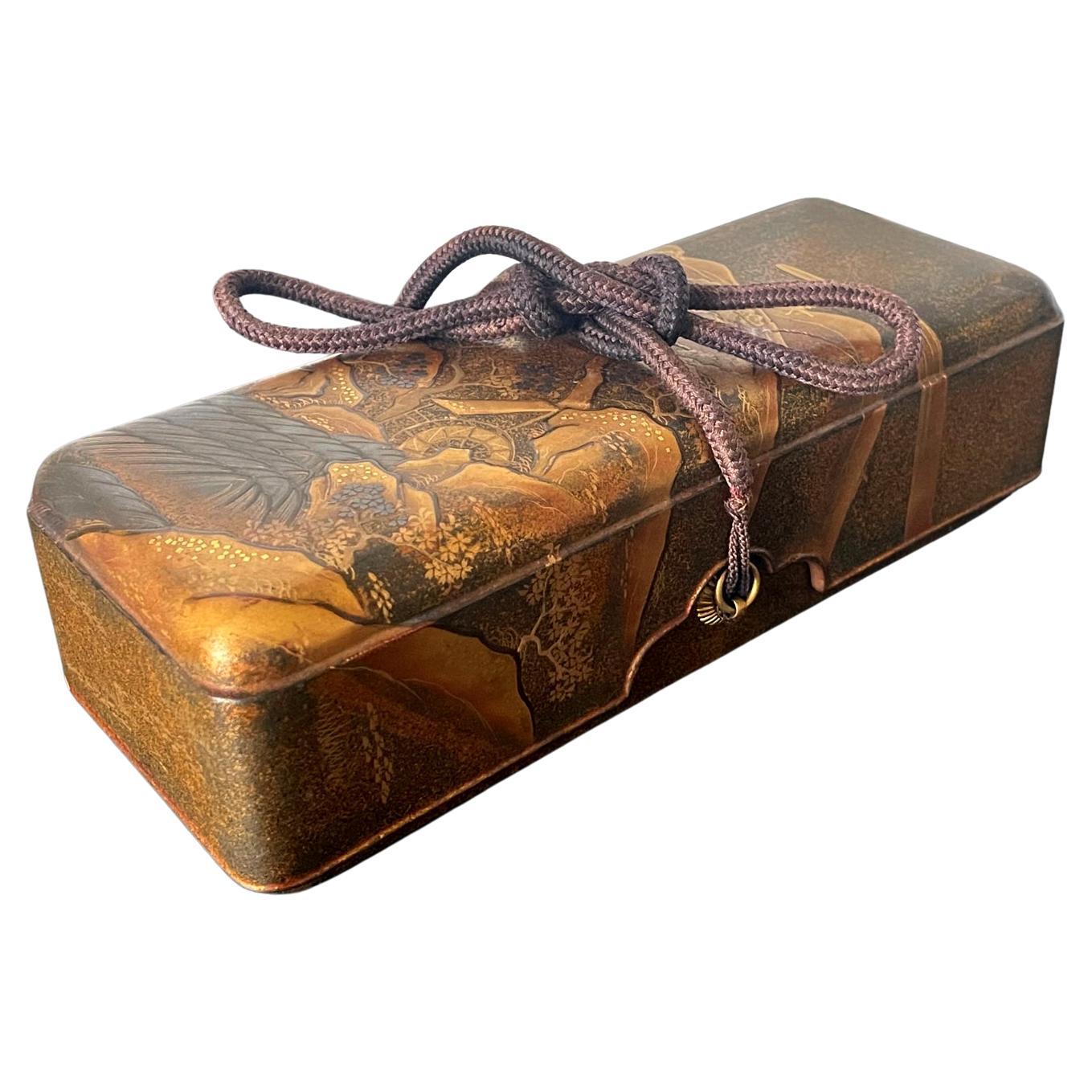
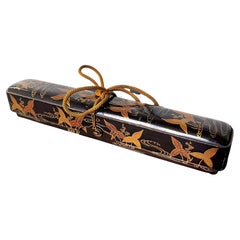
View AllJapanese Lacquered Maki-e Fubako Edo Period
Located in Atlanta, GA
A Japanese lacquered wood fubako (a box used to store document or small scroll painting), circa second half of 19th century late Edo period. The rectangular box features an unusually deep lipped lid with slightly rounded corners, a conforming lower box that is almost entirely covered by the lid which has two bronze medallion rings with tasseled...
Category
Antique 19th Century Japanese Edo Lacquer
Materials
Wood, Lacquer
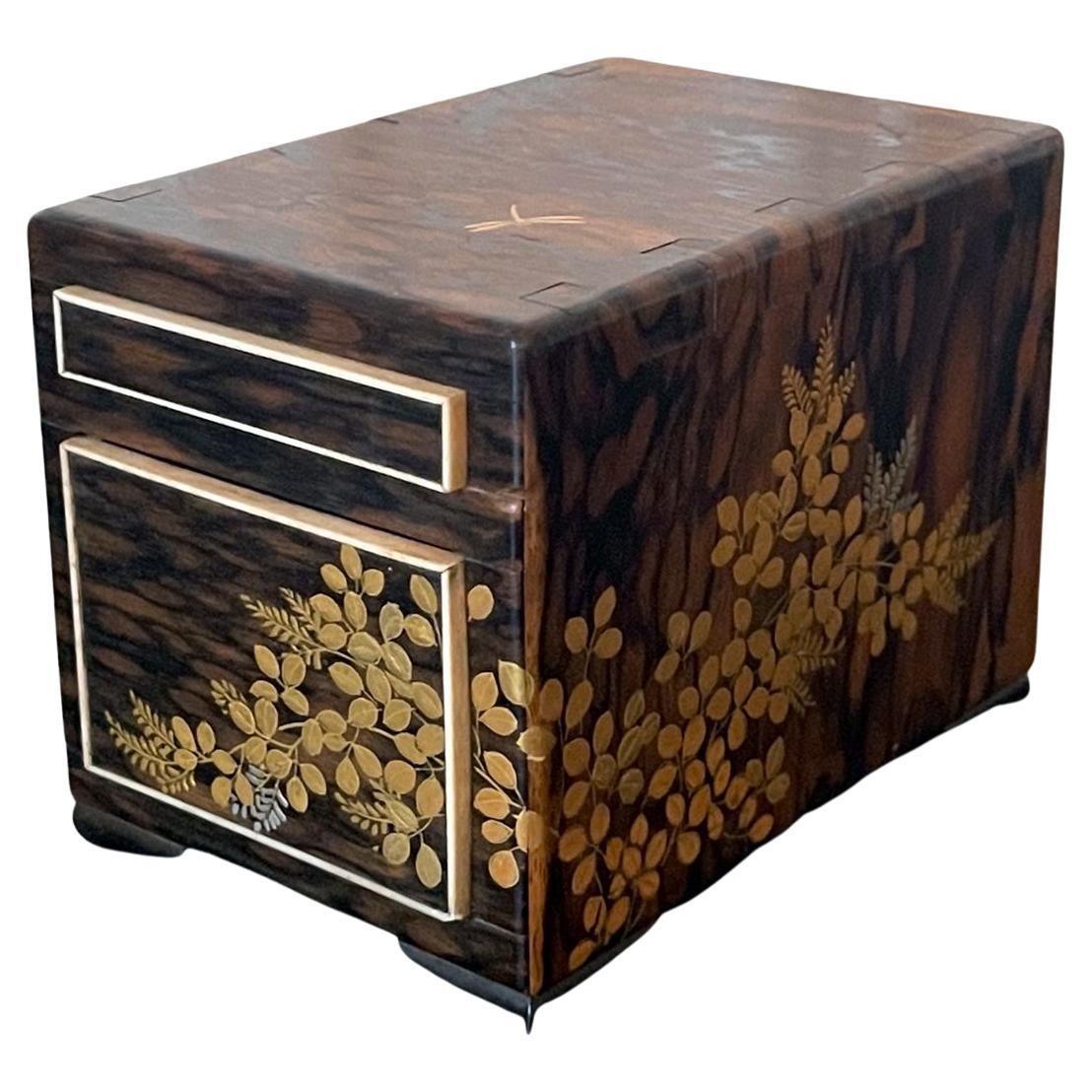
Fine Miniature Japanese Kodansu with Lacquer Inlays
Located in Atlanta, GA
A fine Japanese miniature kodansu constructed from Kaki wood (Persimmon) circa 19th century, late Meiji period. With its expressive exotic wood grains and exposed tenon construction,...
Category
Antique Late 19th Century Japanese Meiji Lacquer
Materials
Wood
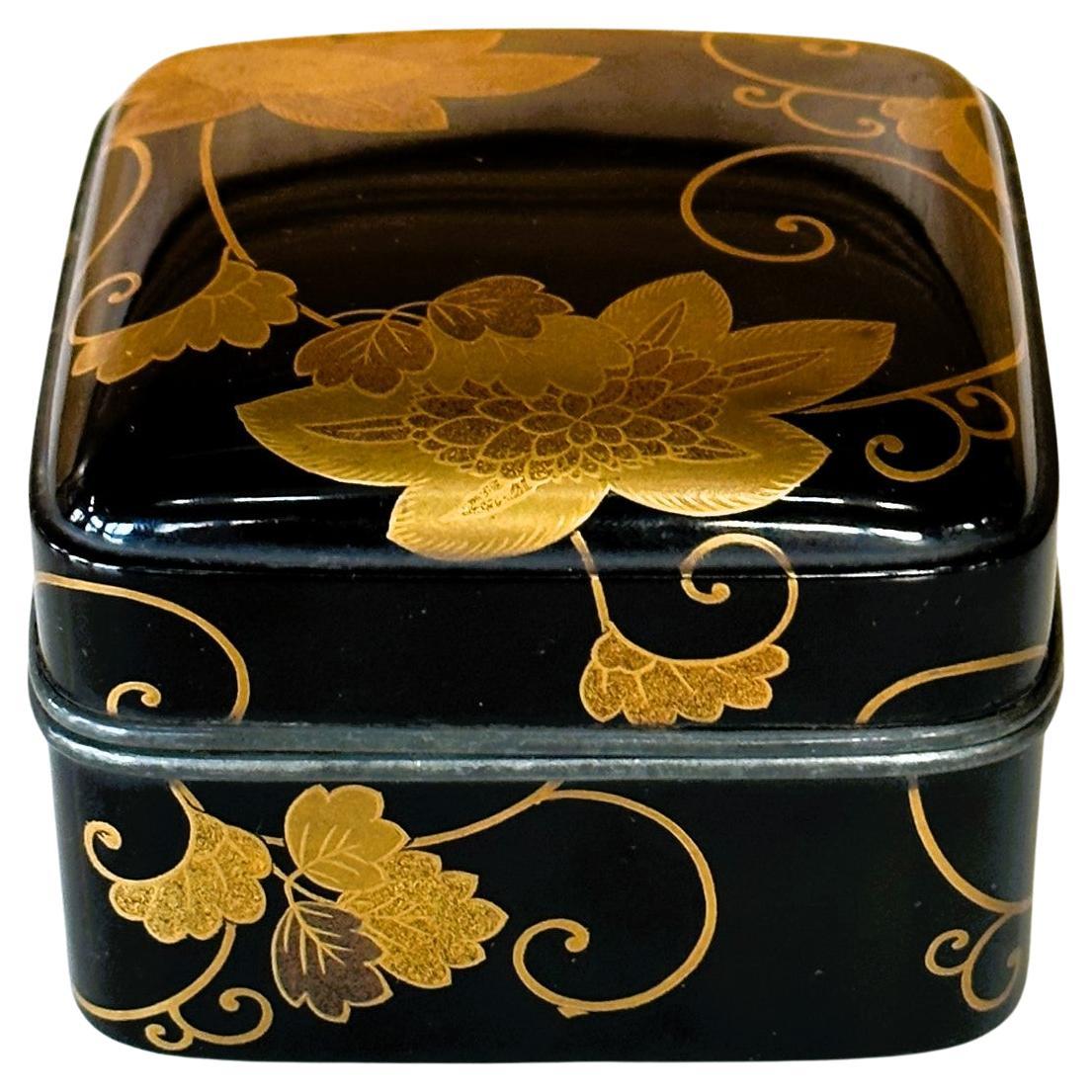
Antique Japanese Lacquered Incense Box Kobako in Kodaiji Style
Located in Atlanta, GA
An antique lacquered small box that was likely used to contain incense powder (it is called Kobako in Japanese), circa early to mid-19th century of the Edo...
Category
Antique 19th Century Japanese Edo Lacquer
Materials
Wood, Lacquer
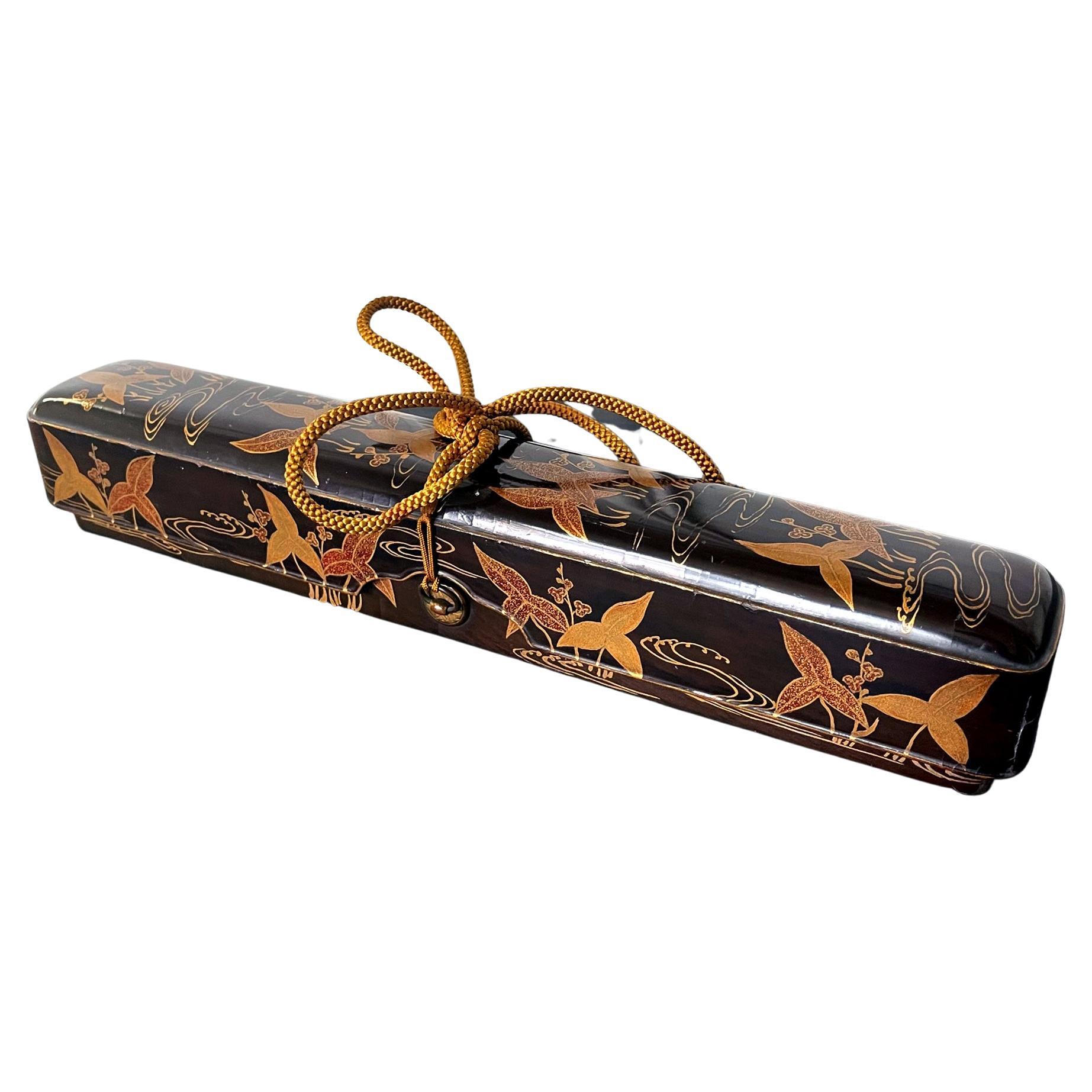
Japanese Lacquered Maki-E Fubako in Kodaiji Style
Located in Atlanta, GA
A rare Japanese lacquered wood fubako decorated in Kodaiji maki-e style circa early 17th century the beginning of the Edo period, possibly early toward the end of the Azuchi-Momoyama period. The rectangular, long and slim box features a deep lipped lid with slightly rounded corners, a conforming lower box with two bronze medallion rings with tasseled...
Category
Antique Early 17th Century Japanese Edo Lacquer
Materials
Wood, Lacquer
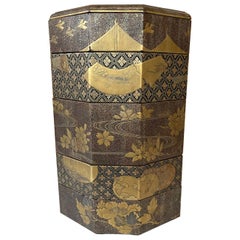
Japanese Maki-e Lacquer Stack Box Jubako
Located in Atlanta, GA
An antique jubako (stack boxes) with five tiers in an elongated octagon shape circa 19th century (end of Edo or beginning of Meiji period). jubako was traditionally used to store and...
Category
Antique 19th Century Japanese Japonisme Lacquer
Materials
Wood, Lacquer
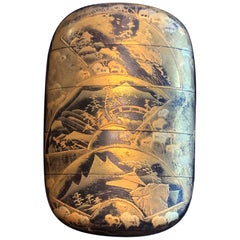
Fine Japanese Lacquered Inro by Yutokusai
Located in Atlanta, GA
A four-case lacquered Japanese inro by Yutokusai (Gyokkei), a lacquer artist active from 1845-1900 (end of Edo to Meiji period). The slightly round inro features a very intricate design with three unfolded fans on the front and two on the back: each reveals a vignette landscape scenery, likely real places in Japan. Using a combination of hiramaki-e and slight takamaki-e, the artist deftly created the pictures with fine details, rendering the inro as a miniature artwork...
Category
Antique 19th Century Japanese Japonisme Lacquer
Materials
Wood, Lacquer
You May Also Like
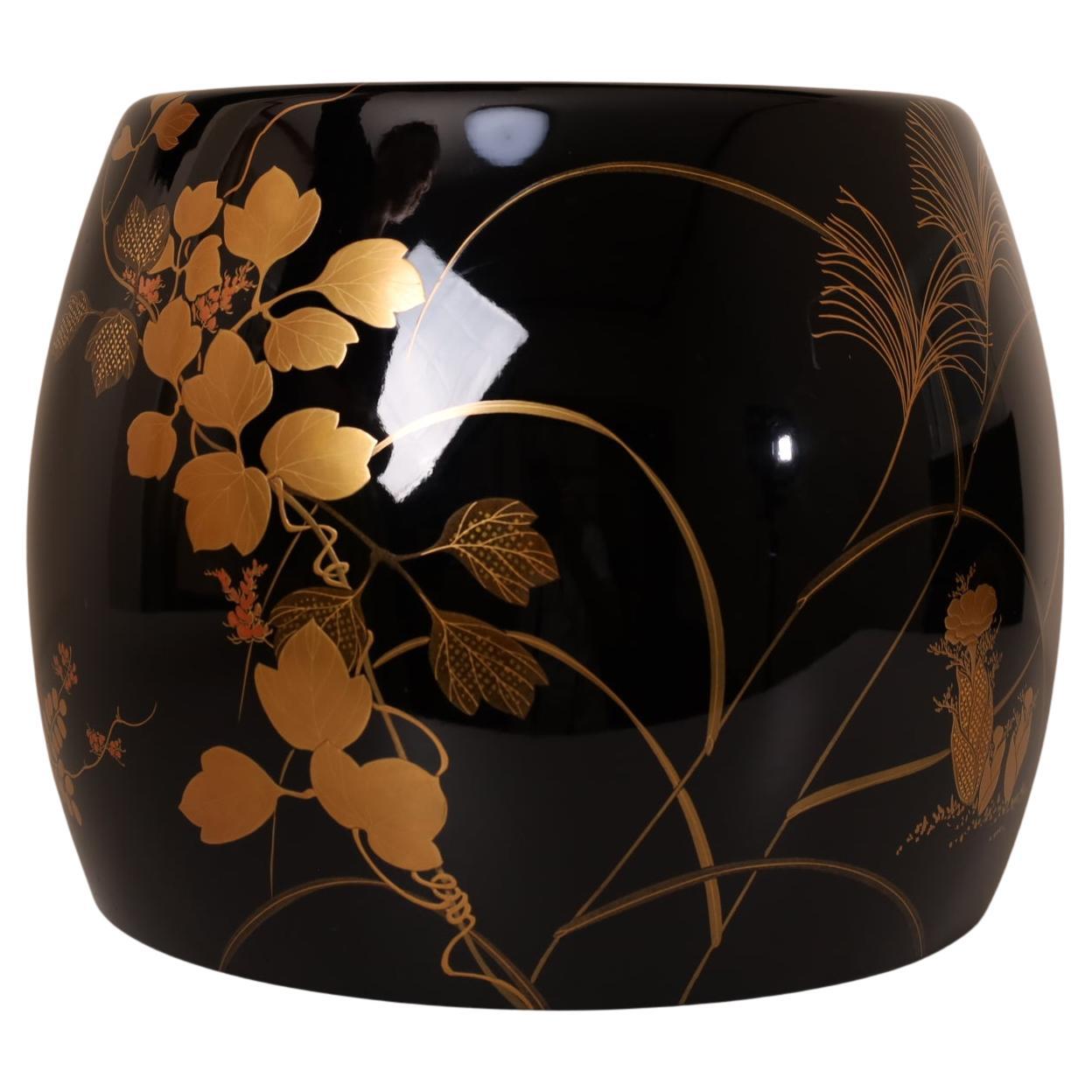
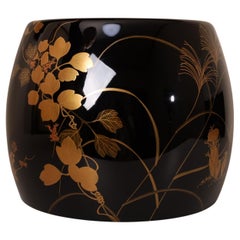
Lacquer Hibachi with Seasonal Motifs — Late Meiji Period (c.1900)
Located in Fukuoka, JP
Dimensions: 23 × 23 × 26 cm
Material: Black lacquer with maki-e decoration
Box: Signed tomobako (original wooden box)
A refined example of late Meiji craftsmanship, this lacquer hibachi (traditional Japanese brazier...
Category
Antique Late 19th Century Japanese Meiji Lacquer
Materials
Copper, Gold Leaf
Kobako in nashiji lacquer imitating wood texture, lid decorated with an ikebana
Located in PARIS, FR
Imposing kobako in nashiji lacquer on a black ground, decorated with a motif imitating wood grain. The lid is adorned with an ikebana basket (hanakago) containing a bouquet of remark...
Category
Antique Early 19th Century Japanese Meiji Lacquer
Materials
Gold

Japanese lacquered Cherry Tree Kobako
Located in PARIS, FR
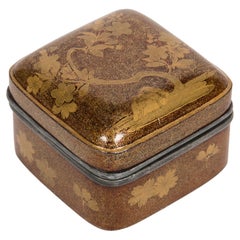
Kobako in nashiji lacquer of square shape with a hira maki-e décor of a blossoming
cherry tree. Both of the four sides are adorned with golden lacquer cherry flowers,
represented i...
Category
Antique 19th Century Japanese Lacquer
Materials
Lacquer
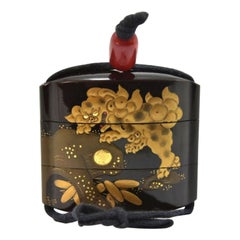
Japanese Inro XIXth Century with 3 Lacquered Wood Boxes
Located in Marseille, FR
19th Century Japanese inro with 3 lacquered wooden compartments, 63 x 70 x 22 mm in size. Weight 39.1 g.
Additional information:
Material: Lacquered ...
Category
Antique 19th Century Japanese Snuff Boxes and Tobacco Boxes
Materials
Wood
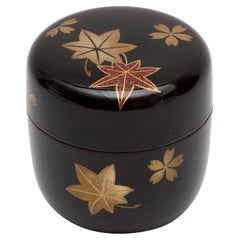
Japanese Natsume or tea box adorned with mapple leaves and sakure flowers
Located in PARIS, FR
Natsume in dark red lacquer, decorated with autumn leaves and cherry blossoms in hiramaki-e and nashiji. Interior in black lacquer.
Maple leaves (Momiji) are celebrated in literature...
Category
Early 20th Century Japanese Taisho Lacquer
Materials
Gold
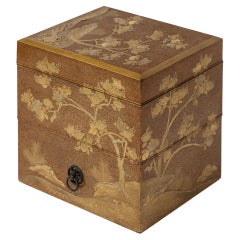
Japanese Tebako in Nashiji lacquer adorned with golden Persimon flowers
Located in PARIS, FR
Tebako box with two compartments in golden and nashi-ji lacquer, decorated with golden, red, and kirigane lacquer, golden persimmon tree leaves, among rocks. The compartments are of ...
Category
Antique Early 19th Century Japanese Meiji Lacquer
Materials
Gold
More Ways To Browse
Cat Japan
Japanese Cat
Lacquer Tea Caddy
Japanese Jizo
Tea Caddy Japan
Japanese Natsume
Antique Japanese Tea Caddy
Japanese Lacquer Tea Caddy
Red Cinnabar
Chinese Cinnabar
Vintage Lacquer
Antique Japanese Tray
Asian Black Lacquer Pearl Furniture
Chinese Cinnabar Furniture
Carved Cinnabar
Cinnabar Lacquer Furniture
Antique Chinese Cinnabar
Japanese Lacquered Tray