Items Similar to Japanese Lacquered Samurai Jingasa Hat Edo Period

Want more images or videos?
Request additional images or videos from the seller
1 of 17
Japanese Lacquered Samurai Jingasa Hat Edo Period
$4,000
£2,986.80
€3,440.39
CA$5,581.82
A$5,901.42
CHF 3,171.26
MX$70,876.98
NOK 39,709.82
SEK 36,337.42
DKK 25,692.17
About the Item
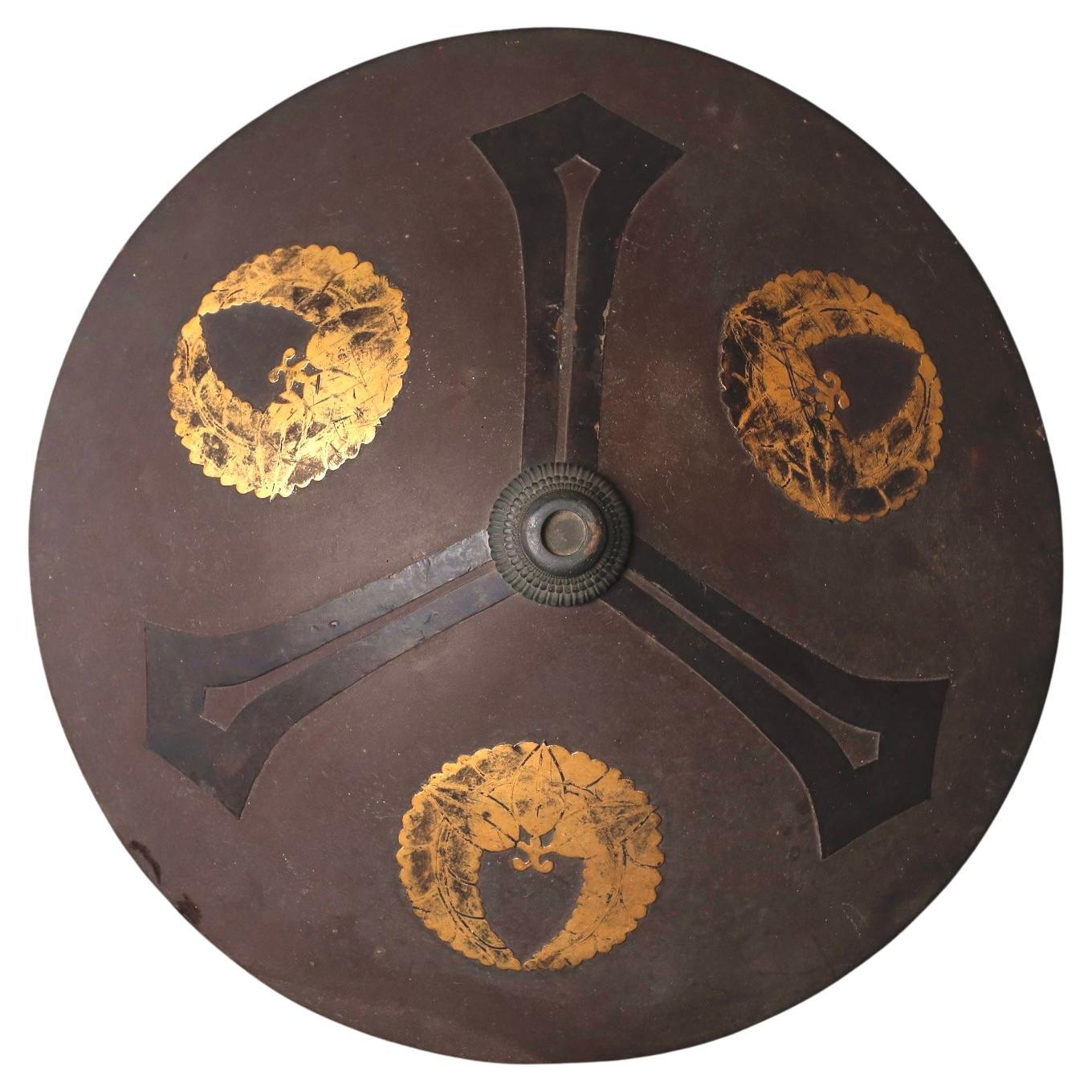
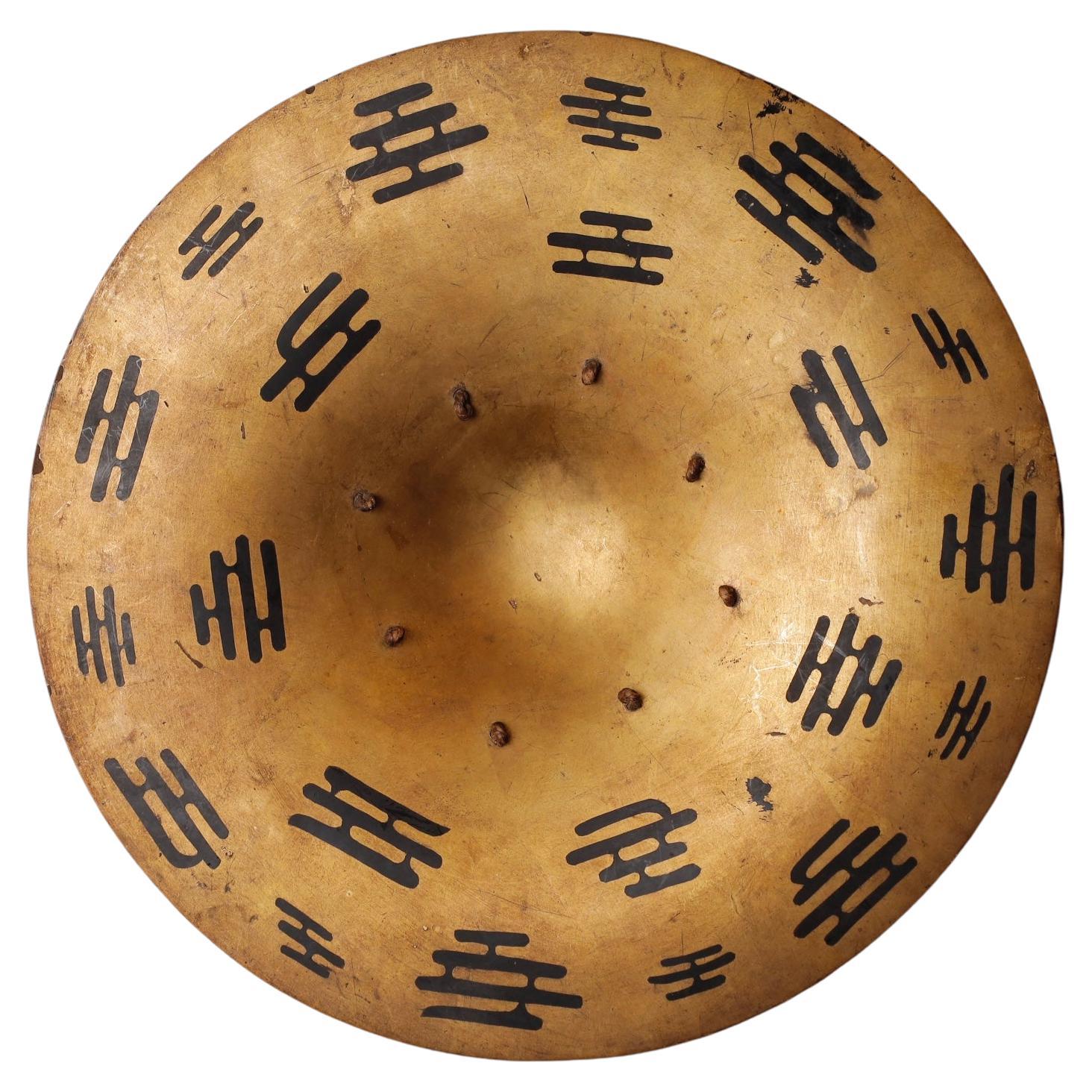
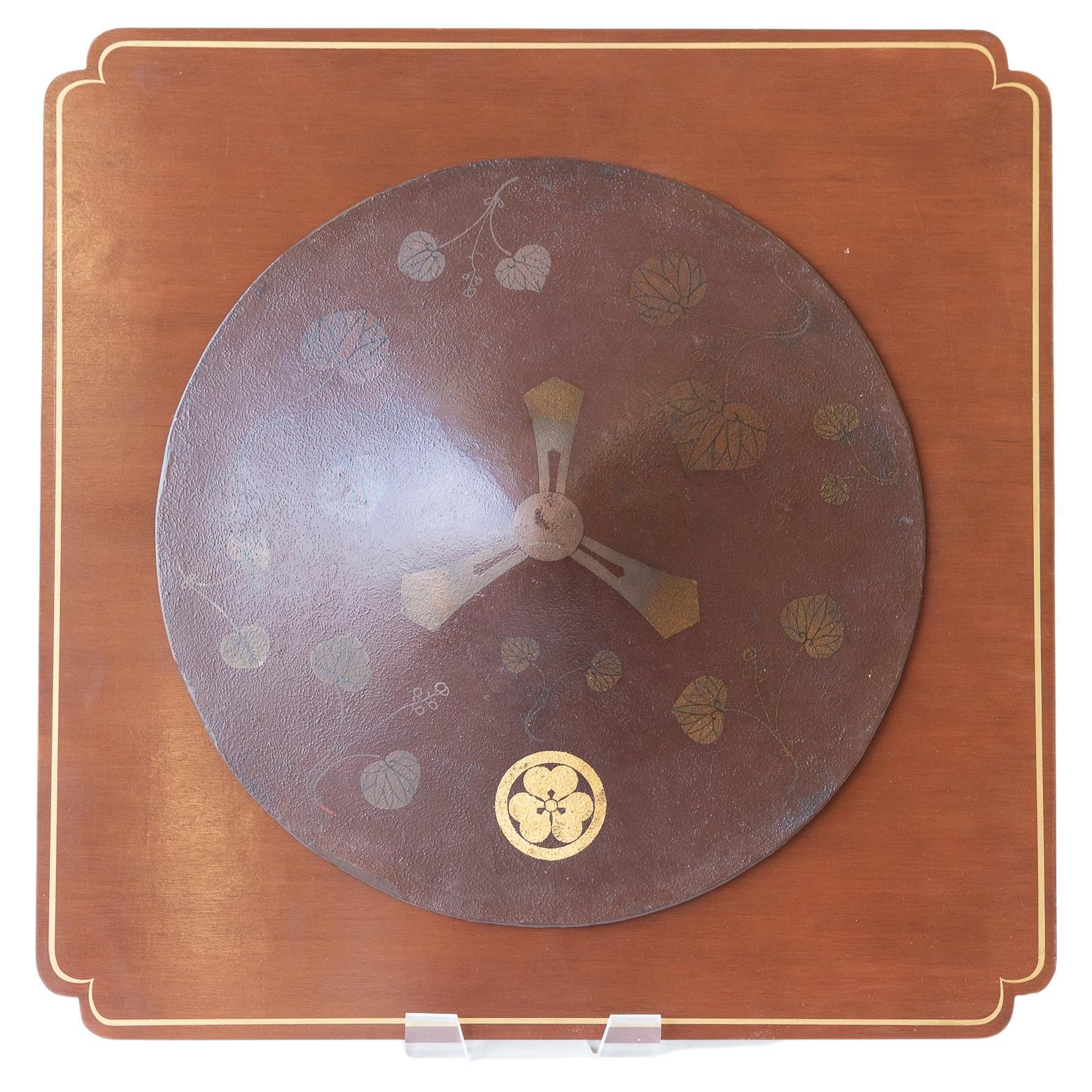
A bespoken Japanese historical hat known as Jinggasa (militant hat) that was worn by samurai in Edo period (1603-1868) circa 18-19th century. There were several subtypes of Jingasa and this is a type called ichimonji gasa or hara gasa (flat type). It was were constructed from layers of paper and cloth with heavy surface lacquer with brass hardware accoutrement and tassels. It was made strong enough to be worn as a helmet and often waterproof. On Jingasa worn by higher ranks of samurai members, there was always a mon (family crest) in gilt lacquer on the surface as an identification.
This Jingasa stands out in its rather unusual decorations. The black exterior features a highly textured surface that resembles tree bark. The underside, which in most cases covered with a simple layer of monochrome lacquer, was lavishly decorated in gold leaf stripes and powder splashes on a bright red background. The overall visual effect is therefore very striking. The exterior surface also showcase a fifteen-leaf Sasa (bamboo) Mon toward the front, three tridents radiating from the metal tehen kanamono (the kiku shape hardware that covers the top center knot), and on the back, a ring (called kasa jirushi no kan) for the decorative agemaki bow. Underneath the hat, there are four rings where the red cord is fastened to be used to tie under the wearer's chin.
The Jingasa appears original with mellow patina and wears along the edges and on the surface that are consistent with its historical use.
- Dimensions:Height: 4 in (10.16 cm)Diameter: 16.5 in (41.91 cm)
- Style:Japonisme (Of the Period)
- Materials and Techniques:
- Place of Origin:
- Period:
- Date of Manufacture:18th-19th Century
- Condition:Wear consistent with age and use. Minor losses. Small historical losses (dumps and nicks), mostly along the rim, a couple on the black and red surface as well. Hardware appears original. Red cord/tassels in good shape, not sure if it is original. Present beautifully as it is with the patina.
- Seller Location:Atlanta, GA
- Reference Number:1stDibs: LU945023942912
About the Seller
4.9
Platinum Seller
Premium sellers with a 4.7+ rating and 24-hour response times
Established in 2006
1stDibs seller since 2010
597 sales on 1stDibs
Typical response time: 1 hour
- ShippingRetrieving quote...Shipping from: Atlanta, GA
- Return Policy
More From This Seller
View AllAntique Japanese Inro by Shigehide Edo Period
Located in Atlanta, GA
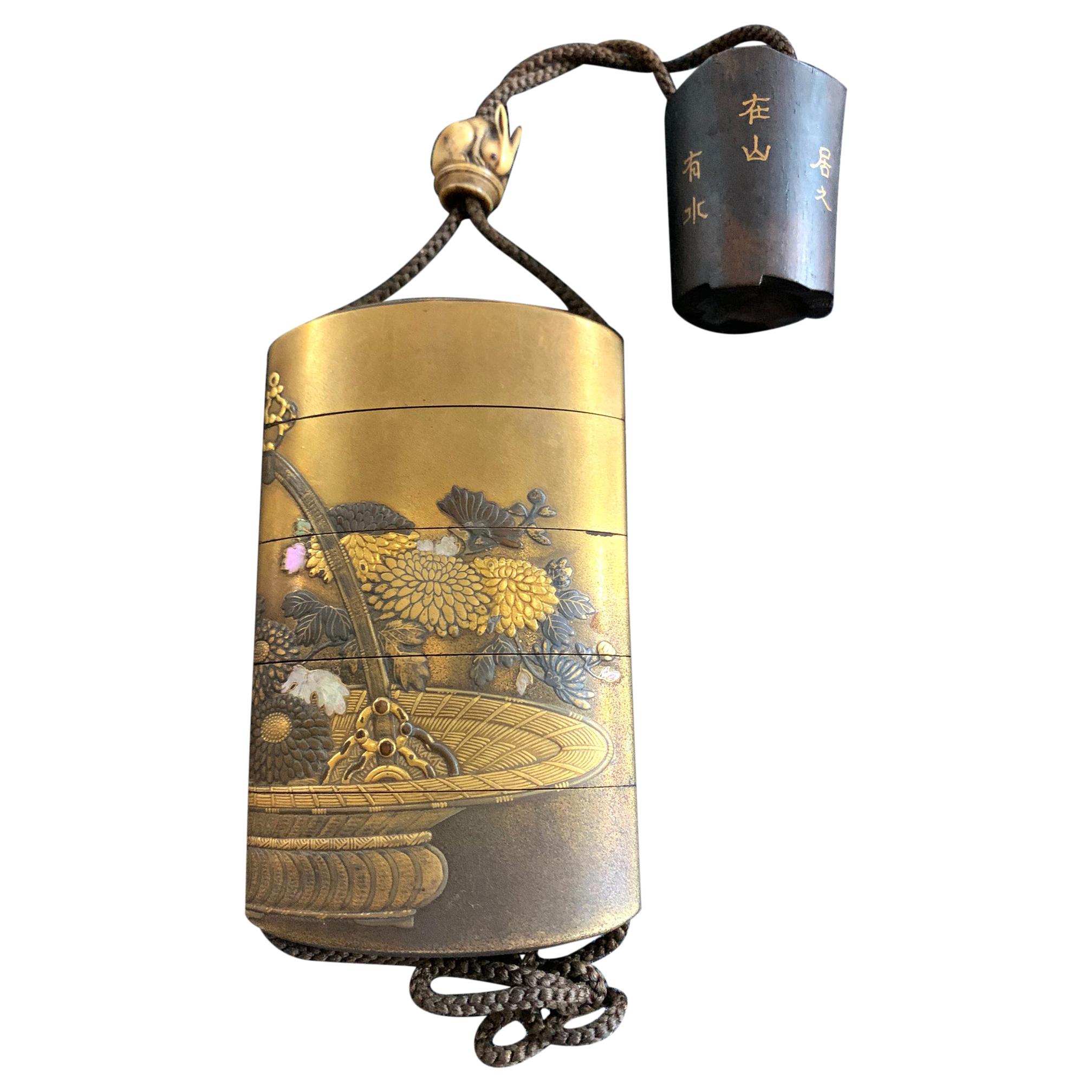
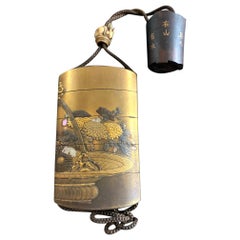
This exquisite four-case lacquered inro was dated to the latter part of 18th century to early 19th century (Edo period) and made by Shigehide. The opposite sides of the inro together features a lavish flower arrangement in a bamboo basket (ikebana). The detailed craftmanship was a true pleasure to behold. Mostly Takamaki-e (high relief) were used to texturize the delicate petals of the chrysanthemums, on which different shades of gold were used to create contrast. Raden (mother of pearl) shells were also used to highlight some leaves, rendering the piece an interesting balance of color and material. The interior was completed in a mottled gold finish. It was signed Shigehide on the bottom with a Kao. There is a small carved rabbit ojime bead...
Category
Antique Late 18th Century Japanese Japonisme Lacquer
Materials
Wood, Lacquer
Fine Japanese Lacquered Inro with Inlays by Kajikawa
Located in Atlanta, GA
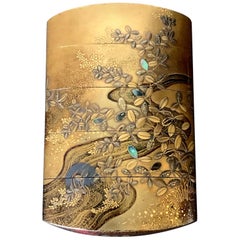
A Japanese four-case lacquer inro by a member of Kajikawa family circa 19th century (late Edo to early Meiji period). It depicts a nocturnal scenery of a meandering stream surrounded by bush clovers, where a full moon is reflected on the water. It was masterfully decorated in gold and silver maki-e using a combination of techniques including takamakie, togidashi and kirigane as well as aogai (abalone shell) inlays. The stream was set between the slightly elevated banks, adding to this piece a already strong three-dimensional composition. The interior was decorated in gold nashiji. It was signed on the bottom "Kajikawa Zou" (made by Kajikawa and a pot seal centered with "Ei" in Kanji. In one of the compartment, there is a katakana mark, appears to be a name, possibly the owner.
Kajikawa clan was one of the most famous lacquer artisanal family established in the 17th century. Many well known members over the generations produced lacquer art in a wide range of formats, but two third were signed only with the family name such as this one. It is therefore not possible to pinpoint the exact author of this piece.
Provenance: This inro was purchased as lot 349 in Christie's New York sale Japanese...
Category
Antique 19th Century Japanese Japonisme Lacquer
Materials
Shell, Wood, Lacquer
Japanese Inro by Koma Koryu Edo Period
Located in Atlanta, GA
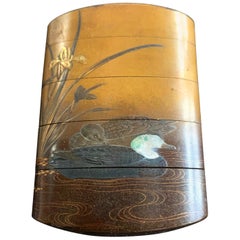
A four-case lacquered inro by Koma Koryu circa 19th century late Edo period. The inro features a pair of Chinese mandarin duck resting under a bundle of blooming irises on the pond. ...
Category
Antique 19th Century Japanese Japonisme Lacquer
Materials
Wood, Lacquer
Fine Japanese Lacquered Inro by Yutokusai
Located in Atlanta, GA
A four-case lacquered Japanese inro by Yutokusai (Gyokkei), a lacquer artist active from 1845-1900 (end of Edo to Meiji period). The slightly round inro features a very intricate design with three unfolded fans on the front and two on the back: each reveals a vignette landscape scenery, likely real places in Japan. Using a combination of hiramaki-e and slight takamaki-e, the artist deftly created the pictures with fine details, rendering the inro as a miniature artwork...
Category
Antique 19th Century Japanese Japonisme Lacquer
Materials
Wood, Lacquer
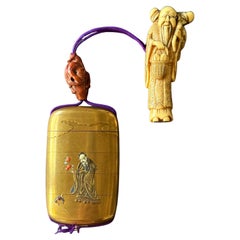
Fine Japanese Inro with Maki-e and Inlay by Shokasai and Shibayama
By Shibayama Factory
Located in Atlanta, GA
A Japanese four-case inro stringed together with a silk cord of a carved wood Ojime and a carved ivory netsuke circa 19th century of Edo period. This fine piece was made in collabora...
Category
Antique 19th Century Japanese Edo Lacquer
Materials
Wood, Lacquer
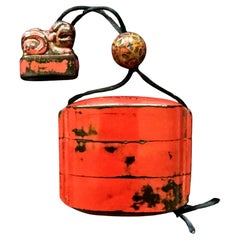
Rare Japanese Inro Netsuke and Omije with Negoro Red Lacquer Edo Period
Located in Atlanta, GA
A Japanese three-case inro with stringed carved netsuke and bead ojime from early Edo period circa 17th century. The trio accoutrement is covered in red Negoro lacquer and displays w...
Category
Antique 17th Century Japanese Edo Lacquer
Materials
Wood, Lacquer
You May Also Like
Unusual Samurai Jingasa Hat with Gilded Crests and Red Lacquer Interior
Located in Fukuoka, JP
An uncommon Edo-period samurai jingasa, distinguished by its gilded crest decorations and richly lacquered red interior. Jingasa of this type were worn by samurai, ashigaru, and reta...
Category
Antique 17th Century Japanese Edo Antiquities
Materials
Wood, Lacquer
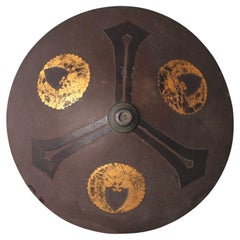
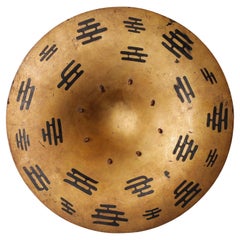
Unusual Samurai Jingasa Hat with Gilded Crests and Gilded Interior
Located in Fukuoka, JP
An uncommon Edo-period samurai jingasa, distinguished by its applied gilded crest decorations and rare gilded interior finish. Jingasa of this type were worn by samurai and retainers...
Category
Antique 18th Century Japanese Edo Antiquities
Materials
Wood, Lacquer
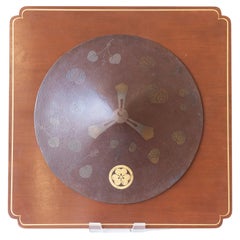
19th Century Japanese Jingasa (Soldier
s Battle Hat) on Lacquer Display panel
Located in New York, NY
An antique Japanese jingasa (foot soldier's hat).
Jingasa (battle hats) were typically worn by common foot soldiers (ashigaru) during feudal Japan, serving as a lightweight alternat...
Category
Antique Mid-19th Century Japanese Decorative Art
Materials
Wood, Lacquer
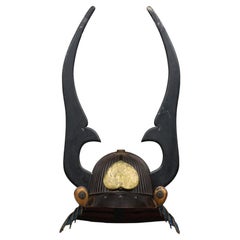
Japanese Edo-Period 62-Plate Kabuto 兜
Helmet
with Long Lacquer Wakidate
Located in Amsterdam, NL
An old and exceptional completely lacquered akoda-nari suji’bachi kabuto (helmet with raised ridges) with a bronze maedate (decorative front piece) shaped like a spade, and mounted b...
Category
Antique 18th Century Japanese Antiquities
Materials
Bronze, Copper, Iron
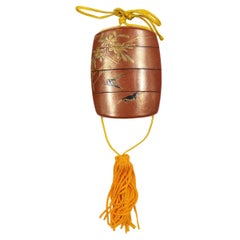
Lacquer inro, Japanese, Late 19th c.
Located in Stockholm, SE
A fourpart Japanese lacquer Inro. the lacquer is red with motives of a spider with its web in gold and two flying cranes. The lowest part of the inro has a crack on one side.
Category
Antique Late 19th Century Japanese Lacquer
Materials
Lacquer
19th c. Chinese Qing Dynasty Children
s Hat
Located in Dallas, TX
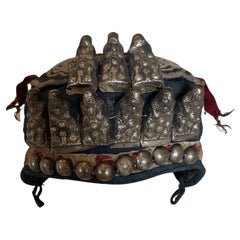
19th c. Chinese Qing Dynasty children's hat
Category
Antique 19th Century Chinese Antiquities
Materials
Silk
More Ways To Browse
Black Lacquer With Brass Hardware
Japan Samurai
Antique Trident
Japanese Samurai Art
Edo Samurai
Antique Hara
Samurai Hat
Tray Japan
Maki E
Antique Cinnabar
Cinnabar Lacquer
Cinnabar Furniture
Japanese Lacquer And Mother Of Pearl
Japanese Red Lacquered
Chinese Export Black Lacquer Gilt
Japanese Mother Of Pearl Art
Red Cinnabar
Chinese Cinnabar