Items Similar to Japanese Maki-e Lacquer Portable Sagejubako Theme of Three Winter Friends
Want more images or videos?
Request additional images or videos from the seller
1 of 21
Japanese Maki-e Lacquer Portable Sagejubako Theme of Three Winter Friends
$8,500
£6,419.77
€7,415.83
CA$11,975.29
A$12,825.54
CHF 6,894.92
MX$155,773.67
NOK 87,120.69
SEK 79,765.47
DKK 55,409.82
About the Item
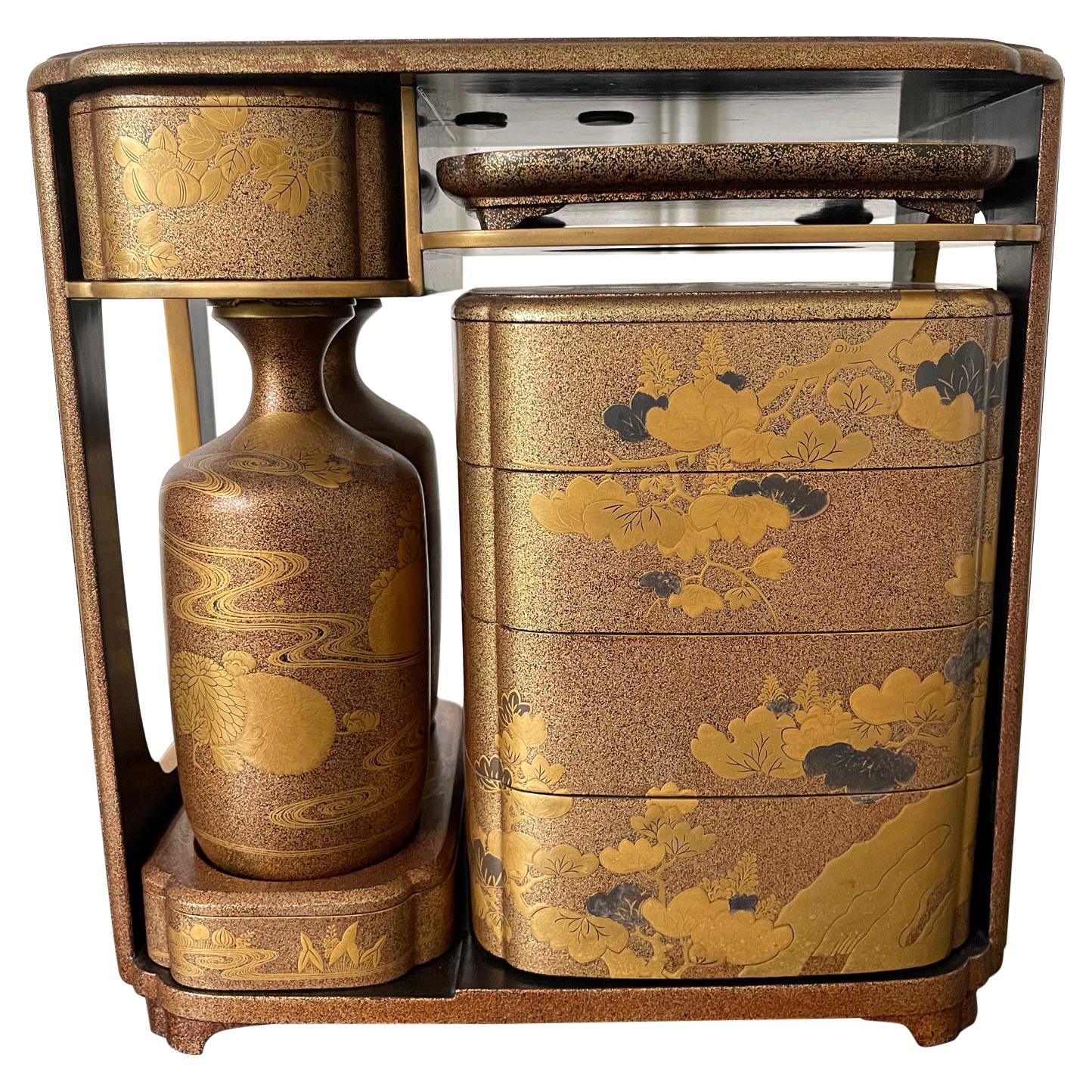
Sagejubako is a portable lunch or picnic set that became popular in the early Edo period when an additional meal was added between breakfast and dinner. It normally consists of a handled carry case and sake bottles, serving trays and tiered food storage boxes called "jubako". This set is rare not only because it appears to retain all the parts (it includes a carry case, seven trays, two sake bottles with lower compartment, a four-tiers jubako), but also because it is lavishly decorated in the motif of "Three Winter Friends: Pine, Bamboo and Plum blossom", one of the designs preferred by the scholarly type. Executed in gold hiramaki-e, takamaki-e and kirigane on black background, the three motifs were used in various combinations across the entire surfaces to decorate the trays, sake bottles, jubako and also exterior top of the carry case. The carry case itself is wonderfully constructed with an all-around lattice wall of overlapping coin design, a symbol for good fortune. All interior of the containers was finished in a vermilion red. The set was finely crafted with bold composition and painstaking workmanship.
The set is likely dated to the second half of 19th century (early Meiji period). There are a minor loss and some stable aged cracks in addition to expected patina, nevertheless it remains a beautiful and well-preserved example.
- Dimensions:Height: 14.5 in (36.83 cm)Width: 14 in (35.56 cm)Depth: 8 in (20.32 cm)
- Style:Japonisme (Of the Period)
- Materials and Techniques:
- Place of Origin:
- Period:
- Date of Manufacture:Second Half of the 19th Century
- Condition:Wear consistent with age and use. Minor losses. Expected patina on parts of the surface. A few stable aged cracks to the front door of, one small loss to the coin lattice as shown. One lower container under the sake bottle has a crack on the back wall that was touched up at some point.
- Seller Location:Atlanta, GA
- Reference Number:1stDibs: LU945029170472
About the Seller
4.9
Platinum Seller
Premium sellers with a 4.7+ rating and 24-hour response times
Established in 2006
1stDibs seller since 2010
586 sales on 1stDibs
Typical response time: <1 hour
- ShippingRetrieving quote...Shipping from: Atlanta, GA
- Return Policy
More From This Seller
View AllJapanese Lacquered Maki-E Natsume in Kodaiji Style
Located in Atlanta, GA
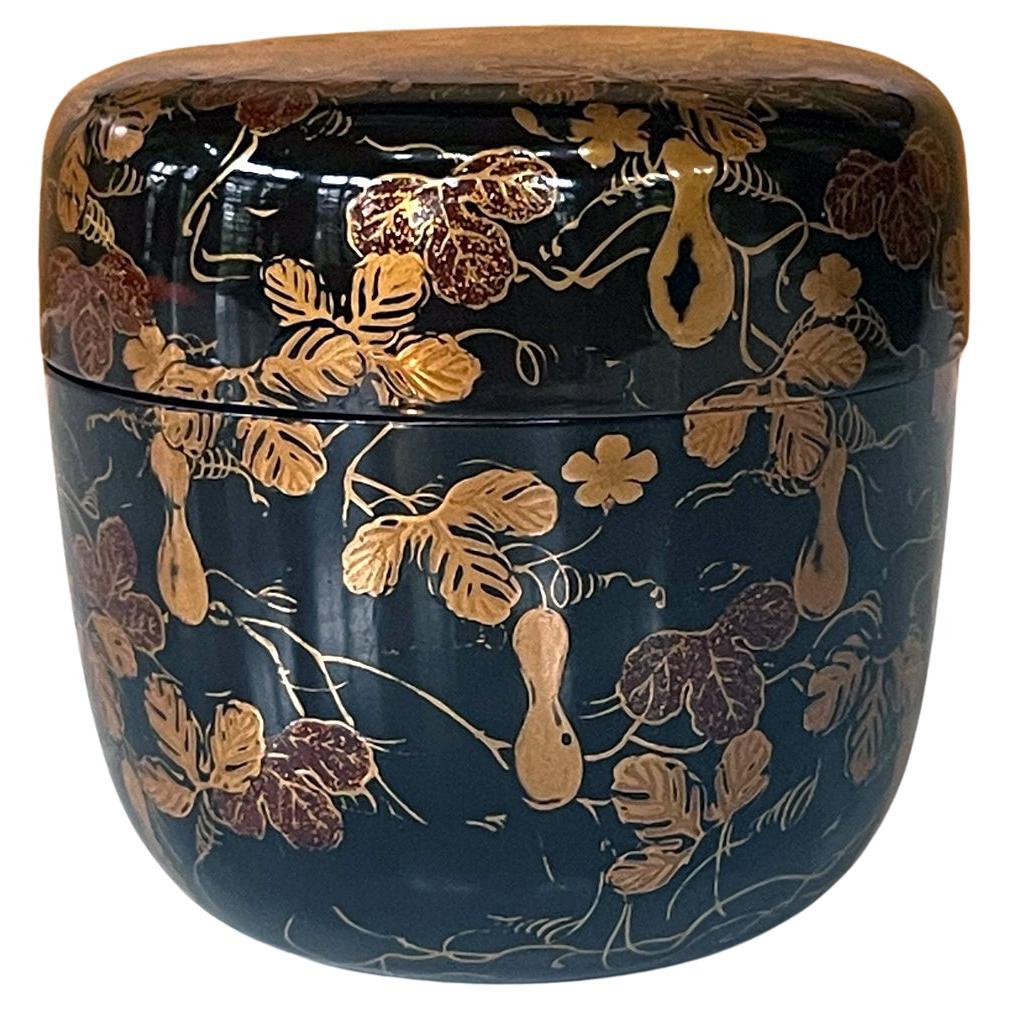
A Japanese lacquered tea caddy (known as Natsume) with fine Maki-e decoration circa 18-19th century Edo to Meiji period. The large-sized nat...
Category
Antique 19th Century Japanese Meiji Lacquer
Materials
Wood, Lacquer
Antique Japanese Inro by Shigehide Edo Period
Located in Atlanta, GA
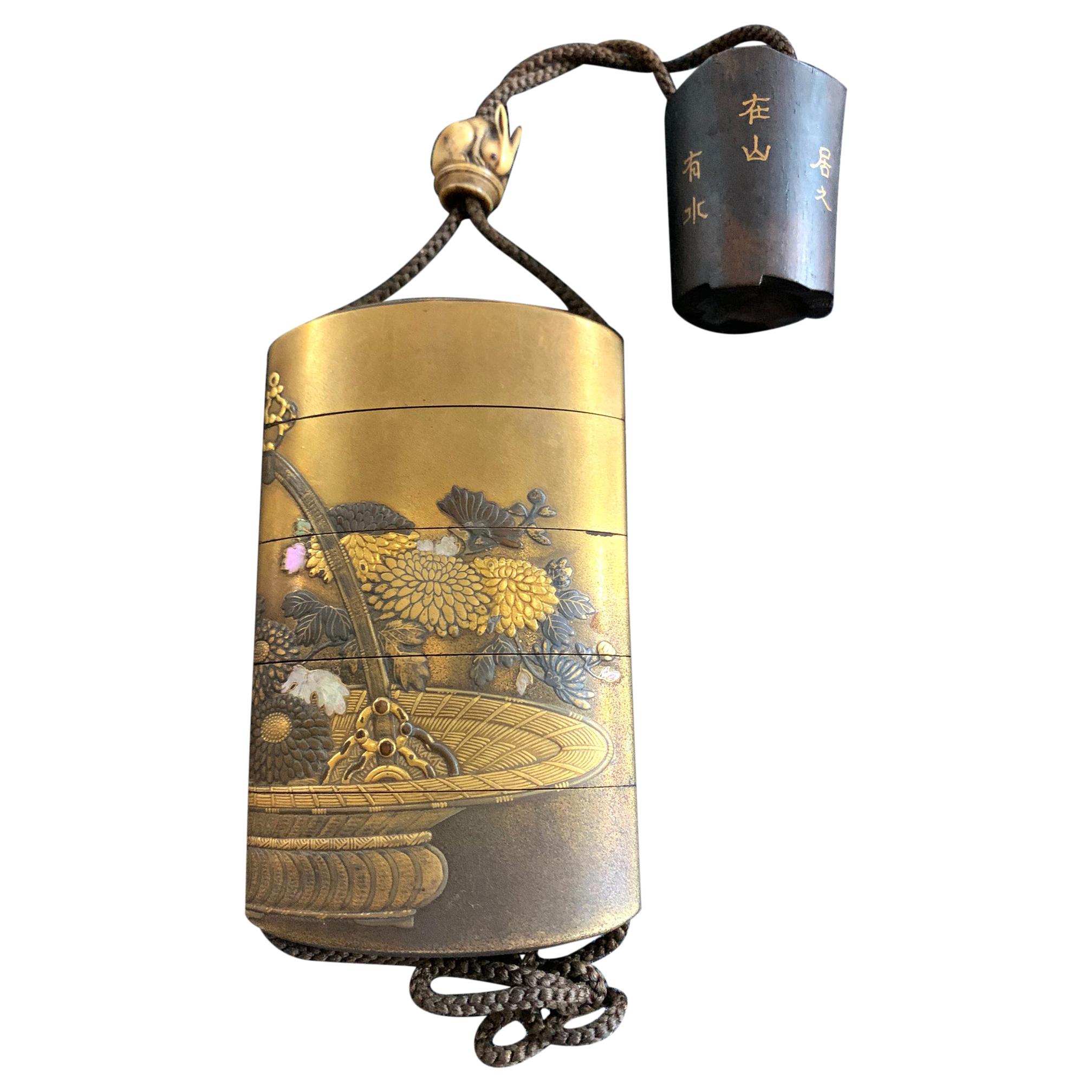
This exquisite four-case lacquered inro was dated to the latter part of 18th century to early 19th century (Edo period) and made by Shigehide. The opposite sides of the inro together features a lavish flower arrangement in a bamboo basket (ikebana). The detailed craftmanship was a true pleasure to behold. Mostly Takamaki-e (high relief) were used to texturize the delicate petals of the chrysanthemums, on which different shades of gold were used to create contrast. Raden (mother of pearl) shells were also used to highlight some leaves, rendering the piece an interesting balance of color and material. The interior was completed in a mottled gold finish. It was signed Shigehide on the bottom with a Kao. There is a small carved rabbit ojime bead...
Category
Antique Late 18th Century Japanese Japonisme Lacquer
Materials
Wood, Lacquer
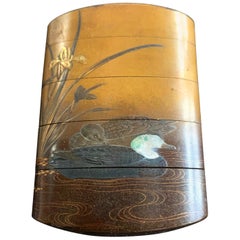
Japanese Inro by Koma Koryu Edo Period
Located in Atlanta, GA
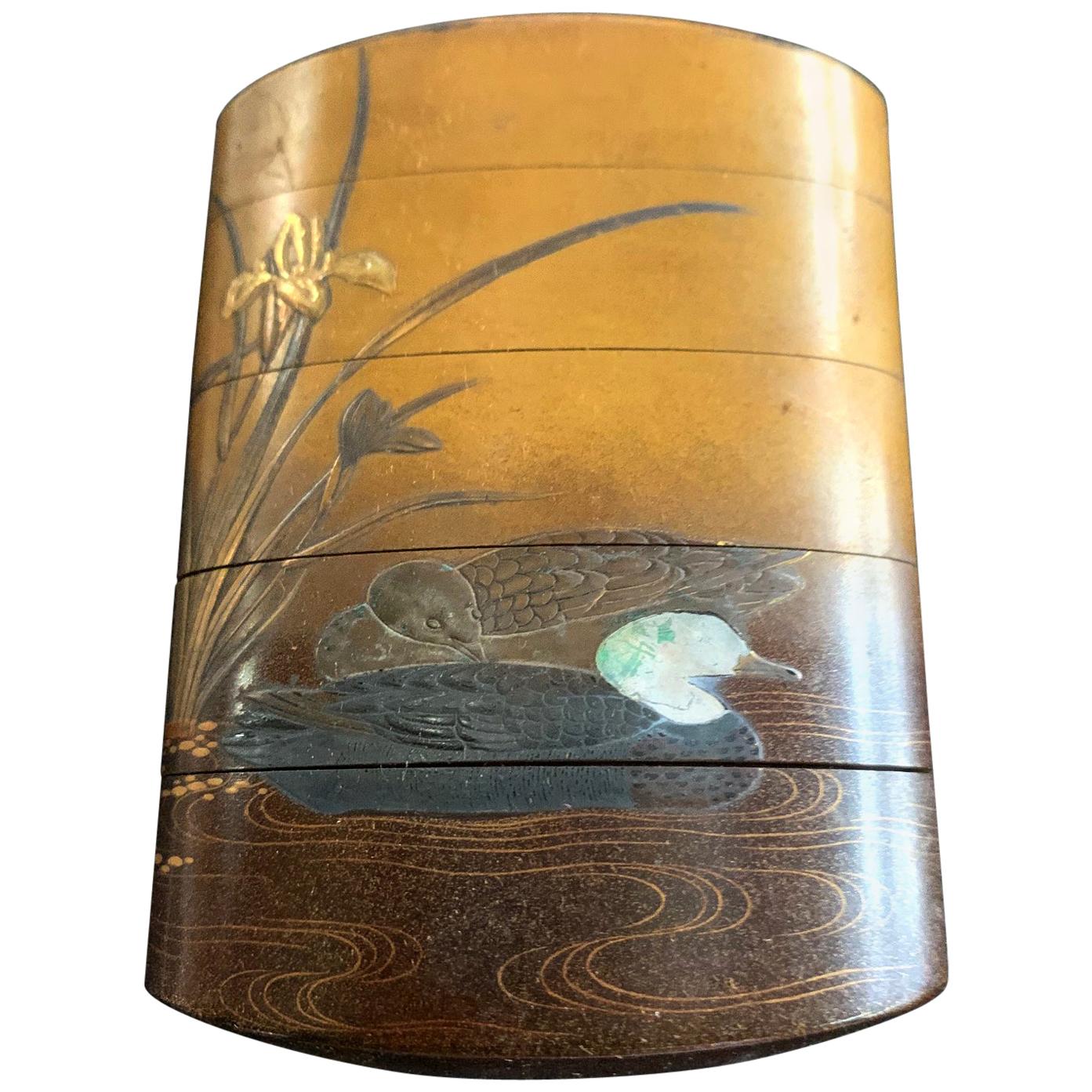
A four-case lacquered inro by Koma Koryu circa 19th century late Edo period. The inro features a pair of Chinese mandarin duck resting under a bundle of blooming irises on the pond. ...
Category
Antique 19th Century Japanese Japonisme Lacquer
Materials
Wood, Lacquer
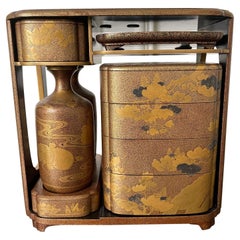
Japanese Maki-e Lacquerware Portable Picnic Set Sagejubako
Located in Atlanta, GA
Sagejubako is a portable picnic set that became popular in the early Edo period when an additional meal was added between breakfast and dinner. It normally consists of a carry case w...
Category
Antique 19th Century Japanese Japonisme Lacquer
Materials
Lacquer
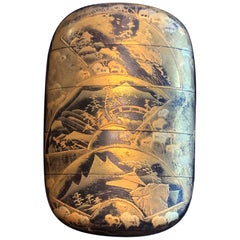
Fine Japanese Lacquered Inro by Yutokusai
Located in Atlanta, GA
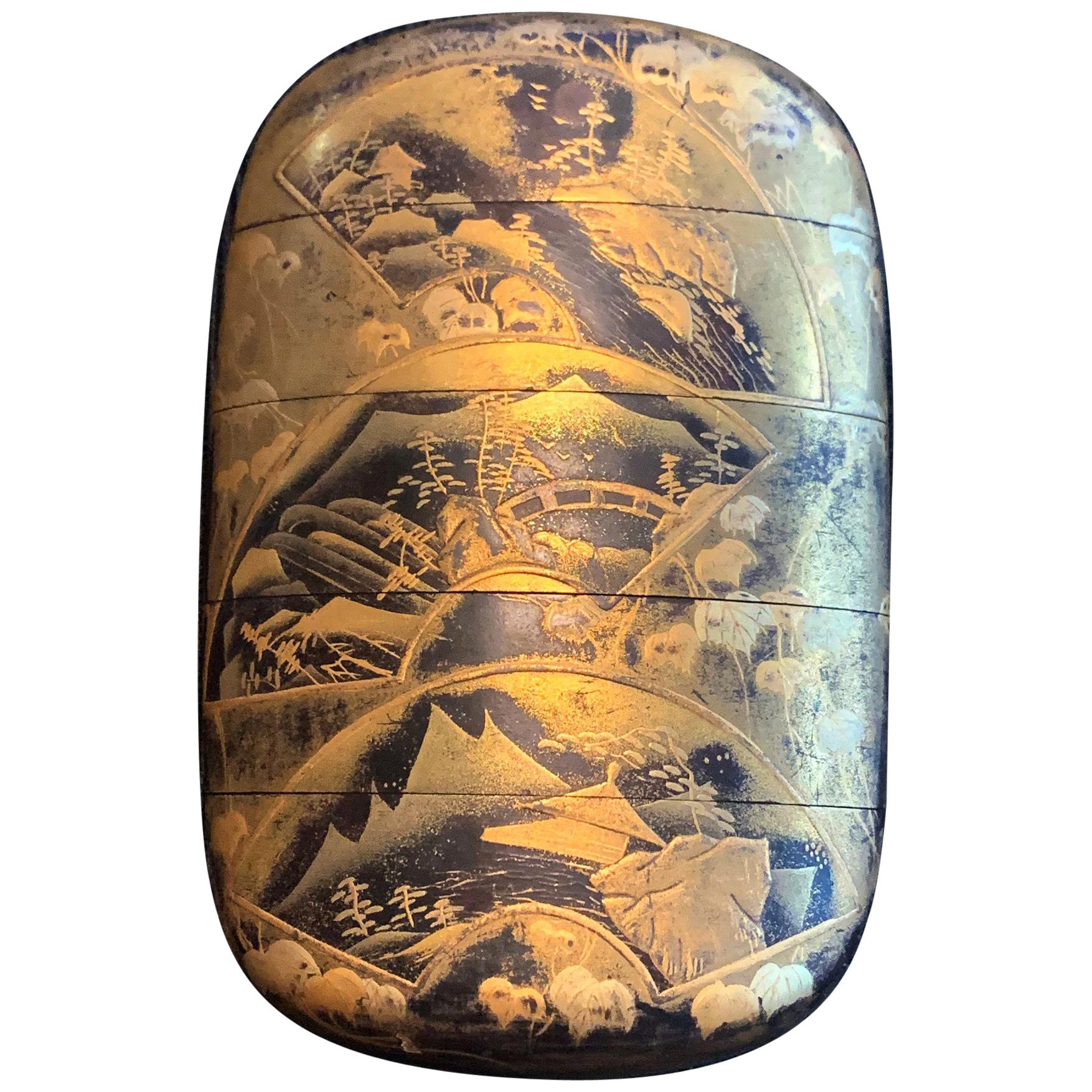
A four-case lacquered Japanese inro by Yutokusai (Gyokkei), a lacquer artist active from 1845-1900 (end of Edo to Meiji period). The slightly round inro features a very intricate design with three unfolded fans on the front and two on the back: each reveals a vignette landscape scenery, likely real places in Japan. Using a combination of hiramaki-e and slight takamaki-e, the artist deftly created the pictures with fine details, rendering the inro as a miniature artwork...
Category
Antique 19th Century Japanese Japonisme Lacquer
Materials
Wood, Lacquer
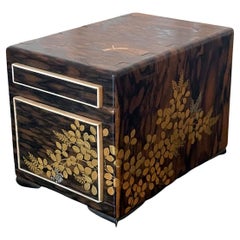
Fine Miniature Japanese Kodansu with Lacquer Inlays
Located in Atlanta, GA
A fine Japanese miniature kodansu constructed from Kaki wood (Persimmon) circa 19th century, late Meiji period. With its expressive exotic wood grains and exposed tenon construction,...
Category
Antique Late 19th Century Japanese Meiji Lacquer
Materials
Wood
You May Also Like
Japanese Decorated Lacquer and Painted Folding Screen
Located in Godshill, Isle of Wight
Japanese Decorated Lacquer and Painted Folding Screen
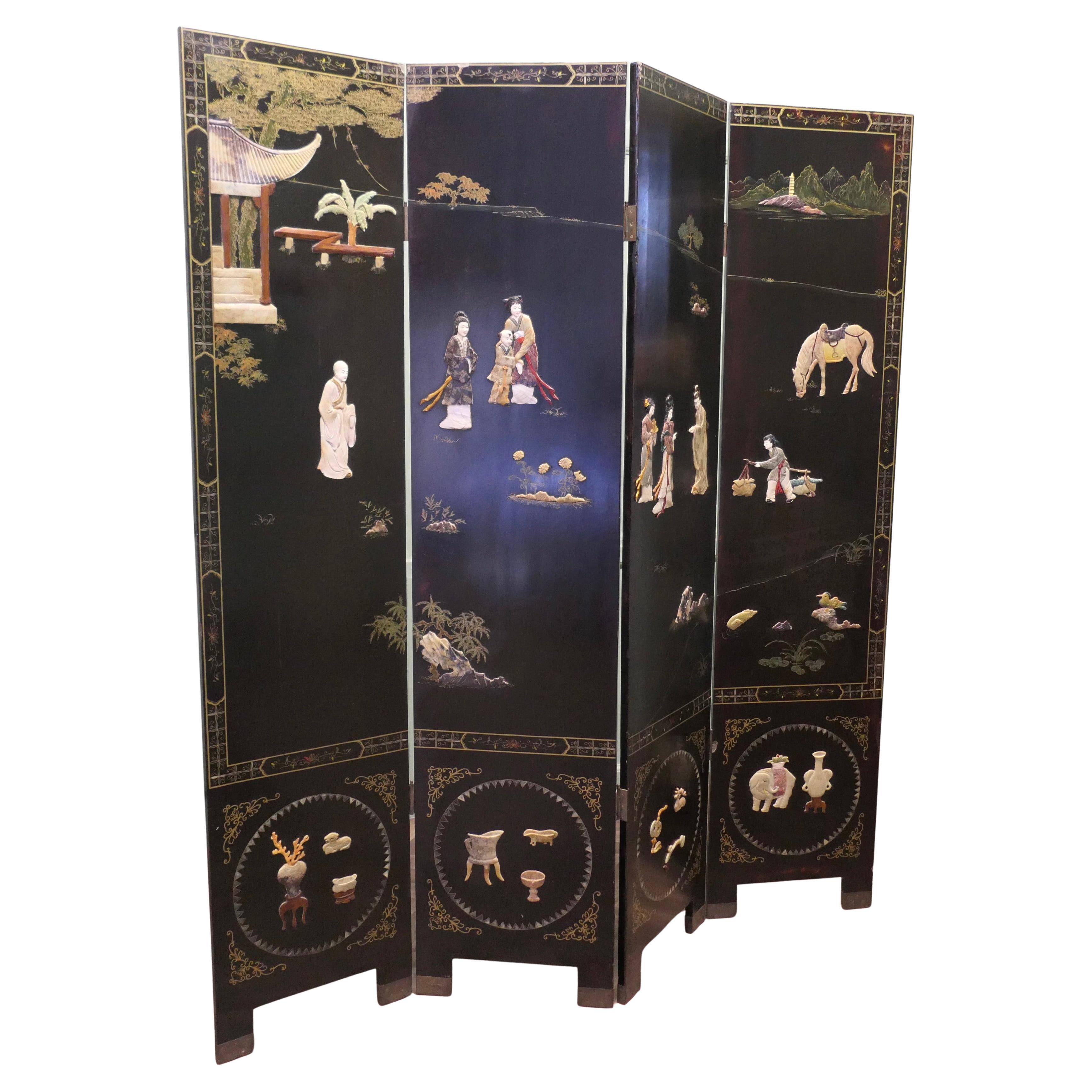
This impressive screen has four superbly decorated panels with a montage of Geisha, Japanese Garden and Animals all made from ...
Category
Vintage 1930s Japonisme Screens and Room Dividers
Materials
Lacquer
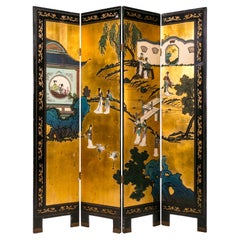
Japanese Lacquer Painted Screen, 1920
Located in Cesena, FC
Elegant screen painted in Japanese lacquer with scenes of imperial life.
Made with 4 wooden and lacquer doors, also painted on the back.
Period: early 1900s
Measures: L. cm 160 - ...
Category
Vintage 1920s Japanese Screens and Room Dividers
Materials
Wood, Lacquer
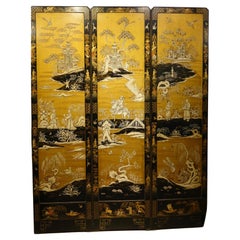
Three-panels creen in black lacquer and polychrome gilt, China 20th century
Located in PARIS, FR
Three-panel screen in black lacquer and polychrome gilt China mid 20th century.
Category
Mid-20th Century Chinese Other Lacquer
Materials
Wood
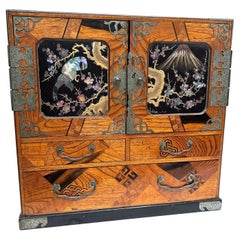
Antique Japanese Yosegi (Marquetry) Shibayama Ko Tansu Meiji Period
Located in Point Richmond, CA
Antique Japanese Yosegi (Marquetry) Shibayama Ko Tansu, Meiji period
The marquetry is composed of keyayaki (zelkova) and kakinoki (persimmon) wood. Two small doors with inlaid Moth...
Category
Antique Late 19th Century Japanese Meiji Furniture
Materials
Wood, Mother-of-Pearl, Lacquer
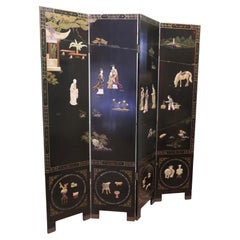
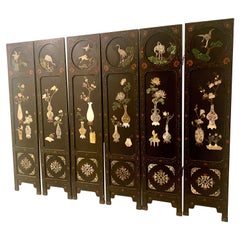
Chinese Soapstone, Semiprecious Hardstone and Lacquer Folding Screen
Located in Miami, FL
This stunning Chinese screen is an exceptionally well-crafted piece, beautifully decorated with intricate semiprecious hardstone carvings. Measuring ...
Category
Mid-20th Century Chinese Chinese Export Lacquer
Materials
Precious Stone, Wood
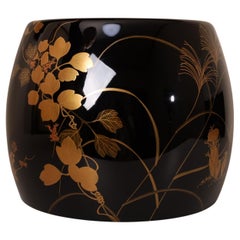
Lacquer Hibachi with Seasonal Motifs — Late Meiji Period (c.1900)
Located in Fukuoka, JP
Dimensions: 23 × 23 × 26 cm
Material: Black lacquer with maki-e decoration
Box: Signed tomobako (original wooden box)
A refined example of late Meiji craftsmanship, this lacquer hibachi (traditional Japanese brazier...
Category
Antique Late 19th Century Japanese Meiji Lacquer
Materials
Copper, Gold Leaf
More Ways To Browse
Sake Bottle
Three Friends Of Winter
Black Lacquer Asian Wall Art
Picnic Set
Antique Sake Bottle
Tiered Serving Tray
Jubako Box
Black Lacquer Box Food Storage
Cinnabar Furniture
Japanese Lacquer And Mother Of Pearl
Japanese Red Lacquered
Chinese Export Black Lacquer Gilt
Japanese Mother Of Pearl Art
Red Cinnabar
Chinese Cinnabar
Vintage Lacquer
Antique Japanese Tray
Asian Black Lacquer Pearl Furniture