Items Similar to Japanese Maki-e Lacquer Stack Box Jubako
Want more images or videos?
Request additional images or videos from the seller
1 of 21
Japanese Maki-e Lacquer Stack Box Jubako
$6,000
£4,573.30
€5,274.83
CA$8,521.79
A$9,157.56
CHF 4,913.56
MX$107,870.51
NOK 61,782.62
SEK 56,438.03
DKK 39,421.98
About the Item
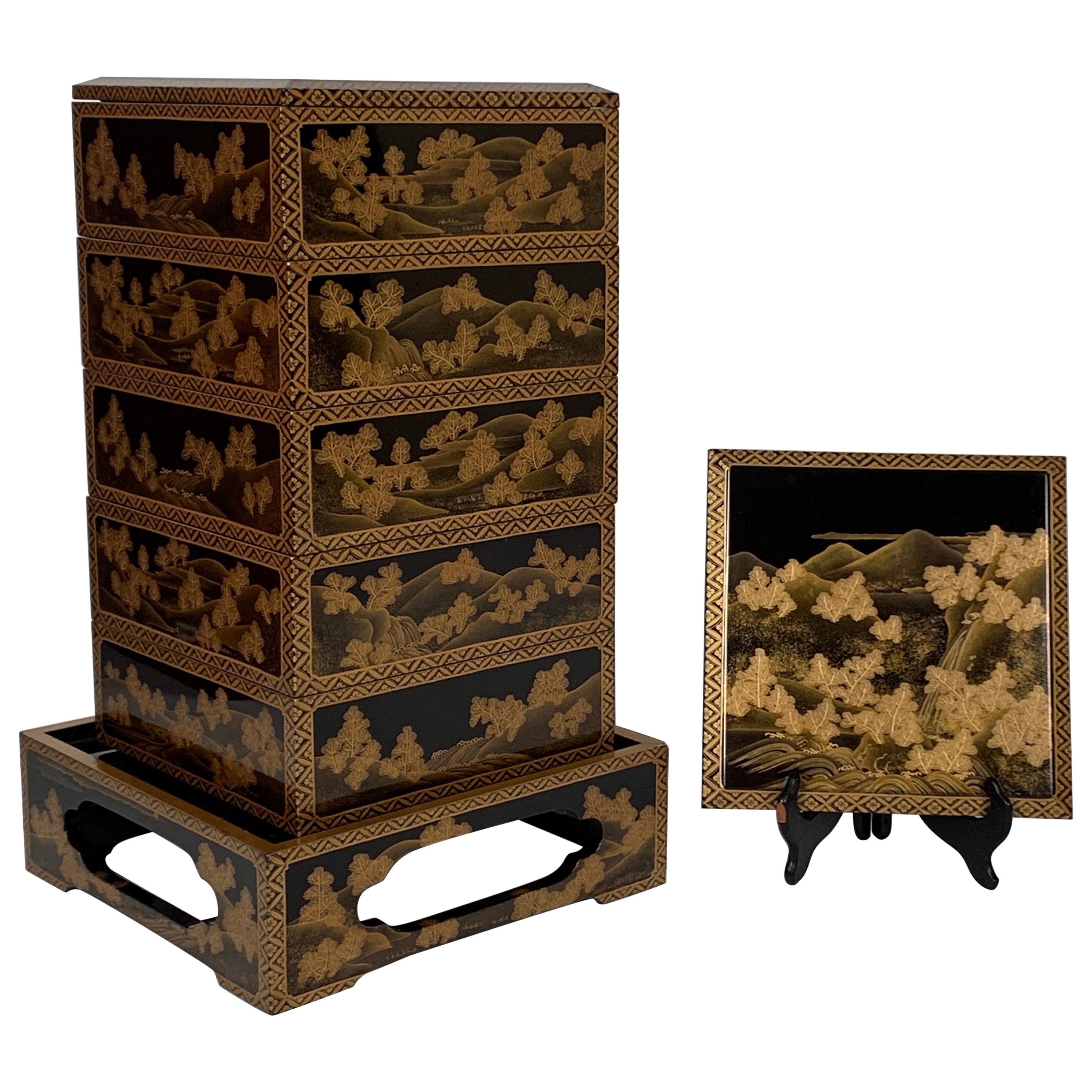
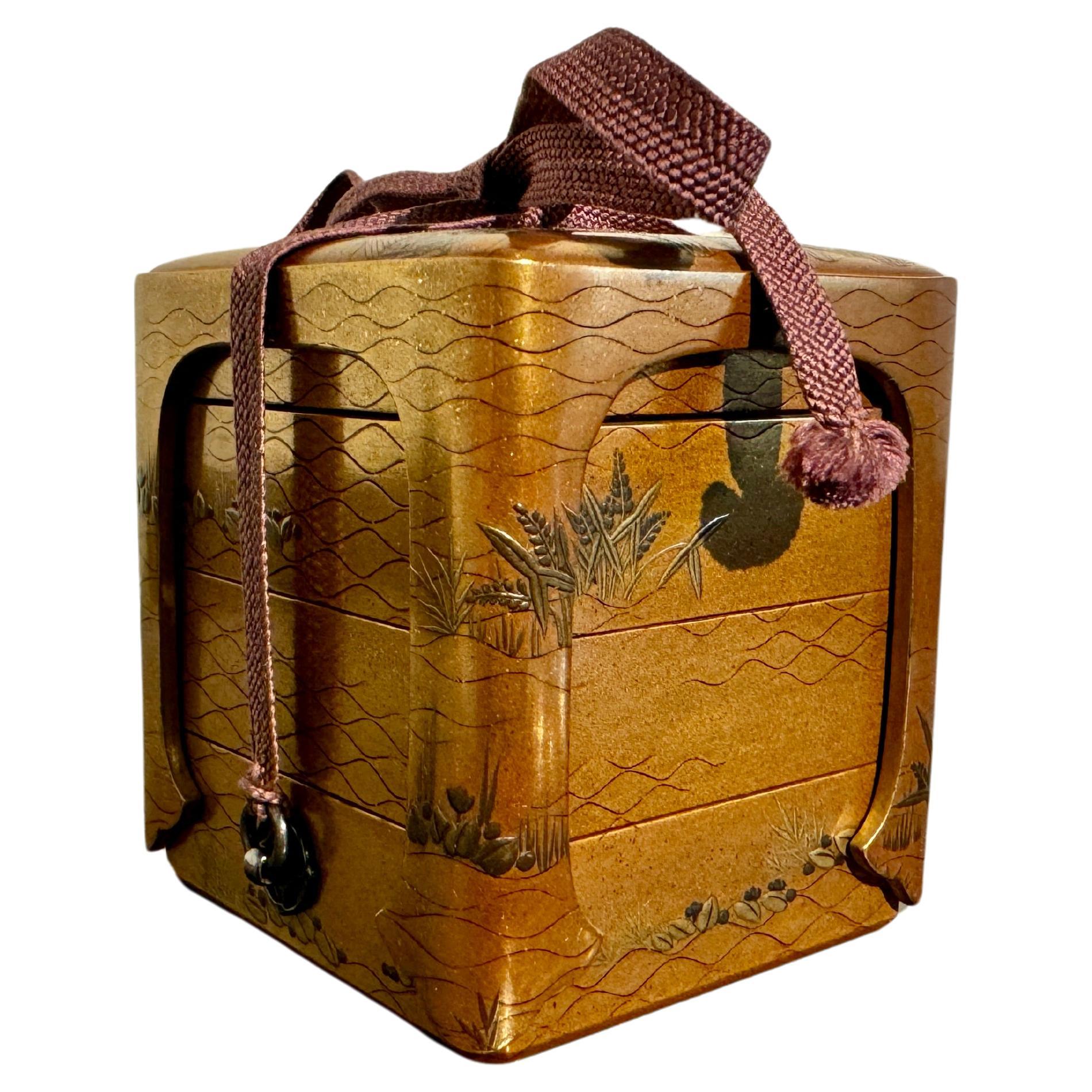
An antique jubako (stack boxes) with five tiers in an elongated octagon shape circa 19th century (end of Edo or beginning of Meiji period). jubako was traditionally used to store and carry foods in Edo time, often as part of the accoutrement with a larger set, often for picnics of the wealthy and noble families. The jubako on offer here is decorated with a wide range of exquisite motifs using both hiramakie and takamakie techniques. Two boxes displays floral and leave design on the background of a flowing creek. Two boxes was decorated with fan painting with stunning details of various motifs, on a background of an octagonal turtle back pattern with a four-petal fleur. The top tier features festival tents with flying birds. The top lid showcase a lion (Shishi in Japanese) centered in a floral border. The body of the Shishi was created using Togidashi burnish technique to achieve a dimensional visual effect. The maki-e design was done with extradentary details and mastery. The interior of the box is finished in a vermilion lacquer in keeping with its function as food vessels.
- Dimensions:Height: 11 in (27.94 cm)Width: 7 in (17.78 cm)Depth: 5.8 in (14.74 cm)
- Style:Japonisme (Of the Period)
- Materials and Techniques:
- Place of Origin:
- Period:
- Date of Manufacture:19th Century
- Condition:Wear consistent with age and use. Minor losses. Some small chips and losses along the edges, mostly on the lid as shown. Some stable crack on the corners due to age, general wear and minute losses on surface as expected.
- Seller Location:Atlanta, GA
- Reference Number:1stDibs: LU945022316562
About the Seller
4.9
Platinum Seller
Premium sellers with a 4.7+ rating and 24-hour response times
Established in 2006
1stDibs seller since 2010
588 sales on 1stDibs
Typical response time: <1 hour
- ShippingRetrieving quote...Shipping from: Atlanta, GA
- Return Policy
More From This Seller
View AllJapanese Lacquer Ryoshibako Document Box Meiji Period
Located in Atlanta, GA
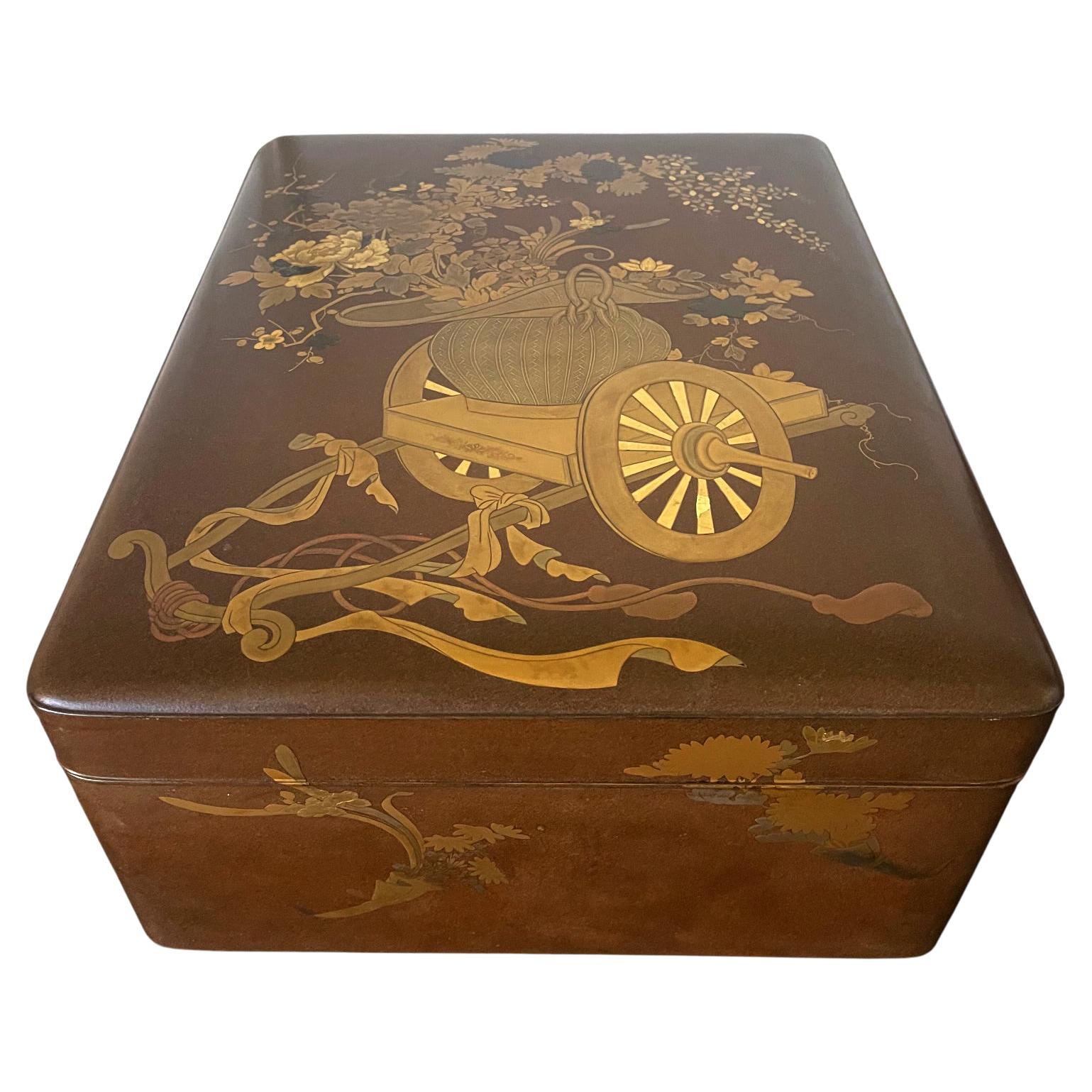
A large Japanese lacquer box with elaborate Maki-e design from Meiji period, (mid-late 19th century). The generous size of the box was reser...
Category
Antique 19th Century Japanese Japonisme Lacquer
Materials
Wood, Lacquer
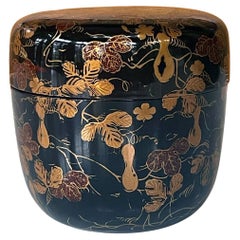
Japanese Lacquered Maki-E Natsume in Kodaiji Style
Located in Atlanta, GA
A Japanese lacquered tea caddy (known as Natsume) with fine Maki-e decoration circa 18-19th century Edo to Meiji period. The large-sized nat...
Category
Antique 19th Century Japanese Meiji Lacquer
Materials
Wood, Lacquer
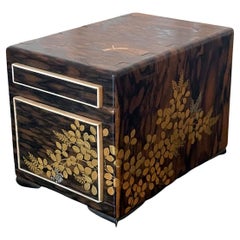
Fine Miniature Japanese Kodansu with Lacquer Inlays
Located in Atlanta, GA
A fine Japanese miniature kodansu constructed from Kaki wood (Persimmon) circa 19th century, late Meiji period. With its expressive exotic wood grains and exposed tenon construction,...
Category
Antique Late 19th Century Japanese Meiji Lacquer
Materials
Wood
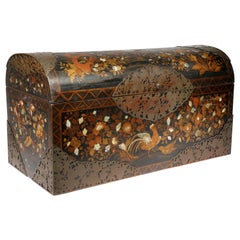
Antique Japanese Lacquer and Inlay Box from Ryukyu Island
Located in Atlanta, GA
A lacquer presentation box with mother-of-pearl inlays from Japanese Ryukyu Islands circa 17-18th century. The lidded box in rectangular form with rounded corner is a classic example...
Category
Antique 18th Century Japanese Japonisme Lacquer
Materials
Mother-of-Pearl, Lacquer

Japanese Namban Lacquer and Inlay Coffer Momoyama Period
Located in Atlanta, GA
A rare Japanese Namban Lacquer domed coffer circa 1570-1610s of Azuchi-Momoyama to early Edo period. These types of lacquerware were made for export to ...
Category
Antique 16th Century Japanese Japonisme Lacquer
Materials
Wood, Lacquer
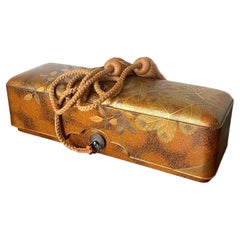
Japanese Lacquer Maki-E Scroll Box Fubako by Kansonsai Edo Period
Located in Atlanta, GA
A Japanese lacquered wood fubako (a box to store document or small scroll painting) circa late 18th century of Edo period. The rectangular box features a deep lid with rounded corners and recessed mid-edge and a lower box with two bronze medallion rings and tasseled silk ties. The surface of the fubako was elaborately decorated with hiramaki-e and a low takamaki-e on a mottled Mura-nashiji background. The motifs on the lid depict branches of Japanese pine with finely rendered needles on the lower part; on the upper part, it showcases fruited persimmon branches. Two different shades of gold fundame were used to contrast the design and augmented by scattered gold kirigane to highlight some of the leaves. The design continues and cascades down to all sides of the lid as well as the walls of the box. The two bronze medallions appear original to the box and the silk ties show significant fading from the age. This Fine fubako is signed on the lower wall "Kanshosai" in Kanji with a kao mark. All the trims were finished in gold fundame and the interiors a dense nashiji in gold.
Kanshosai is the mark of the distinguished lacquer artist Lizuka Toyo I who also signed his work "Toyosai". He was active in the second half of the 18th century during Edo period, employed by Hachisuka Shigeyoshi (1738-1801), daimyo of Awa on Shikoku Island. Although most survived work bearing his marks are inros, he was also known to decorated trays and other larger objects...
Category
Antique Late 18th Century Japanese Edo Lacquer
Materials
Wood, Lacquer
You May Also Like
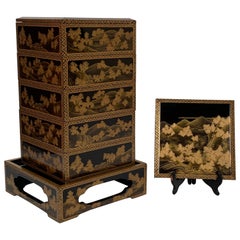
Japanese Maki-e Lacquer Stacking Box, Jubako, Meiji Period, Japan
Located in Austin, TX
A fine and impressive Japanese gold maki-e decorated black lacquer five-tier jubako with presentation tray, two lids, and the original tomobako storage box, Meiji period, late 19th c...
Category
Antique Late 19th Century Japanese Meiji Lacquer
Materials
Lacquer
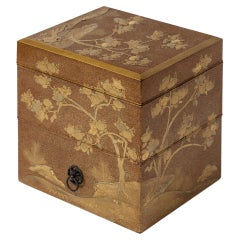
Japanese Lacquered Tebako
Box
Located in PARIS, FR
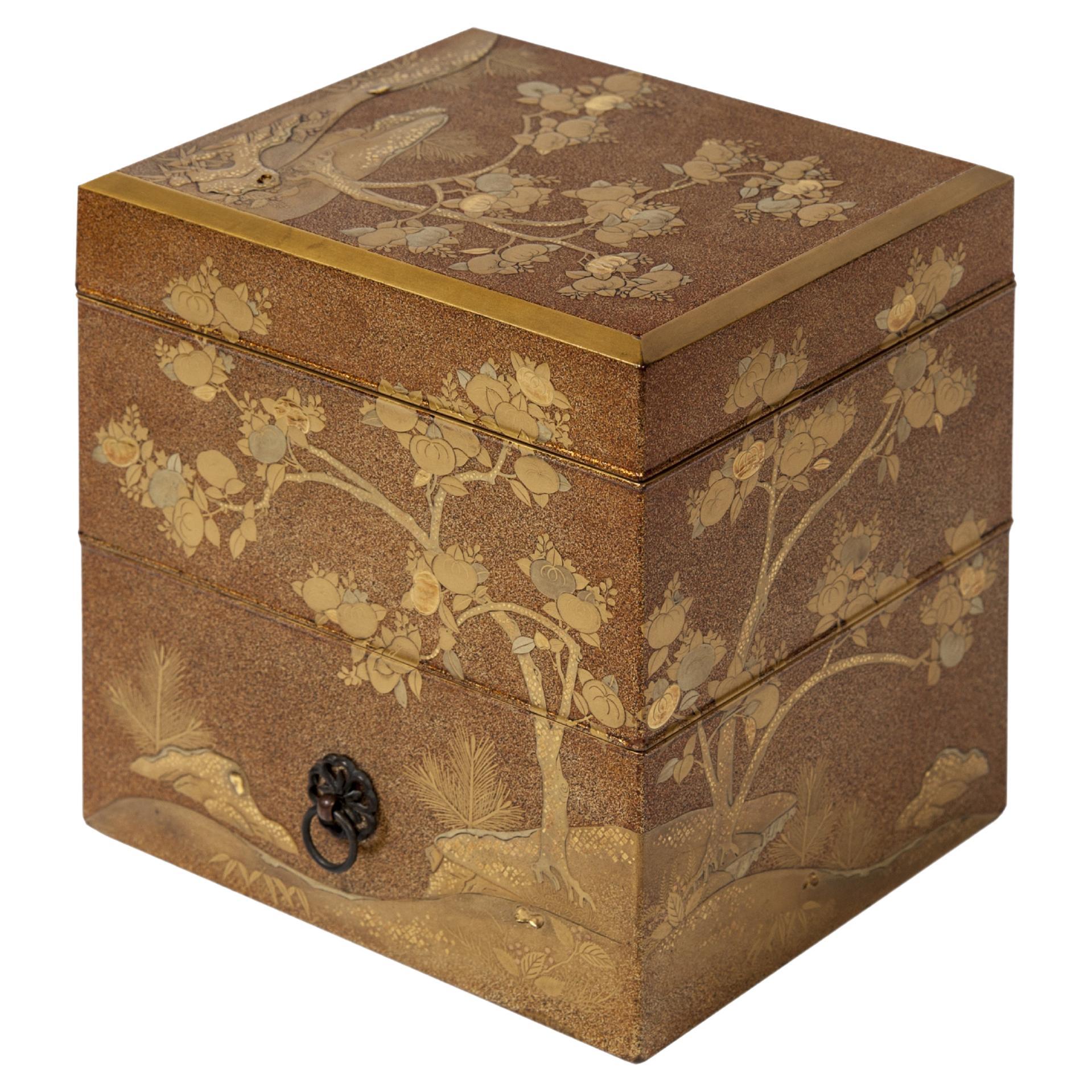
Tebako box with three compartments in golden and nashi-ji lacquer, decorated with golden, red, and kirigane lacquer, golden persimmon tree leaves, among rocks. The compartments are of increasing size from the top. The decoration is in continuity.
Persimmon has been cultivated in southern China for more than 2500 years and is believed to have been introduced to Japan in the 8th century. The veneer is a tree with very hard wood, similar to ebony. According to a legend, one specimen survived the atomic bombing of Nagasaki on August 9, 1945, close to the epicenter. It is therefore in Japan a symbol of strength and longevity. It is also the national fruit of the country. It is eaten as a traditional dish during New Year's Day celebrations.
Tebako literally means "portable box...
Category
Antique 1860s Japanese Lacquer
Materials
Lacquer
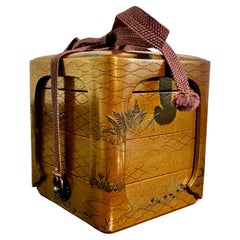
Japanese Stacking Incense Box, Ju-Kobako, Meiji Period, Mid 19th century, Japan
Located in Austin, TX
An exquisite small Japanese maki-e lacquer stacking box for incense and accessories, ju-kobako, late Edo or early Meiji Period, mid 19th century, Japan.
Crafted in maki-e lacquer an...
Category
Antique Mid-19th Century Japanese Meiji Lacquer
Materials
Silver
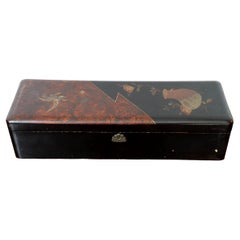
Japanese Maki-e Lacquered Box, Ric.049
Located in Norton, MA
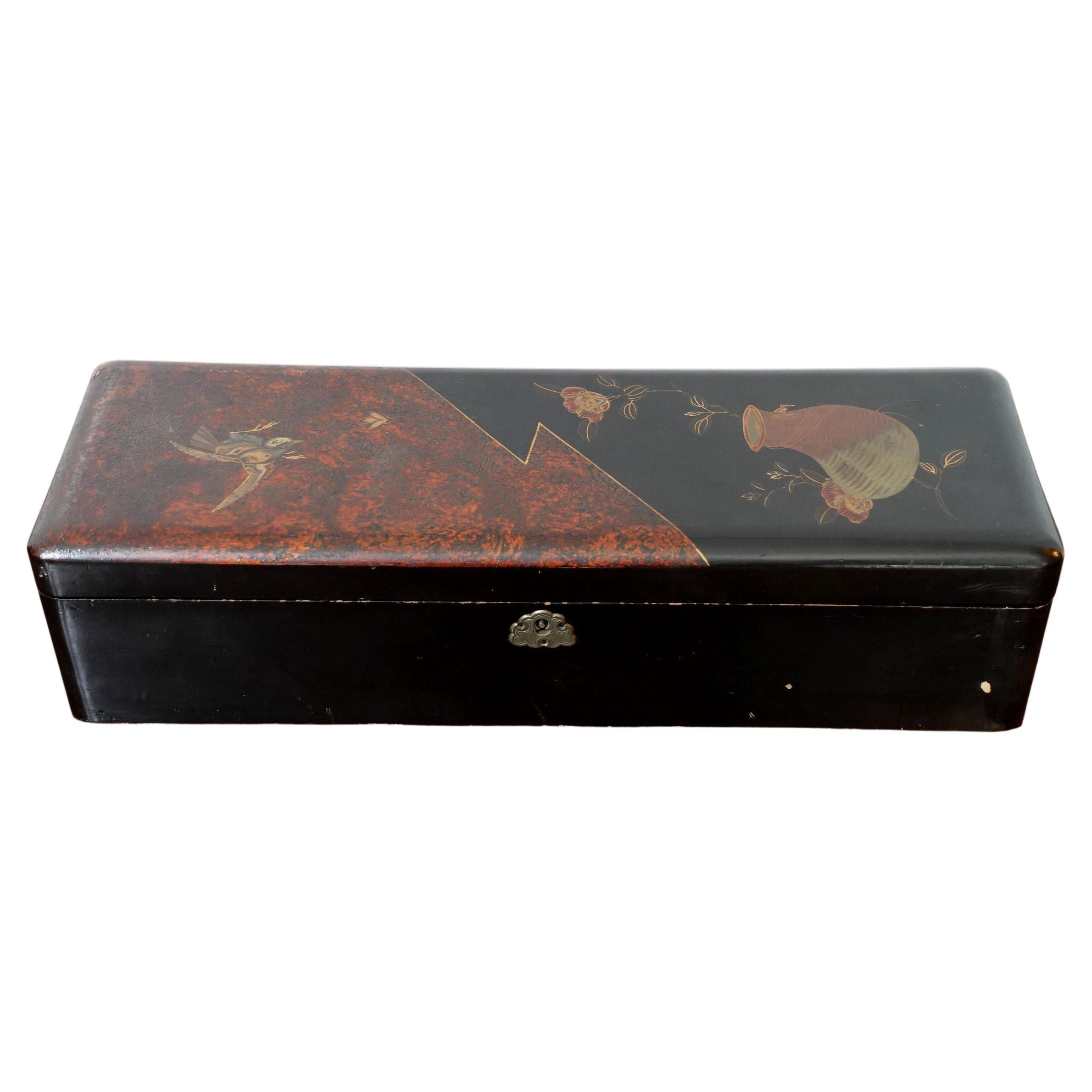
Japan, Edo to Meiji period, a long rectangular document box with hinged cover, decorated with a bird and a floral basket,
The locker is not functioning.
Category
Antique 19th Century Japanese Decorative Boxes
Materials
Lacquer
Japanese Lacquer Box, 1900
Located in Marseille, FR
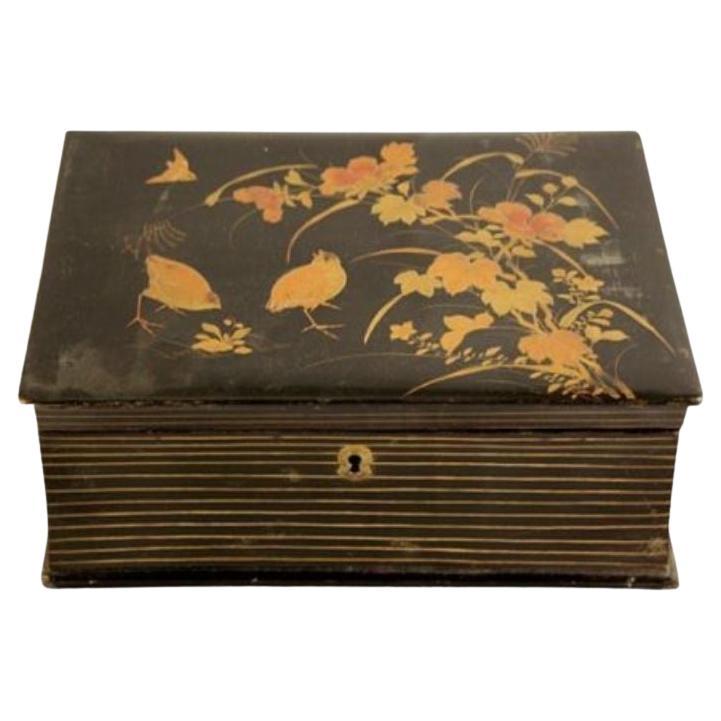
Japanese lacquer box 1900 decorated with sparrows, gold lacquer on a black background of very good quality, good general condition. The dimensio...
Category
Antique 19th Century Decorative Boxes
Materials
Lacquer
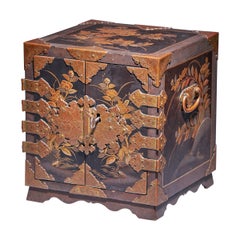
Important Early Edo Period 17th Century Miniature Japanese Lacquer Cabinet
Located in Oxfordshire, United Kingdom
A Rare and Important 17th Century Miniature Japanese Lacquer Cabinet, 19 cm H, 17cm W, 16.5cm D.
The exquisitely decorated cabinet depicts fine floral raised scenes to each side. l...
Category
Antique 17th Century Decorative Boxes
Materials
Lacquer