Items Similar to Japanese Maki-e Lacquer Stacking Box, Jubako, Meiji Period, Japan
Want more images or videos?
Request additional images or videos from the seller
1 of 15
Japanese Maki-e Lacquer Stacking Box, Jubako, Meiji Period, Japan
$4,800
£3,658.64
€4,219.86
CA$6,817.44
A$7,326.05
CHF 3,930.85
MX$86,296.41
NOK 49,426.10
SEK 45,150.42
DKK 31,537.58
About the Item
A fine and impressive Japanese gold maki-e decorated black lacquer five-tier jubako with presentation tray, two lids, and the original tomobako storage box, Meiji period, late 19th century, Japan.
The jubako, or stacking box, is sumptuously decorated in gold maki-e on a fine black lacquer ground with a design of mountains and pine, a popular motif for the New Year. The two covers continuing the mountain and pine motif to the exterior. The interior decorated with cranes flying amongst bamboo on a nashiji ground.
The square stacking boxes sit upon a slightly wider, tall presentation or carrying tray.
The original brown lacquered storage box, called a tomobako, features a large ivy leaf mon, or family crest to the top. This particular mon, called the tsuta, is associated with the Matsunaga clan. One side of the tomobako inscribed with a description of the jubako, "Looking at Pine and Mountains".
A jubako is a stacked set of boxes used to present and serve packed lunches, bento, usually in celebration of the New Year.
Measurements stated are for the tomobako storage box. Individual measurements are as follows:
Base: 12" x 12" x 4
Bento box (each): 9.75" x 9.75" x 3.25"
Fully stacked, the set stands 21" tall.
- Dimensions:Height: 24 in (60.96 cm)Width: 14 in (35.56 cm)Depth: 14 in (35.56 cm)
- Style:Meiji (Of the Period)
- Materials and Techniques:
- Place of Origin:
- Period:
- Date of Manufacture:Late 19th Century
- Condition:Wear consistent with age and use. In overall very good condition. The exterior box with scuff and scratches as expected with age. The lacquer in very good condition, with minimal signs of wear. A few minuscule chips around the edge of the stand.
- Seller Location:Austin, TX
- Reference Number:1stDibs: LU894721403112
About the Seller
5.0
Platinum Seller
Premium sellers with a 4.7+ rating and 24-hour response times
Established in 2001
1stDibs seller since 2010
356 sales on 1stDibs
Typical response time: 1 hour
- ShippingRetrieving quote...Shipping from: Austin, TX
- Return Policy
More From This Seller
View AllJapanese Stacking Incense Box, Ju-Kobako, Meiji Period, Mid 19th century, Japan
Located in Austin, TX
An exquisite small Japanese maki-e lacquer stacking box for incense and accessories, ju-kobako, late Edo or early Meiji Period, mid 19th century, Japan.
Crafted in maki-e lacquer an...
Category
Antique Mid-19th Century Japanese Meiji Lacquer
Materials
Silver
Japanese Lacquer Smoking Box, Tabako Bon, Edo Period, 19th Century
Located in Austin, TX
A very fine Japanese maki-e lacquer decorated tabako bon, or smoking box, late Edo Period, mid-19th century, Japan.
The elegant smoking box of black lacquer decorated with a wonderful gold lacquer takamaki-e design of a gnarled and elegantly twisted plum tree with branches in full bloom. A border of golden cranes in flight to the top.
The smoking box, called a tabako bon, is comprised of an open section at the top with inset with two cylindrical metal canisters...
Category
Antique Mid-19th Century Japanese Edo Lacquer
Materials
Lacquer
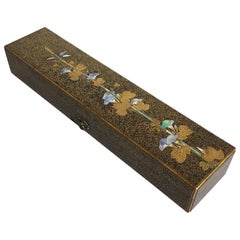
Japanese Edo Period Igarashi School Long Lacquer Box, Tanzaku-Bako
Located in Austin, TX
A stunning Japanese Edo period lacquer tanzakubako, box for poem cards, late 18th-early 19th century, Edo Period, Japan.
Attributed to the Igarashi School, this box is masterfully ...
Category
Antique Early 19th Century Japanese Edo Lacquer
Materials
Mother-of-Pearl, Lacquer
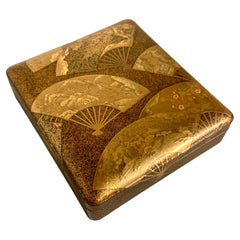
Japanese Maki-e Lacquer Document Box, Edo Period, early 19th Century, Japan
Located in Austin, TX
A spectacular Japanese maki-e lacquer lidded box, possibly a writing box, suzuribako, decorated with images of folding fans, ogi, Edo Period, earl...
Category
Antique Early 19th Century Japanese Edo Lacquer
Materials
Coral
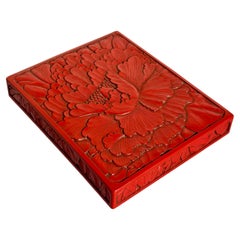
Japanese Kamakura Bori Lacquer Presentation Box, Showa Era, mid 20th century
Located in Austin, TX
An attractive Japanese red lacquered Kamakura-bori inscribed presentation box, featuring peony, Showa Era, mid 20th century, Japan.
The low box and cover carved with a bold and stri...
Category
Vintage 1960s Japanese Showa Lacquer
Materials
Softwood, Lacquer
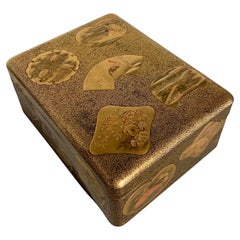
Large Japanese Lacquer Document Box, Ryoshibako, Edo/Meiji period, Japan
Located in Austin, TX
A large and magnificently decorated Japanese lacquer document box, ryoshibako, signed Umeboshi/Baikyo, late Edo or early Meiji Period, mid 19th century, Japan.
The large document box, ryoshibako, of tall, rectangular shape with rounded corners, and fitted with an inrobuta (flush-fitting) cover with beveled edges. The exterior of this exquisite box is decorated all over with fifteen different raised reserves shaped as uchiwa (paddle) fans against a lush and intricate krikane ground imitating shagreen.
The uchiwa shaped reserves all of takamaki-e, and exquisitely painted with designs of animals, flowers, and landscapes in silver, gold, maki-e, hiramaki-e, and takamaki-e, with kirikane, nashiji, and polychrome embellishments, upon gold lacquer fudame grounds.
The interior of the lid is nothing short of spectacular, featuring a large design of a magnificent and beautifully detailed rooster and hen with chicks gathered around a lazy stream. Large stalks of chrysanthemum bloom behind them. All against an ethereal nashiji ground.
The cover of the box features five reserves:
1. Three minogame (turtles with long tails), symbolizing longevity
2. "Narihira Crossing the Sumida" from The Tales of Ise...
Category
Antique 1860s Japanese Meiji Lacquer
Materials
Softwood, Lacquer
You May Also Like
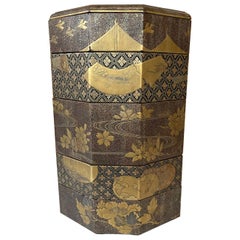
Japanese Maki-e Lacquer Stack Box Jubako
Located in Atlanta, GA
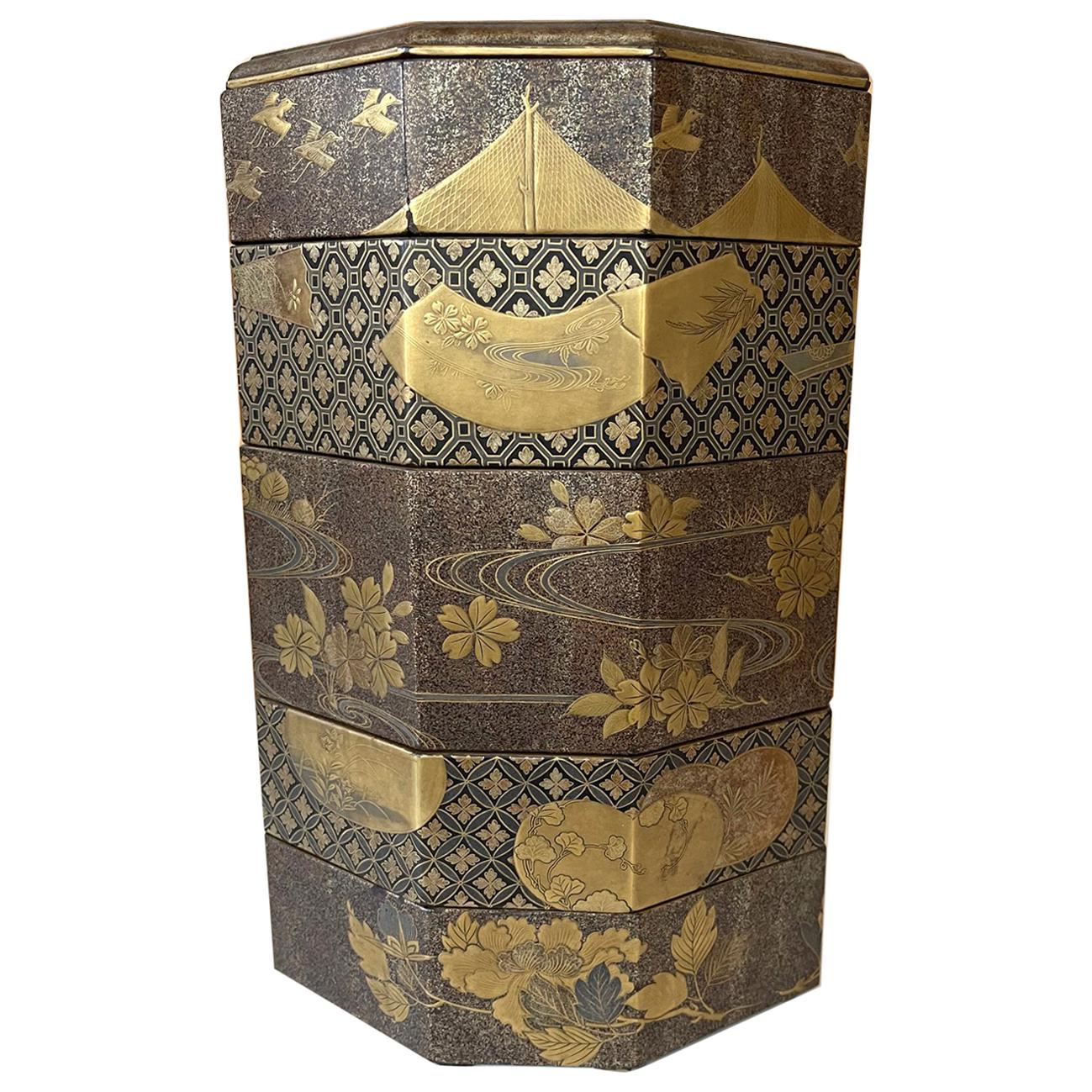
An antique jubako (stack boxes) with five tiers in an elongated octagon shape circa 19th century (end of Edo or beginning of Meiji period). jubako was traditionally used to store and...
Category
Antique 19th Century Japanese Japonisme Lacquer
Materials
Wood, Lacquer
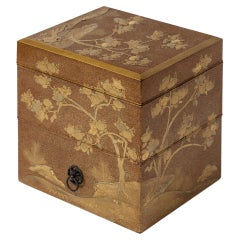
Japanese Lacquered Tebako
Box
Located in PARIS, FR
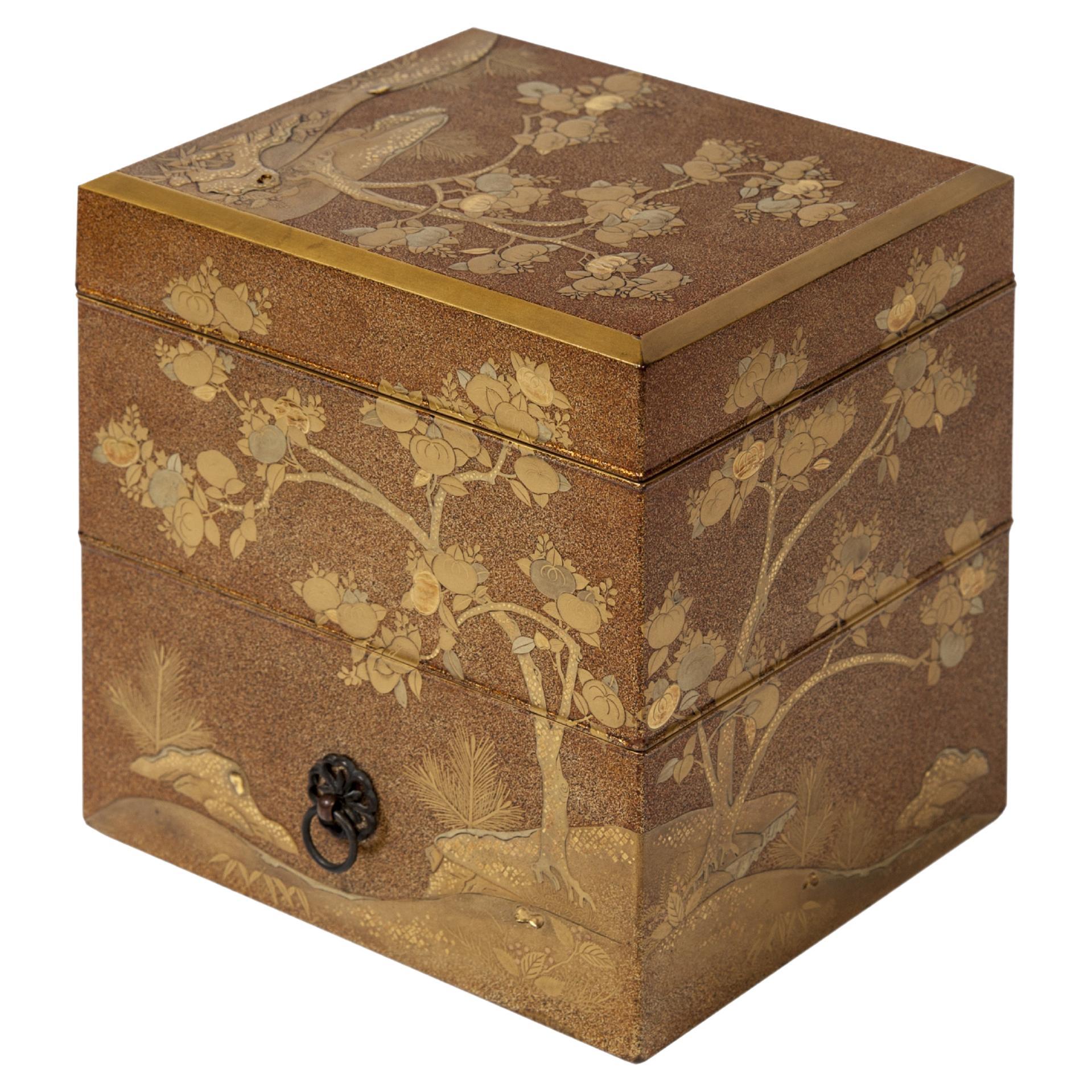
Tebako box with three compartments in golden and nashi-ji lacquer, decorated with golden, red, and kirigane lacquer, golden persimmon tree leaves, among rocks. The compartments are of increasing size from the top. The decoration is in continuity.
Persimmon has been cultivated in southern China for more than 2500 years and is believed to have been introduced to Japan in the 8th century. The veneer is a tree with very hard wood, similar to ebony. According to a legend, one specimen survived the atomic bombing of Nagasaki on August 9, 1945, close to the epicenter. It is therefore in Japan a symbol of strength and longevity. It is also the national fruit of the country. It is eaten as a traditional dish during New Year's Day celebrations.
Tebako literally means "portable box...
Category
Antique 1860s Japanese Lacquer
Materials
Lacquer
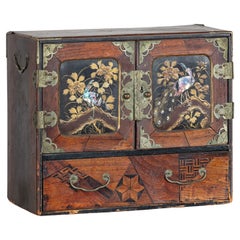
Japanese Lacquer Box with Mother-of-Pearl Inlay and Parquetry Drawers
Located in Yonkers, NY
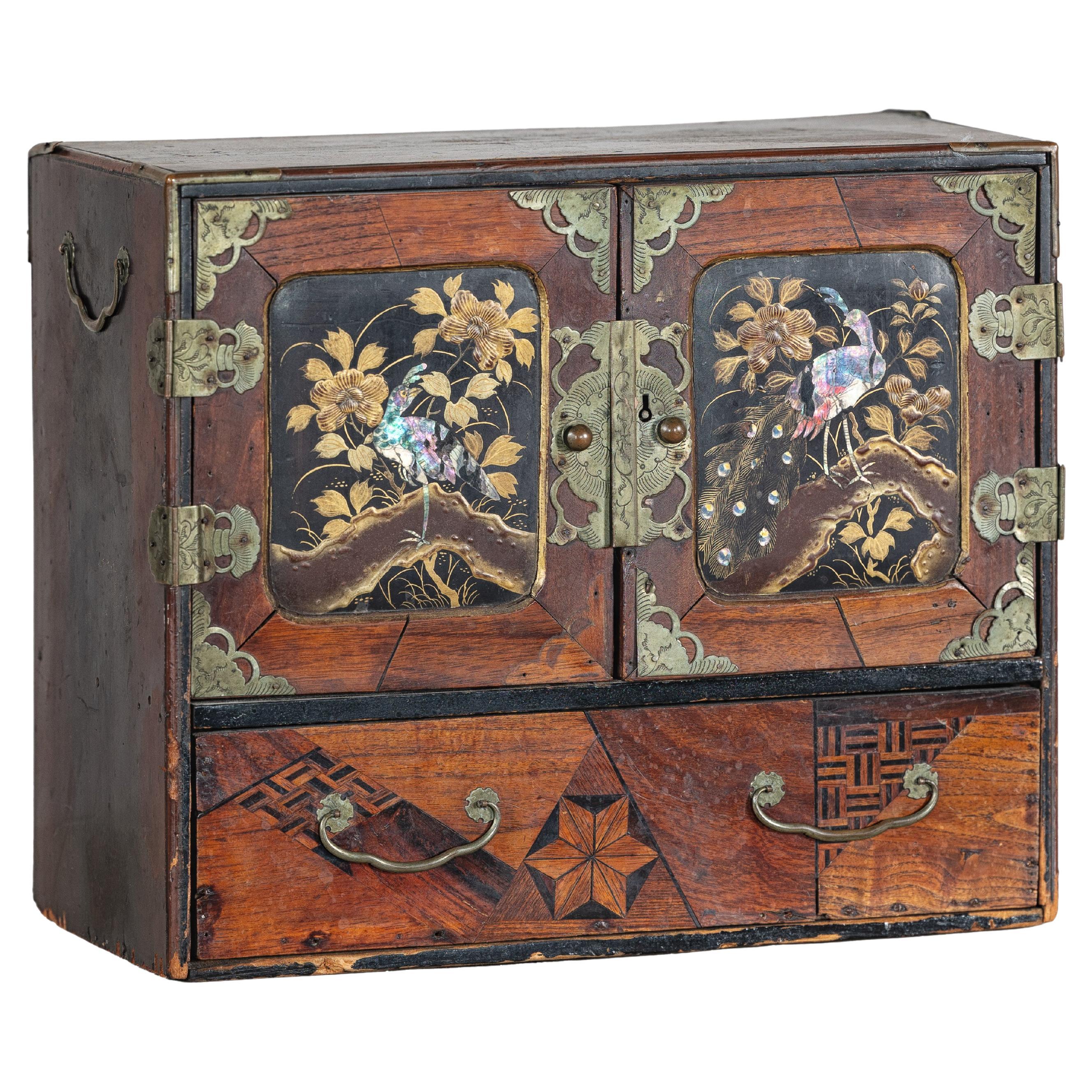
A finely crafted Japanese tabletop cabinet from the early 20th century, this compact storage piece is richly detailed with traditional decorative techniques and export-era flourishes...
Category
Early 20th Century Japanese Meiji Decorative Boxes
Materials
Wood
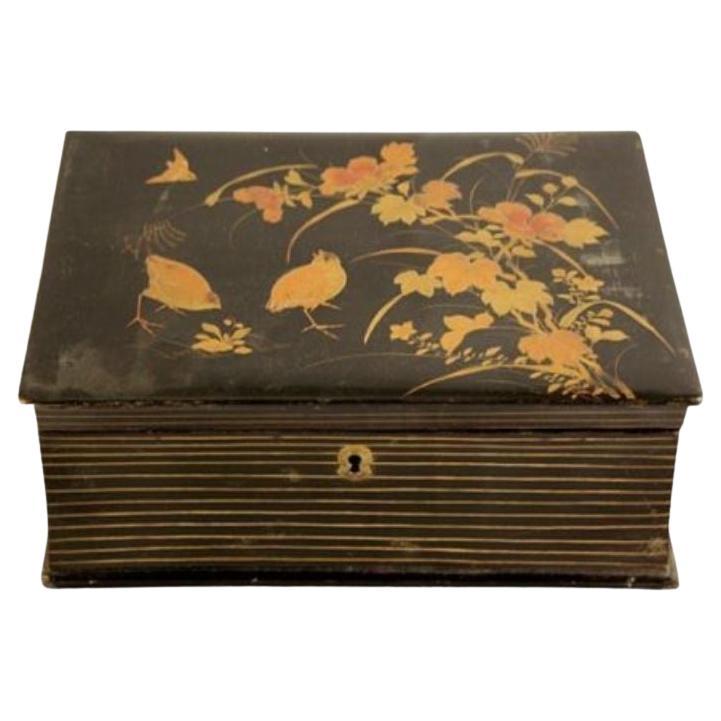
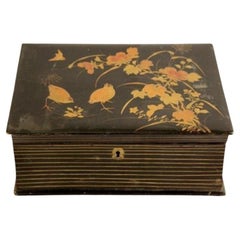
Japanese Lacquer Box, 1900
Located in Marseille, FR
Japanese lacquer box 1900 decorated with sparrows, gold lacquer on a black background of very good quality, good general condition. The dimensio...
Category
Antique 19th Century Decorative Boxes
Materials
Lacquer
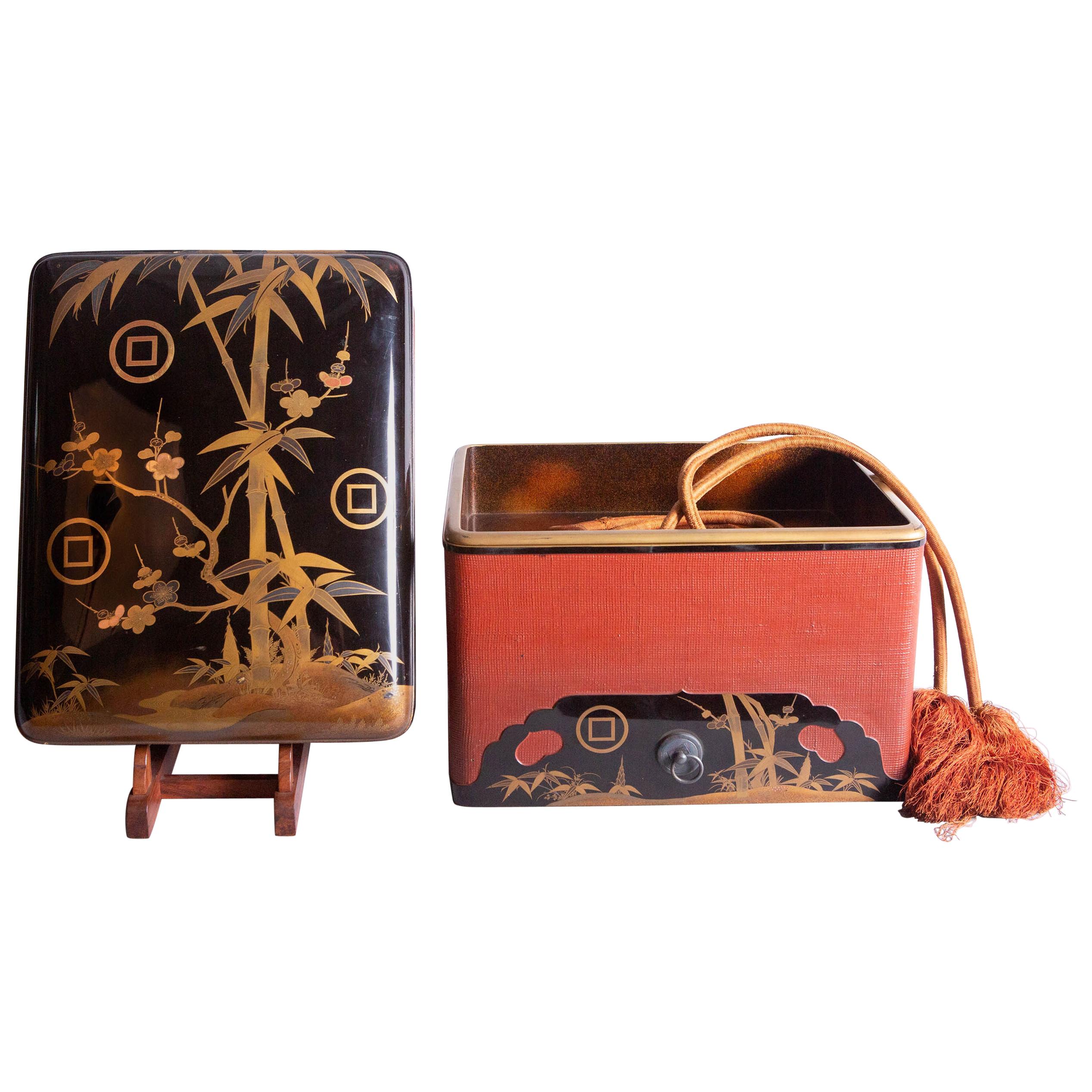
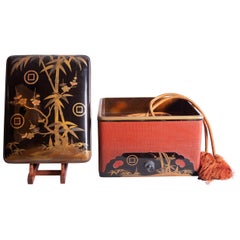
Japanese Lacquer Box with Bamboo, Plum, and Family Crest
Located in Hudson, NY
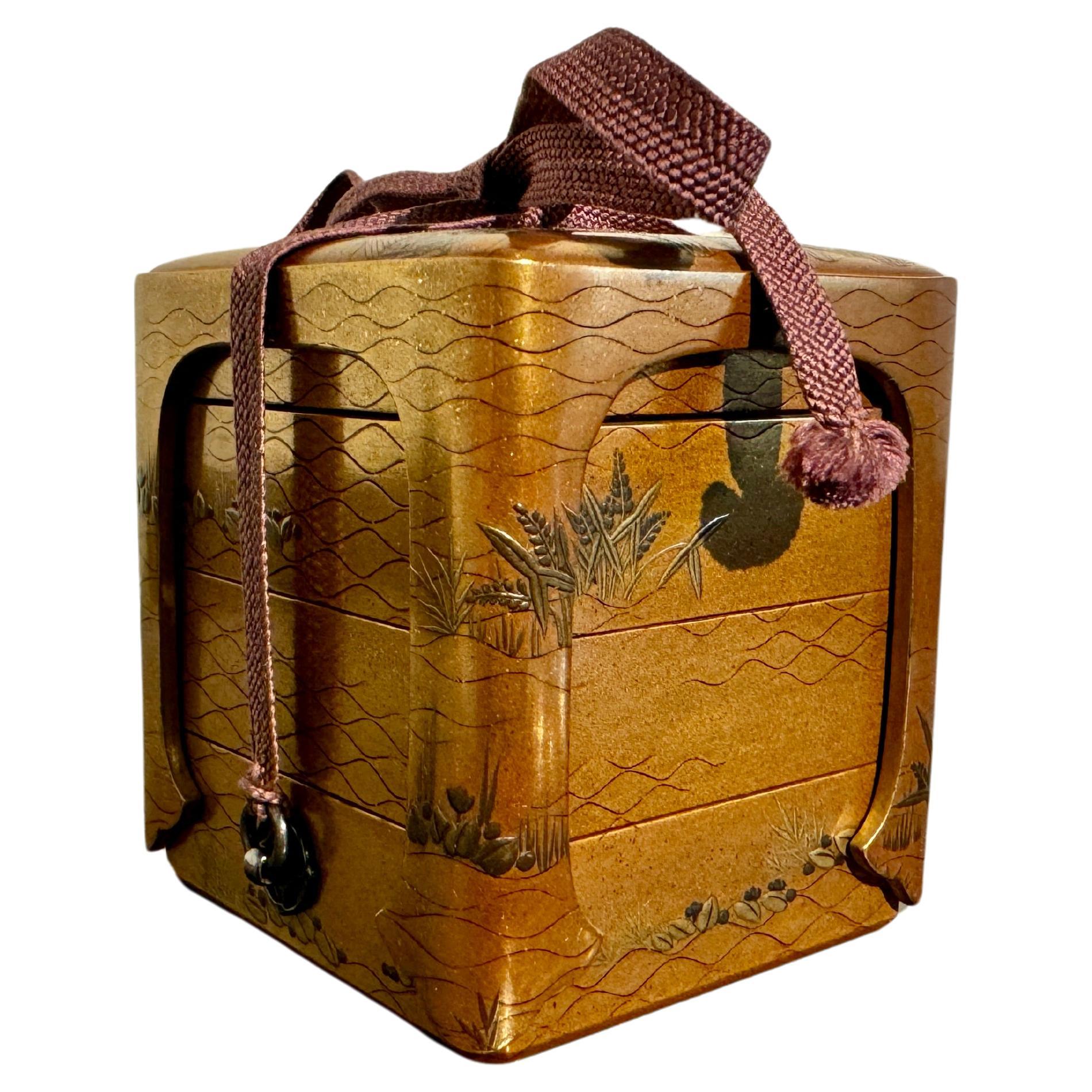
Made with heavy gold flakes and lacquered fabric on wood, with cutout heart designs. Has an interior tray, and comes with silk tasseled ties. (Does not come with presentation stand).
Category
Antique 19th Century Japanese Lacquer
Materials
Lacquer
Antique Japanese Lacquer and Inlay Box from Ryukyu Island
Located in Atlanta, GA
A lacquer presentation box with mother-of-pearl inlays from Japanese Ryukyu Islands circa 17-18th century. The lidded box in rectangular form with rounded corner is a classic example...
Category
Antique 18th Century Japanese Japonisme Lacquer
Materials
Mother-of-Pearl, Lacquer

More Ways To Browse
Japanese Lacquer Boxes
Call Box
Maki E
Flying Cranes
Japanese Meiji Period Box
Meiji Lacquer Box
Jubako Box
Japanese Jubako
Antique Bento Box
Mother Of Pearl Inlay Lacquer
Japan Edo Lacquer
Antique Asian Mother Of Pearl Furniture
Asian Black And Gold Decoration
Tray Japan
Maki E
Antique Cinnabar
Cinnabar Lacquer
Cinnabar Furniture