Items Similar to Japanese Maki-e Lacquer Tray Box with Cutout Design
Want more images or videos?
Request additional images or videos from the seller
1 of 21
Japanese Maki-e Lacquer Tray Box with Cutout Design
$2,200
£1,667.13
€1,921.18
CA$3,111.41
A$3,346.06
CHF 1,789.14
MX$40,352.50
NOK 22,624.94
SEK 20,614.24
DKK 14,355.48
About the Item
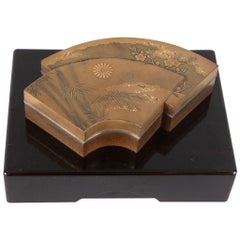
A Japanese lacquer box with lid and an inner tray decorated with Maki-e on a dense nashiji background. The fine box was likely made circa 1920-30s during the Tashio period and likely used for tea ceremony. The low relief hiramaki-e depicts a gentle hilly landscape with flowering bushes with silver highlight, grasses, ferns and pines in the distant. The design was intentionally sparse, with a poetic and painterly composition. What's unusual about the box is that there is cut-out design of four characters on the lid and the wall respectively. The two words read "Deep Thought" on the lid and "Philosophical Study" on the wall. The pieced words were traced with gold fundame that renders the characters a highlighted dimension. There are also two gold maki-e characters on the side of the box "intention".
The fitted tray has a leaf motif design. The interior and base were finished in a dense nashiji.
- Dimensions:Height: 4.25 in (10.8 cm)Width: 7.25 in (18.42 cm)Depth: 3.75 in (9.53 cm)
- Style:Taisho (Of the Period)
- Materials and Techniques:
- Place of Origin:
- Period:
- Date of Manufacture:20th century
- Condition:Repaired: A small professional restoration about 0.2 inch on one of the strokes of the character as shown. Wear consistent with age and use. Overall good condition with expected light surface wear including small losses on the fundame along the rim, shelf wear on the base.1500.
- Seller Location:Atlanta, GA
- Reference Number:1stDibs: LU945037104812
About the Seller
4.9
Platinum Seller
Premium sellers with a 4.7+ rating and 24-hour response times
Established in 2006
1stDibs seller since 2010
586 sales on 1stDibs
Typical response time: <1 hour
- ShippingRetrieving quote...Shipping from: Atlanta, GA
- Return Policy
More From This Seller
View AllJapanese Lacquer Ryoshibako Document Box Meiji Period
Located in Atlanta, GA
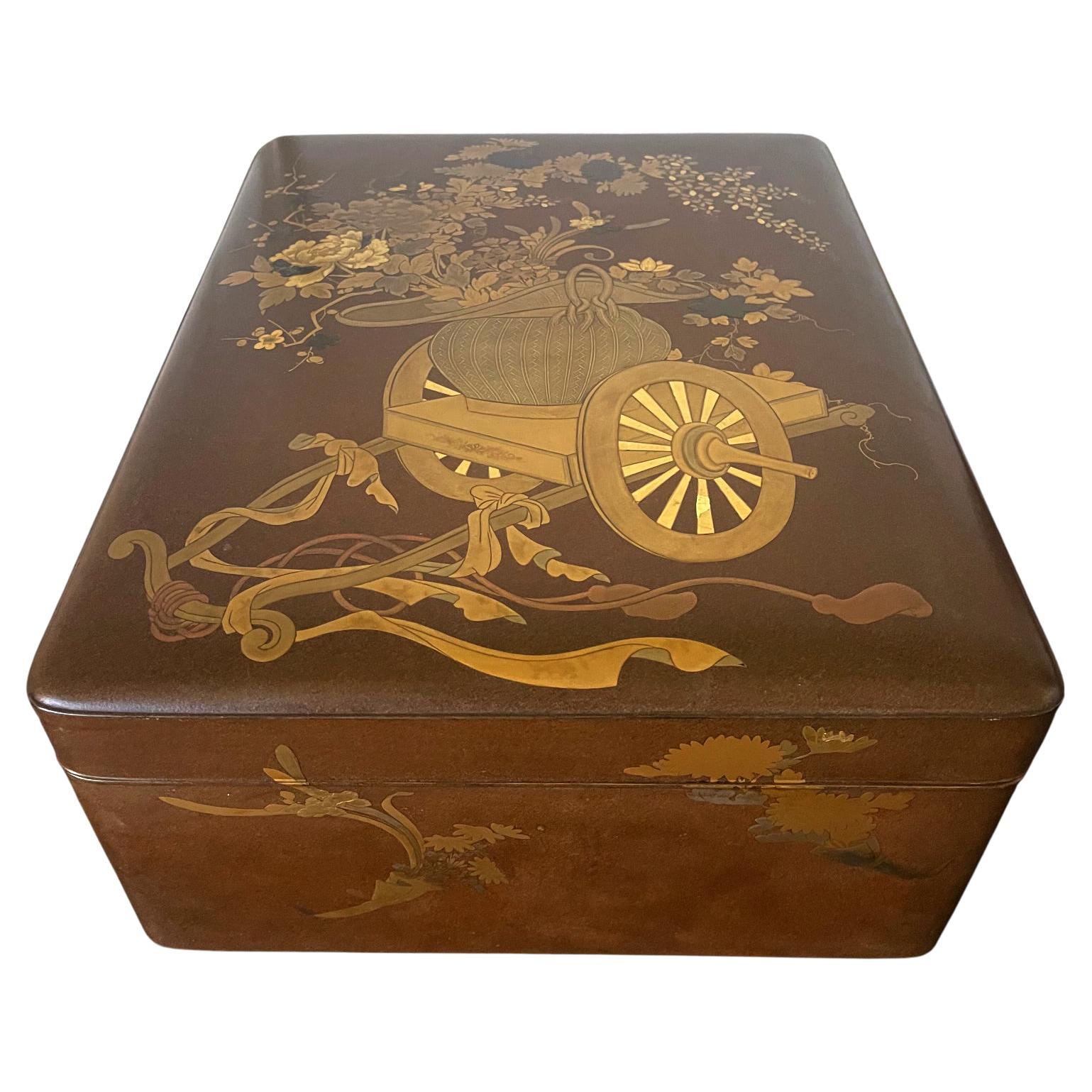
A large Japanese lacquer box with elaborate Maki-e design from Meiji period, (mid-late 19th century). The generous size of the box was reser...
Category
Antique 19th Century Japanese Japonisme Lacquer
Materials
Wood, Lacquer
Japanese Rinpa Style Lacquer Box Meiji Period
Located in Atlanta, GA
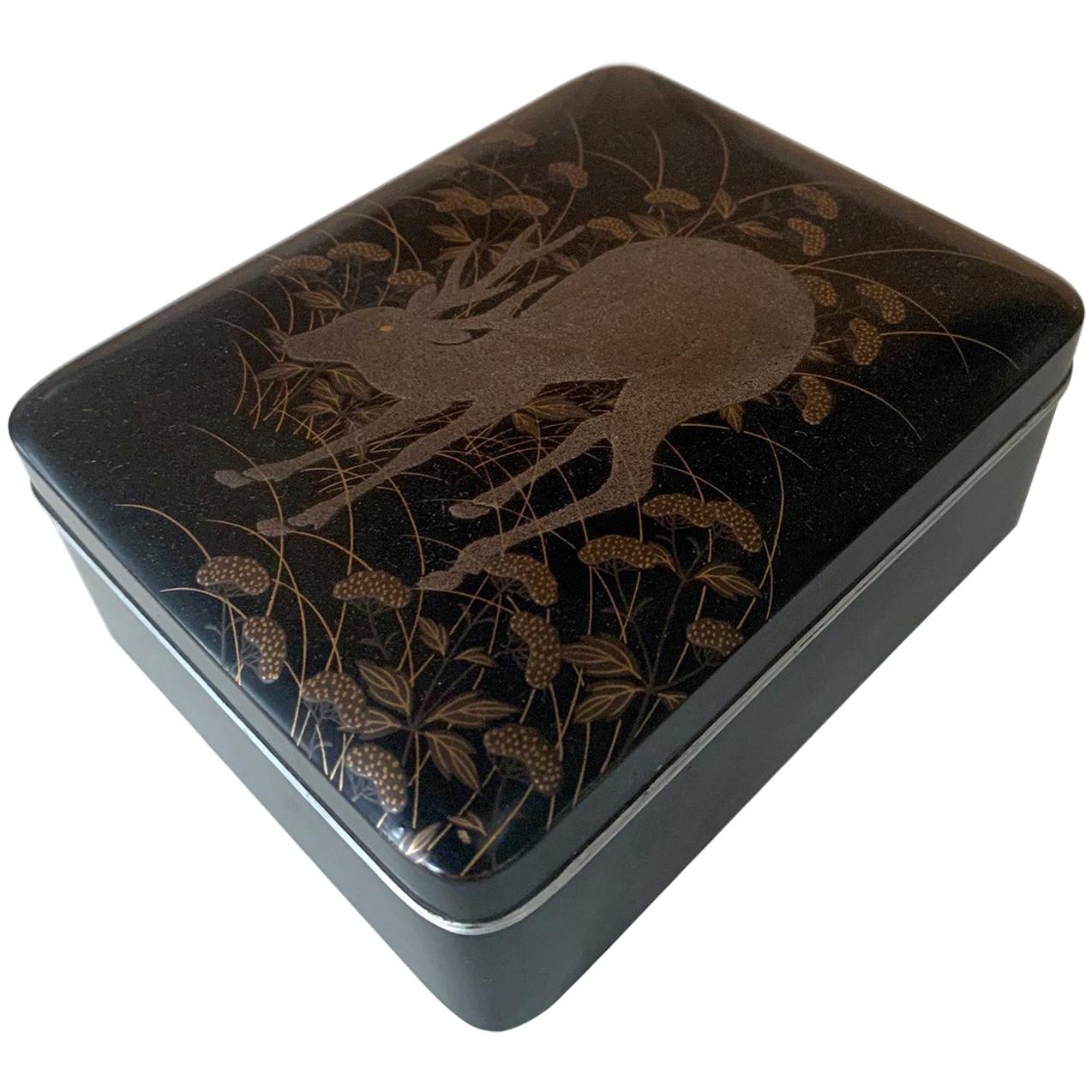
A black lacquer tebako (hand box) with maki-e decoration and silver trim, circa late 19th century, Meiji period. The surface of the lid features a Rinpa style maki-e paint depicting ...
Category
Antique 1890s Japanese Japonisme Lacquer
Materials
Wood, Lacquer
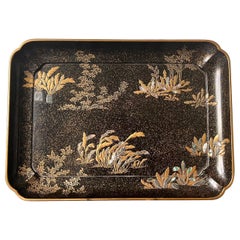
Japanese Lacquer Tray with Maki-e and Inlay Hara Yoyusai Edo Period
Located in Atlanta, GA
A lovely Japanese lacquer rectangular lacquer tray with a slightly scalloped corner and four L shape supporting feet by one of the most celebrated lacquer artist active in Edo period Hara Yoyusai (1772-1845). Yoyusai lived in Edo (Tokyo) and worked under the patronage of Lord Matsudaira. He operated a large workshop and had a very prolific output of lacquer objects. Most survived pieces being inro...
Category
Antique 19th Century Japanese Japonisme Lacquer
Materials
Wood, Lacquer
Antique Japanese Lacquer and Inlay Box from Ryukyu Island
Located in Atlanta, GA
A lacquer presentation box with mother-of-pearl inlays from Japanese Ryukyu Islands circa 17-18th century. The lidded box in rectangular form with rounded corner is a classic example...
Category
Antique 18th Century Japanese Japonisme Lacquer
Materials
Mother-of-Pearl, Lacquer

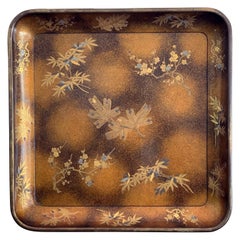
Large Vintage Japanese Maki-e Lacquer Kimono Tray
Located in Atlanta, GA
A large square lacquer presentation tray (likely for kimono) predated 1950 of the Showa period. Elaborately decorated with Maki-e that depicts the prunus blossom, bamboo and needle p...
Category
Vintage 1940s Japanese Japonisme Lacquer
Materials
Wood, Lacquer
Japanese Lacquer Box with Fine Maki-e Decoration Meiji Period
Located in Atlanta, GA
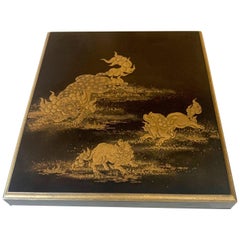
A lacquered wood box with lid from Japan circa 19th century Meiji Period. The finely decorated box was used to store paper slips and small documents on the desk. It is overall finished with black lacquer (kuro) with sparse Mura-Nashiji effect outside and on the top surface of the lid, there are three Komainu, (sometimes known as Shishi or Japanese lions) frolicking and forming a circle in lively motion. Komainu are auspicious animals in Japanese cultures in both Shinto and Buddhism tradition. Originally from China, these animals symbolizes guardians to ward off evil spirits. Hiramaki-e was used in combination with carving and combing to render the lions with various surface textures. A gilt border with an slight angle was given to the lid and even the thin band is decorated with miniature floral scrolls. The interior of the box was finished in a dense nashiji. Underneath the lid, a cluster of peonies open lavishly by two gentle mounts. Takamaki-e (high relief) in both gold and silver were...
Category
Antique Late 19th Century Japanese Japonisme Lacquer
Materials
Wood, Lacquer
You May Also Like
Japanese Maki-e Lacquer Document Box, Edo Period, early 19th Century, Japan
Located in Austin, TX
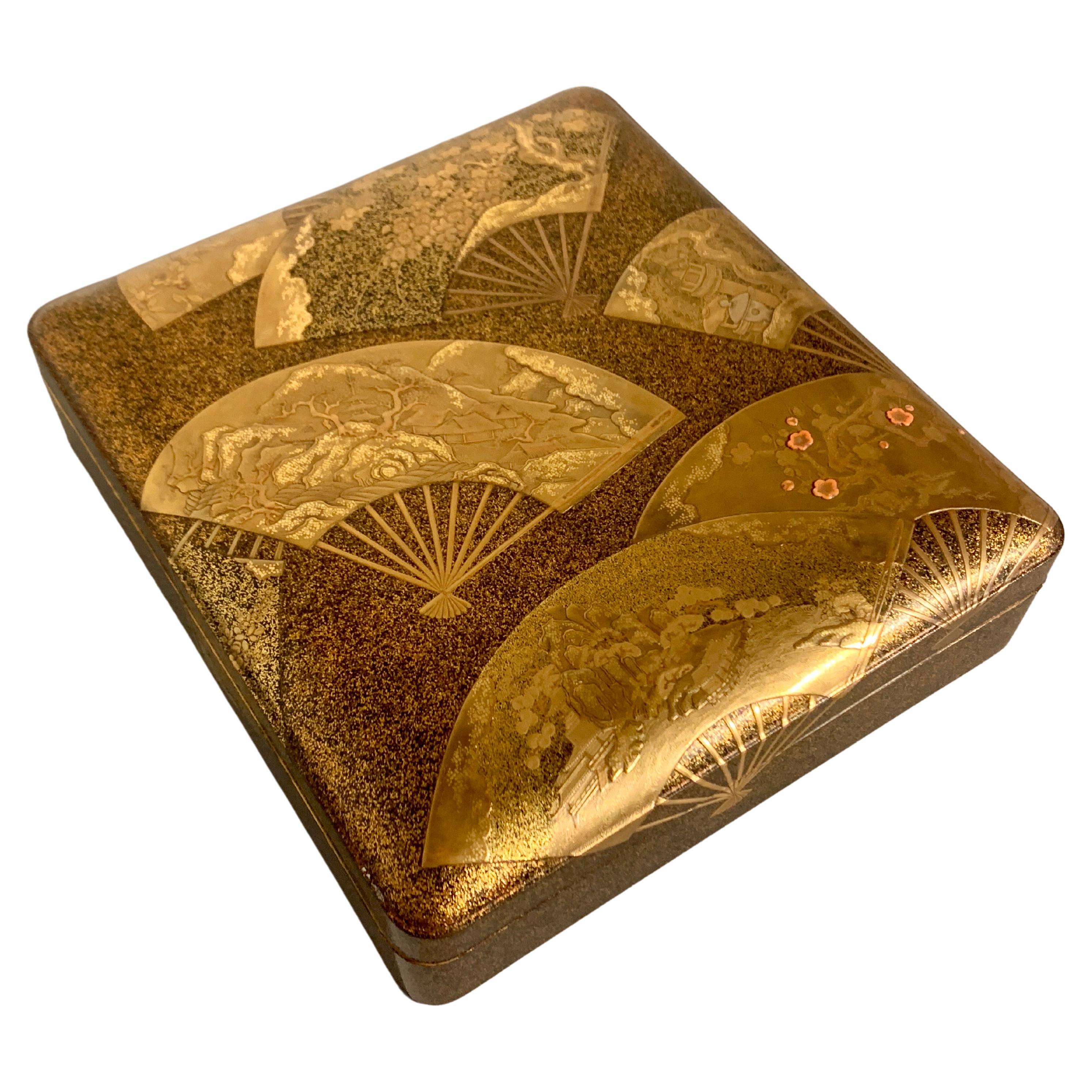
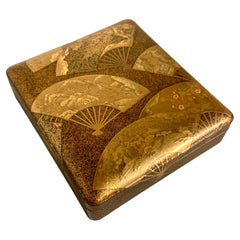
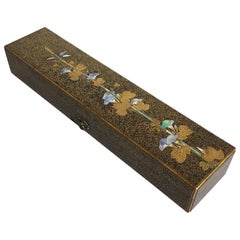
A spectacular Japanese maki-e lacquer lidded box, possibly a writing box, suzuribako, decorated with images of folding fans, ogi, Edo Period, earl...
Category
Antique Early 19th Century Japanese Edo Lacquer
Materials
Coral
Japanese Edo Period Igarashi School Long Lacquer Box, Tanzaku-Bako
Located in Austin, TX
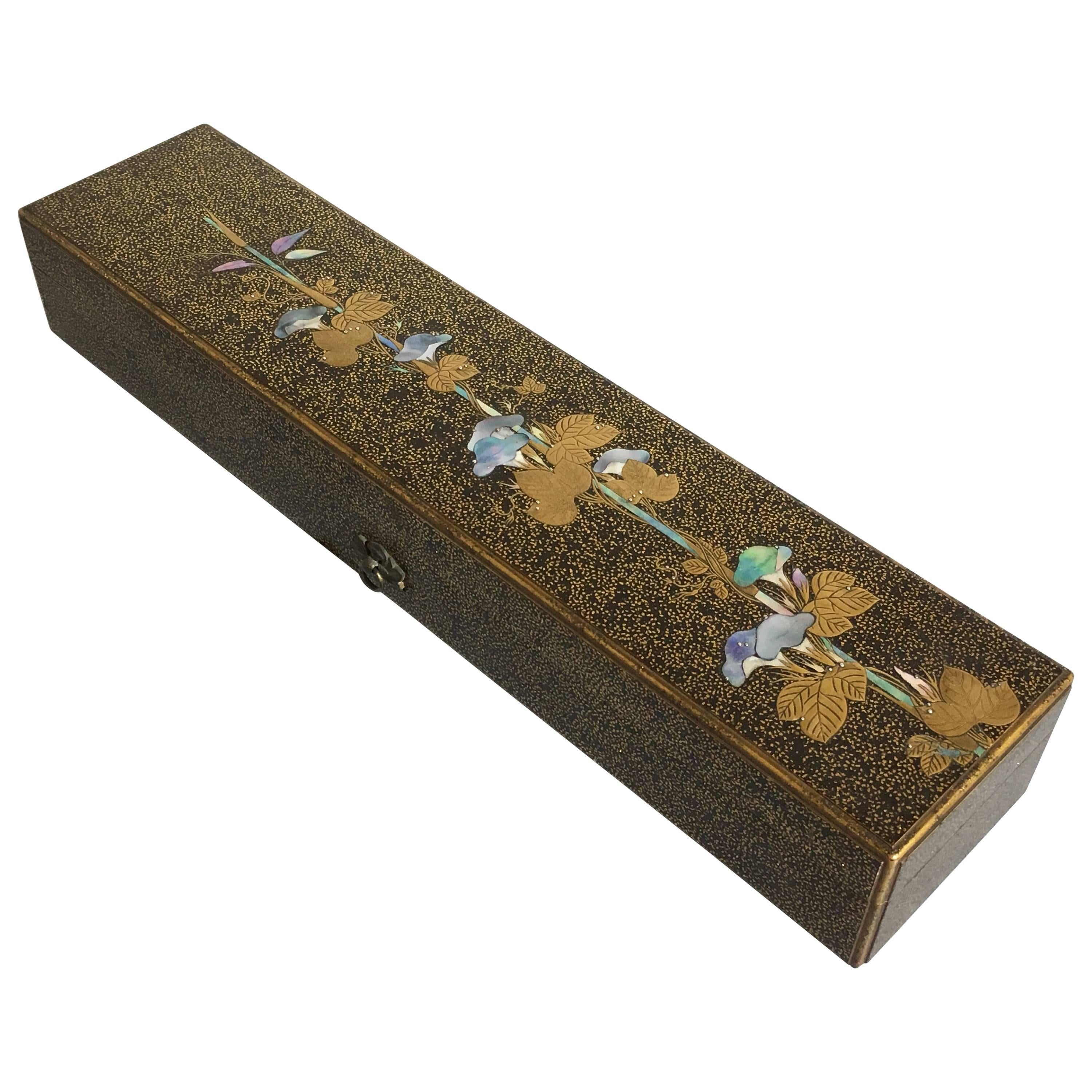
A stunning Japanese Edo period lacquer tanzakubako, box for poem cards, late 18th-early 19th century, Edo Period, Japan.
Attributed to the Igarashi School, this box is masterfully ...
Category
Antique Early 19th Century Japanese Edo Lacquer
Materials
Mother-of-Pearl, Lacquer
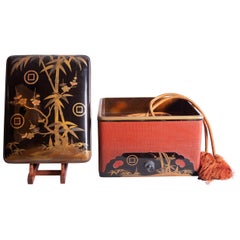
Japanese Lacquer Box with Bamboo, Plum, and Family Crest
Located in Hudson, NY
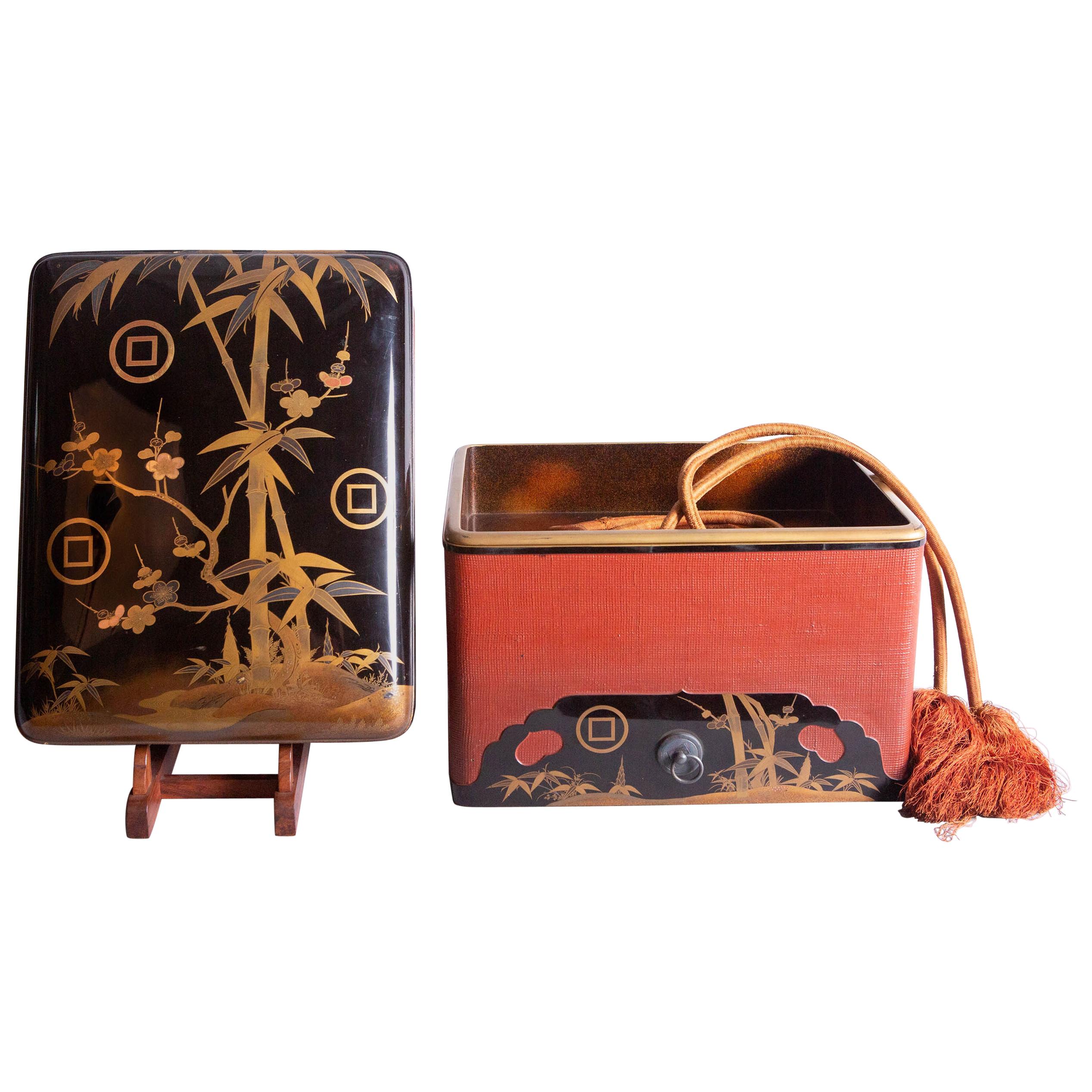
Made with heavy gold flakes and lacquered fabric on wood, with cutout heart designs. Has an interior tray, and comes with silk tasseled ties. (Does not come with presentation stand).
Category
Antique 19th Century Japanese Lacquer
Materials
Lacquer
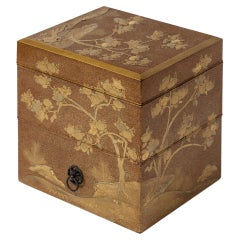
Japanese Lacquered Tebako
Box
Located in PARIS, FR
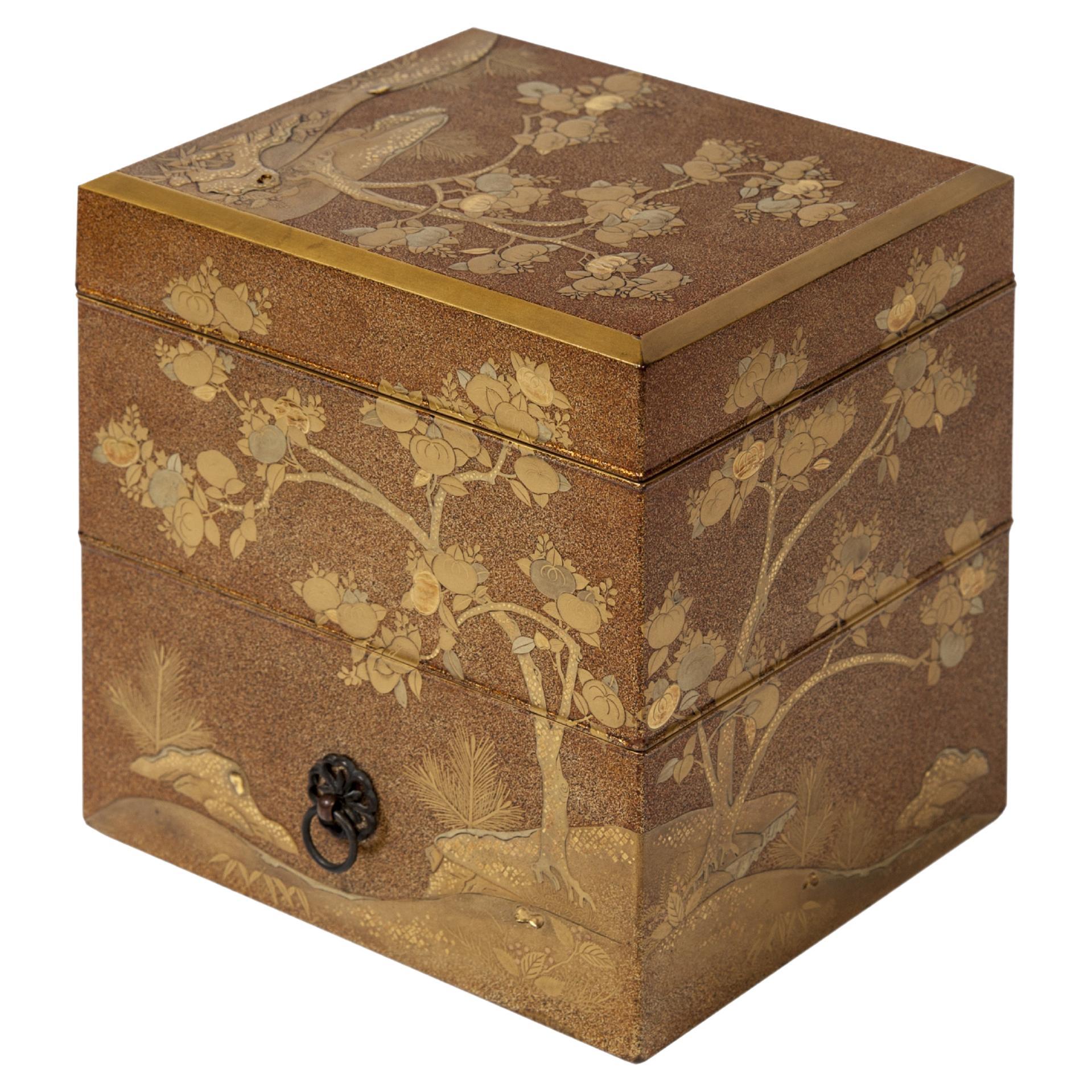
Tebako box with three compartments in golden and nashi-ji lacquer, decorated with golden, red, and kirigane lacquer, golden persimmon tree leaves, among rocks. The compartments are of increasing size from the top. The decoration is in continuity.
Persimmon has been cultivated in southern China for more than 2500 years and is believed to have been introduced to Japan in the 8th century. The veneer is a tree with very hard wood, similar to ebony. According to a legend, one specimen survived the atomic bombing of Nagasaki on August 9, 1945, close to the epicenter. It is therefore in Japan a symbol of strength and longevity. It is also the national fruit of the country. It is eaten as a traditional dish during New Year's Day celebrations.
Tebako literally means "portable box...
Category
Antique 1860s Japanese Lacquer
Materials
Lacquer
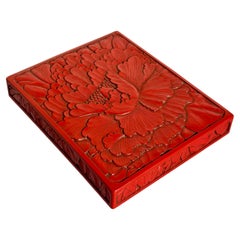
Japanese Kamakura Bori Lacquer Presentation Box, Showa Era, mid 20th century
Located in Austin, TX
An attractive Japanese red lacquered Kamakura-bori inscribed presentation box, featuring peony, Showa Era, mid 20th century, Japan.
The low box and cover carved with a bold and stri...
Category
Vintage 1960s Japanese Showa Lacquer
Materials
Softwood, Lacquer
Japanese Lacquer Kogo
Incense Box
Located in Hudson, NY
Late Edo (1614 - 1868) period incense storage box in stacked, double fan design. Fans have bamboo and plum design with a chrysanthemum crest. Silve...
Category
Antique Mid-19th Century Japanese Edo Lacquer
Materials
Gold
More Ways To Browse
Antique Wood Design
Antique Lacquer Box
Antique Lacquer Boxes
Japanese Lacquer Boxes
Silver Antique Japanese Boxes Silver Boxes
Japanese Lacquered Tray
Silver Fern
Japanese Wood Tray
Wood Cutout
Antique Japanese Lacquer Tray
Cinnabar Lacquer Furniture
Antique Chinese Cinnabar
Japanese Lacquered Tray
Chinese Carved Cinnabar
Japanese Lacquerware
Red Lacquer Cinnabar
Antique Inro
Japanese Gold Lacquer Box