Items Similar to Japanese Namban Lacquer and Inlay Coffer Momoyama Period
Want more images or videos?
Request additional images or videos from the seller
1 of 21
Japanese Namban Lacquer and Inlay Coffer Momoyama Period
$20,000
£15,105.34
€17,449.02
CA$28,177.15
A$30,177.74
CHF 16,223.34
MX$366,526.29
NOK 204,989.87
SEK 187,683.47
DKK 130,376.05
About the Item
A rare Japanese Namban Lacquer domed coffer circa 1570-1610s of Azuchi-Momoyama to early Edo period. These types of lacquerware were made for export to European Market and their production only lasted between 1573-1615 due to the historical Japanese foreign policy when the export was closed off in the beginning of the Edo period.
This is a fantastic piece in superb condition, of typical domed shape and accessorized with copper hardware. The surface was demarcated with geometrical diamond border, an archetypal requirement for the western market. Within the border, it was opulently decorated in Maki-e and raden inlays with a more Japanese style design that includes various birds such as rooster, goose and peacock, among large flowering branches of peonies, prunus and vines with foliage. These decoration in gold and MOP was strikingly set against a black roiro ground. The original copper hardware on the corner and front forms an integral part of the design and blends beautifully with the lacquer design. The interior surface of the coffer was covered in nashiji maki-e. Some spotted restoration is visible. The blue lash appears to be a later replacement.
Similar Namban coffers can be found in the collection of museum with large Japanese holding such as Ashmolean Museum in Oxford University, Peabody Essex Museum in Salem, MA.
- Dimensions:Height: 14.75 in (37.47 cm)Width: 26.8 in (68.08 cm)Depth: 12.7 in (32.26 cm)
- Style:Japonisme (Of the Period)
- Materials and Techniques:
- Place of Origin:
- Period:
- Date of Manufacture:1573-1615
- Condition:Repaired: possible old restorations to stabilize some cracks on the lacquer surface. Wear consistent with age and use. Minor losses. A surface crackle on the dome toward the back, minor losses and shrinkage on a few MOP inlay, possible older restorations, more visible in three Nashiji interior spots. Beautiful and even patina in general.
- Seller Location:Atlanta, GA
- Reference Number:1stDibs: LU945017039481
About the Seller
4.9
Platinum Seller
Premium sellers with a 4.7+ rating and 24-hour response times
Established in 2006
1stDibs seller since 2010
586 sales on 1stDibs
Typical response time: <1 hour
- ShippingRetrieving quote...Shipping from: Atlanta, GA
- Return Policy
More From This Seller
View AllAntique Japanese Lacquer and Inlay Box from Ryukyu Island
Located in Atlanta, GA
A lacquer presentation box with mother-of-pearl inlays from Japanese Ryukyu Islands circa 17-18th century. The lidded box in rectangular form with rounded corner is a classic example...
Category
Antique 18th Century Japanese Japonisme Lacquer
Materials
Mother-of-Pearl, Lacquer

Japanese Lacquer Ryoshibako Document Box Meiji Period
Located in Atlanta, GA
A large Japanese lacquer box with elaborate Maki-e design from Meiji period, (mid-late 19th century). The generous size of the box was reser...
Category
Antique 19th Century Japanese Japonisme Lacquer
Materials
Wood, Lacquer
Japanese Lacquered Maki-e Fubako Edo Period
Located in Atlanta, GA
A Japanese lacquered wood fubako (a box used to store document or small scroll painting), circa second half of 19th century late Edo period. The rectangular box features an unusually deep lipped lid with slightly rounded corners, a conforming lower box that is almost entirely covered by the lid which has two bronze medallion rings with tasseled...
Category
Antique 19th Century Japanese Edo Lacquer
Materials
Wood, Lacquer
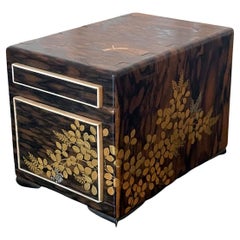
Fine Miniature Japanese Kodansu with Lacquer Inlays
Located in Atlanta, GA
A fine Japanese miniature kodansu constructed from Kaki wood (Persimmon) circa 19th century, late Meiji period. With its expressive exotic wood grains and exposed tenon construction,...
Category
Antique Late 19th Century Japanese Meiji Lacquer
Materials
Wood
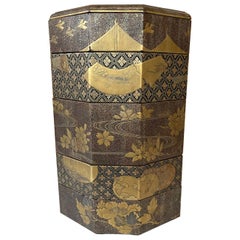
Japanese Maki-e Lacquer Stack Box Jubako
Located in Atlanta, GA
An antique jubako (stack boxes) with five tiers in an elongated octagon shape circa 19th century (end of Edo or beginning of Meiji period). jubako was traditionally used to store and...
Category
Antique 19th Century Japanese Japonisme Lacquer
Materials
Wood, Lacquer
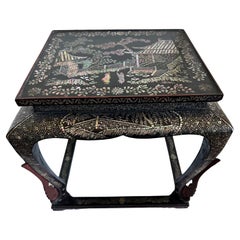
Antique Japanese Lacquer and Inlay Table from Ryukyu Islands
Located in Atlanta, GA
A small square-form table with lacquer and intricate mother-of-pearl inlay design from Ryukyu Islands kingdom circa 17-18th century. Ryukyuan kingdom was used to be an independent is...
Category
Antique 18th Century Japanese Edo Lacquer
Materials
Mother-of-Pearl, Lacquer
You May Also Like
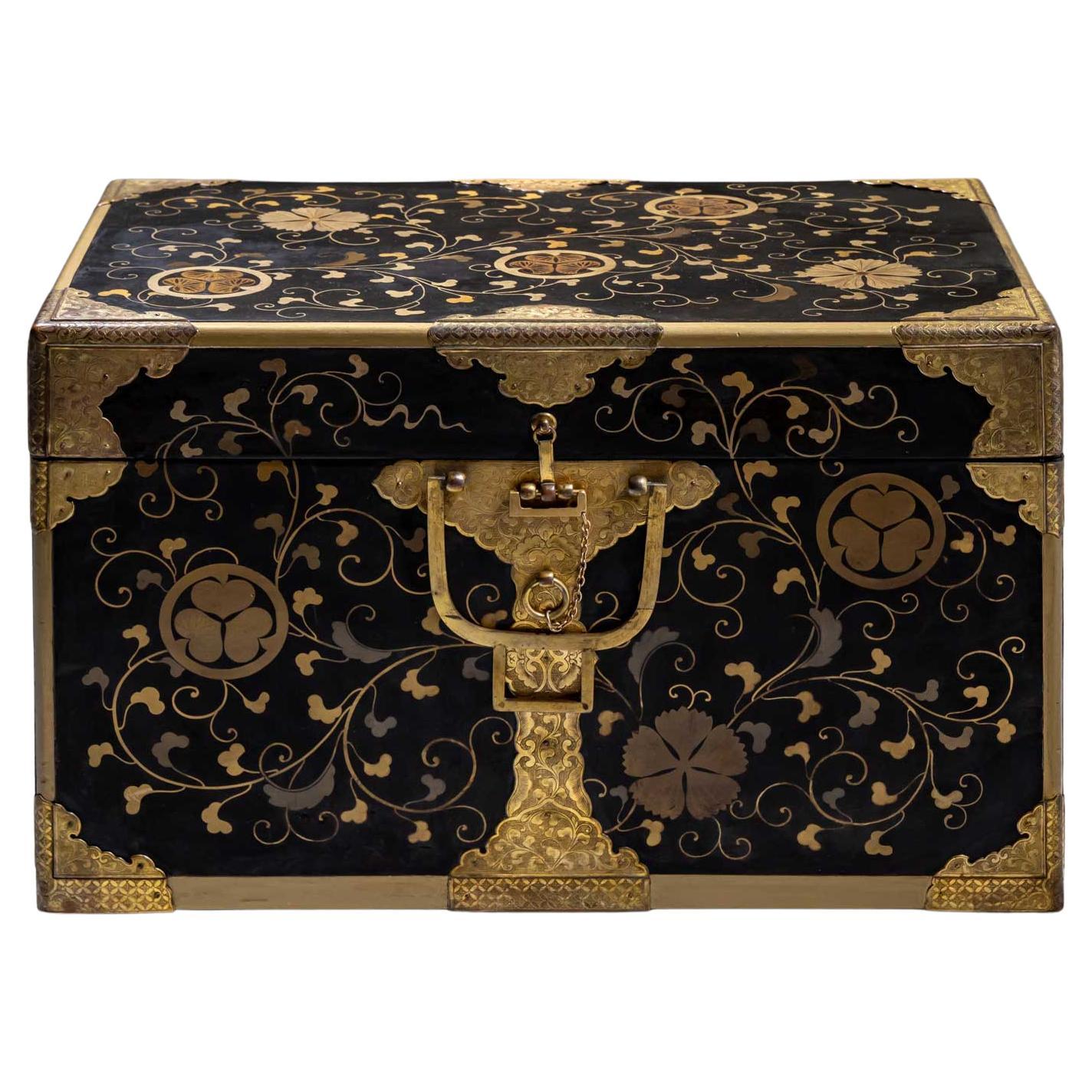
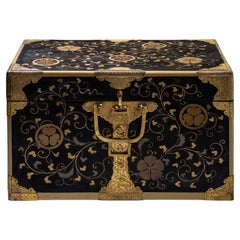
Japanese Lacquer Chest, Edo Period
Located in Greding, DE
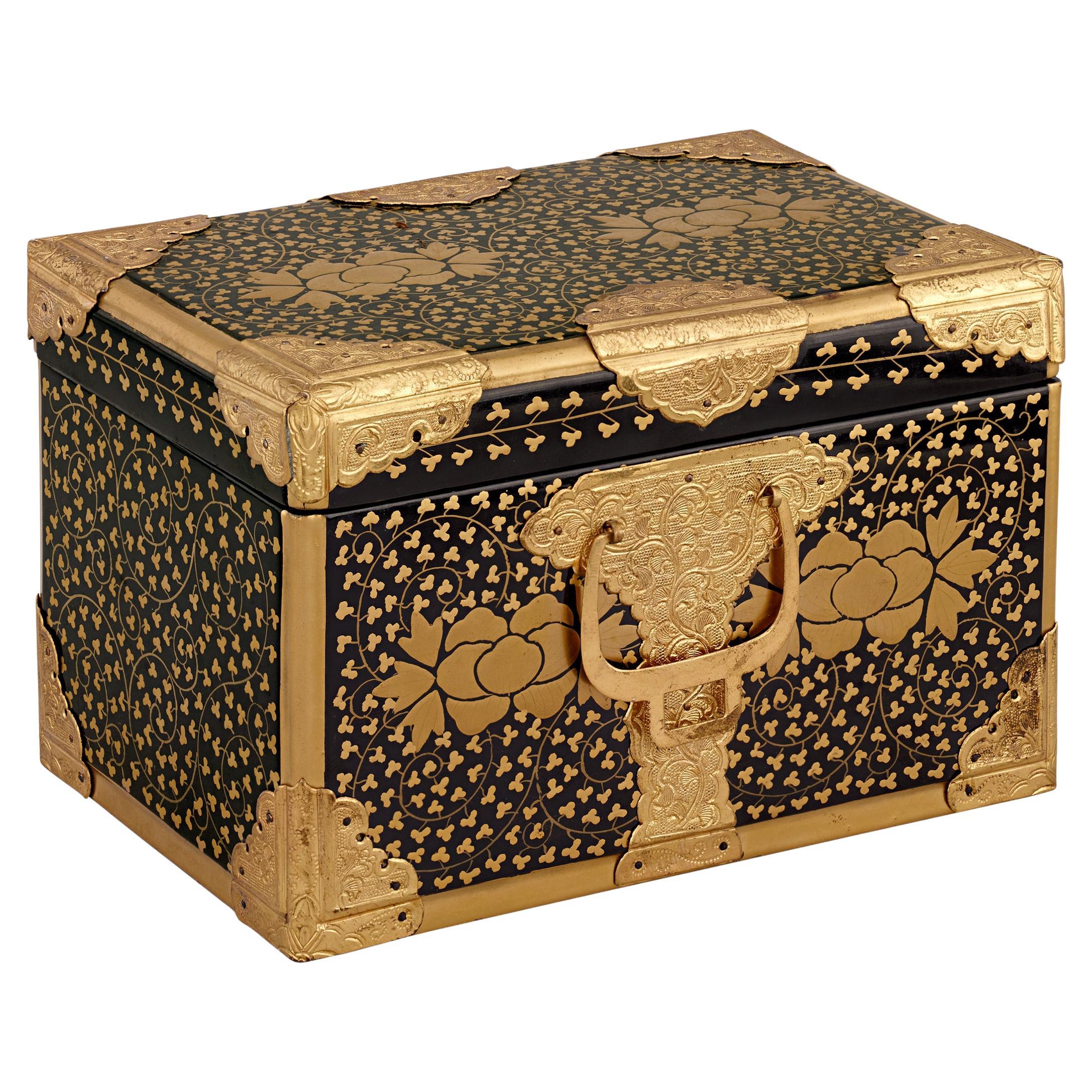
Small rectangular Japanese chest with gold lacquer decoration in the form of leaf tendrils. The chest is decorated with cut-out and ornamentally engraved fittings on the corners and ...
Category
Antique 18th Century Japanese Edo Decorative Boxes
Materials
Brass
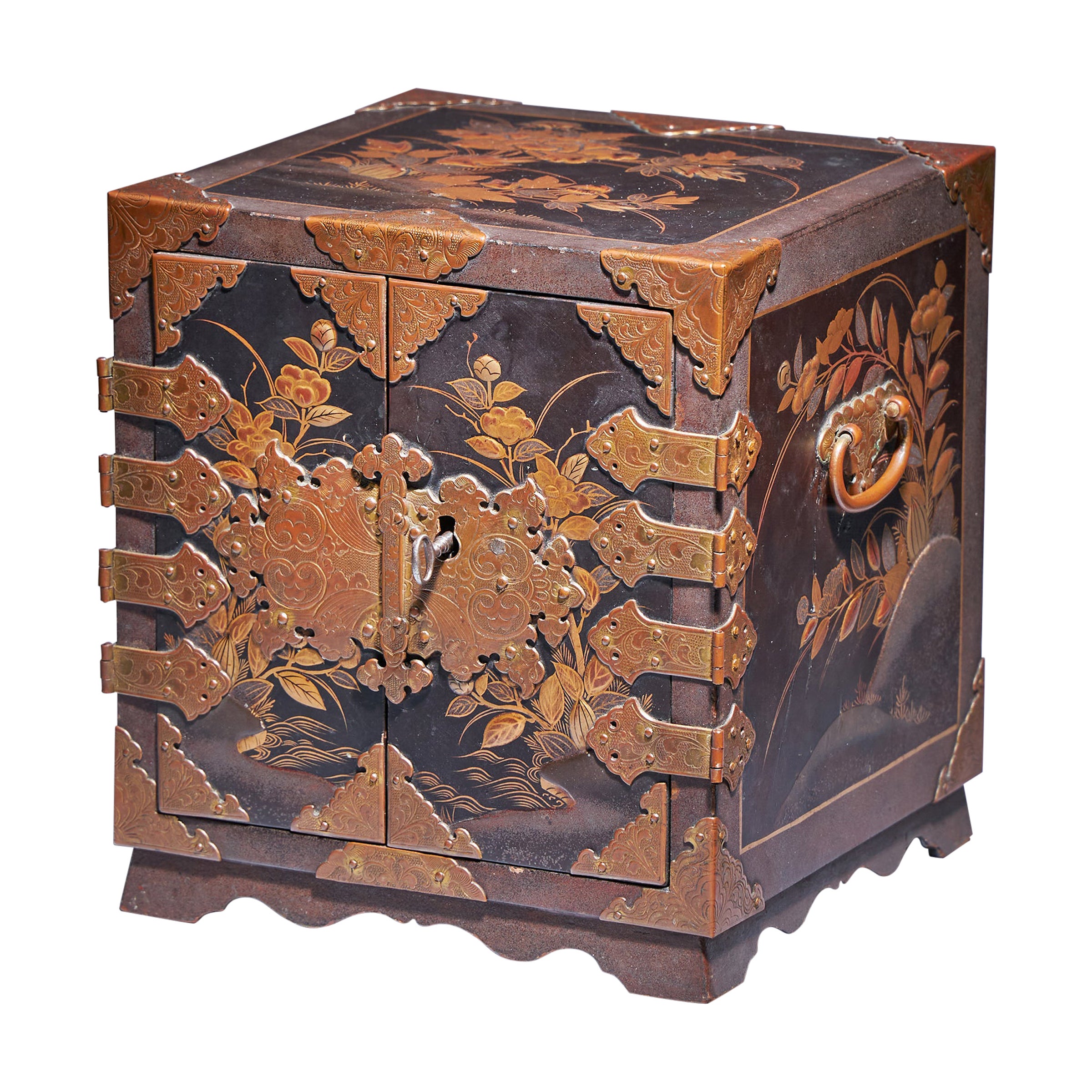
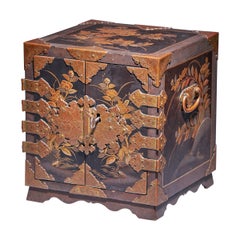
Important Early Edo Period 17th Century Miniature Japanese Lacquer Cabinet
Located in Oxfordshire, United Kingdom
A Rare and Important 17th Century Miniature Japanese Lacquer Cabinet, 19 cm H, 17cm W, 16.5cm D.
The exquisitely decorated cabinet depicts fine floral raised scenes to each side. l...
Category
Antique 17th Century Decorative Boxes
Materials
Lacquer
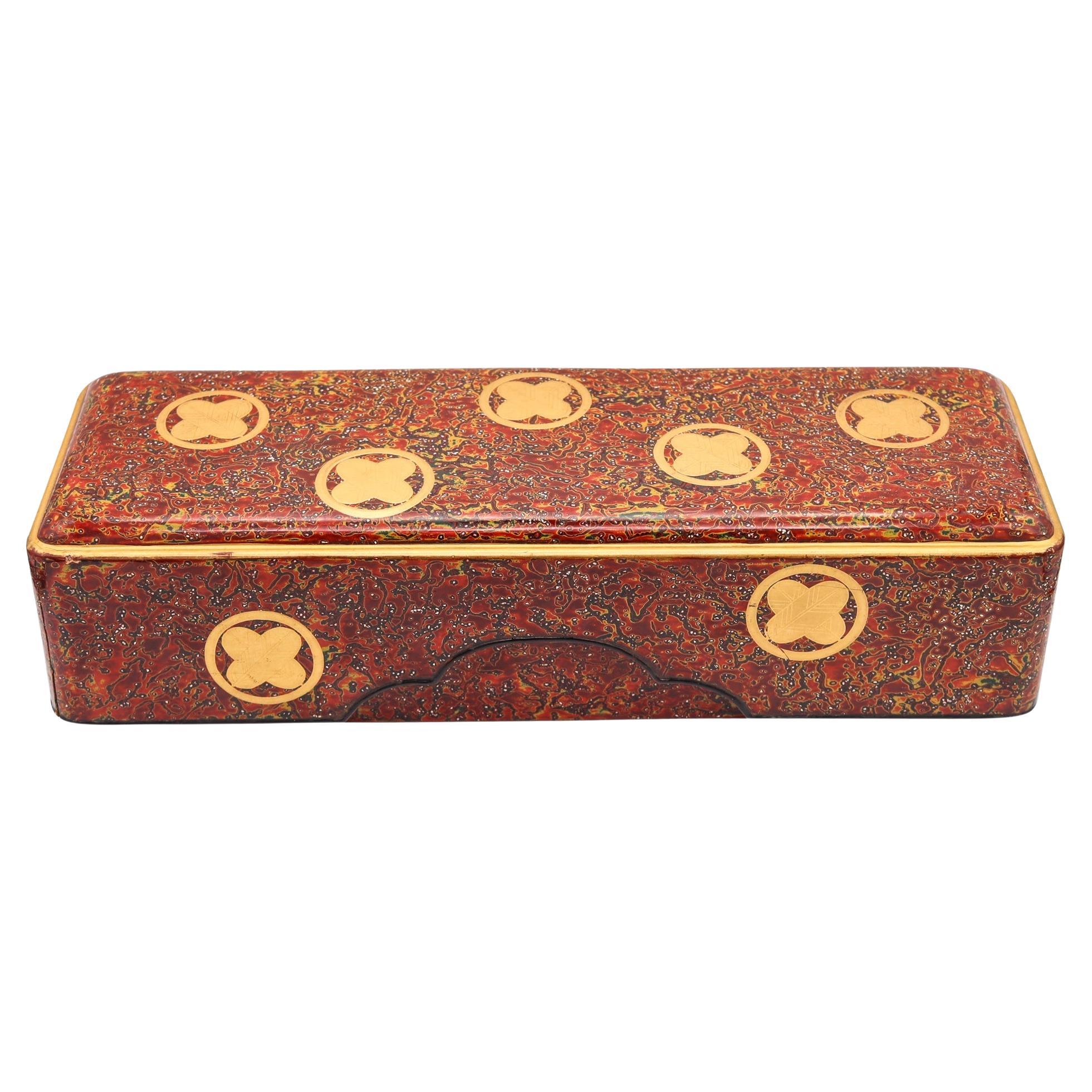
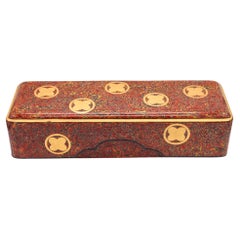
JAPAN 1900 Meiji Period Fubako Box In Hiramaki-e Lacquered Wood With Gilding
Located in Miami, FL
Fubako letters-box from the Japanese Meiji period (1868-1912).
Beautiful decorative Fubako letters box from the Japanese Imperial Meiji period, circa 1900. This box has been meticul...
Category
Antique Early 1900s Japanese Meiji Lacquer
Materials
Gold
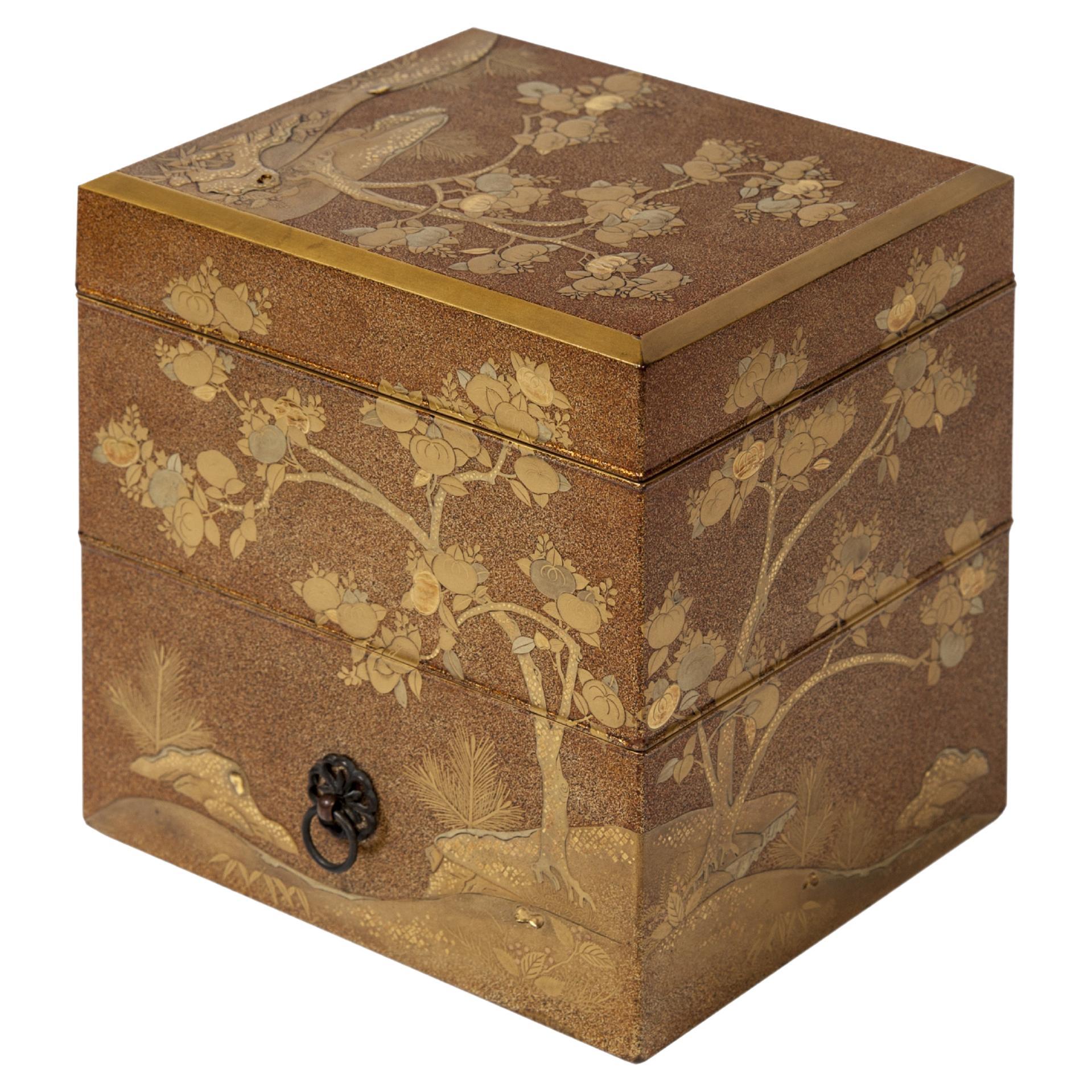
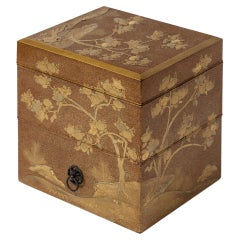
Japanese Lacquered Tebako
Box
Located in PARIS, FR
Tebako box with three compartments in golden and nashi-ji lacquer, decorated with golden, red, and kirigane lacquer, golden persimmon tree leaves, among rocks. The compartments are of increasing size from the top. The decoration is in continuity.
Persimmon has been cultivated in southern China for more than 2500 years and is believed to have been introduced to Japan in the 8th century. The veneer is a tree with very hard wood, similar to ebony. According to a legend, one specimen survived the atomic bombing of Nagasaki on August 9, 1945, close to the epicenter. It is therefore in Japan a symbol of strength and longevity. It is also the national fruit of the country. It is eaten as a traditional dish during New Year's Day celebrations.
Tebako literally means "portable box...
Category
Antique 1860s Japanese Lacquer
Materials
Lacquer
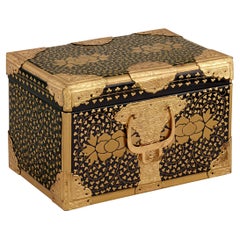
Edo-Period Lacquerware Chest
Located in New Orleans, LA
Edo-Period Lacquerware Chest
19th-century
This exquisite chest, inspired by Hasami-Bako travel trunks, is a striking example of Japanese lacquerware. The hiramaki-e technique—applie...
Category
Antique 19th Century Japanese Edo Decorative Boxes
Materials
Gold
19th century Japanese lacquered wooden box
Located in Auribeau sur Siagne, FR
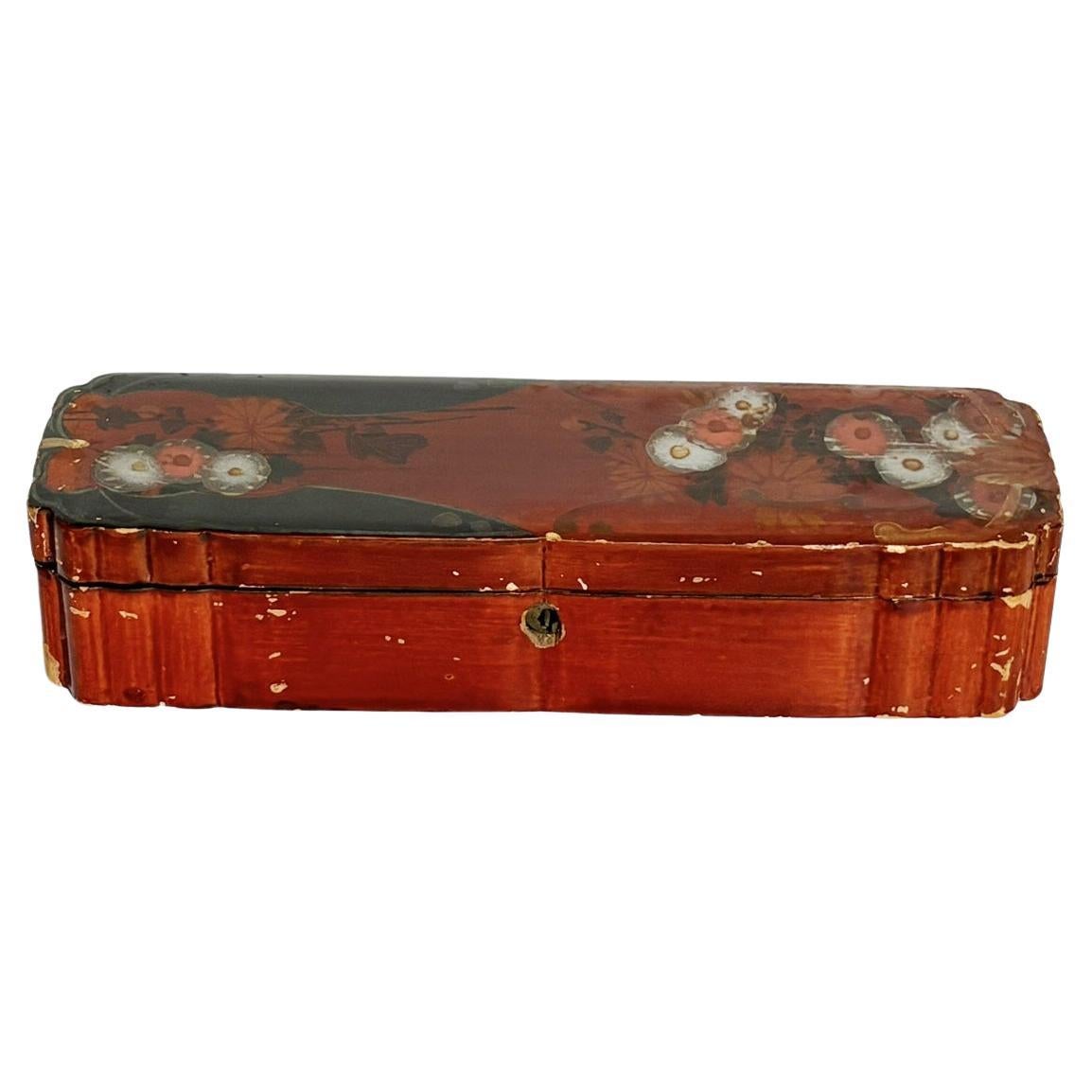
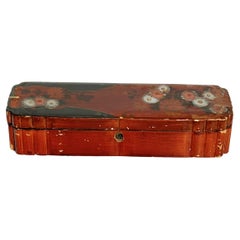
A 19th-century Japanese lacquered wooden box, finely decorated according to traditional Japanese craftsmanship. Rectangular in shape, it features a lacquer in deep red and dark brown...
Category
Early 20th Century Japanese Meiji Decorative Boxes
Materials
Wood, Lacquer
More Ways To Browse
Black Lacquer With Gold Art
Japanese Lacquered Art
Wood Inlay Art
Coffer Furniture
Asian Black And Gold Decoration
Maki E
Japanese Inlay
16th Century Japanese
Japanese Wood Inlay
Namban Lacquer
16th Century Coffer
Black Lacquer With Gold Art
Japanese Lacquered Art
Japanese 19th Century Lacquer
Asian Black Lacquer Furniture
Vintage Japanese Lacquer
Japanese Lacquer Meiji
Mother Of Pearl Inlay Lacquer