Items Similar to Japanese Tebako in Nashiji lacquer adorned with golden Persimon flowers
Want more images or videos?
Request additional images or videos from the seller
1 of 12
Japanese Tebako in Nashiji lacquer adorned with golden Persimon flowers
$6,588.10
£4,926.42
€5,500
CA$9,076.76
A$9,899.48
CHF 5,244.08
MX$118,680.72
NOK 66,786.23
SEK 61,071.05
DKK 41,912.19
About the Item
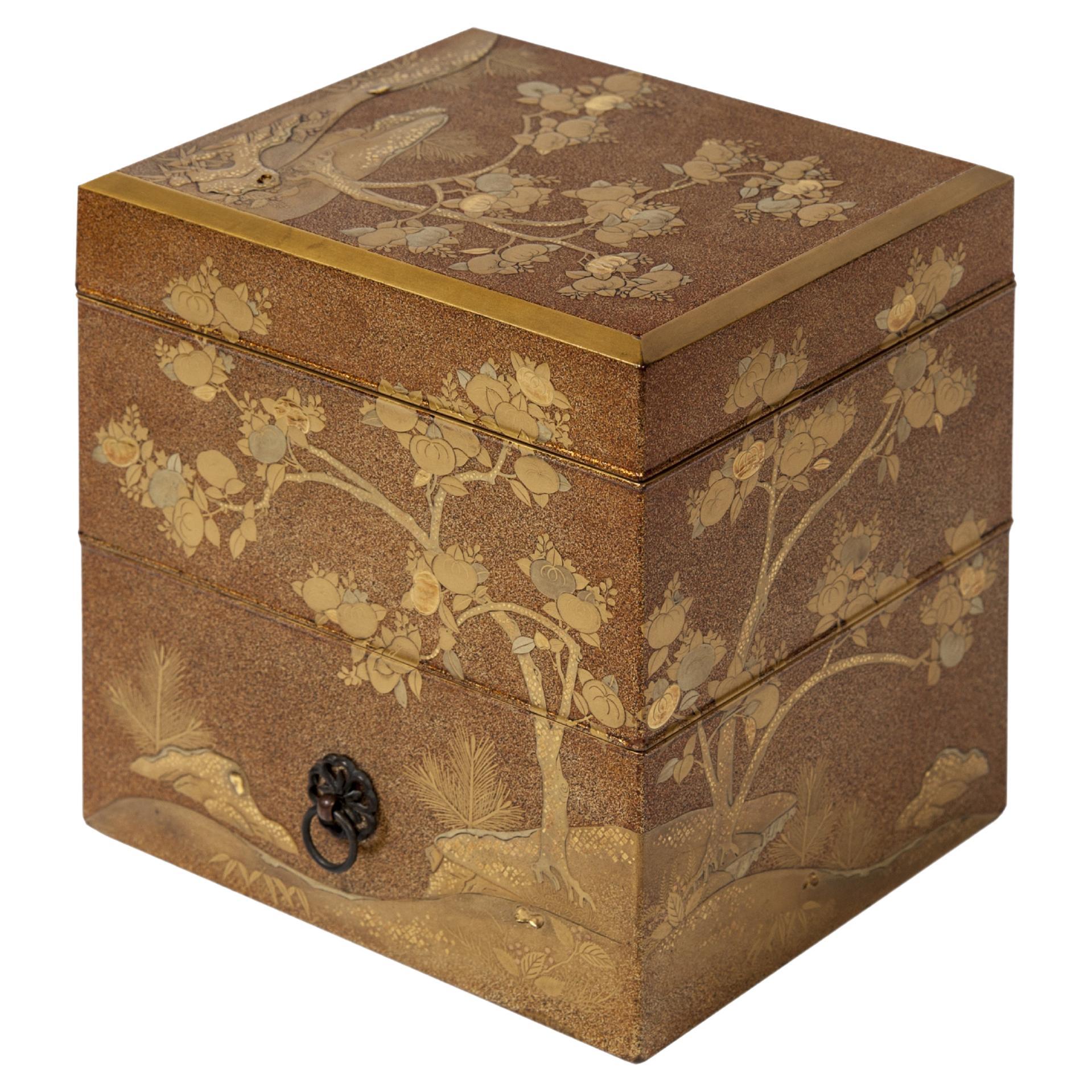
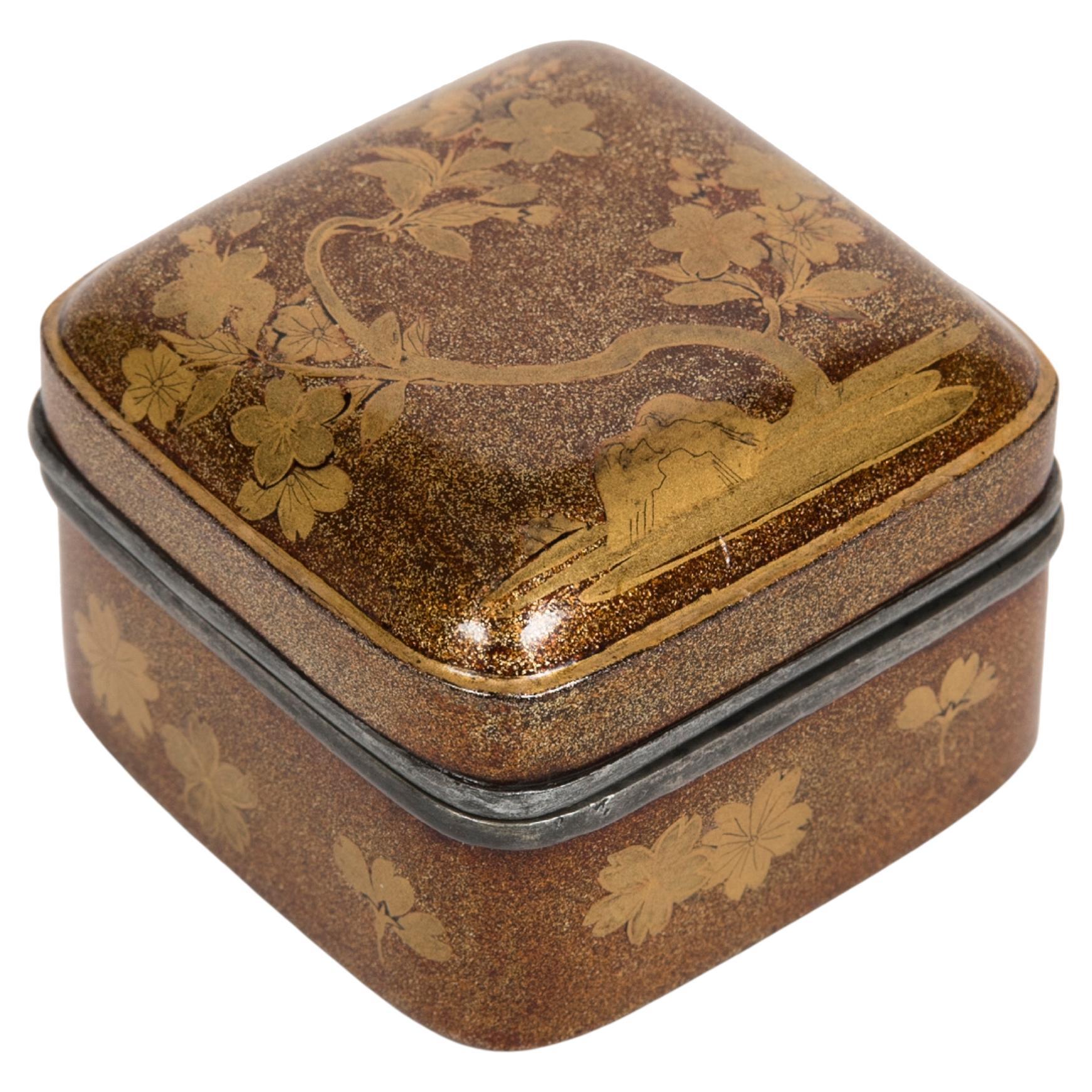
Tebako box with two compartments in golden and nashi-ji lacquer, decorated with golden, red, and kirigane lacquer, golden persimmon tree leaves, among rocks. The compartments are of increasing size from the top. The decoration is in continuity.
Persimmon has been cultivated in southern China for more than 2500 years and is believed to have been introduced to Japan in the 8th century. The veneer is a tree with very hard wood, similar to ebony. According to a legend, one specimen survived the atomic bombing of Nagasaki on August 9, 1945, close to the epicenter. It is therefore in Japan a symbol of strength and longevity. It is also the national fruit of the country. It is eaten as a traditional dish during New Year's Day celebrations.
Tebako literally means "portable box", it is a toilet box containing the objects necessary for washing and make-up, especially blush and mirror boxes.
Japan, Meiji period (1868-1912)
Height: 6.1 in. (15.5 cm) - Length: 6 in. (15.2 cm) - Width: 5.2 in. (13.1 cm)
- Dimensions:Height: 6.11 in (15.5 cm)Width: 5.16 in (13.1 cm)Depth: 5.99 in (15.2 cm)
- Style:Meiji (Of the Period)
- Materials and Techniques:
- Place of Origin:
- Period:
- Date of Manufacture:1868-1912
- Condition:Wear consistent with age and use.
- Seller Location:PARIS, FR
- Reference Number:Seller: 2018-5571stDibs: LU8311242710832
About the Seller
No Reviews Yet
Vetted Professional Seller
Every seller passes strict standards for authenticity and reliability
Established in 2013
1stDibs seller since 2023
- ShippingRetrieving quote...Shipping from: PARIS, France
- Return Policy
More From This Seller
View AllJapanese Lacquered Tebako
Box
Located in PARIS, FR
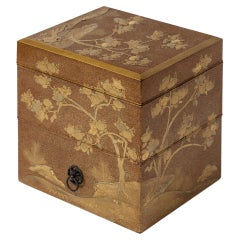
Tebako box with three compartments in golden and nashi-ji lacquer, decorated with golden, red, and kirigane lacquer, golden persimmon tree leaves, among rocks. The compartments are of increasing size from the top. The decoration is in continuity.
Persimmon has been cultivated in southern China for more than 2500 years and is believed to have been introduced to Japan in the 8th century. The veneer is a tree with very hard wood, similar to ebony. According to a legend, one specimen survived the atomic bombing of Nagasaki on August 9, 1945, close to the epicenter. It is therefore in Japan a symbol of strength and longevity. It is also the national fruit of the country. It is eaten as a traditional dish during New Year's Day celebrations.
Tebako literally means "portable box...
Category
Antique 1860s Japanese Lacquer
Materials
Lacquer
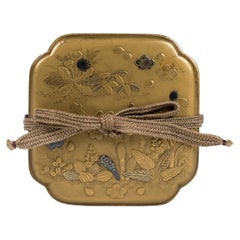
Japanese golden kobako flowers Edo period 18th century
Located in PARIS, FR
Quadrangular kobako box decorated with flowers in gold and blue lacquer with aogai inlay. Lid and sides in fundame lacquer, underside and interio...
Category
Antique 18th Century Japanese Japonisme Lacquer
Materials
Gold
Japanese lacquered Cherry Tree Kobako
Located in PARIS, FR
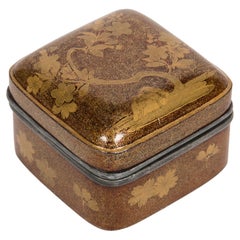
Kobako in nashiji lacquer of square shape with a hira maki-e décor of a blossoming
cherry tree. Both of the four sides are adorned with golden lacquer cherry flowers,
represented i...
Category
Antique 19th Century Japanese Lacquer
Materials
Lacquer
Japanese Natsume or tea box adorned with mapple leaves and sakure flowers
Located in PARIS, FR
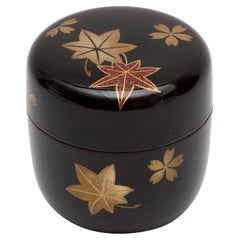
Natsume in dark red lacquer, decorated with autumn leaves and cherry blossoms in hiramaki-e and nashiji. Interior in black lacquer.
Maple leaves (Momiji) are celebrated in literature...
Category
Early 20th Century Japanese Taisho Lacquer
Materials
Gold
Japanese suzuribako lacquered box peony river
Located in PARIS, FR
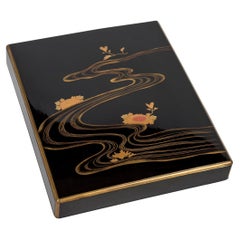
Suzuribako box (empty) in black lacquer. Gold maki-e decoration of a river bordered by peonies, one with red highlights. The edges of the lid are in gold lacquer. Nashi-ji interior.
Category
Antique Late 19th Century Japanese Lacquer
Materials
Gold
Fine Japanese Black and Gold Lacquer Sageju-Bako - Picnic Box
Located in PARIS, FR
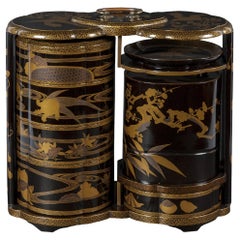
Black and gold lacquer sageju-bako (picnic box) decorated with floral motifs in hiramaki-e. It includes a sake bottle, a four-compartment box with nashi-ji lacquer inside, a simple tray and a hollow tray. At the top, there is a bronze handle for transport.
The sageju-bako is divided into four superimposed boxes for food on the left; a simple tray, a sake bottle and a hollow tray on the right. They are in the shape of a plum blossom.
On the top, on both sides a phoenix. The phoenix (hôo) has an imperial and solar symbolism. This auspicious bird also embodies virtues taken from the teachings of Confucius (such as goodness, righteousness and wisdom).
The left boxes are patterned with turtles, plum tree, bamboo, cherry blossoms, water plantains near rivers. The two trays on the right have a shell and seaweed pattern. The sake bottle is decorated with a plum tree and bamboo.
On the sides, calabash decoration. Borders in saya (or sayagata) pattern, composed of Chinese swastikas...
Category
Antique Early 19th Century Japanese Lacquer
Materials
Lacquer
You May Also Like
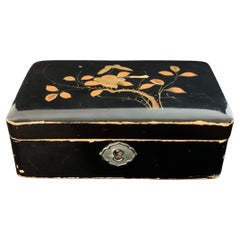
Japonese Lacquered Box with Flower, Late of the 19th Century
Located in Beuzevillette, FR
Nice little black lacquer box from Japan. It is made of black lacquered wood and decorated with flowers and foliage. The inside is covered with red velvet. It is ideal for storing je...
Category
Antique Late 19th Century Japanese Lacquer
Materials
Lacquer
$172 Sale Price
20% Off
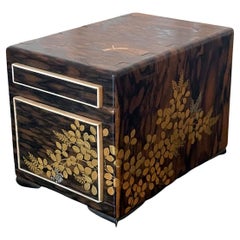
Fine Miniature Japanese Kodansu with Lacquer Inlays
Located in Atlanta, GA
A fine Japanese miniature kodansu constructed from Kaki wood (Persimmon) circa 19th century, late Meiji period. With its expressive exotic wood grains and exposed tenon construction,...
Category
Antique Late 19th Century Japanese Meiji Lacquer
Materials
Wood
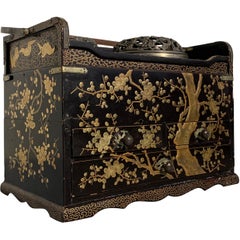
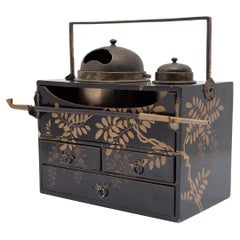
Japanese Lacquer Smoking Box, Tabako Bon, Edo Period, 19th Century
Located in Austin, TX
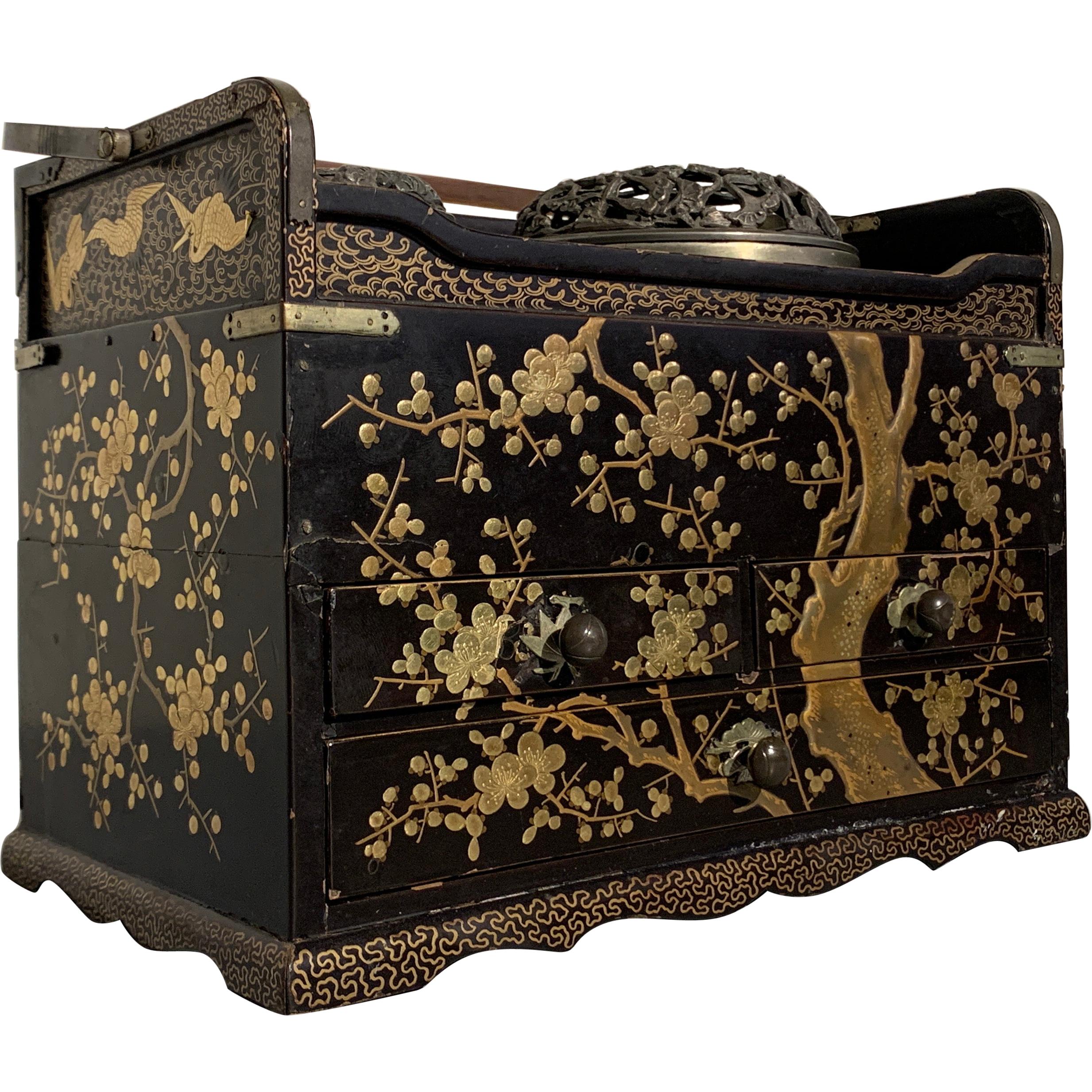
A very fine Japanese maki-e lacquer decorated tabako bon, or smoking box, late Edo Period, mid-19th century, Japan.
The elegant smoking box of black lacquer decorated with a wonderful gold lacquer takamaki-e design of a gnarled and elegantly twisted plum tree with branches in full bloom. A border of golden cranes in flight to the top.
The smoking box, called a tabako bon, is comprised of an open section at the top with inset with two cylindrical metal canisters...
Category
Antique Mid-19th Century Japanese Edo Lacquer
Materials
Lacquer
Japanese Gilt Takamaki-E Tabako-Bon, C. 1850
Located in Chicago, IL
This box with many drawers is a Japanese tabako-bon, or 'tobacco tray,' used to store tobacco and smoking accessories. Believed to have evolved from the t...
Category
Antique Mid-19th Century Japanese Meiji Lacquer
Materials
Brass
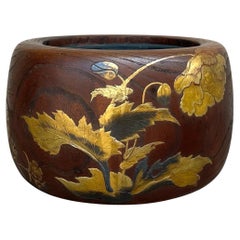
Exceptional Japanese Lacquered Hibachi with Poppy Flowers in Gold and Silver Mak
Located in Fukuoka, JP
This magnificent hibachi (charcoal brazier), likely custom-made to order, exemplifies the pinnacle of Japanese lacquer artistry of the 19th century. Carved from solid wood with a ric...
Category
Antique 19th Century Japanese Edo Lacquer
Materials
Copper
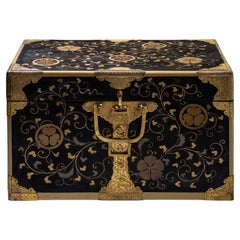
Japanese Lacquer Chest, Edo Period
Located in Greding, DE
Small rectangular Japanese chest with gold lacquer decoration in the form of leaf tendrils. The chest is decorated with cut-out and ornamentally engraved fittings on the corners and ...
Category
Antique 18th Century Japanese Edo Decorative Boxes
Materials
Brass
More Ways To Browse
8th Century
19th Century Chinese Lacquer Box
Antique Bombs
Antique Toilet
Japan Mirror
Antique Mirror Box
Japanese Meiji Period Box
Antique Japanese Mirrors
Toilet Box
Meiji Mirror
Lacquer Fan
Asian Cinnabar
Japanese Lacquer Pearl
Japanese Wood Tray
19th Century Carved Chinese Fan
Black Japanese Tray
Chinese Carved Cinnabar Red Lacquer
Antique Japanese Lacquer Tray