Items Similar to Kobako or japanese incens box, of hexagonal shape and adorned with two roosters
Want more images or videos?
Request additional images or videos from the seller
1 of 6
Kobako or japanese incens box, of hexagonal shape and adorned with two roosters
$2,991.61
£2,234.42
€2,500
CA$4,121.48
A$4,491.69
CHF 2,378.55
MX$53,949.96
NOK 30,112.91
SEK 27,685.86
DKK 19,045.67
About the Item
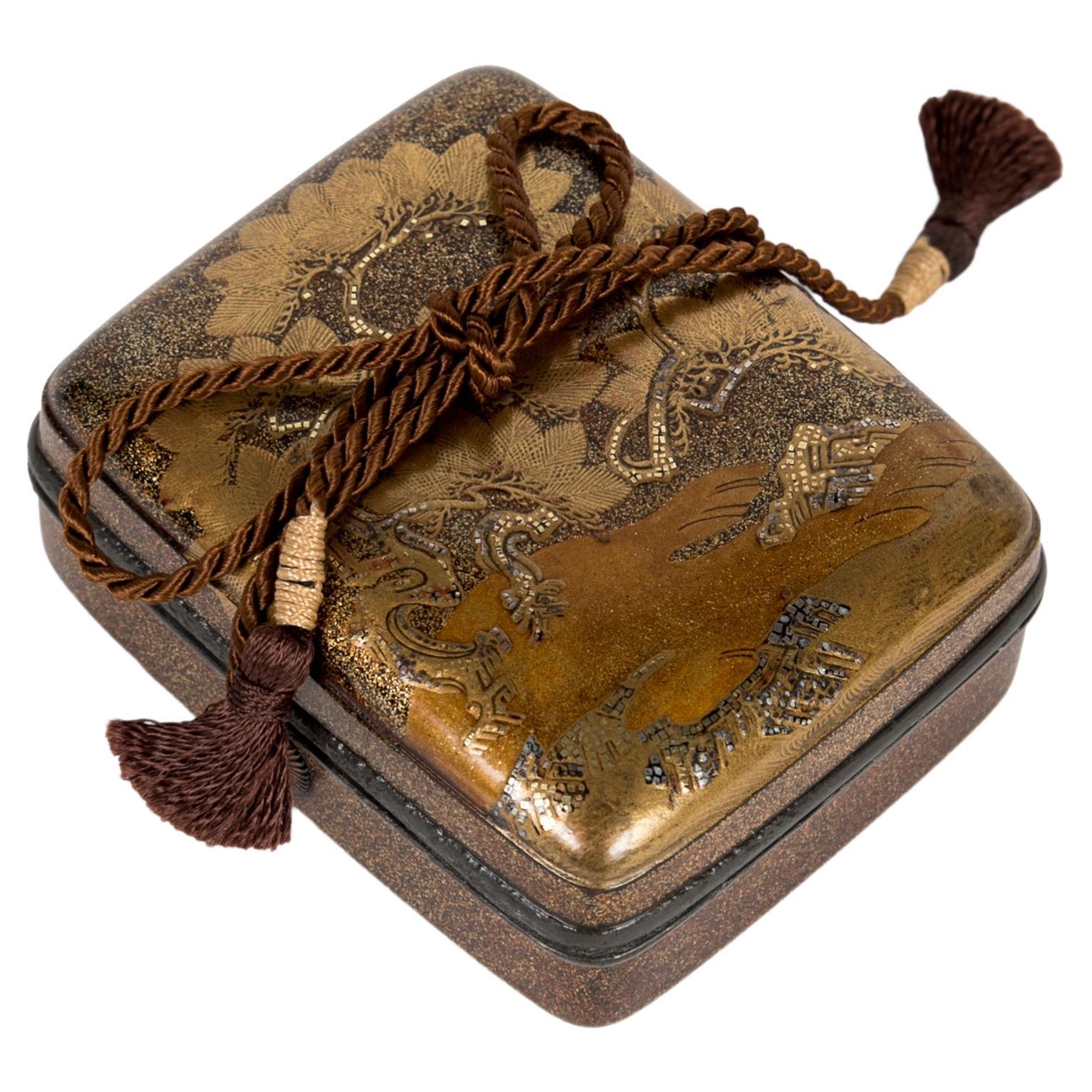
This small hexagonal kobako presents a rich scene featuring two roosters perched on a pine tree, set within an abundant natural landscape. The sides of the composition are adorned with peonies and chrysanthemums, each element rich in symbolic significance.
In the Kojiki (Record of Ancient Matters), Japan’s oldest mythological chronicle, the rooster plays a pivotal role in luring the sun goddess Amaterasu out of her cave using its crow and a magical mirror.
The surrounding vegetation also carries profound meanings. The peony (botan), revered in Japan for its beauty and grace, symbolizes wealth, honor, and elegance. The pine (matsu) stands as a metaphor for unwavering strength, shaped by the trials of daily life, and for those who remain steadfast in their values despite adversity. During the New Year celebrations, the Japanese place two pines—of equal height—at the entrance of their homes, a Shinto tradition that welcomes the presence and blessings of the kami (deities), believed to dwell in the branches of evergreen trees like the pine.
Among the three featured plants, the chrysanthemum (kiku) carries the deepest symbolic weight. Far from its Western association with mourning, in Japan the chrysanthemum is a symbol of imperial power, longevity, and happiness. Introduced from China during the Nara period, it was originally prized for its medicinal properties. Its noble status is reflected in its long history: once reserved for the elite in ancient China, it eventually became the emblem of the Japanese Imperial family in the 13th century under Emperor Go-Toba. The 16-petal chrysanthemum crest continues to symbolize the Emperor, the Imperial family, and the Japanese people.
The "Chrysanthemum Throne" remains a poetic and political term to refer to the Japanese monarchy. The flower even appears on the Japanese passport and 50 yen coin, and lends its name to the Supreme Order of the Chrysanthemum—the highest honor bestowed by the Emperor.
Culturally, the chrysanthemum is also one of the Four Gentlemen (Junzi)—a grouping of plants (plum blossom, orchid, bamboo, and chrysanthemum) that each represent a season and are frequent subjects in East Asian painting. The chrysanthemum, as the flower of autumn, is known as the "golden flower" and symbolizes noble character and serenity.
This kobako showcases multiple lacquer techniques. The body is covered in a fundame ground of gold lacquer, while the lid features a polychrome composition in takamaki-e (raised maki-e), a method developed during the Muromachi period (1336–1573). The surface is further enriched with hirameji, using diamond-shaped gold flakes, and layered maki-e work of varying intensity to create texture and volume. The interior is decorated in gold maki-e on a copper-toned background.
Japan – Edo era (1600–1868)
Dimensions: Length: 10.5 cm – Height: 4 cm
- Dimensions:Height: 1.58 in (4 cm)Width: 4.14 in (10.5 cm)Depth: 4.14 in (10.5 cm)
- Style:Edo (Of the Period)
- Materials and Techniques:
- Place of Origin:
- Period:
- Date of Manufacture:1600-1868
- Condition:Wear consistent with age and use.
- Seller Location:PARIS, FR
- Reference Number:Seller: 2025-13761stDibs: LU8311247740052
About the Seller
No Reviews Yet
Vetted Professional Seller
Every seller passes strict standards for authenticity and reliability
Established in 2013
1stDibs seller since 2023
- ShippingRetrieving quote...Shipping from: PARIS, France
- Return Policy
More From This Seller
View AllJapanese landscape pine kobako box Edo period 18th century
Located in PARIS, FR
Rectangular black and gold lacquer kobako box decorated with pine trees in a mountain landscape in takamaki-e, kirigane and hiramaki-e lacquer. Background in nashi-ji lacquer. Surmou...
Category
Antique 18th Century Japanese Lacquer
Materials
Gold
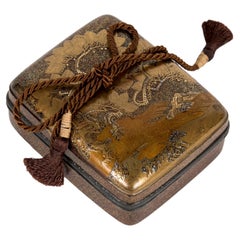
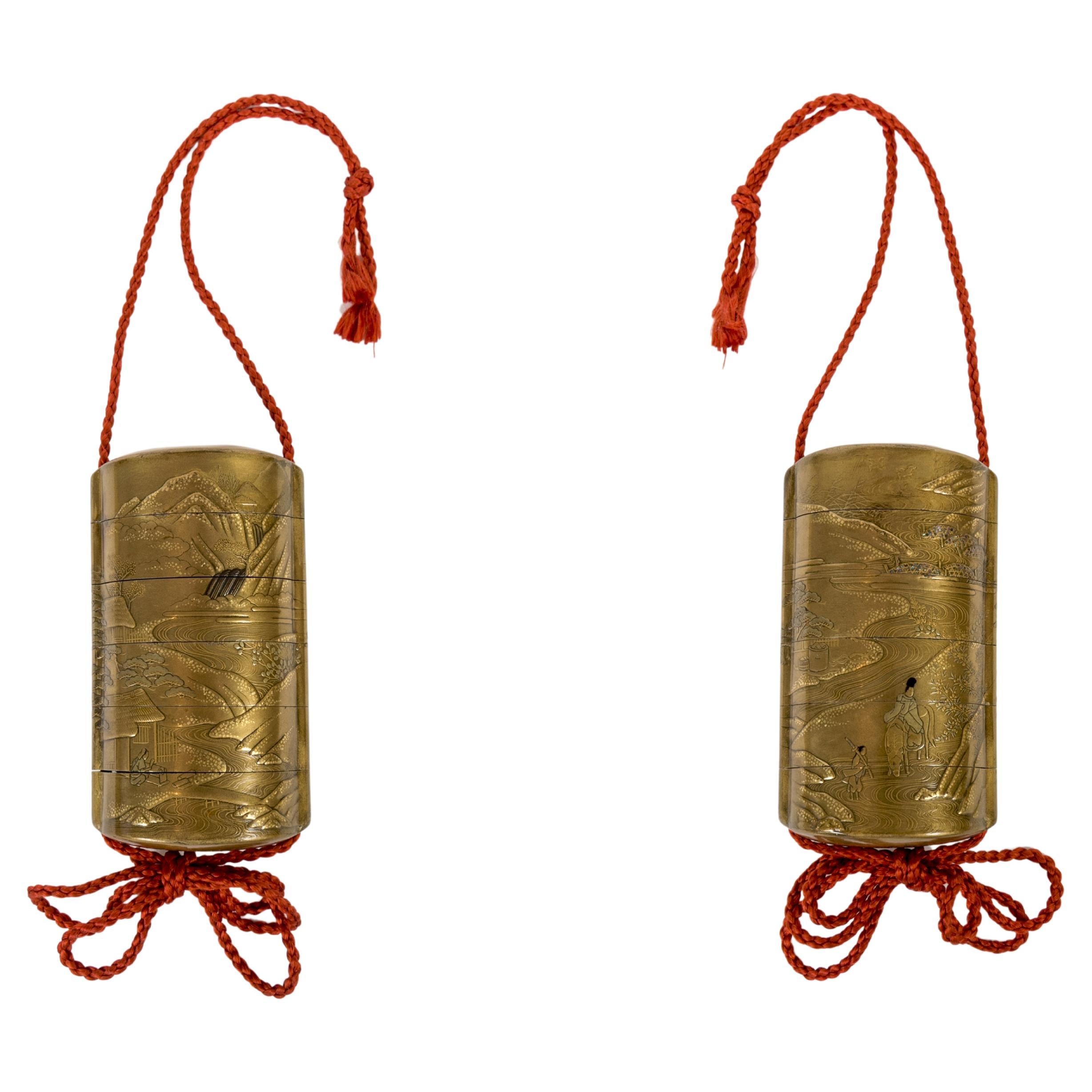
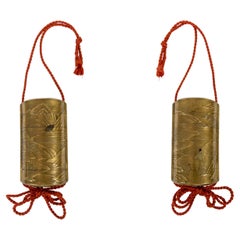
Japanese Sagemono Inro box with a maki-e decor of a Samuari in a lake landscape
Located in PARIS, FR
Inrô in gilded lacquer according to the takamaki-e, hiramaki-e and kirigane techniques, with five squares of a mountain lake landscape.
On the first side, there is a man on horsebac...
Category
Antique 18th Century Japanese Edo Lacquer
Materials
Gold
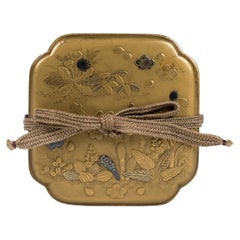
Japanese golden kobako flowers Edo period 18th century
Located in PARIS, FR
Quadrangular kobako box decorated with flowers in gold and blue lacquer with aogai inlay. Lid and sides in fundame lacquer, underside and interio...
Category
Antique 18th Century Japanese Japonisme Lacquer
Materials
Gold
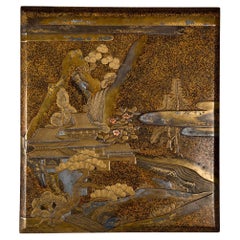
Suzuribako or writing box made of nashiji lacquer and adorned with a landscape
Located in PARIS, FR
Suzuribako, or writing box, of rectangular shape, decorated with an imposing architecture realized in hira maki-e lacquer, probably a palatial structure, situated beside a waterfall...
Category
Antique Late 18th Century Japanese Edo Lacquer
Materials
Gold Leaf
Japanese Lacquered Tebako
Box
Located in PARIS, FR
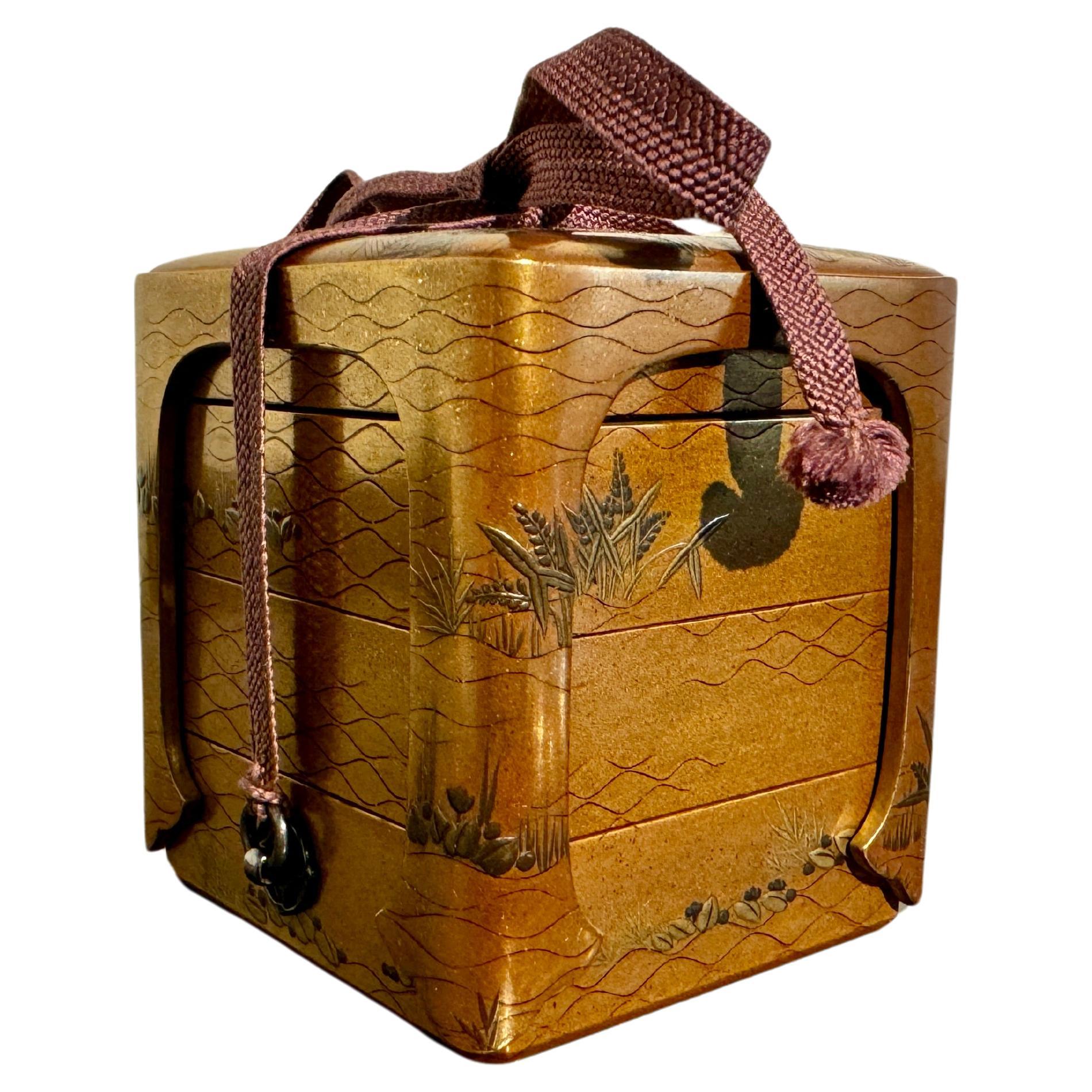
Tebako box with three compartments in golden and nashi-ji lacquer, decorated with golden, red, and kirigane lacquer, golden persimmon tree leaves, among rocks. The compartments are of increasing size from the top. The decoration is in continuity.
Persimmon has been cultivated in southern China for more than 2500 years and is believed to have been introduced to Japan in the 8th century. The veneer is a tree with very hard wood, similar to ebony. According to a legend, one specimen survived the atomic bombing of Nagasaki on August 9, 1945, close to the epicenter. It is therefore in Japan a symbol of strength and longevity. It is also the national fruit of the country. It is eaten as a traditional dish during New Year's Day celebrations.
Tebako literally means "portable box...
Category
Antique 1860s Japanese Lacquer
Materials
Lacquer
Miniature hokkai bako or kaioke, doll furniture replica of a traditional box
Located in PARIS, FR
Small hokkai bako or kaioke seashells game box, of circular form with its four feet, its bronzes and cordon, decorated with a motive of flowers of gold lacquer on a black lacquer bac...
Category
Antique Late 19th Century Japanese Meiji Lacquer
Materials
Gold, Bronze
You May Also Like
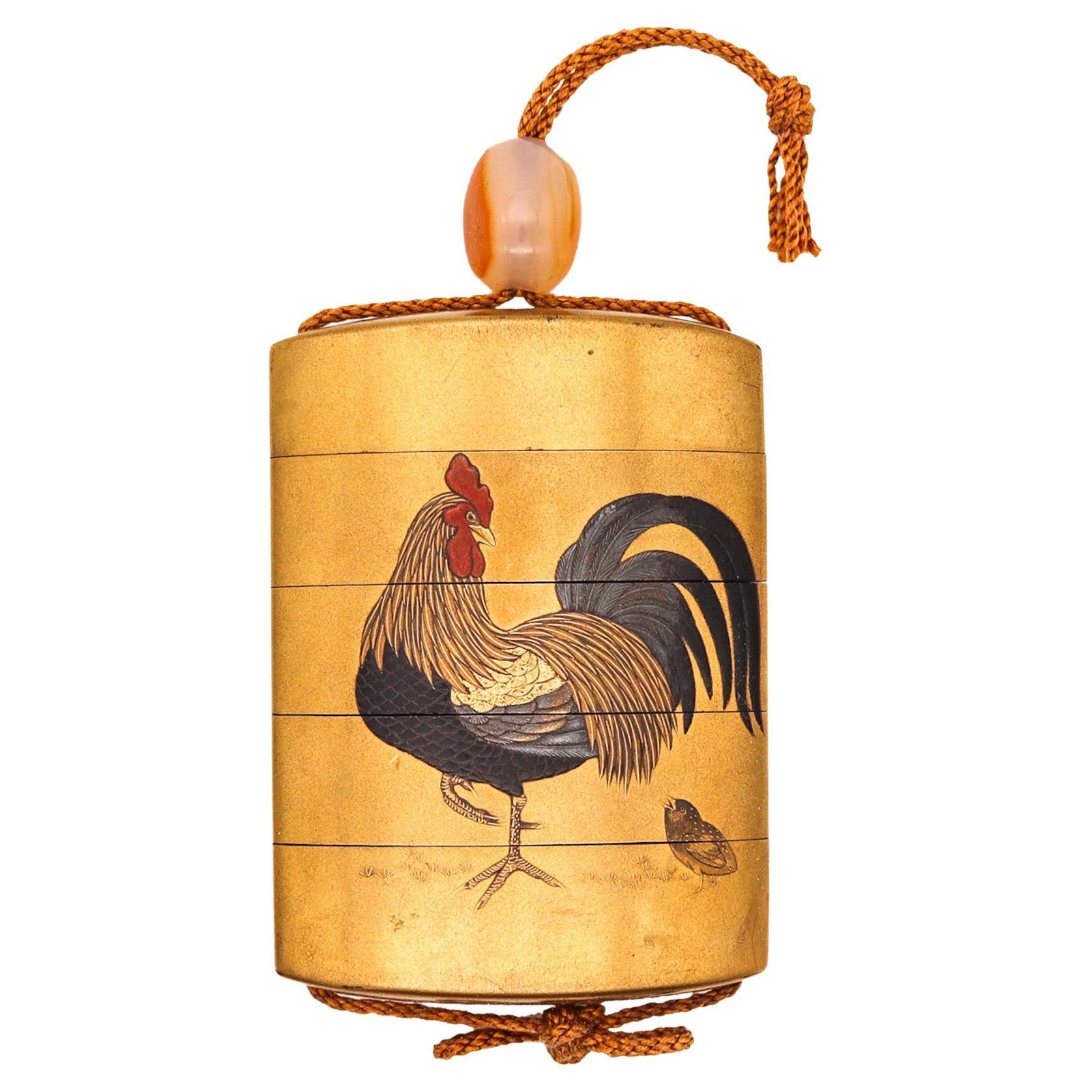
Japan 1810 Kajikawa Edo Period Five Drawer Inro Lacquered Gilt Wood With Rooster
Located in Miami, FL
Japanese Inro from the Edo period (1615-1868) created by Kajikawa.
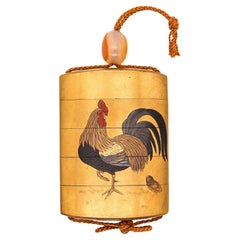
Beautiful Inro, created in Japan by one of the Kajikawa family during the Edo period (1615-1868), circa 1810. Has been carefully crafted in carved precious wood with applications of gilding maki-e and decorated with Japonism patterns. All dan trays are attached together with a himo cord. The detailed craftsmanship was a true pleasure to behold.
Period: Edo period (1615-1868). Shogunate.
Approximate Date: 1790-1810
Motif: A family of birds consisting of a cockerel, the hen and three chicks.
Drawers: Five.
Shape: Rectangular navette.
Technique: Carved wood, lacquer and decorated in iroe-hiramaki-e on a gold ground.
Ojime: 15mm 20mm, oval carved from natural translucent agate.
Netsuke: None
Weight: 47.70 Grams.
Measurements: Inro is 78 mm by 55 mm by 18 mm (3.07 x 2.17 x 0.71 Inches).
Signatures: Kajikawa Saku, in the underside with the signature KAJIKAWA. By a member of the Kajikawa family, signed Kajikawa 梶川 Japan, late 18th century to early 19th century, Edo period (1615-1868).
The Kajikawa family
Kajikawa family, flourished in the 19th century, they was Japanese lacquerware artists whose school in Edo (now Tokyo) flourished for more than 200 years. This family is perhaps the most famous of all the dynasties of Japanese lacquer artists, and certainly the name most often found on inro. The family is said to have been founded by Hikobei at Edo in the early 17th century, although some claim that the family’s great reputation really stemmed from his son and pupil Kyujiro. In any event, Hikobei worked for the shogunate, as did his successors until well into the 19th century. Kijirō excelled in designing particularly delicate lacquer inrō, portable medicine cases...
Category
Antique 1810s Japanese Edo Lacquer
Materials
Agate, Gold
$3,560 Sale Price
20% Off
Japanese Stacking Incense Box, Ju-Kobako, Meiji Period, Mid 19th century, Japan
Located in Austin, TX
An exquisite small Japanese maki-e lacquer stacking box for incense and accessories, ju-kobako, late Edo or early Meiji Period, mid 19th century, Japan.
Crafted in maki-e lacquer an...
Category
Antique Mid-19th Century Japanese Meiji Lacquer
Materials
Silver
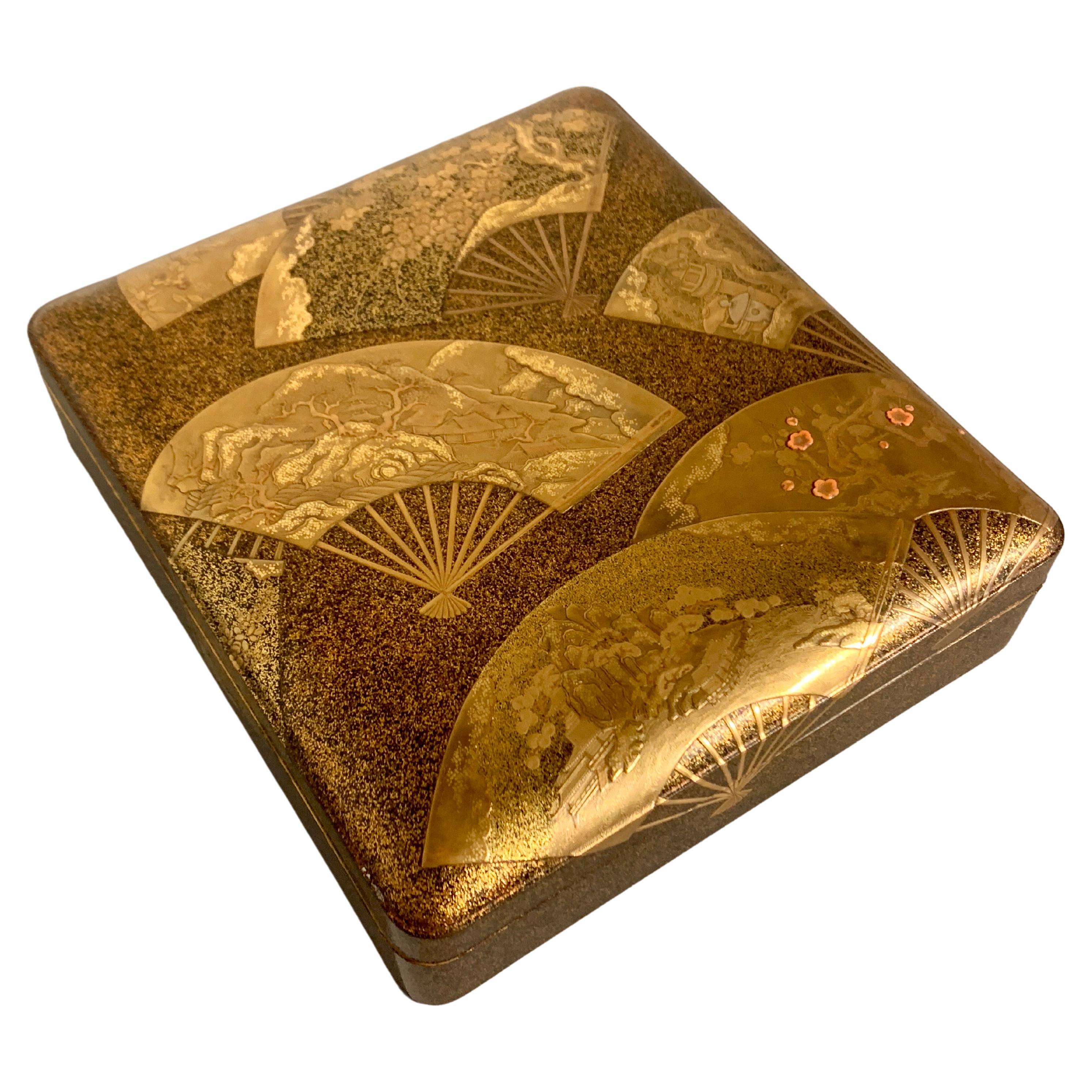
Japanese Maki-e Lacquer Document Box, Edo Period, early 19th Century, Japan
Located in Austin, TX
A spectacular Japanese maki-e lacquer lidded box, possibly a writing box, suzuribako, decorated with images of folding fans, ogi, Edo Period, earl...
Category
Antique Early 19th Century Japanese Edo Lacquer
Materials
Coral
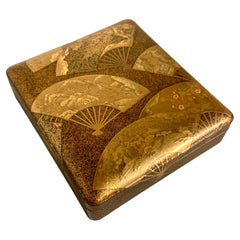
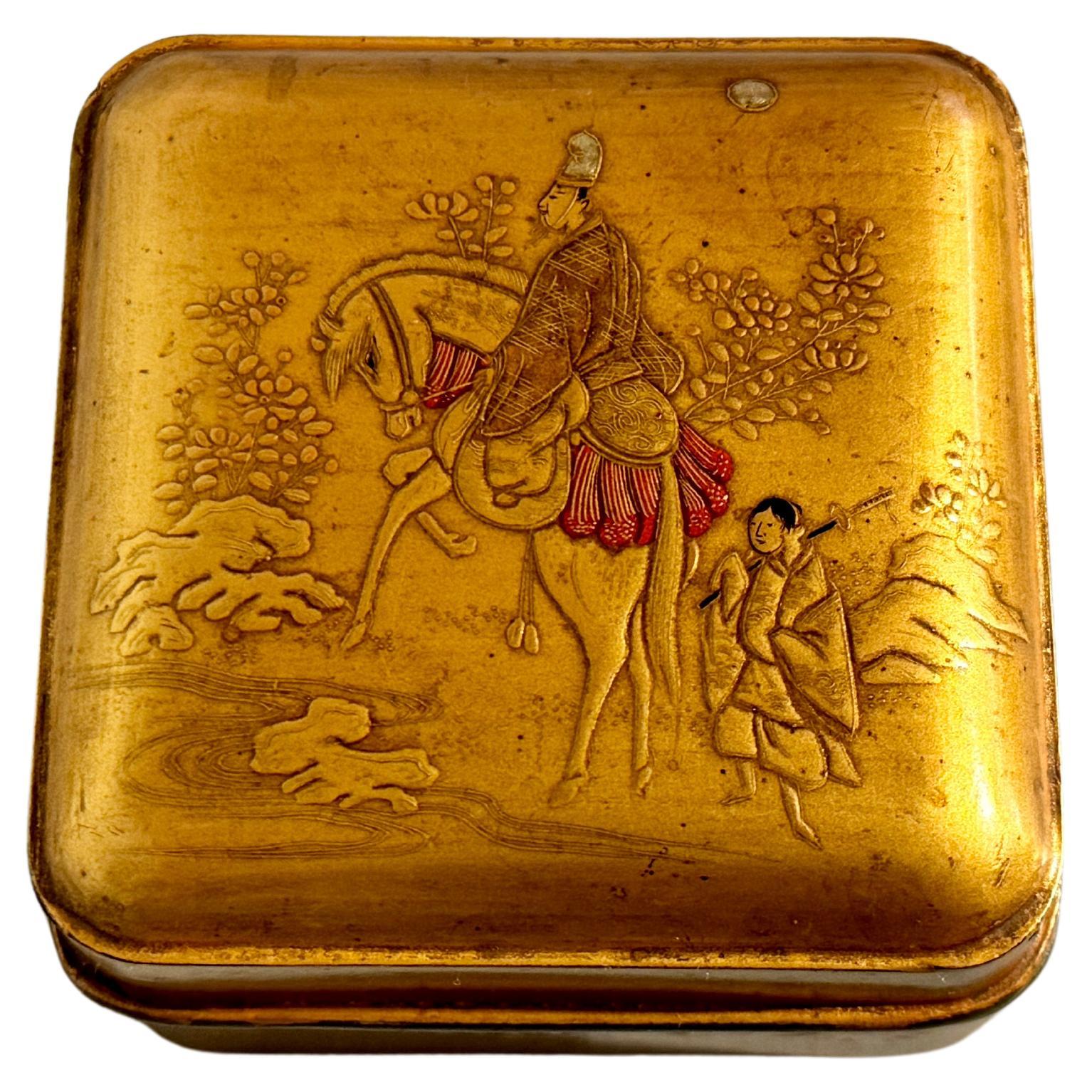
Japanese Lacquer Box, Kogo, Tale of Genji, Edo Period, early 19th century, Japan
Located in Austin, TX
A fine Japanese small lacquer box for precious incense, kogo, Edo period, mid 19th century, Japan.
The small box of gold lacquer and wonderfully dec...
Category
Antique Early 19th Century Japanese Edo Lacquer
Materials
Pewter
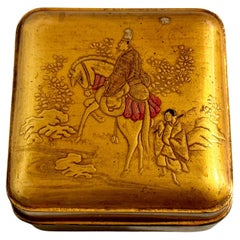
Japanese Lacquer Incense Box, Kogo, Momoyama or Edo Period, 16th/17th Century
Located in Austin, TX
A wonderful Japanese lacquer incense box, kogo, with a design of plovers in flight, late Momoyama or early Edo Period, circa 1600, Japan.
The small box, called a kogo, was used to s...
Category
Antique Early 17th Century Japanese Edo Lacquer
Materials
Gold, Pewter
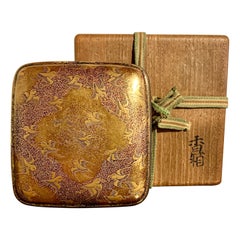
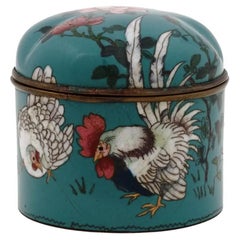
Antique Japanese Cloisonné Meiji Enamel Box with Roosters
Located in Long Island City, NY
An antique Japanese Meiji era covered enamel over brass trinket or jewelry box. Circa: late 19th century to early 20th century. The ware is enameled with a polychrome image of a roos...
Category
Early 20th Century Japanese Meiji Decorative Boxes
Materials
Brass, Enamel