Items Similar to Kobako in nashiji lacquer imitating wood texture, lid decorated with an ikebana
Want more images or videos?
Request additional images or videos from the seller
1 of 9
Kobako in nashiji lacquer imitating wood texture, lid decorated with an ikebana
$6,604.93
£4,891.94
€5,500
CA$9,035.22
A$9,833.10
CHF 5,212.52
MX$118,299.66
NOK 66,111.43
SEK 60,487.33
DKK 41,910.95
About the Item
Imposing kobako in nashiji lacquer on a black ground, decorated with a motif imitating wood grain. The lid is adorned with an ikebana basket (hanakago) containing a bouquet of remarkable harmony despite its complexity. The level of detail achieved by the lacquer artist allows several plants in the floral composition to be clearly identified. The chrysanthemum (kiku), first of all, is not only the heraldic emblem of the Japanese imperial family but also a flower with a long and complex history intertwined with that of the archipelago. It was first described by Jacob Breynius in 1689, although the plant owes its name to Carolus Linnaeus: “chrys” in Greek means “golden,” referring to the flower’s original colour, and “anthemon” means “flower”—hence its designation as the “golden flower.”
To understand the symbolism behind the chrysanthemum, one must go back to the years 1500–1400 BC. Chrysanthemums were already cultivated in China as an aromatic flowering herb and were considered a noble plant endowed with unique powers—so much so that only nobles were permitted to grow them in their gardens. They appear on the finest Chinese porcelains, often painted with great refinement. In China, the chrysanthemum is generally a symbol of nobility. Introduced to Japan only in the 8th century, it was elevated by the emperor to the rank of national symbol and later inspired the imperial seal.
During the Heian period, the imperial family took particular interest in the chrysanthemum, even creating a festival in its honour, held on the 9th day of the 9th month at the Kamigamo Shrine in Kyoto: the annual Chōyō no Sekku, or Chrysanthemum Festival. After the ceremony, priests dressed as white crows perform a ritual dance with bows and arrows, followed by children from the area engaging in sumo bouts within the shrine precincts.
Although long popular throughout Japan, it was not until the 13th century that Emperor Go-Toba adopted the sixteen-petaled chrysanthemum as the formal emblem of the imperial family. Chrysanthemum heraldry represents the emperor, the imperial household, and the Japanese people. It is said that emperors’ thrones were once entirely covered with chrysanthemums, giving rise to the expression “the Chrysanthemum Throne.” Initially reserved for the aristocracy, chrysanthemum cultivation expanded greatly during the Edo period (1600–1868), beginning in Kyoto. Numerous specialists developed and exhibited new varieties in inns and temples, recording each detail—form, colour, name, and price—in dedicated registers. Although centred in Kyoto between 1688 and 1703, chrysanthemum culture eventually spread throughout the country.
The chrysanthemum is also one of the four Junzi, or “gentlemen”: the plum, the orchid, the bamboo, and the chrysanthemum together form the “Four Gentlemen,” each symbolizing a season—winter for the plum, spring for the orchid, summer for bamboo, and autumn for the chrysanthemum. They remain essential motifs in the pictorial arts across East Asia.
This rich symbolism explains the recurrence of the chrysanthemum in many contexts—on the Japanese passport, on 50-yen coins, and in the Supreme Order of the Chrysanthemum, the highest distinction a Japanese citizen can receive from the emperor. No other flower in the world is associated with such an honour.
In the Japanese language of flowers, the sunflower (himawari) represents radiance and respect. It symbolizes brilliant beauty and admiration for light and life. The sunflower is also renowned for its fidelity to the sun, turning its head to follow its path throughout the day. This characteristic has given the sunflower a deeper meaning in Japan, where it symbolizes constancy and loyalty—values highly regarded in a culture deeply attached to tradition and hierarchy. By faithfully following the sun, the sunflower becomes a powerful metaphor for these virtues.
Inside the kobako is a lacquered tray decorated with the same wood-grain motif as the exterior. The interior of the lid features a scene of a pavilion beneath an ancient pine tree on the edge of a lake, set within a karst landscape on a gold nashiji ground.
Japan – Meiji period (1868–1912)
Height: 11 cm – Length: 27.5 cm – Width: 10.5 cm
Tray: Height: 2 cm – Length: 9.5 cm – Width: 6 cm
- Dimensions:Height: 4.34 in (11 cm)Width: 4.14 in (10.5 cm)Depth: 10.83 in (27.5 cm)
- Style:Meiji (Of the Period)
- Materials and Techniques:
- Place of Origin:
- Period:
- Date of Manufacture:1868-1912
- Condition:Wear consistent with age and use.
- Seller Location:PARIS, FR
- Reference Number:Seller: 2024-13981stDibs: LU8311247962872
About the Seller
No Reviews Yet
Vetted Professional Seller
Every seller passes strict standards for authenticity and reliability
Established in 2013
1stDibs seller since 2023
- ShippingRetrieving quote...Shipping from: PARIS, France
- Return Policy
More From This Seller
View AllJapanese Natsume or tea box adorned with mapple leaves and sakure flowers
Located in PARIS, FR
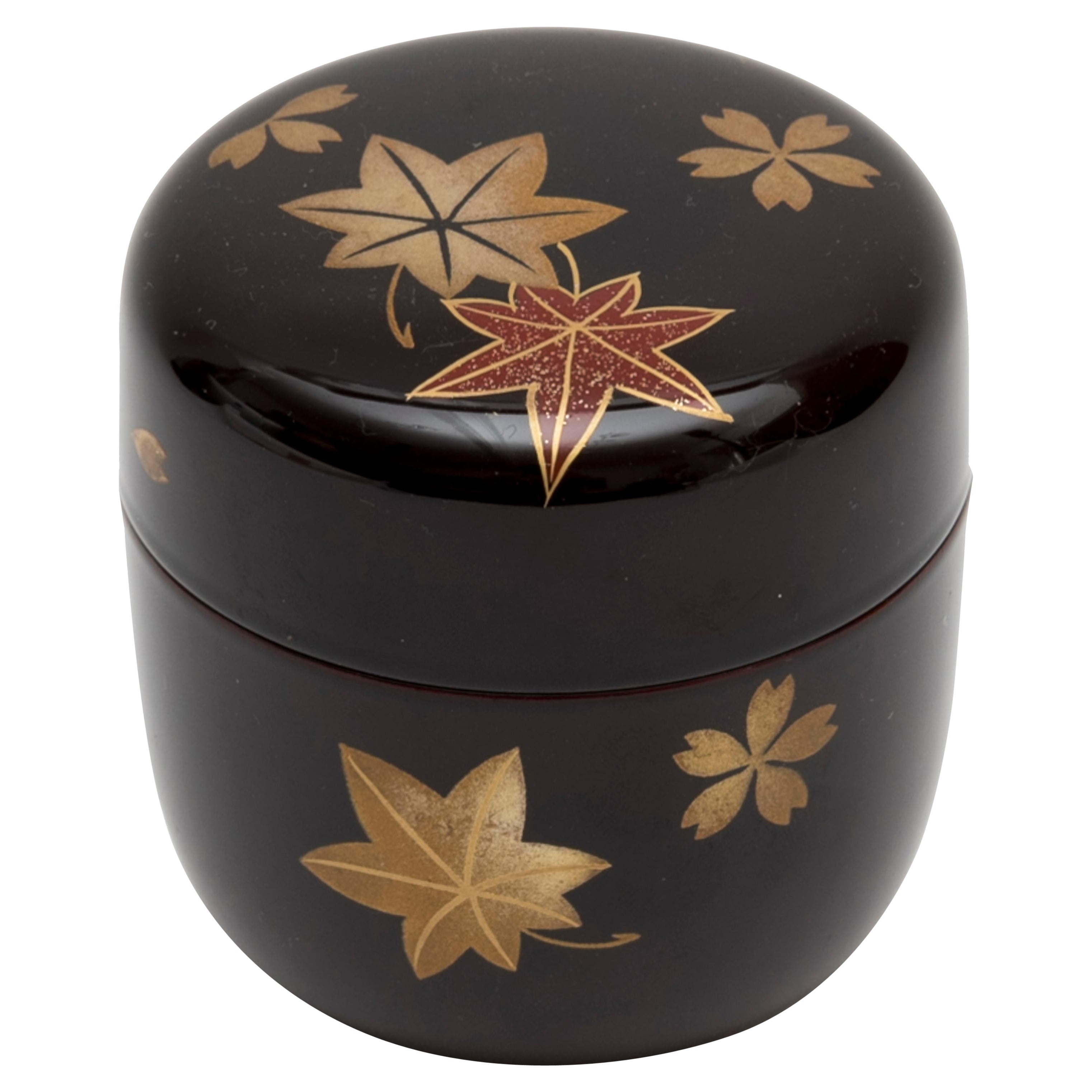
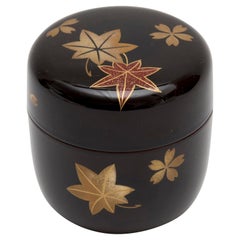
Natsume in dark red lacquer, decorated with autumn leaves and cherry blossoms in hiramaki-e and nashiji. Interior in black lacquer.
Maple leaves (Momiji) are celebrated in literature...
Category
Early 20th Century Japanese Taisho Lacquer
Materials
Gold
Japanese Tebako in Nashiji lacquer adorned with golden Persimon flowers
Located in PARIS, FR
Tebako box with two compartments in golden and nashi-ji lacquer, decorated with golden, red, and kirigane lacquer, golden persimmon tree leaves, among rocks. The compartments are of ...
Category
Antique Early 19th Century Japanese Meiji Lacquer
Materials
Gold
Japanese suzuribako lacquered box peony river
Located in PARIS, FR
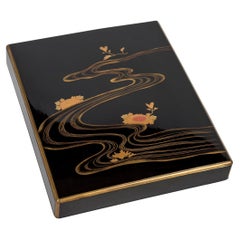
Suzuribako box (empty) in black lacquer. Gold maki-e decoration of a river bordered by peonies, one with red highlights. The edges of the lid are in gold lacquer. Nashi-ji interior.
Category
Antique Late 19th Century Japanese Lacquer
Materials
Gold
Japanese Lacquered Tebako
Box
Located in PARIS, FR
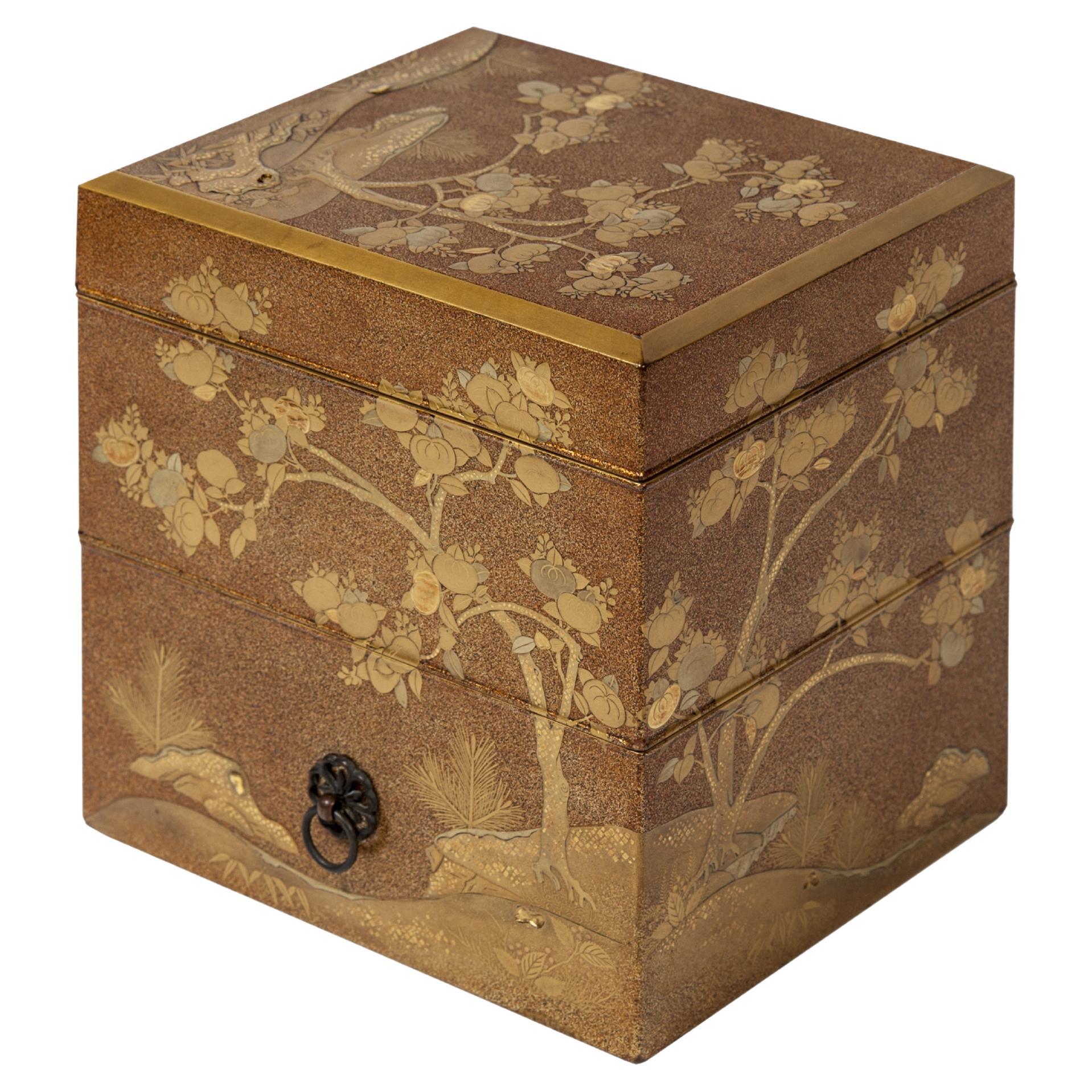
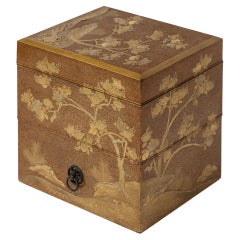
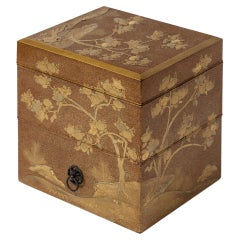
Tebako box with three compartments in golden and nashi-ji lacquer, decorated with golden, red, and kirigane lacquer, golden persimmon tree leaves, among rocks. The compartments are of increasing size from the top. The decoration is in continuity.
Persimmon has been cultivated in southern China for more than 2500 years and is believed to have been introduced to Japan in the 8th century. The veneer is a tree with very hard wood, similar to ebony. According to a legend, one specimen survived the atomic bombing of Nagasaki on August 9, 1945, close to the epicenter. It is therefore in Japan a symbol of strength and longevity. It is also the national fruit of the country. It is eaten as a traditional dish during New Year's Day celebrations.
Tebako literally means "portable box...
Category
Antique 1860s Japanese Lacquer
Materials
Lacquer
Japanese lacquered Cherry Tree Kobako
Located in PARIS, FR
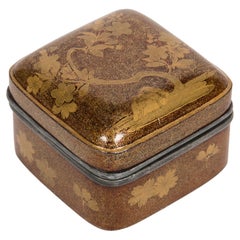
Kobako in nashiji lacquer of square shape with a hira maki-e décor of a blossoming
cherry tree. Both of the four sides are adorned with golden lacquer cherry flowers,
represented i...
Category
Antique 19th Century Japanese Lacquer
Materials
Lacquer
Japanese Lacquered Natsume
Tea Box
Located in PARIS, FR
Natsume in dark red lacquer, decorated with autumn leaves and cherry blossoms in hiramaki-e and nashiji. Interior in black lacquer.
Maple leaves (Momiji) are celebrated in literatur...
Category
Mid-20th Century Japanese Lacquer
Materials
Lacquer
You May Also Like
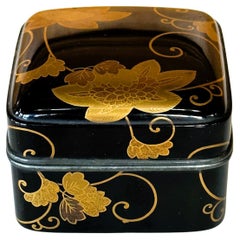
Antique Japanese Lacquered Incense Box Kobako in Kodaiji Style
Located in Atlanta, GA
An antique lacquered small box that was likely used to contain incense powder (it is called Kobako in Japanese), circa early to mid-19th century of the Edo...
Category
Antique 19th Century Japanese Edo Lacquer
Materials
Wood, Lacquer
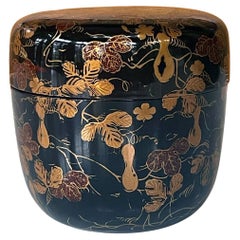
Japanese Lacquered Maki-E Natsume in Kodaiji Style
Located in Atlanta, GA
A Japanese lacquered tea caddy (known as Natsume) with fine Maki-e decoration circa 18-19th century Edo to Meiji period. The large-sized nat...
Category
Antique 19th Century Japanese Meiji Lacquer
Materials
Wood, Lacquer
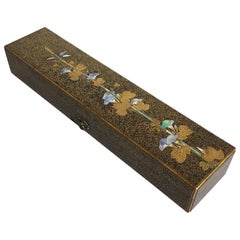
Japanese Edo Period Igarashi School Long Lacquer Box, Tanzaku-Bako
Located in Austin, TX
A stunning Japanese Edo period lacquer tanzakubako, box for poem cards, late 18th-early 19th century, Edo Period, Japan.
Attributed to the Igarashi School, this box is masterfully ...
Category
Antique Early 19th Century Japanese Edo Lacquer
Materials
Mother-of-Pearl, Lacquer
Fine Miniature Japanese Kodansu with Lacquer Inlays
Located in Atlanta, GA
A fine Japanese miniature kodansu constructed from Kaki wood (Persimmon) circa 19th century, late Meiji period. With its expressive exotic wood grains and exposed tenon construction,...
Category
Antique Late 19th Century Japanese Meiji Lacquer
Materials
Wood
Intricately Carved Kamakura Lacquer Box with Botanical Design by Tamerou Ono
Located in Prahran, Victoria
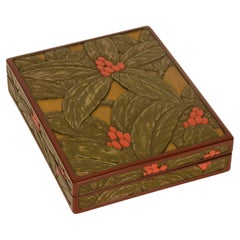
A vintage Japanese Tsuzuri bako, writing box. with an unusual, deeply carved relief of Japanese sarcandra glabra, a woody herbal sub-shrub native to Asia with deep green glossy leave...
Category
Mid-20th Century Japanese Lacquer
Materials
Wood
$3,600 Sale Price
20% Off
Free Shipping
Japonese Lacquered Box with Flower, Late of the 19th Century
Located in Beuzevillette, FR
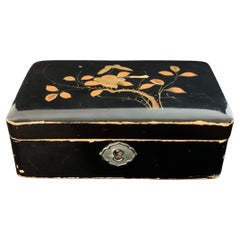
Nice little black lacquer box from Japan. It is made of black lacquered wood and decorated with flowers and foliage. The inside is covered with red velvet. It is ideal for storing je...
Category
Antique Late 19th Century Japanese Lacquer
Materials
Lacquer
$172 Sale Price
20% Off