Want more images or videos?
Request additional images or videos from the seller
1 of 21
Large Japanese Lacquer Box Early Edo Period Ex-Christie
s
Price:$9,000
$13,500List Price
About the Item
- Dimensions:Height: 6 in (15.24 cm)Width: 12.8 in (32.52 cm)Depth: 15.5 in (39.37 cm)
- Style:Japonisme (Of the Period)
- Materials and Techniques:
- Place of Origin:
- Period:
- Date of Manufacture:17th Century
- Condition:Wear consistent with age and use. Fine antique condition, well preserved with integrity and patina. Small scattered nicks along the edges and on the surface (only typical examples are shown), some wear on the lead rim, scratches and wears to base and corners. Storage box very worn.
- Seller Location:Atlanta, GA
- Reference Number:1stDibs: LU945021158502
About the Seller
4.9
Platinum Seller
Premium sellers with a 4.7+ rating and 24-hour response times
Established in 2006
1stDibs seller since 2010
586 sales on 1stDibs
Authenticity Guarantee
In the unlikely event there’s an issue with an item’s authenticity, contact us within 1 year for a full refund. DetailsMoney-Back Guarantee
If your item is not as described, is damaged in transit, or does not arrive, contact us within 7 days for a full refund. Details24-Hour Cancellation
You have a 24-hour grace period in which to reconsider your purchase, with no questions asked.Vetted Professional Sellers
Our world-class sellers must adhere to strict standards for service and quality, maintaining the integrity of our listings.Price-Match Guarantee
If you find that a seller listed the same item for a lower price elsewhere, we’ll match it.Trusted Global Delivery
Our best-in-class carrier network provides specialized shipping options worldwide, including custom delivery.You May Also Like
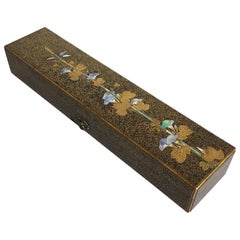
Japanese Edo Period Igarashi School Long Lacquer Box, Tanzaku-Bako
Located in Austin, TX
A stunning Japanese Edo period lacquer tanzakubako, box for poem cards, late 18th-early 19th century, Edo Period, Japan.
Attributed to the Igarashi School, this box is masterfully ...
Category
Antique Early 19th Century Japanese Edo Lacquer
Materials
Mother-of-Pearl, Lacquer
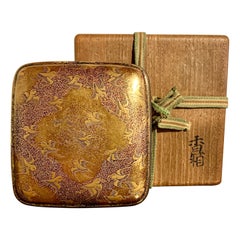
Japanese Lacquer Incense Box, Kogo, Momoyama or Edo Period, 16th/17th Century
Located in Austin, TX
A wonderful Japanese lacquer incense box, kogo, with a design of plovers in flight, late Momoyama or early Edo Period, circa 1600, Japan.
The small box, called a kogo, was used to s...
Category
Antique Early 17th Century Japanese Edo Lacquer
Materials
Gold, Pewter
$6,000
H 2.75 in W 3.75 in D 3.75 in
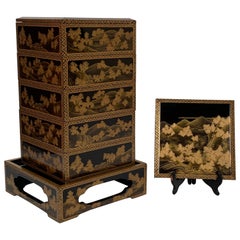
Japanese Maki-e Lacquer Stacking Box, Jubako, Meiji Period, Japan
Located in Austin, TX
A fine and impressive Japanese gold maki-e decorated black lacquer five-tier jubako with presentation tray, two lids, and the original tomobako storage box, Meiji period, late 19th c...
Category
Antique Late 19th Century Japanese Meiji Lacquer
Materials
Lacquer
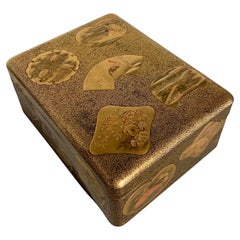
Large Japanese Lacquer Document Box, Ryoshibako, Edo/Meiji period, Japan
Located in Austin, TX
A large and magnificently decorated Japanese lacquer document box, ryoshibako, signed Umeboshi/Baikyo, late Edo or early Meiji Period, mid 19th century, Japan.
The large document box, ryoshibako, of tall, rectangular shape with rounded corners, and fitted with an inrobuta (flush-fitting) cover with beveled edges. The exterior of this exquisite box is decorated all over with fifteen different raised reserves shaped as uchiwa (paddle) fans against a lush and intricate krikane ground imitating shagreen.
The uchiwa shaped reserves all of takamaki-e, and exquisitely painted with designs of animals, flowers, and landscapes in silver, gold, maki-e, hiramaki-e, and takamaki-e, with kirikane, nashiji, and polychrome embellishments, upon gold lacquer fudame grounds.
The interior of the lid is nothing short of spectacular, featuring a large design of a magnificent and beautifully detailed rooster and hen with chicks gathered around a lazy stream. Large stalks of chrysanthemum bloom behind them. All against an ethereal nashiji ground.
The cover of the box features five reserves:
1. Three minogame (turtles with long tails), symbolizing longevity
2. "Narihira Crossing the Sumida" from The Tales of Ise...
Category
Antique 1860s Japanese Meiji Lacquer
Materials
Softwood, Lacquer
$27,500
H 5.75 in W 10 in D 13.25 in
Japanese Lacquer Hokai Box, 19th Century
Located in Pasadena, CA
This is a good example of a traditional Japanese Hokai shell storage box for the Kai-awase game. This box is well-detailed in chased brass appliques and makie. The box is in overall ...
Category
Antique Late 19th Century Japanese Japonisme Lacquer
Materials
Wood, Lacquer
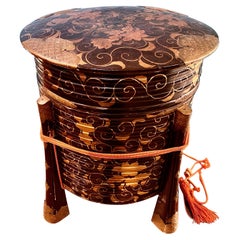
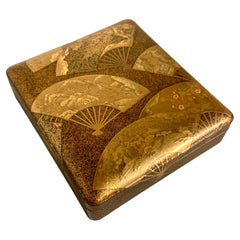
Japanese Maki-e Lacquer Document Box, Edo Period, early 19th Century, Japan
Located in Austin, TX
A spectacular Japanese maki-e lacquer lidded box, possibly a writing box, suzuribako, decorated with images of folding fans, ogi, Edo Period, earl...
Category
Antique Early 19th Century Japanese Edo Lacquer
Materials
Coral
$12,000
H 2.5 in W 9 in D 10 in
Japanese Lacquered Tebako
Box
Located in PARIS, FR
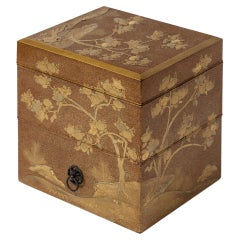
Tebako box with three compartments in golden and nashi-ji lacquer, decorated with golden, red, and kirigane lacquer, golden persimmon tree leaves, among rocks. The compartments are of increasing size from the top. The decoration is in continuity.
Persimmon has been cultivated in southern China for more than 2500 years and is believed to have been introduced to Japan in the 8th century. The veneer is a tree with very hard wood, similar to ebony. According to a legend, one specimen survived the atomic bombing of Nagasaki on August 9, 1945, close to the epicenter. It is therefore in Japan a symbol of strength and longevity. It is also the national fruit of the country. It is eaten as a traditional dish during New Year's Day celebrations.
Tebako literally means "portable box...
Category
Antique 1860s Japanese Lacquer
Materials
Lacquer
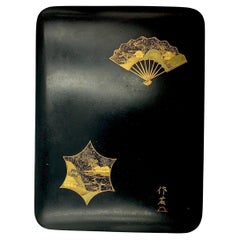
Japanese Meiji Period Antique Lacquer Box with Gold Maki-e Decoration
Located in New York, NY
A fine antique Japanese Meji Period lacquer box decorated with a fan and a stylized star shaped window in the maki-e technique. The fan at the top right corner, fully opened depictin...
Category
Antique 19th Century Japanese Meiji Lacquer
Materials
Lacquer
$1,700
H 4.5 in W 3.25 in D 1.88 in
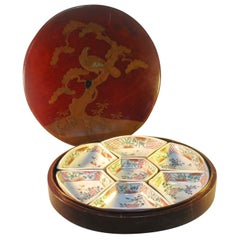
Japanese 7-Pcs, Arita Sweetmeat Set
Matching Lacquer Box Meiji Period, 1880s
Located in Ottawa, Ontario
A seven-piece Japanese Arita Sweetmeat set and matching lacquer box, Meiji period (1880-1890). Comprising of a central hexagonal dish and six-fan shaped ...
Category
Antique Late 19th Century Japanese Meiji Lacquer
Materials
Porcelain, Lacquer
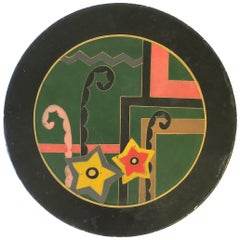
Art Deco Period Box Japanese
Located in New York, NY
A very beautiful Japanese papier-mâché round box with a colorful geometric design and black lacquer finish, Art Deco period, circa early-20th century, Japan. Marked "Made in Japan" o...
Category
Early 20th Century Japanese Art Deco Decorative Boxes
Materials
Paper
More From This Seller
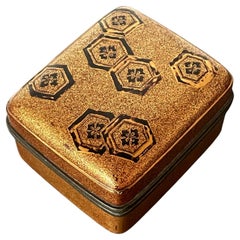
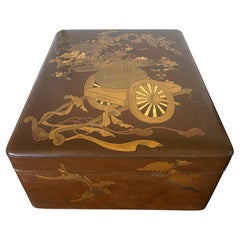
View AllAntique Japanese Lacquered Incense Box Kobako Ex-Christie
s
Located in Atlanta, GA
An old Japanese lacquered small box likely used to contain incense powder called Kobako, circa Momoyama to early Edo period (16-17th century). The rectangular form box with a fitted ...
Category
Antique 17th Century Japanese Japonisme Lacquer
Materials
Lead
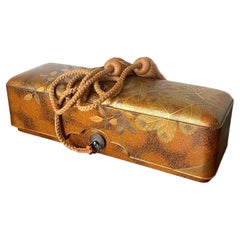
Japanese Lacquer Maki-E Scroll Box Fubako by Kansonsai Edo Period
Located in Atlanta, GA
A Japanese lacquered wood fubako (a box to store document or small scroll painting) circa late 18th century of Edo period. The rectangular box features a deep lid with rounded corners and recessed mid-edge and a lower box with two bronze medallion rings and tasseled silk ties. The surface of the fubako was elaborately decorated with hiramaki-e and a low takamaki-e on a mottled Mura-nashiji background. The motifs on the lid depict branches of Japanese pine with finely rendered needles on the lower part; on the upper part, it showcases fruited persimmon branches. Two different shades of gold fundame were used to contrast the design and augmented by scattered gold kirigane to highlight some of the leaves. The design continues and cascades down to all sides of the lid as well as the walls of the box. The two bronze medallions appear original to the box and the silk ties show significant fading from the age. This Fine fubako is signed on the lower wall "Kanshosai" in Kanji with a kao mark. All the trims were finished in gold fundame and the interiors a dense nashiji in gold.
Kanshosai is the mark of the distinguished lacquer artist Lizuka Toyo I who also signed his work "Toyosai". He was active in the second half of the 18th century during Edo period, employed by Hachisuka Shigeyoshi (1738-1801), daimyo of Awa on Shikoku Island. Although most survived work bearing his marks are inros, he was also known to decorated trays and other larger objects...
Category
Antique Late 18th Century Japanese Edo Lacquer
Materials
Wood, Lacquer
Japanese Lacquer Ryoshibako Document Box Meiji Period
Located in Atlanta, GA
A large Japanese lacquer box with elaborate Maki-e design from Meiji period, (mid-late 19th century). The generous size of the box was reser...
Category
Antique 19th Century Japanese Japonisme Lacquer
Materials
Wood, Lacquer
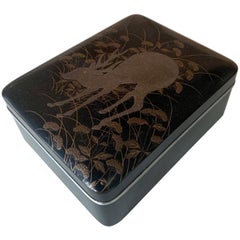
Japanese Rinpa Style Lacquer Box Meiji Period
Located in Atlanta, GA
A black lacquer tebako (hand box) with maki-e decoration and silver trim, circa late 19th century, Meiji period. The surface of the lid features a Rinpa style maki-e paint depicting ...
Category
Antique 1890s Japanese Japonisme Lacquer
Materials
Wood, Lacquer
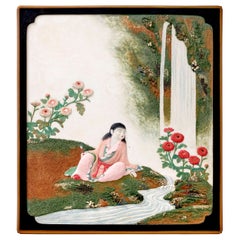
Rare Japanese Lacquer Writing Box Suzuribako Meiji Period
Located in Atlanta, GA
A Japanese Lacquer writing box Suzuribako Meiji Period (1868-1912), likely circa late 19th century. This suzuribako is one of the most unusual boxe...
Category
Antique 19th Century Japanese Japonisme Lacquer
Materials
Lacquer
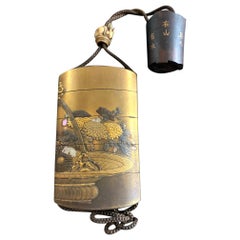
Antique Japanese Inro by Shigehide Edo Period
Located in Atlanta, GA
This exquisite four-case lacquered inro was dated to the latter part of 18th century to early 19th century (Edo period) and made by Shigehide. The opposite sides of the inro together features a lavish flower arrangement in a bamboo basket (ikebana). The detailed craftmanship was a true pleasure to behold. Mostly Takamaki-e (high relief) were used to texturize the delicate petals of the chrysanthemums, on which different shades of gold were used to create contrast. Raden (mother of pearl) shells were also used to highlight some leaves, rendering the piece an interesting balance of color and material. The interior was completed in a mottled gold finish. It was signed Shigehide on the bottom with a Kao. There is a small carved rabbit ojime bead...
Category
Antique Late 18th Century Japanese Japonisme Lacquer
Materials
Wood, Lacquer
Still Thinking About These?
All Recently ViewedMore Ways To Browse
Lacquered Large Boxes
Antique Paper Documents
17th Century Wood Box
Christie Brown
Large Japanese Lacquer Box
Mother Of Pearl Inlay Lacquer
Japan Edo Lacquer
Antique Asian Mother Of Pearl Furniture
Asian Black And Gold Decoration
Tray Japan
Maki E
Antique Cinnabar
Cinnabar Lacquer
Cinnabar Furniture
Japanese Lacquer And Mother Of Pearl
Japanese Red Lacquered
Chinese Export Black Lacquer Gilt
Japanese Mother Of Pearl Art