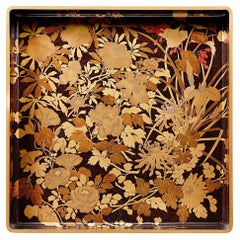
Items Similar to MEIJI PERIOD 1890 Maki-e Presentation Tray In Lacquer
Gold With Kanji Wood Box
Want more images or videos?
Request additional images or videos from the seller
1 of 14
MEIJI PERIOD 1890 Maki-e Presentation Tray In Lacquer
Gold With Kanji Wood Box
$13,965per set
$19,950per set30% Off
£10,555.92per set
£15,079.89per set30% Off
€12,108.08per set
€17,297.26per set30% Off
CA$19,467.78per set
CA$27,811.12per set30% Off
A$21,192.27per set
A$30,274.67per set30% Off
CHF 11,248.87per set
CHF 16,069.81per set30% Off
MX$254,988.64per set
MX$364,269.48per set30% Off
NOK 142,538.44per set
NOK 203,626.34per set30% Off
SEK 130,605.49per set
SEK 186,579.27per set30% Off
DKK 90,422.43per set
DKK 129,174.90per set30% Off
About the Item
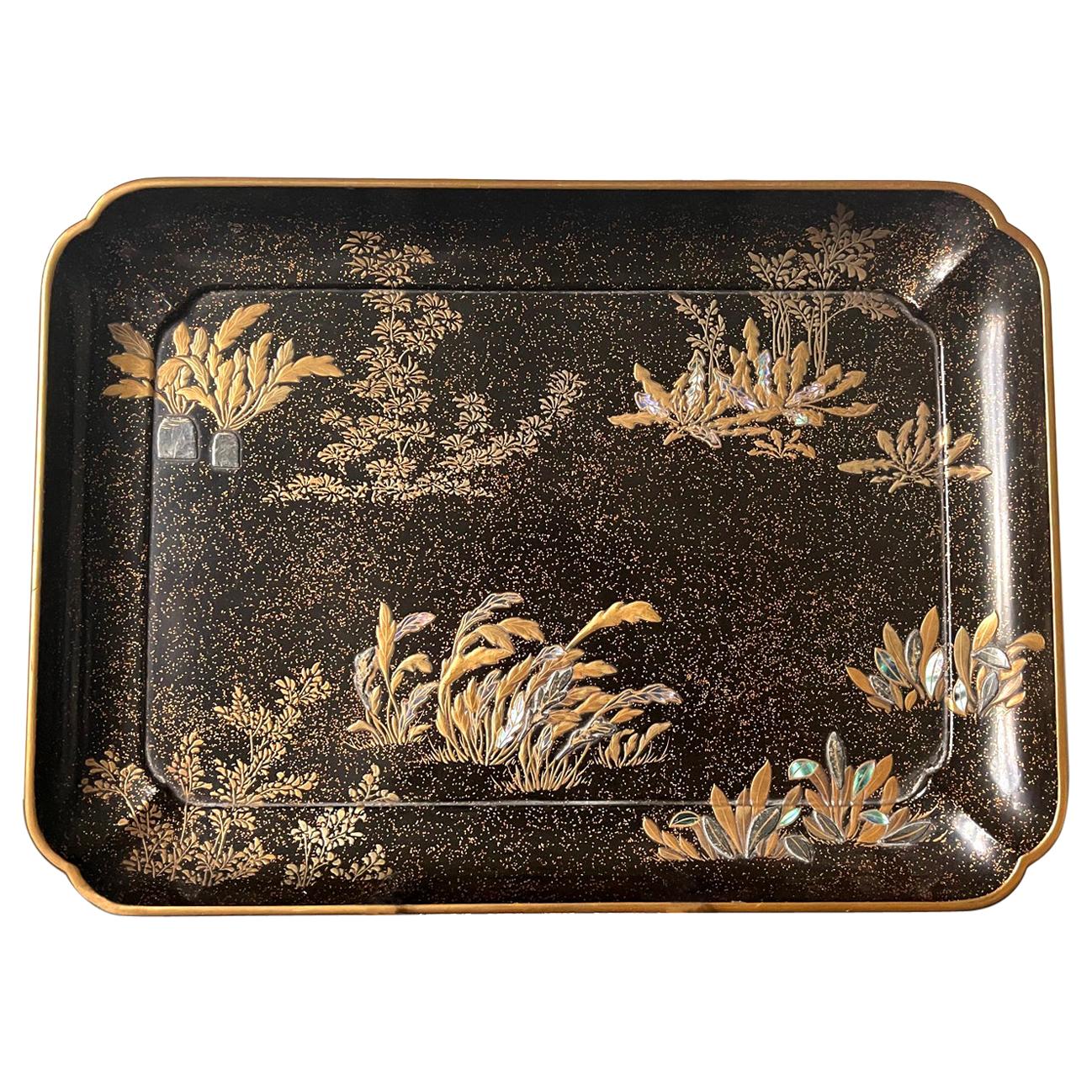
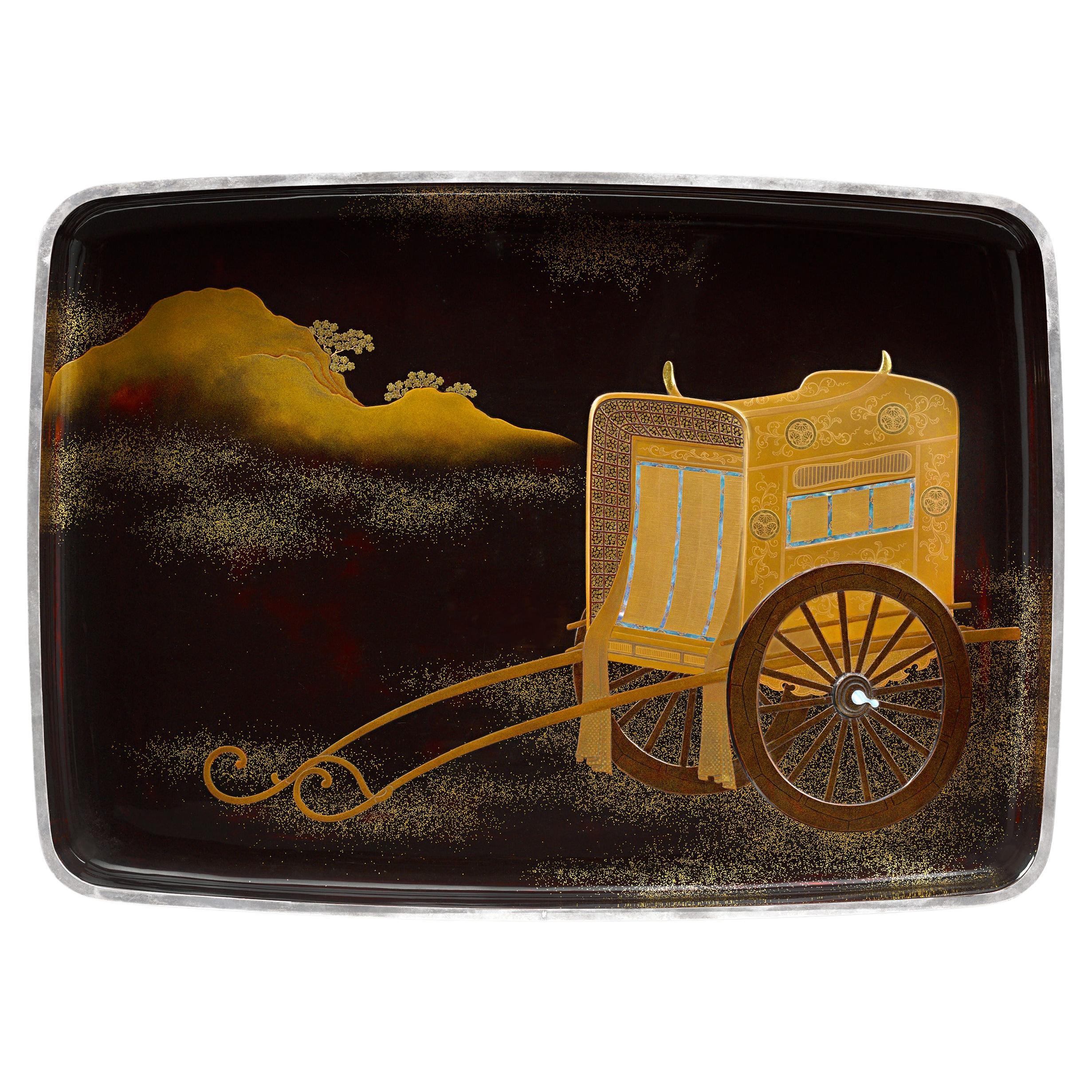
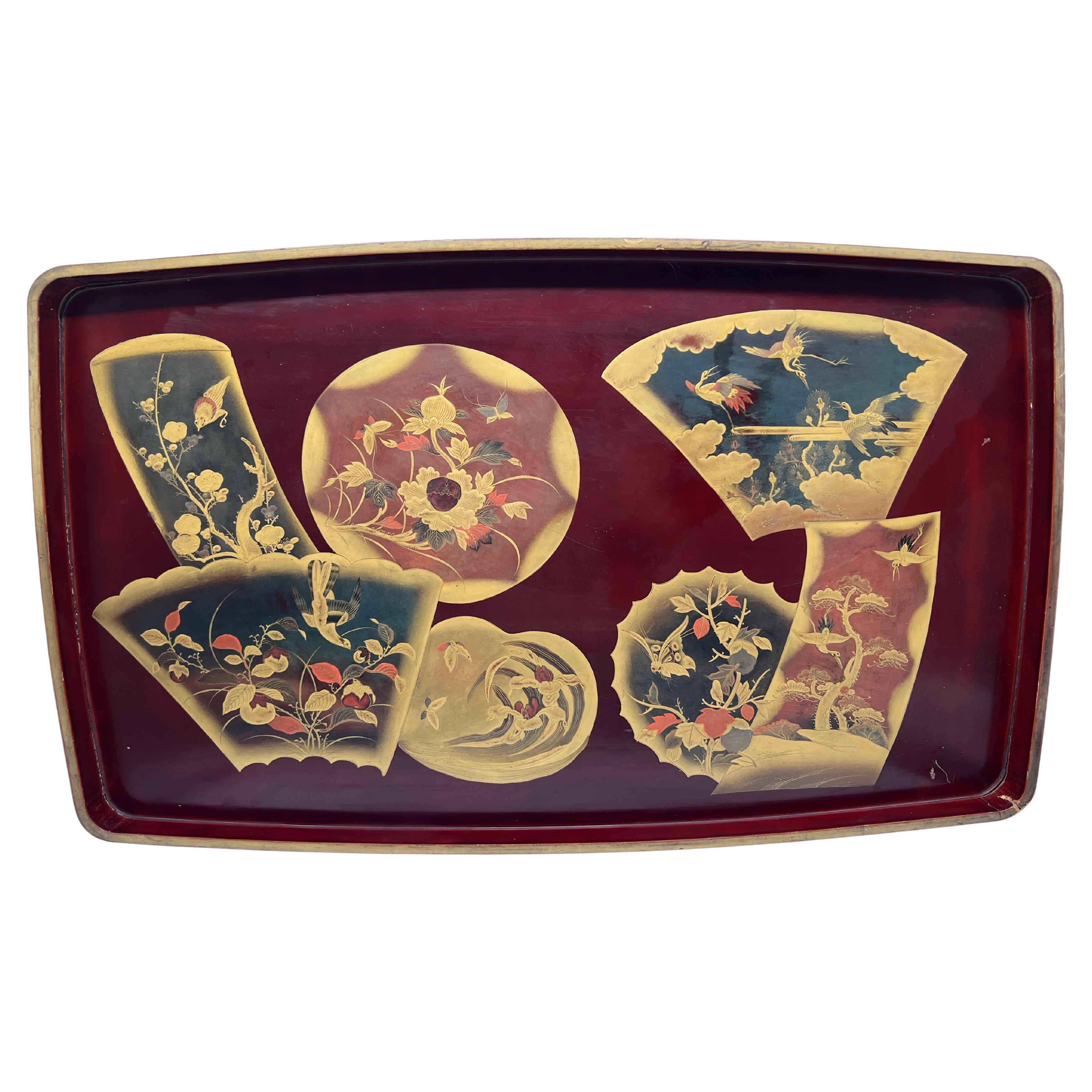
A large maki-e presentation tray from the Meiji period.
This is an extraordinary presentation rectangular tray created in the Imperial Japan period during the pinnacle of the Meiji period, between the 1880 and 1890. The wooden tray was masterfully crafted covered with pure gold and black lacquer decoration and the maki-e method of sprinkling metal particles on the still wet lacquer. This is a great treasure tray, with exceptional and great eye appeal. This magnificent tray is presented in the original kanji wood box
Maki-e
This is a traditional Japanese lacquerware technique that involves creating designs by sprinkling metallic powders, like gold or silver, onto wet lacquer. The process includes preparing a lacquered surface, drawing designs with lacquer, carefully sprinkling metal powders onto the wet lacquer, and then letting it harden. The design is then sealed with more lacquer and polished to a high sheen to protect it and bring out its luster.
The Meiji Imperial Period
This is an era of Japanese history that extended from October 23, 1868 to July 30, 1912.The Meiji era was the first half of the Empire of Japan, when the Japanese people moved from being an isolated feudal society at risk of colonization by Western powers to the new paradigm of a modern, industrialized nation state and emergent great power, influenced by Western scientific, technological, philosophical, political, legal, and aesthetic ideas. As a result of such wholesale adoption of radically different ideas, the changes to Japan were profound, and affected its social structure, internal politics, economy, military, and foreign relations. The period corresponded to the reign of Emperor Meiji. It was preceded by the Keiō era and was succeeded by the Taishō era, upon the accession of Emperor Taishō.
Country: Imperial Japan,
Period: Meiji, 1880-1890.
Materials: Wood, lacquer, gold and
Technique: Maki-e and black lacquer.
Components: The presentation tray, wood box and dust bag.
Weight: All combined, about 6 pounds, (2.73 Kg).
Measurements: Rectangular 91 mm by 680 mm by 471 mm (3.57 x 26.75 x 18.55 Inches).
Collateral: This magnificent Lacquered maki-e tray is presented in the original kanji wood box
Condition: It is in great antique condition, near mint, with all parts secured in the settings. This presentation Lacquered maki-e tray has been carefully inspected to guarantee the condition and authenticity.
INVENTORY REF: D112725RENM/.9811
- Dimensions:Height: 3.57 in (9.07 cm)Width: 26.75 in (67.95 cm)Depth: 18.55 in (47.12 cm)
- Sold As:Set of 2
- Style:Meiji (Of the Period)
- Materials and Techniques:
- Place of Origin:
- Period:
- Date of Manufacture:1890
- Condition:Wear consistent with age and use. It is in great antique condition, near mint, with all parts secured in the settings. This presentation Lacquered maki-e tray has been carefully inspected to guarantee the condition and authenticity.
- Seller Location:Miami, FL
- Reference Number:Seller: D112725RENM/.98111stDibs: LU8303247983242
About the Seller
5.0
Gold Seller
Premium sellers maintaining a 4.3+ rating and 24-hour response times
1stDibs seller since 2023
248 sales on 1stDibs
Typical response time: <1 hour
- ShippingRetrieving quote...Shipping from: Miami, FL
- Return Policy
More From This Seller
View AllJAPAN Meiji Period 1880 Namiki Little Cabined Round Tray In Wood, Gold
Silver
Located in Miami, FL
A Namiki little round cabinet tray from the Meiji period.
This is an amazing and very decorative presentation round cabinet tray created in the Imperial Japan period during the earl...
Category
Antique 1880s Japanese Meiji Sculptures and Carvings
Materials
Gold, Silver
$978 Sale Price
30% Off
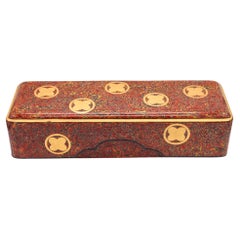
JAPAN 1900 Meiji Period Fubako Box In Hiramaki-e Lacquered Wood With Gilding
Located in Miami, FL
Fubako letters-box from the Japanese Meiji period (1868-1912).
Beautiful decorative Fubako letters box from the Japanese Imperial Meiji period, circa 1900. This box has been meticul...
Category
Antique Early 1900s Japanese Meiji Lacquer
Materials
Gold
$978 Sale Price
30% Off
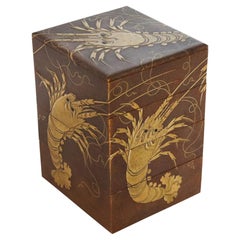
JAPAN Meiji Period 1870 Four Tiers Presentation Jubako Box Namiki Lacquer
Gold
Located in Miami, FL
Four Tier Japanese Gilt Jubako Maki-E box with red Interior.
This is a beautiful decorative presentation Jubako box created in the Imperial Japan during the early Meiji period (1868...
Category
Antique 1870s Japanese Meiji Lacquer
Materials
Gold
$3,815 Sale Price / set
30% Off
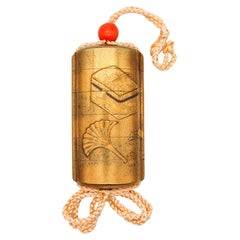
Japan 1800 Edo Period Six Drawer Inro In Lacquered Gilt Wood With Utensils
Located in Miami, FL
Japanese Inro from the Edo Period (1603-1867).
Beautiful Inro, created in Japan during the Edo period (Shogunate), circa 1800. It was carefully crafted in carved precious wood with ...
Category
Antique Early 1800s Japanese Edo Lacquer
Materials
Coral
$2,275 Sale Price
30% Off
JAPAN 1880 Meiji Period Tebako Box In Red Lacquered Wood With Abalone Inlaid
Located in Miami, FL
Presentation Tebako box from the Japanese Meiji period (1868-1912).
Beautiful decorative presentation Tebako box from the Japanese Imperial Meiji period, circa 1880. This box has been meticulously crafted in a squared cushioned shape in wood with kara coating Kobayashi red lacquer, gilding, black lacquer and inlaid decorations of abalone shell, Raden. Tebako literally means "portable box", it is a toilet box containing the objects necessary for washing and make-up, especially blush mirror...
Category
Antique 1880s Japanese Meiji Lacquer
Materials
Abalone, Wool, Lacquer

$2,695 Sale Price / set
30% Off
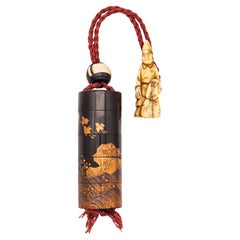
Japan 1870 Meiji Period Round Five Drawer Inro Lacquered Wood With Flying Cranes
Located in Miami, FL
Japanese Inro from the Meiji Period (1868-1912).
Beautiful Inro, created in Japan during the Meiji imperial period, circa 1870. It was carefully crafted in carved precious wood with applications of lacquer and decorated with orientalism patterns. All dan trays are attached together with a himo cord. The detailed craftsmanship was a true pleasure to behold.
Period: Meiji 1868-1912, Period of Emperor Mutsuhito.
Approximate Date: 1870.
Motif: Organic design with cascade landscape scene and five flying cranes.
Drawers: Five.
Shape: Cylinder. Very unusual and rare shape.
Technique: Carved wood, Lacquer, hiramaki-e, takamaki-e, Gilding.
Ojime: 17mm, round with Ebony wood.
Netsuke: Carved dressed...
Category
Antique 1870s Japanese Meiji Lacquer
Materials
Wood, Ebony, Giltwood, Lacquer
$2,089 Sale Price
30% Off
You May Also Like
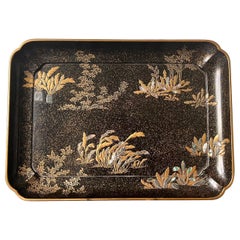
Japanese Lacquer Tray with Maki-e and Inlay Hara Yoyusai Edo Period
Located in Atlanta, GA
A lovely Japanese lacquer rectangular lacquer tray with a slightly scalloped corner and four L shape supporting feet by one of the most celebrated lacquer artist active in Edo period Hara Yoyusai (1772-1845). Yoyusai lived in Edo (Tokyo) and worked under the patronage of Lord Matsudaira. He operated a large workshop and had a very prolific output of lacquer objects. Most survived pieces being inro...
Category
Antique 19th Century Japanese Japonisme Lacquer
Materials
Wood, Lacquer
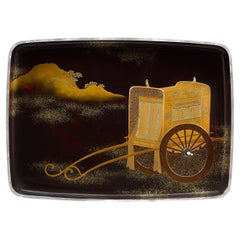
Japanese Lacquer Tray
Located in New Orleans, LA
Hailing from illustrious Meiji-period Japan, this lacquer tray showcases the mastery of Japanese craftsmen. Precious materials are precisely inlaid in the lacquer base, creating an a...
Category
Antique Late 19th Century Japanese Meiji Lacquer
Materials
Silver
$19,800
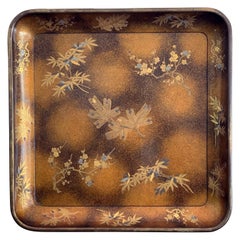
Large Vintage Japanese Maki-e Lacquer Kimono Tray
Located in Atlanta, GA
A large square lacquer presentation tray (likely for kimono) predated 1950 of the Showa period. Elaborately decorated with Maki-e that depicts the prunus blossom, bamboo and needle p...
Category
Vintage 1940s Japanese Japonisme Lacquer
Materials
Wood, Lacquer
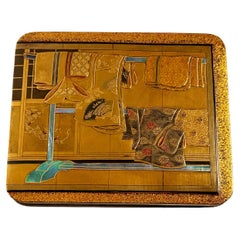
Japanese Tagasode (Whose Sleeves?) Lacquer Incense Box, Kobako, Meiji Period
Located in Austin, TX
A fine and unusual Japanese lacquer box for incense accessories, kobako, featuring a tagasode (whose sleeves?) design, Meiji Period, circa 1900, Japan.
The exquisite box of simple rectangular shape worked in maki-e lacquer, taka-maki-e, and raden, all against a lush ground of gold nashiji. Fitted with silver rims.
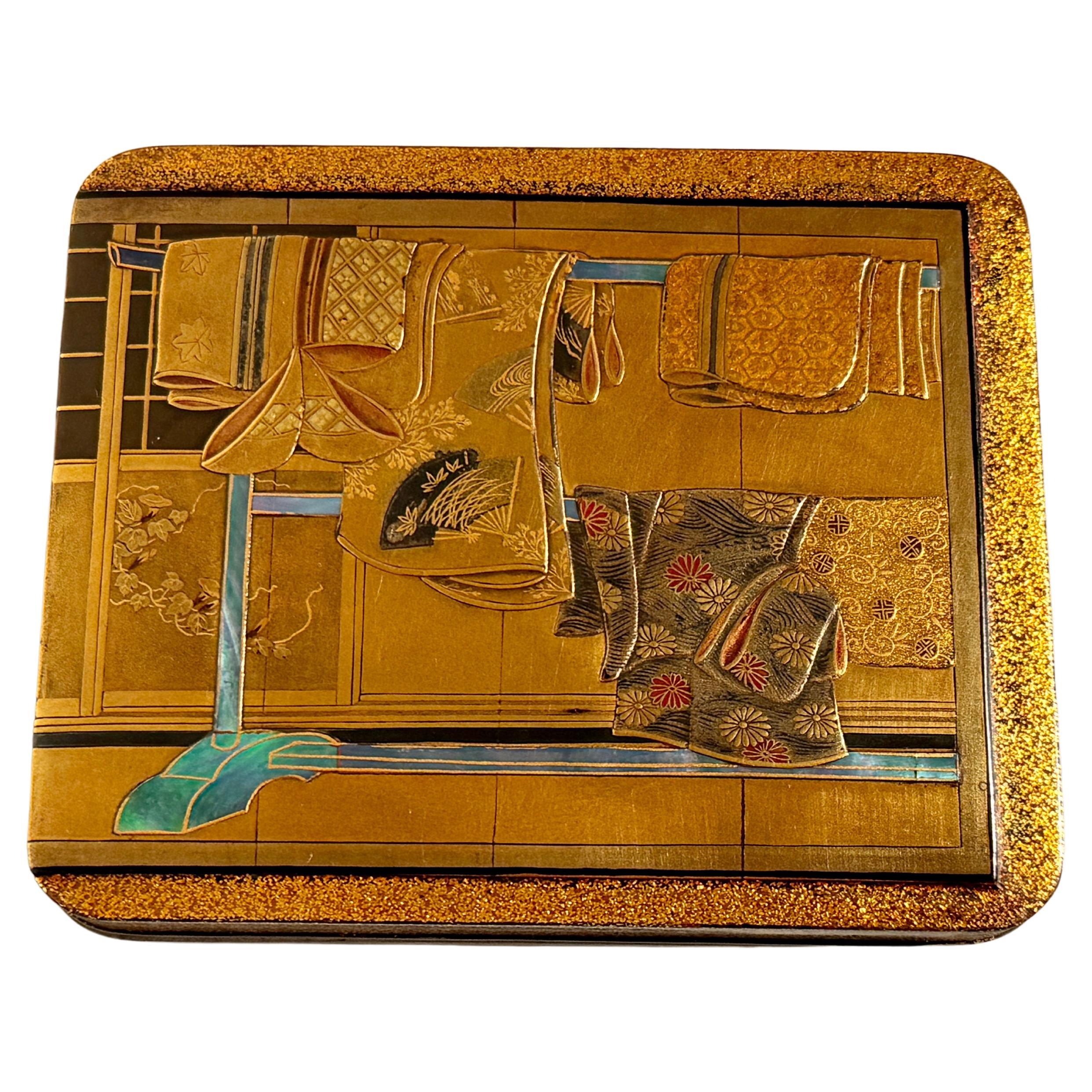
The main decorative element of the box depicts a six panel folding screen, byobu, showing an interior scene with kimono strewn over a rack, a motif known as tagasode (whose sleeves), all in raised taka-maki-e lacquer and inlaid raden.
The screen depicts an intimate room with tatami mats on the floor and sliding shoji doors in the background. The foreground depicts a large clothing...
Category
Antique Early 1900s Japanese Meiji Lacquer
Materials
Silver
Antique Large Scale Japanese Lacquer
Gilt Decorated Tray
Located in Atlanta, GA
This exquisite large-scale antique Japanese lacquer tray showcases masterful gilt decoration against a rich lacquered ground. Its expansi...
Category
Antique 19th Century Japanese Anglo-Japanese Lacquer
Materials
Lacquer
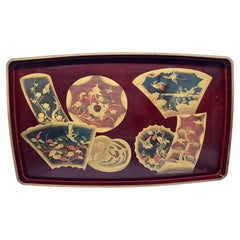
Japanese Lacquer and Gold Tray
Located in New Orleans, LA
This Meiji-period lacquer tray represents the mastery of Japanese craftsmen in the art of lacquer work. Precious materials are precisely inlaid in the lacquer base, creating a highly...
Category
Antique Late 19th Century Asian Meiji Lacquer
Materials
Gold