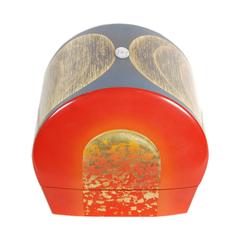
1990s Lacquer
to
1
1
76
292
194
11
104
46
12
12
1
11
8
1
2
4
3
1
1
1
1
1
1
1
1
1
1
1
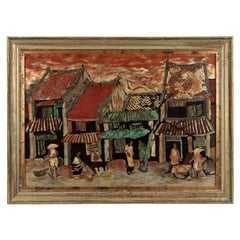
Period: 1990s
Vietnamese Lacquer by Pham Chinh Trung
Located in Jersey City, NJ
lacquer without frame is 13.5 by 19.5 inches
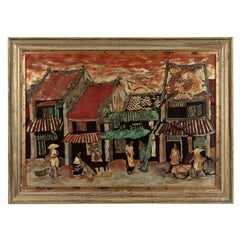
Pham Chinh Trung is a vietnamese lacquer born in 1955 in Vietnam. it is a lacquer on wood depicting a village scene with gold leaf techni...
Category
Vietnamese 1990s Lacquer
Materials
Gold Leaf
Related Items
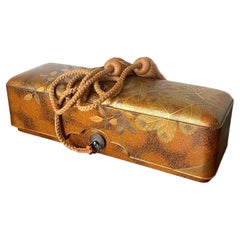
Japanese Lacquer Maki-E Scroll Box Fubako by Kansonsai Edo Period
Located in Atlanta, GA
A Japanese lacquered wood fubako (a box to store document or small scroll painting) circa late 18th century of Edo period. The rectangular box features a deep lid with rounded corners and recessed mid-edge and a lower box with two bronze medallion rings and tasseled silk ties. The surface of the fubako was elaborately decorated with hiramaki-e and a low takamaki-e on a mottled Mura-nashiji background. The motifs on the lid depict branches of Japanese pine with finely rendered needles on the lower part; on the upper part, it showcases fruited persimmon branches. Two different shades of gold fundame were used to contrast the design and augmented by scattered gold kirigane to highlight some of the leaves. The design continues and cascades down to all sides of the lid as well as the walls of the box. The two bronze medallions appear original to the box and the silk ties show significant fading from the age. This Fine fubako is signed on the lower wall "Kanshosai" in Kanji with a kao mark. All the trims were finished in gold fundame and the interiors a dense nashiji in gold.
Kanshosai is the mark of the distinguished lacquer artist Lizuka Toyo I who also signed his work "Toyosai". He was active in the second half of the 18th century during Edo period, employed by Hachisuka Shigeyoshi (1738-1801), daimyo of Awa on Shikoku Island. Although most survived work bearing his marks are inros, he was also known to decorated trays and other larger objects...
Category
Japanese Edo Antique 1990s Lacquer
Materials
Wood, Lacquer

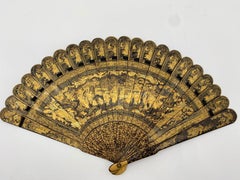
Antique Chinese Hand Painted Lacquer Scene Gilt Fan with Lacquer Box
Located in Brea, CA
19th century antique Chinese hand painted lacquer scene gilt fan with original lacquer box.
Category
Chinese Qing Antique 1990s Lacquer
Materials
Lacquer
Japanese Lacquered Tebako
Box
Located in PARIS, FR
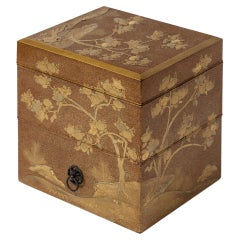
Tebako box with three compartments in golden and nashi-ji lacquer, decorated with golden, red, and kirigane lacquer, golden persimmon tree leaves, among rocks. The compartments are of increasing size from the top. The decoration is in continuity.
Persimmon has been cultivated in southern China for more than 2500 years and is believed to have been introduced to Japan in the 8th century. The veneer is a tree with very hard wood, similar to ebony. According to a legend, one specimen survived the atomic bombing of Nagasaki on August 9, 1945, close to the epicenter. It is therefore in Japan a symbol of strength and longevity. It is also the national fruit of the country. It is eaten as a traditional dish during New Year's Day celebrations.
Tebako literally means "portable box...
Category
Japanese Antique 1990s Lacquer
Materials
Lacquer
Exquisite Japanese Lacquer Maki-e Suzuribako by Koma Kyūhaku Edo Period
Located in Atlanta, GA
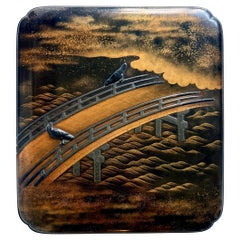
One of the finest Japanese Maki-e Suzuribakos (ink box) we have on offer, the roiro color box showcases an ambient nocturnal scene in which two shakudo inlaid crows perched on the ha...
Category
Japanese Edo Antique 1990s Lacquer
Materials
Stone, Metal
$18,000
H 2 in W 9.25 in D 10.125 in
Antique Chinoisiere Lacquered Box
Located in New York, NY
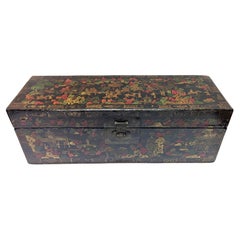
Chinoiserie Lacquer Box. Beautifully hand painted Chinoiserie Box decorated with auspicious Chinese scenes. The box is constructed of wood having polychrome painting lacquered with...
Category
Chinese Qing 1990s Lacquer
Materials
Bronze
Persimmon Box in Black Lacquer by Robert Kuo, Limited Edition
By Robert Kuo
Located in Los Angeles, CA
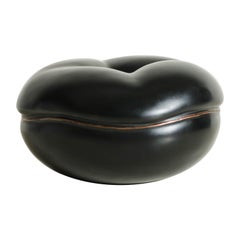
Persimmon Box
Black Lacquer
Hand Repousse
Copper Base
Limited Edition
Lacquer is a laborious and time-consuming process. After it is tapped from the
trees, lacquer needs to b...
Category
Chinese 1990s Lacquer
Materials
Copper
Chinese Cinnabar Lacquer Cuspidor
Located in New Orleans, LA
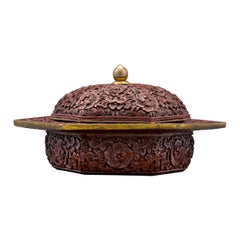
This intriguing Chinese zhadou is intricately carved of fine cinnabar lacquer. A work of exceptional artistry, this covered bowl is adorned with an intricately carved floral motif on all surfaces, including the cover and the wide rim. Also known as a cuspidor or spittoon, this rare container would have been used by members of the imperial family and scholar- officials at the court. Carved during the Kangxi period (1662-1722), this charming piece exhibits the high detail and charm associated with items from that period, making it a true treasure,
Early 18th century (Kangxi dynasty)
Measures: 6 ¼” wide x 3 ¼” high
Cinnabar has been revered for its color all over the world. It has been found in the royal burial chambers of the Mayas, in the rituals of India, and in the ruins of ancient Greece and Rome. In China, cinnabar and gold were the two most important elements in alchemy. Mined since the Neolithic Age, cinnabar is the ore of mercury, and as such, it can be incredibly toxic, especially when mining. In fact, during the Roman Empire, miners at Spain’s Almadén mine in Spain were frequently exposed to mercury fumes, and the subsequent, often fatal, sickness was considered an occupational hazard.
The most popular known use of cinnabar is in Chinese carved lacquer-ware, a technique that is believed to have originated in the Song Dynasty, in which cinnabar is ground to a powder and added to clear lacquer. As with mining, there was inherent danger of mercury poisoning for those who carved the lacquer, as mercury was also released into the air when artisans ground the pigments. Most antique cinnabar...
Category
Chinese Other Antique 1990s Lacquer
Materials
Lacquer
Important Japanese Lacquer Presentation Box Gifted by Japanese President to RAF
Located in Newark, England
PRESENTED BY THE 21ST PRESIDENT OF JAPAN
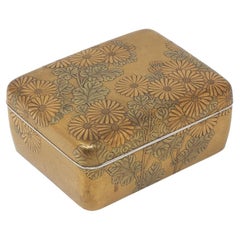
From our Japanese collection, we are absolutely delighted to bring to market this Important Japanese Lacquer Presentation Box. The Presentat...
Category
Japanese Art Deco 1990s Lacquer
Materials
Lacquer
$12,356
H 2.56 in W 5.71 in D 4.53 in
Intricately Carved Kamakura Lacquer Box with Botanical Design by Tamerou Ono
Located in Prahran, Victoria
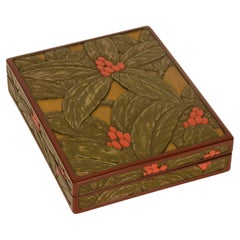
A vintage Japanese Tsuzuri bako, writing box. with an unusual, deeply carved relief of Japanese sarcandra glabra, a woody herbal sub-shrub native to Asia with deep green glossy leave...
Category
Japanese 1990s Lacquer
Materials
Wood
$3,600 Sale Price
20% Off
H 2.37 in W 9.85 in D 7.88 in
Signed Japanese White Lacquer and Maki-E Lacquer Tansu, Meiji Period
Located in Ottawa, Ontario
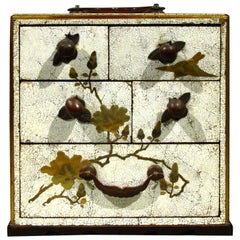
The case decorated overall in crackle-glaze white lacquer and fitted with a patinated metal carrying handle over three tiers of small drawers. The first two tiers are comprised of a ...
Category
Japanese Meiji Antique 1990s Lacquer
Materials
Lacquer
Fine Japanese Lacquered Inro by Yutokusai
Located in Atlanta, GA
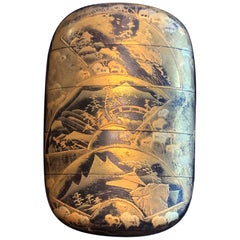
A four-case lacquered Japanese inro by Yutokusai (Gyokkei), a lacquer artist active from 1845-1900 (end of Edo to Meiji period). The slightly round inro features a very intricate design with three unfolded fans on the front and two on the back: each reveals a vignette landscape scenery, likely real places in Japan. Using a combination of hiramaki-e and slight takamaki-e, the artist deftly created the pictures with fine details, rendering the inro as a miniature artwork...
Category
Japanese Japonisme Antique 1990s Lacquer
Materials
Wood, Lacquer
Fine Japanese Lacquered Inro with Inlays by Kajikawa
Located in Atlanta, GA
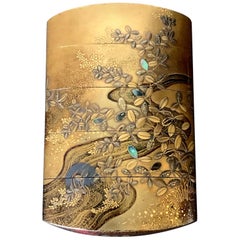
A Japanese four-case lacquer inro by a member of Kajikawa family circa 19th century (late Edo to early Meiji period). It depicts a nocturnal scenery of a meandering stream surrounded by bush clovers, where a full moon is reflected on the water. It was masterfully decorated in gold and silver maki-e using a combination of techniques including takamakie, togidashi and kirigane as well as aogai (abalone shell) inlays. The stream was set between the slightly elevated banks, adding to this piece a already strong three-dimensional composition. The interior was decorated in gold nashiji. It was signed on the bottom "Kajikawa Zou" (made by Kajikawa and a pot seal centered with "Ei" in Kanji. In one of the compartment, there is a katakana mark, appears to be a name, possibly the owner.
Kajikawa clan was one of the most famous lacquer artisanal family established in the 17th century. Many well known members over the generations produced lacquer art in a wide range of formats, but two third were signed only with the family name such as this one. It is therefore not possible to pinpoint the exact author of this piece.
Provenance: This inro was purchased as lot 349 in Christie's New York sale Japanese...
Category
Japanese Japonisme Antique 1990s Lacquer
Materials
Shell, Wood, Lacquer
Previously Available Items
Japanese Kara Nuri Lacquer Tea Caddy, Natusme, late 20th century, Japan
Located in Austin, TX
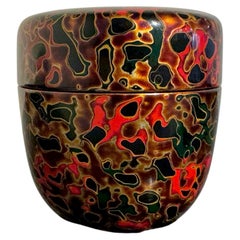
A bold and wild vintage Japanese lacquer tea caddy, Tsugaru nuri natsume, Heisei Era, circa 1990's, Aomori Prefecture, Japan.
The striking ...
Category
Japanese Taisho 1990s Lacquer
Materials
Softwood, Lacquer
Vietnamese Lacquer By Pham Chinh Trung
Located in Jersey City, NJ
Image without original frame 13.5 by 19.5 inches Pham Chinh Trung is a Vietnamese lacquer born in 1955 in Vietnam. ...
Category
Vietnamese 1990s Lacquer
Materials
Gold Leaf
Burmese Lacquer Box Set
Located in New York, NY
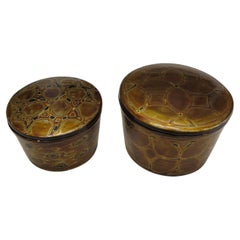
Burmese Lacquer box set. A set of two round Burmese Vintage Lacquer Boxes.
Special lacquering technique to make the color and design on these lac...
Category
Burmese Bohemian 1990s Lacquer
Materials
Lacquer
Black Lacquer Box with Hand Engraved Design, Late 20th Century, Burma
Located in Point Richmond, CA
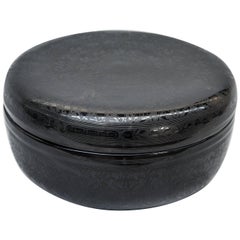
Black lacquer box with hand engraved design, late 20th century, Burma.
This contemporary late 20th century black lacquer box is elaborately decorated with an exuberant cast of dancer...
Category
Burmese Folk Art 1990s Lacquer
Materials
Bamboo, Lacquer
Contemporary Japanese Lacquer Box by Yoshifumi Takeuchi
Located in Prahran, Victoria
Contemporary Japanese red, blue and gold lacquer box of unusual arching form and heavy, carved construction by the known lacquer artist Yoshifumi Takeuchi.
Decorated on its lid with an inlaid mother-of-pearl finial and overall vibrantly coloured with blue and red pigmented lacquers with scattered gold flakes on its sides and interior, the box still bears its exhibition label for 'The World Competition of Arts and Crafts Kanazawa 1999', where it was entered as the 50th lacquer exhibition entry and was entitled 'Sunrise'.
Yoshifumi Takeuchi was born in 1951 in Toyama prefecture. Now a known and well established lacquerware artist, he studied lacquerware crafts under Yasu Onaga before branching out under his own name.
Since his early days Takeuchi has exhibited his works in numerous solo and group shows both internationally and throughout his native Japan.
1971~ Toyama Prefecture Art Exhibition / ’77 / ’78:Award / ’81: Grand prize.
1975 Japan contemporary Craft Art Exhibition (Tokyo Metropolitan Art Museum, Japan).
The Japan Fine Art...
Category
Japanese Other 1990s Lacquer
Materials
Mother-of-Pearl, Wood