Items Similar to Rare Japanese Negoro Stem Dish Momoyama Edo Period
Want more images or videos?
Request additional images or videos from the seller
1 of 21
Rare Japanese Negoro Stem Dish Momoyama Edo Period
$4,800
£3,626.63
€4,155.02
CA$6,697.56
A$7,299.99
CHF 3,859.44
MX$87,878.08
NOK 48,985.95
SEK 44,910.10
DKK 31,038.19
About the Item
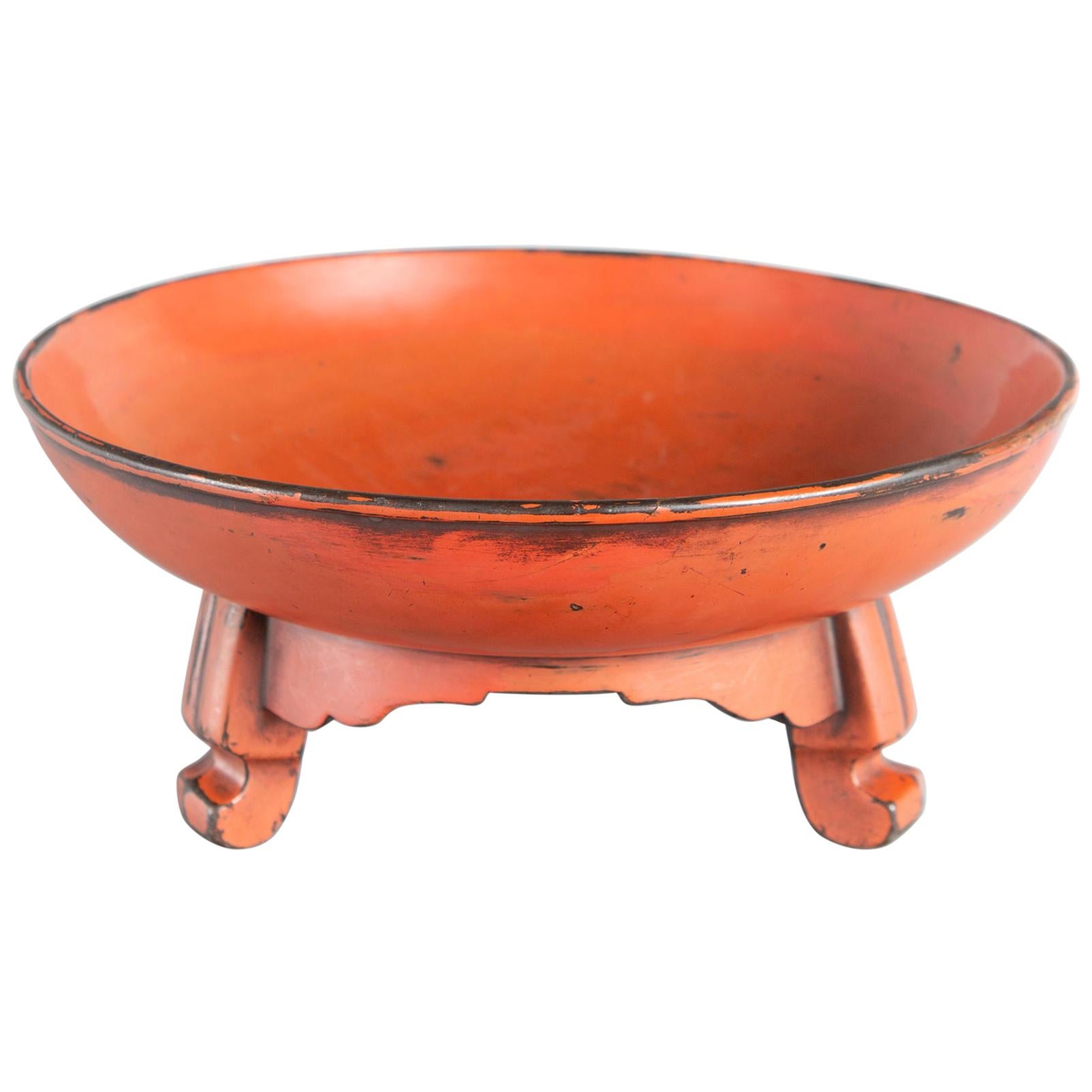
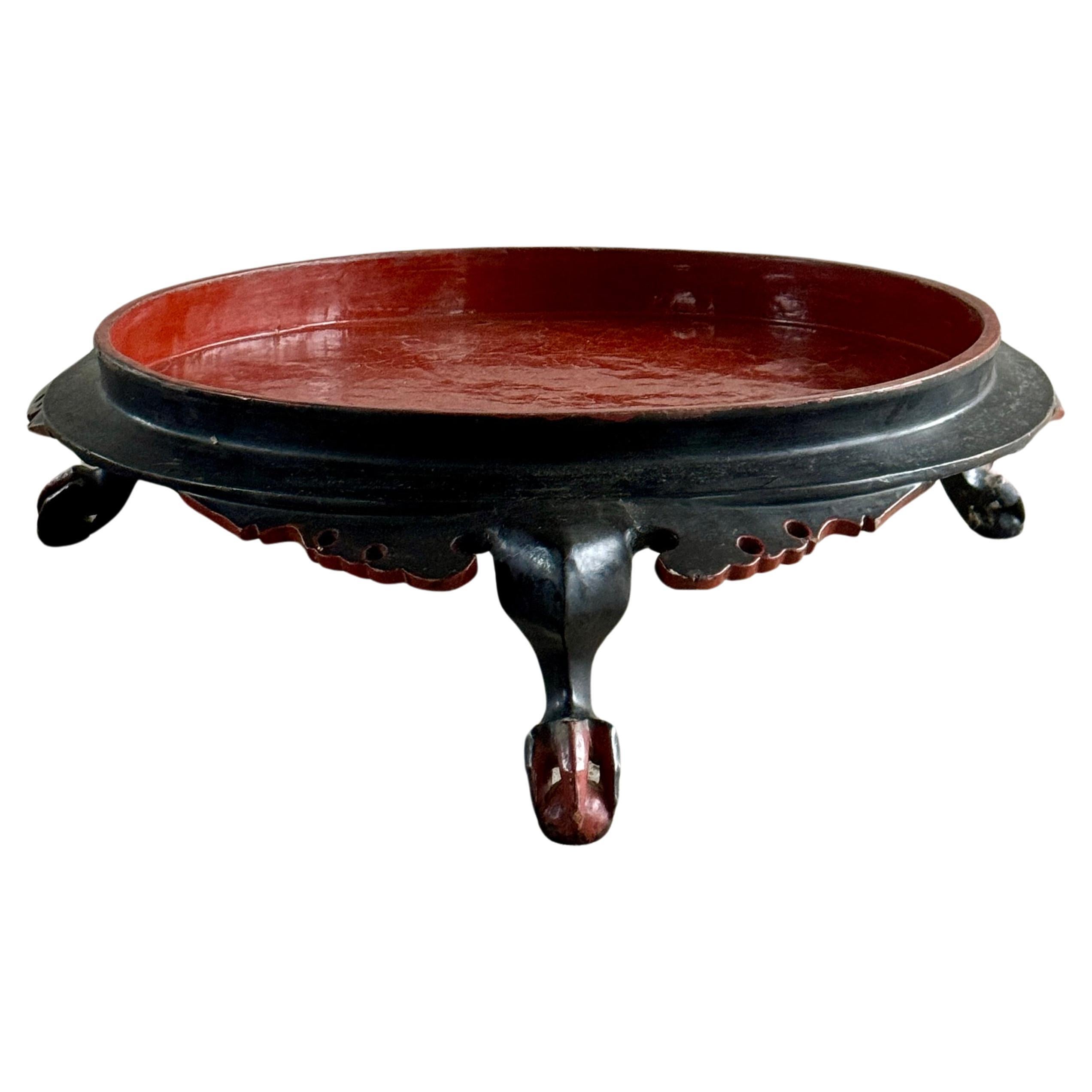
An antique red lacquer stem dish from Japan, circa 17th century (Momoyama to early Edo period). This type of red lacquer finish is known as Negoro lacquer. It was developed by the medieval monks in Negoro-ji in Wakayama Mountains from the 12th century on. The red lacquer was applied in thin layers over a black lacquer base that otherwise devoid of any other decoration. The contact and handling from the usage of the item, over time, produced a random patina on the surface, revealing the underlying black color. The production of Negoro lasted to 17th century and most items were produced for monastic life and daily use, rather than for decorative purpose.
The tazza-form dish on offer has a slightly irregularly plate with shallow everted form supported by a waisted tall stem. It was likely used to offer fruits or sweets on occasions such as Chado tea ceremony.
Provenance: Van de Velde, Antwerp, 5th December 1980 with a copy of redacted invoice.
- Dimensions:Height: 7 in (17.78 cm)Diameter: 10.25 in (26.04 cm)
- Style:Edo (Of the Period)
- Materials and Techniques:
- Place of Origin:
- Period:
- Date of Manufacture:17th Century
- Condition:Wear consistent with age and use. Worn patina on the surface from the age and use. Small lacquer losses on dish edges and tight hairline on the dish, small dings and chips on edge of the base and a hairline as shown.
- Seller Location:Atlanta, GA
- Reference Number:1stDibs: LU945048075742
About the Seller
4.9
Platinum Seller
Premium sellers with a 4.7+ rating and 24-hour response times
Established in 2006
1stDibs seller since 2010
583 sales on 1stDibs
Typical response time: <1 hour
- ShippingRetrieving quote...Shipping from: Atlanta, GA
- Return Policy
More From This Seller
View AllAntique Lacquer Offering Elm Bowl Southeast Asia
Located in Atlanta, GA
A Southeast Asian lacquer vessel of iconic form from Burma or Northern Thailand, circa turn of the 20th century. This covered vessel is called a “Hsun Ok” and was made in the form of...
Category
Early 20th Century Burmese Archaistic Lacquer
Materials
Wood, Lacquer
Antique Japanese Ceramic Ko-Kutani Revival Footed Dish
Located in Atlanta, GA
A Japanese glazed ceramic footed dish made in the Ko-Kutani type of Edo period but likely during Kutani revival in the 19th century Meiji Period. The dish with delicate foliaged rim ...
Category
Antique 19th Century Japanese Japonisme Ceramics
Materials
Ceramic

Early 20th Century Burmese Lacquered Tray, “Pagan Bya”
Located in Atlanta, GA
Burmese (Myanmar) Lacquerware has a long tradition dating back to the 13th century. Lacquer in Burma is called “Thitsi” meaning the sap of a Thitsi Tree (Melanhorrea Usitata). Typica...
Category
Early 20th Century Burmese Lacquer
Materials
Bamboo, Lacquer

Early 20th Century Burmese Lacquered Tray, “Pagan Bya”
Located in Atlanta, GA
Burmese (Myanmar) Lacquerware has a long tradition dating back to the 13th century. Lacquer in Burma is called “Thitsi” meaning the sap of a Thitsi Tree (Melanhorrea Usitata). Typica...
Category
Early 20th Century Burmese Lacquer
Materials
Bamboo, Lacquer
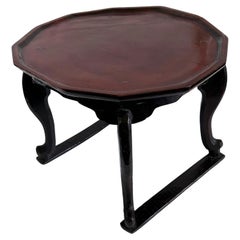
Antique Korean Lacquer Wood Soban Table Joseon Period
Located in Atlanta, GA
A small antique wood table from Korea from turn of the 20th century (end of Joseon Dynasty). This type of light weight table is called "Soban" in Korean. which means "Small Tray". It was widely used primarily as individual dining table to present and serve foods, but also as small desk, incense burner...
Category
Antique Late 19th Century Korean Other Furniture
Materials
Wood
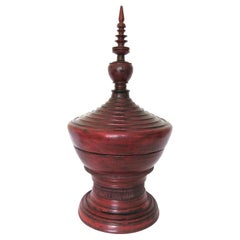
Early 20th Century Burmese Lacquer Offering Vessel, Hsun Ok
Located in Atlanta, GA
Burmese (Myanmar) lacquer ware has a long tradition dating back to the 13th century. Lacquer in Burma is called “Thitsi” meaning the sap of a Thitsi Tree (Melanhorrea Usitata). Typically, bamboo and wood are used as a frame or base in making lacquer work.
This covered offering vessel is called a “Hsun Ok...
Category
Vintage 1920s Burmese Lacquer
Materials
Wood, Lacquer
You May Also Like
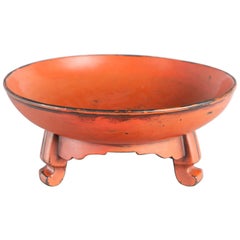
Early 17th Century Negoro Lacquer Footed Bowl
Located in Hudson, NY
Early 17th century Negoro lacquer footed bowl, Edo period (1603-1868) round bowl with tripod cabriole style legs. Negoro lacquer (monk's lacquer in red ...
Category
Antique Early 17th Century Japanese Edo Lacquer
Materials
Lacquer
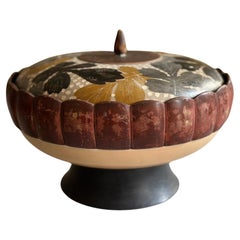
Antique Japanese lidded bowl from the Meiji period, lacquer
Located in Hamburg, DE
This antique Japanese lidded bowl from the Meiji period, around 1900, is a stunning example of traditional lacquer craftsmanship, combining aesthe...
Category
Antique Early 1900s Meiji Lacquer
Materials
Wood
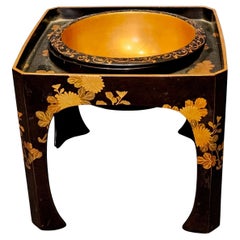
Antique A Japanese Lacquer Bowl with Stand
Located in Norton, MA
Black lacquerware bowl in fitted stand, with raised gilded floral and vine decoration, 6 3/4" high, 7 1/2" sq. The Bowl is 4.25" Dia.
Category
Early 20th Century Japanese Lacquer
Materials
Wood
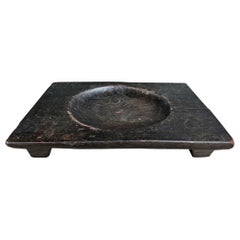
Early 20th Century Japanese Tray
Located in Chicago, IL
A chic and modern-in-spirit early 20th century Japanese hand-carved wooden tray of rectangular form raised on two runners, and with a circular convex bowl in the center. There are several knife marks on one side making us believe that this was used in the kitchen. Today its perfect for catching your keys, pocket change...
Category
Early 20th Century Japanese Primitive Decorative Dishes and Vide-Poche
Materials
Wood
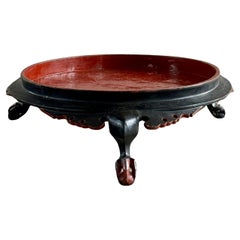
Early 19th Century Burmese Lacquered Footed Offering Tray
Located in Wainscott, NY
Materials and Technique:
These trays were traditionally made from bamboo or wood and coated with layers of lacquer, a process known as "Pan-Yun." Lacquerware is a distinctive and rev...
Category
Antique Early 19th Century Asian Decorative Bowls
Materials
Wood, Lacquer
$1,778 Sale Price
34% Off
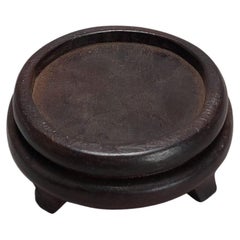
Antique Wooden Stand for Chinese or Japanese Porcelain, 20th Century
Located in Amsterdam, Noord Holland
Here we have a nice wooden plate stand
Not entirely round
Additional information:
Material: Porcelain & Pottery
Region of Origin: China
Period: 19th or early 20th c
Condition: Very ...
Category
20th Century Chinese More Dining and Entertaining
Materials
Wood
$80 Sale Price
20% Off