Want more images or videos?
Request additional images or videos from the seller
1 of 11
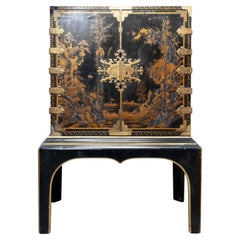
Striking Japanese Gilt and Black Lacquer Cabinet on Later Stand
$18,900List Price
About the Item
- Dimensions:Height: 60 in (152.4 cm)Width: 36 in (91.44 cm)Depth: 16.5 in (41.91 cm)
- Style:Meiji (Of the Period)
- Materials and Techniques:Wood,Lacquered
- Place of Origin:
- Period:
- Date of Manufacture:1860
- Condition:Wear consistent with age and use.
- Seller Location:Stamford, CT
- Reference Number:Seller: ELS - 541971stDibs: LU91866751273
About the Seller
4.9
Vetted Professional Seller
Every seller passes strict standards for authenticity and reliability
Established in 1999
1stDibs seller since 2011
559 sales on 1stDibs
Typical response time: 1 to 2 days
Authenticity Guarantee
In the unlikely event there’s an issue with an item’s authenticity, contact us within 1 year for a full refund. DetailsMoney-Back Guarantee
If your item is not as described, is damaged in transit, or does not arrive, contact us within 7 days for a full refund. Details24-Hour Cancellation
You have a 24-hour grace period in which to reconsider your purchase, with no questions asked.Vetted Professional Sellers
Our world-class sellers must adhere to strict standards for service and quality, maintaining the integrity of our listings.Price-Match Guarantee
If you find that a seller listed the same item for a lower price elsewhere, we’ll match it.Trusted Global Delivery
Our best-in-class carrier network provides specialized shipping options worldwide, including custom delivery.You May Also Like
Japanese Lacquer and Cinnabar "Samurai" Cabinet, Inaba Family, Edo Period
Located in Troy, NY
Exceptionally large and rare lacquer cabinet. According to the heraldry, visible on the headgear in one of the panels, it was made for the Inaba family, a high ranking Daimyo family,...
Category
Antique Late 19th Century Japanese Edo Lacquer
Materials
Bronze
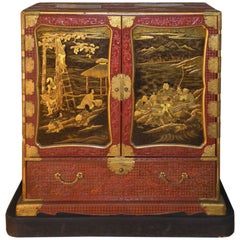
$385,000
H 38 in W 36 in D 21 in
6-drawer cabinet of lacquer carved wood and steel from SoShiro Ainu collection
By SoShiro
Located in London, GB
The All Aid Wellness Cabinet from SoShiro’s Ainu collection, a collaboration between award-winning artist Toru Kaizawa and Shiro Muchiri, was initially imagined as a large-scale medi...
Category
2010s Japanese International Style Lacquer
Materials
Stainless Steel
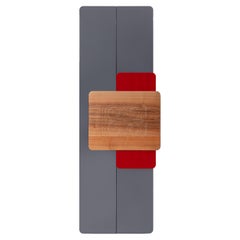
$13,615 / item
H 55.52 in W 17.72 in D 16.93 in
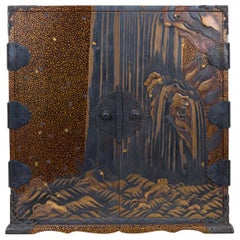
Japanese 19th Century Miniature Lacquer Chest with Waterfall
Located in Hudson, NY
Japanese 19th century miniature lacquer chest with waterfall. Late Edo to early Meiji period lacquer chest (mid to late 19th century) with two characters on the front reading Nuno an...
Category
Antique Late 19th Century Japanese Lacquer
Materials
Gold, Silver, Bronze
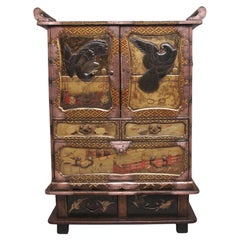
19th Century Japanese gilt lacquered cabinet
Located in Martlesham, GB
A highly decorative 19th Century Japanese gilt lacquered cabinet from the Meiji period (1868-1912) the double hinged doors decorated with two eag...
Category
Antique 1880s Japanese Meiji Cabinets
Materials
Hardwood
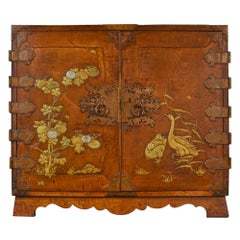
Fine and Rare 17th Century Japanese Mulberry Wood Gilt-Lacquer Cabinet on Stand
Located in Lymington, GB
An outstanding and rare, 17th-century Japanese mulberrywood gilt-lacquer cabinet raised on a later stand.
This fine and exceptional two-door, gilt-heightened cabinet - reputedly in mountain mulberry wood...
Category
Antique 17th Century Japanese Cabinets
Materials
Lacquer
$44,814
H 66.54 in W 35.44 in D 19.89 in
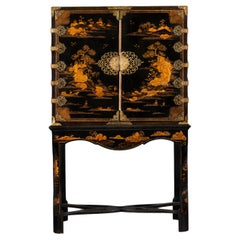
A Rare Mid 18th Century Black Japanned Lacquer Cabinet on Stand
Located in London, GB
England, circa 1760.
A fine mid-eighteenth century Japanned lacquer cabinet, with two doors revealing an interior fitted with eleven drawers with ring handles, all decorated with naturalistic scenes including fishermen and rural life. Retaining the original mid-eighteenth century stand, also with comparable chinoiserie decoration and X form stretcher with central pierced quatrefoil.
Height 161.00 centimetres.
Width 98.00 centimetres.
Depth 51.00 centimetres.
The art of 18th-century Japanning was a European practise that sought to imitate Japanese lacquerware and became a method of emulating the aesthetics of East Asia within the home. The term originates from the late 17th century as the opening of trade routes in the East triggered an interest in Chinese and Japanese fashions in Britain, France, Italy and the Netherlands.
It’s popularity reflected this era of imperial ambition when the West was fascinated by the exoticism of the East and saw the rise of an orientalist attitude. During this time, Europe’s demand for lacquerware began to grow and The East India Company's importation of lacquered objects and screens created a desire for larger, more practical items with similar decorative finishes.
To replicate the appearance of oriental lacquerwork, European cabinet-makers turned to John Stalker and George Parker's 1688 ‘A Treatise of Japaning and Varnishing: Being a Compleat Discovery of Those Arts’. This book contained formulas for creating and applying lacquers as well as various chinoiserie illustrations for readers to copy and modify, having made a concerted effort to reference designs on Chinese porcelain and textiles.
European japanning differed from traditional East Asian lacquer work which used sap from the Toxicodendron vernicifluum tree (also known as the Chinese lacquer tree...
Category
Antique 18th Century English Cabinets
Materials
Lacquer
$26,487
H 63.39 in W 38.59 in D 20.08 in
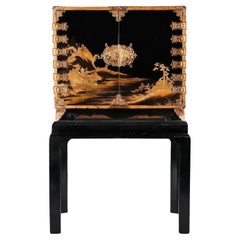
An Important Late 17th Century Japanese Lacquered Cabinet Edo Period on Stand
Located in Benington, Herts
An extremely fine, elegant and rare late 17th Century Japanese lacquer cabinet, from the Eco period, on later lacquered black stand.
Japanese circa 1690
Provenance
A private Scottish collection
This outstanding cabinet is a fascinating fusion of east and west. The cabinet itself would have been made in Japan, c.1690, and is decorated to the outside with hiramaki-e lacquer. This technique involves the use of sprinkled gold powder which adheres to the lacquer surface. On the best pieces, as with this example, many layers are added in order to create areas of high relief and give depth to the surface decoration. The taste of the Japanese workshops in this period was often for quite restrained pieces with plenty of the black background visible, unlike some of the busier Chinese lacquer or European japanned examples produced around the same time. The Japanese makers seemed content to rely on the outstanding quality of the lacquer itself, regarded by most experts as the finest lacquer ever produced, and did not see the need to cover every surface believing that less was more in this respect. The lacquer here is used to produce a mountainous scene with buildings on the bank of a river, the other side of the river with more buildings and a contrasting flatter and forested landscape. The fine perspective achieved is the result of the clever use of raised and flatter areas in the lacquer itself in combination with the drawing of the design itself.
Another remarkable aspect of this piece is the fine metalware throughout, but particularly the lockplate / hasp, hinges and foot mounts to the front. This is all beautifully cast and engraved contrasting against the black background. Interestingly another cabinet on stand with near identical metalwork was advertised in the Burlington Magazine, November 1913, with the dealer W. Williamson and Sons of Guildford. The lacquer on that piece is similarly refined and it seems likely that both pieces came from the same workshop.
The European influence in our piece can be seen in both the later ebonised stand and in the japanned decoration which has been applied to the inside of the doors and is also very fine indeed. This consists of two panels with birds of prey perched on branches in colours set against a golden background. The cabinet has a recent Scottish provenance and so it is likely that the ebonised stand was made in Britain though such pieces were made throughout Europe as a way of quite literally elevating these imported pieces of eastern lacquer as in Japan these would have been used on the floor. Inside the cabinet there is a combination of more Japanese lacquer and lock plates and European drawer handles. Most of the lacquer drawer fronts incorporate mountainous scenes and birds in combination, with a few purely one or the other of the two subjects. Again the lacquer is in excellent condition and is of exceptional quality with multiple layers of relief used in one single scene in many cases.
As mentioned above, Japanese lacquer is the most technically brilliant of the eastern lacquers and, as such, was highly prized by collectors and connoisseurs throughout Europe when this piece was made. The acquisition of such pieces would only have been possible for a small group of incredibly wealthy individuals, largely royal or high ranking courtiers or merchants connected with the East India trade...
Category
Antique 1690s Japanese Edo Cabinets
Materials
Lacquer
$43,417
H 61.82 in W 38.59 in D 22.05 in
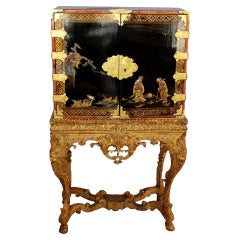
Japanese Lacquer Cabinet on Regence Giltwood Stand, circa 1725
Located in Palm Desert, CA
Japanese lacquer cabinet on Regence Giltwood stand. The stand - Circa 1725 and the lacquer cabinet - late 17th/early 18th Century. Decorated overall with figures in a landscape and d...
Category
Antique Early 18th Century European Louis XV Cabinets
Materials
Giltwood
Early 18th century Japanese Lacquer Cabinet on Stand
Located in Rīga, LV
Rectangular cabinet has nine drawers inside. Hinges, corner mounts and lock plates in gilt brass. Decorated with river landscapes, insects, birds and animals in pairs. The stand is i...
Category
Antique Early 18th Century English George III Cabinets
Materials
Wood, Lacquer
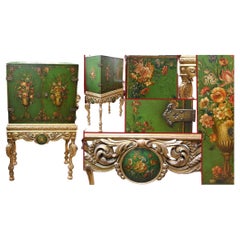
Italian Lacquered Cabinet on Stand Painted Floral Gilt Base
Located in Potters Bar, GB
You are viewing a gorgeous Italian lacquered cabinet on stand
We date this to circa 1900 and it's very on trend for your interior scheme
Stands on an elegantly carved gilt base with ...
Category
Antique Early 1900s Cabinets
Materials
Giltwood
More From This Seller
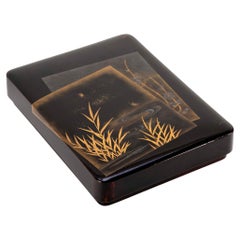
View AllBlack and Gold Lacquer Japanese Suzuribako Box
Located in Stamford, CT
19th century Japanese black and gold lacquer Suzuribako box with firefly and plum blossom design.
Category
Antique Late 19th Century Japanese Decorative Boxes
Materials
Lacquer
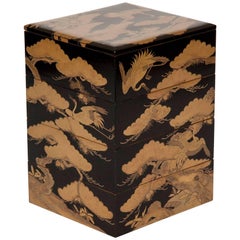
Japanese Black Lacquer Jubako Box with Stork Motif
Located in Stamford, CT
A four-tier Japanese Meiji period black lacquer Jubako box with stork and fir tree decoration. Box in four sections with lid.
Category
Antique Late 19th Century Japanese Edo Lacquer
Materials
Lacquer
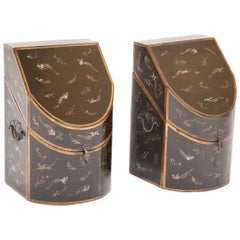
Rare pair of Japanese Nagasaki Export Lacquered Wood Knife Boxes
Located in Stamford, CT
Rare pair of Japanese Nagasaki Export lacquered wood knife boxes with mother-of-pearl inlay of flowers and birds, now converted to letter boxes...
Category
Antique Early 19th Century Japanese Anglo-Japanese Knife Boxes
Materials
Wood
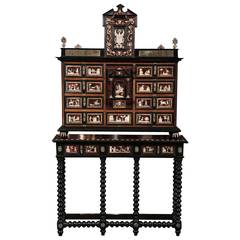
Spanish Tortoiseshell Cabinet on Stand
Located in Stamford, CT
A Spanish tortoiseshell and bone inlaid, ebonized walnut marquetry cabinet on stand. The upper section with a pediment with a double headed eagl...
Category
Antique Early 1800s Spanish Baroque Cabinets
Materials
Tortoise Shell
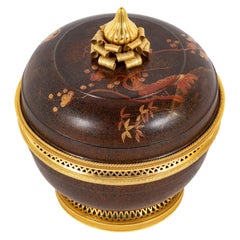
Lacquer Potpourri
Located in Stamford, CT
Lacquer Potpourri box and cover with ormolu mountings from 18th century Directoire Japan/ France.
Category
Antique 18th Century Japanese Lacquer
Materials
Lacquer
$12,500
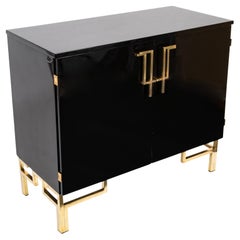
A Maison Jansen Black Lacquer Cabinet with Gilded Brass Accents
By Maison Jansen
Located in Stamford, CT
A wonderfully pared down design by Guy Lefevre, this piece represents a period during which Maison Jansen was shifting under Lefevres design leadership to a much more modern/ contem...
Category
Mid-20th Century French Mid-Century Modern Cabinets
Materials
Wood
Still Thinking About These?
All Recently ViewedMore Ways To Browse
Stacking Lunch Box
16th Century Pewter
Basquiat Tray
Chinese Baby Bath
Chinese Enamel Smoking Set
Chinese Lac Burgaute
Geisha Makeup
Japanese Letter Box
Red Lacquer Ware
Thai Offering Bowl
Indian Wood Angels
Jade Netsuke
Japanese Lacquer Letter Box
Raj Papier Mache
Straits Altar
Tomizo Saratani
Antique Japanese Bento Box
Antique Japanese Food Box