1 of 3
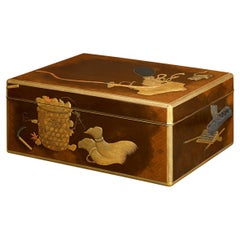
A superb Japanese export lacquer writing box
$50,516.43List Price
About the Item
- Dimensions:Height: 3.94 in (10 cm)Width: 21.07 in (53.5 cm)Depth: 15.56 in (39.5 cm)
- Materials and Techniques:Lacquer,Lacquered
- Place of Origin:
- Period:
- Date of Manufacture:circa 1680
- Condition:Wear consistent with age and use.
- Seller Location:Amsterdam, NL
- Reference Number:1stDibs: LU5458243193572
Authenticity Guarantee
In the unlikely event there’s an issue with an item’s authenticity, contact us within 1 year for a full refund. DetailsMoney-Back Guarantee
If your item is not as described, is damaged in transit, or does not arrive, contact us within 7 days for a full refund. Details24-Hour Cancellation
You have a 24-hour grace period in which to reconsider your purchase, with no questions asked.Vetted Professional Sellers
Our world-class sellers must adhere to strict standards for service and quality, maintaining the integrity of our listings.Price-Match Guarantee
If you find that a seller listed the same item for a lower price elsewhere, we’ll match it.Trusted Global Delivery
Our best-in-class carrier network provides specialized shipping options worldwide, including custom delivery.You May Also Like
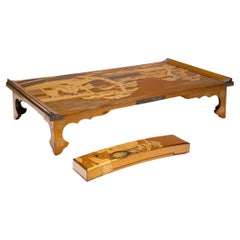
Japanese Meiji Gilt Lacquer Writing Desk
Poem Box
Located in Chicago, IL
With intricate construction and exquisite decoration, this fine tabletop writing set is a masterpiece of Japanese lacquerware. The matching set includes a writing table (bundai) and poem box (tanzaku bako), both decorated with gilt lacquer in the style of takamaki-e and hiramaki-e urushi lacquer.
Framed by everted ends, the lacquered table top is masterfully worked, depicting a robed man seated on a veranda within an idyllic mountain-and-water landscape. Swirling clouds drift overhead and pine trees bend towards the sky, formed of raised lacquer (takamaki-e) and mother of pearl inlay (raden). Dark lacquer at the corners imitate metal hardware and the sculptural corner legs are decorated with raised motifs of maple leaves.
The writing table includes a matching poem box (tanzaku bako), used for storing paper cards of painted calligraphy and poetry. The lid is similarly decorated in shimmering gilt lacquer with a raised design of a fine carriage beneath a pine tree, draped in cloths and shaded by bamboo blinds...
Category
Early 20th Century Japanese Meiji Lacquer
Materials
Mother-of-Pearl, Wood
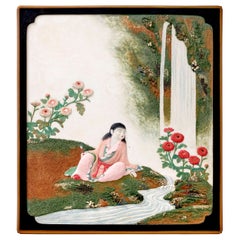
Rare Japanese Lacquer Writing Box Suzuribako Meiji Period
Located in Atlanta, GA
A Japanese Lacquer writing box Suzuribako Meiji Period (1868-1912), likely circa late 19th century. This suzuribako is one of the most unusual boxe...
Category
Antique 19th Century Japanese Japonisme Lacquer
Materials
Lacquer
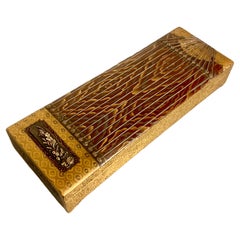
Japanese Lacquer Writing Box, Suzuribako, Edo Period, 18th Century, Japan
Located in Austin, TX
An exceptionally fine and unusual Japanese lacquer writing implements box, suzuribako, in the form of a zither, koto, Edo Period, 18th century, Japan. With a modern wood storage box,...
Category
Antique 18th Century Japanese Edo Lacquer
Materials
Gold, Silver, Copper
$18,000
H 1.5 in W 8 in D 3 in
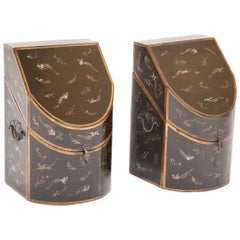
Rare pair of Japanese Nagasaki Export Lacquered Wood Knife Boxes
Located in Stamford, CT
Rare pair of Japanese Nagasaki Export lacquered wood knife boxes with mother-of-pearl inlay of flowers and birds, now converted to letter boxes...
Category
Antique Early 19th Century Japanese Anglo-Japanese Knife Boxes
Materials
Wood
$3,950 / set
H 13.5 in W 8.75 in D 7.5 in
Japanese Lacquer Box
Located in New Orleans, LA
This exquisite Meiji-period lacquer document box known as a ryoshibako showcases the meticulous artistry of maki-e, a technique of raised lacquer decoration. Adorned with gold and vi...
Category
Antique 19th Century Asian Meiji Lacquer
Materials
Gold
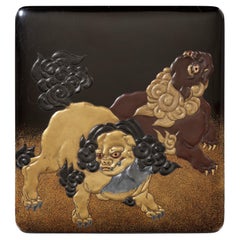
Japanese lacquer suzuri’bako 硯箱 (writing box) with shishi
Hotei design
Located in Amsterdam, NL
A captivating lacquer suzuri’bako (writing box) of rounded rectangular form depicting a pair of shishi (temple lions) and the lucky god Hotei 布袋 on a rôiro...
Category
Antique Early 19th Century Japanese Lacquer
Materials
Gold Leaf, Silver Leaf
$5,292
Free Shipping
H 1.78 in W 10.01 in D 9.26 in
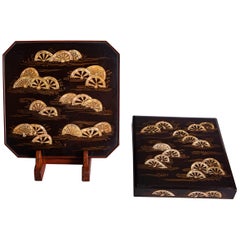
18th Century Japanese Lacquer Writing Box and Tray Set
Located in Hudson, NY
Wheels Submerged in flowing water motif, believed to be a subject popular in samurai families. Example of the same subject matter in Tokyo National Museum.
Category
Antique 18th Century Japanese Lacquer
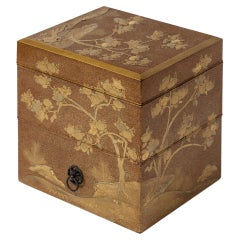
Japanese Lacquered Tebako
Box
Located in PARIS, FR
Tebako box with three compartments in golden and nashi-ji lacquer, decorated with golden, red, and kirigane lacquer, golden persimmon tree leaves, among rocks. The compartments are of increasing size from the top. The decoration is in continuity.
Persimmon has been cultivated in southern China for more than 2500 years and is believed to have been introduced to Japan in the 8th century. The veneer is a tree with very hard wood, similar to ebony. According to a legend, one specimen survived the atomic bombing of Nagasaki on August 9, 1945, close to the epicenter. It is therefore in Japan a symbol of strength and longevity. It is also the national fruit of the country. It is eaten as a traditional dish during New Year's Day celebrations.
Tebako literally means "portable box...
Category
Antique 1860s Japanese Lacquer
Materials
Lacquer
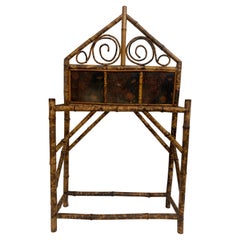
Antique Japanese Export Lacquer Bamboo Stick Stand
Located in Brea, CA
Antique Japanese export lacquer and gilt bamboo stick stand, see more pictures, 46'' x 27.5'' x 10''.
Category
Early 20th Century Japanese Meiji Lacquer
Materials
Bamboo
Japanese lacquer suzuri’bako 硯箱 (writing box) with ‘Rinpa School’-style design
Located in Amsterdam, NL
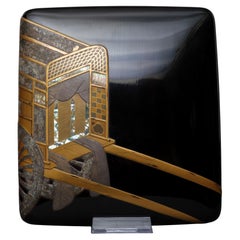
Superb rectangular ‘Rinpa School’-style black lacquer suzuri’bako (writing box) with a slightly arched well-fitted overhanging cover with rounded corners.
The lid with a design of a gosho’guruma (ox-drawn carriage for Heian-era nobles) featuring golden hiramaki-e (low-relief lacquer design) and takamaki-e (high-relief lacquer design), inlays of lead and shiny mother-of-pearl (raden). The design continues along the sides.
The reverse of the lid decorated with two large curving pine trees (matsu) executed in the same way, but also with intricate dots of tiny pieces of inlaid blue mother-of-pearl along the golden trunk.
The interior shaped to hold various scholar’s accessories, including a partially gold lacquered inkstone (suzuri) and a bronze waterdropper (suiteki) shaped like a mythical minogame.
The interior inscribed ‘Hokkyô Kôrin zô’ (Made by Hokkyô Kôrin). Referring to the design being in style of the master Ogata Kôrin, but the actual lacquer artist is unknown. It is a homage to Kôrin by an artist that followed the school of Rinpa.
Including black lacquer wooden tomobako (tomobako).
The Rinpa School was a key part of the Edo period revival of indigenous Japanese artistic interests described by the term yamato-e. Paintings, textiles, ceramics, and lacquerwares were decorated by Rinpa artists with vibrant colours applied in a highly decorative and patterned manner. Favoured themes, which often contained evocative references to nature and the seasons, were drawn from Japanese literature, notably The Tale of Genji, The Tales of Ise...
Category
Antique 19th Century Japanese Lacquer
Materials
Brass, Lead
$10,223
Free Shipping
H 2.09 in W 8.08 in D 8.86 in
Still Thinking About These?
All Recently ViewedMore Ways To Browse
Japanese Lacquer Boxes
Antique Writing Box
Silver Antique Japanese Boxes Silver Boxes
Lacquer Writing Box
Japanese Writing Box
Antique Japanese Writing Box
Japanese Wood Tray
19th Century Carved Chinese Fan
Black Japanese Tray
Chinese Carved Cinnabar Red Lacquer
Antique Japanese Lacquer Tray
Japanese Export 19th
Antique Japanese Lacquerware
Japanese Black Lacquer Gold
Korean Mother Of Pearl Furniture
Antique Chinese Fan
Black Lacquer Decor
Japanese Inro