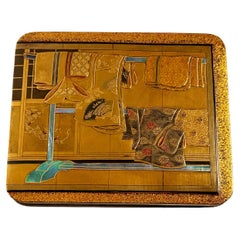
Items Similar to Suzuribako or writing box made of nashiji lacquer and adorned with a landscape
Want more images or videos?
Request additional images or videos from the seller
1 of 10
Suzuribako or writing box made of nashiji lacquer and adorned with a landscape
$11,966.42
£8,937.67
€10,000
CA$16,485.94
A$17,966.77
CHF 9,514.18
MX$215,799.85
NOK 120,451.63
SEK 110,743.42
DKK 76,182.69
About the Item
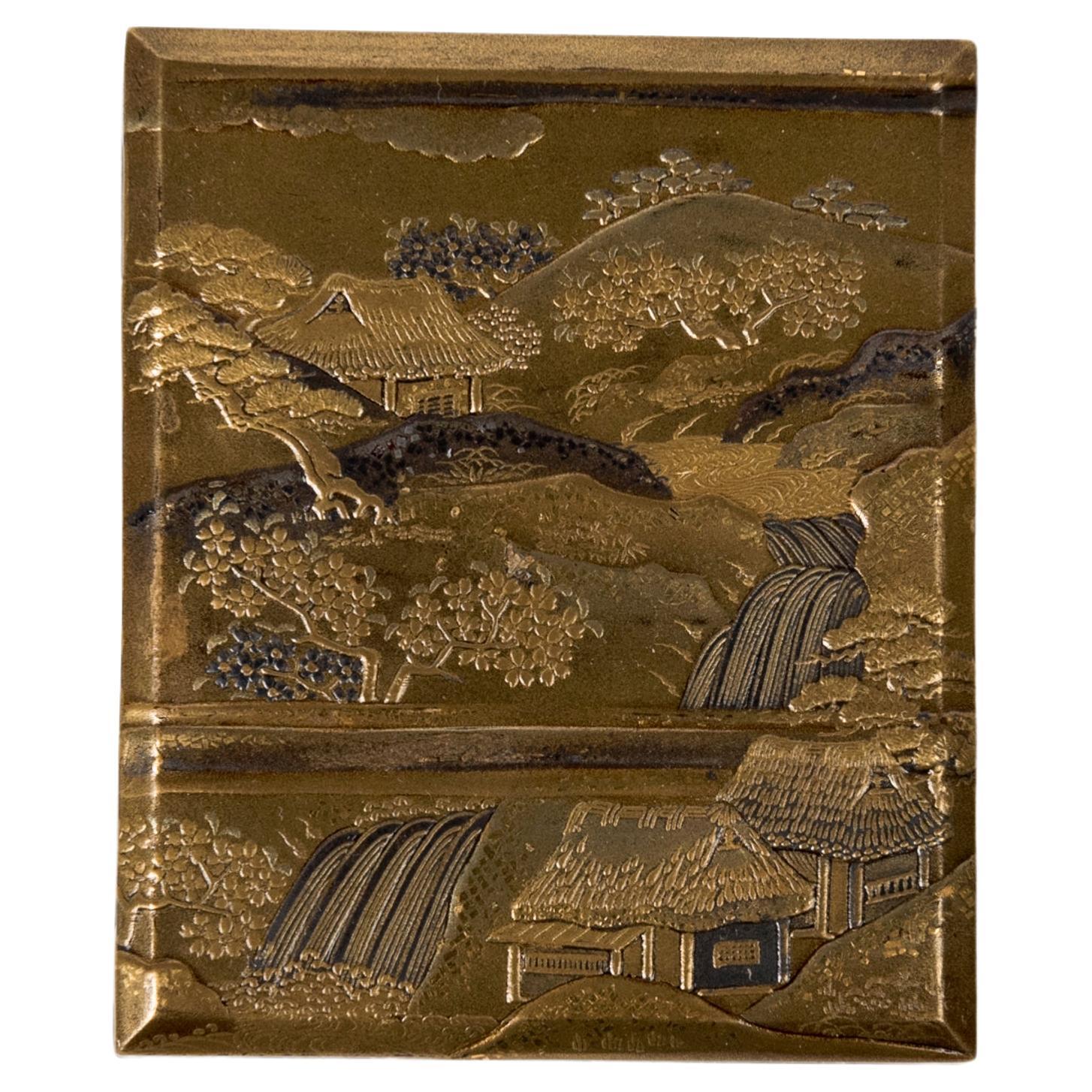
Suzuribako, or writing box, of rectangular shape, decorated with an imposing architecture realized in hira maki-e lacquer, probably a palatial structure, situated beside a waterfall and a mountain river. On its lid alone, this piece combines various lacquer techniques, making it an excellent example of the skill and versatility of lacquer craftsmanship of the end of the Edo period.
First, a nashiji background is applied across the entire piece—this technique involves sprinkling fine metallic powder, variably composed of gold and silver, into fresh lacquer. Afterward, multiple layers are added to build up the design, each one interspersed with drying and polishing stages to ensure a perfectly smooth texture. With the takamaki-e technique, volume is created using charcoal or clay, which is then lacquered to produce striking height differences in the composition, adding a sense of realism.
The decor extends over the entire box, from the lid to each side, and includes a subtle variety of techniques—from the use of kirigane across the surface to the application of raden to highlight a specific detail. In the former, countless gold flakes of varying sizes and shapes are used to suggest the grainy texture of karstic rock and the bark of pine and cedar trees. Higher up, the same technique, this time with a predominance of silver and tin, is used to convey the heaviness of clouds, becoming omnipresent in the upper register.
The scene does not simply portray fishermen’s or farmers’ homes. Rather, the quality of the decoration is evident in the harmony of the composition. The two houses are depicted with great realism—you can see the grain of the wood used for the siding, the strands of rice straw that make up the thatched roofs, and even the noren (a traditional Japanese doorway curtain) appears slightly parted, suggesting a welcoming gesture.
On either side of this architecture, various trees with rich symbolism are represented:
The willow (Salix japonica), placed between the two houses, is known for its ability to thrive in harsh conditions. Its deep roots can absorb water and nutrients from the soil. This resilience and vitality are seen as qualities that promote physical and emotional healing. In Japanese folklore, sitting under a willow tree is believed to bring good fortune and rejuvenate both body and spirit. The willow’s slender, delicate branches also embody the aesthetics of wabi-sabi, a Japanese philosophy that finds beauty in imperfection and transience.
The cedar, or sugi in Japanese, is a revered tree. It is often planted around temples and shrines, either symbolizing protection and purification or for practical reasons, as cedar is a prized building material in Japan. In Japanese mythology, the cedar is seen as a link between the earthly and the divine. Its presence is said to ward off evil spirits and bring prosperity and luck.
The pine, or matsu, is another deeply symbolic tree. Its remarkable longevity and resistance to harsh weather make it a symbol of strength and perseverance. Pines are also commonly planted near temples and shrines to represent protection and wisdom. Their distinctive, twisted branches evoke the beauty of imperfection and the ability to overcome life’s obstacles.
The cherry tree, or sakura, is arguably Japan’s most iconic tree. Like the peach, it is celebrated during Hanami. Its spectacular blossoming is seen as a symbol of fleeting beauty and renewal. The Japanese see a life lesson in this fragility—beauty is transient, so it must be appreciated while it lasts.
Although barely visible behind the house in the foreground, two more cherry trees appear in the second register, clinging precariously to the karstic rock of a misty mountain. In the upper register, a full moon can be discerned, rendered with a masterful blend of metallic oxides—whose precise formula remains the secret of lacquer masters. It appears to reflect off the rocks and clouds, echoing the gold, silver, and tin clouds that envelop the volumes, suggesting the thick mist that surrounds riverbanks in early spring.
The extraordinary urushi maki-e work is evident in the wide array of lacquer techniques used in harmony with the subject’s deep symbolic value. For all these reasons, this unique piece stands as a remarkable example of the technical mastery, craftsmanship, and near-naturalist artistic sensitivity of Japanese artisans from the late Edo period.
Japan – Edo (1603-1868)
Length: 22.5 cm – Width: 20 cm – Height: 4.5 cm
- Dimensions:Height: 1.78 in (4.5 cm)Width: 7.88 in (20 cm)Depth: 8.86 in (22.5 cm)
- Style:Edo (Of the Period)
- Materials and Techniques:
- Place of Origin:
- Period:
- Date of Manufacture:1603-1868
- Condition:Wear consistent with age and use.
- Seller Location:PARIS, FR
- Reference Number:Seller: 2025-13801stDibs: LU8311247740312
About the Seller
No Reviews Yet
Vetted Professional Seller
Every seller passes strict standards for authenticity and reliability
Established in 2013
1stDibs seller since 2023
- ShippingRetrieving quote...Shipping from: PARIS, France
- Return Policy
More From This Seller
View AllJapan lake landscape kobako box lacquer - Edo
Located in PARIS, FR
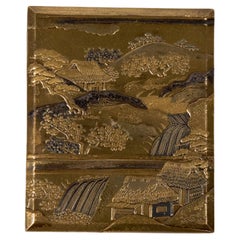
Rectangular kobako box in takamaki-e and kirigane gold lacquer circled with pewter depicting a lake landscape. Inside and back of the box in nashi-ji lacquer.
Japan – Edo period (16...
Category
Antique 18th Century Japanese Lacquer
Materials
Gold
Japanese landscape pine kobako box Edo period 18th century
Located in PARIS, FR
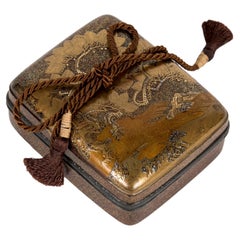
Rectangular black and gold lacquer kobako box decorated with pine trees in a mountain landscape in takamaki-e, kirigane and hiramaki-e lacquer. Background in nashi-ji lacquer. Surmou...
Category
Antique 18th Century Japanese Lacquer
Materials
Gold
Suzuribak or writting box decorated with a moonrise landscape
Located in PARIS, FR
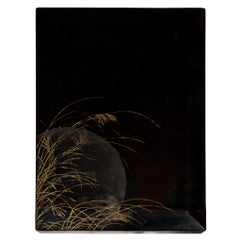
An old suzuribako, or writing box, in black lacquer with a faceted lid and featuring, as its sole decoration in the lower left section, a moonlight scene emerging from tall grasses. ...
Category
Antique Late 17th Century Japanese Edo Lacquer
Materials
Gold Leaf, Silver Leaf
Japanese inro of the edo period adorned with a landscape houses near a lake
Located in PARIS, FR
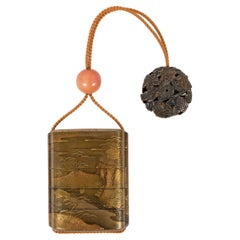
Inrō with four gold lacquer compartments, decorated with a lake landscape. Accompanied by a bronze ryusa manju.
Small boxes formed of compartments that fit one on top of the other, i...
Category
Antique Late 18th Century Japanese Edo Lacquer
Materials
Gold
Japanese Lacquered Tebako
Box
Located in PARIS, FR
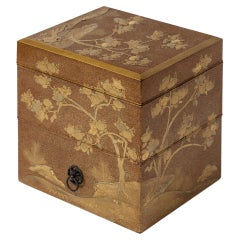
Tebako box with three compartments in golden and nashi-ji lacquer, decorated with golden, red, and kirigane lacquer, golden persimmon tree leaves, among rocks. The compartments are of increasing size from the top. The decoration is in continuity.
Persimmon has been cultivated in southern China for more than 2500 years and is believed to have been introduced to Japan in the 8th century. The veneer is a tree with very hard wood, similar to ebony. According to a legend, one specimen survived the atomic bombing of Nagasaki on August 9, 1945, close to the epicenter. It is therefore in Japan a symbol of strength and longevity. It is also the national fruit of the country. It is eaten as a traditional dish during New Year's Day celebrations.
Tebako literally means "portable box...
Category
Antique 1860s Japanese Lacquer
Materials
Lacquer
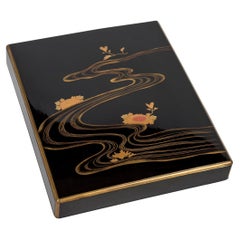
Japanese suzuribako lacquered box peony river
Located in PARIS, FR
Suzuribako box (empty) in black lacquer. Gold maki-e decoration of a river bordered by peonies, one with red highlights. The edges of the lid are in gold lacquer. Nashi-ji interior.
Category
Antique Late 19th Century Japanese Lacquer
Materials
Gold
You May Also Like
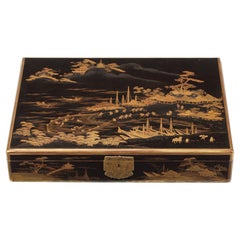
A superb Japanese export lacquer writing box
Located in Amsterdam, NL
Kyoto, circa 1680
The writing box has bevelled edges and a kabusebuta (overhanging lid), and is completely covered in black lacquer in maki-e and decorated in gold, silver and red h...
Category
Antique 17th Century Japanese Lacquer
Materials
Lacquer
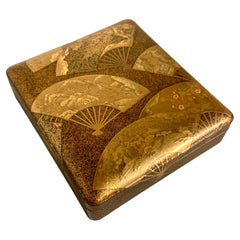
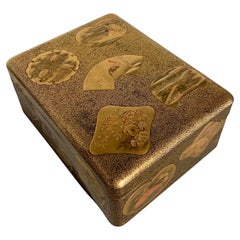
Japanese Maki-e Lacquer Document Box, Edo Period, early 19th Century, Japan
Located in Austin, TX
A spectacular Japanese maki-e lacquer lidded box, possibly a writing box, suzuribako, decorated with images of folding fans, ogi, Edo Period, earl...
Category
Antique Early 19th Century Japanese Edo Lacquer
Materials
Coral
Large Japanese Lacquer Document Box, Ryoshibako, Edo/Meiji period, Japan
Located in Austin, TX
A large and magnificently decorated Japanese lacquer document box, ryoshibako, signed Umeboshi/Baikyo, late Edo or early Meiji Period, mid 19th century, Japan.
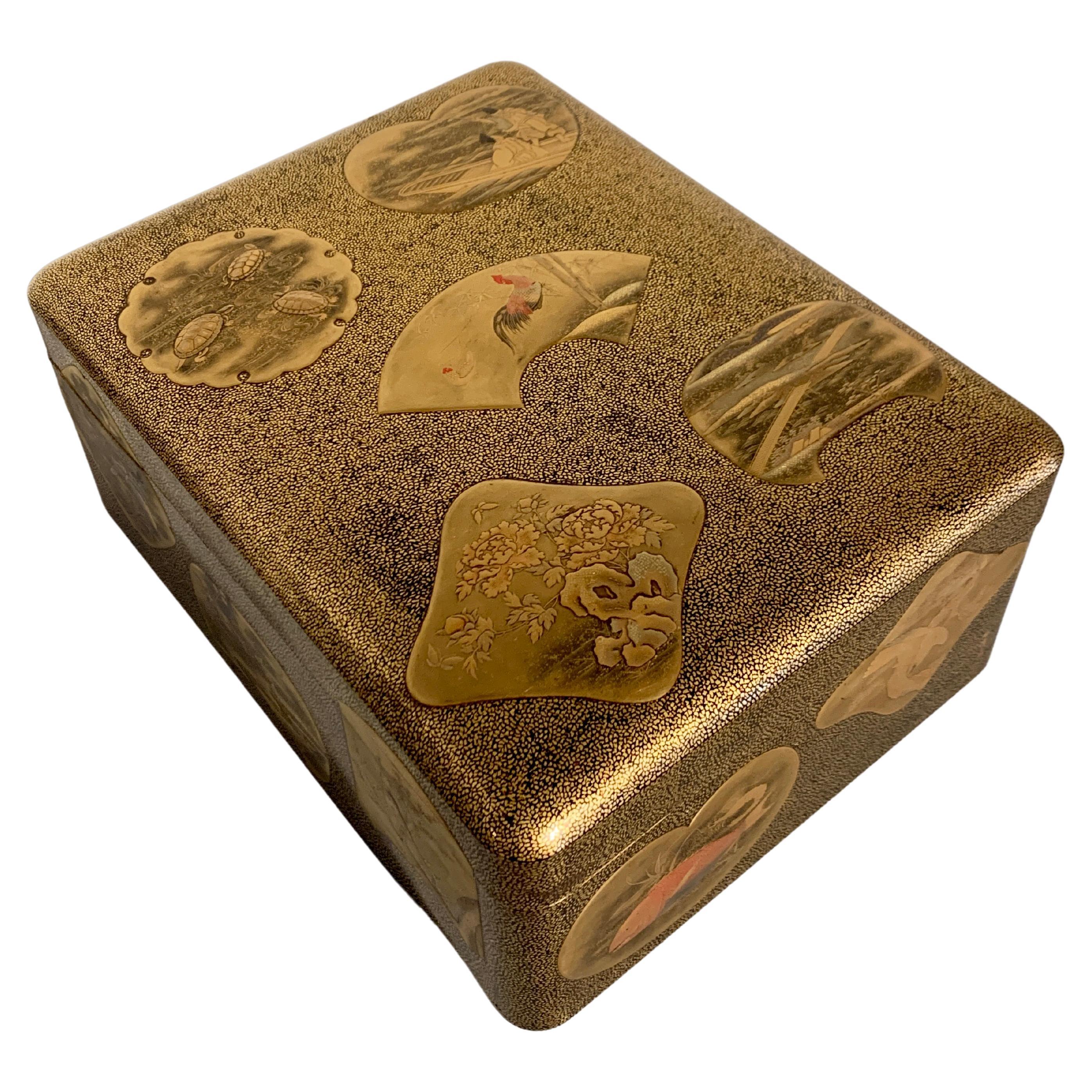
The large document box, ryoshibako, of tall, rectangular shape with rounded corners, and fitted with an inrobuta (flush-fitting) cover with beveled edges. The exterior of this exquisite box is decorated all over with fifteen different raised reserves shaped as uchiwa (paddle) fans against a lush and intricate krikane ground imitating shagreen.
The uchiwa shaped reserves all of takamaki-e, and exquisitely painted with designs of animals, flowers, and landscapes in silver, gold, maki-e, hiramaki-e, and takamaki-e, with kirikane, nashiji, and polychrome embellishments, upon gold lacquer fudame grounds.
The interior of the lid is nothing short of spectacular, featuring a large design of a magnificent and beautifully detailed rooster and hen with chicks gathered around a lazy stream. Large stalks of chrysanthemum bloom behind them. All against an ethereal nashiji ground.
The cover of the box features five reserves:
1. Three minogame (turtles with long tails), symbolizing longevity
2. "Narihira Crossing the Sumida" from The Tales of Ise...
Category
Antique 1860s Japanese Meiji Lacquer
Materials
Softwood, Lacquer
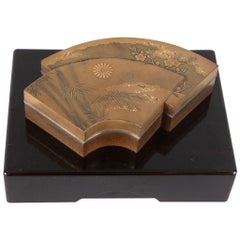
Japanese Lacquer Kogo
Incense Box
Located in Hudson, NY
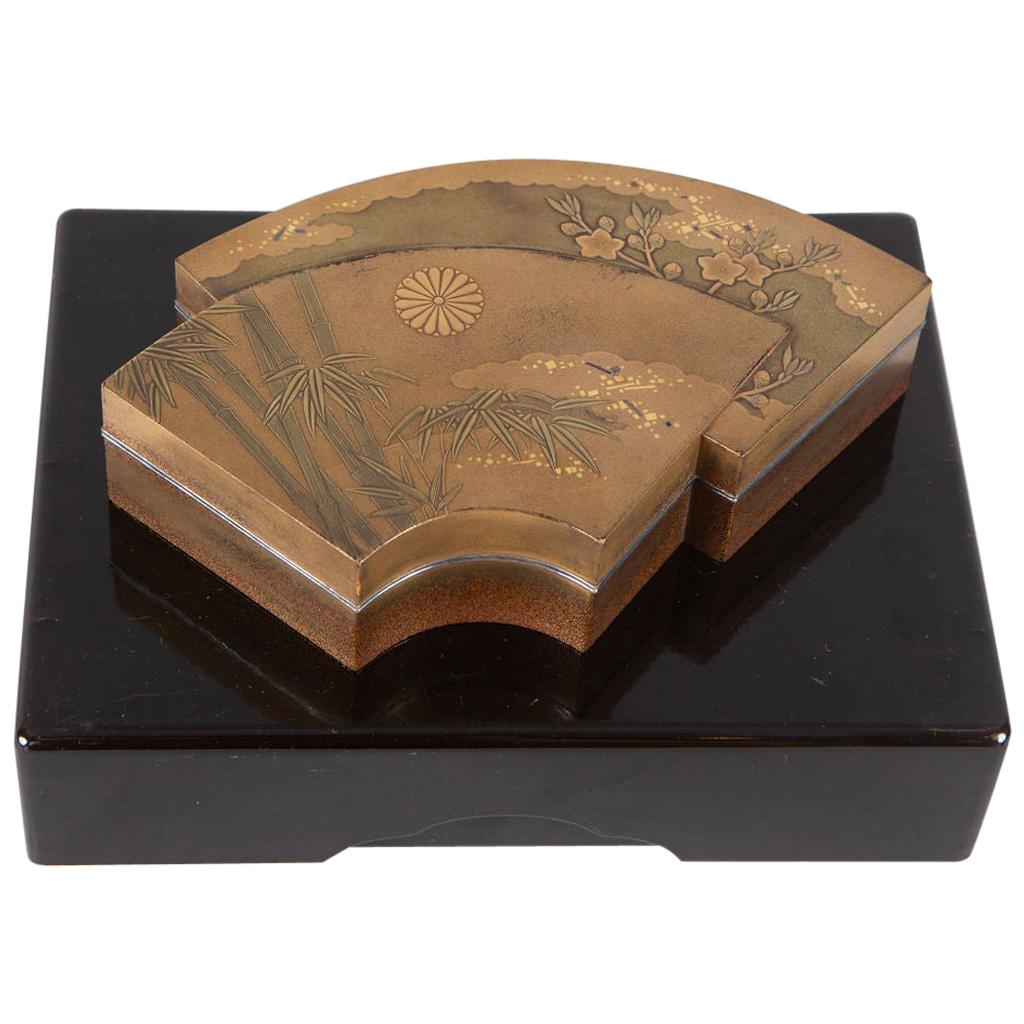
Late Edo (1614 - 1868) period incense storage box in stacked, double fan design. Fans have bamboo and plum design with a chrysanthemum crest. Silve...
Category
Antique Mid-19th Century Japanese Edo Lacquer
Materials
Gold
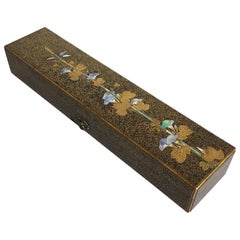
Japanese Edo Period Igarashi School Long Lacquer Box, Tanzaku-Bako
Located in Austin, TX
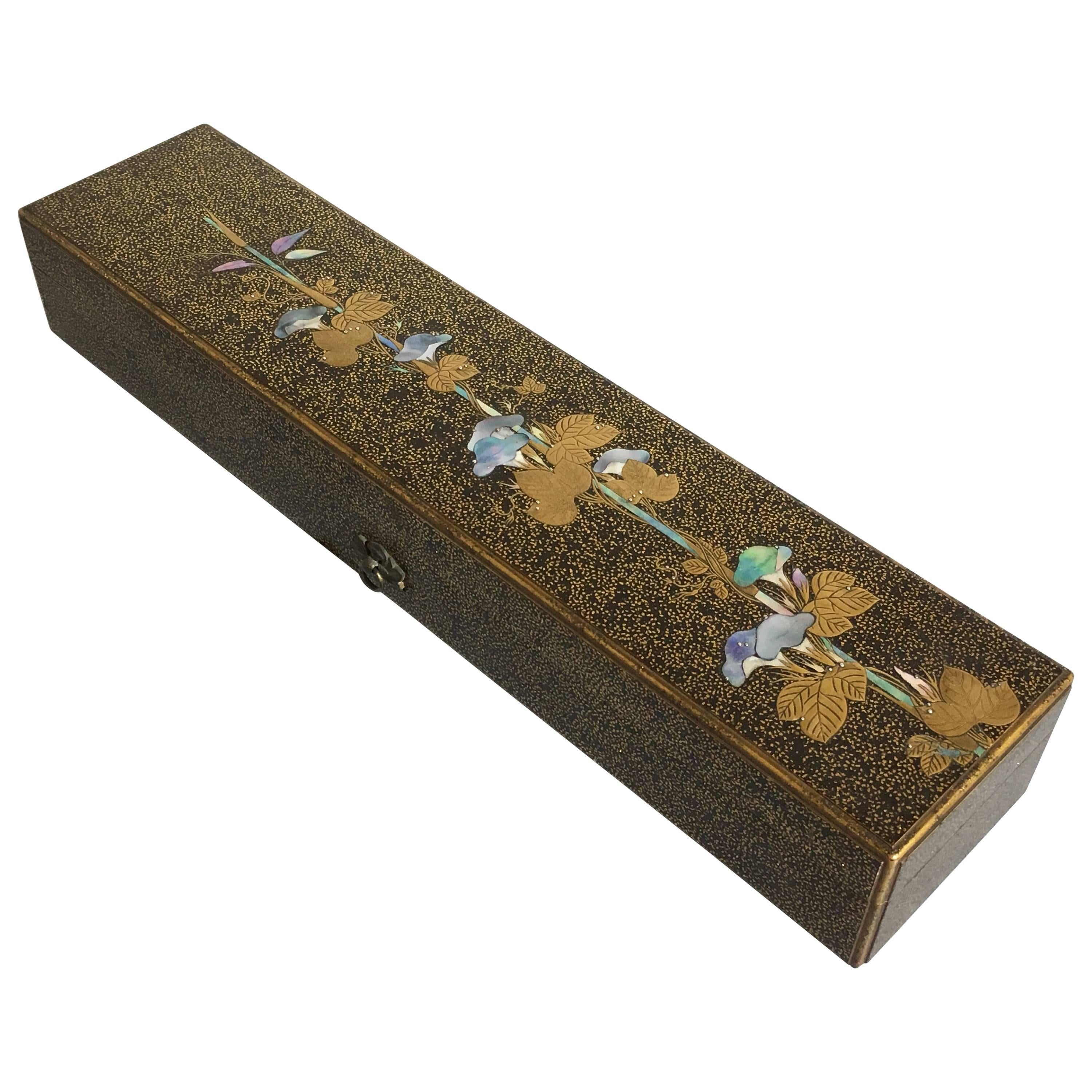
A stunning Japanese Edo period lacquer tanzakubako, box for poem cards, late 18th-early 19th century, Edo Period, Japan.
Attributed to the Igarashi School, this box is masterfully ...
Category
Antique Early 19th Century Japanese Edo Lacquer
Materials
Mother-of-Pearl, Lacquer
Japanese Tagasode (Whose Sleeves?) Lacquer Incense Box, Kobako, Meiji Period
Located in Austin, TX
A fine and unusual Japanese lacquer box for incense accessories, kobako, featuring a tagasode (whose sleeves?) design, Meiji Period, circa 1900, Japan.
The exquisite box of simple rectangular shape worked in maki-e lacquer, taka-maki-e, and raden, all against a lush ground of gold nashiji. Fitted with silver rims.
The main decorative element of the box depicts a six panel folding screen, byobu, showing an interior scene with kimono strewn over a rack, a motif known as tagasode (whose sleeves), all in raised taka-maki-e lacquer and inlaid raden.
The screen depicts an intimate room with tatami mats on the floor and sliding shoji doors in the background. The foreground depicts a large clothing...
Category
Antique Early 1900s Japanese Meiji Lacquer
Materials
Silver