Lacquer Asian Art and Furniture
to
73
655
174
901
16
9
7
4
3
3
2
2
1
1
1
122
439
340
25
190
63
22
22
1
17
8
4
3
5
5
3
1
9,221
6,372
5,361
5,324
3,002
856
718
393
304
125
926
914
917
7
4
1
1
1
Material: Lacquer
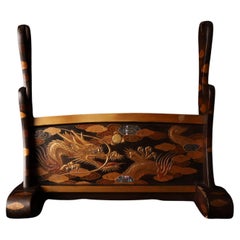
Japanese Gold Maki-e Katana Kake (Sword Stand) with Dragon Motif
Located in Fukuoka, JP
This elegant katana kake (sword stand) is crafted from wood and finished with a rich lacquer coating. Its surface is adorned with a striking gold maki-e depiction of a dragon — a tim...
Category

Late 18th Century Japanese Edo Antique Lacquer Asian Art and Furniture
Materials

Gold Leaf

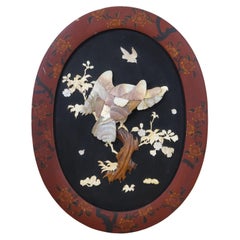
Antique Japanese Meiji Shibayama Lacquered Mother of Pearl Eagle Wall Plaque 21"
Located in Dayton, OH
Early 20th century, Meiji period shibayama wall plaque depicting a mother of pearl eagle perched on a flowering tree, set on a black lacquer background, with a reddish brown oval frame painted...
Category

Early 20th Century Japanese Meiji Lacquer Asian Art and Furniture
Materials

Mother-of-Pearl, Hardwood, Lacquer

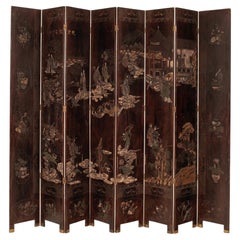
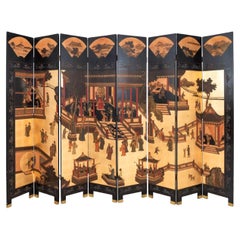
Vintage Chinese Eight Panel Coromandel Screen
Located in Houston, TX
Vintage Chinese eight panel coromandel screen composed of wood and lacquer. This screen depicts daily life on one side and a landscape with birds and fauna on the other side.
Category

20th Century Chinese Chinese Export Lacquer Asian Art and Furniture
Materials

Wood, Lacquer

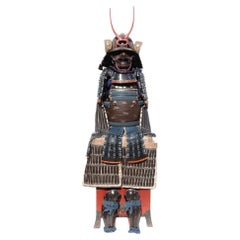
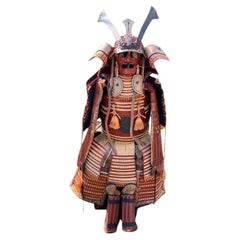
Antique Japanese Samurai Suit of Armor, Edo Period, 18th Century
Located in Point Richmond, CA
Antique Japanese Samurai Suit of Armor, Edo period, 18th century. A complete matching set of lacquered iron work; the cuirass with dragonfly decoration and blue lacing, a Kaga schoo...
Category

18th Century Japanese Edo Antique Lacquer Asian Art and Furniture

Materials

Gold Leaf, Silver, Foil, Iron, Metal

Japanese Red Samurai Armour Beginning of Meiji period 1900s
Located in Paris, FR
This is an armour of samurai. It was made around 1900s in Meiji era. This armour was not used in actual war so it was made as decoration, because of that, it is in good condition as its age. There are some scratches and missing parts, if you need some more information, please let us know, we will respond you as soon as possible and send more photos. This armour can be folded in a box. The box is getting damaged so it is not in good condition. We might send this armour in other box. Dimensions: 50 x 50 x H170 cm Scholars agree that Japanese armour first appeared in the 4th century, with the discovery of the cuirass and basic helmets in graves. During the Heian period, the unique Japanese samurai...
Category

Early 1900s Japanese Meiji Antique Lacquer Asian Art and Furniture

Materials

Metal, Iron

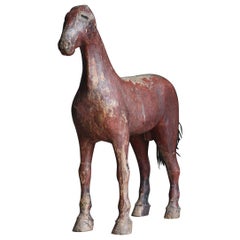
Japanese Antique Sacred Horse "Shinme" 1800s-1860s / Primitive Wabisabi
Located in Chōsei District Nagara, JP
This is an old Japanese carved wooden horse, a highly valuable piece created in the late Edo period (early 1800s–1860s). In Japan, it is known as a "Shinme" (sacred horse), a term re...
Category

Late 19th Century Japanese Edo Antique Lacquer Asian Art and Furniture

Materials

Cedar, Lacquer

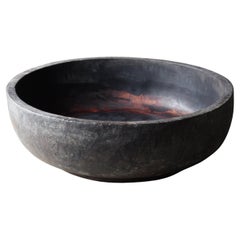
Japanese Antique Huge Wooden Bowl 1906s / Primitive Object Wabisabi Mingei
Located in Chōsei District Nagara, JP
This is a huge old Japanese lacquer wood bowl. It was manufactured in 1906 (Meiji period), and its age can be read from the writing on the bottom. The material used is cedar wood, ma...
Category

Early 1900s Japanese Meiji Antique Lacquer Asian Art and Furniture

Materials

Cedar, Lacquer

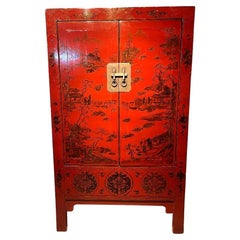
Red Lacquer Armoire with Gilt Motif
Located in Greenwich, CT
Red lacquer cabinet with painted landscape motif . Pair of open doors and two drawers inside. We carry fine quality furniture with elegant finished and has been appeared many times i...
Category

20th Century Chinese Chinoiserie Lacquer Asian Art and Furniture

Materials

Lacquer

Red Lacquer Armoire with Gilt Motif
$3,800 Sale Price
34% Off
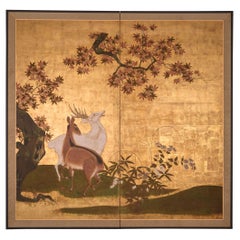
Japanese Two Panel Screen: Deer in Autumn Landscape
Located in Hudson, NY
Buck and doe under a red maple on heavy gold. Mineral pigments on gold leaf on paper with silk brocade border and black lacquer trim. White deer are considered a symbol of longevity ...
Category

Early 19th Century Japanese Antique Lacquer Asian Art and Furniture

Materials

Gold Leaf

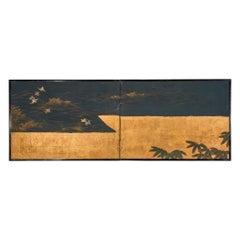
Japanese Two Panel Screen: Plovers Over Waves
Located in Hudson, NY
Lovely furosaki screen of plovers and waves and a bundled twig fence in gold raised relief. Mineral pigments on gold leaf with black lacquer trim. Original storage box.
Category

Mid-19th Century Japanese Antique Lacquer Asian Art and Furniture

Materials

Gold, Gold Leaf

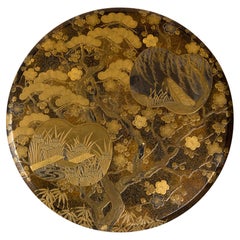
Suzuribako or writting box circular shape in nashiji and gold lacquer
Located in PARIS, FR
Suzuribako (writing box) in black lacquer, rectangular in shape, with a gold lacquer (maki-e) decoration of a pavilion by the edge of a waterfall and a mountain river surrounded by v...
Category

Late 18th Century Japanese Edo Antique Lacquer Asian Art and Furniture

Materials

Gold Leaf

Kobako in nashiji lacquer imitating wood texture, lid decorated with an ikebana
Located in PARIS, FR
Imposing kobako in nashiji lacquer on a black ground, decorated with a motif imitating wood grain. The lid is adorned with an ikebana basket (hanakago) containing a bouquet of remark...
Category

Early 19th Century Japanese Meiji Antique Lacquer Asian Art and Furniture

Materials

Gold

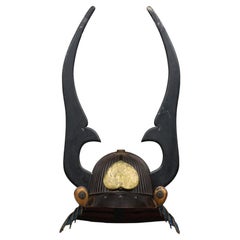
Japanese Edo-Period 62-Plate Kabuto 兜 Helmet with Long Lacquer Wakidate
Located in Amsterdam, NL
An old and exceptional completely lacquered akoda-nari suji’bachi kabuto (helmet with raised ridges) with a bronze maedate (decorative front piece) shaped like a spade, and mounted b...
Category

18th Century Japanese Antique Lacquer Asian Art and Furniture

Materials

Bronze, Copper, Iron

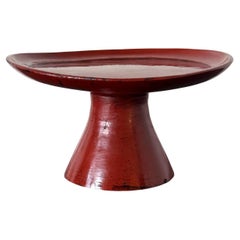
Rare Japanese Negoro Stem Dish Momoyama Edo Period
Located in Atlanta, GA
An antique red lacquer stem dish from Japan, circa 17th century (Momoyama to early Edo period). This type of red lacquer finish is known as Negoro lacquer. It was developed by the me...
Category

17th Century Japanese Edo Antique Lacquer Asian Art and Furniture

Materials

Wood, Lacquer

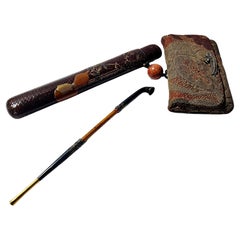
A Set of Lacquer Kiseruzutsu, Tabako-ire, and Kiseru, Signed Sesshin, Meiji Era
Located in Norton, MA
A fine set of a lacquer kiseruzutsu (pipe case), tabako-ire (tobacco pouch), and kiseru (pipe), signed on both the Pipe and Pipe Case. Decorated with a sake gourd suspended from a ma...
Category

Late 19th Century Japanese Antique Lacquer Asian Art and Furniture

Materials

Stone, Gold, Silver, Copper

An Imperial Japanese Meiji Shibayama Tea Cabinet by The Tokugawa Samurai Clan
Located in Queens, NY
An Imperial Japanese Meiji Shibayama Tea Ceremony Cabinet by The Tokugawa Samurai Clan. This extraordinary Meiji-period shibayama cabinet, attributed to the Tokugawa samurai clan, s...
Category

19th Century Japanese Meiji Antique Lacquer Asian Art and Furniture

Materials

Mother-of-Pearl, Wood, Lacquer

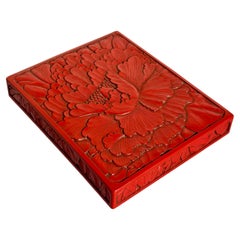
Japanese Kamakura Bori Lacquer Presentation Box, Showa Era, mid 20th century
Located in Austin, TX
An attractive Japanese red lacquered Kamakura-bori inscribed presentation box, featuring peony, Showa Era, mid 20th century, Japan. The low box and cover carved with a bold and stri...
Category

1960s Japanese Showa Vintage Lacquer Asian Art and Furniture

Materials

Softwood, Lacquer

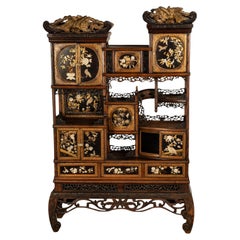
Antique Japanese Lacquer Inlaid Hardwood Meiji Period Shibayama Shodana Cabinet
Located in Portland, OR
An exquisite antique Japanese Meiji period Shibayama Shodana cabinet, circa 1880. One of the finest antique Shibayama cabinets one will see, ...
Category

Late 19th Century Japanese Meiji Antique Lacquer Asian Art and Furniture

Materials

Gold

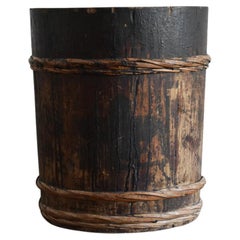
Antique wooden bucket of Japanese lacquer craftsman/20th century/planter
Located in Sammu-shi, Chiba
This is a wooden bucket used by Japanese lacquerware craftsmen to store lacquer. It is believed to have been used from the Meiji period to the first half of the Showa era (1868-1940)...
Category

Late 19th Century Japanese Meiji Antique Lacquer Asian Art and Furniture

Materials

Cedar, Lacquer

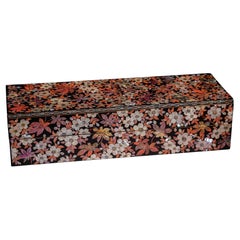
Fine Meiji Period Mother-of-Pearl Inlaid Lacquer Box
Located in Taichung, TW
This refined rectangular lacquer box was crafted during the Meiji period and showcases the height of Japanese raden mother-of-pearl artistry. The wood-core body is coated in deep bla...
Category

Late 19th Century Japanese Meiji Antique Lacquer Asian Art and Furniture

Materials

Mother-of-Pearl, Wood, Lacquer

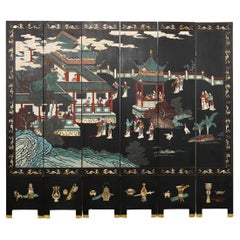
Chinese Export Six Panel Lacquered Coromandel Screen Courtyard
Located in Rio Vista, CA
Vibrant 20th century Chinese export coromandel screen depicting a walled pagoda courtyard. The lacquered panels are incised and decorated with colorful pigments of green, red, and wh...
Category

20th Century Chinese Chinese Export Lacquer Asian Art and Furniture

Materials

Brass

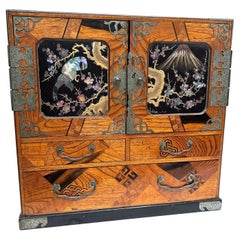
Antique Japanese Yosegi (Marquetry) Shibayama Ko Tansu Meiji Period
Located in Point Richmond, CA
Antique Japanese Yosegi (Marquetry) Shibayama Ko Tansu, Meiji period The marquetry is composed of keyayaki (zelkova) and kakinoki (persimmon) wood. Two small doors with inlaid Moth...
Category

Late 19th Century Japanese Meiji Antique Lacquer Asian Art and Furniture

Materials

Wood, Mother-of-Pearl, Lacquer

Chinese Export Eight-Panel Lacquered Coromandel Screen
Located in Tarry Town, NY
Beautifully hand painted and decorated grand scale Chinese export Eight-panel Coromandel screen featuring different hand painted Chinese scene on each side. One side depicting an hand painted and parcel gilded court scenes. The reverse features a Chinese landscape scene. The screen measures 96 inches...
Category

Mid-20th Century Chinese Chinese Export Lacquer Asian Art and Furniture

Materials

Brass

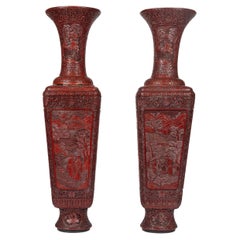
A Monumental and Rare Pair of Chinese Cinnabar Carved Lacquer Vases, Qianlong
Located in Queens, NY
Introducing an extraordinary and exceptionally rare pair of Chinese Cinnabar Carved Lacquer Vases from the Qianlong period. These monumental vases stand as magnificent examples of Ch...
Category

19th Century Chinese Antique Lacquer Asian Art and Furniture

Materials

Lacquer

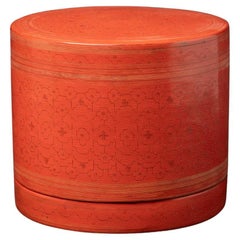
Early 20th century Old Burmese lacquerware betelnut box from Burma
Located in DEVENTER, NL
This exquisite old Burmese lacquerware betelnut box, dating back to the early 20th century, showcases the rich cultural heritage of Burma (Myanmar). Crafted from traditional lacquerw...
Category

Early 20th Century Burmese Lacquer Asian Art and Furniture

Materials

Lacquer

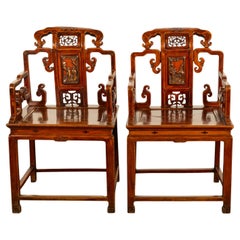
Pair Antique Ming Style Chinese Qing Carved Hardwood Gilt Lacquer Throne Chairs
Located in Portland, OR
A fine pair of antique late 19th/early 20th Century Chinese Ming style carved, lacquered & gilt throne armchairs, Qing dynasty, circa 1900. This very attractive pair of antique carve...
Category

Mid-19th Century Chinese Ming Antique Lacquer Asian Art and Furniture

Materials

Hardwood, Lacquer

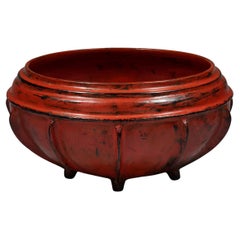
Late 19th/ early 20th Century Large Red Lacquer Offering Bowl, Burma
Located in Point Richmond, CA
Large Red Offering Bowl Burma Late 19th/early 20th century Bamboo, lacquer D: 21 in x H: 7.5 in :: 78.7 cm x 19 cm Traditionally used to bring offerings to an altar, and to present ...
Category

Early 20th Century Burmese Tribal Lacquer Asian Art and Furniture

Materials

Bamboo, Lacquer

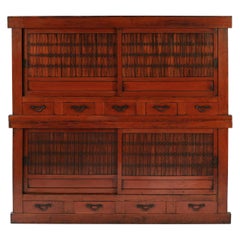
Late 19th Century Large Two Section Antique Japanese Kitchen Tansu
Located in Point Richmond, CA
Late 19th Century Large Two Swection Antique Japanese Kitchen Tansu A Kyoto Mizuya Tansu also known as a Gifu Mizuya Tansu from the Meiji Period (1868-19...
Category

1990s Japanese Meiji Lacquer Asian Art and Furniture

Materials

Iron

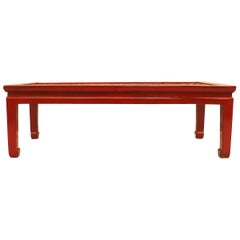
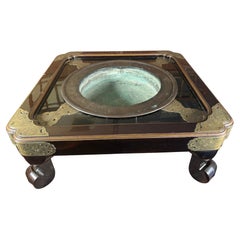
Fine Red Lacquer Low Table with Fret Work Top
Located in Greenwich, CT
Fine red lacquer low table / coffee table with fret work top, elegant fine red lacquer finished. Purchase red lacquer low table / coffee table also come with glass top that can place...
Category

Late 20th Century Chinese Ming Lacquer Asian Art and Furniture

Materials

Lacquer

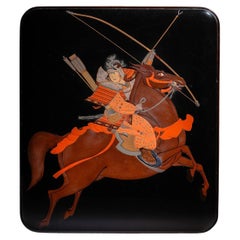
Edo Gold-Lacquer Writing Box with Samurai Warrior, Makie Suzuribako
Located in Taichung, TW
This Edo-period makie suzuribako features the legendary Heian-period general Minamoto no Yoshiie, widely known as Yawata Tarō, shown charging forward on horseback with bow drawn. Cel...
Category

Mid-18th Century Japanese Edo Antique Lacquer Asian Art and Furniture

Materials

Lacquer

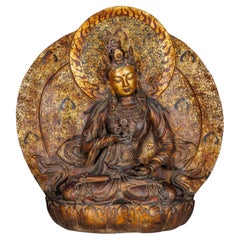
A Monumental Gilt-Lacquered Bronze Ornamental Buddha Sculpture of Vajravidarana
Located in Queens, NY
A Monumental Gilt-Lacquered Bronze Ornamental Buddha Sculpture of Vajravidarana: A Masterpiece of Sino-Tibetan Craftsmanship, Late 19th Century, Qing Dynasty This monumental gilt-lacquered bronze ornamental sculpture of Vajravidarana is an extraordinary and commanding piece of art, showcasing the pinnacle of Sino-Tibetan craftsmanship from the late 19th century. The figure of Vajravidarana, a powerful purification deity in Tibetan Buddhism, is meticulously sculpted to embody both spiritual authority and artistic excellence. Vajravidarana is primarily known for his role in removing spiritual impurities and negativities. Unlike other deities associated with wisdom or compassion, Vajravidarana’s function is centered on purification and healing. He is typically depicted holding a vajra and a bell, symbolizing the cutting away of delusions and the resonance of divine truth. In this striking sculpture, Vajravidarana is shown holding a vishva vajra (the double vajra), a unique and powerful variation of the traditional iconography, which signifies ultimate protection and the dispelling of negative karma. Vajravidarana: The Supreme Purifier and Protector Vajravidarana is revered in Tibetan Buddhism as the deity of spiritual purification, called upon to cleanse practitioners of defilements and negative influences. His vajra represents the indestructibility of truth, while his bell signifies the wisdom that resonates through purification rituals. In this sculpture, the presence of the vishva vajra, or double vajra, enhances his association with supreme protection, ensuring the destruction of all spiritual obstacles and afflictions. The figure’s powerful yet composed expression conveys a sense of unwavering resolve and divine authority. His posture, along with the carefully sculpted details of his robes and ornaments, highlights his function as a guardian against impurity. The inclusion of the vishva vajra rather than the usual single vajra reinforces his role as a supreme protector, capable of dispelling all forms of negativity and restoring balance. Symbolism of the Mantras and Aureole: Unlike deities that embody wisdom through duality, Vajravidarana’s iconography is centered on purification and exorcism. The aureole surrounding him is inscribed with sacred purification mantras rather than depictions of a consort. These mantras emphasize his function as a remover of obstacles and impurities, reinforcing his role in Buddhist healing rituals. The presence of the sacred inscriptions elevates the sculpture’s spiritual significance, making it a focal point for meditation and ritual purification. Practitioners often visualize Vajravidarana radiating purifying light, dissolving afflictions and negative karma. This theme is mirrored in the sculptural repetition of the purification symbols on the aureole, reinforcing the deity’s role as a divine cleanser. Gilt-Lacquered Bronze: The Artistry of Sino-Tibetan Metalwork: The craftsmanship of this monumental figure reflects the expertise of late 19th-century Sino-Tibetan metalwork, where traditional Tibetan themes were infused with Chinese artistic sensibilities. Cast in bronze and finished with a rich gilt lacquer, the statue has an otherworldly glow, giving it an ethereal, almost divine presence. The gilding process—applied with exceptional skill—gives the sculpture a striking luminosity that enhances the fine details of the facial features, flowing robes, jewelry, and other elements of the deity’s attire. The technique employed to create this figure speaks to the high level of craftsmanship that flourished during the late Qing Dynasty and early modern Tibetan art. The ornate details of the robes and the fine texture of the sculpture highlight the exceptional skill of the artisans who brought this work to life. The use of gold and lacquer not only reflects the preciousness of the sculpture but also its spiritual significance as an object meant to inspire reverence and meditation. An Ornamental Sculpture of Monumental Scale: Unlike smaller devotional objects, this sculpture is designed as an ornamental masterpiece, intended to make a grand visual and spiritual statement. Its monumental size allows it to dominate any space, offering a commanding presence that is both physically and symbolically impressive. In Buddhist practice, large sculptures of this nature are often placed in temples or meditation halls, where their imposing size and serene presence would encourage contemplation and devotion. The grand scale of the statue further amplifies the spiritual power it is meant to convey. As a representation of Vajravidarana, it is not only a physical object of beauty but also a conduit for meditation, purification, and enlightenment. The scale of the sculpture also emphasizes the divine stature of the deity, highlighting his importance in the Buddhist tradition as the ultimate force for spiritual cleansing and protection. Provenance: Acquired in China in circa 1900 1905 Private Buddhist Temple, Northeast, USA Private Sale Solomon Treasure...
Category

Late 19th Century Chinese Tibetan Antique Lacquer Asian Art and Furniture

Materials

Bronze

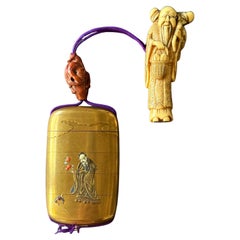
Fine Japanese Inro with Maki-e and Inlay by Shokasai and Shibayama
By Shibayama Factory
Located in Atlanta, GA
A Japanese four-case inro stringed together with a silk cord of a carved wood Ojime and a carved ivory netsuke circa 19th century of Edo period. This fine piece was made in collabora...
Category

19th Century Japanese Edo Antique Lacquer Asian Art and Furniture

Materials

Wood, Lacquer

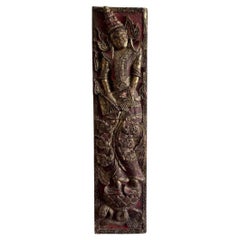
Antique Burmese Carved Wood Panel of a Court Scribe.
Located in Point Richmond, CA
Antique Burmese Carved Wood Panel of a Court Scribe. The standing heavenly being holds a manuscript with a brush in the right hand writing scriptur...
Category

Late 19th Century Burmese Folk Art Antique Lacquer Asian Art and Furniture

Materials

Wood, Lacquer

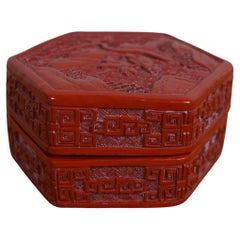
Chinese Chinoiserie Cinnabar Lacquered Hexagon Trinket Box
Located in Dayton, OH
Vintage 20th century red cinnabar trinket box with ring. Hexagonal shaped box with geometric pattern around the sides and lid featuring a pair of figures under a gnarled pine tree. R...
Category

20th Century Chinese Lacquer Asian Art and Furniture

Materials

Lacquer

Chinese Export Four Panel Coromandel Screen Pastel Beauties
Located in Rio Vista, CA
Gorgeous Chinese export four-panel coromandel screen featuring a courtyard scene of beauties engaged in leisurely activities. The lacquered panels are incised and painted in soft pas...
Category

20th Century Chinese Chinese Export Lacquer Asian Art and Furniture

Materials

Brass

Antique Black Lacquered Carved Box Village Life
Located in Somis, CA
This captivating early 20th-century lacquerware box transports you to a serene Chinese farming village. The fully carved lid unfolds a scene of daily life: two men, one seated on a ...
Category

Early 20th Century Chinese Qing Lacquer Asian Art and Furniture

Materials

Kork, Wood, Lacquer

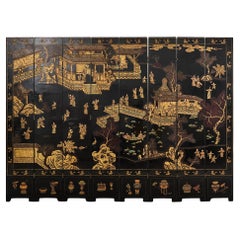
A Chinese 10-panel folding screen, C. 1940.
Located in Philadelphia, PA
Each 17.5" wide panel is decorated on both sides with traditional lacquer, carved painted motifs (the front featuring figures in a garden landscape and the reverse with variou...
Category

Early 20th Century Chinese Lacquer Asian Art and Furniture

Materials

Wood, Lacquer, Paint

Japanese Two Panel Screen: European Hounds
Located in Hudson, NY
18th century painting of European hound and her pup. Mineral pigments on gold leaf with black lacquer trim.
Category

Mid-18th Century Japanese Antique Lacquer Asian Art and Furniture

Materials

Gold Leaf

Large Japanese 6-panel byôbu 屏風 (folding screen) with Edo genre painting
Located in Amsterdam, NL
An elaborate, large six-panel byôbu (folding screen) featuring a detailed genre painting on gold leaf, capturing the vibrancy of festive scenes from the Edo period. Central to the p...
Category

Early 19th Century Japanese Antique Lacquer Asian Art and Furniture

Materials

Metal, Gold Leaf

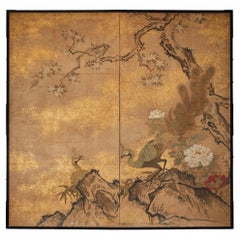
Japanese Two Panel Screen: Amorous Pea-fowl in Craggy Garden Landscape
Located in Hudson, NY
Ink and minimal pigments on mulberry paper with black lacquer trim.
Category

Mid-19th Century Japanese Antique Lacquer Asian Art and Furniture

Materials

Lacquer, Paper

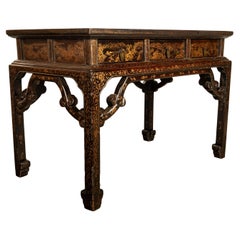
Antique Chinese Qing Dynasty Export Gilt Black Lacquer Table 3 Drawer Desk 1850
Located in Portland, OR
A fine antique gilt-wood & black lacquer Chinese Export Qing dynasty table desk, circa 1850. The table top is finely hand-painted to the top with a gilded landscape scene, depicting ...
Category

1850s Chinese Qing Antique Lacquer Asian Art and Furniture

Materials

Giltwood, Lacquer

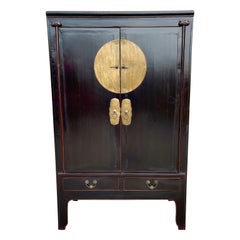
Chinese Wedding Cabinet Black on Red Lacquer with Circular Brass Medallion
Located in Hanover, MA
Chinese Qing Dynasty wedding cabinet in black lacquer with red accents featuring large circular brass medallion hardware on two 45 inch high doors above two drawers. The interior is...
Category

Early 20th Century Qing Lacquer Asian Art and Furniture

Materials

Brass

Grand Chinese Export Eight Panel Lacquered Coromandel Screen
Located in Rio Vista, CA
Gorgeous Chinese export eight panel coromandel double sided screen depicting Han Palace on the front side. The screen features heavily lacquered panels incised with color pigments an...
Category

20th Century Chinese Chinese Export Lacquer Asian Art and Furniture

Materials

Brass

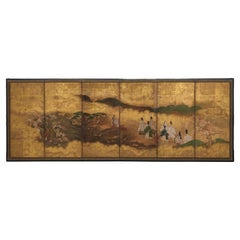
Mid-size 6-panel byôbu 屏風 with a scene from The Tale of Genji
Located in Amsterdam, NL
A refined medium-sized six-panel byôbu (folding screen) showcasing a classical autumn court scene from chapter 7 of The Tale of Genji (Genji Monogatari), titled Momiji no Ga (The Aut...
Category

17th Century Japanese Antique Lacquer Asian Art and Furniture

Materials

Metal, Gold Leaf

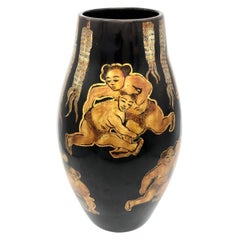
Antique Vietnamese Lacquer Wrestlers Drummer Vase
Located in Munich, DE
Unusual lacquer vase depicting wrestlers in different poses and a drummer. The figures and banderoles are painted with gold, silver and black color onto the brown/red lacquer. The va...
Category

21st Century and Contemporary Vietnamese Lacquer Asian Art and Furniture

Materials

Lacquer

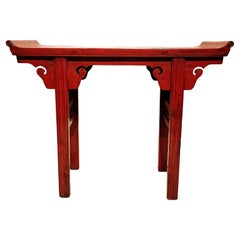
Red Lacquer Altar Table
Located in Greenwich, CT
Red lacquer altar table with everted flangers.
Category

1920s Chinese Vintage Lacquer Asian Art and Furniture

Materials

Lacquer

Red Lacquer Altar Table
$1,900 Sale Price
32% Off
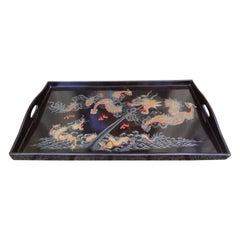
Antique Chinese Lacquer Tray With Dragons
Located in Houston, TX
Antique Chinese Lacquer Tray With Dragons. Our stunning Chinese lacquer tray is rectangular with two handles and hand decorated with gold ...
Category

1920s Chinese Chinoiserie Vintage Lacquer Asian Art and Furniture

Materials

Lacquer

Japan Elegant Antique Rich Black Lacquer Table, 1852 With Signed Box
Located in South Burlington, VT
From our recent Japan acquisitions An important black lacquer treasure dated 1852 with its original box tomobako Superb antique Ohibachi (over sized hibachi) from late Edo era use...
Category

Mid-19th Century Japanese Edo Antique Lacquer Asian Art and Furniture

Materials

Wood, Lacquer

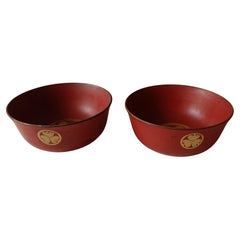
Japanese Lacquered Wood Bowls 19th Century Asian Antiques 中国古董
Located in London, GB
Fine Pair Japanese Lacquered Wood Bowls 19th Century Meiji Beautiful and elegant example of Japanese lacquer ware with and gold gilt, Rice bowls ...
Category

19th Century Japanese Antique Lacquer Asian Art and Furniture

Materials

Wood, Lacquer

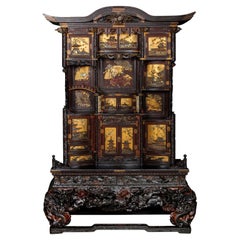
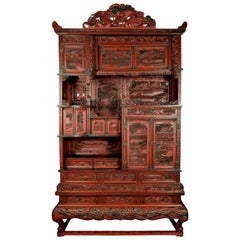
19th Century Japanese Cinnabar / Lacquer Cabinet
Located in Fulton, CA
Incredible example of Asian lacquer carving. Standing over seven feet tall, this monumental display shelf was produced in Japan at the end of the Ed...
Category

Late 19th Century Japanese Edo Antique Lacquer Asian Art and Furniture

Materials

Wood, Lacquer

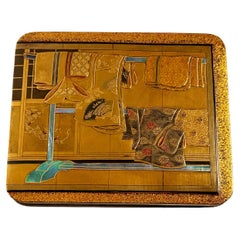
Japanese Tagasode (Whose Sleeves?) Lacquer Incense Box, Kobako, Meiji Period
Located in Austin, TX
A fine and unusual Japanese lacquer box for incense accessories, kobako, featuring a tagasode (whose sleeves?) design, Meiji Period, circa 1900, Japan. The exquisite box of simple rectangular shape worked in maki-e lacquer, taka-maki-e, and raden, all against a lush ground of gold nashiji. Fitted with silver rims. The main decorative element of the box depicts a six panel folding screen, byobu, showing an interior scene with kimono strewn over a rack, a motif known as tagasode (whose sleeves), all in raised taka-maki-e lacquer and inlaid raden. The screen depicts an intimate room with tatami mats on the floor and sliding shoji doors in the background. The foreground depicts a large clothing...
Category

Early 1900s Japanese Meiji Antique Lacquer Asian Art and Furniture

Materials

Silver

Large Tibetan Red Painted Storage Trunk with Kirtimukha, circa 1900, Tibet
Located in Austin, TX
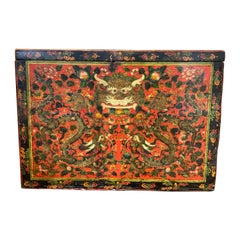
A powerful and impressive large and tall Tibetan orange red lacquer painted storage trunk featuring a Kirtimukha, Face of Glory, late 19th or early 20th century, Tibet. The large storage chest...
Category

Early 20th Century Tibetan Tibetan Lacquer Asian Art and Furniture

Materials

Iron

Rare set of 2 Japanese suits-of-armour, complete with 2 matching folding screens
Located in Amsterdam, NL
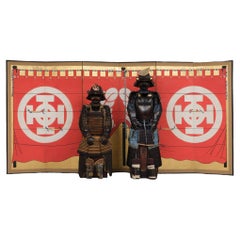
Important unique set of two suits-of-armour (yoroi), complete with two high six-panel screens, that belong together as is indicated by the used family crests (mon). Two crests are used, both belonging to the Nakagawa family of Oka Castle, Ôita prefecture on Kyûshû. They are: – the Nakagawa-kurusu, a circle depicting a Celtic-like cross through a ring. The cross was originally a Christian symbol but after the ban on Christianity in Japan the use of a hidden cross in family crests could continue. – the Nakagawa-kashiwa, two leaves of the Japanese Emperor Oak turned to each other (dakikashiwa mon). The remarkable aspect of this ensemble is the presence of matching crests on both the yoroi and the accompanying folding screens. The kurusu and kashiwa crests adorning the yoroi are elegantly replicated on the screens, providing compelling evidence that these pieces form a harmonious and unified set. This exceptional cohesion between the armour and screens further enhances their artistic and historical value. After the warlord Toyotomi Hideyoshi (1537-1598) had interfered in the battle between the Lord of Bungo Province Ôtomo Yoshi-mune (1558-1605) and the Shimazu of Hyûga Province, he split the Bungo Province in a number of small fiefs and transferred in 1594 Nakagawa Hideshige (1570-1612) from Miki Castle in the Harima Fief to Oka Castle in Kyûshû. The Nakagawa family stayed in possession of Oka Castle till the abolishment of the military use of castles in 1873. In 1884 the Nakagawa family received the title of Count (a title in use till the abolishment of aristocracy in 1947). After the Nakagawa’s left, the castle and the building soon dilapidated and is now known as Oka Castle Ruins. The castle is located in Taketa Village part of Taketa Town in Ôita Province on Kyûshû. > Set of two tall byôbu (folding screens), painted with large red jinmaku (camp enclosure curtain) on a gold leaf ground. The curtains show both crests of the Nakagawa family: one screen depicts two Nakagawa-kurusu crests next to a Nakagawa-kashi crest in the middle, and the other shows the symbols the other way round. Dimensions: Total width 148.66 in/377.6 cm (2 x 25.35 in/64.4 cm, 4 x 24.48 in/62.2 cm); Height 72.63 in/184.5 cm. Period: Japan – Late Edo period (First half 19th century), and maybe even older. > Yoroi with Nakagawa-kashiwa crest: A Japanese black lacquered suit-of-armour (yoroi) completely laced with orange cords (kuro’urushinuri hi’ito odoshi nimai’dô’maru). A thirty-two plate suji’bachi kabuto (helmet with raised ridges) with in front a maedate (fore crest) -with traces of gilding- in the shape of flames, resembling a mythical flaming bird flying down. The fukikaeshi (face guards) and the mabizashi (visor) have the Nakagawa-kashiwa crest in gold maki-e lacquer. Five curved ‘itazane’-plate neck guards (shikoro) laced with orange cords. Together with an ‘angry man...
Category

18th Century Japanese Antique Lacquer Asian Art and Furniture

Materials

Gold Leaf, Iron, Metal

Large Japanese 6-panel byôbu 屏風 (folding screen) with genre painting
Located in Amsterdam, NL
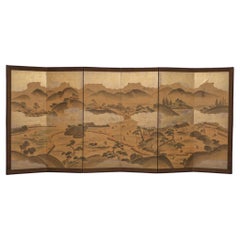
Fascinating large six-panel byôbu (folding screen) with a detailed genre painting on goldish silver leaf with different scenes of people at work in a rural mountain village during th...
Category

Early 20th Century Japanese Lacquer Asian Art and Furniture

Materials

Silver Leaf

Black Lacquer Hand Painted Chinoiserie Black Lacquer Secretary Writing Desk
Located in Chattanooga, TN
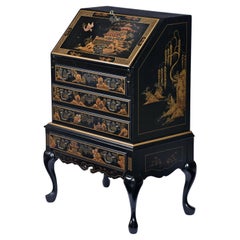
This incomparable slant-front chinoiserie black lacquer secretary desk depicts a serene, traditional Asian motif from head to toe. The gold and greens appear as mystical and radiant...
Category

1970s American Chinoiserie Vintage Lacquer Asian Art and Furniture

Materials

Brass

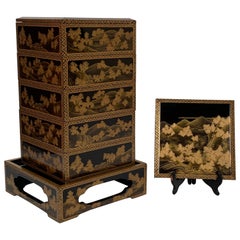
Japanese Maki-e Lacquer Stacking Box, Jubako, Meiji Period, Japan
Located in Austin, TX
A fine and impressive Japanese gold maki-e decorated black lacquer five-tier jubako with presentation tray, two lids, and the original tomobako storage box, Meiji period, late 19th c...
Category

Late 19th Century Japanese Meiji Antique Lacquer Asian Art and Furniture

Materials

Lacquer

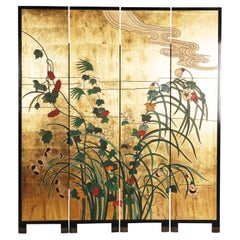
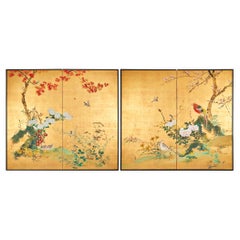
Vintage Gold Leaf Lacquer Asian-Inspired Four-Panel Folding Screen
Located in Sheridan, CO
Vintage Black and Gold Leaf Lacquer Asian-Inspired Four-Panel Folding Screen. An Asian-Inspired Four-Panel Screen depicting colorful foliage, floral and grasses on a stunning gold le...
Category

1950s Japanese Japonisme Vintage Lacquer Asian Art and Furniture

Materials

Gold Leaf

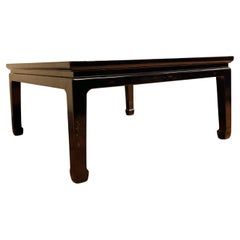
Black Lacquer Low Table with Gilt Motif
Located in Greenwich, CT
An elegant black lacquer square low table with gilt motif landscape top, gilt motif on apron and legs, simple and beautiful form. We carry Fine quality furniture with elegant finishe...
Category

Late 20th Century Chinese Lacquer Asian Art and Furniture

Materials

Lacquer

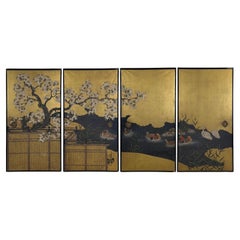
Stunning Set of Four 19th Century Edo Period Fusuma Door Decorative Panels
Located in Los Angeles, CA
A set of four fusuma (sliding door) panels from the 19th century, painted in ink and colors on gold leaf. The panels depict a blossoming cherry tree extending beyond a woven fence an...
Category

Late 19th Century Japanese Edo Antique Lacquer Asian Art and Furniture

Materials

Gold Leaf, Brass

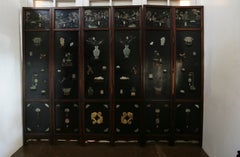
Early 19th Century Chinese Hardwood, Lacquer and Jade Six-Panel Screen
Located in Austin, TX
A very fine mid-Qing Dynasty Chinese hardwood and lacquer six-panel screen, Jailing Period, circa 1800. The hardwood frame inset with black lacquer panels. One side features an over...
Category

Early 19th Century Chinese Qing Antique Lacquer Asian Art and Furniture

Materials

Coral, Jade

Still Thinking About These?

All Recently Viewed