Items Similar to Articulated iron sculpture or Jizai (articulated) in the form of a butterfly

Want more images or videos?
Request additional images or videos from the seller
1 of 6
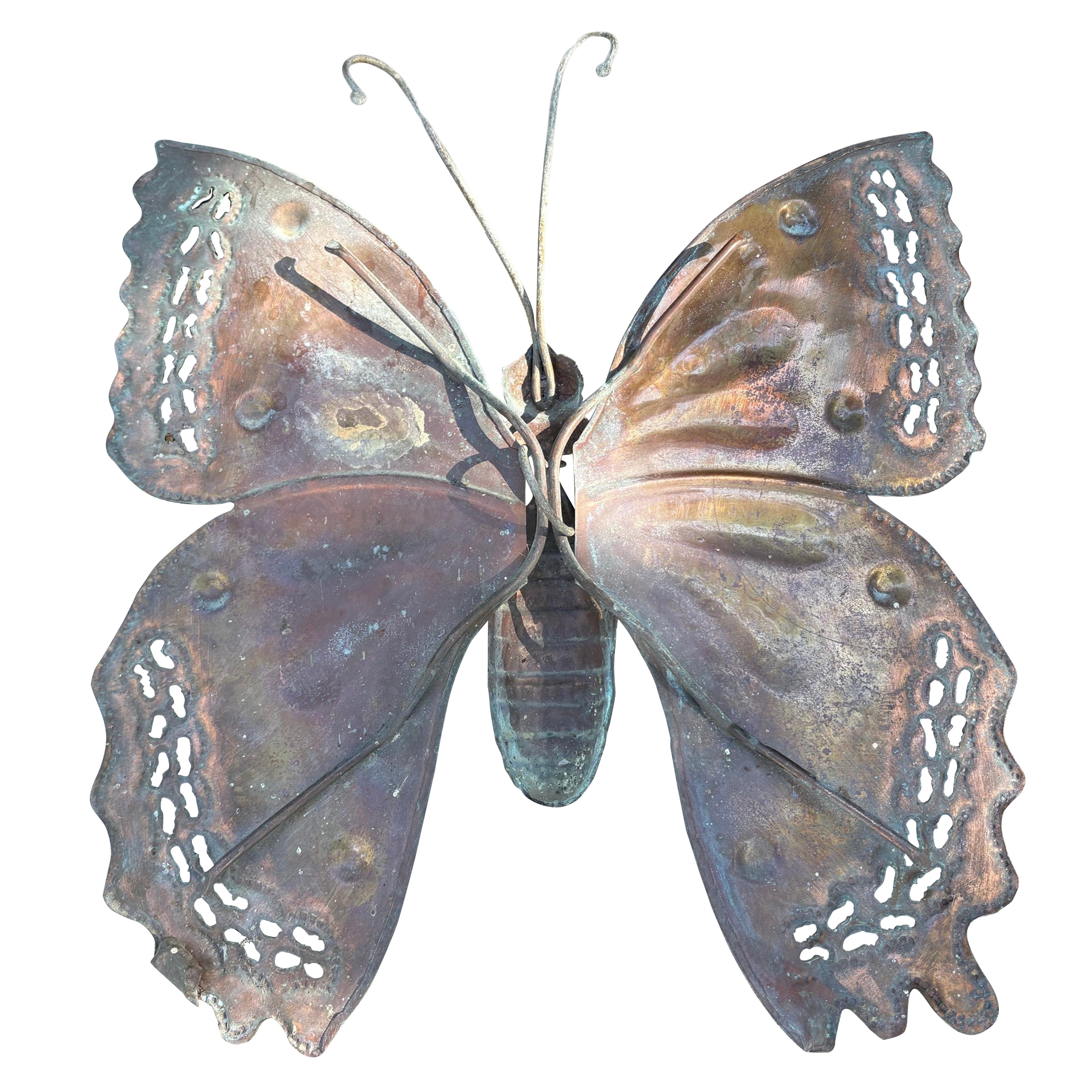
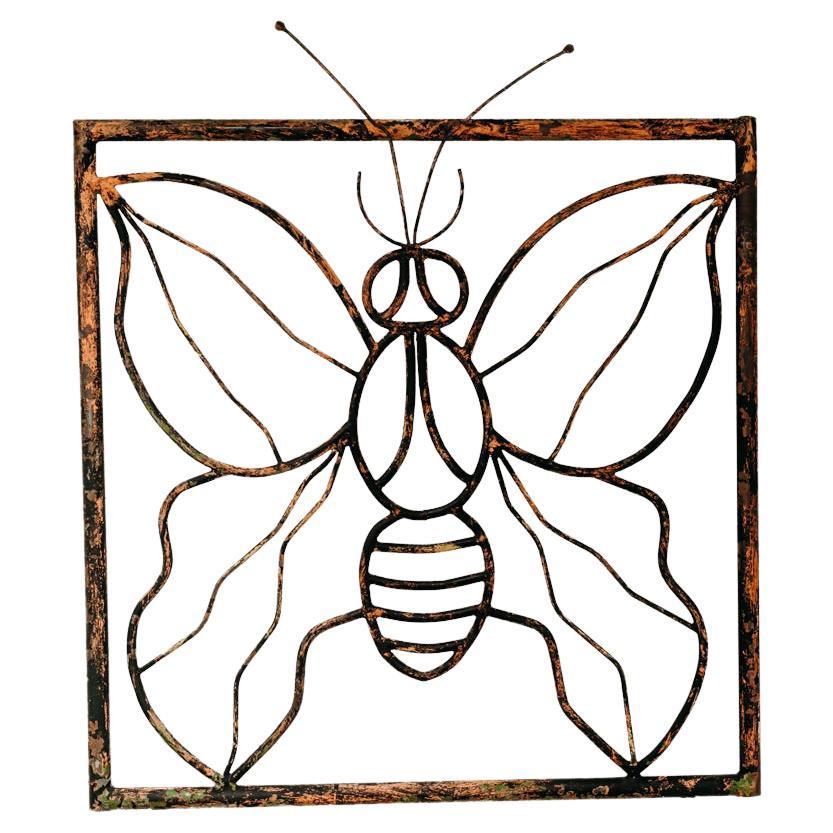
Articulated iron sculpture or Jizai (articulated) in the form of a butterfly
$1,801.35
£1,334.17
€1,500
CA$2,464.15
A$2,681.75
CHF 1,421.60
MX$32,263.54
NOK 18,030.39
SEK 16,496.54
DKK 11,430.26
About the Item
Fine iron jizai of an articulated butterfly with fascinating openwork on its wings. In 1876, the Haitōrei decree was proclaimed, prohibiting the use of swords by anyone other than the military and the police. The aim of this measure was to reduce the influence of the samurai, modernise the imperial army and avoid a second revolt similar to the Boshin War. The ban led to a decline in the production of katanas and armour. Many blacksmiths found themselves forced to renew their skills or turn to other trades. Many specialised craftsmen began making tools, knives and even bells and chimes (furin). However, one singular art form stands out from this complex
transition period: jizai. When the most meticulous armourers, responsible for making kabuto (helmets) and maedate (family ornaments, usually in bronze, used as coats of arms), found themselves without customers, they came up with the idea of producing very fine sculptures made in nature, combining the striking realism of certain maedate with the articulatory engineering of the finest pieces of armour. Jizai Okimono are realistic sculptures of animals, generally divided into the following categories: birds, crustaceans, insects, but also imaginary animals such as dragons and shachi (aquatic monster similar to fish). They are generally made from iron, shibuichi copper (an alloy of copper and silver) or shakudo (an alloy of copper and gold), but can also be made from deer antlers or ivory. Their bodies and limbs are articulated, and can be moved in the same way as a living animal. This type of okimono (decorative object) is little known in Japan because they were mainly exported from the beginning of the Meiji period to the end of the Showa era.
Jizai Okimono began to attract the interest of the Japanese public in October 1983 when several models were presented at a special exhibition on ‘Japanese Metal Art’ held at the Tokyo National Museum. The pieces on display included a dragon, a falcon, ashachi, a carp, a lobster and a crab. Shortly afterwards, a number of Jizai animals from the British Museum were included in the exhibitions ‘Masterpieces of Japanese and Chinese Art from the British Museum’ in 1987 at the Tokyo National Museum and ‘Daei Hakubutsukan Hizo Edo Bijutsu Ten (Exhibition of Edo Period Art from the British Museum Collections)’ in 1990 at the Tokyo Metropolitan Art Museum.
Public interest in Jizai okimono continued to grow when the exhibition ‘The Art of East and West at World Fairs’ was held from July 2004 to March 2005 at the Tokyo National Museum, the Osaka Municipal Museum of Art and the Nagoya City Museum, and included a dragon, a carp and a praying mantis from the Japanese collections, as well as a lobster on loan from the Linden Museum in Stuttgart.
As early as 1888, the French magazine Le Japon Artistique published detailed illustrations and an explanation of an articulated frog made by Myochin Muneharu. They also made their appearance at Japanese art auctions in the early days.
Insects are basically made in the same way as crustaceans, joining the legs together with rivets. The wings of butterflies and dragonflies are attached to the body with hinges to make them mobile, while those of beetles and praying mantises, which cover the lighter wings, can be opened to spread the more fragile wings.
The butterfly (choho) in Japan is perceived as "the soul of the living and the dead", the spirits of the dead taking the form of a butterfly on their journey to the other world.
The butterfly spreading its wings is a symbol of femininity. It can also symbolize joy and longevity. This last motif is taken up by the samurai, seeing in its twirling figure a motive of good omen allowing them to reach immortality. The Taira clan has adopted the butterfly as its coat of arms for this symbolism.
Japan-Meiji Era (1868-1912)
Length: 6 cm(3 inch) cm-Width: 8 cm (2.4 inch)–Height: 2 cm
- Dimensions:Height: 0.79 in (2 cm)Width: 3.15 in (8 cm)Depth: 2.37 in (6 cm)
- Style:Meiji (Of the Period)
- Materials and Techniques:Bronze,Cast
- Place of Origin:
- Period:
- Date of Manufacture:1868-1912
- Condition:Wear consistent with age and use.
- Seller Location:PARIS, FR
- Reference Number:Seller: 2020-8531stDibs: LU8311242720922
About the Seller
No Reviews Yet
Vetted Professional Seller
Every seller passes strict standards for authenticity and reliability
Established in 2013
1stDibs seller since 2023
- ShippingRetrieving quote...Shipping from: PARIS, France
- Return Policy
More From This Seller
View AllBronze okimono sculpture of a huge cicada lying on a bamboo segment
Located in PARIS, FR
Huge bronze sculpture in the form of a cicada standing on a bamboo segement. This type of sculpture of small dimensions with a flat base is generally used by calligraphs to maintain ...
Category
Late 20th Century Japanese Meiji Metalwork
Materials
Bronze
Bronze sculpture or Okimono in the form of a snail in an interesting pose
Located in PARIS, FR
An interesting bronze sculpture or okimono with a brown patina depicting a snail in a very original pose. Its angular form indeed suggests that it can be displayed in a way that give...
Category
Antique Late 19th Century Japanese Meiji Metalwork
Materials
Bronze
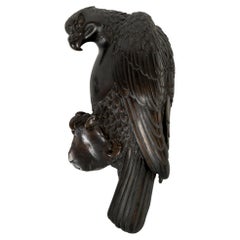
Japanese Bronze Hawk Ikebana
Located in PARIS, FR
Bronze intended for hanging (? dô kakenanaike, « hanging bronze ») depicting a hawk, placed on a branch. The inside is hollow so a bouquet a flowers can be put inside and thus, serve...
Category
Antique Late 19th Century Japanese Metalwork
Materials
Bronze
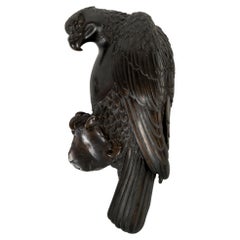
Ikebana in bronze of an Hawk designed to display flowers hanged on the wall
Located in PARIS, FR
Bronze intentded for hanging (銅掛斜生, dô kakenanaike, « hanging bronze ») depicting a hawk, placed on a branch. The inside is hollow so a bouquet a flowers can be put inside and thus, ...
Category
Antique Late 19th Century Japanese Meiji Metalwork
Materials
Bronze
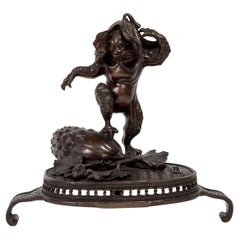
Japanese Bronze Kappa
Located in PARIS, FR
Dark brown patina bronze figure of a standing kappa with its right leg leaning on a cucumber. The figure is put on four-legged rattan-like bronze stand.
The kappa (??) is a aquatic creature taken from Japanese folklore having the appearance of an anthropomorphic turtle.
His skull is either slightly hollowed out to accommodate water, from which it derives its power, or hidden with a water lily leaf hiding this sag. Naturally polite, it is advisable to bow to him in order that it should do so in return, thus losing all the water he has gathered and leaving it harmless.
Kappa has the reputation of attempting to lure both humans and animals into the water. In some areas, it ravages fields, stealing eggplants and cucumbers. Some people prefer to worship it and give it offerings rather than be its victims.
Signed Shokaken (???). His real name is Ôshima Yasutarô. He was born in 1849 and is the third generation of a metalworkers family. Together with his brother Ôshima Joun...
Category
Antique Late 19th Century Japanese Metalwork
Materials
Bronze
$5,404
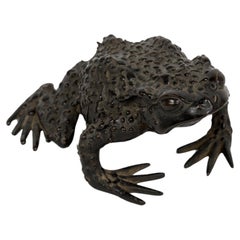
Japanese bronze okimono toad (sculpture)
Located in PARIS, FR
Okimono bronze sculpture of a large toad in a crouching position, possibly about to jump.
The toad and the frog, referred to by the same term in Japanese (kaeru), are associated with...
Category
Antique Mid-19th Century Japanese Japonisme Metalwork
Materials
Bronze
You May Also Like
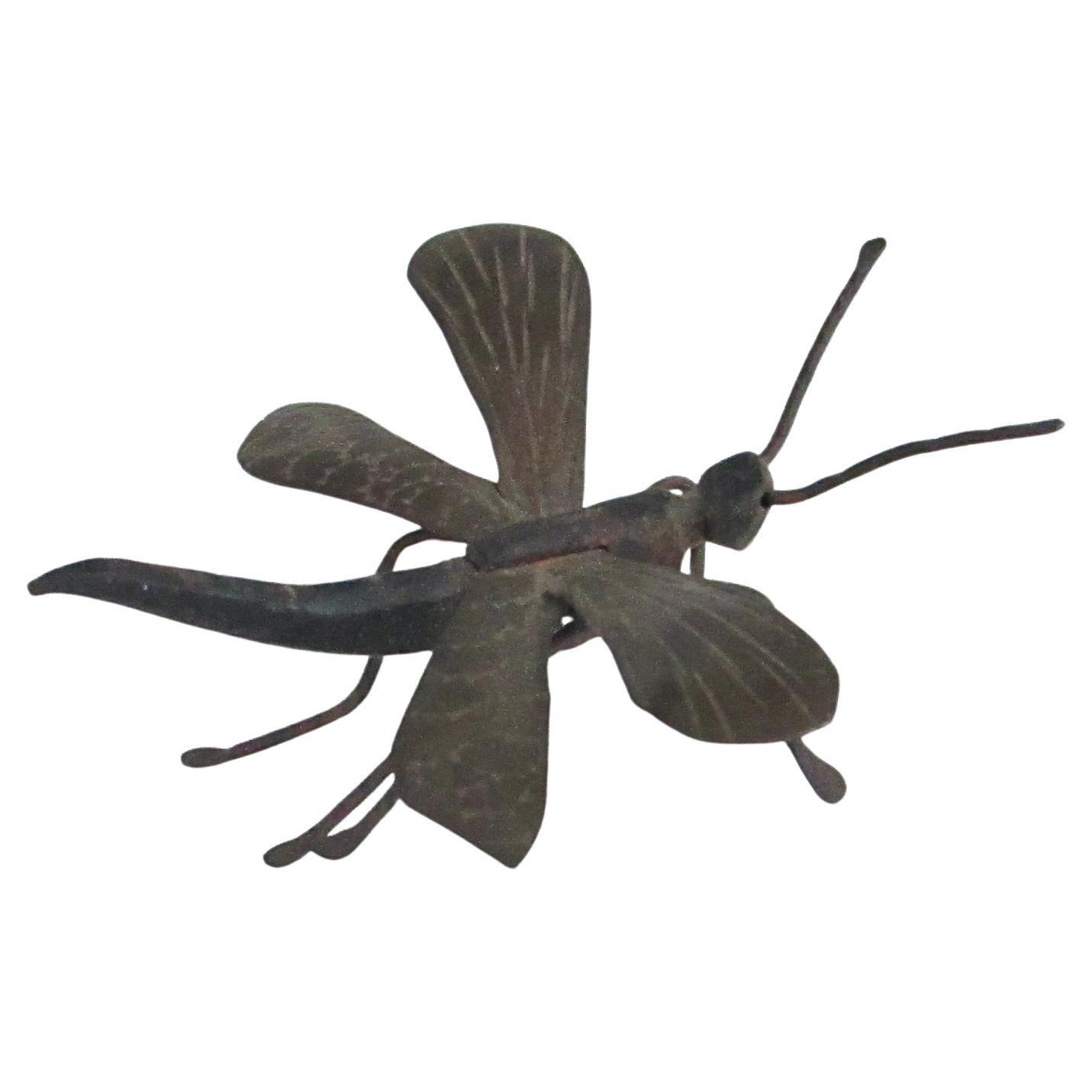
Wrought iron with braas winged Okimono Jizai dragonfly sculpture
Located in Ferndale, MI
Nicely crafted early Okimono sculpture of dragonfly . Wrought and forged body with brass wings . Original finish and patina .
Category
Antique Late 19th Century Japanese Japonisme Sculptures and Carvings
Materials
Brass, Wrought Iron
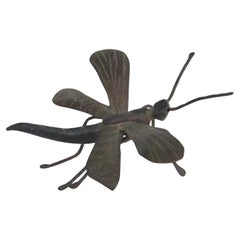
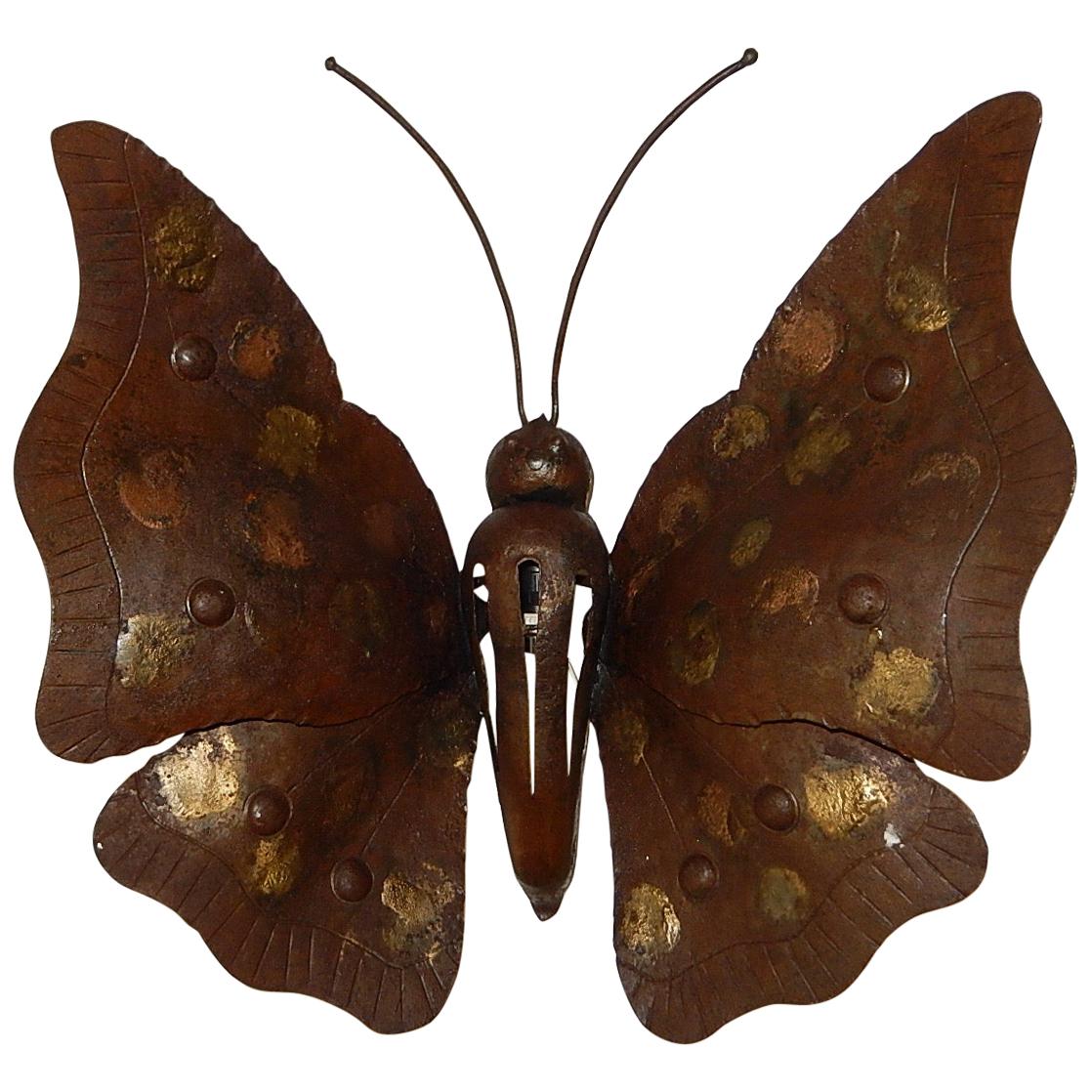
Alessandro Mazzucotelli Italian Brutalist Wrought Iron Rare Butterfly Sconce
Located in Firenze, Toscana
Housing one light. Will be rewired with certified US UL sockets for USA and appropriate sockets for all other countries and ready to hang. Wrought iron body that has been oiled to st...
Category
Antique Early 1900s Italian Brutalist Wall Lights and Sconces
Materials
Metal, Wrought Iron
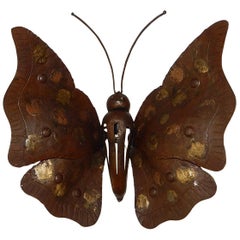
Italian Hollywood Regency Copper Butterfly Sculpture
By Curtis Jeré
Located in Houston, TX
Italian Hollywood Regency Copper Butterfly Sculpture.
Offered is a beautifully detailed Italian mid-century copper butterfly that would look great mounted on a wall, sitting on a tab...
Category
Vintage 1960s Italian Hollywood Regency Wall-mounted Sculptures
Materials
Copper
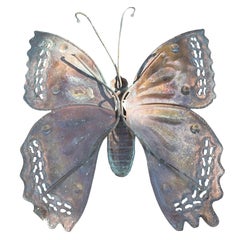
Vintage Boho Monumental Bent Wood Butterfly
Located in West Palm Beach, FL
Celebrate the beauty of nature and minimalist design with this monumental vintage butterfly wall sculpture. Masterfully crafted from bentwood, this piece captures the essence of ligh...
Category
Late 20th Century American Minimalist Animal Sculptures
Materials
Bentwood
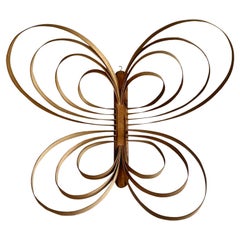
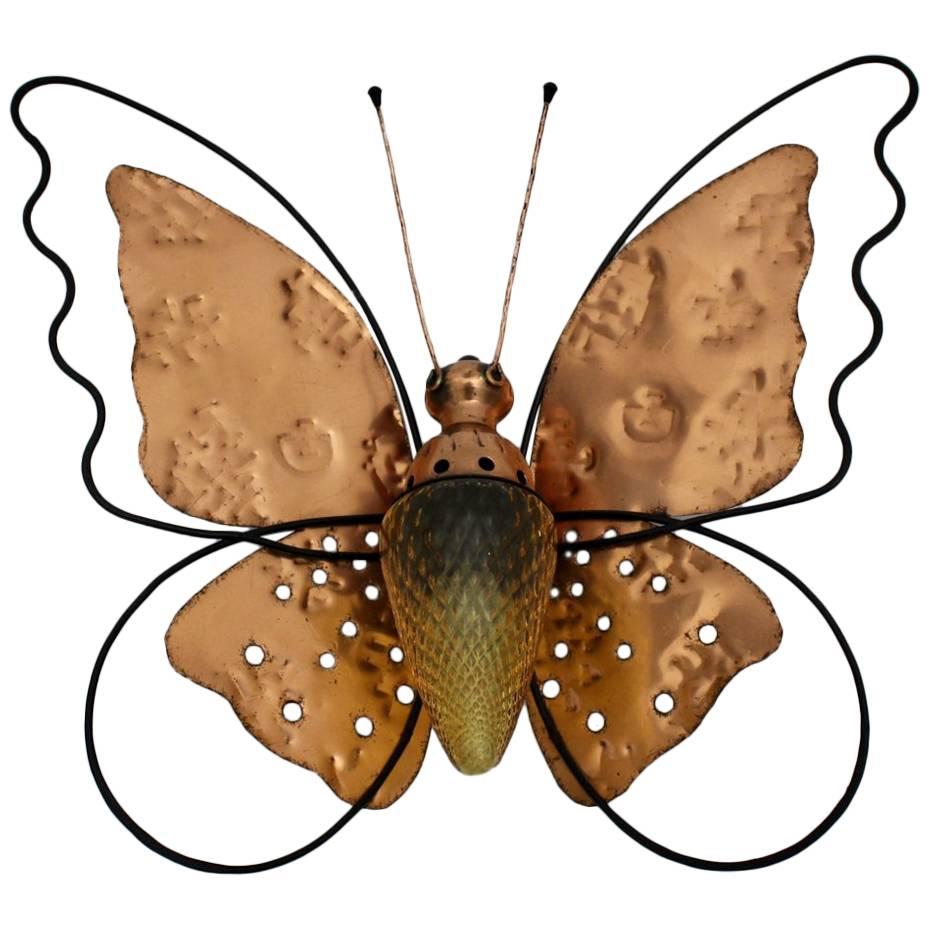
Mid Century Modern Copper Metal Wall Light Butterfly Austria, 1950s
Located in Vienna, AT
Mid Century Modern vintage metal wall light in butterfly shape, designed and executed in Austria, 1950s.
A gorgeous sconce or wall light works...
Category
Mid-20th Century Austrian Mid-Century Modern Wall Lights and Sconces
Materials
Metal, Copper
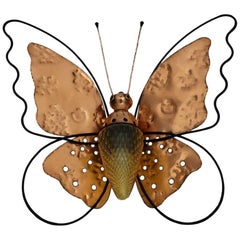
Iron Butterfly
Located in Brecht, BE
great quirky object ... this iron framed butterfly ... can be used indoors as well as outdoors ...
Category
Early 20th Century French Decorative Art
Materials
Iron
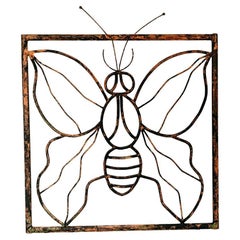
$3,422
More Ways To Browse
Japanese Butterfly
Antique Police
Articulated Sculpture
Butterfly Iron
Meiji Bronze Sculptures
Japanese Iron Meiji
Bronze Butterfly
Japanes Cast Iron
Cast Iron Japanese
Japanese Iron Sculpture
Antique Copper Canner
Praying Mantis
Antique Japanese Cast Iron
Realistic Animal Sculpture
Kabuto Helmet
Japanese Jizai
Antique Kabuto
Japanese Articulated