Items Similar to Japanese Bronze Hawk Ikebana
Want more images or videos?
Request additional images or videos from the seller
1 of 7
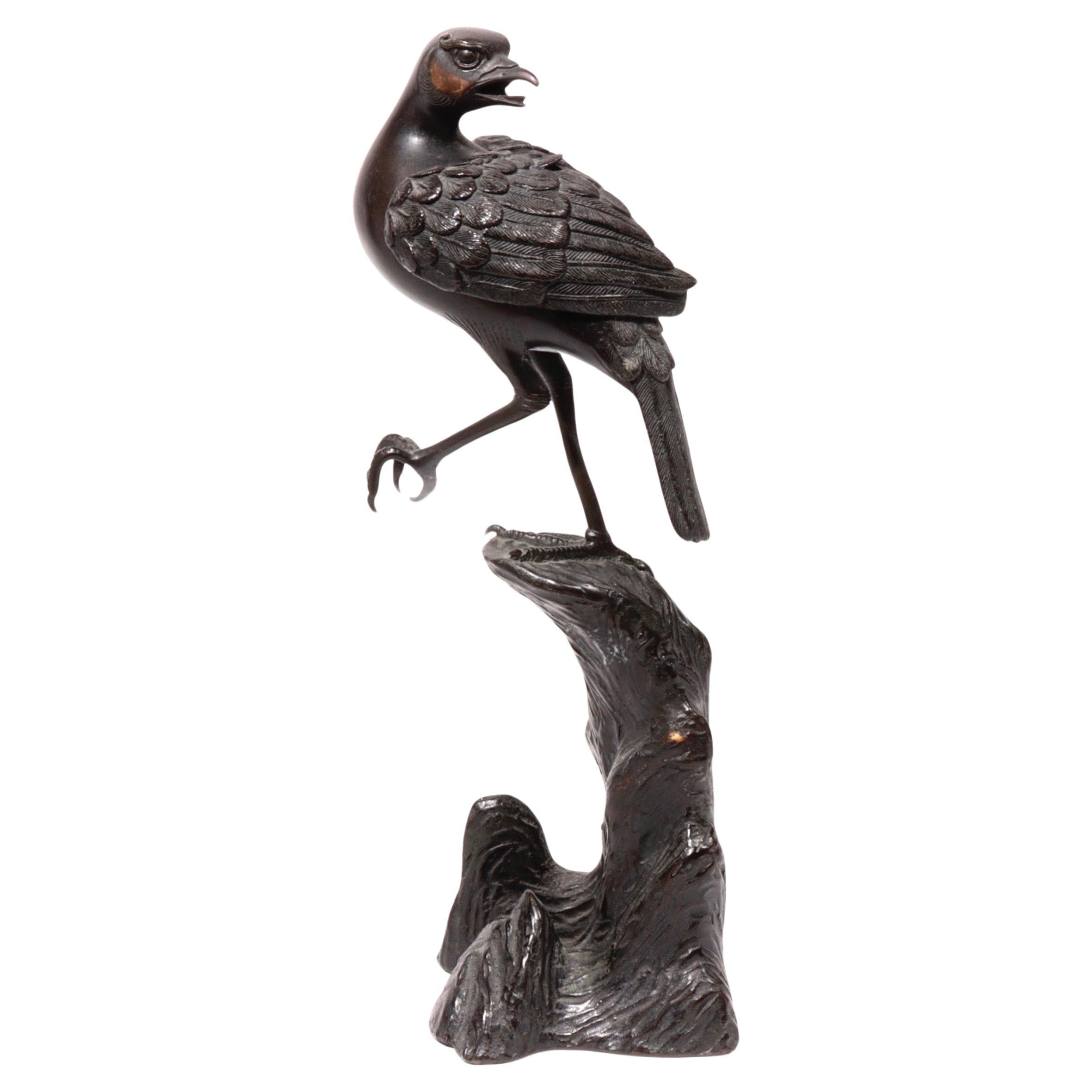
Japanese Bronze Hawk Ikebana
$8,399.70
£6,224.71
€7,000
CA$11,479.93
A$12,496.84
CHF 6,633.33
MX$150,363.93
NOK 84,053.31
SEK 77,016.59
DKK 53,321.09
About the Item
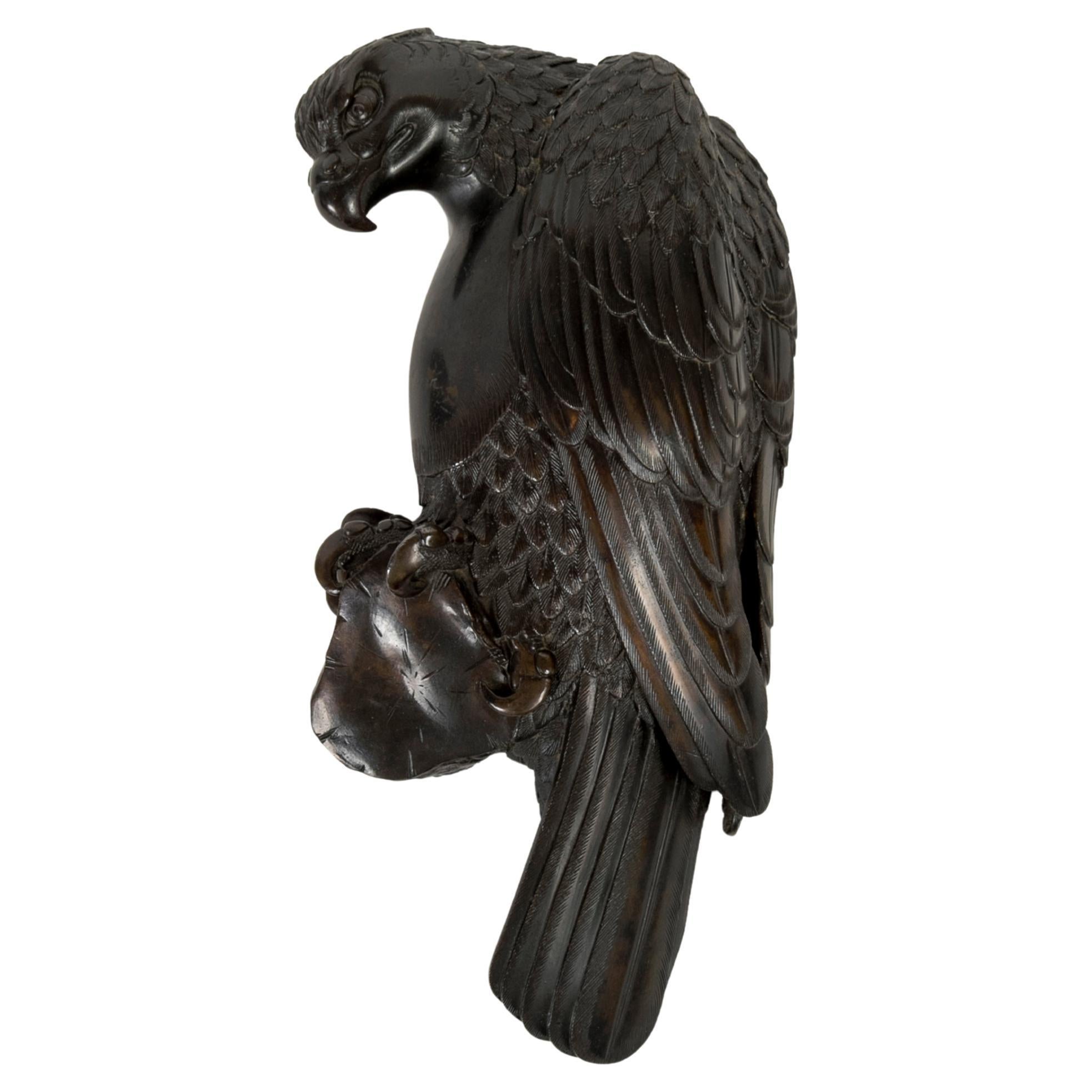
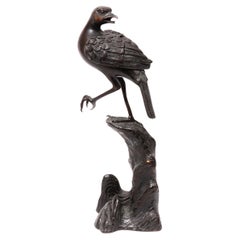
Bronze intended for hanging (? dô kakenanaike, « hanging bronze ») depicting a hawk, placed on a branch. The inside is hollow so a bouquet a flowers can be put inside and thus, serve as a vase.
The eagle is considered the king of birds. Its tail feathers are said to be the best feathers for an arrow. It is said that they were given to the imperial court and to the shrine of Ise (Mie prefecture), one of the most sacred places of Shinto.
Japan – Meiji era (1868-1912)
Height: 10.6 in. (27 cm) - width: 5.1 in. (13 cm) - depth: 3.2 in. (8.2 cm).
- Dimensions:Height: 10.63 in (27 cm)Width: 5.12 in (13 cm)Depth: 3.23 in (8.2 cm)
- Materials and Techniques:
- Place of Origin:
- Period:
- Date of Manufacture:1868-1912
- Condition:Wear consistent with age and use.
- Seller Location:PARIS, FR
- Reference Number:Seller: 2022-10191stDibs: LU8311234824122
About the Seller
No Reviews Yet
Vetted Professional Seller
Every seller passes strict standards for authenticity and reliability
Established in 2013
1stDibs seller since 2023
- ShippingRetrieving quote...Shipping from: PARIS, France
- Return Policy
More From This Seller
View AllIkebana in bronze of an Hawk designed to display flowers hanged on the wall
Located in PARIS, FR
Bronze intentded for hanging (銅掛斜生, dô kakenanaike, « hanging bronze ») depicting a hawk, placed on a branch. The inside is hollow so a bouquet a flowers can be put inside and thus, ...
Category
Antique Late 19th Century Japanese Meiji Metalwork
Materials
Bronze
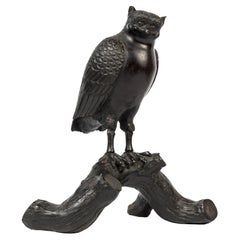
Japanese bronze incense burner in the form of an owl Signed Murata Seimin 村田製眠
Located in PARIS, FR
A bronze okimono of an owl, constructed in two sections, the short-eared owl (detachable) perched on a tree branch with its head cocked quizzically to the right and its wings folded ...
Category
Antique 18th Century Japanese Edo Metalwork
Materials
Bronze
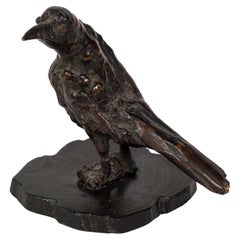
Raven boxwood okimono sculpture
Located in PARIS, FR
Okimono or boxwood sculpture integrating the natural shape and texture of a tormented section of a boxwood branch, used to reveal the form of a corvid. This type of scholar's object, which uses natural marvels as a medium for sculpture, is common in China, the birthplace of calligraphy. However, a similar aesthetic can be found in many Sinicized countries, whether it involves Japanese okimono made of wood or ivory, or Chinese dream stones...
Category
Antique Early 18th Century Japanese Edo Sculptures and Carvings
Materials
Boxwood
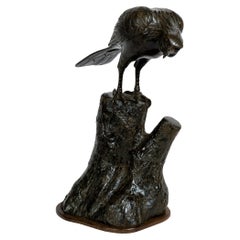
Bronze sculpture of an eagle on a tree stump, to be used as an incense burner
Located in PARIS, FR
This bronze sculpture represents a royal eagle standing on top of a tree stump. Its body and the stump were realized separately and mounted, the transition being right above the talo...
Category
Antique Early 19th Century Japanese Edo Metalwork
Materials
Bronze
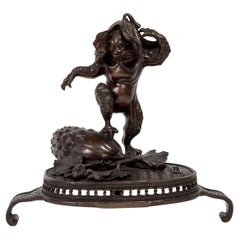
Japanese Bronze Kappa
Located in PARIS, FR
Dark brown patina bronze figure of a standing kappa with its right leg leaning on a cucumber. The figure is put on four-legged rattan-like bronze stand.
The kappa (??) is a aquatic creature taken from Japanese folklore having the appearance of an anthropomorphic turtle.
His skull is either slightly hollowed out to accommodate water, from which it derives its power, or hidden with a water lily leaf hiding this sag. Naturally polite, it is advisable to bow to him in order that it should do so in return, thus losing all the water he has gathered and leaving it harmless.
Kappa has the reputation of attempting to lure both humans and animals into the water. In some areas, it ravages fields, stealing eggplants and cucumbers. Some people prefer to worship it and give it offerings rather than be its victims.
Signed Shokaken (???). His real name is Ôshima Yasutarô. He was born in 1849 and is the third generation of a metalworkers family. Together with his brother Ôshima Joun...
Category
Antique Late 19th Century Japanese Metalwork
Materials
Bronze
$5,399
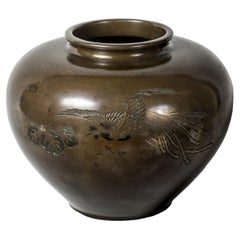
Japanese Bronze Vase decorated with a Phoenix and paulownia leaves
Located in PARIS, FR
Patinated bronze vase decorated with a flying phenix and paulownia leaves. The phoenix has imperial and solar symbolism. This bird of good omen also embodies virtues from the teaching of Confucius (such as goodness, righteousness, and wisdom). Paulownia (kiri) is considered as a symbol of nobility, honor and longevity. Since the Edo era, there has been a tradition that paulownia is planted at the birth of a daughter to be used later as a material for making items that will be part of her dowry. Its wood is ideal for chests and kimono boxes...
Category
20th Century Japanese Showa Metalwork
Materials
Bronze
You May Also Like
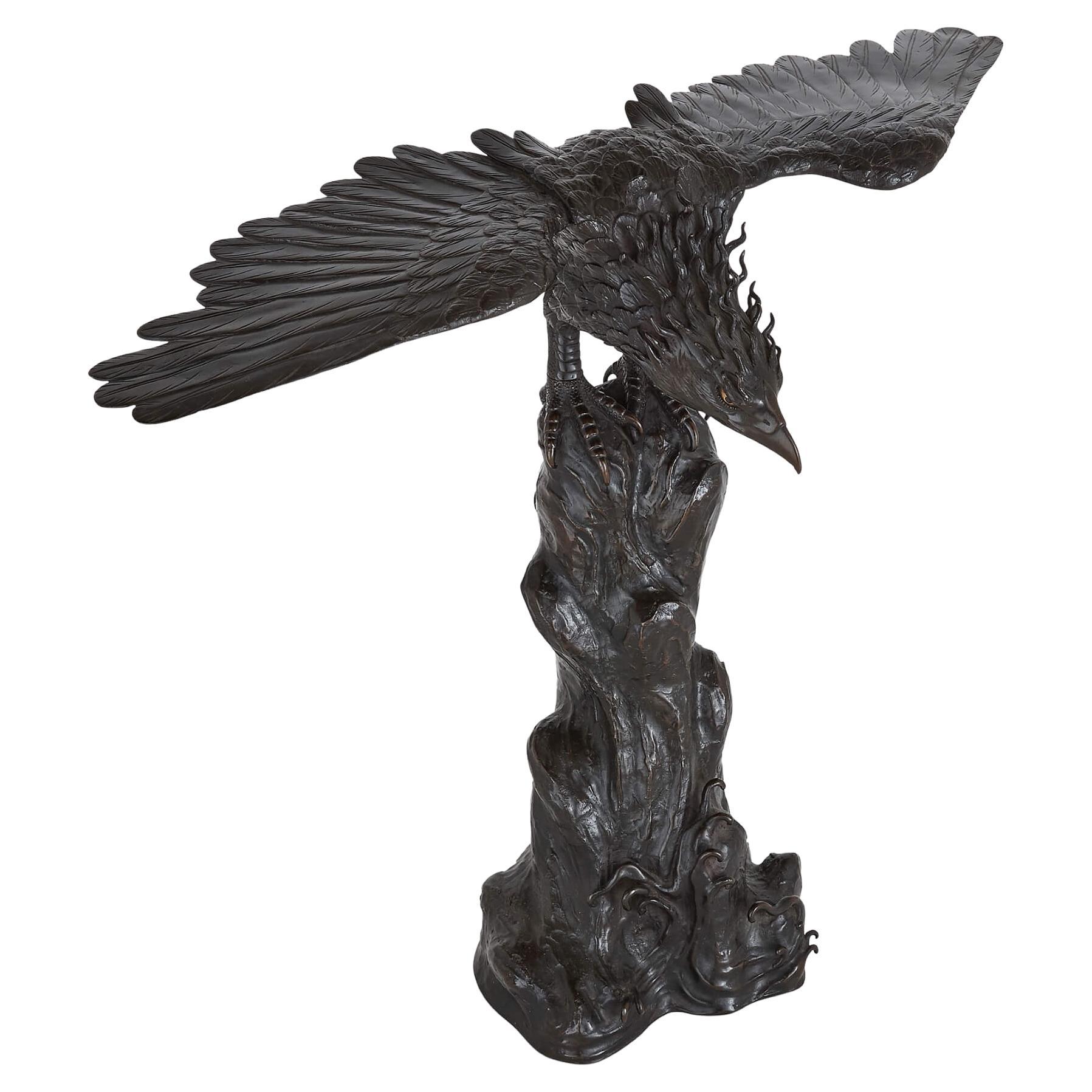
Antique Japanese patinated bronze eagle
Located in London, GB
Antique Japanese patinated bronze eagle
Japanese, c. 1900
Height 54cm, width 67cm, depth 32cm
This fine and naturalistic Meiji period bronze...
Category
Early 20th Century Japanese Meiji Animal Sculptures
Materials
Bronze
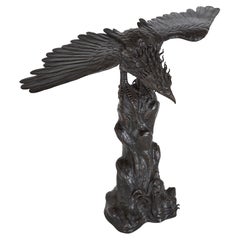
Japanese Cast Bronze Hawk Room Guardian Sculpture
Located in Douglas Manor, NY
1231 Finely detailed cast bronze hawk room guardian sculpture.
In Japanese culture ,hawks are a symbol of good fortune and luck because of their clever nature
Category
Vintage 1920s Sculptures and Carvings
Materials
Bronze
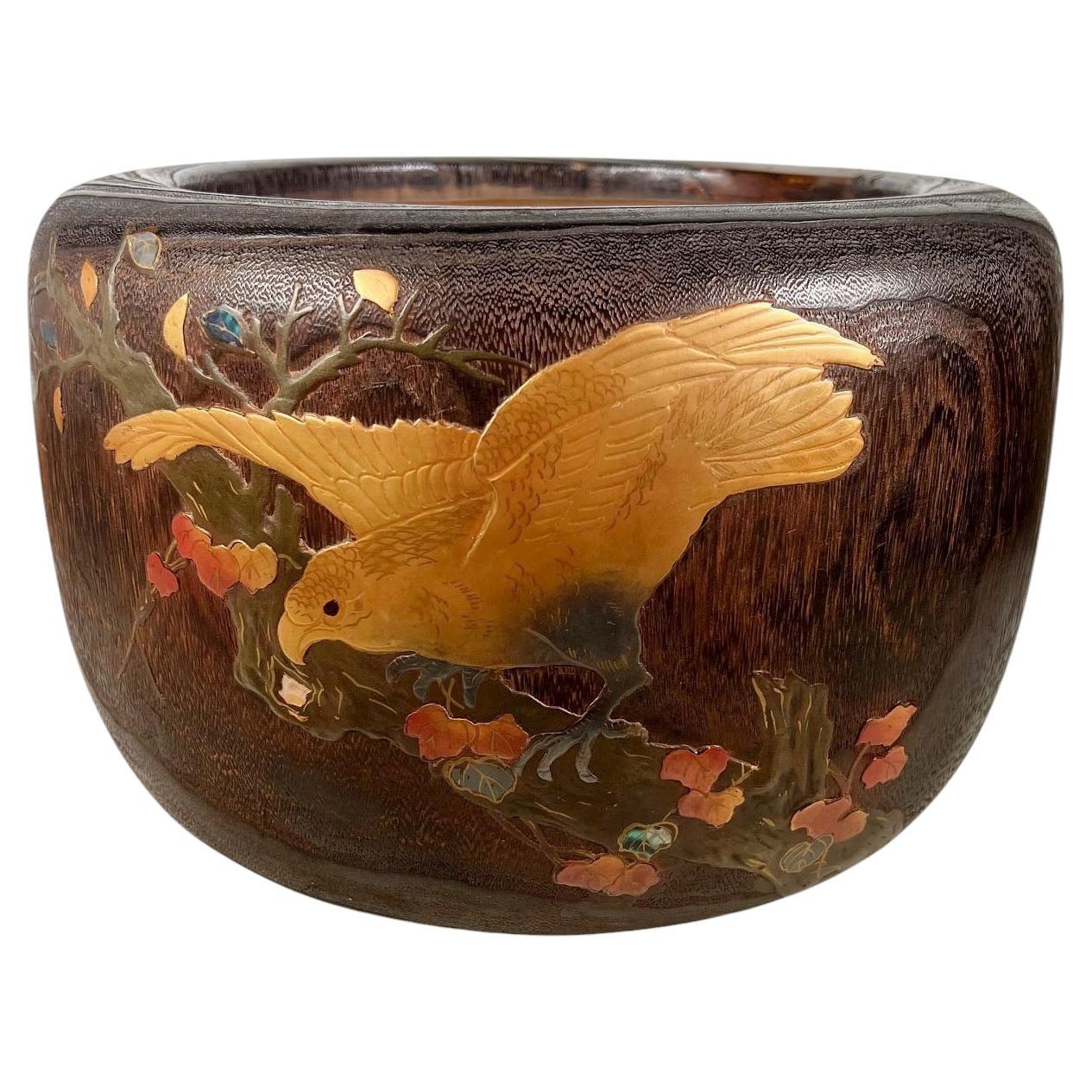
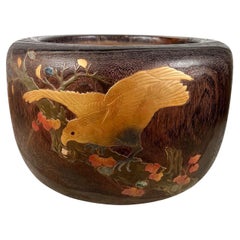
Meiji Period Japanese Hibachi with Gilded Eagle
Located in Dallas, TX
An exceptional Meiji Period, circa 1870 Japanese hibachi featuring a finely detailed gilded eagle in flight. The craftsmanship reflects the artistry and refinement characteristic of ...
Category
Antique 1870s Japanese Sculptures and Carvings
Materials
Copper
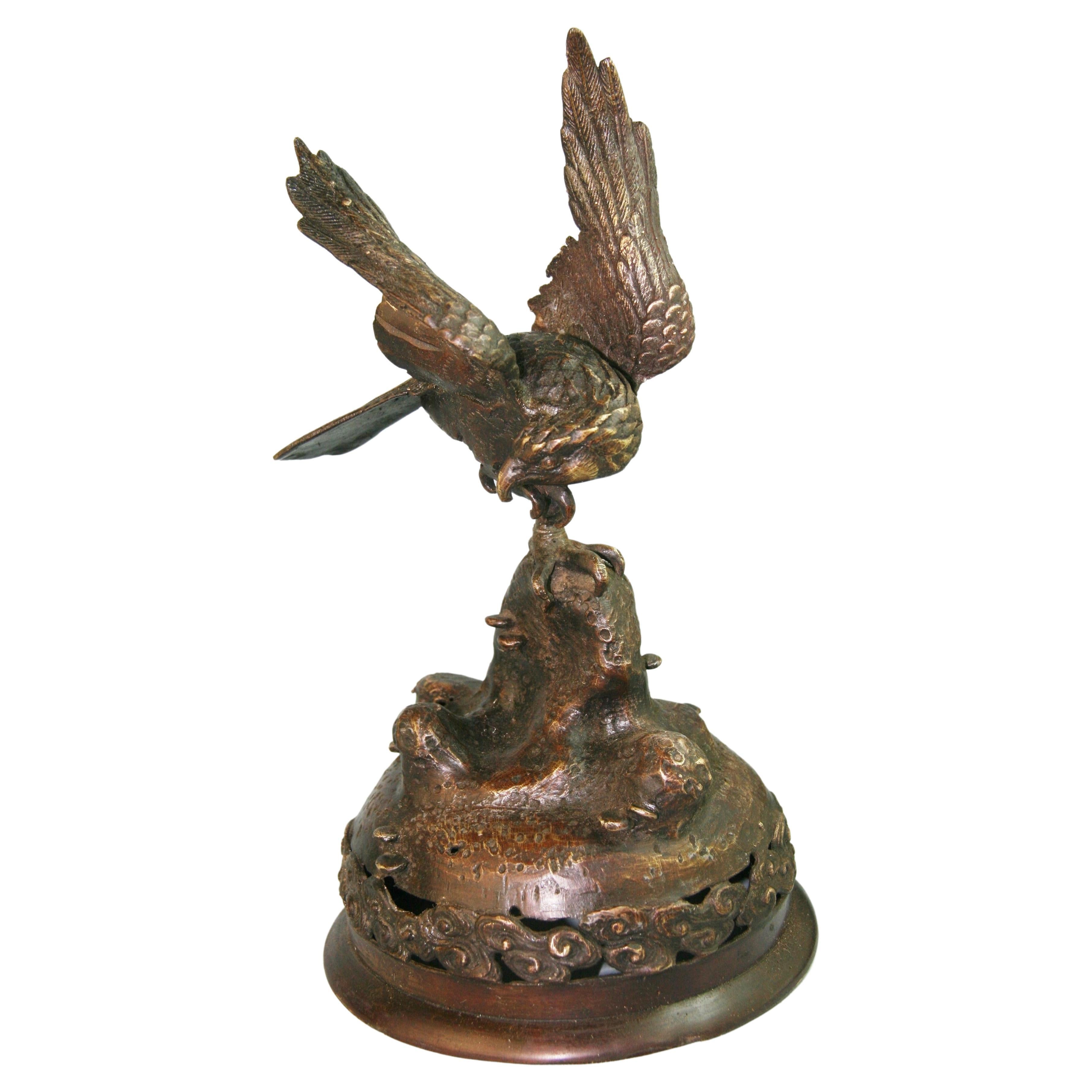
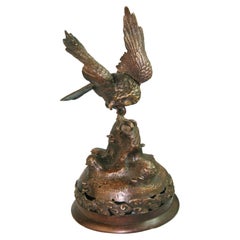
Antique Japanese bronze incense burner, in the form of a bird
Located in Point Richmond, CA
Antique Japanese bronze incense burner, in the form of a bird perched on one foot on a tall rocky outcropping, the bird’s head l...
Category
Antique Late 19th Century Japanese Meiji Metalwork
Materials
Bronze
A Large Japanese Meiji Bronze Eagle with Bronze Tokugawa Mon Base
Located in Long Island City, NY
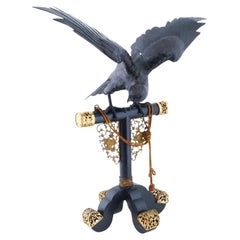
An antique Japanese Meiji era bronze eagle on a perch. The eagle, with its head lowered and wings outspread, reflects the dynamic energy and alertness characteristic of these majestic birds. The detailing, likely down to the feathers and talons, showcases the skill of the Meiji era bronze artisans, known for their precision and attention to naturalistic forms. The tasseled bronze stand with gilt mounts not only provides a stable perch for the eagle but also adds a touch of elegance and ornate detailing.
Circa the early 19th century.
Antique Japanese Bronze Bird Sculptures...
Category
Antique Early 19th Century Japanese Animal Sculptures
Materials
Bronze
$5,400 Sale Price
55% Off
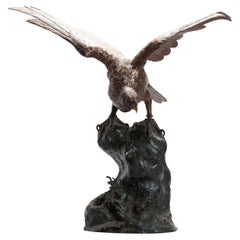
Huge Antique Meiji Japanese Bronze Bird of Prey On a Rock Gold Elements Marked
Located in Amsterdam, Noord Holland
Huge Antique Meiji Japanese Bronze Bird of Prey On a Rock Gold Elements Marked
Condition
Close to perfect condition, just some ware. 40 x 45CM LengthxWidexHeight (including base)
P...
Category
Antique 19th Century Japanese Meiji Ceramics
Materials
Metal, Bronze
$4,913 Sale Price
50% Off