Items Similar to Japanese Meiji Silver-Wire Cloisonné Enamel Vase with Chrysanthemums, Inaba Co.
Want more images or videos?
Request additional images or videos from the seller
1 of 9
Japanese Meiji Silver-Wire Cloisonné Enamel Vase with Chrysanthemums, Inaba Co.
$11,800
£8,965.09
€10,302.77
CA$16,574.55
A$18,040.98
CHF 9,559.27
MX$216,970.05
NOK 121,543.66
SEK 111,381.31
DKK 76,961.05
About the Item
A Japanese Meiji Period Silver-Wire Cloisonné Enamel Vase with Chrysanthemums on a Midnight Ground, Attributed to Inaba
A magnificent Japanese cloisonné enamel vase from the Meiji period, attributed to the celebrated Inaba workshop, distinguished for its exceptional silver-wire technique and painterly approach to naturalistic design. The vase is of tall, elegant baluster form, its surface covered with a flawless midnight-black enamel ground that provides a dramatic contrast to the brilliant floral decoration.
The central design is a luxuriant profusion of chrysanthemums, Japan’s most iconic and auspicious flower, long associated with longevity, rejuvenation, and imperial authority. Rising in layered clusters, the blooms are worked in the finest silver wire, their petals unfurling in shades of ivory, coral red, and pale lavender with remarkable delicacy. Each blossom exhibits subtle variations of tone and shading, while the surrounding leaves are rendered in a spectrum of verdant greens and bluish-greens, capturing the seasonal vitality of the autumn garden.
At the base, smaller blossoms in yellow and purple emerge among dense foliage, creating a rhythmic balance between bold central blooms and finely detailed accents. The arrangement rises upward in vertical grandeur, giving the vase both dynamism and harmony. Every element is painstakingly outlined in pure silver wire, testifying to the technical brilliance and refinement for which the Inaba studio was renowned.
The mouth and foot are encircled with geometric border designs in silver wire, framing the naturalistic composition with elegance and restraint. The combination of painterly naturalism, flawless enamel execution, and meticulous wirework exemplifies the pinnacle of Japanese cloisonné production during the late nineteenth century.
Chrysanthemums held deep cultural resonance in Meiji Japan, not only as a symbol of the imperial household but also as a motif celebrated in art and literature. In cloisonné enameling, their intricate layered petals provided the perfect subject for demonstrating the virtuosity of the enameler’s craft. This vase, with its bold yet balanced arrangement, is a masterclass in both technical innovation and artistic design.
Comparable examples of Inaba’s chrysanthemum-decorated cloisonné can be found in the Victoria and Albert Museum, London, as well as in major private collections worldwide. Works of this quality and scale are increasingly rare to encounter outside museum collections, making this an especially desirable example for the connoisseur of Japanese decorative arts.
A true museum-quality masterpiece, representing the height of Meiji-period cloisonné artistry and the enduring beauty of Japan’s imperial flower.
9.5" high x 5" diameter
Very good condition, no damages noted.
- Attributed to:Inaba Cloisonne Co. (Maker)
- Dimensions:Height: 9.5 in (24.13 cm)Diameter: 5 in (12.7 cm)
- Style:Meiji (Of the Period)
- Materials and Techniques:
- Place of Origin:
- Period:
- Date of Manufacture:19th Century
- Condition:Wear consistent with age and use.
- Seller Location:Queens, NY
- Reference Number:1stDibs: LU1798246446762
About the Seller
5.0
Vetted Professional Seller
Every seller passes strict standards for authenticity and reliability
Established in 1980
1stDibs seller since 2016
63 sales on 1stDibs
Typical response time: 2 hours
- ShippingRetrieving quote...Shipping from: Long Island City, NY
- Return Policy
More From This Seller
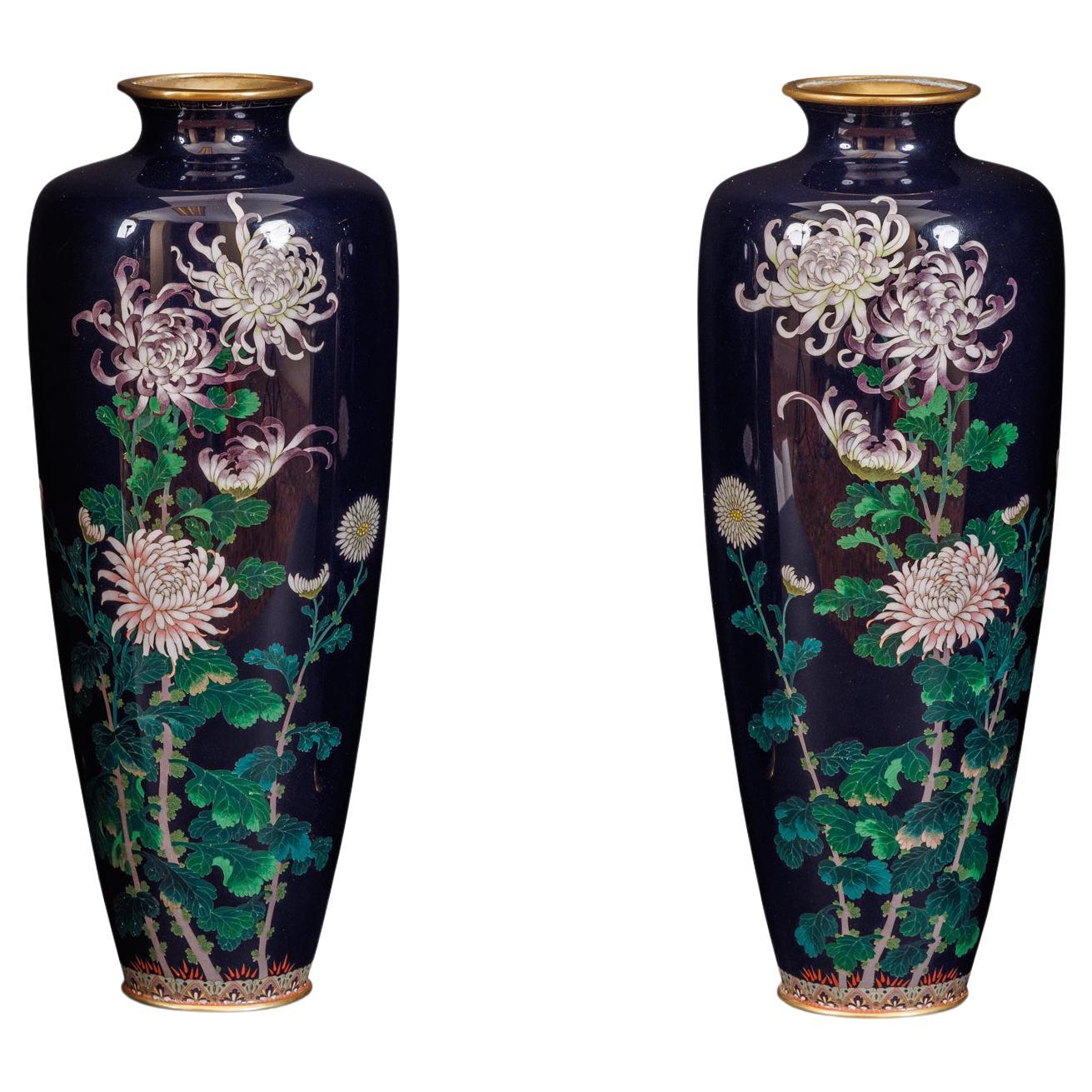
View AllAn Exquisite Pair Of Japanese Cloisonné Enamel Vases with Chrysanthemum Blossoms
Located in Queens, NY
An Exquisite Pair Of Japanese Cloisonné Enamel Vases with Chrysanthemum Blossoms, Attributed to Hayashi, Meiji Period.
Experience the exquisite craftsmanship of the Meiji period wit...
Category
Antique 19th Century Japanese Meiji Metalwork
Materials
Enamel
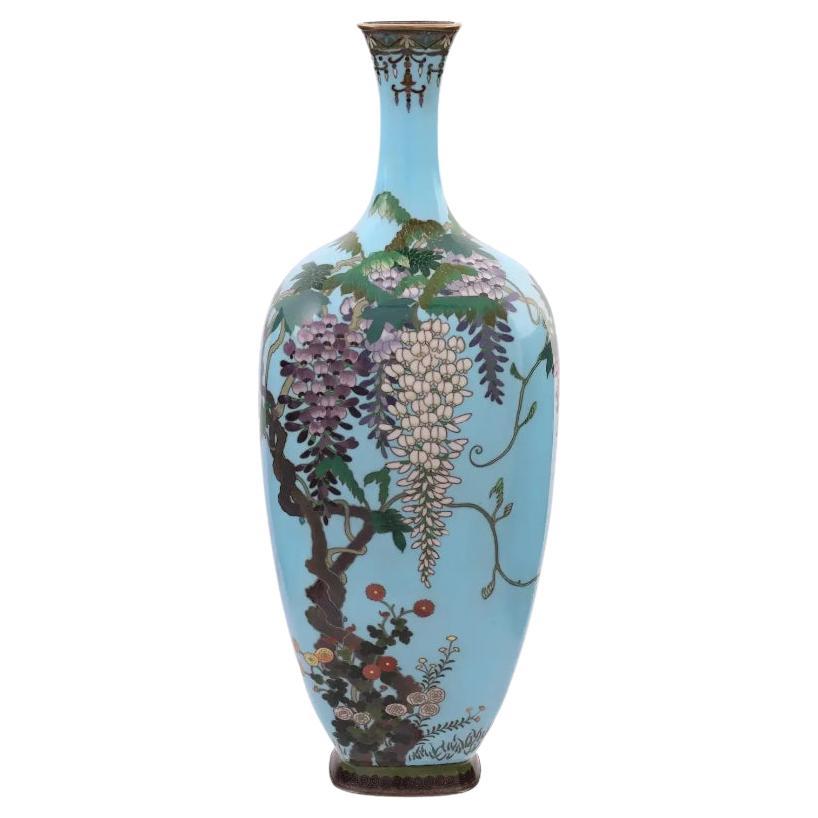
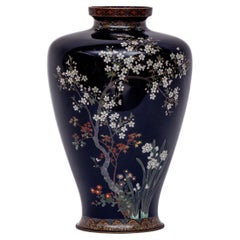
Japanese Meiji Cloisonné Enamel Vase with Cherry Blossoms, Ota Tamashiro
Located in Queens, NY
A Japanese Meiji Period Silver-Wire Cloisonné Enamel Vase with Cherry Blossoms and Narcissus, Attributed to Ota Tamashiro
An elegant Japanese cloisonné enamel vase from the Meiji pe...
Category
Antique 19th Century Japanese Meiji Vases
Materials
Copper, Enamel
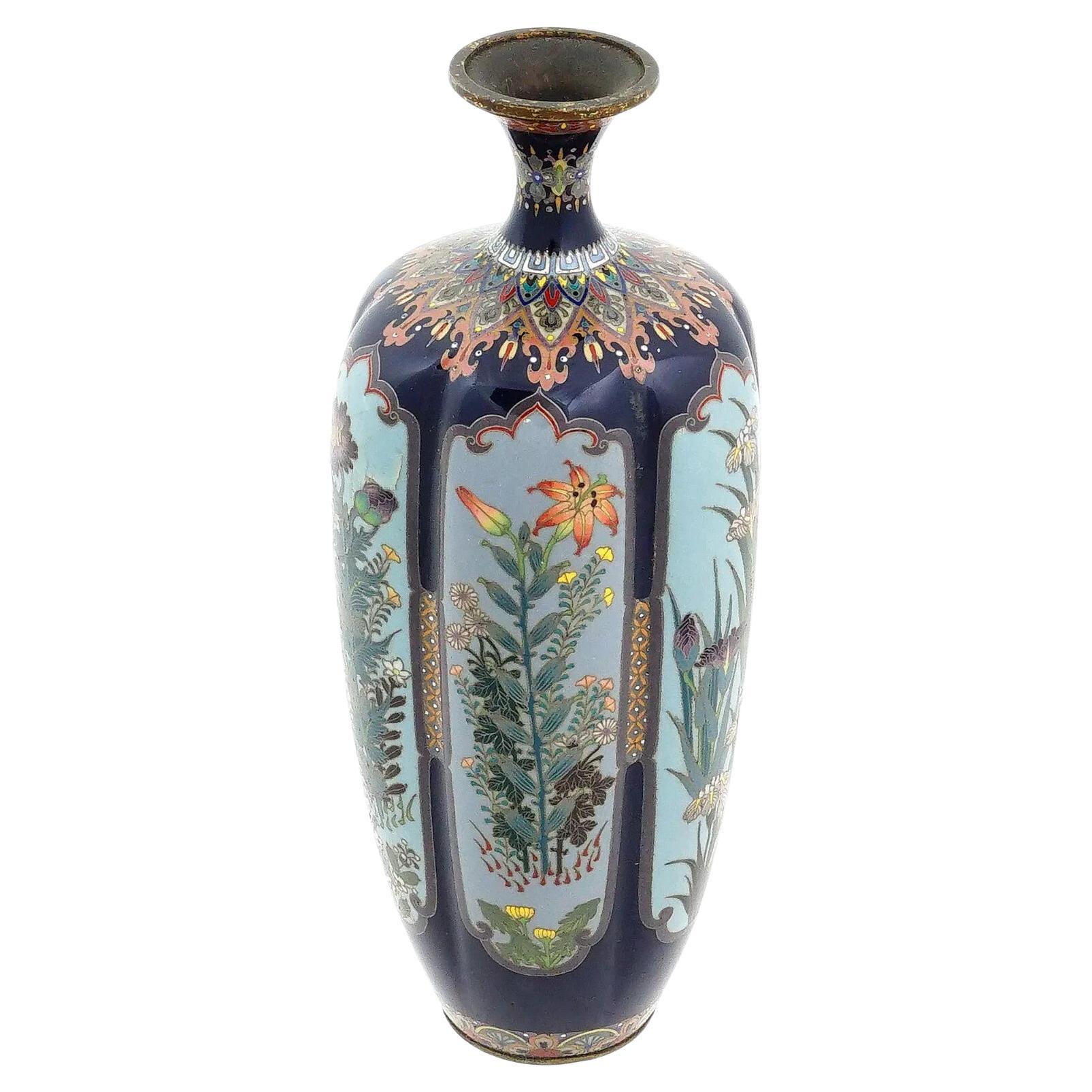
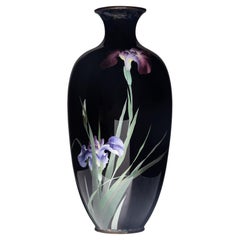
Large Meiji Period Japanese Cloisonne Enamel Vase Adorned with Iris Blossoms
Located in Queens, NY
Introducing a magnificent Large Meiji Period Japanese Cloisonné Enamel Vase adorned with enchanting iris blossoms. This extraordinary vase encapsulates the essence of Japanese artist...
Category
Antique 19th Century Japanese Meiji Vases
Materials
Enamel
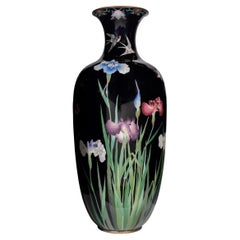
Palace-Sized Japanese Cloisonne Enamel Vase Adorned with Irises and Sparrows
Located in Queens, NY
Introducing a truly magnificent Palace-Sized Japanese Cloisonné Enamel Vase adorned with exquisite irises and graceful sparrows. This extraordinary vase showcases the epitome of Japa...
Category
Antique 19th Century Japanese Meiji Vases
Materials
Enamel
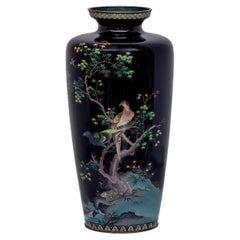
Magnificent Japanese Meiji Cloisonné Enamel Vase with Pheasants, Inaba Co.
By Inaba Cloisonne Co.
Located in Queens, NY
A Magnificent Japanese Meiji Period Silver-Wire Cloisonné Enamel Vase with Pheasants and Maple Leaves, Attributed to Inaba
An exceptional Japanese cloisonné enamel vase from the Mei...
Category
Antique 19th Century Japanese Meiji Metalwork
Materials
Copper, Enamel
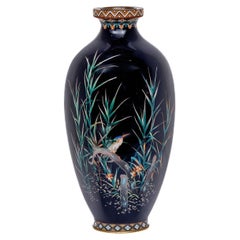
Rare Japanese Cloisonné Enamel Vase with Kingfisher and Reeds, Hayashi Kodenji
Located in Queens, NY
A Rare Japanese Meiji Period Lobed Silver-Wire Cloisonné Enamel Vase with Kingfisher and Reeds, Attributed to the Hayashi Kodenji Studio
A rare and elegant Japanese cloisonné enamel...
Category
Antique 19th Century Japanese Meiji Vases
Materials
Copper, Enamel
You May Also Like
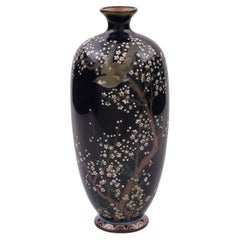
Antique Japanese Cloisonne Enamel Silver Wire Blossom Vase
Located in Long Island City, NY
An antique Japanese copper vase with polychrome cloisonne enamel decor. Late Meiji period,
attributed to Hayashi
Elongated baluster shape. Intricate cherry blossom and bird motif aga...
Category
Antique Late 19th Century Japanese Meiji Vases
Materials
Copper, Enamel
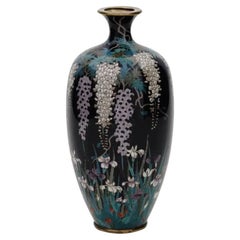
High Quality Antique Meiji Japanese Cloisonne Enamel Silver Wire Vase Blossoming
Located in Long Island City, NY
High Quality Antique Meiji Japanese Cloisonne Enamel Silver Wire Vase Blossoming Wisteria and Iris's
An antique Japanese, late Meiji period, ena...
Category
Antique Late 19th Century Japanese Meiji Vases
Materials
Brass, Enamel
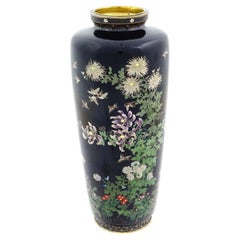
Antique Golden Age Japanese Cloisonne Enamel Chrysanthemums And Sparrows Vase
Located in Long Island City, NY
An antique Japanese, late Meiji era, footed enamel over copper vase in the Hayashi Tanigoro manner, c.1895 to 1935, a Japanese artist.
The urn shaped vase is enameled with a polyc...
Category
Antique Late 19th Century Japanese Meiji Vases
Materials
Enamel, Copper
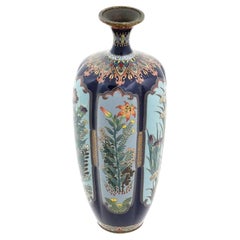
Antique Meiji Japanese Cloisonne Enamel Multi Panel Floral Vase Attributed OTA
Located in Long Island City, NY
An antique Japanese enamel vase, Ota Kichisaburo, Meiji period, 1868 to 1912. The baluster body is adorned with a polychrome design representing panels with blossoming flowers and sa...
Category
Antique Late 19th Century Japanese Meiji Metalwork
Materials
Enamel
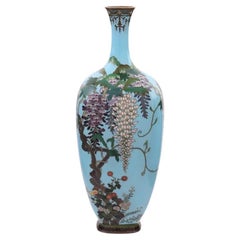
Meiji Japanese Cloisonne Enamel Turquoise Silver Wire Japanese Vase with Flowers
Located in Long Island City, NY
A high quality Japanese, Meiji era, cloisonne enamel and silver wire vase. The vase has an amphora shaped body and a narrow neck. The ware is enameled with a polychrome image of blos...
Category
Antique Late 19th Century Japanese Meiji Vases
Materials
Enamel, Copper
A silver-wire cloisonné vase with butterflies and chrysanthemums
Located in Milano, IT
A globular cloisonné vase executed with fine silver wire and decorated with numerous butterflies in flight within a luxuriant garden of chrysanthemums in various colors and forms, re...
Category
Antique Late 19th Century Japanese Metalwork
Materials
Enamel