Items Similar to A Mamluk Engraved Brass Basin, Egypt, Early 16TH Century
Want more images or videos?
Request additional images or videos from the seller
1 of 10
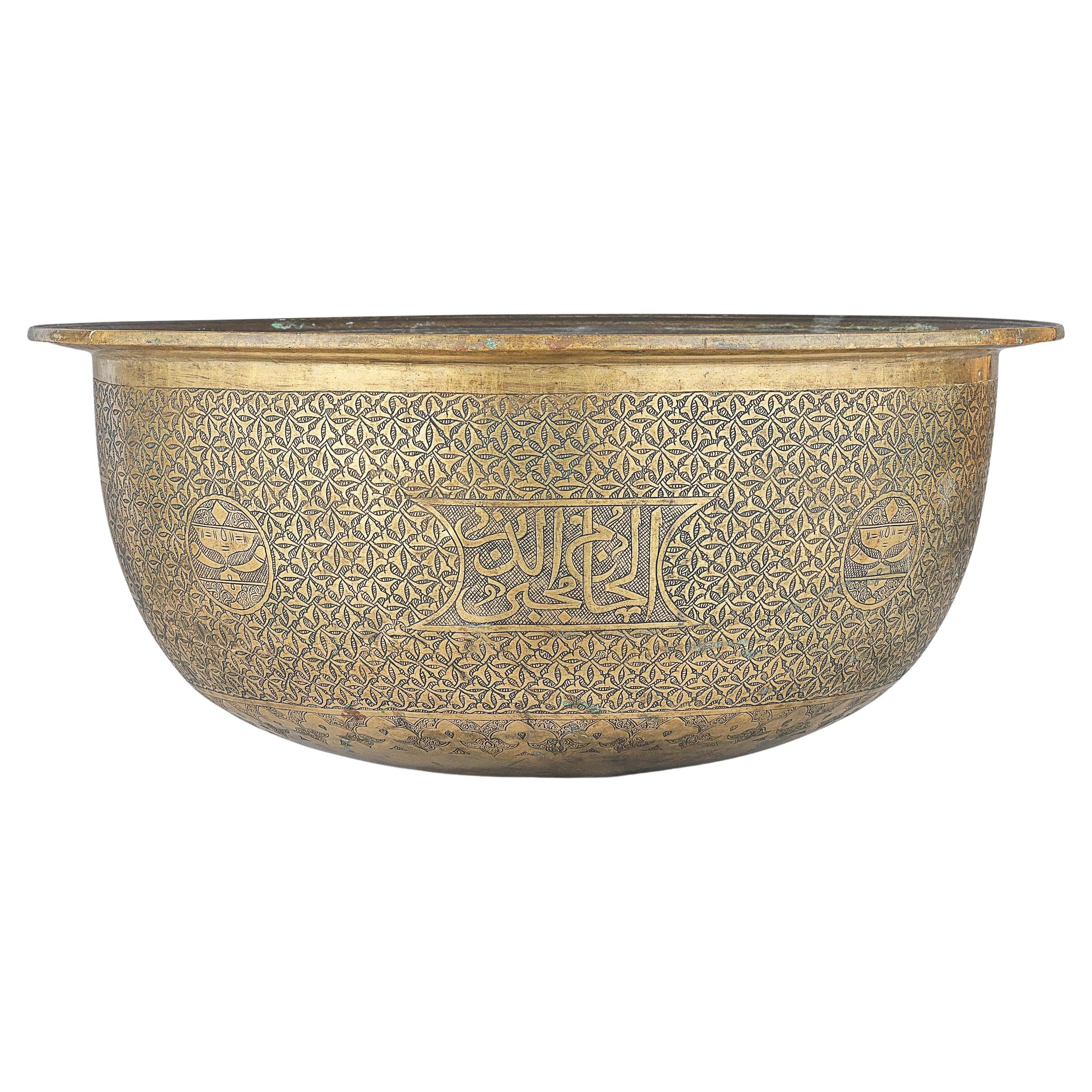
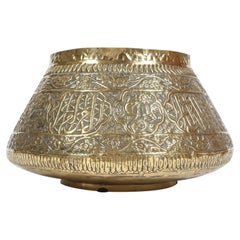
A Mamluk Engraved Brass Basin, Egypt, Early 16TH Century
$103,276.08
£75,000
€87,645.86
CA$141,278.06
A$153,985.87
CHF 81,410.98
MX$1,853,697.70
NOK 1,033,308.15
SEK 947,332.37
DKK 654,718.70
About the Item
of waisted form with flaring everted rim, engraved with a series of cartouches filled with inscriptions in thuluth interspersed with roundels containing vegetal interlace on a floral or geometric ground, above and below bands of undulating vines and vegetal motifs, the rim with a band of alternating roundels containing heraldic blazons and inscriptions in thuluth interspersed by floral and vegetal interlace, the engraved areas with inlaid black composition.
39 cm. diam.
Provenance
Christie's, Arts of Islam Including Property from the Bequest of Adrienne Minassian sold to benefit Brown University, 26 April 2013, lot 658.
Inscriptions: to the body mimma 'umila bi-rasm al-maqarr al-ashraf al-karim/al-'ali al-mawlawi al-amiri ... /al-maliki al-makhdumi al-humami al-a/, 'One of what was made for the noble authority, the honourable, the high, the lordly, the commander ... the possessing, the masterful, the valiant'; to the rim al-maqarr al-ashraf al-karim / al-'ali al-mawlawi / al-amiri al-kabiri al-maliki / al-'alimi al-'amili a / al-makhdumi al-humami / al-mujahidi al-murabit[i], 'The honourable authority, the high, the lordly, the great commander, the possessing, the learned, the diligent, the masterful, the holy warrior, the defender'.
The blazons on the present lot are similar to those on a basin sold at Christie's (Art of the Islamic and Indian Worlds, lot 131) which is attributed to the period of the penultimate Mamluk Sultan, Al-Ashraf Qansuh al-Ghuri (r. 1501-16). Whilst the form of the basin is typically Mamluk, the decoration takes on a more dense and small scale form which is reminiscent of Veneto-Saracenic metalwork produced in Syria. Related examples are in the Musée des Beaux-Arts in Lyon (Rémi Labrusse, Islamophilies. L'Europe moderne et les arts de l'Islam, exhibition catalogue, Paris, 2011, cat.358, p.354), and the Poldi Pezzoli Museum in Milan (inv.1657, published in Doris Behrens-Abouseif, 'Veneto-Saracenic Metalware, a Mamluk Art', Mamluk Studies Review, vol.9, no.2, Chicago, 2005, fig.4, pp.149 and 162).
Unlike earlier Mamluk vessels which tended to be inlaid with silver, the present lot displays a new technique which was becoming increasingly popular at the time where a black bituminous material was applied to the recesses of the decoration. The global shortage of precious metals in the 15th and early 16th century ensured that this new fashion became predominant in the ensuing years and eventually replaced inlaid metalwork. For a further discussion see Esin Atil, Renaissance of Islam, Art of the Mamluks, exhibition catalogue, Washington D.C., 1981, no.26, pp.88-89 and 101.
- Dimensions:Height: 13.78 in (35 cm)Diameter: 15.36 in (39 cm)
- Materials and Techniques:
- Place of Origin:
- Period:
- Date of Manufacture:Early 16TH Century
- Condition:
- Seller Location:London, GB
- Reference Number:Seller: H13921stDibs: LU6022248100772
About the Seller
5.0
Vetted Professional Seller
Every seller passes strict standards for authenticity and reliability
Established in 1989
1stDibs seller since 2021
25 sales on 1stDibs
Associations
LAPADA - The Association of Arts
Antiques Dealers
- ShippingRetrieving quote...Shipping from: Richmond, United Kingdom
- Return Policy
More From This Seller
View AllA Large Mamluk Engraved Brass Basin, Egypt, Late 15th-Early 16th Century
Located in London, GB
Of deep rounded form with an everted rim, this impressive Mamluk brass basin is richly engraved throughout. The exterior is decorated with four inscription-filled cartouches alternat...
Category
Antique 16th Century Egyptian Metalwork
Materials
Brass
A Rare Safavid Enamelled Brass Bowl, 16TH - 17TH Century
Located in London, GB
of compressed globular form on a tapering foot with waisted flaring rim, profusely engraved with a lattice containing vegetal interlace, above and below bands of tendrils and interla...
Category
Antique 16th Century Metalwork
Materials
Brass
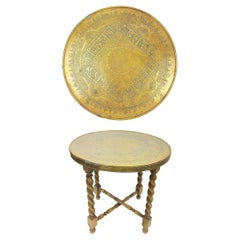
Fine Mamluk Revival Brass Centre Table, Late 19th Century
Located in London, GB
Late 19th century heavily carved Islamic calligraphy and Mamluk motifs brass centre table, the brass top of a round shape raised on a four spiral columns wooden base. Egypt or Syria.
Category
Antique Late 19th Century Egyptian Center Tables
Materials
Brass
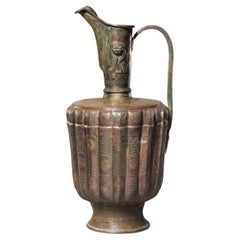
A Khorasan Silver And Copper Inlaid Bronze Ewer, 12TH Century
Located in London, GB
of slightly flaring lobed form on a splayed foot, wide shoulder and long neck with spout, simple handle, engraved and inlaid in silver and copper with alternating inscription-filled ...
Category
Antique 15th Century and Earlier Metalwork
Materials
Bronze
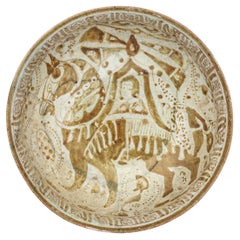
Kashan Lustre Bowl, 12th/13th Century, Horse and Rider Motif, Antique
Located in London, GB
of deep rounded form on a splayed foot, decorated in a yellow-brown lustre with a large richly caparisoned horse, the rider seated within a canopy, surrounded by abstract vegetal mot...
Category
Antique 15th Century and Earlier Ceramics
Materials
Ceramic
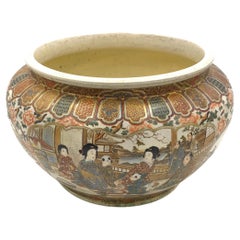
Large Japanese Satsuma Bowl, 19th Century
Located in London, GB
Meticulously enamelled and gilt with different scenes satsuma bowl.
Category
Antique Late 19th Century Japanese Ceramics
Materials
Porcelain
$3,304 Sale Price
20% Off
You May Also Like
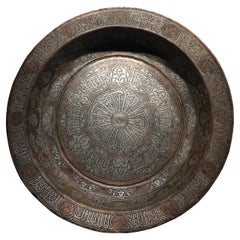
Large copper basin, silver inlaid, Egypt, 19th c. or before.
Located in PARIS, FR
Large silver damask copper basin decorated with scrolls, arabesques and foliage, encircling thuluth writing ledges.
An attachment has been welded at the back to allow the hanging.
Eg...
Category
Antique 1880s Egyptian Islamic Decorative Dishes and Vide-Poche
Materials
Silver, Copper
20th century Indo Persian Brass Coffee Tray - Hammer Engraved
Located in West Hollywood, CA
This beautifully crafted round tray showcases designs typical of Qajar art. Made from brass, the tray features detailed engravings that reflect the rich arti...
Category
Early 20th Century Persian Islamic Metalwork
Materials
Brass

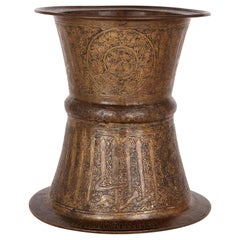
Medieval Egyptian Mamluk Brass Tray Stand with Silver Inlay
Located in London, GB
This exceptionally beautiful and rare silver-inlaid brass tray stand dates from the medieval period, when the Mamluks ruled Egypt and Syria (1250-1517). The Mamluks originated as slave-soldiers, who served the Muslim caliphs and Ottoman Empire. With time, the Mamluks became a powerful military caste, and they managed to take control and establish themselves as rulers of certain areas within the Abbasid caliphate. The Mamluk dynasty commissioned great works of art and architecture, particularly in Cairo, the capital city of Egypt, which was described in the 14th Century as ‘the centre of the universe and garden of the world’ (Ibn Khaldun, 1382).
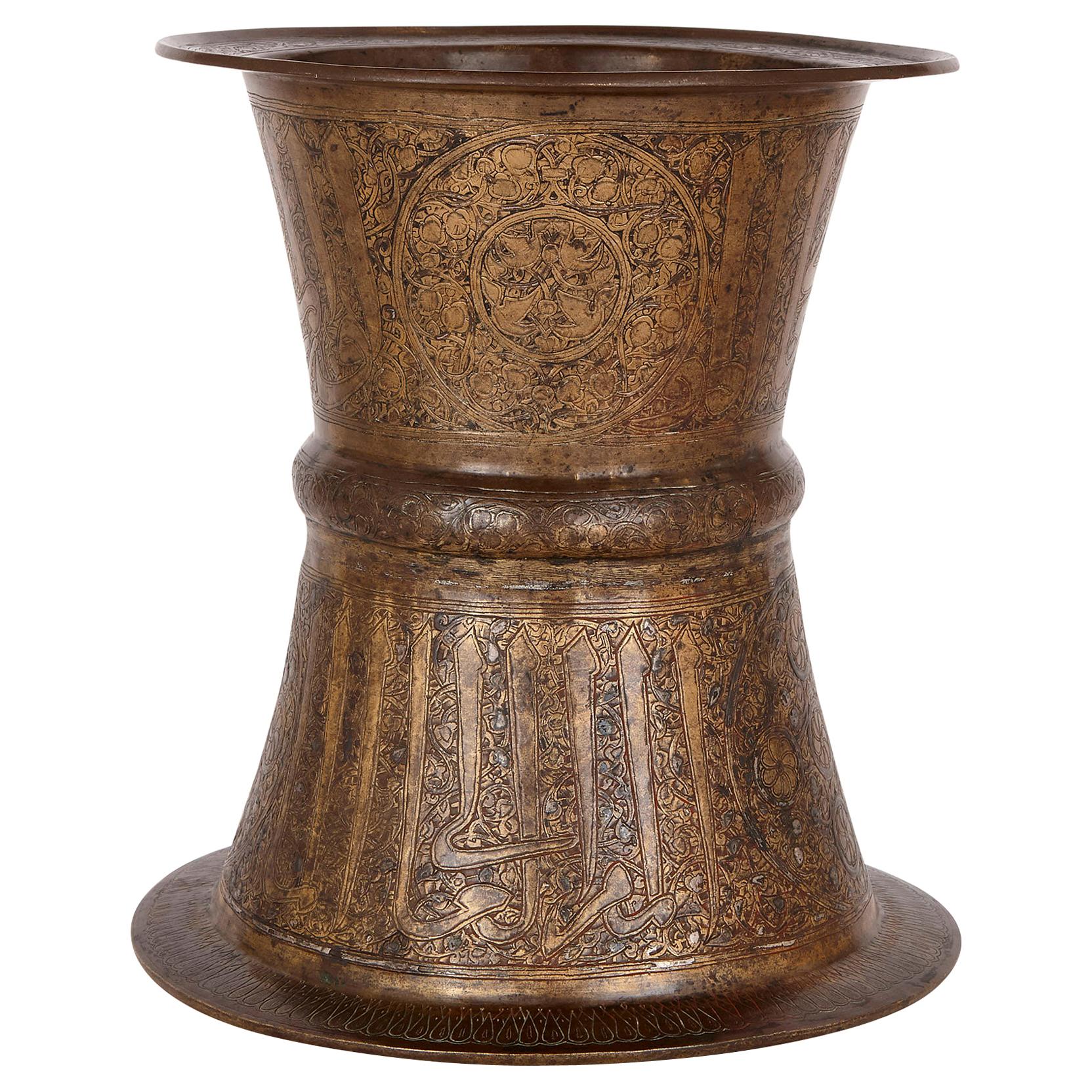
This tray stand is of biconical form, with a raised central band and flared base and rim. It is decorated with scrolling vines, overlaid with Thuluth inscriptions and roundels. On the lower body, the roundels contain floral motifs, and in the upper, stylised depictions of birds. The Thuluth inscriptions praise the patron, referring to him as ‘The High authority, the Lordly, the Possessor’, and ‘the learned’. The underside of the rim is engraved with a heraldic medallion, possibly the patron’s symbol.
In the middle ages, when this piece was made, this item would have stood in a grand interior, supporting a tray full of fruit and fine food. The owner of this lavish piece which still bears traces of its original silver inlay would likely have been an Amir (prince) or some other important figure who was close to the Sultan in the Mamluk court.
Mamluk tray...
Category
Antique 15th Century and Earlier Egyptian Islamic Historical Memorabilia
Materials
Brass, Silver
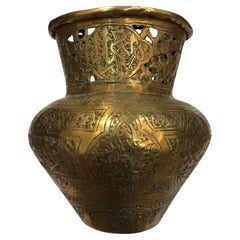
Middle Eastern Moorish Brass Bowl Engraved with Arabic Calligraphy
Located in Moreno Valley, CA
19th Century Middle Eastern Moorish brass repousse bowl, finely hand-etched, engraved, hammered and chased with elaborate Moorish Syrian designs decorated with medallions of Arabic c...
Category
Antique Mid-19th Century Egyptian Moorish Decorative Bowls
Materials
Brass
Middle Eastern Brass Bowl with Arabic Calligraphy Writing
Located in Moreno Valley, CA
Large antique 19th century or before brass Middle Eastern Persian Islamic style footed bowl finely and heavily hand-etched and embossed with brass repousse and decorated with calligraphic decoration inscriptions medallions.
A large Mamluk style brass bowl, hammered and engraved brass, with slightly rounded base, inverted sides narrowing to rim, the exterior engraved with a large honorific thuluth inscription, alternating with roundels containing blazons.
Islamic work from the the 19th century, in the style of Mamluk productions.
Handcrafted and embossed with geometric designs and Arabic writing on brass vessel.
Great brass decorative collectible Islamic metal...
Category
Antique Late 19th Century Asian Islamic Decorative Bowls
Materials
Brass
Antique Islamic Brass Bowl Fine Metalwork Hand Etched Bowl
Located in Moreno Valley, CA
Antique Middle Eastern Islamic art Moorish brass bowl engraved with Thuluth Arabic calligraphy.The polished brass bowl is profusely chased with vines and vegetal motifs and inscribed with Islamic verses of the Holly Koran.This bowl has been professionally cleaned and polished.Measures: Diameter 7.25" x 4" height Mouth opening: 5".Great Middle Eastern brass metalwork decorative Islamic art objects.Handcrafted Moorish hand-etched Islamic metal brass bowl.Engraved, incised and hammered with very fine Arabic Islamic calligraphy writing and geometric designs on brass vessel.Very Intricate fine Middle eastern Moorish Islamic Art metalwork, museum quality artwork.Late 19th Century.Date of Manufacture: Circa 1880.Condition: Wear consistent with age and use.
Islamic brass metalwork is an intricate and beautiful form of art that originated in the Islamic world. It encompasses a wide range of decorative objects made from brass or other metals such as copper, bronze, and silver. Brass trays, in particular, are highly regarded for their craftsmanship and intricate designs.
Islamic brass metalwork has a rich history that dates back to the early Islamic period, with its roots in the metalworking traditions of ancient civilizations such as the Persians, Greeks, and Romans. However, Islamic artisans developed their own unique styles and techniques, blending elements from various cultures and creating distinctive motifs that reflected Islamic aesthetics and religious beliefs.
The process of creating brass trays involves several steps, each requiring specialized skills. Here is a general overview of the traditional techniques involved:
1) Design: A skilled artist or calligrapher creates the design for the brass object. Islamic brass metalwork often incorporates intricate geometric patterns, arabesques, floral motifs, and calligraphy inspired by Quranic verses or poetry.
2) Metalworking: The object is typically made from a sheet of brass or another metal. The metal is cut into the desired shape and then hammered or pressed to create the object. Traditional techniques such as repoussé (hammering from the reverse side) or chasing (hammering on the front side) may be employed to shape the metal.
3) Engraving: The surface of the metal is often decorated with intricate engravings or etchings. Skilled artisans use chisels, gravers, or other specialized tools to create fine details and elaborate patterns.
4) Filigree and Inlay: Some brass trays feature additional decorative elements such as filigree or inlay work. Filigree involves shaping thin wires of brass into delicate patterns and soldering them onto the tray's surface. Inlay work, on the other hand, involves embedding contrasting materials such as silver or copper into the brass, creating intricate designs.
5) Surface Treatment: After the main decorative work is complete, the tray may undergo surface treatments to enhance its appearance. This can include processes like polishing, buffing, or applying various chemical patinas to create an aged or oxidized effect.
While this bowl has certainly witnessed the passage of time, it remains in remarkably good condition, with only minor signs of age that add character to its appearance. The patina on the brass enhances its antique allure, making it a truly authentic and captivating collectible.
Arabic Calligraphy: The Arabic writing on the bowl is a work of art in itself. The calligraphy showcases the mastery of the scribe's hand, with flowing curves and intricate details that form an elegant script. The script may include Quranic verses, blessings, or poetic verses, depending on the bowl's origin and purpose. The inscriptions are not only visually striking but also carry profound meaning, making this bowl a beautiful representation of Islamic heritage.
Intricate Patterns: In addition to the Arabic calligraphy, the bowl features intricate geometric patterns and motifs that further enhance its visual appeal. These patterns are a hallmark of Islamic art and reflect the mathematical precision and artistic creativity that defined Islamic craftsmanship.
This antique Islamic brass bowl...
Category
Antique 19th Century Turkish Islamic Metalwork
Materials
Brass