Items Similar to Pair of Japanese Abumi Stirrups
Want more images or videos?
Request additional images or videos from the seller
1 of 9
Pair of Japanese Abumi Stirrups
$7,187.02per set
£5,374.27per set
€6,000per set
CA$9,901.92per set
A$10,799.43per set
CHF 5,720.81per set
MX$129,469.87per set
NOK 72,857.71per set
SEK 66,622.97per set
DKK 45,722.39per set
About the Item
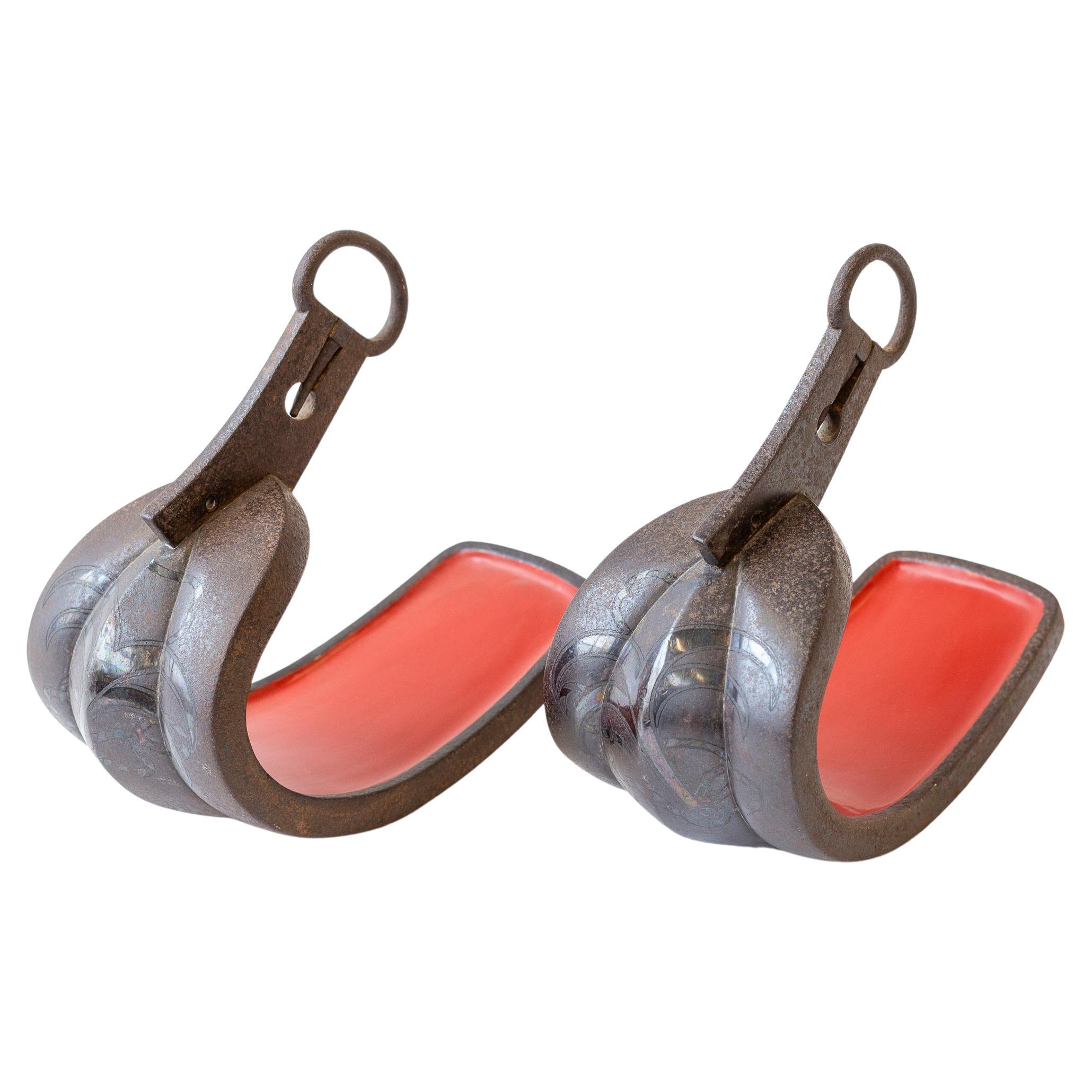
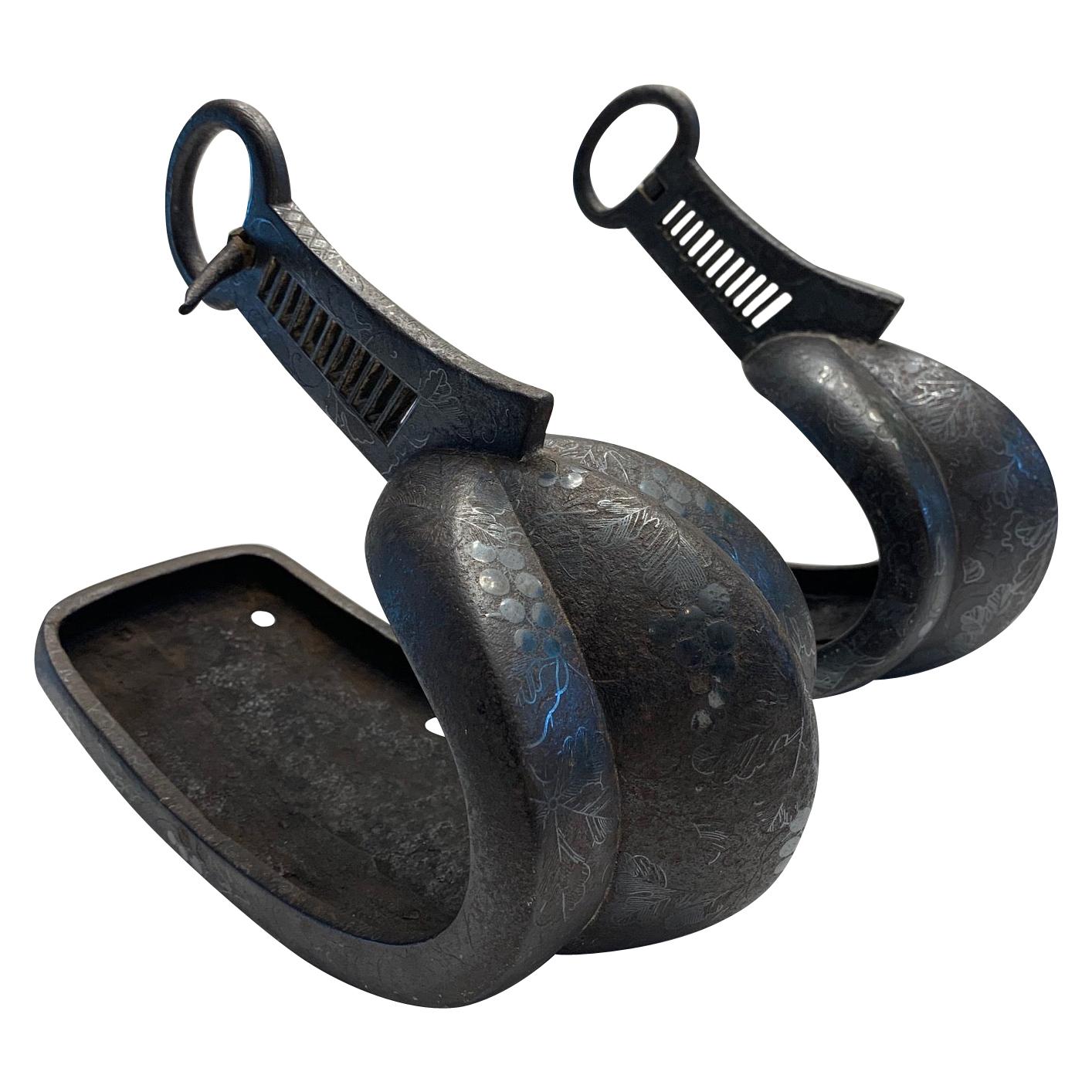
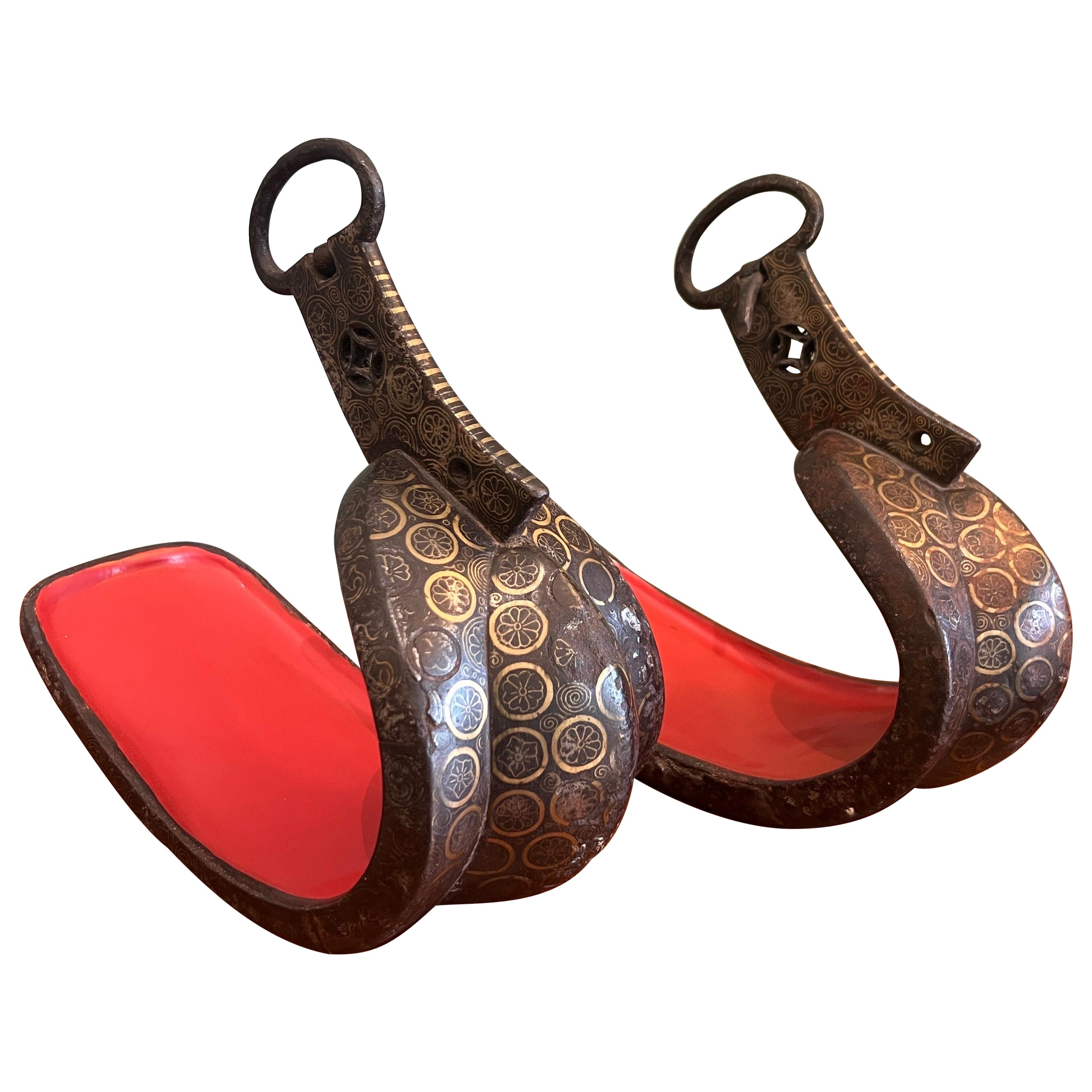
Pair of stamped brass stirrups decorated with Hashizuka, Ito and Manabe Mons.
Japan - Edo (1615-1868), 18th century.
Height: 10.24 in. (26 cm), length: 12.6 in. (32 cm), width 4.72 in. (12 cm)
As in Western culture, the culture Japanese stirrups were part of traditional accessories used only by the nobility and the people belonging to the upper class. The stirrups were made in the most precious metal, they were intended to indicate the social status of the owner.
They were used in military combat during ceremony or daily. The traditional form of Japanese calipers take its source in the Heian period (Between 794 and 1185). During the Momoyama period some helmets and armor reflect the influence of Iberian armament but the shape of the Japanese stirrups remained unaltered. The arrival of the Portuguese in the archipelago had an impact at another level. The decoration is different. Because these pieces are melted in iron, they are highly resistant and also thoughts as powerful weapons. Volume and frontal prominence guaranteed considerable damage to their enemies especially when they were without frames. The presence of ganches proves that these calipers were manufactured by or for the Portuguese. The ganche being absent from the Japanese stirrups.
- Dimensions:Height: 10.24 in (26 cm)Width: 4.73 in (12 cm)Depth: 12.6 in (32 cm)
- Sold As:Set of 2
- Materials and Techniques:
- Place of Origin:
- Period:
- Date of Manufacture:1615-1868
- Condition:Wear consistent with age and use.
- Seller Location:PARIS, FR
- Reference Number:Seller: 2016-3651stDibs: LU8311234268662
About the Seller
No Reviews Yet
Vetted Professional Seller
Every seller passes strict standards for authenticity and reliability
Established in 2013
1stDibs seller since 2023
- ShippingRetrieving quote...Shipping from: PARIS, France
- Return Policy
More From This Seller
View AllPair of Japanese Bronze Grasshopper Vases
Located in PARIS, FR
Insects (mushi) occupy an important place in Japanese culture. Hunting for insects is a popular pastime, especially among children. Using plastic nets and cages, they catch cicadas and beetles to observe them.
Between 1830 and 1832, Hokusai composed an untitled series of ten large horizontal prints...
Category
Antique Late 19th Century Japanese Metalwork
Materials
Bronze
$5,989 / set
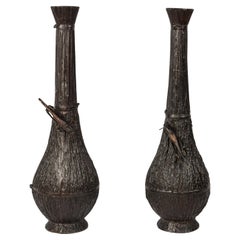
Pair of japanese bronze vase imitating hay and decorated with a grass hopper
Located in PARIS, FR
Detailed pair of vases in bronze of baluster form, textured to represent straws of hay, bound together by three knots that divide each vase in three, just under le second ring, a well detailed grasshopper is detached from the rest of the composition.
Insects (mushi) occupy an important place in Japanese culture. Hunting for insects is a popular pastime, especially among children. Using plastic nets and cages, they catch cicadas and beetles to observe them.
Between 1830 and 1832, Hokusai composed an untitled series of ten large horizontal prints...
Category
Antique Late 19th Century Japanese Meiji Metalwork
Materials
Bronze
Inro Dragon
Located in PARIS, FR
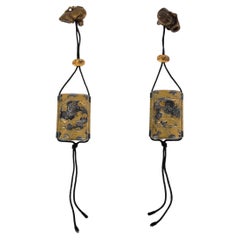
Beautifull inro of six compartments made of black gold, silver and tin lacquer,
representing a dragon on each side, surrounded by black and silver clouds, the inside
is made of nas...
Category
Antique Early 19th Century Japanese Japonisme Lacquer
Materials
Lacquer
$11,978
Gold Lacquer Inro Decorated with a Lake Landscape
Located in PARIS, FR
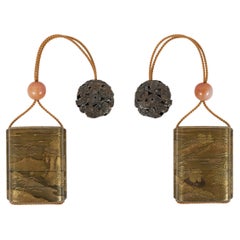
Inro with four gold lacquer boxes, decorated with a lake landscape. Accompanied by a bronze ryusa manju.
Small boxes formed of compartments that fit one on top of the other, inro (? ?) are traditional Japanese clothing...
Category
Antique Mid-19th Century Lacquer
Materials
Lacquer
Japanese Smoking Set
Tabac-Ire
Located in PARIS, FR
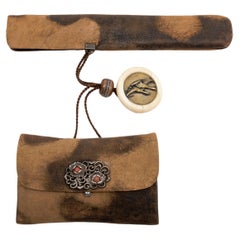
Smoking set (tabako-ire) composed of a pipe (kiseru), a pipe case (kiseruzutsu) and a tabacco pouch (tonkotsu) for women linked to a netsuke.
Intended f...
Category
Antique Late 19th Century Japanese Antiquities
Materials
Metal
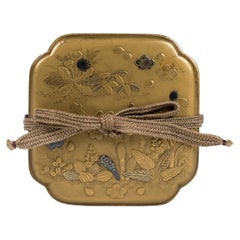
Japanese golden kobako flowers Edo period 18th century
Located in PARIS, FR
Quadrangular kobako box decorated with flowers in gold and blue lacquer with aogai inlay. Lid and sides in fundame lacquer, underside and interio...
Category
Antique 18th Century Japanese Japonisme Lacquer
Materials
Gold
You May Also Like
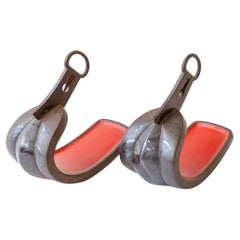
Pair of Japanese Edo Period 18th/19th century Iron Samurai Abumi Stirrups
Located in New York, NY
A pair of antique Japanese samurai Abumi (horse riding stirrups) from the Edo period (1615-1868)
Abumi often have a distinctive shape, curving up and backward at the front to achiev...
Category
Antique Mid-19th Century Japanese Edo Antiquities
Materials
Silver, Iron
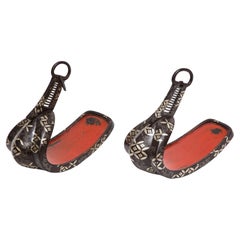
Pair of Japanese Edo Period Iron Silver Inlaid Red Lacquered Stirrups
Abumi
Located in New York, NY
A Pair of Japanese Edo Period (1603–1867) iron, silver inlaid, and red lacquered stirrups (Abumi). Each of typical form, made of iron with silver inlay on the front with floral bloss...
Category
Antique 1690s Japanese Edo Metalwork
Materials
Silver, Iron
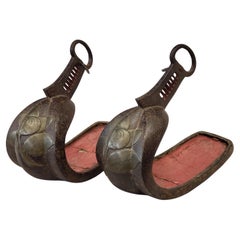
Antique Edo Period Japanese Samurai Iron Stirrups with Brass or Bronze Inlay
Located in Centennial, CO
A pair of antique Edo period (1603–1867) Japanese Samurai Abumis (stirrups for horseback-riding) expertly crafted out of cast iron with brass or bronze inlay in the form of a stylize...
Category
Antique 18th Century Japanese Edo Metalwork
Materials
Brass, Bronze, Iron
Japanese Samurai Abumi Stirrups Lacquer Edo, 18th Century
Located in Dallas, TX
Japanese Samurai Abumi Stirrups lacquer Edo late 18th century, early 19th century.
Measures: 12 inch length, 10 inch height, 5.5 inch width.
AVANTIQUES is dedicated to providing an...
Category
Antique Late 18th Century Japanese Edo Lacquer
Materials
Iron
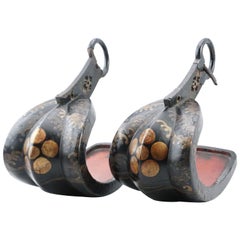
Antique Japanese Iron Stirrups with Silver Inlay Signed
Located in Atlanta, GA
A pair of antique Japanese Abumis, stirrup for horse-riding, in cast iron with elaborate silver inlay, circa 16th century Muramachi to Momoyama period. The prototype of Japanese abum...
Category
Antique 16th Century Japanese Japonisme Metalwork
Materials
Silver, Iron
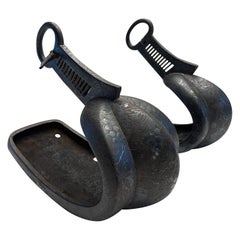
Pair of 18th/19th century Japanese Samurai Abumi (stirrups)
Located in New York, NY
A striking pair of antique Japanese abumi, dating to the Edo Period (1615-1868)
Abumi are stirrups, and were an important part of a samurai armor set.
The distinctive curved shape ...
Category
Antique Mid-19th Century Edo More Asian Art, Objects and Furniture
Materials
Copper, Iron
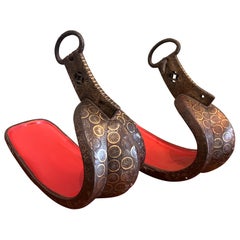
More Ways To Browse
Japanese Brass
18th Century Japanese Art
Antique Brass Stampings
Antique Stirrups
Armor Helmet
Heian Period
18th Century Asia Brass
Antique Calipers
Abumi Japanese Stirrup
Stirrup Japan
Used Western Stirrups
Japanese Cloisonne Charger
Filigree Chinese
Koro Incense
Mughal Silver
Meiji Mixed Metal
Asian Bucket
Shang Antique