Early 1900s Metalwork
to
8
21
15
38
3
2
132
869
837
31
438
176
51
38
14
22
8
9
10
20
8
6
2
38
14
14
11
11
36
27
15
10
4
38
38
38
1
1
1
1
1
Period: Early 1900s
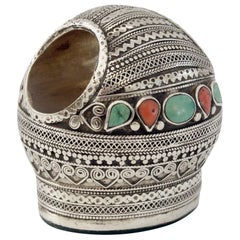
Middle Eastern Large Antique Silver Gem Set Intaglio Seal Ring
Located in Bishop
s Stortford, Hertfordshire
An exceptional and large antique Middle Eastern regal gem set silver intaglio collectors seal ring dating from circa 1900. This large and heavy man’s ring is handcrafted with wonderf...
Category
Afghan Other Antique Early 1900s Metalwork
Materials
Silver
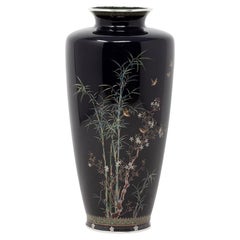
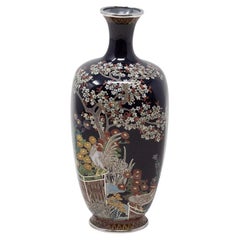
Japanese Antique Cloisonne Enamel Vase Hayashi Kodenji
Located in Newark, England
MEIJI PERIOD (1868-1912)
From our Japanese collection, we are delighted to introduce this good size Japanese Cloisonne Enamel Vase. The Vase of gently tapered form with a pinched n...
Category
Japanese Meiji Antique Early 1900s Metalwork
Materials
Gold, Silver, Enamel
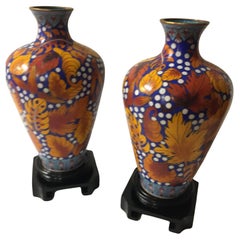
Antique Japanese Cloisonne Enamel Meiji Vases Petite Pair
Located in Savannah, GA
This colorful striking pair of antique Japanese bronze vases from the Meiji period are decorated with enamel using the cloisonne technique. Two matched vases with a relief pattern of...
Category
Japanese Anglo-Japanese Antique Early 1900s Metalwork
Materials
Enamel

$475 Sale Price / set
46% Off
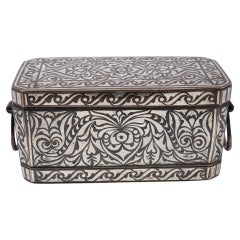
Antique Medium Betel Nut Box, Maranao, Southern Philippines (Mindanao)
Located in Point Richmond, CA
Medium Betel Nut Box, Maranao, Southern Philippines (Mindanao).
Bronze with bordered silver inlay design overall of a symmetrical floral tendril vine pattern referred to as “the okir...
Category
Philippine Tribal Antique Early 1900s Metalwork
Materials
Silver, Bronze, Copper
Japanese Meiji Period Cloisonne Enamel Vase by Ando Jubei
By Ando Jubei
Located in Newark, England
Free international shipping
Ando Cloisonne Company Mark
From our Japanese collection, we are delighted to introduce this Japanese Cloisonne Enamel Vase by Ando Jubei. The Cloisonn...
Category
Japanese Meiji Antique Early 1900s Metalwork
Materials
Enamel, Wire
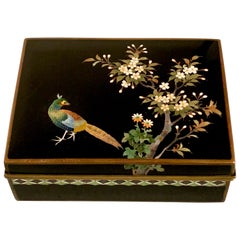
Japanese Cloisonne Box by Inaba, Meiji Period, circa 1900, Japan
Located in Austin, TX
A fine Japanese cloisonne hinged box with pheasant and autumn foliage, by Inaba Nanaho and the Inaba Cloisonne Company, Meiji period, circa 1900, ...
Category
Japanese Meiji Antique Early 1900s Metalwork
Materials
Copper, Enamel, Metal
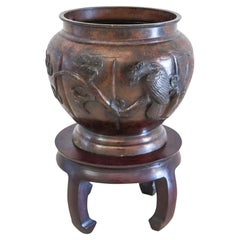
JAPAN 1900 Meiji Period Bronze Planter Vase With Carved Wood Base
Located in Miami, FL
Large Planter Vase from imperial Japan.
This a beautiful piece of Japanese decorative arts, created in Japan during the Meiji imperial period, circa 1900. The oversized vase can be ...
Category
Japanese Meiji Antique Early 1900s Metalwork
Materials
Bronze
$2,789 Sale Price / set
30% Off
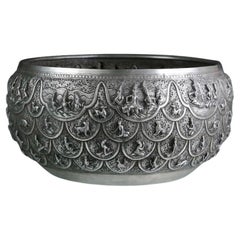
Antique Burmese Silver Offering Bowl
Located in Point Richmond, CA
A SILVER OFFERING BOWL WITH SCENES FROM THE VIDHURA-PANDITA JATAKA, LOWER BURMA (MYANMAR), DATED 1901.
A hammered repoussé Buddhist beggar’s bowl form with high relief design depicting scenes from the Vidhura-Pandita Jataka on the upper row of cartouches and beneath neat rows of semicircular lappets each depicting various auspicious human and animal forms with scrolling acanthus leaf backgrounds. The overall concept is similar to the layered effect of a Burmese court costume. The circular etched design on the base is of Punnaka astride his magical horse mid-stride holding the white umbrella and Vidhura pleading behind. All surrounded by an inscription, translated as, "Mr Saw Marn's silver bowl. Year 1263 [1901 CE]".
Excellent condition.
11 3/4 in. (30 cm) diameter x 5 7/8 in. (15 cm) high.
38 troy oz., 2lbs. 10 oz. (1175 grams).
Provenance:
The Noble Silver Collection.
Bonhams New York, 24 March 2022, The Noble Silver Collection Treasures from the Burmese Silver Age, lot 942.
Published:
David Owens, Burmese Silver Art: Masterpieces Illuminating Buddhist, Hindu and Mythological Stories of Purpose and Wisdom, 2020, p. 76, no. S81, fig. 3.57.
Bonham’s Footnotes:
In the Vidhura-Pandita Jataka, the bodhisattva that will later become Gautama Buddha perfects the virtue of truthfulness (sacca), at once a keen perception of the true reality of things and an unwavering commitment to imparting this truth. Reborn as a renowned advisor to a virtuous king, the bodhisattva uses undivided speech throughout the story—even when it puts him in harm's way—thereby preventing disputes among rulers, offering amnesty, and ultimately saving the antagonists who initially conspired to kill him.
Burmese Silver Ceremonial Offering Bowls were produced in great numbers, the finely decorated ceremonial offering bowl is the quintessential Burmese silver artwork...
Category
Burmese Other Antique Early 1900s Metalwork
Materials
Silver
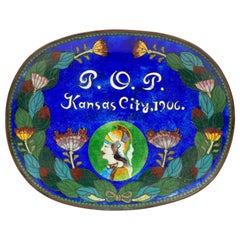
Priests of Pallas Festival Kansas City Chinese Cloisonné Card Tray, 1906
Located in Bishop
s Stortford, Hertfordshire
An unusual and scarce Chinese attributed Art Nouveau cloisonné card tray made for the Priests of Pallas Festival in Kansas City in 1906. The Festival wa...
Category
Chinese Art Nouveau Antique Early 1900s Metalwork
Materials
Metal
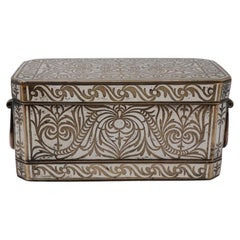
Small Betel Nut Box, Maranao, Southern Philippines (Mindanao)
Located in Point Richmond, CA
Small Betel Nut Box, Maranao, Southern Philippines (Mindanao).
Bronze with bordered silver inlay design overall of a symmetrical floral tendril vine pattern referred to as “the okir ...
Category
Philippine Tribal Antique Early 1900s Metalwork
Materials
Silver, Bronze, Copper
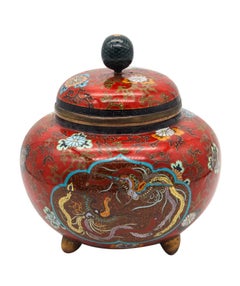
JAPAN IMPERIAL 1900 Meiji Period Tripode Koro Censer In Cloisonné Enamel With
Located in Miami, FL
Japanese tripod Koro from the Meiji Period (1868-1912).
This is a rare and beautiful antique koro censer, created in the imperial Japan during the Meiji period (1868-1912), circa 1900. It was carefully crafted in solid bronze and copper with silver wires and embellished with applications of polychromatic Cloisonné enamels and aventurine. The designs depict organics and natural motifs such mythological animals and flowers.
The Chrysanthemum Symbol
In Imperial Japan, the chrysanthemum (Kiku) was a potent symbol of the imperial family and the emperor himself, representing longevity, royalty, and divine power. The 16-petaled chrysanthemum is the Imperial Seal and crest, found on passports, coins, and the Chrysanthemum Throne. This association dates back to the Kamakura period (1185–1333), particularly with Emperor Go-Toba's fondness for the flower, establishing its link to imperial authority and lineage. The connection between the chrysanthemum and the imperial family began when Emperor Go-Toba adopted it as a personal emblem, aligning it with the strength and refinement of the emperor's rule. During the Meiji Period, the 16-petaled chrysanthemum crest, solidifying the association with the imperial family, was established during this time.
The Meiji Imperial Period
This is an era of Japanese history that extended from October 23, 1868 to July 30, 1912.The Meiji era was the first half of the Empire of Japan, when the Japanese people moved from being an isolated feudal society at risk of colonization by Western powers to the new paradigm of a modern, industrialized nation state and emergent great power, influenced by Western scientific, technological, philosophical, political, legal, and aesthetic ideas. As a result of such wholesale adoption of radically different ideas, the changes to Japan were profound, and affected its social structure, internal politics, economy, military, and foreign relations. The period corresponded to the reign of Emperor Meiji. It was preceded by the Keiō era and was succeeded by the Taishō era, upon the accession of Emperor Taishō.
Country: Imperial Japan.
Period: Meiji, 1890-1910.
Technique: Silver Wire Cloisonné over copper and bronze.
Weight: 416.80 Grams, (0.417 Kg).
Measurements:118 mm by 115 mm (4.65 x 4.52 Inches).
Koro
This term refers to a Japanese censer, incense burner, perfume burner or pastille burner is a vessel made for burning incense or perfume in some solid form. They vary greatly in size, form, and material of construction, and have been in use since ancient times throughout the world. They may consist of simple earthenware bowls or fire pots to intricately carved silver or gold vessels, small tabletop objects a few centimeters tall to as many as several meters high. Many designs use openwork to allow a flow of air. In many cultures, burning incense has spiritual and religious connotations, and this influences the design and decoration of the censer.
Cloisonné
This is an enameling technique in which the pattern is formed by wires soldered to the surface of the object to be decorated, which is usually made from copper, forming cells or cloisons, each of which holds a single colour of enamel paste which is then fired, and ground and polished. The champleve technique also uses an enameling technique, but the cells are formed by carving into the surface of the object, or in the casting. The cloisonne technique has been in use since the 12th century BC in the west, but the technique did not reach China until the 13th or 14th century. It became popular in China in the 18th century. Initially bronze or brass bodies were used, and in the 19th century copper, at which time the quality of the items produced began to decline. Chinese cloisonné is the best-known enamel cloisonné, though the Japanese produced large quantities from the mid-19th century, of very high technical quality. In the west the cloisonne technique was revived in the mid-19th century following imports from China, and its use continued in the Art Nouveau and Art Deco periods.
Condition: Basically, is in great antique condition, near mint, with insignificant and minimal usage, in great condition. All parts are secured in the settings. This Japanese Meiji Koro...
Category
Japanese Meiji Antique Early 1900s Metalwork
Materials
Silver, Bronze, Copper, Enamel
$1,398 Sale Price
30% Off
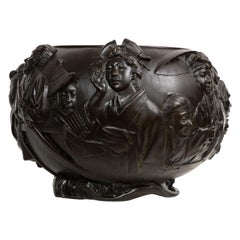
Meiji Japanese Bronze Jardinière Japanese People on a Boat, Genryusai Seiya Zo
Located in New York, NY
A masterpiece, rare, 19th Century Japanese bronze Jardinière/centerpiece of a group of Japanese travelers on a boat, signed on the bottom, Genryusai Seiya...
Category
Japanese Meiji Antique Early 1900s Metalwork
Materials
Bronze
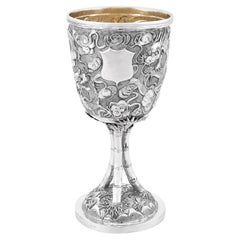
Antique Chinese Export Silver Goblet, circa 1900
Located in Jesmond, Newcastle Upon Tyne
An exceptional, fine and impressive antique Chinese Export Silver goblet; an addition to our wine and drinks related silverware collection
This exceptional antique Chinese Export Silver (CES) goblet has a circular bell shaped form, to a shaped stem and plain circular stepped foot.
The drinking vessel of this antique silver goblet is embellished with chased iconic Chinese dragon designs accented with stylised flame and cloud decoration, all on a matte background.
The decoration to the body incorporates a vacant shield shaped cartouche.
The upper rim of this antique Chinese goblet is encompassed with an applied moulded border.
The impressive shaped pedestal is realistically modelled in the form of three rooted and swept bamboo stalks, accented with applied leaves in junction with the drinking vessel.
The impressive domed circular foot is embellished with further chased decoration replicating the details of the bamboo's terrain and environment.
This impressive Chinese silver goblet...
Category
Chinese Chinese Export Antique Early 1900s Metalwork
Materials
Silver
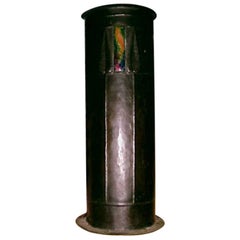
Talwin Morris Style of, an Arts
Crafts Copper Vase with Enamel Decorations
Located in London, GB
Talwin Morris style of, an Arts & Crafts Glasgow School cylindrical copper vase with wonderful oblong enamels to each side and stylised elongated tree de...
Category
English Arts and Crafts Antique Early 1900s Metalwork
Materials
Copper, Enamel
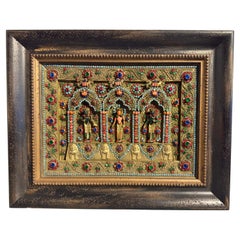
Nepalese Filigree and Stone and Glass Inlay Votive Plaque, circa 1900
Located in Austin, TX
A fine and impressive Nepalese gilt copper filigree votive plaque inset with coral, turquoise, and colored glass "gems", 19th/20th century, Nepal.
This large votive plaque would ori...
Category
Nepalese Antique Early 1900s Metalwork
Materials
Stone, Coral, Copper
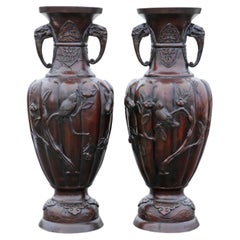
Antique Very Large Pair of Japanese Bronze Vases Meiji Period
Located in Wisbech, Cambridgeshire
Antique very large pair of fine quality Japanese bronze vases C1900 Meiji Period.
Would look amazing in the right location. Rare large size and design.
Overall maximum dimensi...
Category
Japanese Antique Early 1900s Metalwork
Materials
Bronze
$1,717 Sale Price / set
30% Off
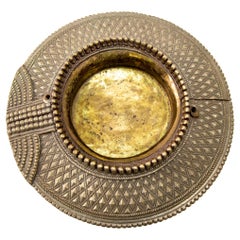
19th Century Mughal India Raj Style Silver Traditional Anklet Bracelet Catchall
Located in Moreno Valley, CA
Late 19th century Mughal Indian Raj Style Silvered Traditional Anklet Bracelet from India repurposed as a vide poche, catchall, bowl ashtray or just as a beautiful collectible decorative object from India.
Antique silver coin and brass heavy metal Dhokra ethnic tribal ankle bracelet that has been repurposed with a brass inner plate that was later added to use the bracelet as a small ashtray or decorative vanity jewelry bowl.
The closure was a push pin mechanism that was closed.
Dhokra art old ethnic tribal brass traditional ankle bracelet from India, handcrafted of a hollow band of heavy brass decorated with chevron repoussé banding and lost wax granulation.
Measures: Height : 1.5 inches.
Length : 7.5 inches.
Width : 7.5 inches.
Diameter: 7.5 inches
Brass silver plated.
Rare collectible decorative bowl, catchall, ashtray, Mughal Raj style, North India, Rajasthan.
Circa 1900's
Weight= 2 Lb 6.9 oz
Anklets were important components in a suite of jewels worn by women in India. These very heavy examples are fabricated in two pieces, and tightly secured with a near-invisible pin. Some legends suggest that heavy anklets like these could weigh up to 20 pounds and were used to prevent brides from running away from their new families.
How it is made: "Dhokra is an ancient folk art tradition prevalent in India in the eastern states of West Bengal, Odisha, Jharkhand and Chhattisgarh. Dhokra craft objects are made through the process of non-ferrous metal casting using the lost-wax casting technique, which is one of the earliest and most advanced methods of metal casting known to human civilization. Its roots can be traced back 4500 years to the ancient city of Mohenjodaro in the Indus Valley Civilization. The name Dokra or Dhokra was used to indicate a group of craftsmen of nomadic type from the Dhokra Damar tribe, scattered over the regions of Bengal, Orisa and Madhya Pradash, whose wares were identified by their beautifully shaped and decorated metal products. The enchanting Dhokra art objects have motifs inspired by indigenous folk...
Category
Indian Islamic Antique Early 1900s Metalwork
Materials
Silver Plate, Brass
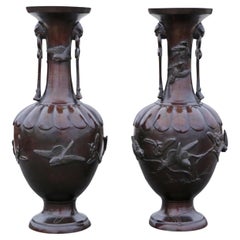
Large Pair of Fine Quality Japanese Bronze Vases Dated 1903 Meiji Period Antique
Located in Wisbech, Cambridgeshire
Antique Very Large Pair of Japanese Bronze Vases - Exquisite Meiji Period Presentation Pieces!
These magnificent Japanese bronze vases, dating back to the Meiji Period and dated 190...
Category
Japanese Meiji Antique Early 1900s Metalwork
Materials
Bronze
$1,908 Sale Price / set
30% Off
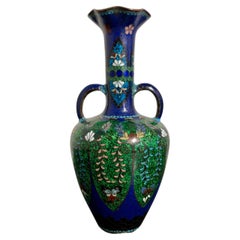
Japanese Art Nouveau Cloisonne and Ginbari Amphora Vase, Meiji Period, Japan
Located in Austin, TX
An unusual and elegant Japanese Art Nouveau amphora shaped cloisonne and ginbari foiled vase, Meiji Period, circa 1900, Japan.
The vase of amphora form, with a tapering body resti...
Category
Japanese Art Nouveau Antique Early 1900s Metalwork
Materials
Copper, Enamel, Foil, Wire
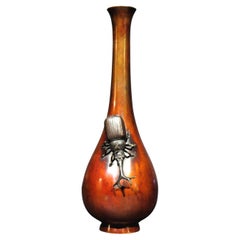
A Very Fine 19th C. Japanese Bronze
Kabutomushi
Vase, Meiji Period (1868-1912)
Located in Ottawa, Ontario
A fine & rare Meiji period 'Kabutomushi' bronze vase, exhibiting a fine old surface with an exceptionally fine patina overall, featuring an applied, naturalistically cast & detailed ...
Category
Japanese Meiji Antique Early 1900s Metalwork
Materials
Bronze
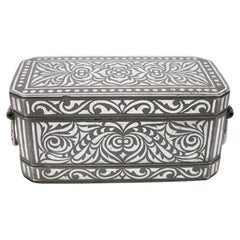
Antique Small Betel Nut Box, Maranao, Southern Philippines (Mindanao).
Located in Point Richmond, CA
Small Betel Nut Box, Maranao, Southern Philippines (Mindanao).
Bronze with bordered silver inlay design overall of a symmetrical floral tendril vine pattern referred to as “the okir ...
Category
Philippine Tribal Antique Early 1900s Metalwork
Materials
Silver, Bronze
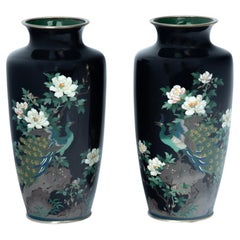
A pair of Meiji period blue cloisonne vases
Located in Lymington, Hampshire
A pair of Meiji period blue cloisonne vases, each with a peacock on a rocky outcrop surrounded by flowering peony plants on a dark blue ground, the peacocks facing each other, with s...
Category
Japanese Antique Early 1900s Metalwork
Materials
Metal
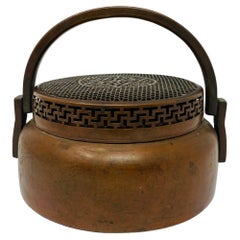
Antique Sculptural Copper Chinese Hand Warmer
Located in San Diego, CA
Artistically and visually stunning early 19th Century piece of copper work. This intricate piece is full of detail. The compressed globular body rises to a waisted neck which is co...
Category
Chinese Chinoiserie Antique Early 1900s Metalwork
Materials
Copper
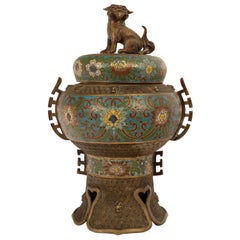
Antique Chinese Qing Dynasty Bronze Cloisonne Enamel Censer Insence Burner 1900
Located in Portland, OR
A good, large, antique Chinese Qing dynasty bronze and cloisonne censer, circa 1900.
The lidded censer having a Chinese lion (Shi) to the lid, the...
Category
Chinese Qing Antique Early 1900s Metalwork
Materials
Bronze, Enamel
$1,000 Sale Price
20% Off
Chinese Wang Hing Hong Kong Silver Dollar Set Pin Dish
Located in Bishop
s Stortford, Hertfordshire
A fine antique Chinese Hong Kong dollar mounted silver dish by renowned Hong Kong silver maker Wang Hing and dating from around 1901. The small but he...
Category
Hong Kong Art Nouveau Antique Early 1900s Metalwork
Materials
Silver
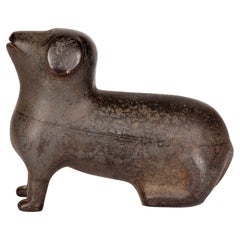
Unusual Indian Khond Attributed Stylized Patinated Metal Seated Dog Figure
Located in Bishop
s Stortford, Hertfordshire
An unusual antique/vintage Indian Khond tribe attributed stylized patinated metal, possibly bronze, seated dog figure sculpture believed to date to the late 19th or early 20th centur...
Category
Indian Anglo-Indian Antique Early 1900s Metalwork
Materials
Metal
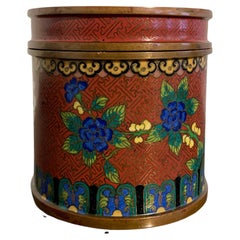
Chinese Lao Tian Li Cloisonne Cylindrical Box, Late Qing Dynasty, China
Located in Austin, TX
A delightful antique Chinese cloisonné cylindrical box and cover by Lao Tian Li, late Qing Dynasty, circa 1900, China.
The box of cylindrical form and w...
Category
Chinese Qing Antique Early 1900s Metalwork
Materials
Brass, Copper, Enamel
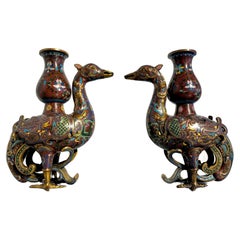
Pair Chinese Cloisonne Phoenix Zun Vases, Late Qing Dynasty, c. 1900, China
Located in Austin, TX
An impressive pair of Chinese cloisonne phoenix form zun vases, late Qing Dynasty, circa 1900, China.
The attractive and fantastic pair of red ground cloisonne vases in the form of ...
Category
Chinese Qing Antique Early 1900s Metalwork
Materials
Copper, Enamel
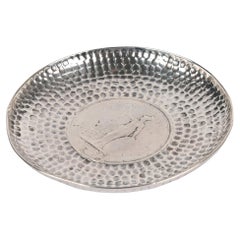
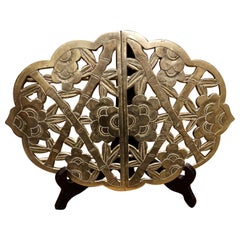
Antique Asian Silver Plate Engraved Expanding Tea Trivet Decorative Stand
Located in Vancouver, British Columbia
Hand engraved expanding tea trivet with unique design and exuding finesse. May be used as a decorative screen, plaque or objet d'art, circa 1900-1910.
Category
Asian Anglo-Japanese Antique Early 1900s Metalwork
Materials
Silver Plate
$1,560 Sale Price
20% Off
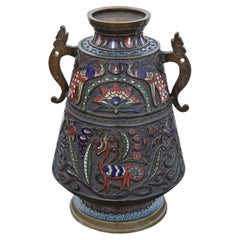
Antique Large Japanese Bronze Champleve Enamel Vase
Located in Wisbech, Cambridgeshire
Antique large quality Japanese bronze Champleve enamel vase C1900.
Would look amazing in the right location. Rare large size and design.
O...
Category
Japanese Antique Early 1900s Metalwork
Materials
Bronze
$1,143 Sale Price
30% Off
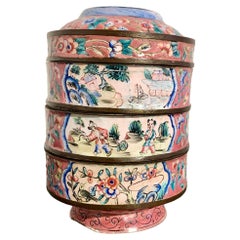
Chinese Canton Enamel Round Stacking Boxes and Cover, circa 1900, China
Located in Austin, TX
An absolutely lovely Chinese export pink Canton enamel round stacking box and cover, late Qing Dynasty, circa 1900, China.
The circular stacking box consists of a bowl form base, ...
Category
Chinese Qing Antique Early 1900s Metalwork
Materials
Copper, Enamel
Matching Pair of Korean Brass Candlesticks with Shields and Snuffers Joseon
Located in Atlanta, GA
A pair of tall matching candlesticks fashioned out of heavy solid brass from Korea circa 1900s (end of Joseon Dynasty). The candlestick consists of three sections: a large base tray ...
Category
Korean Other Antique Early 1900s Metalwork
Materials
Brass

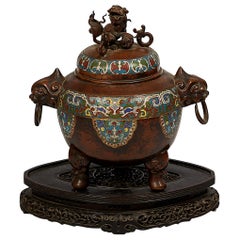
Japanese Meiji Period Bronze and Champlevé Enameled Censer
Located in Long Island City, NY
This Japanese censer incense burner, inspired by Chinese pieces, is of spheroidal form, the bronze body with polychrome champlevé enamel work flanked b...
Category
Japanese Meiji Antique Early 1900s Metalwork
Materials
Bronze
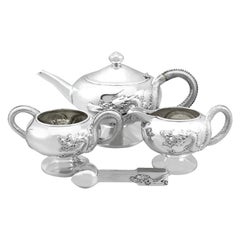
Chinese Export Silver Three Piece Tea Service
By Luen Wo
Located in Jesmond, Newcastle Upon Tyne
An exceptional, fine and impressive antique Chinese export silver three piece tea service; an addition to our diverse silver teaware collection
This exceptional antique Chinese silver tea service...
Category
Chinese Chinese Export Antique Early 1900s Metalwork
Materials
Silver
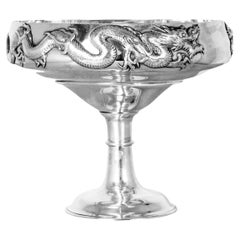
Chinese Export Silver Bowl
By Luen Hing
Located in London, GB
A Chinese Silver Bowl on plain round pedestal base. The decoration comprises of two applied opposing dragons against a plain background. Marked LH, for Luen Hing, a retailer based in...
Category
Chinese Chinese Export Antique Early 1900s Metalwork
Materials
Silver
$16,400
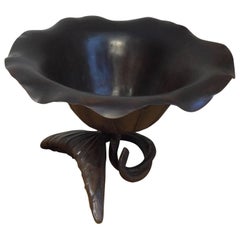
John Bradstreet Bronze Lotus, circa 1900
Located in New York, NY
From the 1890s until his death in 1914, John Bradstreet, the important American Arts and Crafts furniture and interior designer, worked from The Crafts House, his landscaped orientalist compound in Downtown Minneapolis. There, he also received his clients, and dealt in Asian art acquired on frequent trips to the Far East. He used similar bronze Japanese lotuses...
Category
American Arts and Crafts Antique Early 1900s Metalwork
Materials
Bronze
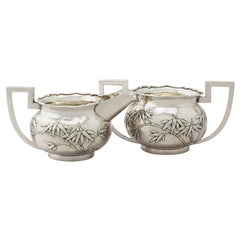
1900s Chinese Export Silver Cream Jug / Creamer and Sugar Bowl
By Sincere
Co.
Located in Jesmond, Newcastle Upon Tyne
A fine Chinese Export silver creamer and sugar bowl; part of our Asian silverware collection.
This fine antique Chinese Export Silver (CES) cream jug and sugar bowl have an oval rounded form onto a collet foot.
This antique silver sugar bowl...
Category
Chinese Antique Early 1900s Metalwork
Materials
Silver
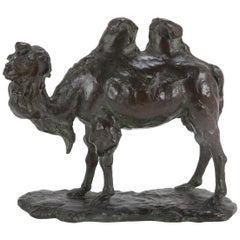
A Japanese Bronze of a Bactrian Camel
Located in Stamford, CT
A sculpted Japanese bronze of a Bactrian camel.
Category
Japanese Showa Antique Early 1900s Metalwork
Materials
Bronze
Still Thinking About These?
All Recently ViewedMore Ways To Browse
Zhou Bronze
Antique Arabic Coffee Pot Dallah
Antique Chinese Bronze Marks
Antique Lime Boxes
Bidri Art
Burmese Bell
Cast Iron Kettle
Chinese Cloisonne Censer
Chinese Cloisonne Incense Burner
Chinese Tripod Bronze Censer
Hand Hammered Raj
Islamic Safavid
Japanese Bronze Miyao
Large Bronze Incense Burner
Meiji Bronze Bowl
Meiji Plaque
Qajar Gold
Turkish Copper Ewer