Want more images or videos?
Request additional images or videos from the seller
1 of 7
Turkish Arab 1850 Damascene Silver and Niello Waist Short Dagger with Sheath
Price:$1,000
$1,285List Price
About the Item
- Dimensions:Height: 9.75 in (24.77 cm)Width: 2.75 in (6.99 cm)Depth: 1.25 in (3.18 cm)
- Sold As:Set of 2
- Style:Islamic (Of the Period)
- Materials and Techniques:
- Place of Origin:
- Period:
- Date of Manufacture:1850
- Condition:Wear consistent with age and use. The overall condition of this dagger is excellent. Beside the normal wear, there is no damage to the steel or the silver. This piece has been carefully inspected to guarantee the condition and authenticity.
- Seller Location:Miami, FL
- Reference Number:Seller: D050623SNMJ/.33211stDibs: LU8303234171142
About the Seller
5.0
Gold Seller
Premium sellers maintaining a 4.3+ rating and 24-hour response times
1stDibs seller since 2023
249 sales on 1stDibs
Typical response time: 1 hour
Authenticity Guarantee
In the unlikely event there’s an issue with an item’s authenticity, contact us within 1 year for a full refund. DetailsMoney-Back Guarantee
If your item is not as described, is damaged in transit, or does not arrive, contact us within 7 days for a full refund. Details24-Hour Cancellation
You have a 24-hour grace period in which to reconsider your purchase, with no questions asked.Vetted Professional Sellers
Our world-class sellers must adhere to strict standards for service and quality, maintaining the integrity of our listings.Price-Match Guarantee
If you find that a seller listed the same item for a lower price elsewhere, we’ll match it.Trusted Global Delivery
Our best-in-class carrier network provides specialized shipping options worldwide, including custom delivery.You May Also Like
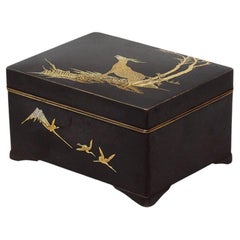
Japanese Meiji Period Damascene Box by Ashizuki with Gold and Silver
Located in Newark, England
INLAID WITH A GOLD AND SILVER DEER
From our Japanese collection we are pleased to offer this Japanese Damascene Box by Ashizuki. The Japanese Box of re...
Category
Antique 19th Century Japanese Meiji Metalwork
Materials
Gold, Silver, Brass, Iron
$3,089
Free Shipping
H 2.37 in W 4.53 in D 3.35 in
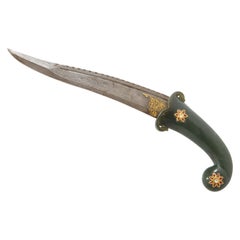
18th/19th Century Mughal Dynasty Gold and Gem Encrusted Jade Dagger
Located in New York, NY
Mughal dynasty gold and gem encrusted Spinach jade dagger having a dark green pistol grip, inlaid with gold, ruby and sapphire applied rosettes to either s...
Category
Antique 19th Century Indian Islamic Metalwork
Materials
Jade, Steel
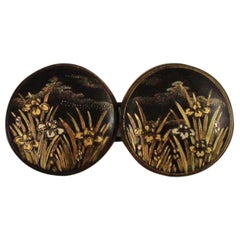
Japanese Damascene Belt Buckle
Located in Hamilton, Ontario
Meiji period silver Japanese damascene belt buckle with gold inlay.
Category
Early 20th Century Japanese Meiji Metalwork
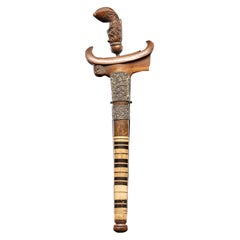
Indonesian Wood and Bone Kris Dagger, Indonesia
Located in Leuven , BE
Indonesian Wood and Bone Kris Dagger, Indonesia
Category
Early 20th Century Indonesian Metalwork
Materials
Metal
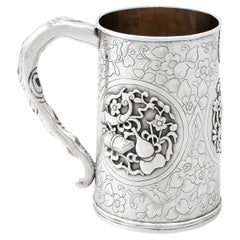
Antique 1850s Chinese Export Silver Mug
By Khe Cheong
Located in Jesmond, Newcastle Upon Tyne
A fine and impressive antique Chinese Export Silver mug; part of our Asian silverware collection.
This fine and impressive antique Chinese...
Category
Antique 1850s Chinese Metalwork
Materials
Silver
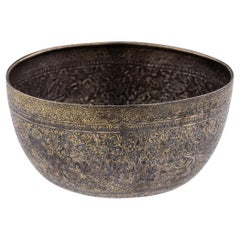
Antique 19th Century Thai Solid Silver-Gilt Niello Enamel Bowl, Siam c.1800
Located in Royal Tunbridge Wells, Kent
Antique early-19th Century rare fine solid silver niello bowl, repoussé decorated, depicting Singha lions and dense floral gilded decoration throughout. Nielloware art and jewellery ...
Category
Antique Early 1800s Thai Other Metalwork
Materials
Silver
$4,523
Free Shipping
H 2.76 in W 4.93 in D 4.93 in
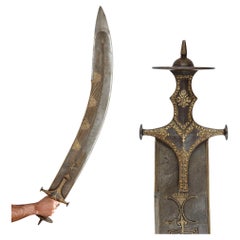
Large Indian Gold Damascened Steel Tegha Sword
Located in London, GB
Large Indian gold damascened steel tegha sword.
Indian, c. 1850
Length 112cm, width 16cm, depth 10cm
This remarkable sword is a tegha, a large Indian sword...
Category
Antique Mid-19th Century Indian Arms, Armor and Weapons
Materials
Gold, Steel
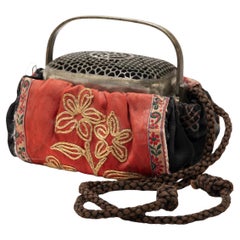
Chinese Petite Brass Brazier with Embroidered Pouch, c. 1850
Located in Chicago, IL
Filled with burning coals, this petite 19th-century brass brazier once warmed the hands of a well-to-do person on a cold winter's night in northern China. The brazier is crafted of w...
Category
Antique Mid-19th Century Chinese Qing Metalwork
Materials
Brass
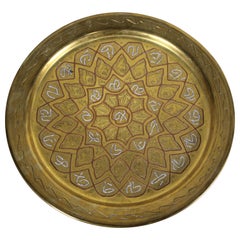
Egyptian Middle Eastern Tray Overlaid with Islamic Writing in Silver
Located in Moreno Valley, CA
Islamic Arabic calligraphy circular tray with silver overlay.
Round Egyptian brass tray overlaid with metal silver and copper Islamic calligraphy ...
Category
Mid-20th Century Egyptian Islamic Metalwork
Materials
Metal, Brass, Copper
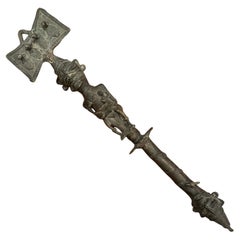
Vintage Patinated Indo-Tibetan Buddhism Bronze "Phurba" Ritual Dagger / Tool
Located in San Diego, CA
Vintage patinated Indo-Tibetan Buddhism bronze "phurba" ritual dagger / tool, circa 1900s. The piece is in good vintage condition with a great patina and measures 4.5"W x 2"D x 19.5"...
Category
20th Century Indian Metalwork
Materials
Bronze
$475
H 19.5 in W 4.5 in D 2 in
More From This Seller
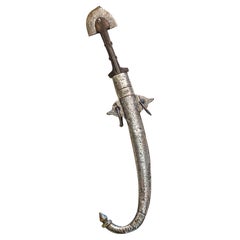
View AllMarroquin Arab 1870 Koummya Dagger With Sheath In Wood Silver And Brass
By Berber Tribes of Morocco
Located in Miami, FL
Marroquin forged steel dagger with sheath.
Beautiful koummya dagger with a sheath from the region of Morocco, circa 1870. The blade was created with forged steel, mounted in wood and brass and embellished with silver parts decorated with chiseled and engraved motifs. The dagger is curved with a tick double edge blade, the handle is ornate with silver and wood. Like swords and daggers in most cultures, the Islamic dagger...
Category
Antique 1870s Moroccan Islamic Tribal Art
Materials
Silver, Sterling Silver, Brass, Steel
$1,588 Sale Price / set
20% Off
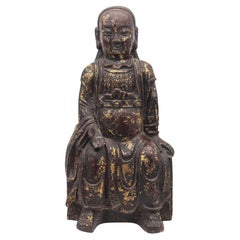
QING DYNASTY 1850 Sculptural Enthroned Mazu Quan-Yin In Solid Gilded Bronze
Located in Miami, FL
A 19th century enthroned Mazu Quan Ying from the Qing Dynasty.
This is a beautiful antique sculptural figure of an enthroned Mazu Quan Yin, cast in bronze in high relief in the late...
Category
Antique 1850s Chinese Qing Metalwork
Materials
Bronze, Gold
$1,198 Sale Price
20% Off
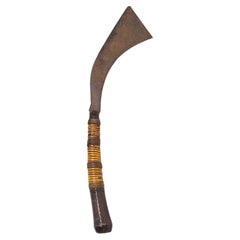
Philippines 19th Century Panabas Iron Sword With Carved Wood And Rattan Handle
Located in Miami, FL
Panabas short sword from the Philippines.
A rare late 18th early 19th century Panabas short sword from the Mindanao, Malabang and the Moro cultures in Lanao Del Sur, the southern p...
Category
Antique 19th Century Philippine Tribal Metalwork
Materials
Iron
$1,800 Sale Price
20% Off
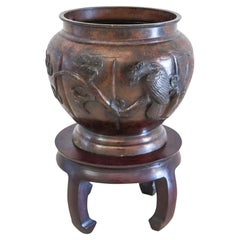
JAPAN 1900 Meiji Period Bronze Planter Vase With Carved Wood Base
Located in Miami, FL
Large Planter Vase from imperial Japan.
This a beautiful piece of Japanese decorative arts, created in Japan during the Meiji imperial period, circa 1900. The oversized vase can be ...
Category
Antique Early 1900s Japanese Meiji Metalwork
Materials
Bronze
$3,188 Sale Price / set
20% Off
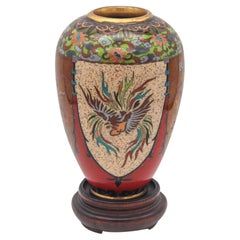
Japan 1890 Meiji Period Decorative Vase In Cloisonné Enamel With Wood Base
Located in Miami, FL
Japanese vase from the Meiji Period (1868-1912).
Beautiful antique decorative vase, created in Japan during the Meiji period (1868-1912), circa 1890s. It was carefully crafted in so...
Category
Antique 1890s Japanese Meiji Metalwork
Materials
Bronze, Enamel
$558 Sale Price / set
20% Off
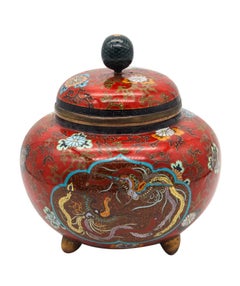
JAPAN IMPERIAL 1900 Meiji Period Tripode Koro Censer In Cloisonné Enamel With
Located in Miami, FL
Japanese tripod Koro from the Meiji Period (1868-1912).
This is a rare and beautiful antique koro censer, created in the imperial Japan during the Meiji period (1868-1912), circa 1900. It was carefully crafted in solid bronze and copper with silver wires and embellished with applications of polychromatic Cloisonné enamels and aventurine. The designs depict organics and natural motifs such mythological animals and flowers.
The Chrysanthemum Symbol
In Imperial Japan, the chrysanthemum (Kiku) was a potent symbol of the imperial family and the emperor himself, representing longevity, royalty, and divine power. The 16-petaled chrysanthemum is the Imperial Seal and crest, found on passports, coins, and the Chrysanthemum Throne. This association dates back to the Kamakura period (1185–1333), particularly with Emperor Go-Toba's fondness for the flower, establishing its link to imperial authority and lineage. The connection between the chrysanthemum and the imperial family began when Emperor Go-Toba adopted it as a personal emblem, aligning it with the strength and refinement of the emperor's rule. During the Meiji Period, the 16-petaled chrysanthemum crest, solidifying the association with the imperial family, was established during this time.
The Meiji Imperial Period
This is an era of Japanese history that extended from October 23, 1868 to July 30, 1912.The Meiji era was the first half of the Empire of Japan, when the Japanese people moved from being an isolated feudal society at risk of colonization by Western powers to the new paradigm of a modern, industrialized nation state and emergent great power, influenced by Western scientific, technological, philosophical, political, legal, and aesthetic ideas. As a result of such wholesale adoption of radically different ideas, the changes to Japan were profound, and affected its social structure, internal politics, economy, military, and foreign relations. The period corresponded to the reign of Emperor Meiji. It was preceded by the Keiō era and was succeeded by the Taishō era, upon the accession of Emperor Taishō.
Country: Imperial Japan.
Period: Meiji, 1890-1910.
Technique: Silver Wire Cloisonné over copper and bronze.
Weight: 416.80 Grams, (0.417 Kg).
Measurements:118 mm by 115 mm (4.65 x 4.52 Inches).
Koro
This term refers to a Japanese censer, incense burner, perfume burner or pastille burner is a vessel made for burning incense or perfume in some solid form. They vary greatly in size, form, and material of construction, and have been in use since ancient times throughout the world. They may consist of simple earthenware bowls or fire pots to intricately carved silver or gold vessels, small tabletop objects a few centimeters tall to as many as several meters high. Many designs use openwork to allow a flow of air. In many cultures, burning incense has spiritual and religious connotations, and this influences the design and decoration of the censer.
Cloisonné
This is an enameling technique in which the pattern is formed by wires soldered to the surface of the object to be decorated, which is usually made from copper, forming cells or cloisons, each of which holds a single colour of enamel paste which is then fired, and ground and polished. The champleve technique also uses an enameling technique, but the cells are formed by carving into the surface of the object, or in the casting. The cloisonne technique has been in use since the 12th century BC in the west, but the technique did not reach China until the 13th or 14th century. It became popular in China in the 18th century. Initially bronze or brass bodies were used, and in the 19th century copper, at which time the quality of the items produced began to decline. Chinese cloisonné is the best-known enamel cloisonné, though the Japanese produced large quantities from the mid-19th century, of very high technical quality. In the west the cloisonne technique was revived in the mid-19th century following imports from China, and its use continued in the Art Nouveau and Art Deco periods.
Condition: Basically, is in great antique condition, near mint, with insignificant and minimal usage, in great condition. All parts are secured in the settings. This Japanese Meiji Koro...
Category
Antique Early 1900s Japanese Meiji Metalwork
Materials
Silver, Bronze, Copper, Enamel
$1,598 Sale Price
20% Off