1 of 19
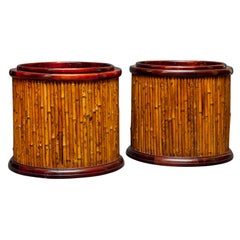
Japanese Medicine Boxes, a Pair
$1,550List Priceper set
About the Item
- Dimensions:Height: 12 in (30.48 cm)Width: 14 in (35.56 cm)Depth: 9 in (22.86 cm)
- Sold As:Set of 2
- Materials and Techniques:
- Place of Origin:
- Period:
- Date of Manufacture:1890
- Condition:Wear consistent with age and use.
- Seller Location:San Francisco, CA
- Reference Number:1stDibs: LU790312588231
Authenticity Guarantee
In the unlikely event there’s an issue with an item’s authenticity, contact us within 1 year for a full refund. DetailsMoney-Back Guarantee
If your item is not as described, is damaged in transit, or does not arrive, contact us within 7 days for a full refund. Details24-Hour Cancellation
You have a 24-hour grace period in which to reconsider your purchase, with no questions asked.Vetted Professional Sellers
Our world-class sellers must adhere to strict standards for service and quality, maintaining the integrity of our listings.Price-Match Guarantee
If you find that a seller listed the same item for a lower price elsewhere, we’ll match it.Trusted Global Delivery
Our best-in-class carrier network provides specialized shipping options worldwide, including custom delivery.You May Also Like
Antique Japanese Medicine "Kanban"
Shop Sign
, Late Meiji Period
Located in Point Richmond, CA
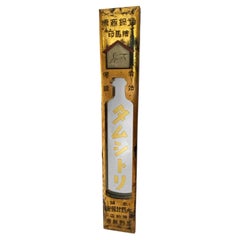
Antique Japanese Medicine "Kanban" (Shop Sign) with mirror, Meiji Period.
The Medicine being advertised is a soothing cream used to relieve itchin...
Category
Early 20th Century Japanese Meiji Paintings and Screens
Materials
Wood, Lacquer
Japanese Meiji Satsuma Finely Decorated and Gilded Scenic Box
By Satsuma
Located in Sarasota, FL
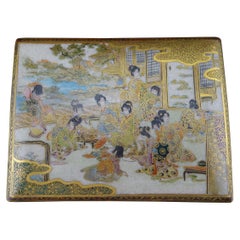
Japanese Meiji satsuma finely hand decorated and gilded box. The box depicts a different scene on each side. Marked with a maker's mark on the bottom.
Category
Antique Late 19th Century Japanese Meiji Ceramics
Materials
Pottery
Meiji Period Red and Black Painted Kimono Storage Box, Japan
Located in Point Richmond, CA
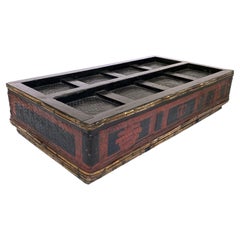
Japanese Kimono storage box, constructed of wood and bamboo, painted black with family crest painted in red on the sides. The top has wood slats, which ...
Category
20th Century Japanese Meiji Sculptures and Carvings
Materials
Wood
$600 Sale Price
20% Off
H 7 in W 31 in D 17 in
Japanese Small Wooden Box with Beautiful Wood Grain Made of Mulberry
Located in Sammu-shi, Chiba
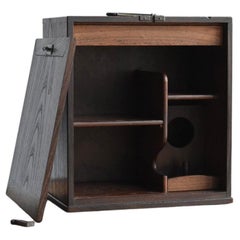
This is a small storage box for storing old Japanese tea utensils.
It is called [kikyoku] in Japanese.
This wooden box comes in a variety of mate...
Category
Early 20th Century Japanese Taisho Furniture
Materials
Other
$650
H 9.93 in W 9.06 in D 6.11 in
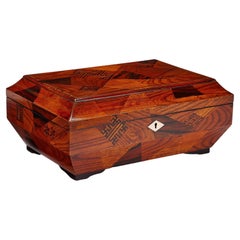
19th Century Japanese Elm and Calamander Parquetry Sarcophagus Work Box
Located in Henley-on-Thames, Oxfordshire
A mid 19th century Japanese export elm and calamander parquetry workbox with a divided interior and lift out tray.
This charming box would work e...
Category
Antique 1860s Japanese Anglo-Japanese More Asian Art, Objects and Furniture
Materials
Elm
$543
H 6.3 in W 14.18 in D 9.85 in
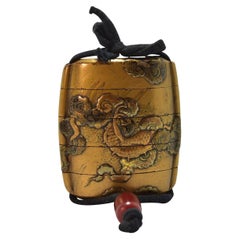
Japanese Inro with 4 Boxes in Gold Lacquer with Mat Kinji Background
Located in Marseille, FR
19th century Japanese inro with 4 boxes in gold lacquer with kinji mat background decorated in taka makiyé of gold of different tones. Lacquered wood siz...
Category
Antique 19th Century Japanese Japonisme More Asian Art, Objects and Furn...
Materials
Giltwood
$3,843
H 27.56 in W 2.56 in D 0.87 in
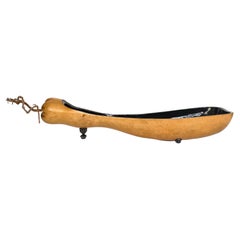
Japanese Lacquered Gourd Ikebana Vessel, with Storage Box, Mid-20th Century
Located in Point Richmond, CA
Large Japanese Lacquered Gourd Ikebana vessel with storage box, mid-20th century.
Ikebana, the art of flower arrangement, is one of the most sublime ...
Category
20th Century Japanese Mid-Century Modern Sculptures and Carvings
Materials
Wood
$1,500
H 4 in W 27 in D 7.5 in
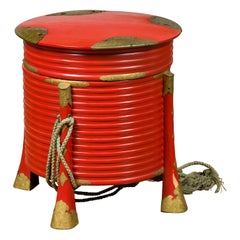
Japanese Taishō Red Lacquered Hokai Box with Brass Accents and Original Rope
Located in Yonkers, NY
A Japanese Taisho period Hokai box from the early 20th century, with red lacquer, ornate brass accents and original rope. This vibrant Japanese Taisho period...
Category
Early 20th Century Japanese Taisho Decorative Boxes
Materials
Brass
$1,500
H 16 in Dm 14.5 in
Pair of Japanese Rosewood and Bamboo Round Hibachi
Located in Hudson, NY
With solid walnut tops, can be used as side tables.
Category
20th Century Japanese More Asian Art, Objects and Furniture
Materials
Bamboo, Walnut, Rosewood
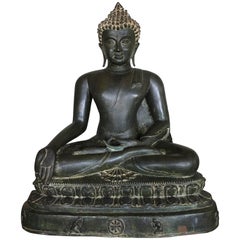
Large Burmese Bronze Medicine Buddha, Pagan Style, Late 19th Century
Located in Austin, TX
A large and magnificent cast bronze image of the Medicine Buddha, Bhaisajyaguru, rendered in the Burmese Pagan style, and most likely based on a period example that was either damaged or lost, 19th century, Burma or Thailand.
He can be identified as the Medicine Buddha by the hand that rests in his lap, with his middle finger touching the thumb. A medicine pot or fruit stem would originally have been placed in his upturned palm.
The face of this Buddha has been sculpted masterfully. He has a beautiful heart shaped face topped by hair neatly arranged in the typical "snail shell curls", and surmounted by a high ushnisha. Long, pendulous earlobes frame his face, a symbol of his princely past. He gazes serenely outwards from heavily lidded, downcast eyes, a content smile upon his full, lush lips.
The Buddha is portrayed seated in vajrasana (full lotus position), his elegant hands displayed in varada mudra, the gesture of granting favors and fulfilling wishes. Long, exquisite fingers extended, the thumb and middle finger touching in a gesture of compassion.
He is clothed in a simple kasaya wrapped around his body and over one shoulder, leaving the shoulder and part of his chest bare. The diaphanous garment clings to his body, outlining his well proportioned and graceful, almost sensuous, form. The excess material pooled in neat pleats in front of him. A sash thrown over his shoulder.
He sits upon a double lotus base upon a raised platform. The platform features two kneeling attendants, usually interpreted as the monks Ananda and Kasyapa. Between them is a circular disc representing the Wheel of Dharma. Contained in the disk is a flower with eight petals, symbolizing the eightfold path, one of the principle teachings of the Buddha.
The sides and back of the platform featuring a series of singha, or lions, representative of the Buddha's royal past.
An applied lacquer patina covers the entirety of the image. Large deposits of ash (from incense) are present between the curls of the hair, as well as some the other crevices, indicating this image was the subject of worship for many years.
Bhaisajyaguru, also called the Medicine Buddha, or Buddha of Healing, is a revered figure in the Buddhist pantheon as a master able to cure suffering, both physical and spiritual, through his teachings.
The Pagan Empire ruled most of present day Burma (Myanmar) from 849 to 1297. The capital, Bagan, served as a both the center of government and religion, where Buddhism reigned supreme. Bagan was also at a crossroads of the Buddhist world, with influence from India, Nepal, Tibet, China, and even Indonesia shaping their culture. As such, Pagan Buddha...
Category
Antique Late 19th Century Burmese Sculptures and Carvings
Materials
Bronze
$27,000
H 29 in W 24 in D 13.5 in
Still Thinking About These?
All Recently ViewedMore Ways To Browse
Japanese Medicine
Opium Antique
Japanese Mingei
Mingei Furniture
Opium Weight
Burmese Opium Weights
Vintage Asian Hat
Burmese Manuscript
Japanese Wooden Box
Opium Set
Chinese Eglomise
Shanghai Art Deco
Chinese Antique Furniture Shanghai
Chinese Chops
Old Japanese Cedar
Opium Lamp
Chinoiserie Fans
Buddhist Manuscript