Brazilian Asian Art and Furniture

BRAZILIAN FURNITURE

More often than not, vintage mid-century Brazilian furniture designs, with their gleaming wood, soft leathers and inviting shapes, share a sensuous, unique quality that distinguishes them from the more rectilinear output of American and Scandinavian makers of the same era.

Commencing in the 1940s and '50s, a group of architects and designers transformed the local cultural landscape in Brazil, merging the modernist vernacular popular in Europe and the United States with the South American country's traditional techniques and indigenous materials.

Key mid-century influencers on Brazilian furniture design include natives Oscar NiemeyerSergio Rodrigues and José Zanine Caldas as well as such European immigrants as Joaquim TenreiroJean Gillon and Jorge Zalszupin. These creators frequently collaborated; for instance, Niemeyer, an internationally acclaimed architect, commissioned many of them to furnish his residential and institutional buildings.

The popularity of Brazilian modern furniture has made household names of these designers and other greats. Their particular brand of modernism is characterized by an émigré point of view (some were Lithuanian, German, Polish, Ukrainian, Portuguese, and Italian), a preference for highly figured indigenous Brazilian woods, a reverence for nature as an inspiration and an atelier or small-production mentality.

Hallmarks of Brazilian mid-century design include smooth, sculptural forms and the use of native woods like rosewoodjacaranda and pequi. The work of designers today exhibits many of the same qualities, though with a marked interest in exploring new materials (witness the Campana Brothers' stuffed-animal chairs) and an emphasis on looking inward rather than to other countries for inspiration.

Find a collection of vintage Brazilian furniture on 1stDibs that includes chairssofastables and more.

to
1
1
1
3
1
1
1
3
2
2
2
2
1
8,236
17,324
12,894
6,950
5,245
4
1
2
2
Place of Origin: Brazilian
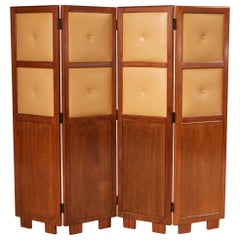
Brazilian Hardwood, Leather and Mirrored Panel Folding Screen, Brazil, c 1960s
Located in Los Angeles, CA
A beautiful four-paneled Brazilian Hardwood folding screen with leather panels on one side and mirrored paneling on the reverse. Produced in Brazil in circa 1960s, this folding scree...
Category

20th Century Mid-Century Modern Brazilian Asian Art and Furniture

Materials

Wood, Leather, Mirror

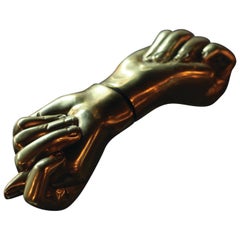
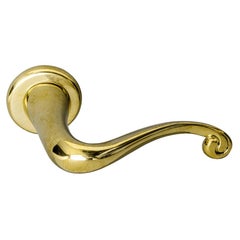
Golden "Figa" Contemporary Double Door Handle in Cast Brass by Estudio Orth
By Estúdio Orth
Located in Sao Paulo, BR
Contemporary golden handle, in cast brass. Produced in São Paulo, Brazil. This door handle was meticulously handmade by master artisans one delicate piece at a time. It is therefore...
Category

2010s Brutalist Brazilian Asian Art and Furniture

Materials

Brass

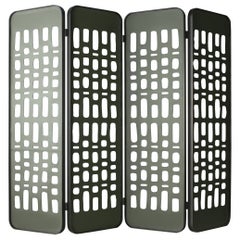
Vazado Screen by Doimo Brasil
Located in Geneve, CH
Vazado Screen by Doimo Brasil Dimensions: W 240 x D 5 x H 190 cm Materials: Structure: Metallic paint, Finishing: Natural leather. With the intention of providing good taste a...
Category

2010s Post-Modern Brazilian Asian Art and Furniture

Materials

Leather, Paint

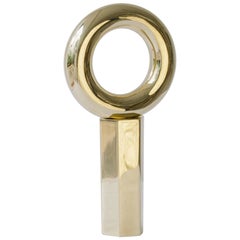
"Primeiro" Contemporary Corkscrew in Cast Brass by Estudio Orth
By Estúdio Orth
Located in Sao Paulo, BR
Produced in São Paulo, Brazil. This contemporary corkscrew in cast brass was meticulously handmade by master artisans one piece at a time. It is therefore quite difficult, if not ...
Category

2010s Brutalist Brazilian Asian Art and Furniture

Materials

Brass

Related Items
Polished Solid Brass Batlló door handle by Antoni Gaudi, 20th century design
By Antoni Gaudí
Located in Barcelona, ES
Solid cast brass with polished finish. A company that has always attributed such great importance to the author of the designs could never forget the great figures in history. That is why the BD catalogue of contemporary creations has always included those by admired classical masters. Antoni Gaudí (1852/1926) is, without doubt, the most internationally well-known Spanish architect. But is not only his buildings and brilliant architectural solutions that have travelled the globe. His integrated conception of architecture led him to pay attention, not only to structural calculations, but also to all the decorative elements, including furniture, that would form part of the building. The admiration felt by modern designers for the furniture designed by Gaudí has not gone unnoticed by BD which was the first company to rescue them from history by embarking on their serial production using...
Category

21st Century and Contemporary Art Nouveau Brazilian Asian Art and Furniture

Materials

Brass

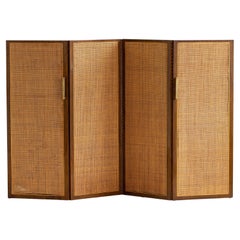
Mid-Century Folding Screen, Room Divider
By Dumais Made
Located in Bantam, CT
Finish -Walnut: Mahogany -Cane -Brass -Minimum wear to cane at the edges -Good vintage condition ...
Category

1950s Mid-Century Modern Vintage Brazilian Asian Art and Furniture

Materials

Brass

Mid-Century Folding Screen, Room Divider
$2,880 Sale Price
20% Off
H 48 in W 19.5 in D 2 in
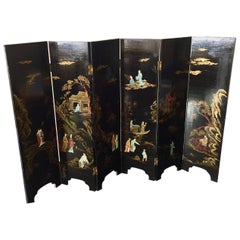
Chinese Six-Panel Lacquer Screen
Located in Montreal, Quebec
Chinese six-panel lacquer screen. This lovely and versatile screen is in the great style of Coco Chanel who loved to decorate with Coromandel s...
Category

20th Century Chinoiserie Brazilian Asian Art and Furniture

Materials

Wood

Chinese Six-Panel Lacquer Screen
$2,400 Sale Price
33% Off
H 44.5 in W 69 in D 0.75 in
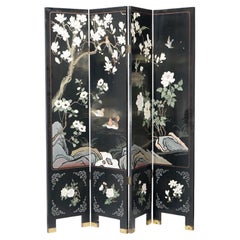
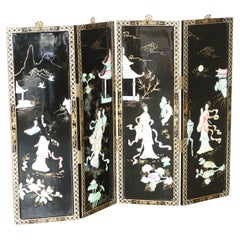
Ebonized Chinoiserie Decorated Four Panel Landscape Screen with Garden, 20th C
Located in Big Flats, NY
An Asian style screen offers four Chinoiserie decorated ebonized panels with landscape scene having garden with tree, birds and pond, raised on square l...
Category

20th Century Chinoiserie Brazilian Asian Art and Furniture

Materials

Wood

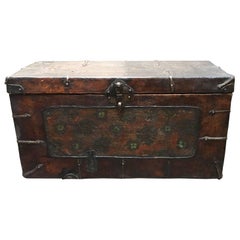
Tibetan Leather Painted Trunk
Located in Austin, TX
A charming Tibetan painted leather storage trunk, 18th century, Tibet. Of smaller size, the softwood construction of the trunk covered by a richly tanned yak leather. The central p...
Category

Late 18th Century Tibetan Antique Brazilian Asian Art and Furniture

Materials

Wrought Iron

Tibetan Leather Painted Trunk
$4,800
H 15.5 in W 29.25 in D 12.5 in
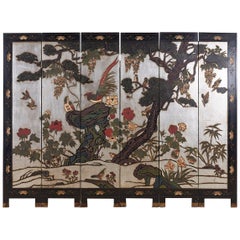
Chinese Export Six-Panel Silver Leaf Coromandel Screen
Located in Rio Vista, CA
Impressive Chinese export six-panel folding coromandel screen depicting flora and fauna. Constructed from lacquered wooden panels hand carved and painted. Features a rare silver leaf...
Category

20th Century Chinese Export Brazilian Asian Art and Furniture

Materials

Brass, Silver Leaf

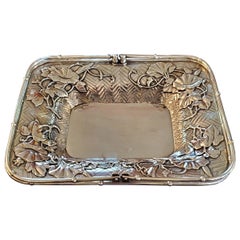
Japanese Meiji Period Sterling Silver 2 Handled Basket by Katsu Miyamoto
By Miyamoto Shoko 1
Located in Dallas, TX
PRESENTING a GORGEOUS, VERY HIGH QUALITY and EXTREMELY RARE piece of Japanese Meiji Period Sterling Silver 2 Handled Basket by Katsu Miyamoto. EXQUISITE, EXCEPTIONAL, RARE & IMPORTANT! This is definitely a Meiji Period piece due to the fact that it is marked with the sterling silver mark “jungin”. The Meiji period was from 1868 to 1912 and in 1928 a law was introduced in Japan compelling the use of decimal marks for silver. This pre-dates that decimalization law. We are of the opinion that it is from circa 1900. Miyamoto Shoko was founded in 1880 as the first silverware specialty shop. In 1899, Miyamoto Shoko’s silverwares were ordered by the family members of the Emperor of Japan, and to this day, they are making fine and graceful handicrafts with skillful craftsmen. Loved by numerous customers since the Meiji era, Miyamoto Shoko’s products have also been given to Princess Mako and Princess Kako of Akishino, as well as Princess Aiko Toshinomiya, on their birthdays. Katsu Miyamoto (宮本勝), in 1880, in order to increase the sales of tobacco and cigarettes to foreigners founded the Moyamoto Shoko company, which produced different silverwares in general and particularly silver cigarette cases. Miyamoto’s first name, Katsu (勝) in some sources is written as “Masaru”, since 勝 kanji can be pronounced in both ways. This basket is of the HIGHEST QUALITY imaginable! The top of the basket has the MOST GORGEOUS repousse work of flowers, probably lotus flowers, with leaves and foliage. It has an underlying chevron effect chasing, reflecting parquetry. The 2 handles are cast in the form of bamboo handles. The rim of the top likewise is cast as bamboo. The base is equally stunning in a different way! It is chased with a chevron effect, like parquetry flooring and the four feet simulate pieces of sliced bamboo with an interlinking gallery of support columns, likewise, simulating bamboo. The QUALITY of WORKMANSHIP is OUTSTANDING! The pieces weighs exactly 525 grams. This piece takes my breath away! This is one for the SERIOUS COLLECTOR of EXQUISITE AND RARE Japanese silver. You will not find another like it, for sale ANYWHERE ELSE IN THE WORLD …… I know as I have searched! Provenance: Acquired from a Dallas Private Collector. Dimensions: 9.6 inches wide, 7.6 inches deep and 2.75 inches tall ( 7.25 inches tall with handles up) Condition: Very good. It looks like the base 4 legged gallery, has been repaired/re-attached to the base, but otherwise it is excellent and of Museum quality. The Meiji period (明治時代 Meiji-jidai?), also known as the Meiji era, is a Japanese era which extended from October 23, 1868 through July 30, 1912.[1] This period represents the first half of the Empire of Japan during which Japanese society moved from being an isolated feudal society to its modern form. Fundamental changes affected its social structure, internal politics, economy, military, and foreign relations. The period corresponded with the reign of Emperor Meiji after 1868, and lasted until his death in 1912. It was succeeded by the Taishō period upon the accession of Emperor Taishō to the throne. Solid silver pieces...
Category

Early 20th Century Meiji Brazilian Asian Art and Furniture

Materials

Sterling Silver

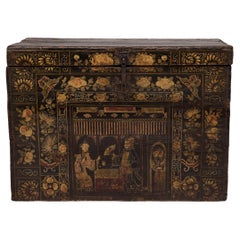
Chinese Painted Clothing Trunk, c. 1850
Located in Chicago, IL
Trunks and storage chests were the most ubiquitous form of household storage throughout the Ming and Qing dynasties. Used to store clothes, linens, kitchen utensils, and other miscel...
Category

Mid-19th Century Qing Antique Brazilian Asian Art and Furniture

Materials

Pine

Chinese Painted Clothing Trunk, c. 1850
$1,580
H 24.5 in W 34.75 in D 20.5 in
Chinese Export Soapstone Folding Screen Room Divider
Located in West Sussex, Pulborough
We are delighted to offer for sale this extremely well-made and highly collectable Chinese Export Soapstone room divider folding screen depicting court beauties A truly stunning and...
Category

20th Century Chinese Export Brazilian Asian Art and Furniture

Materials

Soapstone

Chinese Export Soapstone Folding Screen Room Divider
$2,384
H 37.41 in W 48.63 in D 0.79 in
Chinese Export Four Panel Lacquered Coromandel Screen
Located in Rio Vista, CA
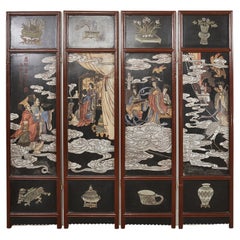
Celestial Chinese export coromandel four-panel screen depicting figures in colorful robes in a heavenly landscape among the white clouds. Eac...
Category

20th Century Chinese Export Brazilian Asian Art and Furniture

Materials

Brass

Chinese Export Four Panel Carved Soapstone Coromandel Screen
Located in Rio Vista, CA
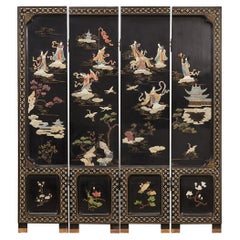
Impressive Chinese export four panel lacquered coromandel screen featuring hand-carved soapstone beauties in a floral landscape with gilt clo...
Category

20th Century Chinese Export Brazilian Asian Art and Furniture

Materials

Soapstone, Brass

Cast Iron Foo Dog Sculpture
Located in Asheville, NC
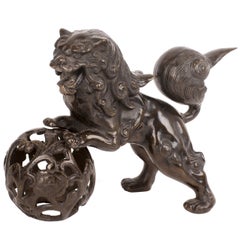
This cast iron piece features a statuary male Chinese guardian Lion (Foo Dog) proudly balancing both hands atop an embroidered ball, representing supremac...
Category

20th Century Brazilian Asian Art and Furniture

Materials

Iron

Cast Iron Foo Dog Sculpture
$1,680
H 10 in W 12 in D 5 in
Previously Available Items
Textile in Green, Blue, Black, and White by Roberto Burle Marx, circa 1980s
By Roberto Burle Marx
Located in New York, NY
Textile in green, blue, black and white. Unsigned, circa 1980s. Roberto Burle Marx, Brazil.  
Category

1980s Modern Vintage Brazilian Asian Art and Furniture

Materials

Textile

Still Thinking About These?

All Recently Viewed