Items Similar to 17th Century Japanese Screen. Ink Plum Tree
Birds by Kano Naonobu.

Want more images or videos?
Request additional images or videos from the seller
1 of 7
17th Century Japanese Screen. Ink Plum Tree
Birds by Kano Naonobu.
$38,000
£28,912.44
€33,313.02
CA$53,948.11
A$57,876.66
CHF 31,043.85
MX$696,827.28
NOK 391,344.22
SEK 356,851.69
DKK 248,892.69
About the Item
Kano Naonobu (1607-1650)
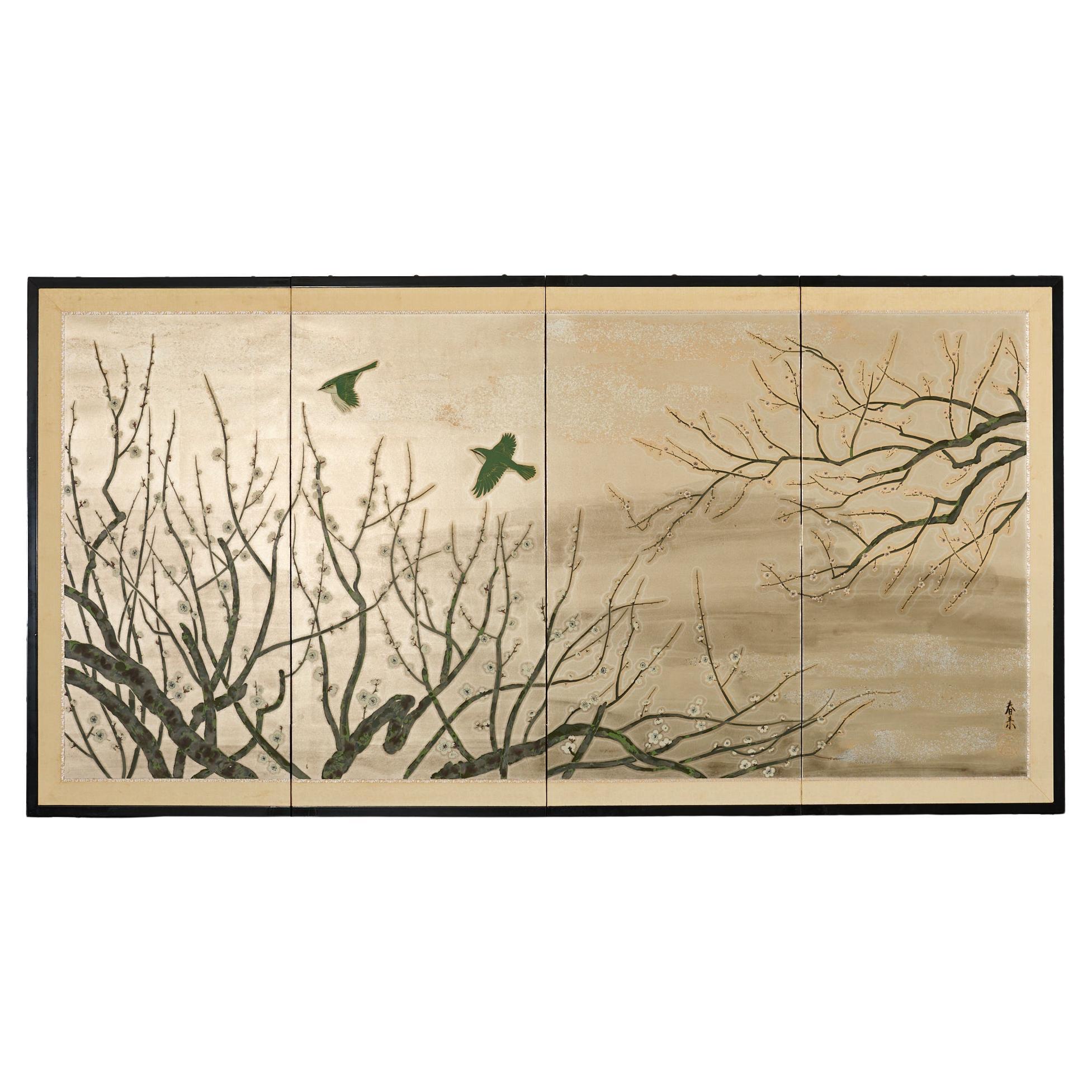
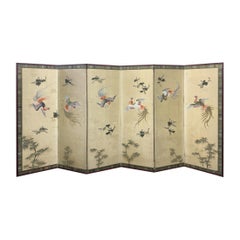
Plum Tree and Birds
Six-fold Japanese Screen. Ink and slight color on paper.
In this evocative ink work spread over a six-panel folding screen, we see the consummation of the elegance and refinement of the Edo Kano school. This 17th century screen is a rare surviving example of a large-scale bird and flower painting by Kano Naonobu, the younger brother of Kano Tanyu. Closely related works are held in the Minneapolis Institute of Arts and the Cleveland Museum of Art. Kano Naonobu was the second son of Kano Takanobu (1571-1618). He was granted an estate in Edo in 1630. He became an official painter for the Shogunate and founder of the influential Kobikicho Kano family. The Kano were the most important family of professional painters in Japanese history. Stretching from the sixteenth to the twentieth century, the House of Kano served as official painters to the imperial and military elite for over four centuries. Naonobu produced a number of prominent commissions for the Shogunate including room partitions in Nagoya Castle. In Kyoto, he helped his brother with paintings for Nijō Castle and the major Pure Land Buddhist temple Chion’in.
His older brother Tanyu was a child prodigy and giant of Japanese art who laid the foundations for the Kano school’s dominance of Japan’s Edo period. Tan'yu made bold use of negative space to create his own unique world of simple elegance which was sensitively in tune with the demands of the era. Tanyu’s influence on his younger brother is undeniable but Naonobu’s delicate and lyrical ink paintings are outstanding. Even during his short lifetime his ink talents were praised over those of his brother. Naonobu seems to have inherited the tendency of painters of the previous era who found beauty in negative space, such as Hasegawa Tohaku and Kaiho Yusho, and to this he added elegance of expression. His works show individualism and originality even within the strict confines of the Kano school of the time, suggesting the form of the subject rather than delineating it. Although the screen presented here is a work of ink painting, the winter world of birds, blossoming plum trees and flowing water expressed by ink bleeding, scratching and stopping is already the realm of abstraction.
- Dimensions:Height: 65 in (165.1 cm)Width: 145 in (368.3 cm)Depth: 0.75 in (1.91 cm)
- Style:Edo (Of the Period)
- Materials and Techniques:
- Place of Origin:
- Period:
- Date of Manufacture:Circa 1640
- Condition:Refinished. Wear consistent with age and use. The screen has recently been completely remounted in Kyoto utilizing traditional craftsmen and techniques.
- Seller Location:Kyoto, JP
- Reference Number:1stDibs: LU2472332487722
About the Seller
5.0
Recognized Seller
These prestigious sellers are industry leaders and represent the highest echelon for item quality and design.
Established in 2001
1stDibs seller since 2016
77 sales on 1stDibs
Typical response time: 5 hours
- ShippingRetrieving quote...Shipping from: Kyoto, Japan
- Return Policy
More From This Seller
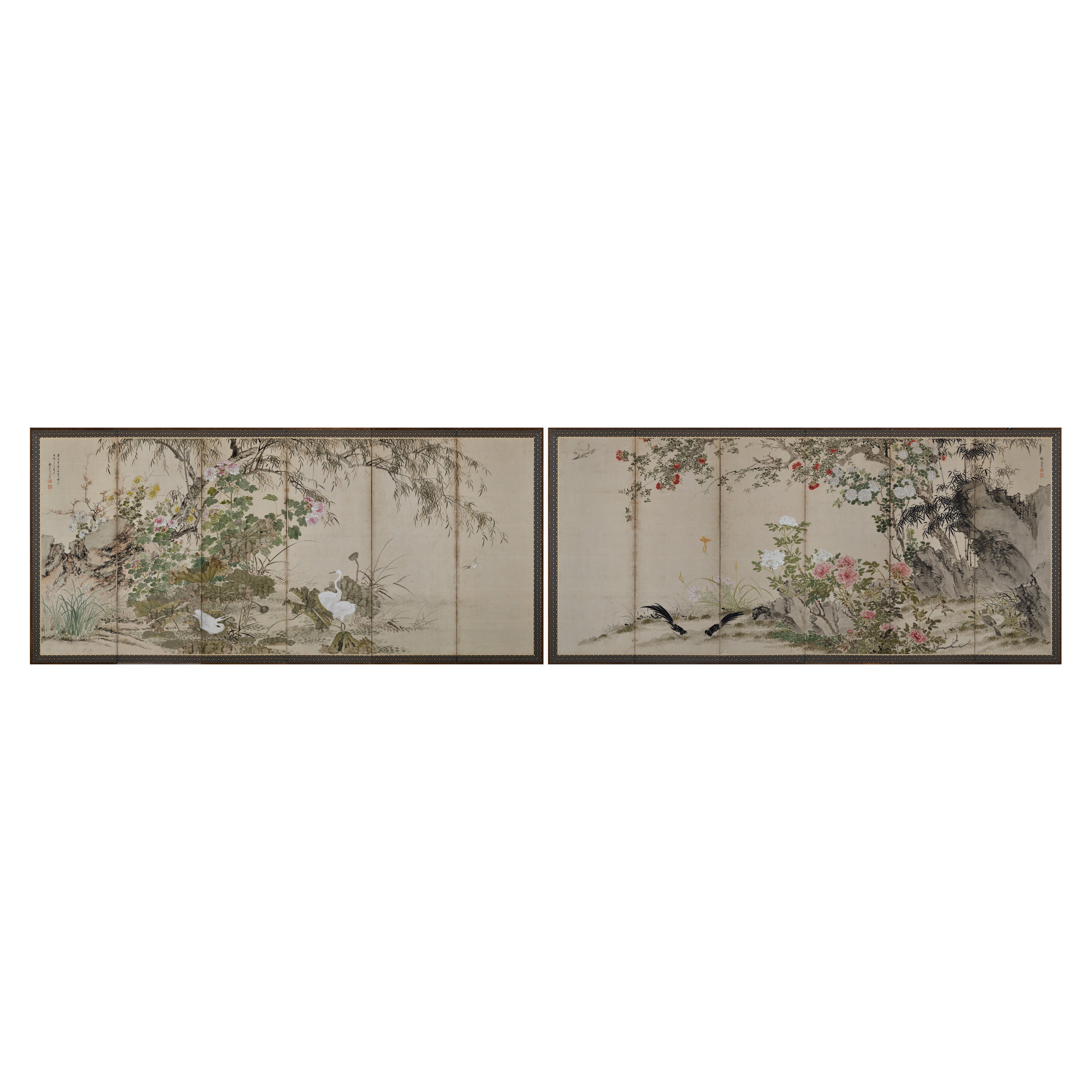
View All19th Century Japanese Screen Pair - Birds
Flowers of the Four Seasons
Located in Kyoto, JP
Birds & Flowers of the Four Seasons
Yamamoto Baiitsu (1783-1856)
Late Edo period, Dated 1850
A magnificent pair of six-panel Japanese folding screens by Yamamoto Baitsu, representin...
Category
Antique Mid-19th Century Japanese Edo Paintings and Screens
Materials
Wood, Paper
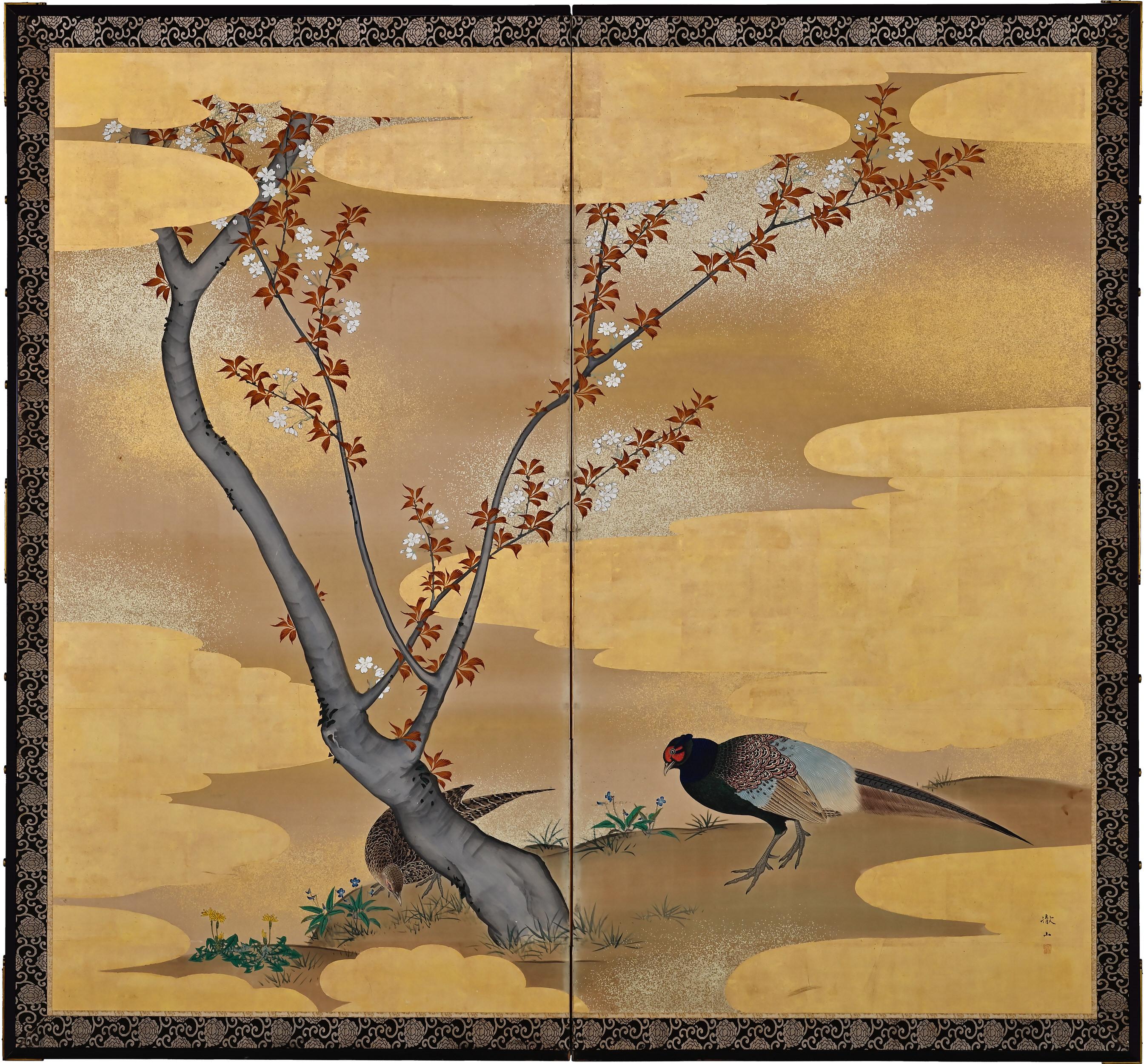
Early 19th Century Japanese Screen. Cherry Blossom
Pheasants by Mori Tetsuzan
Located in Kyoto, JP
Mori Tetsuzan (1775-1841)
Pheasants and Cherry Blossoms
Two-fold Japanese screen. Ink, color, gofun, gold and silver on paper.
A two-fold Japanese bir...
Category
Antique Early 19th Century Japanese Edo Paintings and Screens
Materials
Gold Leaf
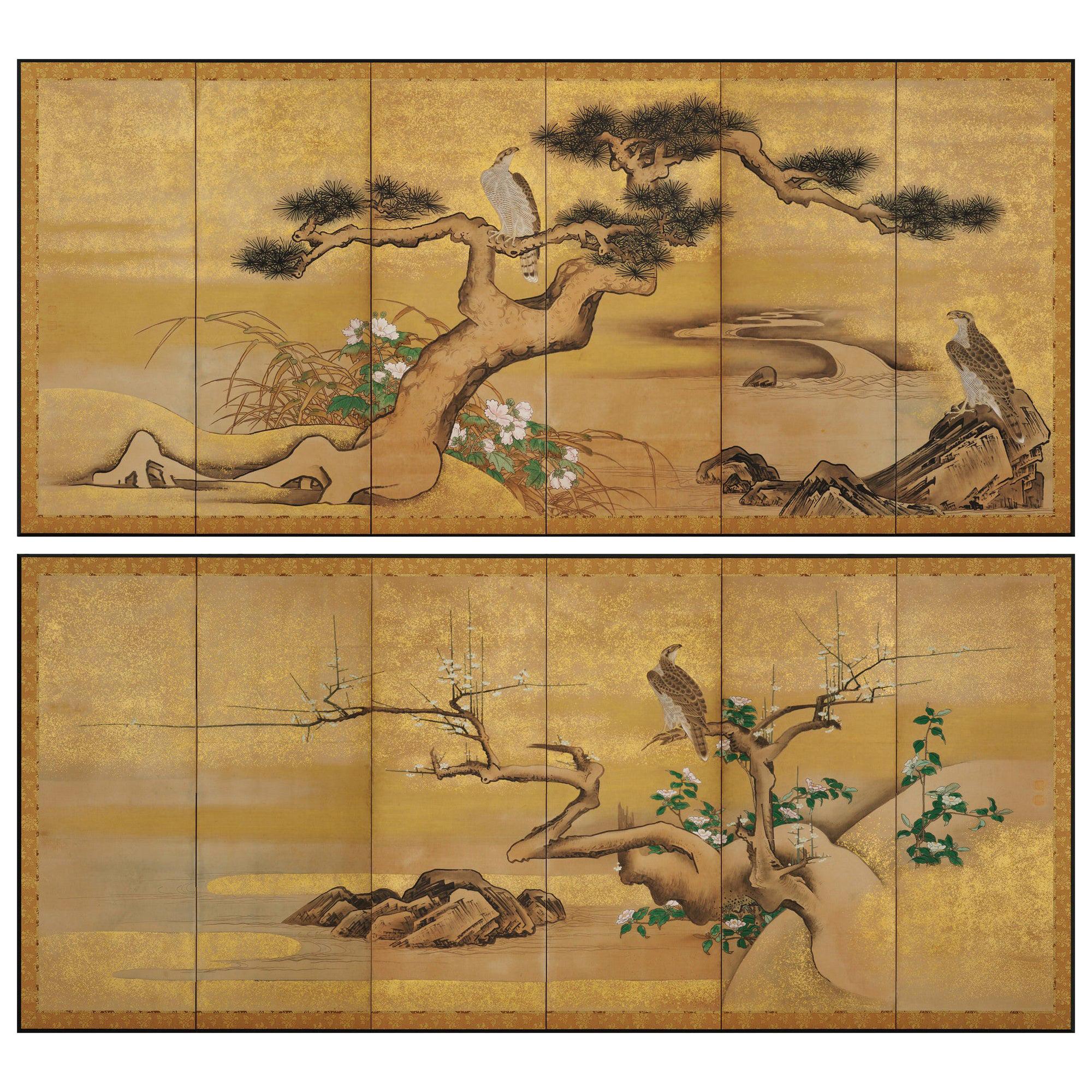
17th Century Japanese Screen Pair by Soga Nichokuan, Hawks on Pine
Plum Trees
Located in Kyoto, JP
Hawks on plum and pine
Soga Nichokuan (active circa 1625-1660)
Pair of six-fold screens.
Ink, mineral pigments, gofun, gold and speckled gold l...
Category
Antique 1640s Japanese Edo Paintings and Screens
Materials
Wood, Paper
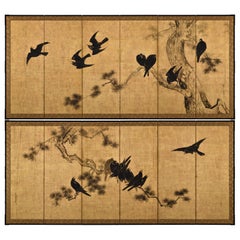
Mid 18th Century Japanese Screen Pair. Crows
Pines by Unkoku Toshuku.
Located in Kyoto, JP
Unkoku Toshuku (1722-1779)
Crows and Pines
A pair of six-panel Japanese Screens. Ink and gold leaf on paper.
Dimensions: Each Screen: H. 170.5 cm x W. 375 cm
Haha-cho or mynah birds, whose forms resemble crows in artwork, were commonly depicted in Japanese art. These types of paintings were originally modeled on paintings attributed to the 13th century Chinese painter Muqi (Mokkei), whose art was enormously influential in Japan. Crows only became a theme among Japanese artists from the later 1500s onward. They likely were inspired by these imported Chinese paintings of myna birds, which are not native to Japan, substituting the native species of crow instead.
The best known early examples of the depiction of Japanese crows are two Momoyama screen...
Category
Antique Mid-18th Century Japanese Edo Paintings and Screens
Materials
Gold Leaf
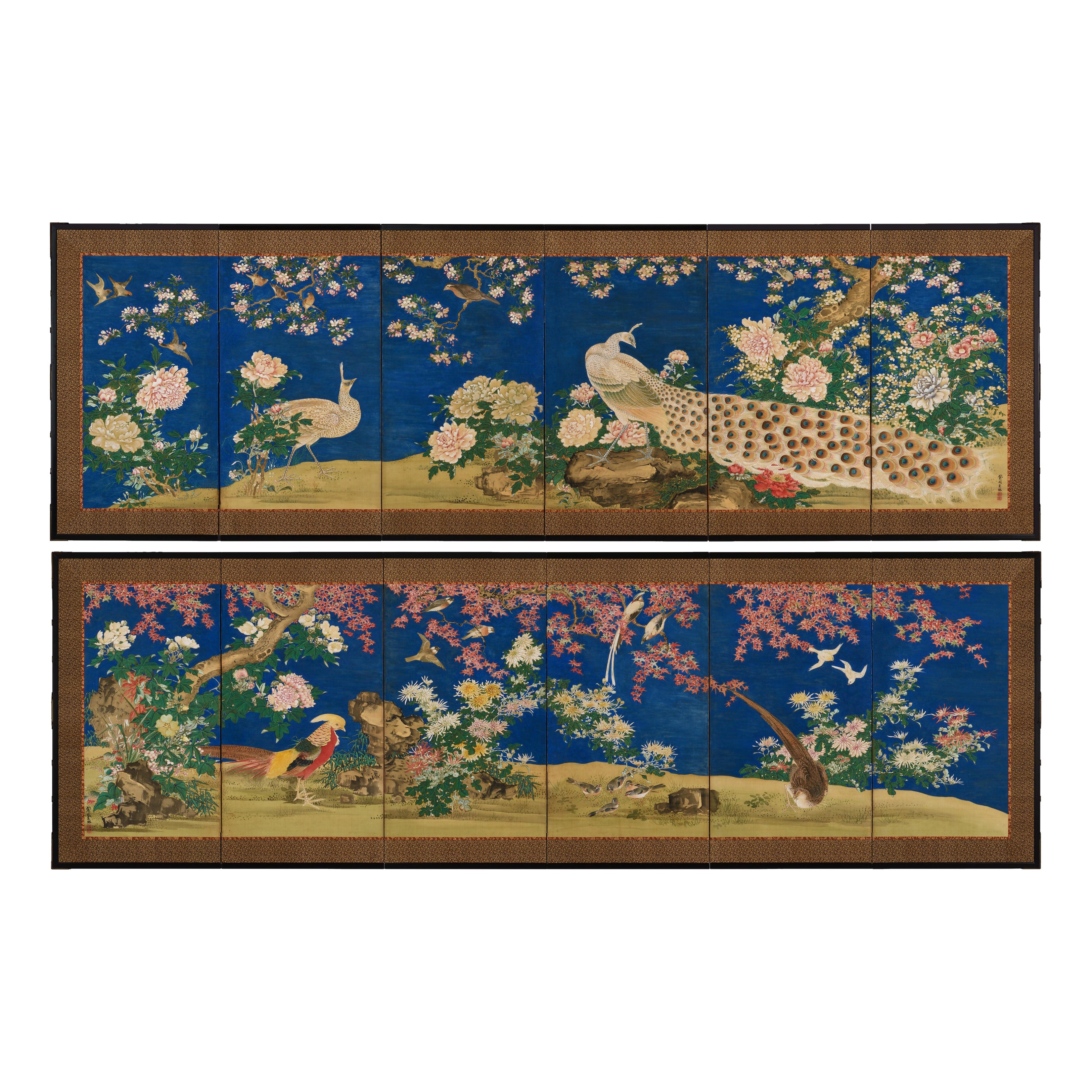
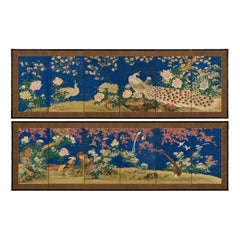
Mid 19th Century Japanese Screen Pair. Flowers
Birds of the Four Seasons.
Located in Kyoto, JP
Shioka Sorin (1781-1850)
Flowers & Birds of the Four Seasons
Pair of six-panel Japanese Screens. Ink, gofun and pigments on silk.
Dimensions (each screen): H. 91.5cm x W. 285cm (3...
Category
Antique Mid-19th Century Japanese Edo Paintings and Screens
Materials
Silk
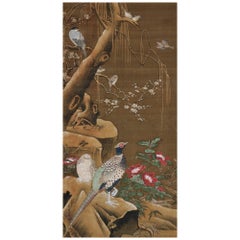
Japanese Painting. Bird and Flower. 19th century copy of Lu Ji by Ogata Tomin.
Located in Kyoto, JP
Ogata Tomin (1839 -1895)
Birds in a spring landscape
Ink and colour on silk.
Inscription reads:
“Copy of Lu Ji, painted with heartfelt appreciation”
“Painted by Tomin Ogat...
Category
Antique Late 19th Century Japanese Ming Paintings and Screens
Materials
Silk
You May Also Like
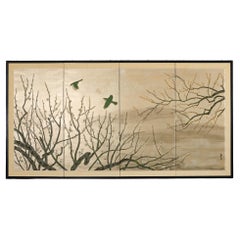
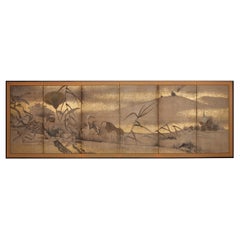
Japanese Showa Four Panel Screen Prunus with Songbirds
Located in Rio Vista, CA
Spectacular late 20th century Japanese Showa period four panel byobu screen depicting blossoming spring prunus or plum trees with songbirds in flight. The screen features a dramatic ...
Category
20th Century Japanese Showa Paintings and Screens
Materials
Brass
Japanese Six Panel Screen, Egrets in Water Landscape with Lotus and Loquats
Located in Hudson, NY
Hasegawa School painting in ink and gold dust accents on mulberry paper.
Category
Antique Mid-19th Century Japanese Paintings and Screens
Materials
Gold
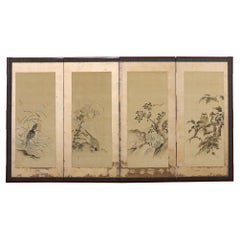
Japanese Kano School Four Panel Screen Birds and Owl
Located in Rio Vista, CA
Amazing 19th century Japanese Meiji period four-panel byobu screen featuring painted panels depicting egrets, heron, pheasants, songbirds, and an owl. Painted with ink and natural co...
Category
Antique 19th Century Japanese Meiji Paintings and Screens
Materials
Gold Leaf
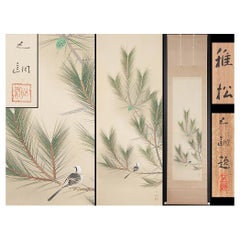
Japanese Nihonga Painting 20th Showa/Taisho Scroll Pine Tree and Bird
Located in Amsterdam, Noord Holland
Hanging scroll "Wakamatsu" silk version, painted, signed in box
size Axis: Height 208.5cm Width 49.5cm
Drawing: Height 123cm Width 36cm *There may be slight differences in dimension...
Category
20th Century Taisho Paintings
Materials
Silk
$1,707 Sale Price
20% Off
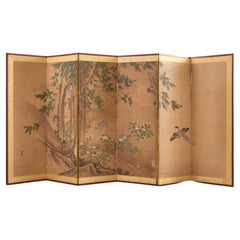
19th Century Japanese Edo Six Panel Kano School Landscape Screen
Located in Rio Vista, CA
Late Edo period 19th century Japanese six-panel landscape screen featuring a cypress tree over a flowering hibiscus with a pair of hototogisu birds. Kano school painted with ink and ...
Category
Antique 19th Century Japanese Edo Paintings and Screens
Materials
Silk, Wood, Paper
Edo-Meiji Phoenix Birds Screen
Located in Fukuoka, JP
Edo-Meiji Phoenix Birds Screen
Period: Edo-Meiji
Size: 360 x 152 cm (141.73 x 60 inches)
SKU: PD16
This gorgeous silk screen from the Edo-Meiji period showcases mythical phoenix bi...
Category
Antique 19th Century Japanese Edo Paintings and Screens
Materials
Silk, Paper
More Ways To Browse
Antique Bird Tree
Kano School
Flower And Bird Painting
Plum Wood
Asian Bird Paintings
Japanese Painting Tree
Four Panel Japanese Folding Screen
Room Partition
17th Century Japanese Paintings
17th Century Japanese Screens
Japanese Screen Tree
Japanese Kano Screen
Japanese Screens Six Fold
Kano School Screen
Edo Japanese Screen Kano
Birds Folding Screen
Japanese Antique Wood Birds
17th Century Kano