Items Similar to 18th Century Japanese Screen Pair. Plum
Young Pines. Kano School.
Want more images or videos?
Request additional images or videos from the seller
1 of 7
18th Century Japanese Screen Pair. Plum
Young Pines. Kano School.
$42,000per set
£32,034.68per set
€36,479.76per set
CA$59,022.81per set
A$64,372.67per set
CHF 34,100.30per set
MX$771,736.90per set
NOK 434,286.22per set
SEK 397,122.52per set
DKK 272,539.51per set
About the Item
Dimensions (Each screen): H. 176 cm x W. 378 cm (69’’ x 149’’)
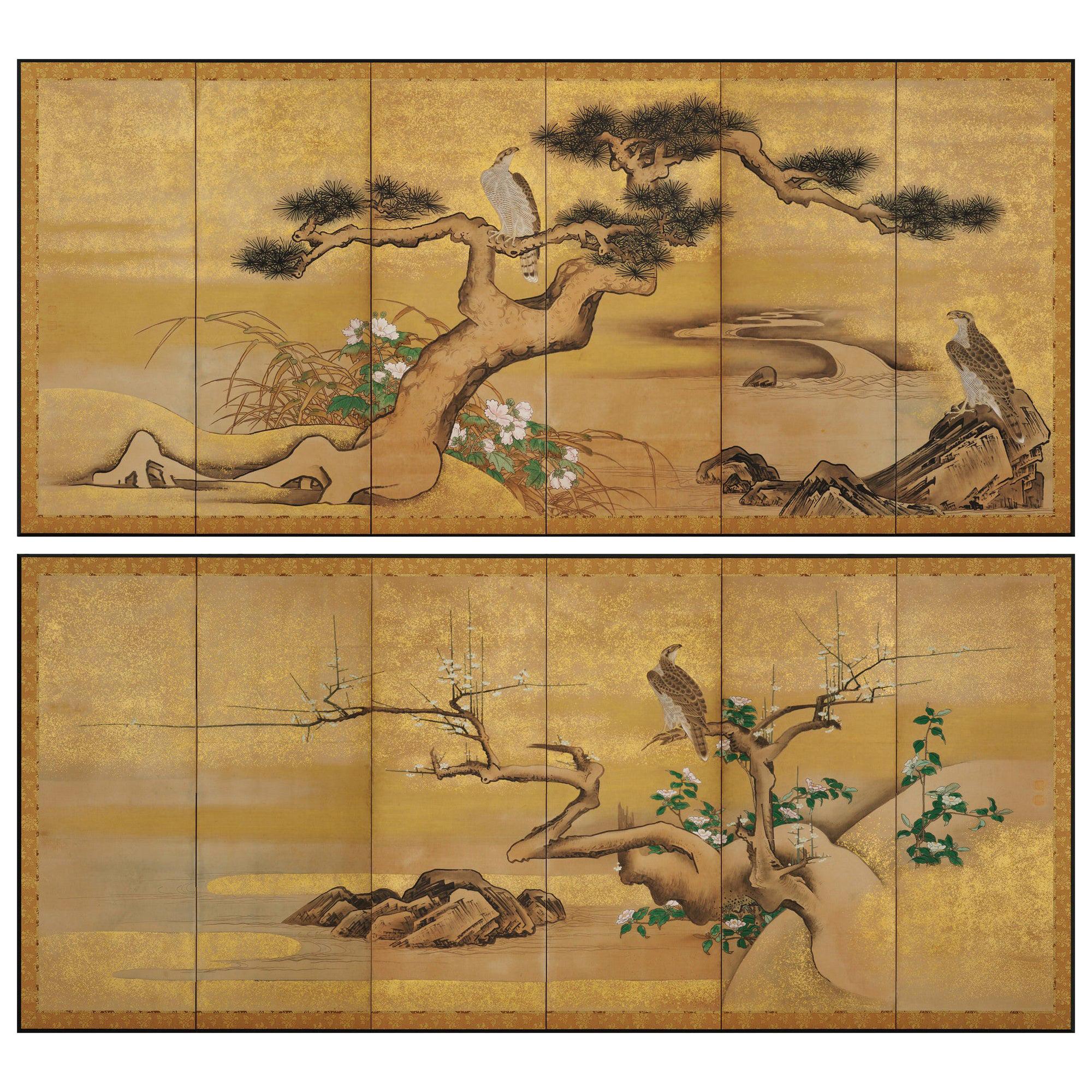
This pair of Japanese folding screens depict blossoming plum trees amongst young pines. They are designed to capture the changing seasons, from winter to spring, reflecting the cyclical nature of life and seeking inspiration from it. Rather than a naturalistic depiction, here the trees and flowers are depicted in a heavily stylized manner influenced by traditional Chinese landscape painting. The copious use of gold leaf conveys a sense of opulence and grandeur and this pair of screens have a particularly beautiful patina. The composition makes full use of the large canvas without overwhelming the space. The negative space is utilized to emphasize the elegant lines and curves of the plum branches and the youthful nature of the pine trees.
These screens were painted by a member of the influential Kano academy of painters. The Kano school operated as a hereditary school with a widespread workshop system. Kano school artists were renowned for producing large-scale screen paintings. These screens were used to define and decorate spaces in castles, temples, and other significant locations. These large-scale screen paintings not only served as decorative elements but also played a role in conveying cultural and historical narratives.
This pair of screens would have been displayed around the New Year period, emphasizing the values of perseverance and strength in the pursuit of a disciplined and enlightened life. The plum blossom is one of the first flowers to bloom in late winter or early spring, signifying hope and renewal. It is widely admired for its beauty and fragrance. In art, the plum blossom represents the coming of spring after the harsh winter, making it a symbol of endurance and new beginnings. The young pine trees similarly convey feelings of revitalization and hope, whilst its evergreen nature also alludes to perpetuity and timelessness.
- Dimensions:Height: 69 in (175.26 cm)Width: 149 in (378.46 cm)Depth: 0.75 in (1.91 cm)
- Sold As:Set of 2
- Style:Edo (Of the Period)
- Materials and Techniques:
- Place of Origin:
- Period:
- Date of Manufacture:Circa 1780
- Condition:Refinished. Wear consistent with age and use. This pair of screens have recently been conserved and fully remounted. The original lacquered frames, metalwork and silk brocade have been retained. Expert Japanese craftsmen and entirely traditional techniques and materials were used.
- Seller Location:Kyoto, JP
- Reference Number:1stDibs: LU2472337540322
About the Seller
5.0
Recognized Seller
These prestigious sellers are industry leaders and represent the highest echelon for item quality and design.
Gold Seller
Premium sellers maintaining a 4.3+ rating and 24-hour response times
Established in 2001
1stDibs seller since 2016
75 sales on 1stDibs
Typical response time: 6 hours
- ShippingRetrieving quote...Shipping from: Kyoto, Japan
- Return Policy
More From This Seller
View All17th Century Japanese Screen Pair by Soga Nichokuan, Hawks on Pine
Plum Trees
Located in Kyoto, JP
Hawks on plum and pine
Soga Nichokuan (active circa 1625-1660)
Pair of six-fold screens.
Ink, mineral pigments, gofun, gold and speckled gold l...
Category
Antique 1640s Japanese Edo Paintings and Screens
Materials
Wood, Paper
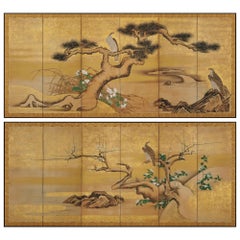
Mid-18th Century Japanese Screen Pair, One Hundred Flowers, Chrysanthemums
Located in Kyoto, JP
Omori Soun (b. 1704)
Chrysanthemums - One Hundred Flowers
A Pair of Six-fold Japanese Screens. Ink, color, gofun and gold leaf on paper.
Dating ...
Category
Antique Mid-18th Century Japanese Edo Paintings and Screens
Materials
Gold Leaf
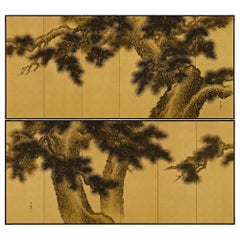
Early 20th Century Japanese Screen Pair - Ink Pine Trees on Gold
Located in Kyoto, JP
Imao Keisho (1902-1993)
Pine Trees
Early 20th Century, Circa 1930
Pair of six-panel Japanese screens. Ink on silk and gold leaf.
Dimensions: Each screen H. 67.5” x 148” (172 cm x 376 cm)
A pair of monumental six-panel Japanese pine screens by the renowned Nihonga artist Imao Keisho. Here Keisho entirely removed the background and brought the pine trees to the surface of the painting. This simplification of the elements makes the scene exceptionally direct and compelling and injects a very modern...
Category
Early 20th Century Japanese Showa Paintings and Screens
Materials
Gold Leaf
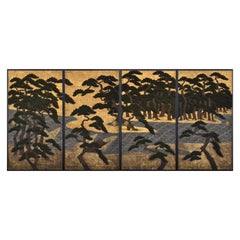
Circa 1700 Japanese Sliding Door (Fusuma) Set. Pine Trees on the Seashore.
Located in Kyoto, JP
"Pine Trees on the Seashore"
A set of four sliding doors (Japanese fusuma). Ink, color, gold-leaf and gold-fleck on paper.
Dimensions (total display si...
Category
Antique Late 17th Century Japanese Edo Paintings and Screens
Materials
Gold Leaf
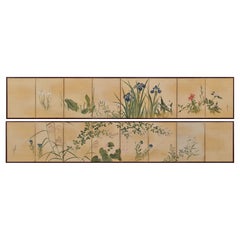
1838 Japanese Screen Pair. Flowers
Grasses of the Four Seasons.
Located in Kyoto, JP
Maruyama Oshin (1790-1838)
Flowers and grasses of the four seasons: dated 1838
Pair of eight-panel Japanese screens; ink, color and gold leaf on silk
Dimensions: each (2) H. 38.5 cm...
Category
Antique 1830s Japanese Edo Paintings and Screens
Materials
Silk
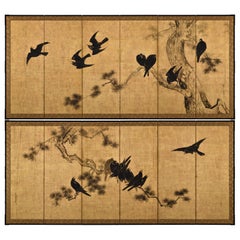
Mid 18th Century Japanese Screen Pair. Crows
Pines by Unkoku Toshuku.
Located in Kyoto, JP
Unkoku Toshuku (1722-1779)
Crows and Pines
A pair of six-panel Japanese Screens. Ink and gold leaf on paper.
Dimensions: Each Screen: H. 170.5 cm x W. 375 cm
Haha-cho or mynah birds, whose forms resemble crows in artwork, were commonly depicted in Japanese art. These types of paintings were originally modeled on paintings attributed to the 13th century Chinese painter Muqi (Mokkei), whose art was enormously influential in Japan. Crows only became a theme among Japanese artists from the later 1500s onward. They likely were inspired by these imported Chinese paintings of myna birds, which are not native to Japan, substituting the native species of crow instead.
The best known early examples of the depiction of Japanese crows are two Momoyama screen...
Category
Antique Mid-18th Century Japanese Edo Paintings and Screens
Materials
Gold Leaf
You May Also Like
Antique 19th Century Japanese Two-Panel Screen ‘Byobu’, Kano School, Edo Period
Located in London, GB
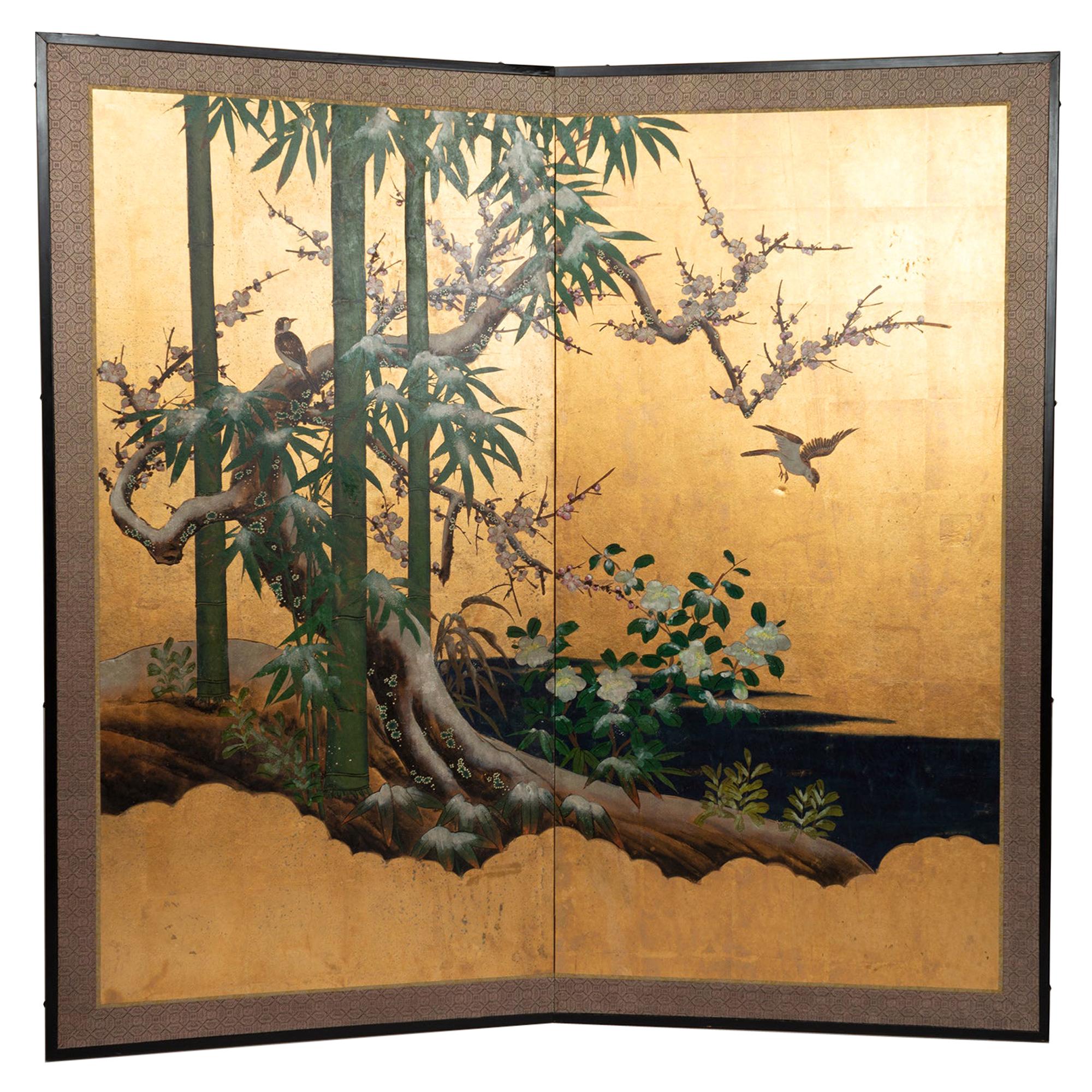
Japanese Kano School Edo period two-panel screen depicting flowering prunus and bamboo on a rock formation, with colorful birds next to a body of water. ...
Category
Antique Mid-19th Century Japanese Edo Paintings and Screens
Materials
Gold Leaf

Pair of Japanese Edo Rimpa School Screens after Tawaraya Sōtatsu
Located in Rio Vista, CA
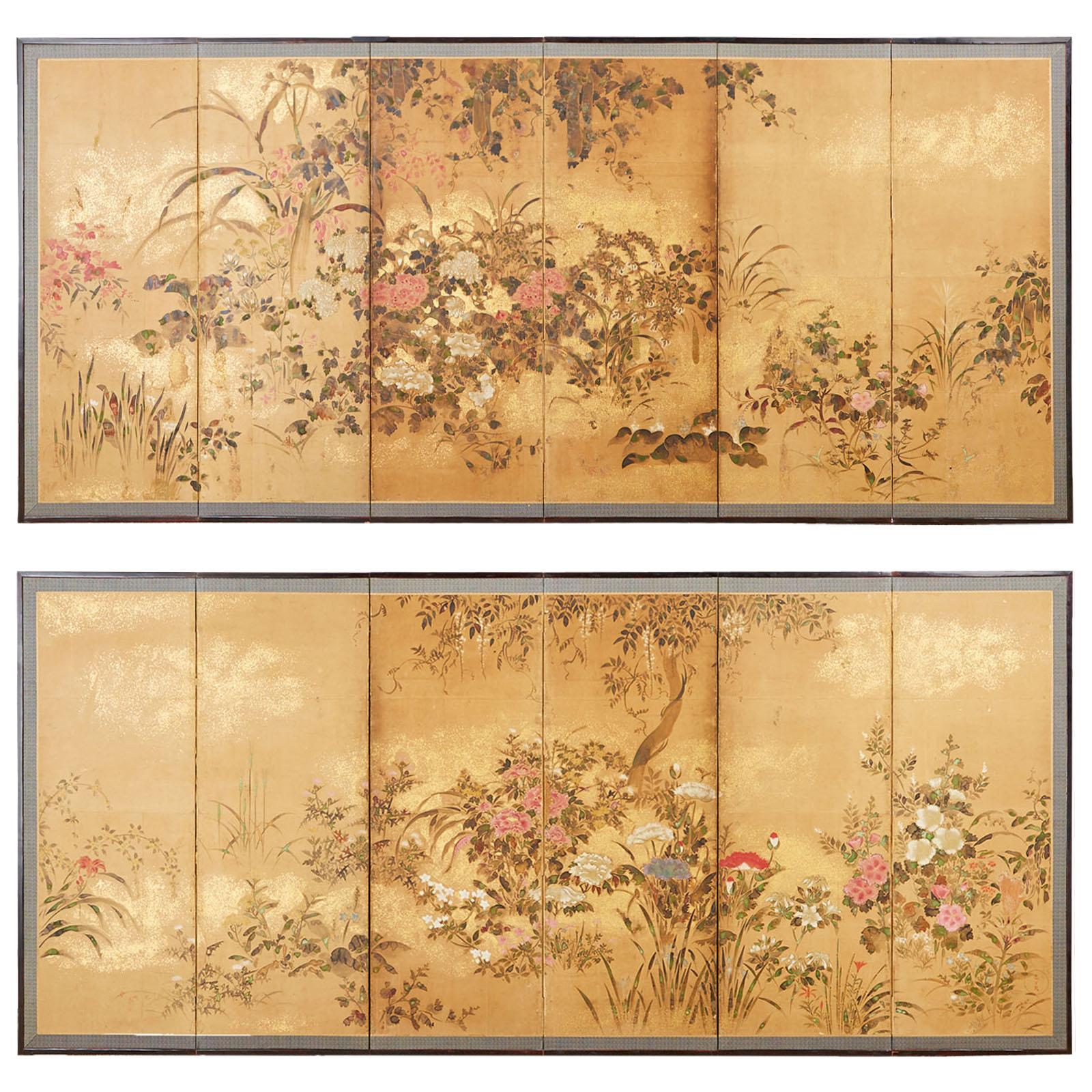
Impressive pair of 17th century Japanese Edo period Rinpa school screens made in the manner and style of Autumn Grasses by Tawaraya Sōtatsu (1570-1640). Beautifully decorated with wi...
Category
Antique 17th Century Japanese Edo Paintings and Screens
Materials
Gold Leaf
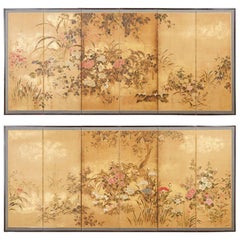
Pair of Japanese Edo Six Panel Screens the Seven Sages
Located in Rio Vista, CA
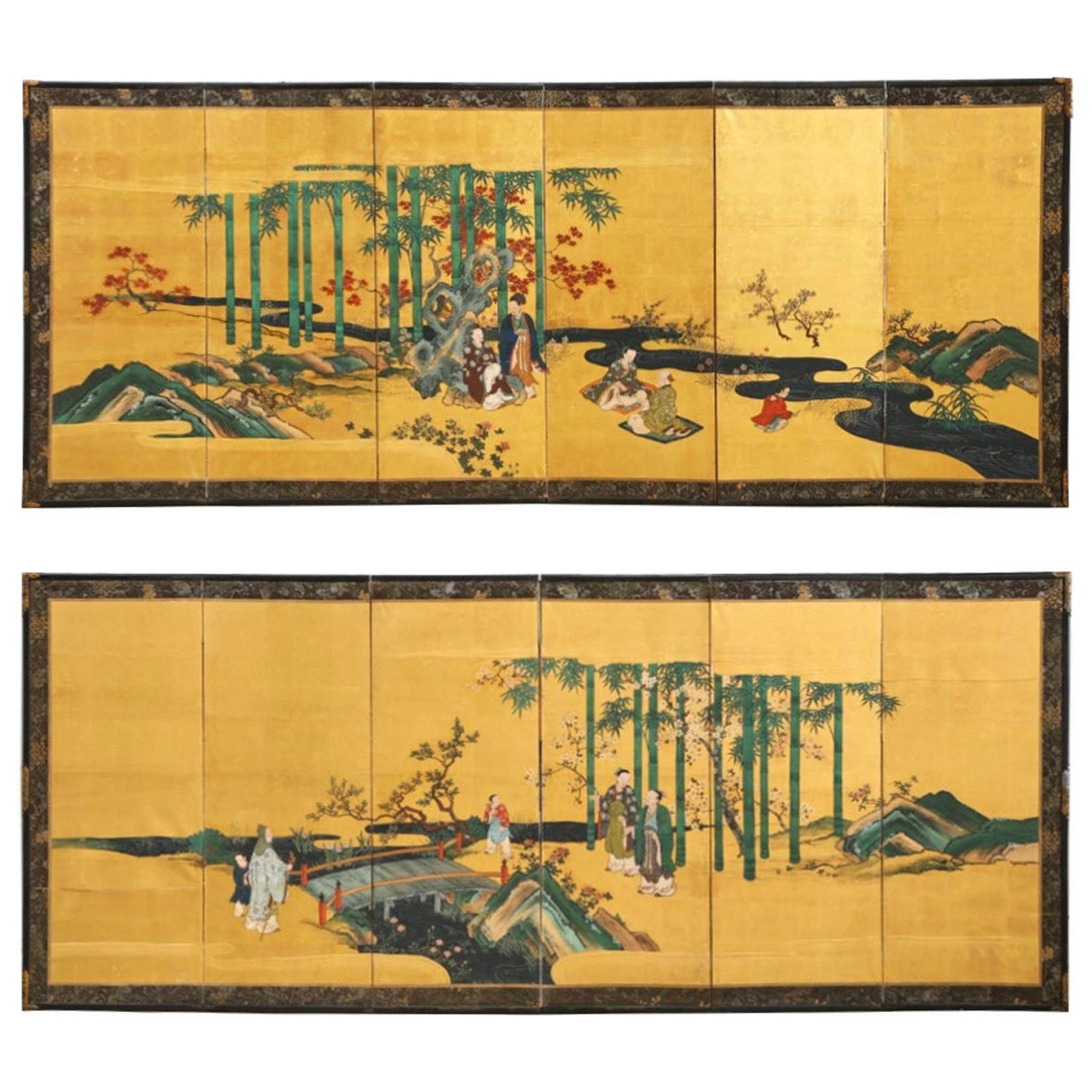
Fantastic pair of 19th century Japanese late Edo/early Meiji period six-panel screens titled The seven sages of the bamboo grove. The Kano school screens...
Category
Antique 19th Century Japanese Edo Paintings and Screens
Materials
Brass, Gold Leaf

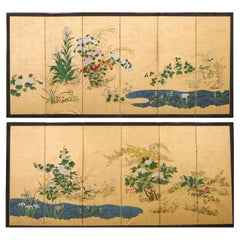
Pair of Japanese Meiji Screens Blossoms of Spring, Summer and Autumn
Located in Rio Vista, CA
Amazing pair of late 19th/early 20th century Japanese Meiji period byobu screens depicting flowering plants and blossoms of the spring, summer, and autumn. Painted in the Nihonga sch...
Category
Antique 19th Century Japanese Meiji Paintings and Screens
Materials
Brass, Gold Leaf
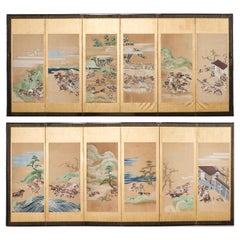
Pair of Japanese Edo/Tokugawa Screens Tale of Heiki
Located in Rio Vista, CA
Monumental pair of late 18th century Japanese Edo/Tokugawa period byobu screens depicting the battles between Taira and Minamoto. The screens have six panels each with individual sce...
Category
Antique 19th Century Japanese Edo Paintings and Screens
Materials
Brass, Gold Leaf
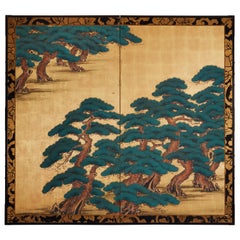
Japanese Two Panel Screen: Pine on Heavy Gold
Located in Hudson, NY
Kano School painting in mineral pigments on mulberry paper with heavy gold leaf and a silk brocade border made of antique monk's robes.
Category
Antique Late 19th Century Japanese Paintings and Screens
Materials
Gold Leaf
More Ways To Browse
Edo Screen Gold
18th Century Japanese Screens
Painting Antique Pine Furniture
18th Century Hand Screen
Pair Of Japanese Screens
Japanese Screens Pines
Japanese Screen Tree
Japanese Kano Screen
Kano School Screen
Edo Japanese Screen Kano
Japanese Screen Kano School
Japanese Plum Blossom
20th Century Japanese Folding Screen
Byobu Panel
Four Panel Asian Art
Gold Folding Screen
China Silk Panels
Chinese Silk Panel