Items Similar to 18th Century Nagasaki School Tiger Screen
Want more images or videos?
Request additional images or videos from the seller
1 of 9
18th Century Nagasaki School Tiger Screen
$3,128
$8,26062% Off
£2,364.41
£6,243.6062% Off
€2,712.07
€7,161.6762% Off
CA$4,360.56
CA$11,514.7862% Off
A$4,746.83
A$12,534.7862% Off
CHF 2,519.62
CHF 6,653.4662% Off
MX$57,114.53
MX$150,820.3562% Off
NOK 31,926.98
NOK 84,308.4562% Off
SEK 29,254.13
SEK 77,250.3662% Off
DKK 20,253.59
DKK 53,482.9462% Off
About the Item
18th Century Nagasaki School Tiger Screen
Period: Edo
Size: 165 x 172 cm (65 x 67.7 inches)
SKU: PTA69
This exceptional 18th-century screen from the Edo period is a remarkable representation of the Nagasaki school of painting, which often featured exotic themes uncommon in traditional Japanese art of the time. With its two-panel breadth, this screen captures the raw power and majestic presence of tigers, animals not native to Japan but whose imagery was popularized through cultural exchange with neighboring China and Korea.
Intricately inked on paper, the tigers are depicted with dynamic energy and fierce grace, a testament to the skilled artists who created vivid and lifelike representations from their imaginations and secondhand accounts. The tigers, symbols of strength and courage, are set against a minimalist backdrop, bringing their commanding presence to the forefront.
This unique piece not only stands as an art collector's treasure but also as a historical narrative that reflects Japan's fascination with foreign wildlife during the Edo period. Its existence celebrates cross-cultural influences and the adventurous spirit of Japanese artistry.
- Dimensions:Height: 60.04 in (152.5 cm)Width: 68.12 in (173 cm)Depth: 0.79 in (2 cm)
- Style:Edo (Of the Period)
- Materials and Techniques:
- Place of Origin:
- Period:
- Date of Manufacture:Unknown
- Condition:Minor losses. Minor fading. Condition report upon request.
- Seller Location:Fukuoka, JP
- Reference Number:1stDibs: LU8121239721132
About the Seller
5.0
Vetted Professional Seller
Every seller passes strict standards for authenticity and reliability
Established in 1998
1stDibs seller since 2023
62 sales on 1stDibs
Typical response time: 1 hour
- ShippingRetrieving quote...Shipping from: Tambon Hang Dong, Thailand
- Return Policy
More From This Seller
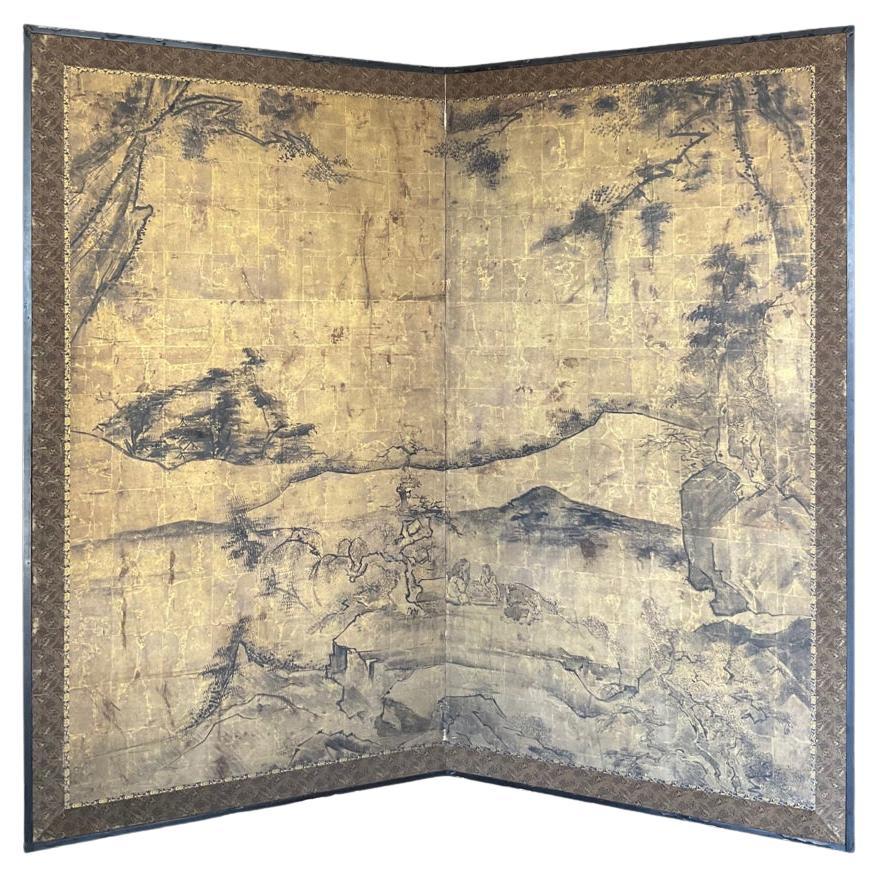
View AllEarly Edo Period Chinese-Inspired Screen
Located in Fukuoka, JP
This remarkable screen from the early Edo period, circa the 17th century, showcases the influence of early Chinese art forms with its intricate ink work on a gold leafed surface. The...
Category
Antique 17th Century Japanese Edo Paintings and Screens
Materials
Gold Leaf
$3,496 Sale Price
56% Off
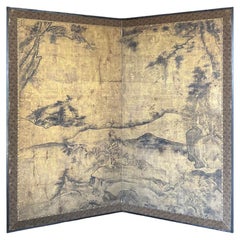
Late 19th century (Meiji period) painting depicting tiger
Located in Fukuoka, JP
Antique Tiger Painting on Paper – Meiji Period
A striking depiction of a tiger, painted on paper and signed by the artist. This work was originally part of a Japanese byobu folding ...
Category
Antique Late 19th Century Japanese Meiji Paintings and Screens
Materials
Gold Leaf
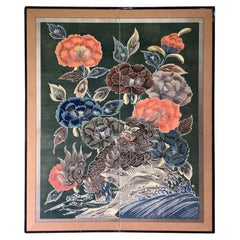
Late Edo period Tsutsugaki 筒描 Auspicious Shishi Batik Screen
Located in Fukuoka, JP
Auspicious Shishi Batik Screen
Period: Late Edo
Size: 145x173 cm (57x68 inches)
SKU: PTA62
Step into the mythical world of late Edo Japan with our radiant batik screen depicting the...
Category
Antique 19th Century Japanese Edo Paintings and Screens
Materials
Cotton, Wood
$2,690 Sale Price
50% Off
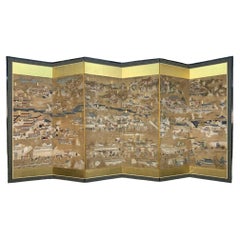
Edo Period Kyoto Screen (2/2)
Located in Fukuoka, JP
Edo Period Kyoto Screen
Period: Edo period
Size: 343 x 176 cm (134.6 x 69 inches)
This stunning Edo period screen depicts typical scenes of daily life...
Category
Antique 18th Century Japanese Edo Paintings and Screens
Materials
Paper, Wood, Silk
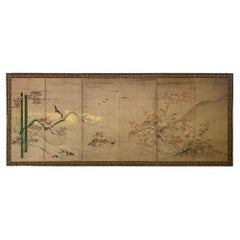
Edo Period Seasonal Transition Screen
Located in Fukuoka, JP
Edo Period Seasonal Transition Screen
Period: Edo
Size: 368 x 153 cm
This exquisite six-panel screen, adorned with golden flakes, beautifully portrays the seamless transitio...
Category
Antique 19th Century Japanese Edo Paintings and Screens
Materials
Gold Leaf
$3,208 Sale Price
61% Off
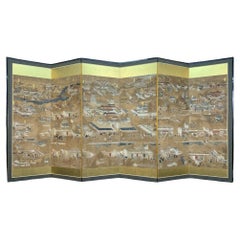
Edo Period Kyoto Screen
Located in Fukuoka, JP
Edo Period Kyoto Screen
Period: Edo period
Size: 343 x 176 cm (134.6 x 69 inches)
SKU: RJ69
This stunning Edo period screen depicts typical scenes of d...
Category
Antique 18th Century Japanese Edo Paintings and Screens
Materials
Silk, Wood, Paper
$9,450
You May Also Like
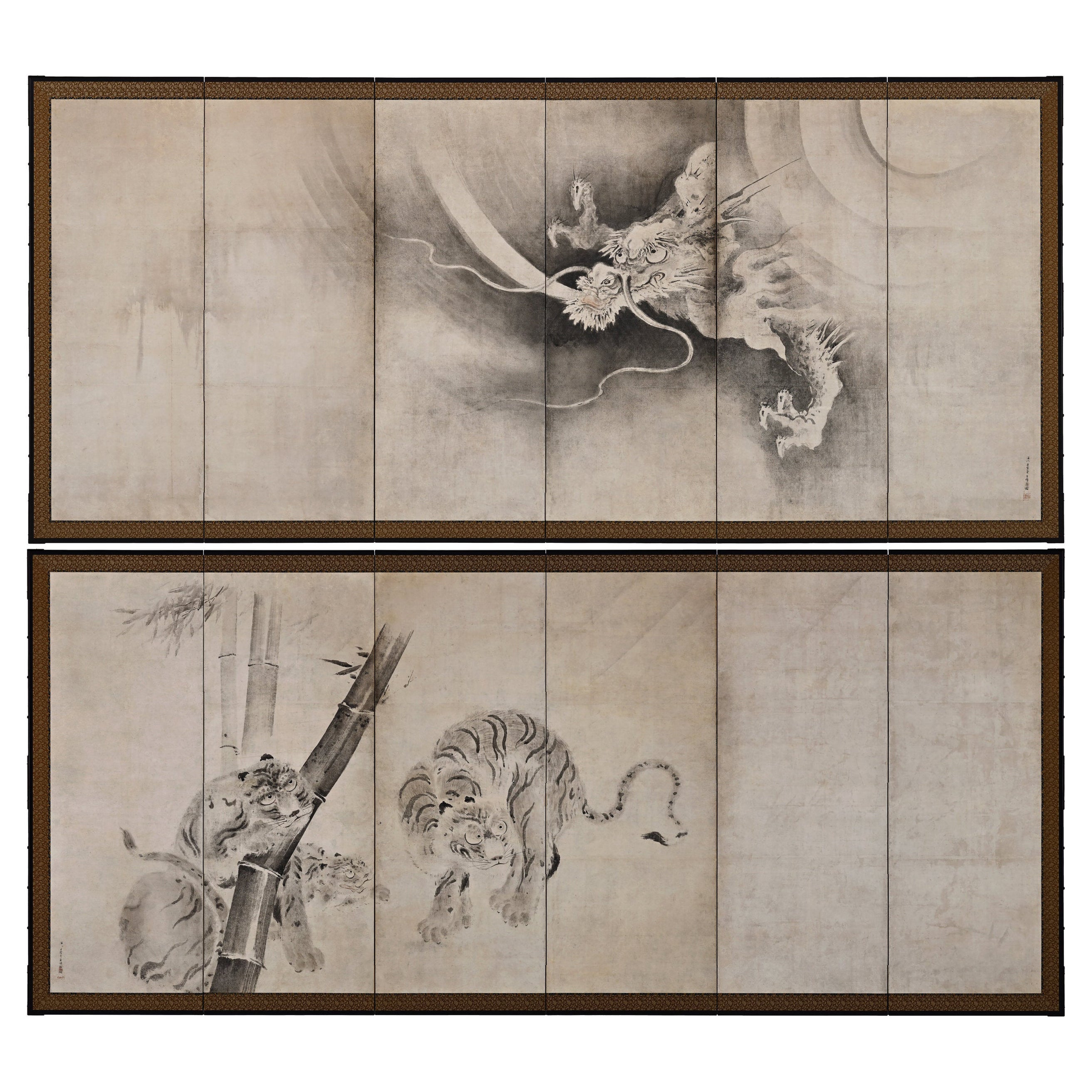
17th Century Japanese Screen Pair. Tiger
Dragon by Kaiho Yusetsu
Located in Kyoto, JP
Kaiho Yusetsu (1598-1677)
Tiger and Dragon
Early Edo Period, Circa 1650
A Pair of Six-fold Japanese Screens. Ink and slight color on paper.
Dimensions:
Each screen: H. 171 cm x W. 380 cm (67.5’’ x 149.5’’)
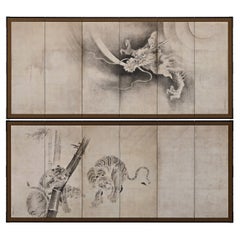
In this pair of early Edo period Japanese screens a group of tigers prowl in a bamboo grove whipped with fierce wind, while a dragon claws through clouds and mist. The dragon embodies elemental qualities - looming out of the mist, the coils of its body disappearing in the clouds. The dragon is calling for rain, symbolizing spring which is considered the fountain of life. On the other side, the tigers calls for the wind, symbolizing autumn which is considered the end of life. Tigers were familiar motifs within Japanese art from ancient times though the animals were imaginary to the people in the 17th century. While dragons and tigers are usually associated as sacred and ferocious, in this painting, both animals have rather amusing expressions. The tigers appear to glare at the dragon with cat-like eyes, and the look on the swirling dragon’s face appears almost affectionate - lending a playful flair to an otherwise magnificent theme.
The tiger and dragon are cosmological symbols of the balancing forces in the world. Screens such as this were originally meant to express the fluctuating nature of the world. For Japanese in the early Edo period, they likely suggested the powers of the cosmos. In Japan the tiger and dragon motif was originally absorbed into the circles of Zen monasteries before spreading into the secular world. The theme especially appealed to the military classes with the Kano school, the official painters to the Shogun and the samurai, being the leading contributors. The painter of this pair of screens, Kaiho Yusetsu (1598-1677), was closely patronized by the third Shogun Tokugawa Iemitsu. In his later years he worked with Kano school artists...
Category
Antique Mid-17th Century Japanese Edo Paintings and Screens
Materials
Silk, Wood, Paper
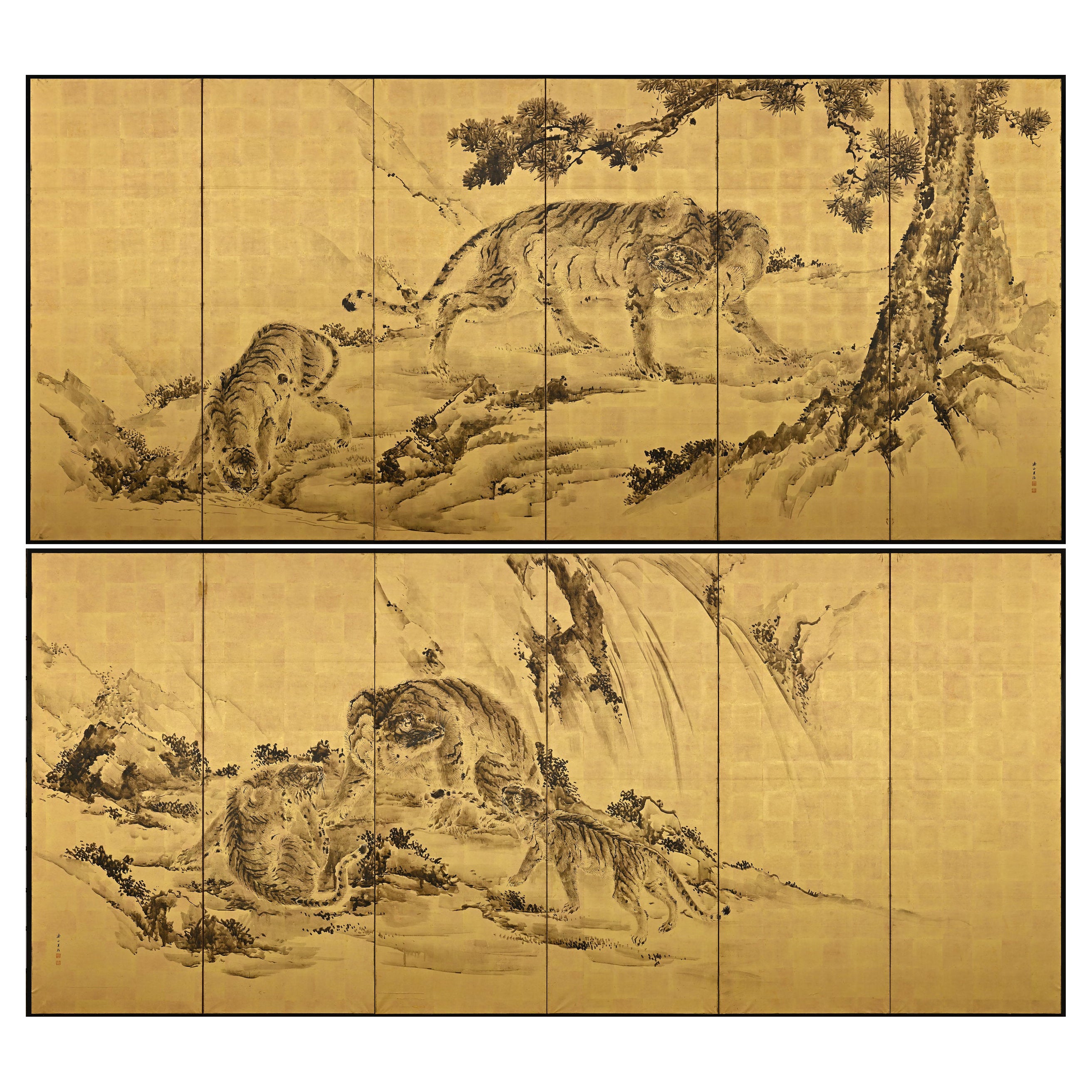
Japanese Screen Pair, Tigers by Kishi Renzan, Late Edo Period
Located in Kyoto, JP
Kishi Renzan (1804-1859)
Tigers
Pair of six-panel Japanese screens.
Ink and gold-leaf on paper.
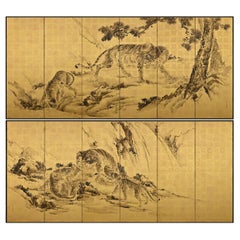
In this monochromatic pair of six-fold Japanese screens painted on gold-leaf, Kishi Renzan has created a breathtaking composition of a family of tigers. The screens are filled with a sense of drama which is conveyed by both the subject matter and the wet, expressive brushwork. The running mountain stream and the towering waterfall allude to refreshment during the summer months and we feel the tiger families familiarity and security within their environment. Renzan’s master, Kishi Ganku...
Category
Antique Mid-19th Century Asian Edo Paintings and Screens
Materials
Gold Leaf
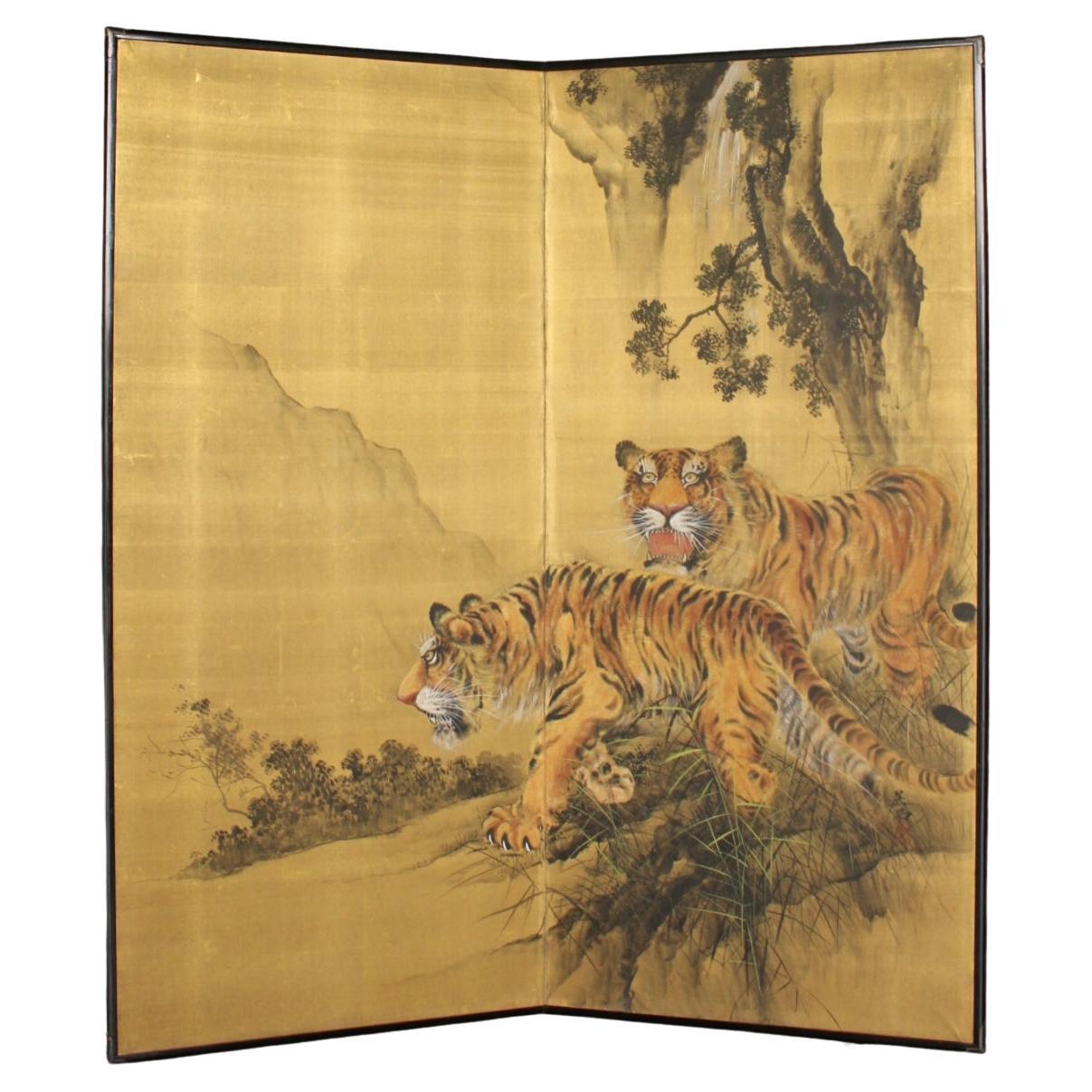
B13 Japanese Antiques 2panels, silk, folding Screen with Tiger
Located in Niiza, JP
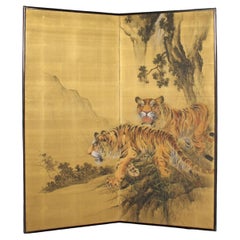
Material: Silk on wooden frame
One piece: W685×H1525mm×D20mm,
Unfolded size: W1370mm
Folded size: W685×H1525×D40mm, 5kg
Packaging estimate (sandwiched with 5-10mm plywood): 12cm x 77...
Category
20th Century Japanese Paintings and Screens
Materials
Silk
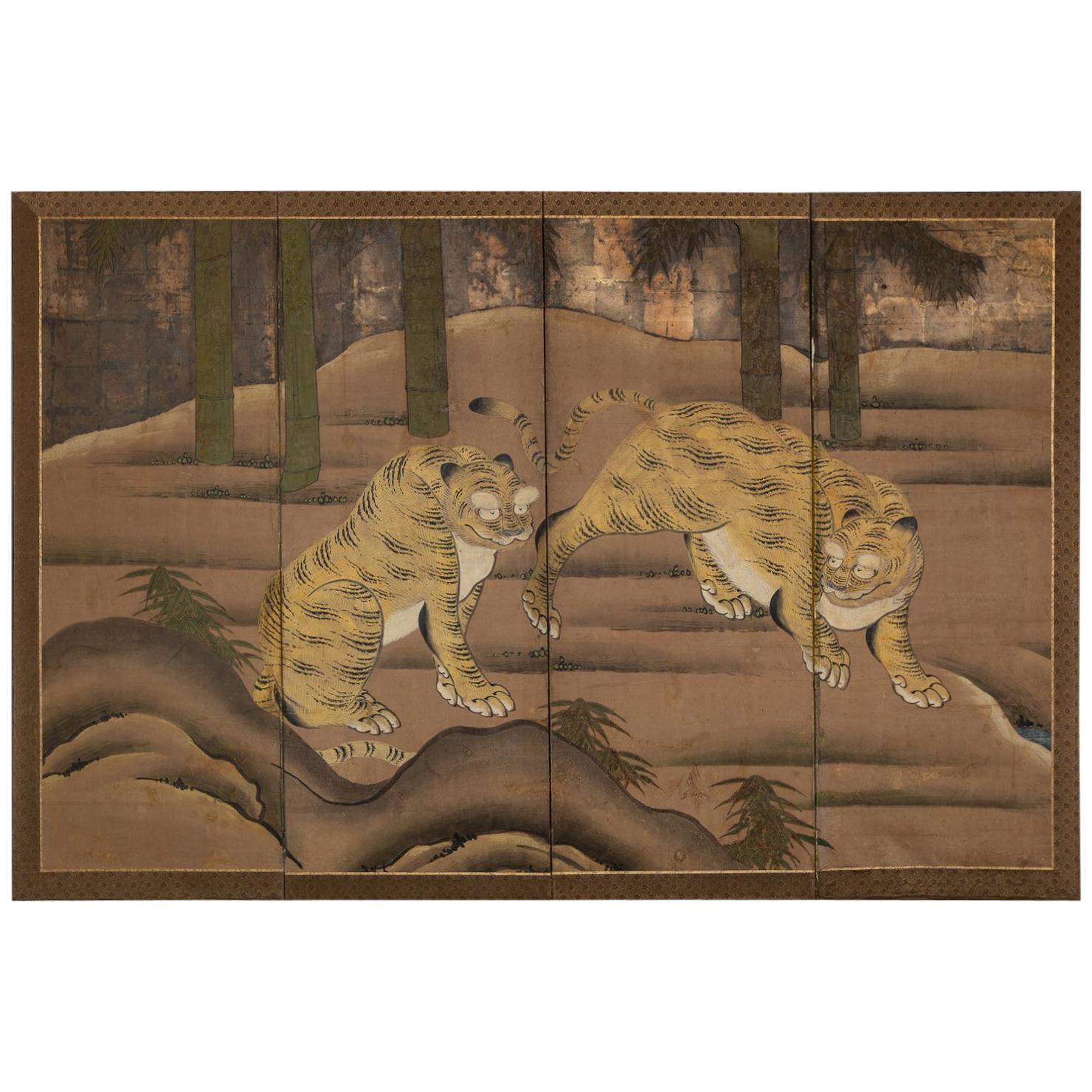
Japanese Four Panel Screen: Two Tigers
Located in Hudson, NY
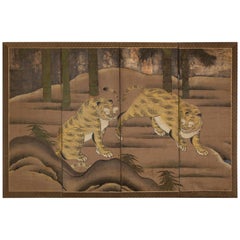
Two tigers exchanging amorous glances. Kano School painting.
Category
Antique 18th Century Japanese Paintings and Screens
Materials
Paper
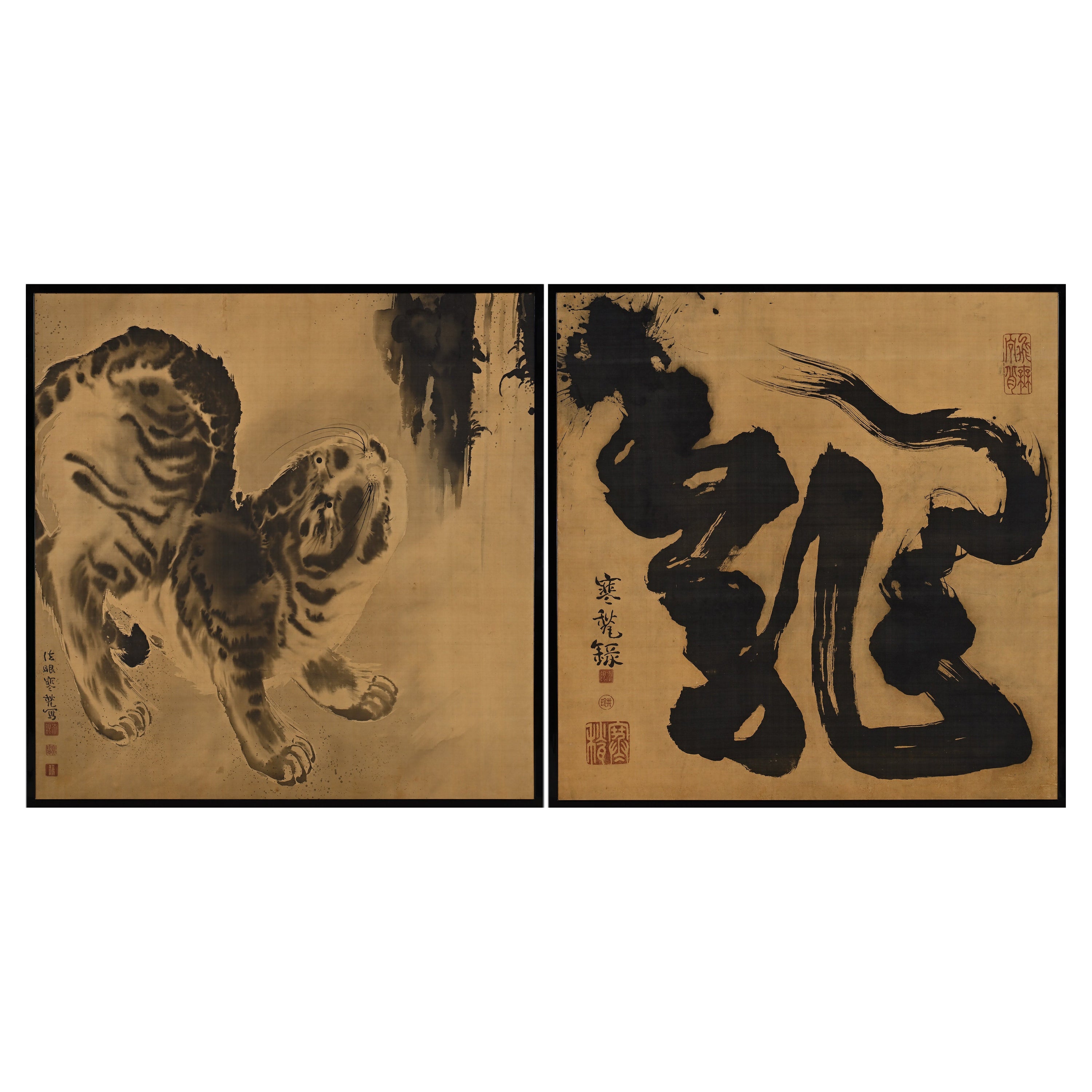
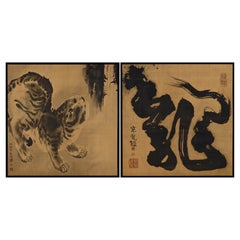
19th Century Japanese Paintings. Zenga Tiger and Dragon by Inoue Kanshu.
Located in Kyoto, JP
Inoue Kanshu (1807-1880)
Zenga Tiger and Dragon
19th century
Pair of framed Japanese paintings. Ink on silk.
Dimensions (each): W. 114 cm x H. 115 cm (45” x 45”)
Presented here ...
Category
Antique Mid-19th Century Japanese Meiji Paintings and Screens
Materials
Silk
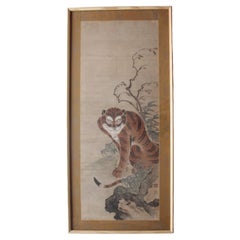
Japanese Antiques Suzuki Kiryu(鈴木冀龍), Tiger painting , Framed on Paper
Located in Niiza, JP
Material: frame/Acrylic and cloth , ink on paper
There is very little information available
about this artist.
He is from Oita, so it is likely that he is a member of
the Nagasak...
Category
Antique 19th Century Japanese Paintings and Screens
Materials
Paper
More Ways To Browse
Wood Screen
The Tiger
Tiger Furniture
Antique Tiger
Asian Tiger
Tiger Woods
Hand Painted Tiger
18th Century Hand Screen
Antique Tiger Wood
Japanese Tiger
Antique Tiger Wood Furniture
Tiger Screen
Japanese Tiger Painting
Japanese Tiger Screen
Used Lattice Panels
Coromandel Lacquer
Calligraphy
Mineral Pigments On Silk