Items Similar to 19th Century Japanese Paintings. Zenga Tiger and Dragon by Inoue Kanshu.
Want more images or videos?
Request additional images or videos from the seller
1 of 10
19th Century Japanese Paintings. Zenga Tiger and Dragon by Inoue Kanshu.
$17,500per set
£13,332.09per set
€15,215.07per set
CA$24,591.64per set
A$26,800.56per set
CHF 14,192.05per set
MX$321,902.97per set
NOK 179,674.53per set
SEK 165,193.06per set
DKK 113,639.72per set
About the Item
Inoue Kanshu (1807-1880)
Zenga Tiger and Dragon
19th century
Pair of framed Japanese paintings. Ink on silk.
Dimensions (each): W. 114 cm x H. 115 cm (45” x 45”)
Presented here are a pair of tiger and dragon (calligraphic) paintings by Inoue Kanshu, a Zen monk who held the honorary title of Hogan at Shokokuji temple in Kyoto during the early Meiji period. The paintings were originally mounted as two sides of a Japanese standing screen (tsuitate). Painted on expensive silk and on a grand scale we can only imagine that the original screen stood in an important temple.
Zen paintings or Zenga represent one of the world’s most fascinating religious and artistic traditions. Created to spread the teachings of Zen Buddhism, monk-artists rejected the rigid and serious style of traditional religious paintings, which catered to an elite audience. Instead, they favored playful, bold, and relatively simple designs that would appeal to commoners. Zenga aim to communicate the vision of Zen masters and reveal the essence of Zen Buddhism.
Often depicted winding through billowing clouds, dragons are one of the four supernatural animals in Chinese lore, associated with the male principle yang. From this Taoist association, dragon imagery was adopted by painters in the Zen tradition. Kanshu, by writing the word "dragon," leverages the pictographic origin of the Chinese character and the gestural quality of calligraphy to suggest a dragon floating dramatically through the composition. Kanshu prioritizes not the proper rendering of the character but its ability to rise above its two-dimensional form, conveying the strength and movement of his brush.
The pale, seemingly hazy outlines and detail of the monochrome ink tiger and waterfall painting might initially appear casually brushed, but closer examination reveals Kanshu’s expert brush control. He had a real talent for painting which transcends more typically amateurish Zen artists. In this painting he exclusively uses a technique where he holds two brushes simultaneously—one with ink and the other with only water. By alternating between the brushes, he first outlines the general structure with ink, then uses the water brush to blend the still-wet ink. This process smudges the ink into tones and washes, softening it and varying the dark and light until the final shaping is achieved.
Shokokuji is the head temple of the Rinzai sect and oversees many sub-temples including the famous Kinkakuji and Ginkakuji. As well as holding a high position there, Inoue Kanshu was a teacher at the Imperial Palace in Kyoto. He remained single his whole life, devoting himself to his training and painting and calligraphy. At the time, his way of life was so unconventional that it was difficult for the general public to understand, but his style of painting, which strove to capture the essence of things, is still innovative even to this day.
- Dimensions:Height: 45.28 in (115 cm)Width: 44.89 in (114 cm)Depth: 0.4 in (1 cm)
- Sold As:Set of 2
- Style:Meiji (Of the Period)
- Materials and Techniques:
- Place of Origin:
- Period:
- Date of Manufacture:Circa 1860
- Condition:Refinished. Wear consistent with age and use. The paintings have recently been restored and remounted in Kyoto.
- Seller Location:Kyoto, JP
- Reference Number:1stDibs: LU2472341336752
About the Seller
5.0
Recognized Seller
These prestigious sellers are industry leaders and represent the highest echelon for item quality and design.
Gold Seller
Premium sellers maintaining a 4.3+ rating and 24-hour response times
Established in 2001
1stDibs seller since 2016
75 sales on 1stDibs
Typical response time: 6 hours
- ShippingRetrieving quote...Shipping from: Kyoto, Japan
- Return Policy
More From This Seller
View All17th Century Japanese Screen Pair. Tiger
Dragon by Kaiho Yusetsu
Located in Kyoto, JP
Kaiho Yusetsu (1598-1677)
Tiger and Dragon
Early Edo Period, Circa 1650
A Pair of Six-fold Japanese Screens. Ink and slight color on paper.
Dimensions:
Each screen: H. 171 cm x W. 380 cm (67.5’’ x 149.5’’)
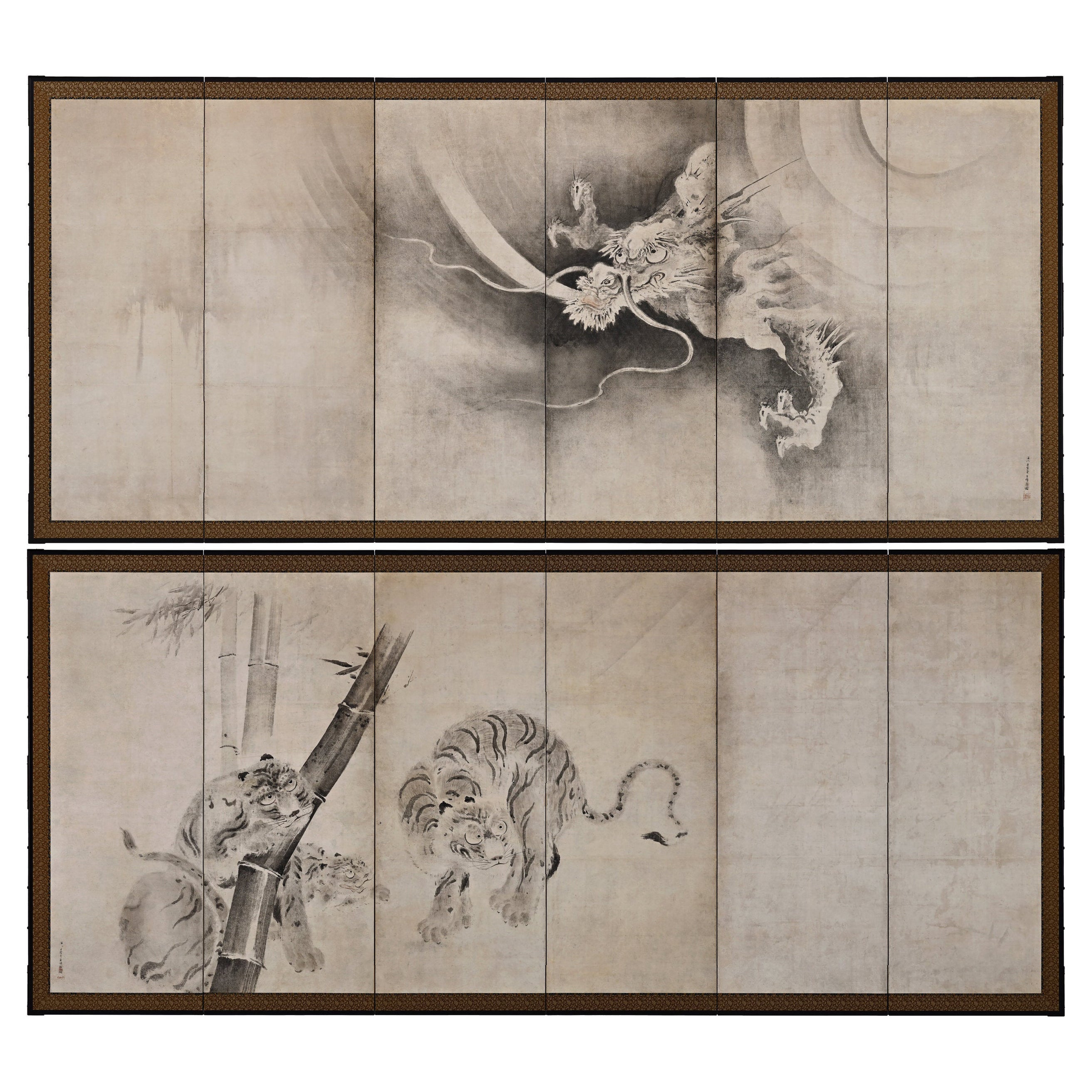
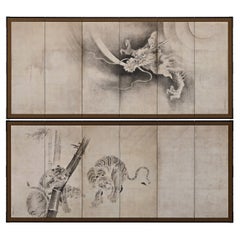
In this pair of early Edo period Japanese screens a group of tigers prowl in a bamboo grove whipped with fierce wind, while a dragon claws through clouds and mist. The dragon embodies elemental qualities - looming out of the mist, the coils of its body disappearing in the clouds. The dragon is calling for rain, symbolizing spring which is considered the fountain of life. On the other side, the tigers calls for the wind, symbolizing autumn which is considered the end of life. Tigers were familiar motifs within Japanese art from ancient times though the animals were imaginary to the people in the 17th century. While dragons and tigers are usually associated as sacred and ferocious, in this painting, both animals have rather amusing expressions. The tigers appear to glare at the dragon with cat-like eyes, and the look on the swirling dragon’s face appears almost affectionate - lending a playful flair to an otherwise magnificent theme.
The tiger and dragon are cosmological symbols of the balancing forces in the world. Screens such as this were originally meant to express the fluctuating nature of the world. For Japanese in the early Edo period, they likely suggested the powers of the cosmos. In Japan the tiger and dragon motif was originally absorbed into the circles of Zen monasteries before spreading into the secular world. The theme especially appealed to the military classes with the Kano school, the official painters to the Shogun and the samurai, being the leading contributors. The painter of this pair of screens, Kaiho Yusetsu (1598-1677), was closely patronized by the third Shogun Tokugawa Iemitsu. In his later years he worked with Kano school artists...
Category
Antique Mid-17th Century Japanese Edo Paintings and Screens
Materials
Silk, Wood, Paper
Japanese Screen Pair, Tigers by Kishi Renzan, Late Edo Period
Located in Kyoto, JP
Kishi Renzan (1804-1859)
Tigers
Pair of six-panel Japanese screens.
Ink and gold-leaf on paper.
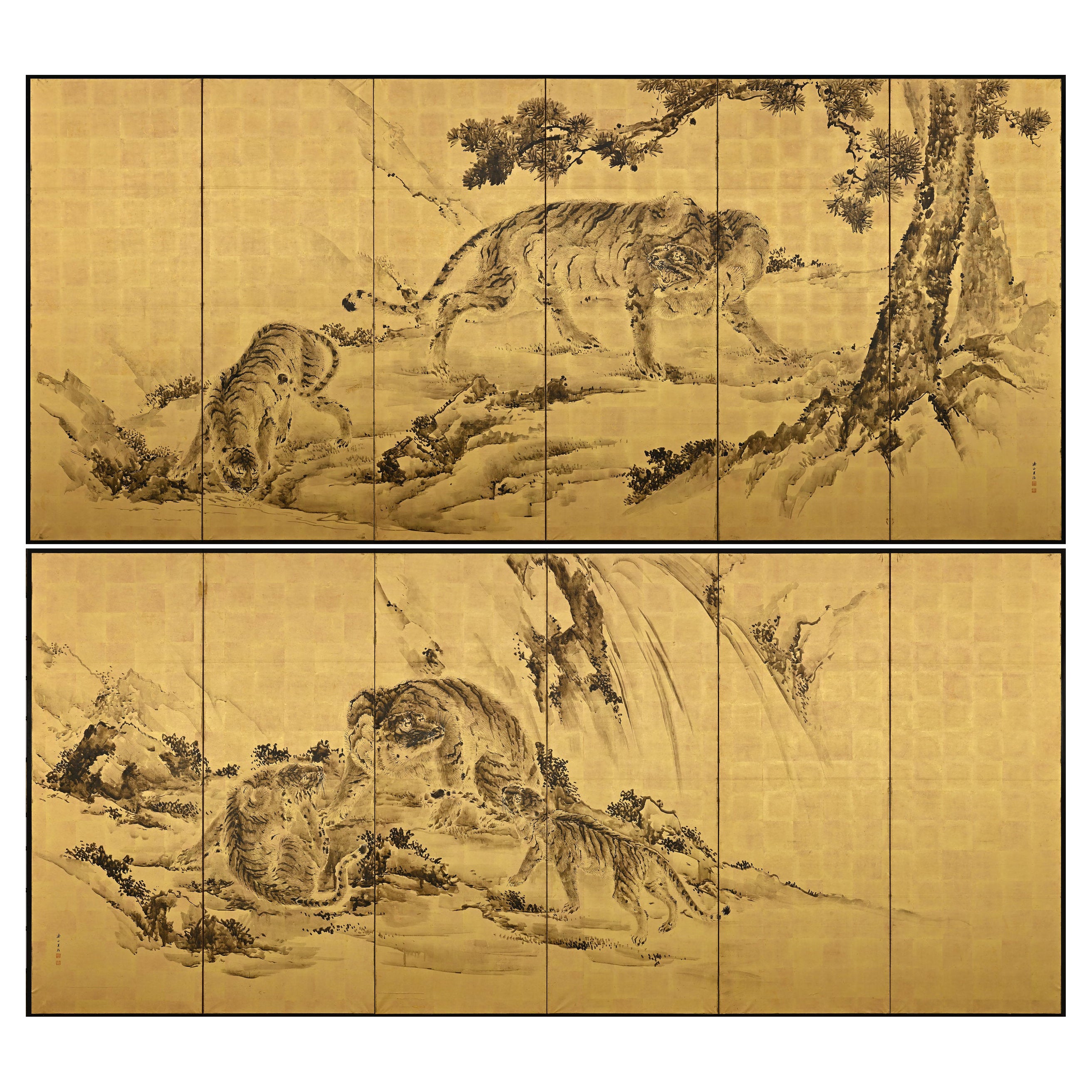
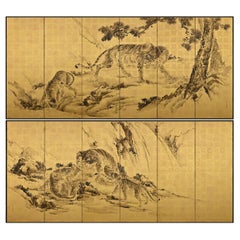
In this monochromatic pair of six-fold Japanese screens painted on gold-leaf, Kishi Renzan has created a breathtaking composition of a family of tigers. The screens are filled with a sense of drama which is conveyed by both the subject matter and the wet, expressive brushwork. The running mountain stream and the towering waterfall allude to refreshment during the summer months and we feel the tiger families familiarity and security within their environment. Renzan’s master, Kishi Ganku...
Category
Antique Mid-19th Century Asian Edo Paintings and Screens
Materials
Gold Leaf
Yamamoto Shunkyo (1871-1933) Japanese Framed Painting Pair, Carp and Bamboo
Located in Kyoto, JP
Two framed panels by Yamamoto Shunkyo depicting a carp (koi) leaping from a river.
Ink and gold leaf on paper.
Instinctively brushed in a freehand s...
Category
Early 20th Century Japanese Meiji Paintings and Screens
Materials
Gold Leaf
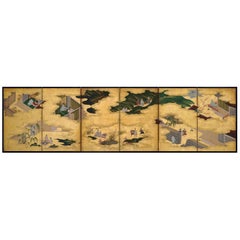
Japanese Screen Painting, Circa 1700
Tales of Ise
by Tosa Mitsusuke
By Tosa Mitsusuke 1
Located in Kyoto, JP
A six-fold Japanese screen by Tosa Mitsusuke (1675-1710), Japan 17th-18th century, Edo period.
The signature reads Shoroku-i ge Tosa sa Konoe Shogen Mit...
Category
Antique Late 17th Century Japanese Edo Paintings and Screens
Materials
Gold Leaf
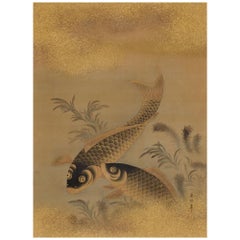
Japanese Painting, Hanging Scroll, Mid 19th Century, Koi and Water Plants
By Iwase Hirotaka
Located in Kyoto, JP
Iwase Hirotaka (1808-1877)
Koi and Water Plants
Hanging scroll, ink, color, gold wash and gold flecks on silk
Inscription: Hirotaka
Seal: Ille...
Category
Antique 1860s Japanese Edo Paintings and Screens
Materials
Silk
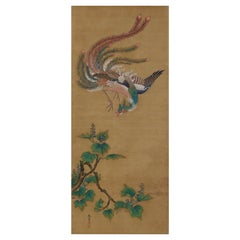
19th Century Japanese Silk Painting by Kano Chikanobu, Phoenix
Paulownia
Located in Kyoto, JP
Birds & Flowers of the seasons
Pheasants & Plum in Snow
Unframed painting. Ink, pigment and gofun on silk
Kano Chikanobu 1819-1888
Signature...
Category
Antique Mid-19th Century Asian Edo Paintings and Screens
Materials
Silk
You May Also Like
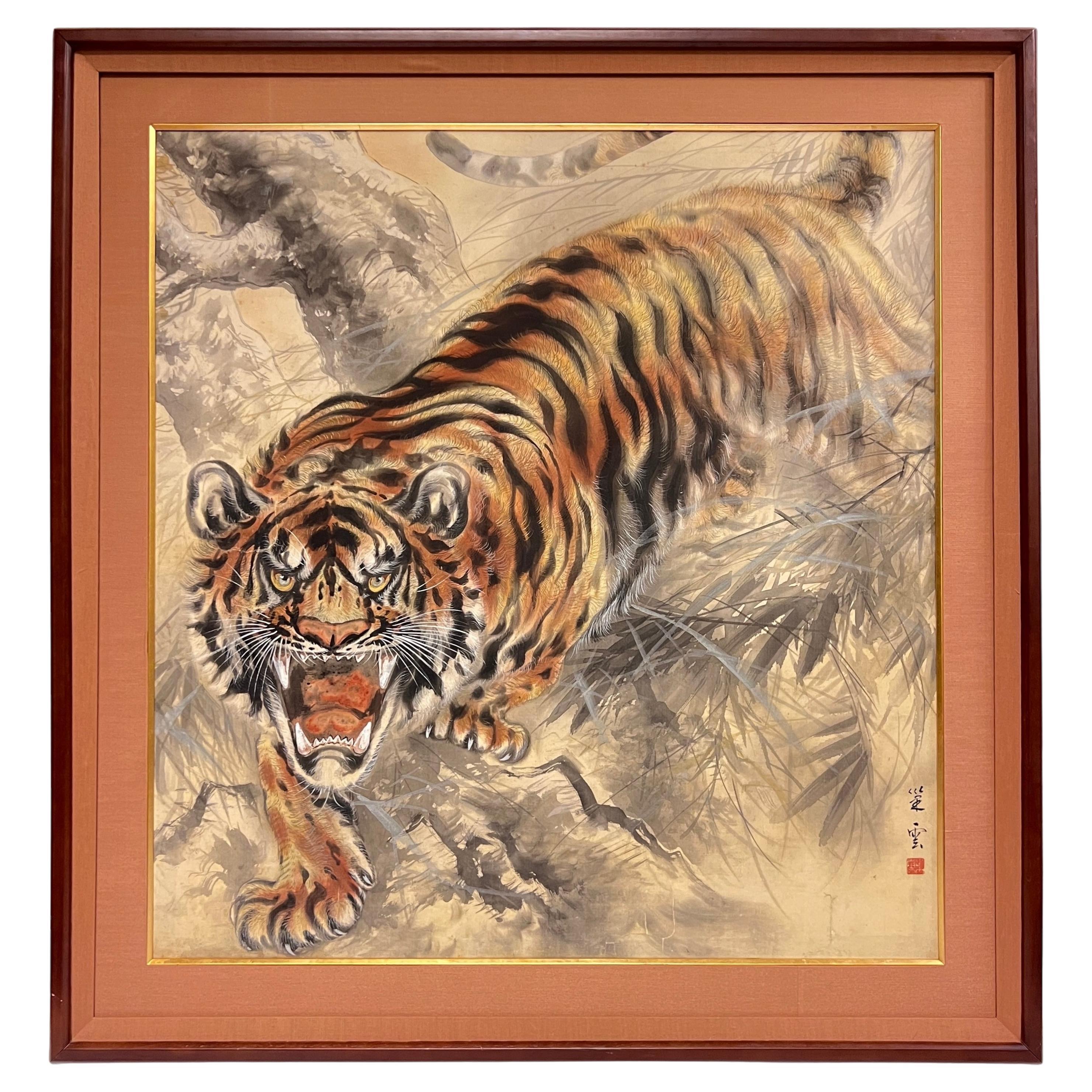
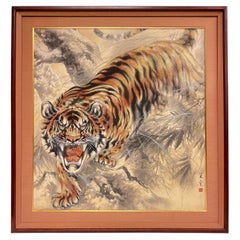
Japanese Painting on Linen of Roaring Tiger
Located in New York, NY
Japanese watercolor and ink painting on fine linen, mounted in wooden frame with brick red finish with gilt-lined matte, signed in lower right, with its original box and documentatio...
Category
20th Century Japanese Paintings and Screens
Materials
Linen
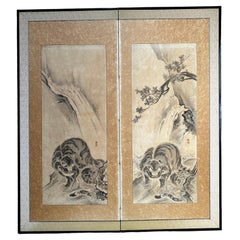
18th Century Nagasaki School Tiger Screen
Located in Fukuoka, JP
18th Century Nagasaki School Tiger Screen
Period: Edo
Size: 165 x 172 cm (65 x 67.7 inches)
SKU: PTA69
This exceptional 18th-century screen from the Edo...
Category
Antique Early 18th Century Japanese Edo Paintings and Screens
Materials
Wood, Paper
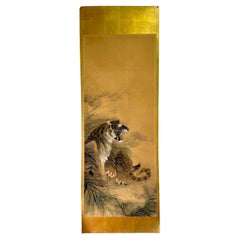
Late 19th century (Meiji period) painting depicting tiger
Located in Fukuoka, JP
Antique Tiger Painting on Paper – Meiji Period
A striking depiction of a tiger, painted on paper and signed by the artist. This work was originally part of a Japanese byobu folding ...
Category
Antique Late 19th Century Japanese Meiji Paintings and Screens
Materials
Gold Leaf
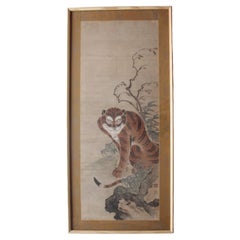
Japanese Antiques Suzuki Kiryu(鈴木冀龍), Tiger painting , Framed on Paper
Located in Niiza, JP
Material: frame/Acrylic and cloth , ink on paper
There is very little information available
about this artist.
He is from Oita, so it is likely that he is a member of
the Nagasak...
Category
Antique 19th Century Japanese Paintings and Screens
Materials
Paper
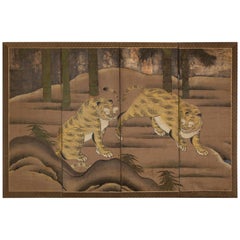
Japanese Four Panel Screen: Two Tigers
Located in Hudson, NY
Two tigers exchanging amorous glances. Kano School painting.
Category
Antique 18th Century Japanese Paintings and Screens
Materials
Paper
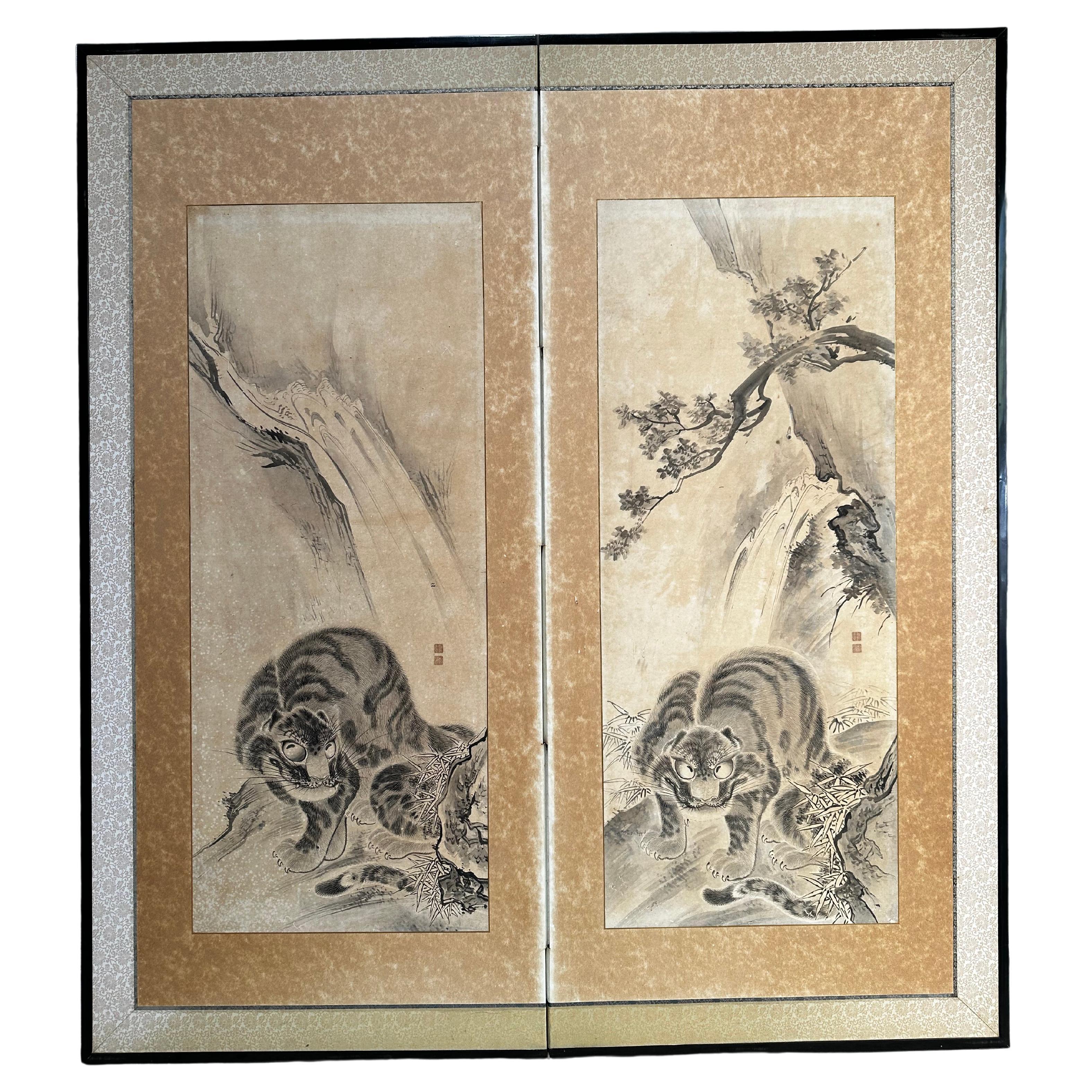
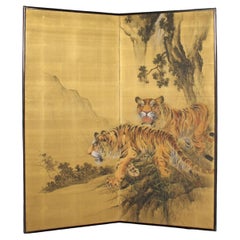
B13 Japanese Antiques 2panels, silk, folding Screen with Tiger
Located in Niiza, JP
Material: Silk on wooden frame
One piece: W685×H1525mm×D20mm,
Unfolded size: W1370mm
Folded size: W685×H1525×D40mm, 5kg
Packaging estimate (sandwiched with 5-10mm plywood): 12cm x 77...
Category
20th Century Japanese Paintings and Screens
Materials
Silk
More Ways To Browse
Asian Tiger
Japanese Dragon
Antique Japanese Dragon
Hand Painted Tiger
Dragon Silk
Meiji Dragon
Japanese 19th Century Meiji Period Silk Painting
Pair Of Tigers
Japanese Tiger
Pair Of Japanese Paintings
Tiger Screen
Meiji Tiger
Tiger Painting Midcentury
Japanese Tiger Painting
Japanese Tiger Screen
Japanese Silk Painting Ink
Asian Dragon Paintings
Japanese Dragon Painting