Paintings and Screens

to
362
1,102
1,773
132
19
729
533
1,597
1,924
1,864
1,881
Paintings and Screens For Sale
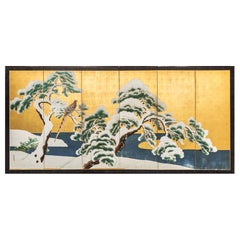
Japanese Six Panel Screen: Snow Scene
Located in Hudson, NY
Kano school painting of a pheasant in a snowy pine. Artist signature reads: Hokkyo Shunyo. Mineral pigments on gold leaf with silk brocade border.  
Category

Early 19th Century Japanese Antique Paintings and Screens

Materials

Gold Leaf

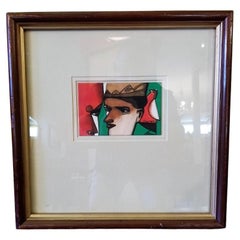
Paresh Maity Watercolor on Board, Encounter I
Located in Dallas, TX
Presenting a glorious contemporary piece of Art by a recognized Indian Master – Paresh Maity Watercolor on Board – Encounter I. This piece has impeccable Provenance! It was purchased by a Private Dallas Collector at Sotheby’s New York Auction on 18th September 2008. Lot No. 74. Sotheby’s operate a twice yearly auction of Southeast Asian Art & Antiquities in New York in the months of March and September. This sale was titled “Modern & Contemporary Indian Art”. The Lot consisted of a Group of 3 Watercolors by Babu Xavier, Paresh Maity and Ranjit Kurmi. (b.1960, b.1965, b.1970) Three Untitled Works. Signed and dated ‘Paresh Maity ’02 lower right, watercolor and ink on paper. …. 5.6 x 3.6 (14 x 9 cm)”. Exhibited: Herbert F. Johnson Museum of Art, Modern Indian Art, Cornell University, Ithaca, April 8 – June 11 2006. The Provenance is given as: “Property of Private Maryland Collectors”. The 3 watercolors carried an Auction estimate of USD 3,000 to USD 4,000 and Sold for USD 4,000 (not including Buyers Premium). Allowing for inflation alone this would be over $7,000 in today’s value. We have this watercolor by Paresh Maity and (listed separately) the Babu Xavier watercolor, but not the Ranjit Kurmi watercolor. As an added bonus and proof of authenticity the painting still retains it’s original Sotheby’s Lot No. Label. It has substantially increased in value over the years as a HIGHLY DESIRABLE piece from an exhibited and highly collected Modern Indian Master painter. We also possess the Babu Xavier watercolor in our Collection! Paresh Maity (born 1965) is an Indian painter...
Category

20th Century Indian Modern Paintings and Screens

Materials

Paper

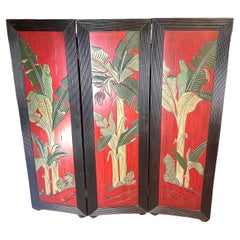
20th Century Three-Panel Asian Screen in Red with Palm Leaf Accent
Located in Waxahachie, TX
20th century Asian three-panel screen or room divider in red with palm leaf decoration. Striking crimson red will accent any room. Good vintage condition with age appropriate wear. ...
Category

20th Century Chinese Hollywood Regency Paintings and Screens

Materials

Wood

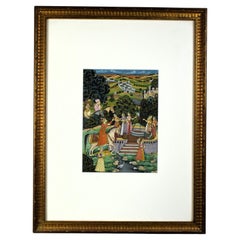
Mughal Miniature of Shah Jahan on a Leisure Stroll, 19th Century
Located in Islamabad, PK
The Mughal miniature painting, meticulously crafted with a single-hair brush on fine rice paper, captures a serene and elegant scene of Emperor Shah Jahan taking a leisurely stroll o...
Category

Mid-19th Century Indian Anglo Raj Antique Paintings and Screens

Materials

Paint, Paper

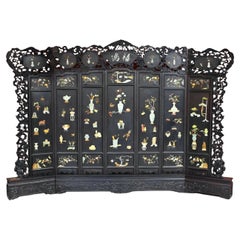
Chinese Seven-Panel Inlaid Zitan Screen, late 19th/early 20th century
Located in Los Angeles, CA
An extraordinary and monumental seven-panel zitan screen from the late Qing Dynasty, dating to the early 20th century. Masterfully crafted and richly decorated on both sides, the fro...
Category

Early 1900s Chinese Antique Paintings and Screens

Materials

Wood

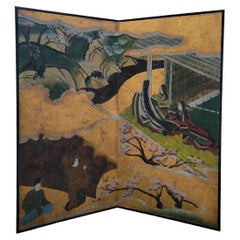
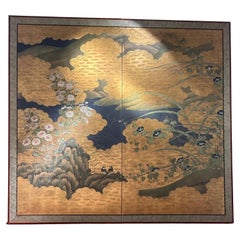
Japanese Two-Panel Kanō Screen -Tale of Genji Cherry Blossoms
Located in Greenwich, CT
Japanese Two-Panel Screen Kanō school, depicting a scene from the Tale of Genji , with various noble ladies and gentlemen in a landscape of cherry Blossoms - ink, colors and gold ...
Category

Late 19th Century Japanese Meiji Antique Paintings and Screens

Materials

Wood, Paper

Mid 20th Century kimono textile art " Growing ~ Longevity ~" by ikasu Pink Japan
Located in Setagaya City, JP
<< About this canvas This set is a depiction of a tall chrysanthemum stem, entirely dyed in a traditional shibori technique. << Period / Story The haori featured in this canvas was created and used during the late Showa period (1960-80ies). << Explanation and meaning of pattern and colors A charming chrysanthemum flowers all around a stem seem to reach the heavens. The chrysanthemum flower, which retains its vitality long after being cut, symbolizes longevity, purification from malevolent spirits, and good fortune. In ancient times, during the Kamakura period (1185-1333), emperors loved the chrysanthemum pattern, and it remains the most prestigious flower and the emblem of the Japanese imperial family...
Category

1970s Japanese Japonisme Vintage Paintings and Screens

Materials

Canvas, Silk

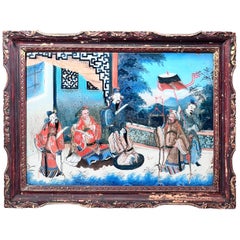
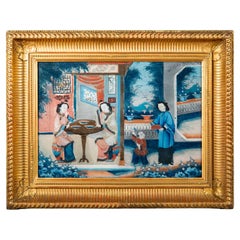
Large 19th Century Reverse Glass Painting in Its Original Frame
Located in Richmond, London
A 19th century reverse glass painting in its original frame. Extremely rare in this large size. Canton, China, circa 1860. Rare o...
Category

Mid-19th Century Chinese Victorian Antique Paintings and Screens

Materials

Glass

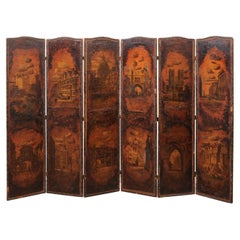
Large Continental 6 Panel Leather Screen with Architectural Landscape Design
Located in Atlanta, GA
Large Continental 6 Panel Leather Screen with Architectural Landscape Design ca. 1800
Category

Early 19th Century Antique Paintings and Screens

Materials

Leather, Wood

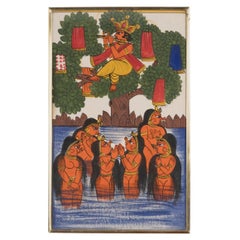
Indian Antique Hand-Painted Folk Art Painting
Located in Yonkers, NY
An antique Indian hand-painted folk art painting depicting six maidens and a musician. Introducing an enchanting piece of Indian heritage, an antique folk art painting...
Category

Early 20th Century Indian Paintings and Screens

Materials

Brass

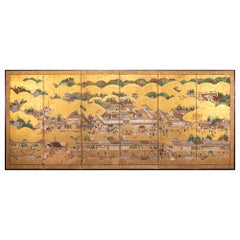
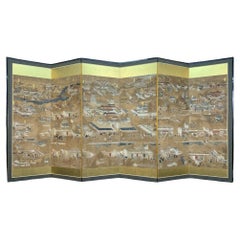
Japanese Six Panel Screen: Scenes in and Around Kyoto, Rakuchu Rakugai-Zu
Located in Hudson, NY
The left two panels is the intersection of the Tokaido (an important and historical road that connects Kyoto with Tokyo) at Sanjo (Sanjo translates to "Third Street" and is the main ...
Category

18th Century Japanese Antique Paintings and Screens

Materials

Gold Leaf

Early 20th Century kimono textile art "Flower of Life ~Bonds~" by ikasu Japan
Located in Setagaya City, JP
[Story behind the work] This artwork uses two pieces - front and reverse sides of same vintage obi (sash for kimono) fabric, united in a symbol of bonds and unity in Eastern culture ...
Category

1960s Japanese Japonisme Vintage Paintings and Screens

Materials

Gold Leaf

Japanese two panels screen
Located in Brussel, BE
Breathtaking Japanese two panels screen. Flowers and birds painted on paper and gold leafs. Hugely decorative as a screen or hanging on a wall. Unique pi...
Category

Late 19th Century Japanese Japonisme Antique Paintings and Screens

Materials

Gold Leaf

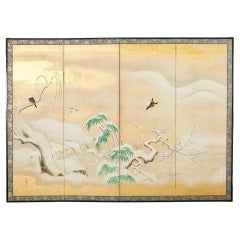
Japanese Showa Four Panel Screen Snowy Winter Landscape
Located in Rio Vista, CA
Impressive large scale Japanese Showa period four panel byobu screen depicting a serene snowy winter landscape with willow, prunus, and bamboo. The screen features an amazing backgro...
Category

20th Century Japanese Showa Paintings and Screens

Materials

Brass, Gold Leaf

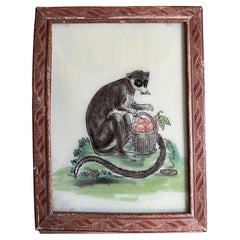
"19th-Century Monkey Portrait: Captivating Wildlife Art"
Located in Southall, GB
This captivating 19th-century monkey portrait captures the lively expression and unique charm of its subject with exquisite detail. The artist's skilled brushwork and attention to th...
Category

19th Century English Antique Paintings and Screens

Materials

Glass

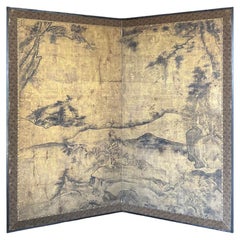
Early Edo Period Chinese-Inspired Screen
Located in Fukuoka, JP
This remarkable screen from the early Edo period, circa the 17th century, showcases the influence of early Chinese art forms with its intricate ink work on a gold leafed surface. The...
Category

17th Century Japanese Edo Antique Paintings and Screens

Materials

Gold Leaf

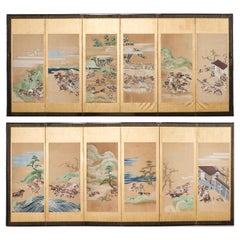
Pair of Japanese Edo/Tokugawa Screens Tale of Heiki
Located in Rio Vista, CA
Monumental pair of late 18th century Japanese Edo/Tokugawa period byobu screens depicting the battles between Taira and Minamoto. The screens have six panels each with individual sce...
Category

19th Century Japanese Edo Antique Paintings and Screens

Materials

Brass, Gold Leaf

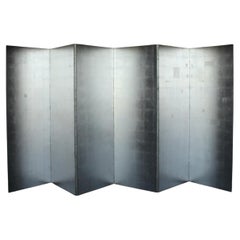
B81 Old Japanese Antiques 6panels, Silver Paper, folding Screen, Black remmed
Located in Niiza, JP
Silver paper folding screen Material: Paper pasted on wooden frame 1 piece: Width 600 x Height 1750 x Depth 20 mm Expanded size: Width 3630 mm Folded size: Width 615 x Height 1750 x ...
Category

20th Century Japanese Paintings and Screens

Materials

Paper

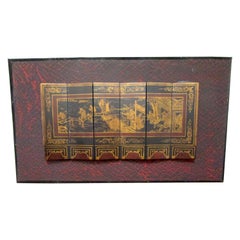
19th Century Chinese Gilt Inkwash Painted Screen
Located in Lomita, CA
This is a singular piece, a framed vintage Chinese gilt and inkwash miniature six-fold paper screen, that was possibly a salesman's sample, and it is beautiful. This is from the la...
Category

Late 19th Century Chinese Chinese Export Antique Paintings and Screens

Materials

Giltwood

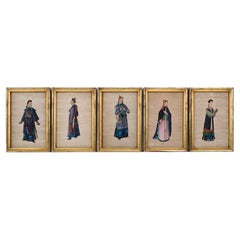
Collection of Five 19th Century Chinese Export Gouache Portraits on Pith Paper
Located in London, GB
A Collection of Five 19th Century Chinese Export Gouache Portraits on Pith Paper C.1850 Depicting Court Figures in Imperial Dress Framed and gla...
Category

19th Century Chinese Antique Paintings and Screens

Materials

Paper

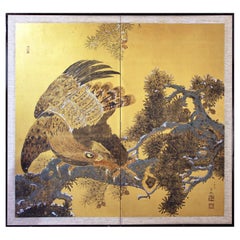
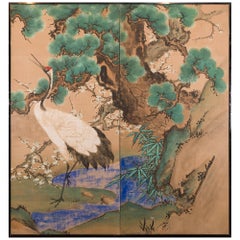
Japanese screen two-panel
Located in Brescia, IT
Eagle on a pine branch with traces of white snow. A rare subject for this mid-century two-panel screen, painted in mineral pigments on gilded paper. The screen is a nice size and is ...
Category

20th Century Japanese Showa Paintings and Screens

Materials

Paper

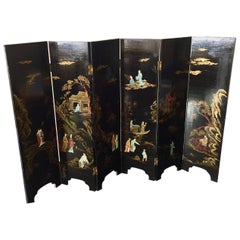
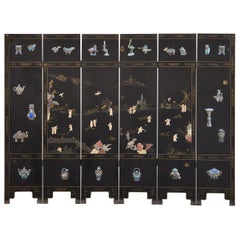
Chinese Six-Panel Lacquer Screen
Located in Montreal, Quebec
Chinese six-panel lacquer screen. This lovely and versatile screen is in the great style of Coco Chanel who loved to decorate with Coromandel s...
Category

20th Century Chinese Chinoiserie Paintings and Screens

Materials

Wood

Chinese Six-Panel Lacquer Screen
$2,400 Sale Price
33% Off
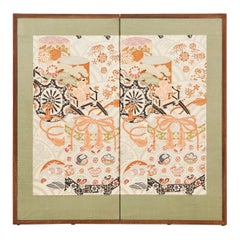
Japanese Showa Two Panel Screen Embroidered Silk Gilt Boxes
Located in Rio Vista, CA
Charming Japanese Showa period two-panel folding byobu screen featuring an embroidered silk picture of beautiful gift boxes. Stunning pattern of Hanaguruma (flower cart) laden with d...
Category

20th Century Japanese Mid-Century Modern Paintings and Screens

Materials

Silk, Wood, Paper

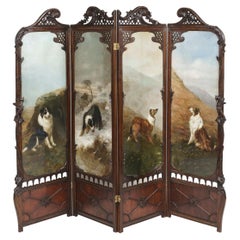
Four Fold Screen with Paintings of Dogs
By Maud Earl 2
Located in London, GB
A Rare four-fold screen The panels by Maud Earl The screen of rounded rectilinear form and constructed from mahogany, with two pierced broken swan-neck pedi...
Category

Early 20th Century European Art Nouveau Paintings and Screens

Materials

Mahogany

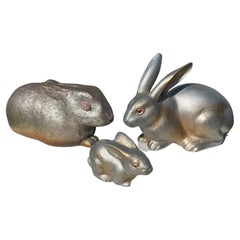
Japanese Three Garden Rabbits Family, Usagi
Located in South Burlington, VT
From our recent Japanese acquisitions and coming from a Japanese collector of rabbit usagi sculptures Rabbit family trio (3) seated rabbit sculptures hand cast and hand painted This is an unusual Japanese one-of-a-kind group in both large and small scale Quality: Hand cast with carved ears...
Category

Mid-20th Century Japanese Showa Paintings and Screens

Materials

Bronze, Iron

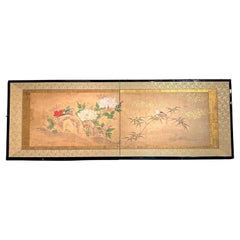
Japanese "Magpie and Peony" Two Panel Screen, Edo Period, 18th/19th century
Located in Austin, TX
A sublime Japanese two panel "Magpie and Peony" screen, ink and color on paper, Edo Period, late 18th or early 19th century, circa 1800, Japan. The two panel screen features a wond...
Category

Early 19th Century Japanese Edo Antique Paintings and Screens

Materials

Copper

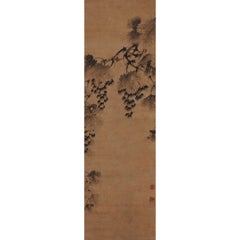
Korean Painting, Wall Panel, 17th Century Ink Grapevine
Located in Kyoto, JP
Grapevine Anonymous. Korean, 17th century. Wall panel, ink on paper. Upper seal: Kou Kinun in Lower seal: Kaigen Dimensions: Measures: 98.5 cm x 29.5 cm (39” ...
Category

17th Century Korean Other Antique Paintings and Screens

Materials

Wood, Paper

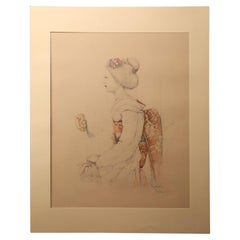
Large Collotype Print by Ryunosuke Fukui from "Maiko" Series - print no 8
Located in Fukuoka, JP
A large print created by Ryunosuke Fukui, a highly acclaimed modernist artist from Japan who lived between 1923 and 1986. Fukui's art has been exhibited in many prestigious museums a...
Category

20th Century Showa Paintings and Screens

Materials

Other

19th Century Reverse Glass Painting in Giltwood Frame
Located in Richmond, London
An early 19th century Qing dynasty reverse painting on glass, in a very fine late 19th century giltwood frame. Canton, circa 1830–50. Why we like it Superbly decorative and bright,...
Category

Mid-19th Century Chinese Antique Paintings and Screens

Materials

Glass

Antique Chinese Folding Chamber Screen / Paravent Early 20th century Japan Crane
Located in Amsterdam, Noord Holland
A super nice Chinese Chamber screen. Also suitable for wall mounting. Good condition and lovely colors
Category

20th Century Chinese Meiji Paintings and Screens

Materials

Bronze

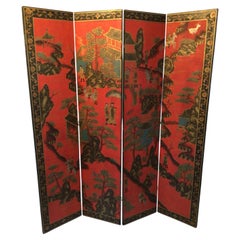
1960s Hand-Painted 4-Panel Folding Screen
Located in Tarrytown, NY
1960s Hand-Painted 4-Panel Folding Screen The screen features a painted traditional landscape and "figures in pavilions" design on both sides. One with a red background, the other bl...
Category

1960s Chinese Chinoiserie Vintage Paintings and Screens

Materials

Brass

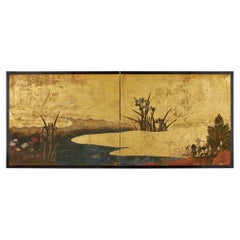
Japanese Two Panel Screen: Iris By Rivers Edge
Located in Hudson, NY
Mineral pigments and gold leaf on mulberry paper with black lacquer trim.
Category

Early 19th Century Japanese Antique Paintings and Screens

Materials

Gold Leaf

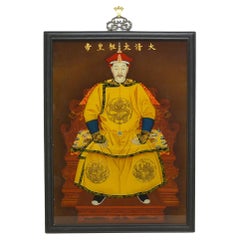
Vintage Chinese Qing Nurhaci Emperor Portrait Reverse Glass Hanging Painting
Located in Danville, CA
Vintage Chinese Qing Taizu Nurhaci Emperor Reverse Glass Hanging Painting ITEM DESCRIPTION: a beautiful reverse glass paintings. It has been in priv...
Category

1980s Chinese Qing Vintage Paintings and Screens

Materials

Glass, Wood

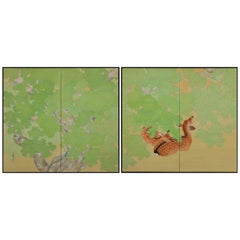
Early 20th Century Pair of Japanese Folding Screens, Deer Under Maple Trees
Located in Kyoto, JP
Deer under maples Late Taisho period, circa 1925-1930 Pair of two-panel screens. Ink and pigment on silk. Signature: Goho Seal: Goho A pair of two-fold Japanese silk screens...
Category

1920s Japanese Taisho Vintage Paintings and Screens

Materials

Wood, Paper, Silk

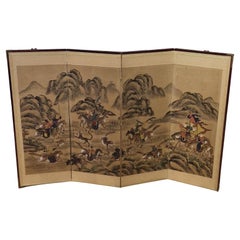
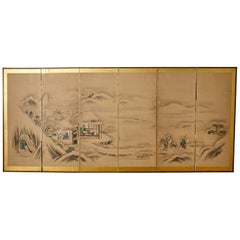
Japanese Six Panel Kano School Winter Landscape Screen
Located in Rio Vista, CA
Large Japanese Meiji period six-panel screen depicting a winter landscape with a Chinese sage visiting friends in a country villa. Ink and vivid color pigments on mulberry paper mounted to a gilt background. Painted in the 19th century Kano school...
Category

19th Century Japanese Meiji Antique Paintings and Screens

Materials

Metal

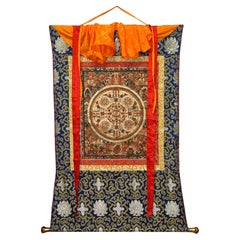
Tibetan Thangka of Celebration Hand Painted Gilded
Located in Somis, CA
An exquisite hand painted Tibetan Thangka depicting 63 Buddhas with consorts and 5 protector Vajrabhairavas. Buddha seated dhyana asana on lotus throne at the center of the mandala i...
Category

2010s Nepalese Paintings and Screens

Materials

Gold Leaf

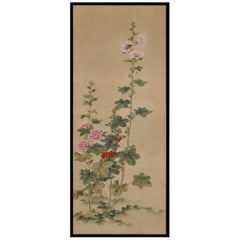
Mid 19th Century Framed Japanese Painting. Snail, Wasp Hollyhock.
Located in Kyoto, JP
Obata Tosho (1812-1886) Snail, Wasp & Hollyhock Late Edo period, mid 19th Century Framed Japanese Painting. Ink and color on paper. Individually framed 19th century bird and flow...
Category

Mid-19th Century Japanese Edo Antique Paintings and Screens

Materials

Paper

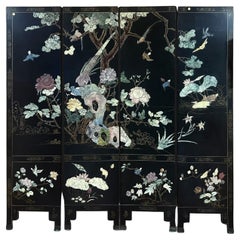
Chinese Screen with Semi-Precious Stone
Located in Fukuoka, JP
This magnificent Chinese folding screen captivates with its deep black lacquer surface, richly adorned with inlays of semi-precious stones. The composition depicts a luxuriant garden...
Category

Early 20th Century Chinese Paintings and Screens

Materials

Multi-gemstone

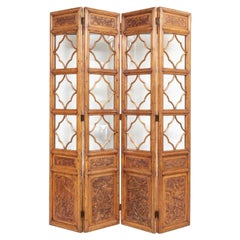
Superb and Architectural Chinese Carved Wood and Glass Four-Panel Screen
Located in Bridgeport, CT
Provenance: Christie’s. The panels with carved figural vignettes- floral vines at the top, the bottom with small ones with figures at various tasks in landscapes with houses, the lar...
Category

Early 20th Century Asian Qing Paintings and Screens

Materials

Wood

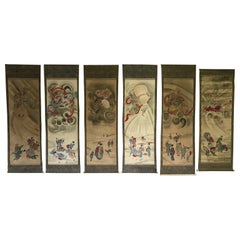
Set of 6 Large Kakemonos Japanese Mythology, 19th Century Japan circa 1800 Edo
Located in Beuzevillette, FR
Beautiful set of 6 large kakemonos from 19th century Japanese mythology. Paper support with a canvas pasted on the paper Wonderful set that is part of Japan's history and beliefs When not hung, the Kakemonos are rolled up. circa 1800 - Japan - Edo Period A kakemono translates as "object to hang". In Japan this refers to a painting or calligraphy, most often done on silk or paper framed in a scroll that was intended to be hung on walls or in public lighting. This particular form, which allows them to be in a roll, dates back to the Tang dynasty in China (this would be related to the copying and preservation of ancient Buddhist texts). A Kami is a deity or spirit worshipped in the Shinto religion. A Yokai is a spirit, ghost, demon, or strange apparition from the creatures of Japanese folklore. Each of these kakemonos represents a unique story: - A kami, a Japanese deity, is shown painting a rainbow. Indeed, he performs the action with his right hand while his left hand holds a kind of basket with three pots of paint. This kami has a rather closed attitude. He is standing in a dark and tormented sky. Below this figure, 8 villagers are dressed in traditional Japanese clothes. Their faces are softened. They are not afraid of the elements made by the kami above their heads. - A character with an unreal look is holding a kind of jar with his two hands, which he spills on human figures above. This being is floating in the air, probably a character from mythology, perhaps Susanoo. Underneath, villagers on umbrellas. They are trying to protect themselves as best they can from what is falling on them. One of them is carrying baskets with fish on her shoulders. A character in the background is thrown forward and falls. - On this kakemono, the god Raijin, dressed in a white and blue outfit, strikes the sky with his two drum hammers to create lightning and its thunderous sound. Surrounded by Tomoe and a long red scarf, Raijin, enraged and with dishevelled hair, creates a dark and violent storm. The villagers seem frightened by this meteorological phenomenon. One of the villagers can be seen fainting in the arms of a man. This scene may seem chaotic, but Japanese legend tells us that once a field is struck by lightning, the harvest is good. - On this kakemono, we see an unreal-looking figure holding a fan, as if he were sweeping away the bad weather, or simply producing gusts of wind. He is probably the kami of wind and air, Shina tsu-hiko. The figures below him seem surprised by so much wind. An umbrella flies away on the left, the women hold their hair and scarf, the clothes are caught in the power of the wind, there is even a woman on the ground on the bottom left. - This Kakemono represents a short moment. This Raiju is a yokai (ghost spirit...
Category

19th Century Japanese Edo Antique Paintings and Screens

Materials

Paper

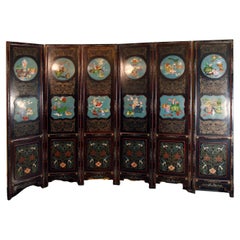
Chinese six panel screen with cloisonné insets
Located in New York, NY
measurements of each panel: 16in(L) x 65.5in(H) x 1in(D); each panel is adorned with cloisonné insets, which are surrounded by delicate, finely, painted incised decorations; back of ...
Category

Mid-20th Century Chinese Paintings and Screens

Materials

Enamel, Metal

Japanese Two Panel Screen Manchurian Crane and Turtles
Located in Hudson, NY
In Japan, cranes symbolize fidelity as they mate for life and turtles symbolize longevity. Additionally, this screen also has the Japanese motif of sho-chiku-bai, or the three friends of winter (pine, plum, and bamboo). So called the three friends of winter because all three flourish during the cold months. This screen was originally fusuma doors...
Category

Mid-19th Century Japanese Edo Antique Paintings and Screens

Materials

Paper

Chinese Export Six Panel Cloisonné Soapstone Coromandel Screen
Located in Rio Vista, CA
Charming Chinese export six-panel lacquer coromandel screen featuring a blue and white cloisonné style border decorated with scholars objects,...
Category

20th Century Chinese Chinese Export Paintings and Screens

Materials

Soapstone, Brass

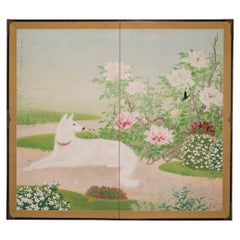
Japanese Two Panel Screen: White Shepard
Located in Hudson, NY
White Shepard reclining in a garden pathway surrounded by tree peony, azaleas and thistle. Mineral pigments on paper with silk brocade border and black lacquer trim with elaborate br...
Category

Early 20th Century Japanese Paintings and Screens

Materials

Brocade, Lacquer, Paper

Asian Wood Panel Paintings Diptych Brass Hardware Flora and Fauna Scene Chinese
Located in Oklahoma City, OK
Vintage Han Palace Art Co. scroll framed oil painting wood diptych carved panels. The original tag on back. This is a vintage piece from the 1950s or 1960s....
Category

Late 20th Century Taiwanese Chinoiserie Paintings and Screens

Materials

Wood, Paint, Paper

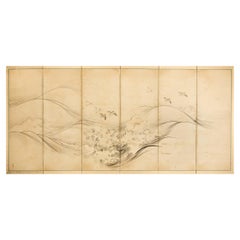
Japanese Six-Panel Screen, Open Ocean
Located in Hudson, NY
Japanese six-panel screen, open ocean, late Edo - early Meiji period, circa 1870, painting of plovers flying over cresting waves. Sumi ink on mulberry paper with a silk brocade borde...
Category

1870s Japanese Antique Paintings and Screens

Materials

Silk, Wood, Paper

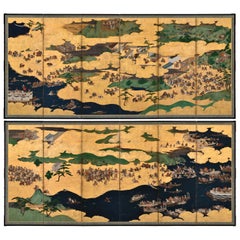
Late 17th Century Japanese Screen Pair. Battle of Ichi-no-tani and Yashima.
Located in Kyoto, JP
Anonymous Late 17th Century Battle of Ichi-no-tani & Yashima Dimensions: Each Screen: H. 175 cm x W. 385 cm (69” x 151.5”) This pair of Japanese screens depict two significant battles from the Genpei War (1180–85), as recounted in the Tale of the Heike, a semi-historical epic chronicling the conflict between rival clans for control of Japan, written in the early 1200s. Each screen portrays a single battle through a series of small episodes, framed by gold clouds, landscape elements, and architectural features. True to the style of many screens inspired by The Tale of the Heike, the scenes are rendered in lavish colors and gold, downplaying the brutality of the warfare. Although based on real events, these narratives often glorified and romanticized the heroic feats of the warriors. Viewers at the time would have been familiar with the story’s details, leading to a proliferation of paintings on folding screens inspired by this theme from the late Muromachi to the early Edo periods. On the right screen, we see the Minamoto’s attack on the Taira, who have retreated from the capital, Kyoto, toward the sea. The central building represents the temporary Taira headquarters, where Taira soldiers are holding the young Emperor Antoku. The Minamoto plan to launch a surprise attack from the rear after descending the steep cliff known as Ichi-no-tani, depicted at the top center. This scene highlights the tactical brilliance of Minamoto commander Yoshitsune and the courage of his men. The left screen captures moments from the Battle of Yashima...
Category

Late 17th Century Japanese Edo Antique Paintings and Screens

Materials

Gold Leaf

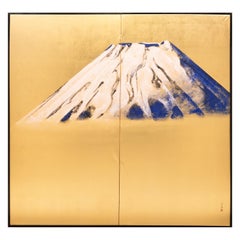
A two-panel folding screen on gold leaf depicting snow-covered Mount Fuji
Located in Milano, IT
A Japanese two-panel folding screen painted on paper with applied gold leaf, depicting Mount Fuji covered in snow. The decisive brushstrokes and tonal contrasts clearly define Mount...
Category

Mid-20th Century Japanese Paintings and Screens

Materials

Paper

Set of Four Hand Carved Chinese Panels Mounted As A Screen
Located in Milford, NH
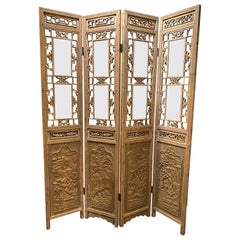
A fine set of four hand carved Chinese hardwood open panels with clear glass panes, various figural folkloric carved scene panels, accented with animals and foliate and scroll decora...
Category

Early 20th Century Chinese Paintings and Screens

Materials

Glass, Hardwood

Tibetan Painting Thangka Wealth God Jambhala Hand Painted
Located in Somis, CA
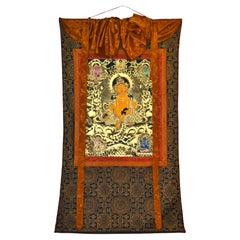
A finely painted Tibetan Thangka featuring the five wealth gods Jambhala. In the center the most powerful Yellow Jambhala sits on a lotus throne in the vajra position with his right ...
Category

2010s Nepalese Tibetan Paintings and Screens

Materials

Brocade, Wood, Paint

Decorative Chinoiserie Wallpaper Panels
Located in Bradenton, FL
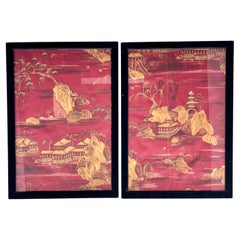
Pair of vintage decorative Chinoiserie panels. Panels feature gold Asian scenery with building, trees and birds on a red background. Each panel is framed in a black wooden frame.
Category

Late 20th Century Chinese Chinoiserie Paintings and Screens

Materials

Paper

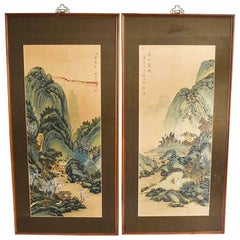
Pair of Chinese Watercolour on Silk Paintings, China, c.1940
Located in London, GB
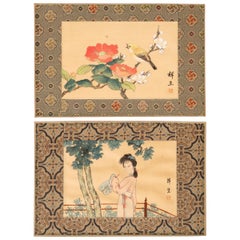
A pair of Chinese watercolour on silk paintings, China, C.1940. Framed in its original silk brocade border. Presented unframed. In exce...
Category

Mid-20th Century Chinese Showa Paintings and Screens

Materials

Silk, Paint

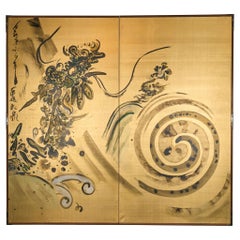
Japanese Two Panel Screen: Whimsical Dragon
Located in Hudson, NY
Extremely dramatic painting of a dragon in sumi-e ink and mineral pigments on gold silk in a dark brown lacquer trim. Signature and seal read: Shonan.
Category

Early 1900s Japanese Antique Paintings and Screens

Materials

Silk, Wood, Lacquer

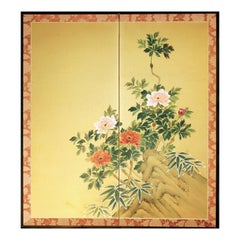
Japanese screen
Located in Brescia, IT
Two-panel screen of Rinpa school painted with mineral pigments on silk and rice paper. It depicts colorful peony flowers. This is the flower of spring, symbolizing success and pro...
Category

20th Century Japanese Showa Paintings and Screens

Materials

Silk, Paper

A Very Good Tibetan Thangka Depicting Buddha Nagaraja, 19th Century or Earlier
Located in Ottawa, Ontario
A striking 19th century Tibetan thangka of the enlightened one, Buddha Nagaraja; King of Nagas (a.k.a. Buddha Nageshvara). Shown seated in the vajra position atop a lotus blossom, ha...
Category

19th Century Tibetan Tibetan Antique Paintings and Screens

Materials

Other

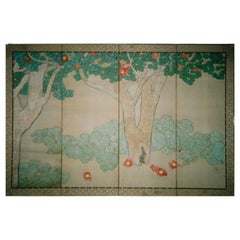
Antique Japanese Camellia Tree 4 Panel Folding Screen ~ Naga Gallery Provenance
Located in New York, NY
Antique four-panel Japanese screen featuring a painting of a Camellia tree dating to the Taisho period (1912-1926), executed with delicate brushwork and vibrant colors, characteristi...
Category

1920s Japanese Vintage Paintings and Screens

Materials

Wood, Paper

Edo Period Kyoto Screen
Located in Fukuoka, JP
Edo Period Kyoto Screen Period: Edo period Size: 343 x 176 cm (134.6 x 69 inches) SKU: RJ69 This stunning Edo period screen depicts typical scenes of d...
Category

18th Century Japanese Edo Antique Paintings and Screens

Materials

Silk, Wood, Paper

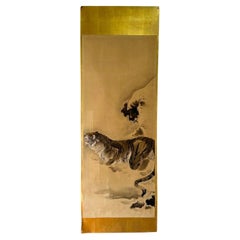
Late 19th century (Meiji period) painting depicting tiger
Located in Fukuoka, JP
Antique Tiger Painting on Paper – Meiji Period A striking depiction of a tiger, painted on paper and signed by the artist. This work was originally part of a Japanese byobu folding ...
Category

Late 19th Century Japanese Meiji Antique Paintings and Screens

Materials

Gold Leaf

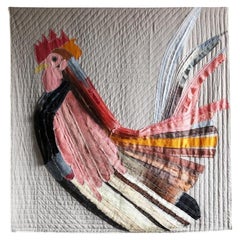
sky color bird by Blue Tip Atelier
Located in Sammu-shi, Chiba
Title : sky color bird Japan / 2024s Size : w1620 x h1635 mm Scraps of fabric used in the Sky series are used to express birds in the colours of the sky. The materials used are li...
Category

2010s Japanese Modern Paintings and Screens

Materials

Linen

French Mid-Century Modern Cerused Wood and Mother of Pearl Four Panel Screen
Located in Queens, NY
French Mid-Century 4-panel folding screen with a frame constructed from cerused wood in a grid pattern centering square mother of pearl panels. Separation in frame, cracks and losse...
Category

20th Century French Mid-Century Modern Paintings and Screens

Materials

Mother-of-Pearl, Wood

Antique Asian Paintings and Screens

Traditional Asian paintings were often created on scrolls and folding screens. Artisans made screens that could be folded up or spread out by connecting several panels using hinges. Today, antique Asian folding screens and paintings are sophisticated decorative accents that can serve as makeshift partitions to ensure privacy.

The original folding screens were created by Chinese artists. The earliest record of screens comes from the 2nd century B.C., and surviving examples date back to the Ming dynasty. Chinese painting utilizes many of the same tools as calligraphy — these screens were crafted from wood with painted panels featuring striking art or calligraphy that told cultural stories or represented nature and life in the area.

The practice was introduced to Japan, where paintings for screens were made on paper and silk, in the 8th century. These paintings frequently feature subjects such as landscapes, animals, flowers and Buddhist religious themes. Along with screens for tea ceremonies and dance backgrounds, there were screens for use in Shinto and Buddhist temples.

In the 17th century, screens began to be imported to Europe where their popularity grew. Coco Chanel famously collected Coromandel folding screens.

Traditional Asian paintings can make a tasteful addition to any wall, and screens can be used as decoration or, in the case of larger iterations, as an aesthetic way to divide a large room. Browse the selection of antique Asian paintings and screens from a variety of styles and eras on 1stDibs.

Still Thinking About These?

All Recently Viewed