Items Similar to Antique Japanese Ink Painting of Hotei by Kita Busei, Edo Period, c. 1820-1850
Want more images or videos?
Request additional images or videos from the seller
1 of 5
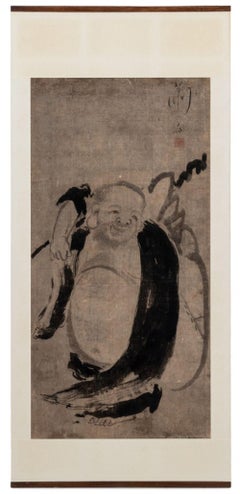
Antique Japanese Ink Painting of Hotei by Kita Busei, Edo Period, c. 1820-1850
$3,600
£2,721.18
€3,121.31
CA$5,018.55
A$5,463.10
CHF 2,899.82
MX$65,732.84
NOK 36,744.60
SEK 33,668.44
DKK 23,309.76
About the Item
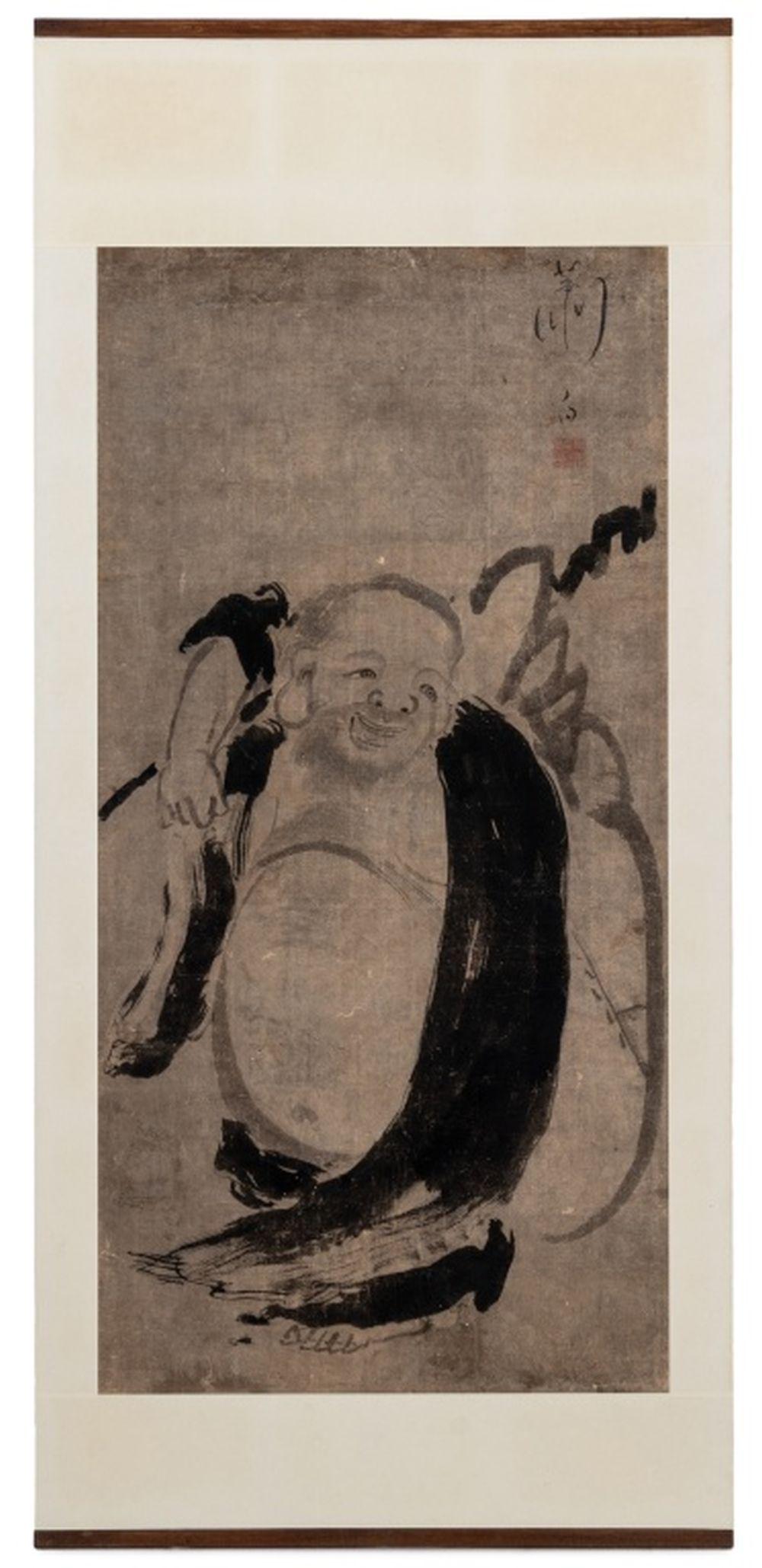
A superb and authentic Japanese ink and light colour painting on silk, executed by a masterful hand during the late Edo period (c. 1820-1850).
The work is a quintessential depiction of Hotei, the beloved Japanese God of Contentment and Good Fortune. He is rendered with remarkable dynamism and personality, striding forward with his iconic cloth sack (or Budai, his namesake) slung over a staff and prayer beads in hand.
This is a confident work by the renowned artist Kita Busei (Japanese, 1776–1856). The attribution is firmly secured by the artist's four-character calligraphic signature in the upper left, 可庵知物 (Ka-an Chimotsu), and his two personal seals. The round relief seal reads 'Ka-an' (可庵), one of his primary art names, while the square intaglio seal below reads 'Busei no in' (武清之印), meaning "Seal of Busei."
Kita Busei was a celebrated pupil of the great master Tani Bunchō and a versatile artist who blended the formal Kanō school, decorative Rinpa, and literati (Nanga) styles. His work is held in the collections of the British Museum, the Harvard Art Museums, and the Metropolitan Museum of Art. The brushwork here is exemplary, showing the fluid, expressive sumi-e (ink wash) lines in the robes, contrasted with the fine, controlled draftsmanship of the face and hands.
The painting possesses a unique and compelling provenance. It was acquired in Japan by a notable Australian studio potter who resided on the Mornington Peninsula. A passionate student of Japanese aesthetics, the potter treasured this piece as a source of personal inspiration, and it hung in his studio for decades.
Presented in a stunning, handmade, minimalist solid teak timber frame with an archival acid-free broad mat and UV-protective glass, this piece is a rare and exceptional work. It is an ideal acquisition for a discerning collector, blending historical gravitas with a joyful, uplifting spirit.
Artist: Kita Busei (喜多武清, 1776–1856)
Title: Hotei with Sack and Rosary
Period: Late Edo Period, c. 1820-1850
Medium: Ink and light colour on silk
Frame Dimensions: H.80 x W.60 cm
Condition: Excellent antique condition, consistent with its age. The silk shows light, even toning. Professionally matted and framed under UV-protective glass in a solid teak timber frame.
- Dimensions:Height: 23.63 in (60 cm)Width: 1.97 in (5 cm)Depth: 31.5 in (80 cm)
- Style:Edo (Of the Period)
- Materials and Techniques:
- Place of Origin:
- Period:
- Date of Manufacture:Late Edo Period, c. 1820-1850
- Condition:Additions or alterations made to the original: Framed on an acid-free mat board with UV-protective glass. Wear consistent with age and use.
- Seller Location:TORQUAY, AU
- Reference Number:1stDibs: LU10657247440972
About the Seller
New to 1stDibs
Joined in the past six months.
No Reviews Yet
Vetted Professional Seller
Every seller passes strict standards for authenticity and reliability
Established in 2025
1stDibs seller since 2025
- ShippingRetrieving quote...Shipping from: TORQUAY, Australia
- Return Policy
More From This Seller
View AllRare Utagawa Kunimaru "Golden Age" Ukiyo-e Print of Kabuki Actors, Japan, c.1820
Located in TORQUAY, AU
A rare and powerful authentic woodblock print (nishiki-e) by the "Golden Age" master Utagawa Kunimaru (1793-1829). Dating from the 1820s, this piece is a superb example of yakusha-e ...
Category
Antique 1820s Japanese Edo Prints
Materials
Glass, Wood, Paper
Antique Japanese Woodblock Print Courtesan Shinoko, by Kikukawa Eizan c.1815
By Kikukawa Eizan
Located in TORQUAY, AU
A captivating portal to the "Floating World" (ukiyo) of 19th-century Edo, this authentic antique woodblock print by Kikukawa Eizan (1787-1867) captures the very "alchemy of elegance"...
Category
Antique 1810s Japanese Edo Prints
Materials
Glass, Wood, Paint, Paper
Authentic 1867 Toyohara Kunichika Woodblock Print Ukiyo-e
By Toyohara Kunichika
Located in TORQUAY, AU
A captivating, intense gaze from the final days of feudal Japan. This is not merely a portrait; it is a time capsule, capturing a moment of profound cultural transformation.
This au...
Category
Antique 1860s Japanese Edo Prints
Materials
Wood, Paper
Utagawa Kunisada I (Toyokuni III) Antique Japanese Woodblock Print Three Beautys
By Utagawa Kunisada (Toyokuni III)
Located in TORQUAY, AU
An exquisite original ukiyo-e woodblock print by Utagawa Kunisada I (Toyokuni III), a dominant force in 19th-century Japanese art.
This piece captures three bijin (beauties) on a s...
Category
Antique 1830s Japanese Edo Prints
Materials
Glass, Wood, Paper
Museum-Quality 18th Century Tibetan Lineage Thangka Painting Buddha Shakyamuni
Located in TORQUAY, AU
From a private collection, this is a Tibetan Thangka of exceptional quality and profound spiritual narrative. More than a painting, it is a complete visual scripture, a "Refuge Tree"...
Category
Antique Late 18th Century Tibetan Tibetan Paintings and Screens
Materials
Fabric, Glass, Hardwood
Magnificent 19th Century Chinese Ancestral Portrait of the Qing Court
Located in TORQUAY, AU
A captivating glimpse into China's last imperial era.
This exceptional 19th-century Chinese ancestral watercolour portrait captures three generations or couples of a noble family fr...
Category
Antique 19th Century Chinese Qing Paintings and Screens
Materials
Linen, Silk, Acrylic, Plexiglass, Paper
You May Also Like
Antique Japanese Suibokuga Sage by Kano Tokinobu, 17th century.
Located in Point Richmond, CA
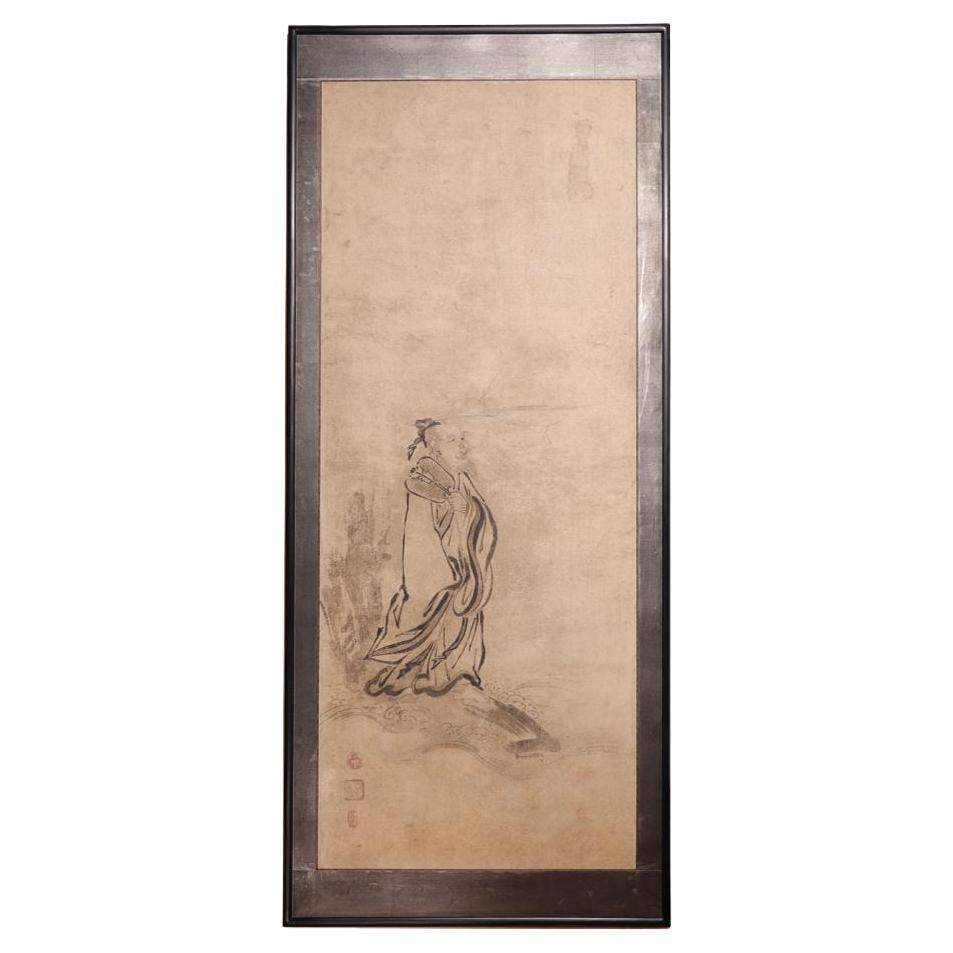
Antique Japanese Suibokuga Sage Painting by Kano Tokinobu, 17th century. A sumi-e ink on paper painting illustrating an acolyte at a riverbank. The image of the standing Chinese figure with elongated earlobes (a symbol of enlightenment), hair tied back in a kerchief and long beard, holds a large fan in his left hand to his right shoulder. The long robes are windswept with water curls about the figures feet. The painting with 3 vermillion seals of the artist in the lower left corner. Japanese dry mount paper on a wood frame with thin brocade border silver leafed surround and lacquered wood outer frame.
Condition: Paper restoration on center, a quarter of an inch of the left edge of the painting is added, other minor signs of age, wear, stains and repairs overall fine condition.
Age: Painting Edo Period, circa 1670. Mounting circa 1985.
Image: 51-1/2 in. x 20-1/2 in. (131cm x 52cm)
Frame: 59-1/4 in. x 25-1/4 in. (150cm x 64cm)
Weight: 6lbs.
Provenance:
with Honeychurch Antiques...
Category
Antique 1670s Japanese Edo Paintings and Screens
Materials
Paper
Japanese Hotei Buddha Ink on Paper, 19th C.
Located in Astoria, NY
Japanese School, Hotei Buddha Composition, Ink on Paper, 19th century, calligraphy and chop seal mark upper right, mounted to panel. Image: 45.5" H x 22.25" W; panel: 60" H x 27.5" W...
Category
19th Century Other Art Style Figurative Drawings and Watercolors
Materials
Ink
Late 18th Century Japanese Framed Painting, God of Thunder by Yamaguchi Soken
Located in Kyoto, JP
Raijin - God of Thunder
Yamaguchi Soken (1759-1818)
Mid to Late Edo period, circa 1800.
Framed painting. Ink and light color on paper.
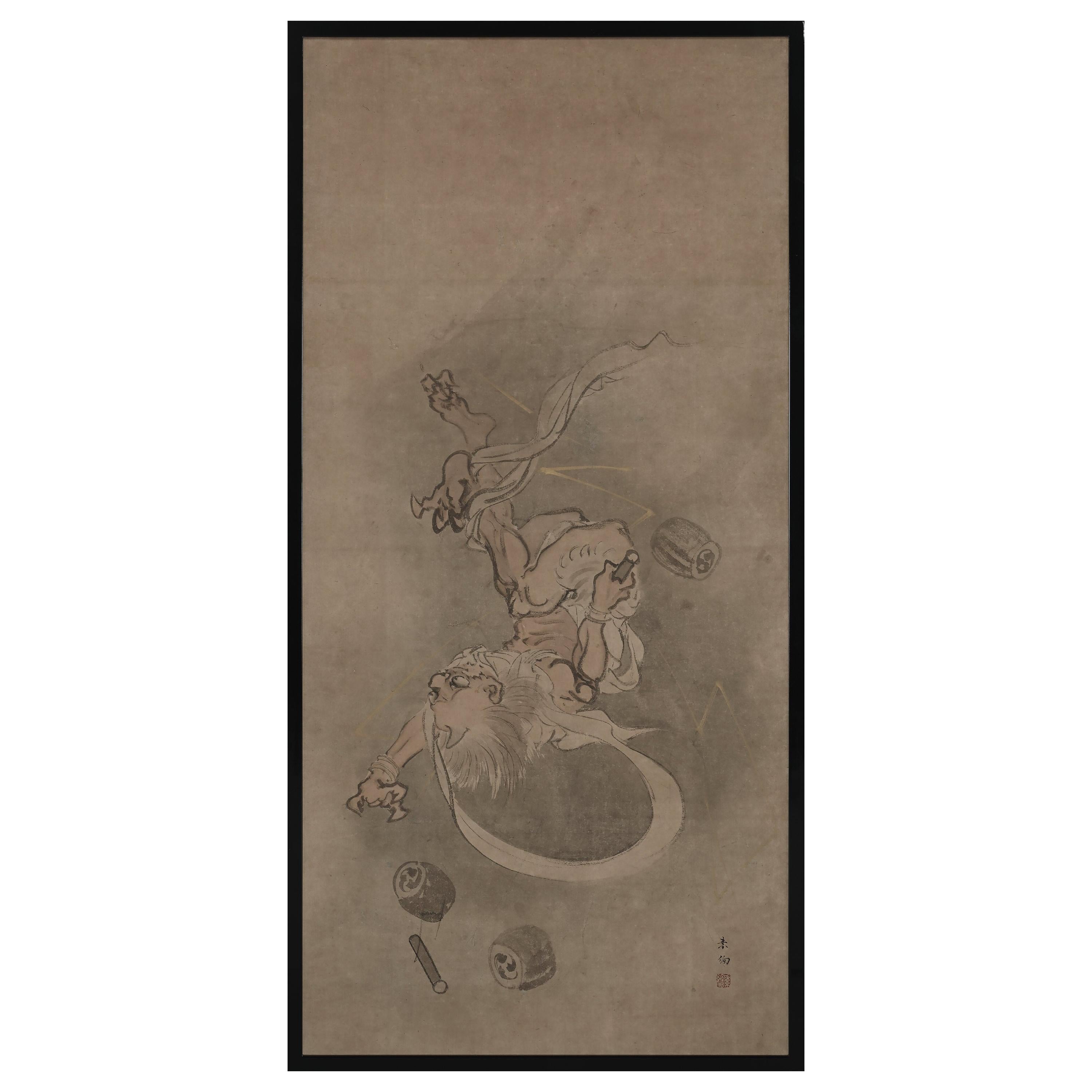
This humorous painting depicts the Thunder God, Raijin, tumbling from the sky, presumably being struck down by one of his own lighting bolts. He clings to one drumstick as the other is in free-fall along with his Taiko drums...
Category
Antique Late 18th Century Asian Edo Paintings and Screens
Materials
Paper

Antique Japanese 17th c Edo Scroll Kano Yosanobu Buddhist Painting
Located in Amsterdam, Noord Holland
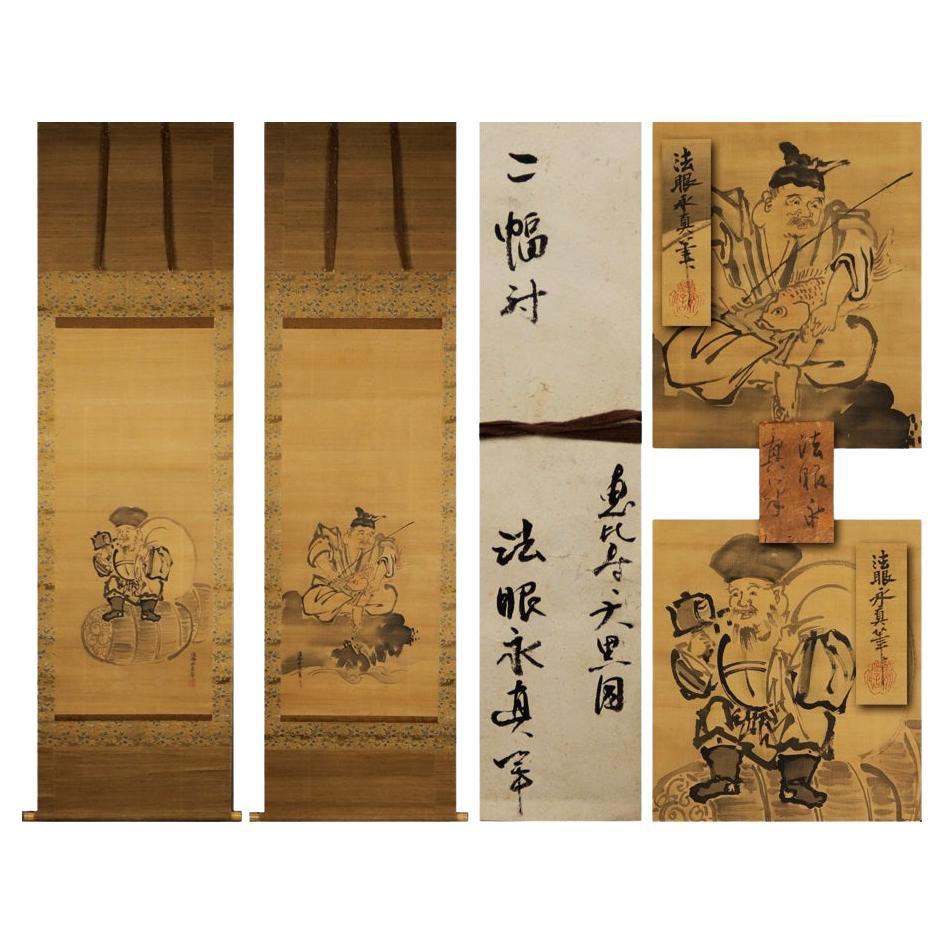
Eishin Kano's Ebisu/Great Country Map, double-width/comes with an old box.
The auspicious statues of Ebisu and Daikoku are standing in a double-width hanging scroll with a smiling fa...
Category
Antique 18th Century Edo Paintings
Materials
Silk
$3,453 Sale Price
20% Off
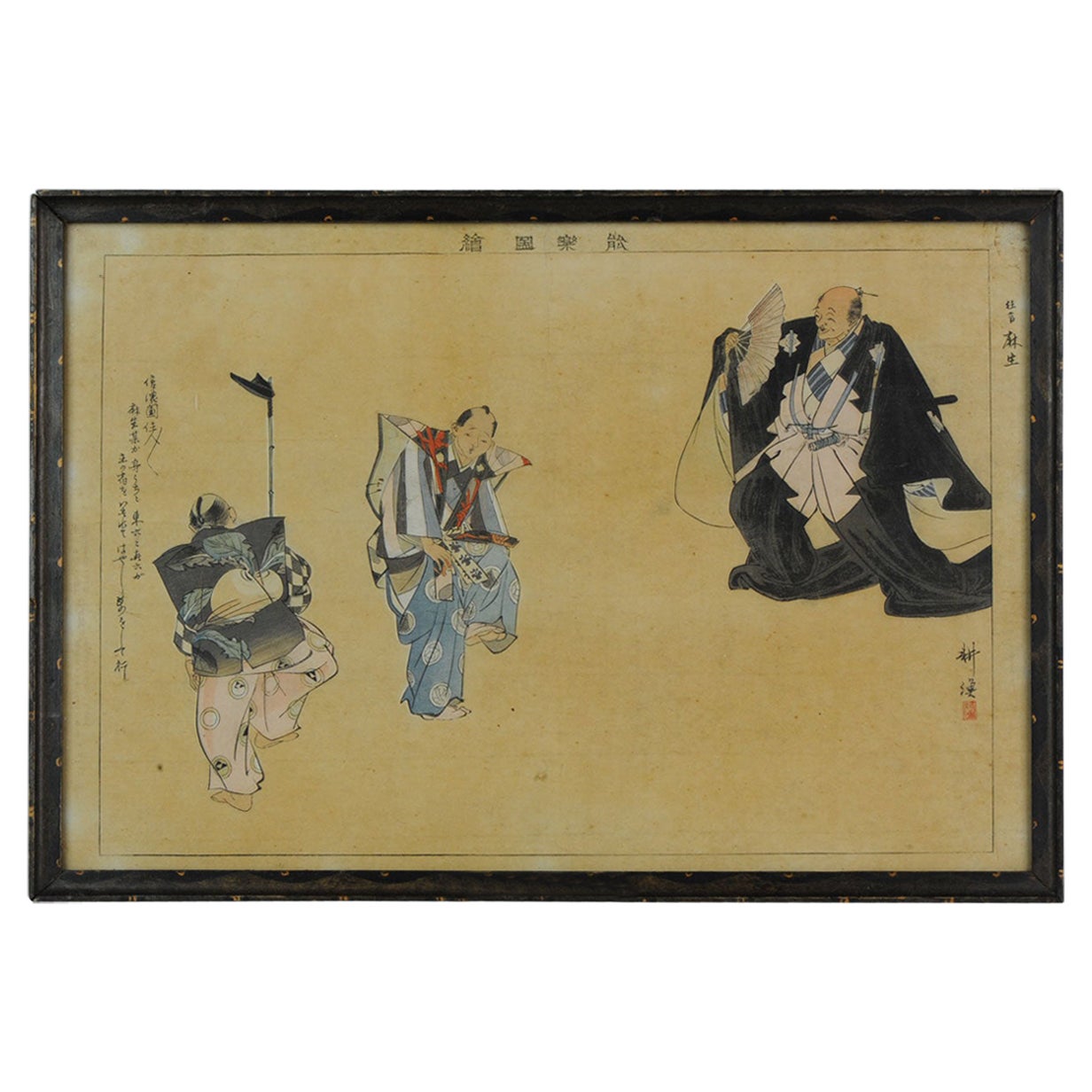
Lovely Japanese Blockprint Made by Kogyo Antique Meiji, 19th Century
Located in Amsterdam, Noord Holland
Interesting and finely painted Japanese painting. Marked Kogyo.
Additional information:
Material: Paper
Type: Paintings, Scrolls & Prints
Region of Origin: Japan
Period: ca 1900
Con...
Category
Antique 19th Century Japanese Prints
Materials
Paper
$398 Sale Price
20% Off
Antique Chinese Printed Ink Rubbing of Panthaka Arhat, (scroll mounted)
Located in Point Richmond, CA
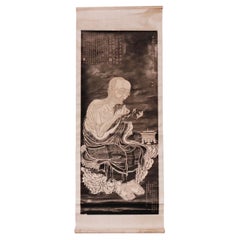
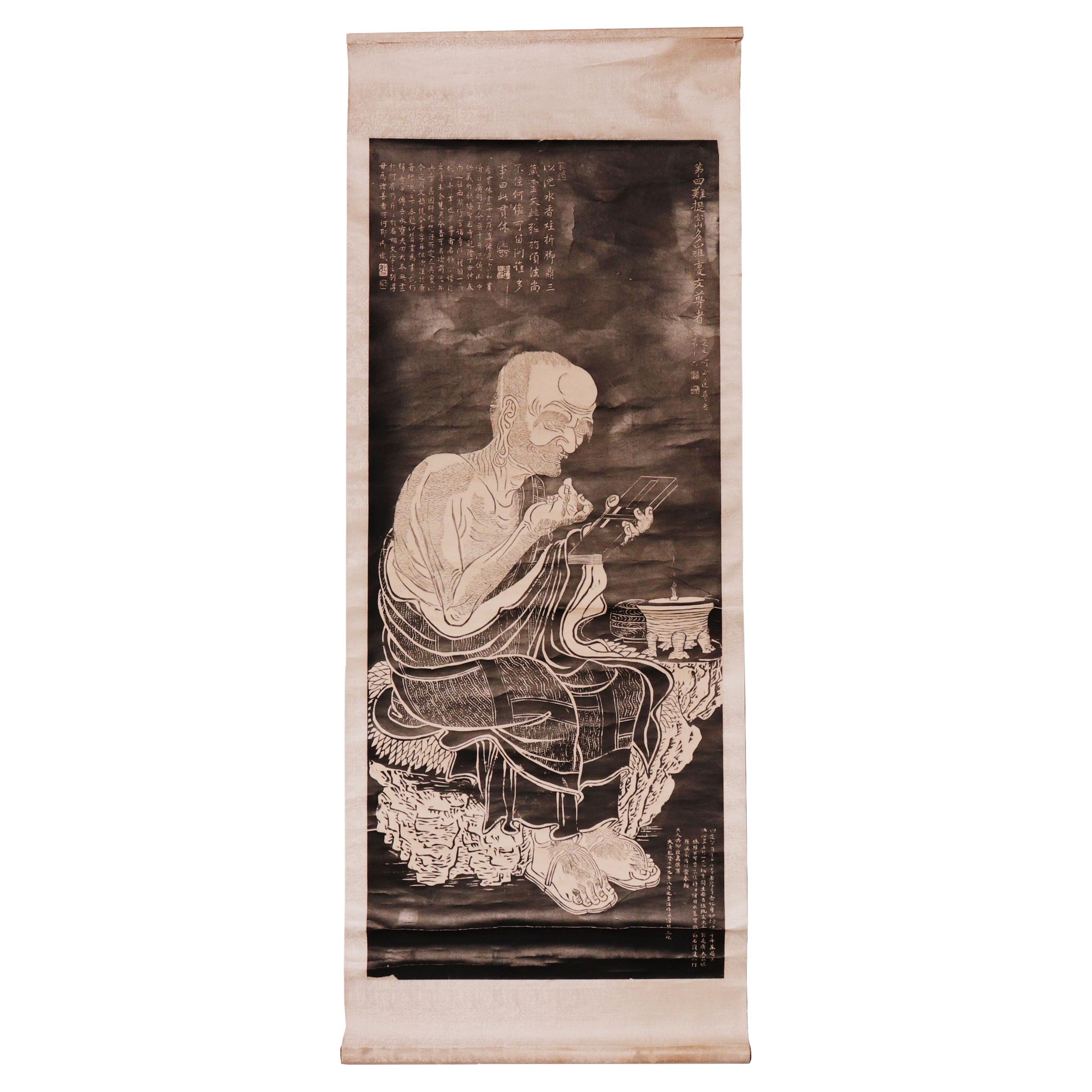
Chinese ink rubbing printing depicting Panthaka Arhat, no.4 of the 16 arhat images immortalized in stone at the former stupa at Shengyin Temple. Depicted here sitting on a rock with a book in his left hand and snapping his fingers in his right hand, symbolic of the speed at which he obtained enlightenment, accompanied by a beggar’s bowl and an incense burner, complete with colophons and silk scroll mounting. The Emperor Qianlong ordered the stone stele to be carved in 1764 after the arhat designs painted by the famed artist Guanxiu (832-912). Even though the temple was destroyed in the Taiping rebellion, the steles remain and have been reinstalled at the Hangzhou Stele Forest. Condition: Creases from rolling, otherwise fine condition. Mounting: 58” x 22”. 19th Century. Ex Collection: Frank “Till” & Peggy Durdin, San Diego.
For other rubbings of this stele see:
Penn Museum, object number 2010-26-4
The Metropolitan Museum of Art AN#: 59.195.15
Fine Arts Library of Harvard University, record id: W280021_urn-3:FHCL:478850
For another example of this image rendered in jade and lacquer see: “Screen Paintings of Guanxiu’s Sixteen Arhats in the Collection of the Palace Museum” Luo Wehhua translated by Bruce Doar, Orientations, September 2010, p. 104. In this article the image is identified as the sixteenth arhat Abheda, It is explained in this article that Qianlong re-identified the arhats, thus the 16th Arhat attribution for this image. Also in this article the identical colophon by Qianlong above the image is translated as: “These accurate portraits of the Sixteen Arhats were created by the Tang Dynasty painter Guanxiu, as recorded in Xuanhe Huapu (Record of paintings in the Xuanhe Reign), and during the millennium from the Guangming reign period to the present day, the original works were to be found in Zhejiang, where they were housed in the collection of Shengyin Temple in Qiantang (Huangzhou). In spring of the dingchou year (1757) of his reign, the Qianlong emperor undertook a southern tour of inspection and stayed at an imperial lodge on the West Lake. He went to the temple to pay his respects and there he saw the arhats on display and wrote a description of these marvels. The sequence of the arhats and their names had been passed down since ancient times, but they did not correspond to their Sanskrit titles; the sequence of the arhat names conformed instead to the interpretation of the Sanskrit classics by the Zhangjia State Preceptor. The emperor penned the original names and positions in the sequence below each of the figures in accordance with the readings supplied in Tongwen Yuntong (Unified Rhymes), and below each he penned an encomium, which he signed. Then the images were returned to the collection, to be passed down as a perpetual treasure. Now, the fourth great arhat had long gone missing and we did not know where his painting was. But it was merely a trifling matter of matching the images with the names, and now surely we have found him! This I, the emperor, believe.”
All 16 of these rubbings can be found in the Rubel Chinese Rubbings Collection at the Fine Arts Library of Harvard University with the following descriptive historical note: “Rubbing from stele depicting No. 4 of 16 arhats (Lohans, Buddhist saints) -- Nan ti mi duo luo qing you, Panthaka Arhat. Original painting attributed to Guanxiu, 832-912. Inscriptions written by Hongli, Emperor Qianlong (Gaozong, 1711-1799) of Qing Dynasty. 7 seals of Qianlong follow the inscriptions. Script style: in xing shu. Shi liu zun zhe -- "The 16 noble ones" are 16 lohans. Lohans are also called "a-lo-han" based on the transliteration of the Sanskrit term "arhat." (Japanese: Rakan; Chinese: Lohan; Tibetan: Gnas-brtan). Arhats or Arahants are saints or sages said to have renounced nirvana (freedom from the cycle of suffering and rebirth), vowed to remain in the world to protect the Dharma and propagate the Law of the Buddha in order to devote themselves more effectively to the relief of human misery, like the Bodhisattvas. These 16 Arhats, personal disciples distinguished by the Buddha, formed part of the 500 claimed by tradition to have attended the First Council in Rajagrha. The names and abodes of these 16 arhats are given in a work entitled "Record on the Duration of the Law, spoken by the Great arhat Nadimitra," which was translated into Chinese by the famous pilgrim Xuanzang (596-664) in 654. 16 lohans are quite often represented, especially in China and Japan, in sculpture and painting, in poses and with attributes. Every lohan can be easily with special icongraphic characteristics. Guanxiu (Jiang Deyin or Deyuan, a Buddhist monk also named Master Chan Yue, 832-912) -- painter during late Tang to Five Dynasties, specialized in painting lohan figures. Legend has it that the first portraits of the 18 Lohans...
Category
Antique 19th Century Chinese Qing Prints
Materials
Paper