Items Similar to Antique kimono textile art " Peacock Feathers ~ Royalty ~" by ikasu Blue Japan
Video Loading
Want more images or videos?
Request additional images or videos from the seller
1 of 22
Antique kimono textile art " Peacock Feathers ~ Royalty ~" by ikasu Blue Japan
$3,800
£2,901.61
€3,303.58
CA$5,335.80
A$5,833.07
CHF 3,085.96
MX$69,802.10
NOK 39,264.39
SEK 35,942.58
DKK 24,675.73
About the Item
This work uses an antique furisode (festive kind of kimono with long sleeves) with peacock feathers - a symbol of royalty and prosperity. Can be used both vertically and horizontally.
It is elegantly framed with paulownia wood originally used for kimono chest-of-drawers, and is filled with storytelling and sense of luxury.
I used pieces of kimono that could no longer be used as clothing and kiritansu chest-of-drawers that would normally be discarded to create the ultimate upcycled piece.
This artworks uses textile dated early 20th century, around 1920ies.
In Japanese traditional culture, peacock feathers carry several meanings and symbolisms, reflecting both aesthetic appreciation and deeper spiritual significance:
・Beauty and Elegance: Peacock feathers are renowned for their striking colors and intricate patterns. In Japanese culture, they are admired for their beauty and elegance, often used in traditional arts and crafts to adorn clothing, accessories, and decorative items. The vibrant hues and graceful lines of peacock feathers symbolize refinement and aesthetic appreciation.
・Protection and Warding Off Evil: In some Japanese beliefs, peacock feathers are considered talismans for protection against evil spirits and misfortune. It's believed that the radiant eyespots on peacock feathers have the power to ward off negative energy and bring good luck to the bearer. As such, peacock feathers are sometimes displayed in homes to safeguard against malevolent forces.
・Spiritual Significance: Peacock is associated with spiritual purity and enlightenment. The iridescent colors of the peacock's plumage symbolize the transformation of negative qualities into positive virtues on the path to enlightenment.
・Royal and Imperial Symbolism: Historically, the peacock has been associated with royalty and nobility in various cultures, including Japan. In Japanese imperial symbolism, the peacock is considered a symbol of regal beauty, power, and authority. Peacock feathers may be depicted in imperial crests, emblems, and ceremonial regalia as a symbol of the imperial family's prestige and lineage.
・Rebirth and Renewal: In Japanese folklore and mythology, the peacock is sometimes associated with themes of rebirth and renewal. Its ability to shed and regrow its feathers is seen as a metaphor for transformation and regeneration. Peacock feathers may be used in rituals or celebrations marking significant life transitions, such as weddings, coming-of-age ceremonies, or New Year's festivities, to symbolize new beginnings and opportunities.
Overall, peacock feathers in Japanese traditional culture symbolize beauty, protection, spirituality, and royalty. Their presence in various aspects of Japanese art, folklore, underscores their enduring significance as symbols of cultural richness and spiritual resonance.
The fabric is decorated with hand-painted yuzen - a traditional Japanese painting technique, and golden and silver threads intricate embroidery called "kinkoma" - also unique Japanese technique.
Kiritansu - chest-of-drawers for kimono, is traditionally made from paulownia wood, a uniquely Japanese material closely tied to the world of kimonos.
Paulownia wood is known as the lightest wood in Japan, prased for its natural luster, resistance to moisture, and resilience against cracking. Since ancient times, it has been used in crafting furniture, chests, and musical instruments.
During the Edo period, it became customary to store cherished kimonos in paulownia chests, which offered fire resistance and protection from moisture and insects.
Traditionally, when a daughter was born, a paulownia tree would be planted. Upon her marriage, the tree would be cut down, and the wood would be used to craft a chest for her as a wedding gift.
Following the Ansei Earthquake during the late Edo period in 1855, paulownia chests gained popularity due to their ability to withstand fires and even float in water, thereby safeguarding their contents during floods.
I use antique kiritansu that can’t be used as furniture anymore to create basis and frames for my works. It adds them even more authentic atmosphere of traditional wabisabi spirit. Can you feel it?
- Creator:Kimono ikasu (Artist)
- Dimensions:Height: 35.44 in (90 cm)Width: 39.38 in (100 cm)Depth: 1.58 in (4 cm)
- Style:Japonisme (In the Style Of)
- Materials and Techniques:
- Place of Origin:
- Period:
- Date of Manufacture:2024
- Condition:All the works are made from real kimonos, antiques and vintages. For this reason, the fabric may have traces of long-term use and minor fabric damages. In case there are any scratches or stains, we always add a photo of the area on the item page.
- Seller Location:Setagaya City, JP
- Reference Number:1stDibs: LU10079242702792
About the Seller
No Reviews Yet
Vetted Professional Seller
Every seller passes strict standards for authenticity and reliability
1stDibs seller since 2024
- ShippingRetrieving quote...Shipping from: Setagaya City, Japan
- Return Policy
More From This Seller
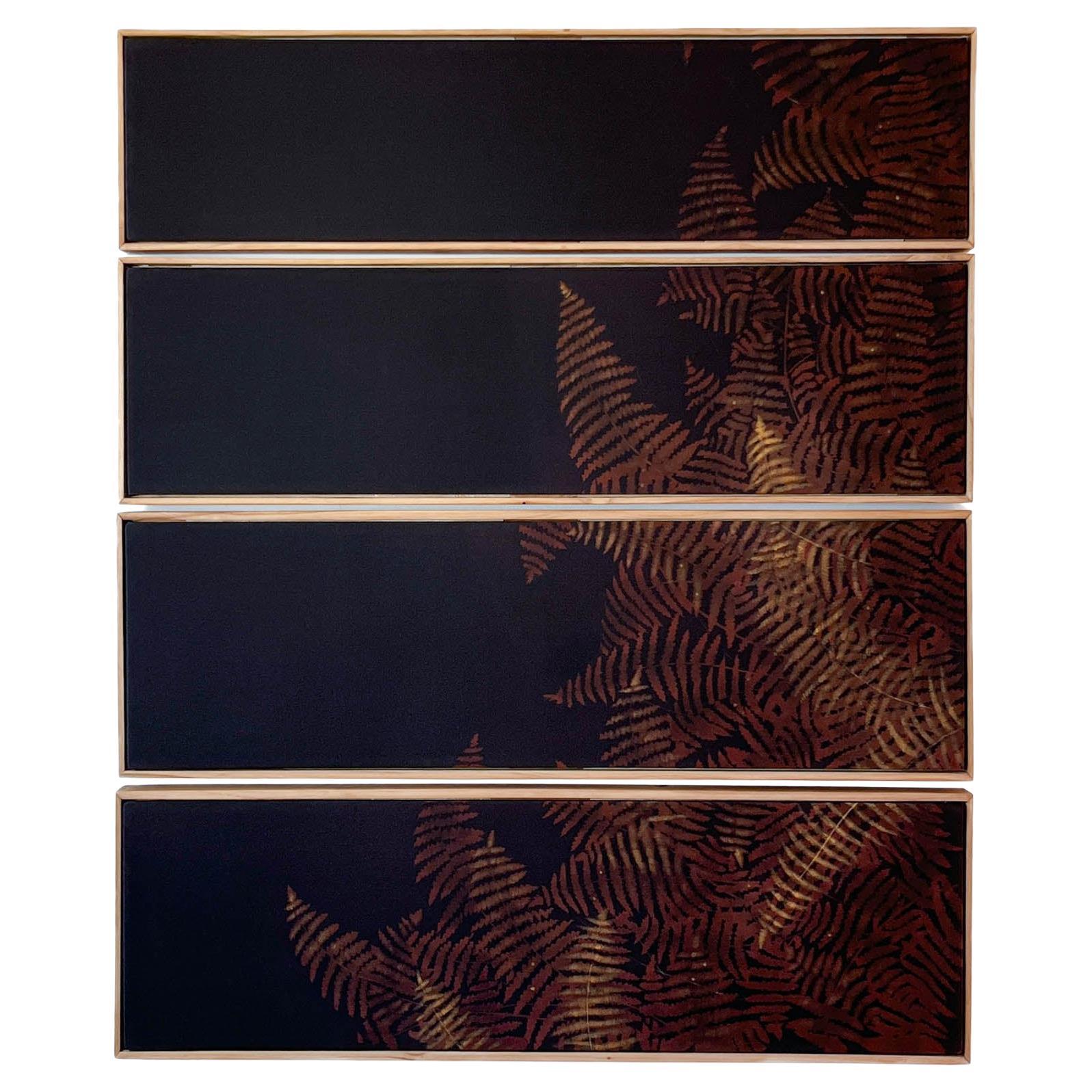
View AllVintage kimono textile art " Fern ~ Connection to Nature ~" by ikasu Black Japan
By Kimono ikasu
Located in Setagaya City, JP
This work uses an antique tomesode (festive kind of kimono) with fern design to evoke feelings of tranquility, harmony, and appreciation for the beauty of the environment. Can be used both vertically and horizontally.
It is elegantly framed with paulownia wood originally used for kimono chest-of-drawers, and is filled with storytelling and sense of luxury.
I used pieces of kimono that could no longer be used as clothing and kiritansu chest-of-drawers that would normally be discarded to create the ultimate upcycled piece.
<< Explanation of colors and patterns
In Japanese traditional culture, ferns, particularly the Japanese painted fern (Athyrium niponicum), hold several meanings and symbolisms:
・Elegance and Beauty: Ferns are admired for their graceful, delicate appearance and intricate leaf patterns. In Japanese aesthetics, they are appreciated for their natural beauty and are often used in gardens, landscapes, and floral arrangements to add a sense of refinement and elegance.
・Resilience and Perseverance: Ferns are known for their ability to thrive in diverse environments, including shady forests, rocky cliffs, and damp soil. Their resilience in the face of challenging conditions is seen as a symbol of endurance and perseverance. In Japanese culture, ferns may represent the ability to overcome adversity and flourish despite obstacles.
・Connection to Nature and Tranquility: Ferns are native to forested areas and are often associated with the natural world. In Japanese traditional culture, they symbolize a deep connection to nature and the importance of maintaining harmony with the environment. The lush green foliage of ferns evokes feelings of tranquility and peacefulness, making them popular motifs in Zen gardens and traditional landscape paintings.
・Purity and Simplicity: Ferns are emblematic of simplicity and purity in Japanese aesthetics. Their unassuming beauty and understated elegance reflect the principles of wabi-sabi, an aesthetic worldview that values imperfection, impermanence, and simplicity. Ferns may be used in tea ceremonies, Ikebana (flower arranging), and other traditional arts to evoke a sense of tranquility and appreciation for life's fleeting moments.
Overall, ferns in Japanese traditional culture symbolize elegance, resilience, connection to nature, purity, and simplicity. Their presence in art, literature, and landscape design underscores their enduring significance as symbols of natural beauty and spiritual resonance.
<< Characteristics of the fabric
This vintage textile is hand-painted with a traditional Japanese technique called "yuzen".
<< About the frame
Kiritansu - chest-of-drawers for kimono, is traditionally made from paulownia wood, a uniquely Japanese material closely tied to the world of kimonos.
Paulownia wood is known as the lightest wood in Japan, prased for its natural luster, resistance to moisture, and resilience against cracking. Since ancient times, it has been used in crafting furniture, chests, and musical instruments.
During the Edo period, it became customary to store cherished kimonos in paulownia chests...
Category
Vintage 1960s Japanese Japonisme Paintings and Screens
Materials
Silk, Wood
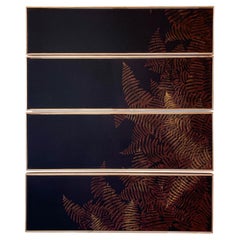
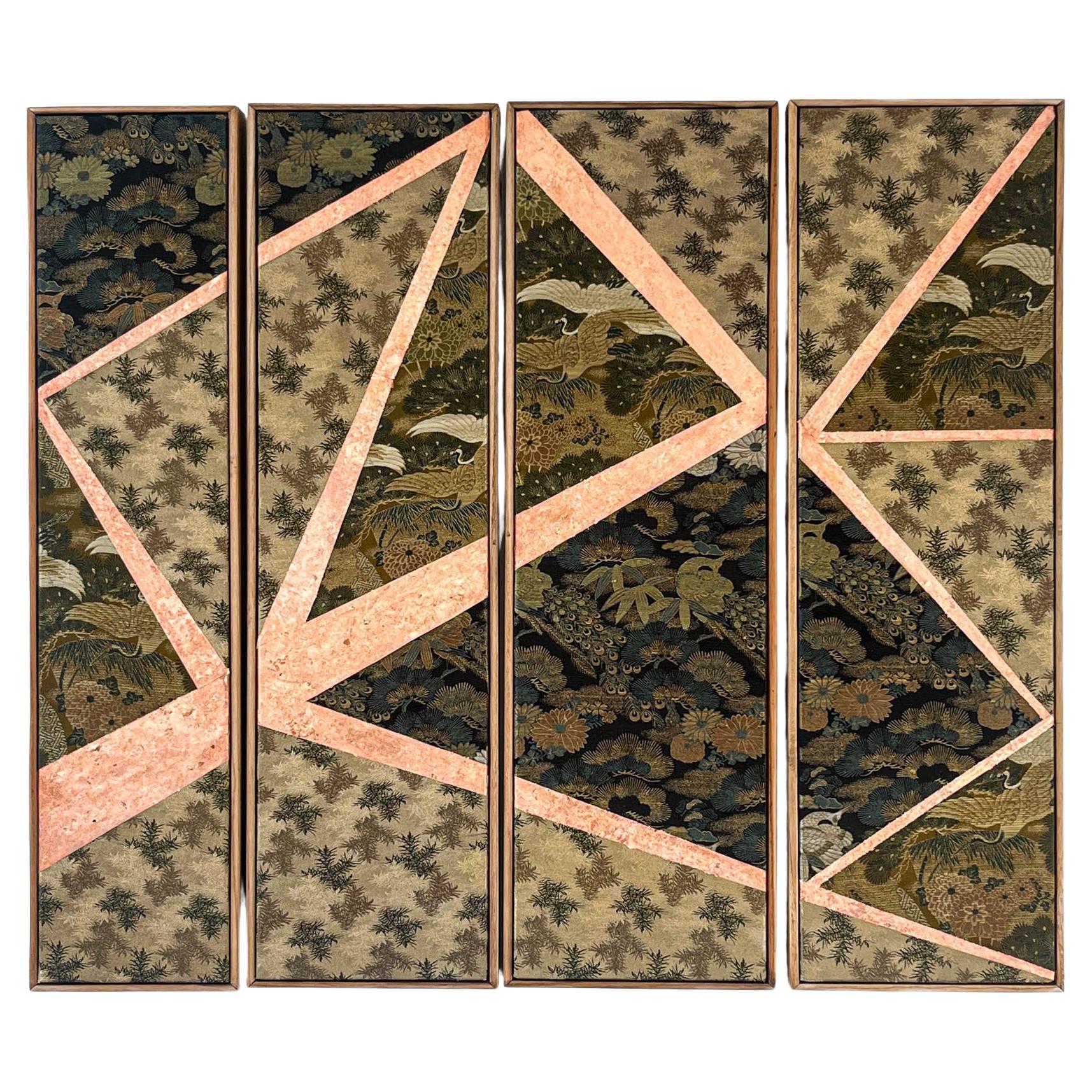
19th Century obi textile art " Pine forest ~ Longivety ~ " by ikasu Green Japan
By Kimono ikasu
Located in Setagaya City, JP
<< Story behind the work
Obi fabric I used for this artwork is taken from three different over 100-years-old antique sashes, and is framed in wood taken from antique ...
Category
Early 20th Century Japanese Japonisme Paintings and Screens
Materials
Gold Leaf
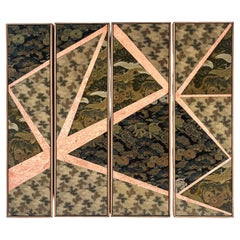
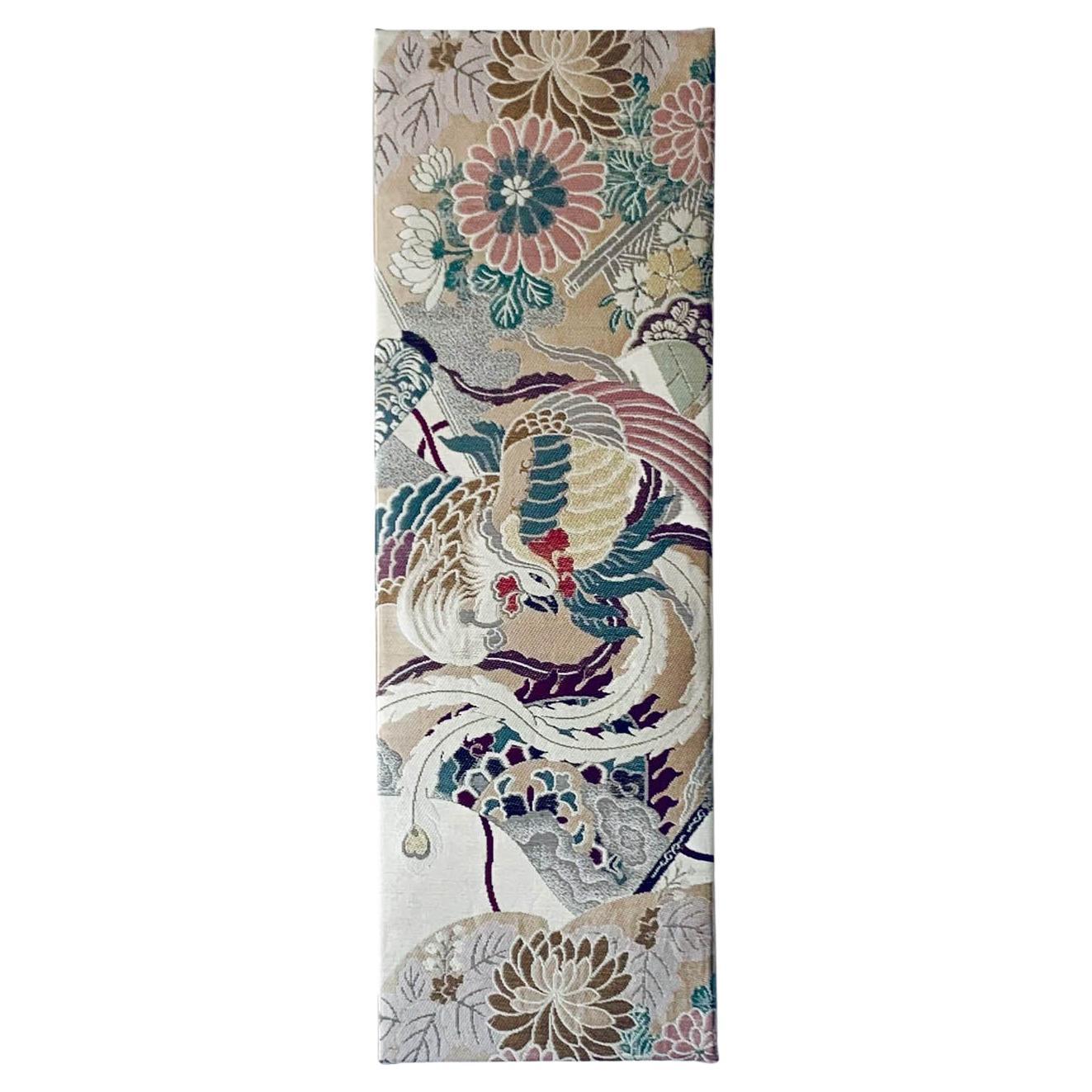
Vintage Obi textile art " From the Ashes ~ Serendipity ~" by ikasu Beige Japan
By Kimono ikasu
Located in Setagaya City, JP
<
This canvas has been upcycled from an early 20th-century maru-obi, featuring a subtle yet sophisticated depiction of the phoenix—a legendary symbol of peace and renewal. Ren...
Category
Vintage 1910s Japanese Japonisme Decorative Art
Materials
Canvas, Silk
Vintage kimono textile art " Turquoise Forest ~ Strength ~ " by ikasu Blue Japan
By Kimono ikasu
Located in Setagaya City, JP
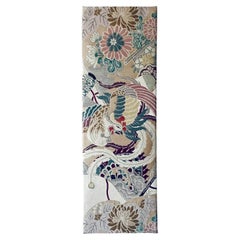
Fabrics featuring iconic Japanese plants like chrysanthemum, maple, and bamboo were gathered from various long underwear and kimono pieces to create a set of canvases (diameter 30, 25 and 20cm) showcasing exquisite gradations.
The top canvas, in pristine white, originates from long under-kimono, while the middle and bottom canvases are skillfully upcycled from kimono fabrics.
<< Period / Story
The long under-kimono and kimono fabrics used in these canvases were originally crafted and worn during the late Showa period (1960-80ies).
<< Explanation and meaning of pattern and colors
The pattern on the top canvas features a chrysanthemum, an auspicious emblem symbolizing longevity. It is affectionately referred to as the "raccoon dog chrysanthemum" due to the large, overlapping petals resembling the fur of a muzina, a creature similar to a raccoon dog or badger. This motif is highly popular in various plant-inspired designs and frequently seen in Edo komon, katazome, and jimon textiles.
The top canvas naga-juban under-kimono, being entirely white and devoid of any additional dyes, suggests its use as formal wear. Its pristine white hue accentuates the silk's luster when exposed to light and highlights the beauty of the woven patterns.
The fabric used here is rinzu, a type of fabric thinner than crepe de chine, characterized by its soft, smooth texture and subtle sheen. This particular lintel distinguishes itself with the way its ground pattern emerges and also incorporates a woven chrysanthemum pattern.
The central canvas showcases a maple tree, symbolizing longevity, which changes its colors with the seasons, bringing joy and happiness to people's lives.
The bamboo featured on the lower canvas has been regarded as a symbol of good fortune since ancient times, given its straight and vigorous growth, along with the Chinese legend that a phoenix consumes its fruit. It embodies concepts such as "immortality," "longevity," and "strength" because it remains green even in winter. The hollow stem also signifies "innocence," suggesting that there are no hidden agendas.
All three canvases are adorned with ground patterns that, when viewed from a distance, appear as modern works of art, yet upon closer inspection, they reveal a distinct Japanese ambiance.
<< Characteristics of the fabric
All three canvases are made of fabrics with jimon. The unique and high level of Japanese weaving...
Category
Vintage 1970s Japanese Japonisme Paintings and Screens
Materials
Canvas, Silk
Antique kimono textile art " Kobachi ~ Green Collection ~" by ikasu Japan
By Kimono ikasu
Located in Setagaya City, JP
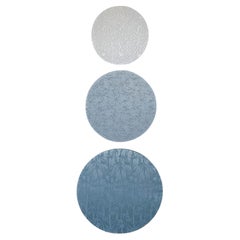
[Story behind the work]
This work is inspired by the green color palette, and is framed in paulownia wood originally used for a kimono chest-of-drawers.
It is elegantly framed with ...
Category
Vintage 1920s Japanese Japonisme Paintings and Screens
Materials
Silk, Wood
Vintage kimono textile art " Sunset Timelapse ~ Ephemerality ~" ikasu Red Japan
By Kimono ikasu
Located in Setagaya City, JP
<
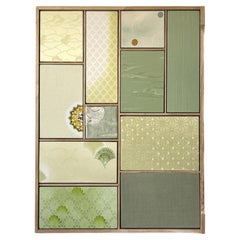
The art piece uses two sides - front and reverse - of the same kimono, to show beautiful sea surrounding Japan, in hues and in late sunset, as a timelapse.
The frame for this work is made of paulownia wood taken from antique Kiritansu - chest-of-drawers for kimono.
I use antique kiritansu that can’t be used as furniture anymore to create basis and frames for my works. It adds them even more authentic atmosphere of traditional wabisabi spirit. Can you feel it?
<< Period / Story
The kimono used in this piece was originally crafted during Showa period (around 1960ies).
<< Explanation and meaning of pattern and colors
Sea waves, depicted in two color variations here, are a symbol of transience and Impermanence in Japanese culture. The ebb and flow of the tides, the ever-changing currents, and the relentless motion of the waves serve as reminders of the fleeting nature of life. This artwork featuring the sea convey themes of impermanence, reminding viewers to cherish the present moment and appreciate the beauty of life's fleeting moments.
The theme of impermanence is strengthen by two colors of the sea - the lighter in early hues and the darker when the sun is just about to set in the sea.
<< About the frame
This artwork frame is crafted from paulownia wood, a uniquely Japanese material closely tied to the world of kimonos, and it serves to convey the refined beauty of Japanese nature.
Paulownia wood is known as the lightest wood in Japan, prased for its natural luster, resistance to moisture, and resilience against cracking. Since ancient times, it has been used in crafting furniture, chests, and musical instruments.
Paulownia wood is closely linked to kimono culture. During the Edo period (17th cent.~), it became customary to store cherished kimonos in paulownia chests...
Category
Vintage 1960s Japanese Japonisme Paintings and Screens
Materials
Silk, Wood
You May Also Like
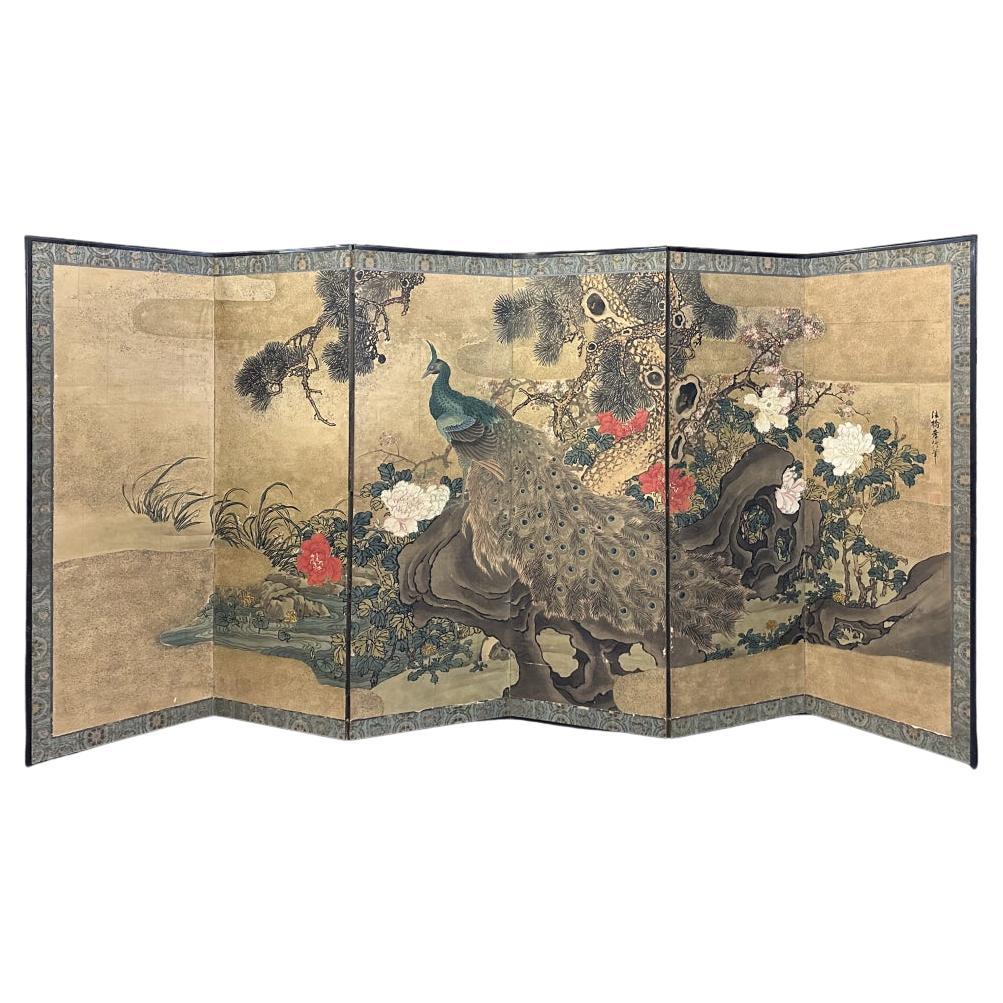
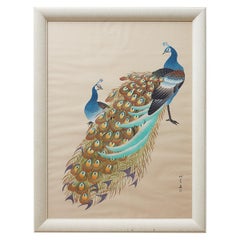
Japanese Showa Period Peacocks Painted on Silk
Located in Rio Vista, CA
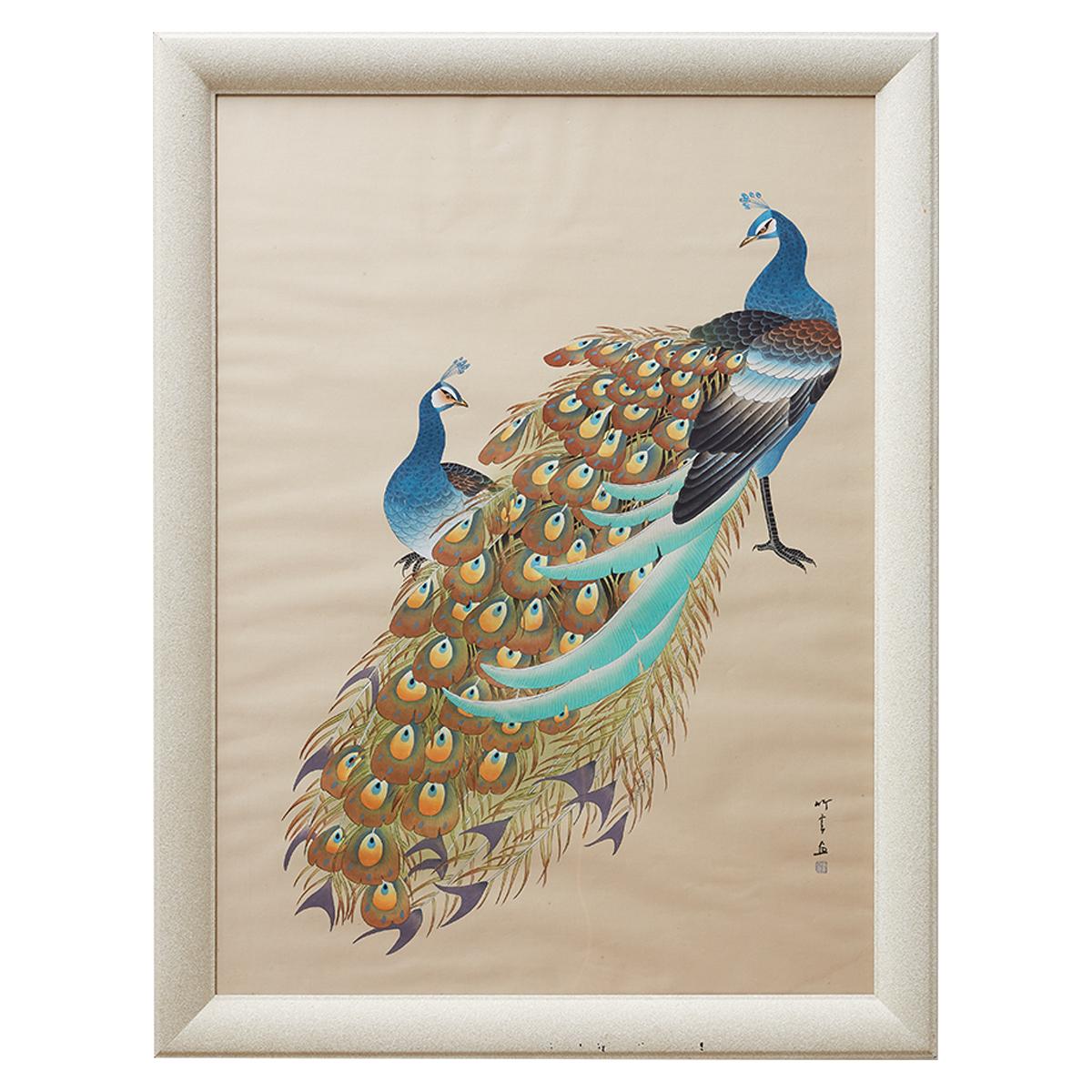
Colorful Japanese ink and color on silk Showa painting of a pair of peacocks. Vivid colors and beautiful details with a signature and seal on right side bottom. Framed in a midcentur...
Category
20th Century Japanese Showa Paintings and Screens
Materials
Silk, Plexiglass, Paper, Wood
$1,440 Sale Price
20% Off
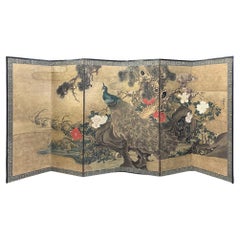
Lavish 19th Century Maruyama School Peacock Screen
Located in Fukuoka, JP
Lavish 19th Century Maruyama School Peacock Screen
Period: 19th Century
Size: 360 x 173 cm (141.7 x 68.1 inches)
Behold the grandeur of the 19th Cent...
Category
Antique 19th Century Japanese Edo Paintings and Screens
Materials
Wood, Paper
$10,700 Sale Price
45% Off
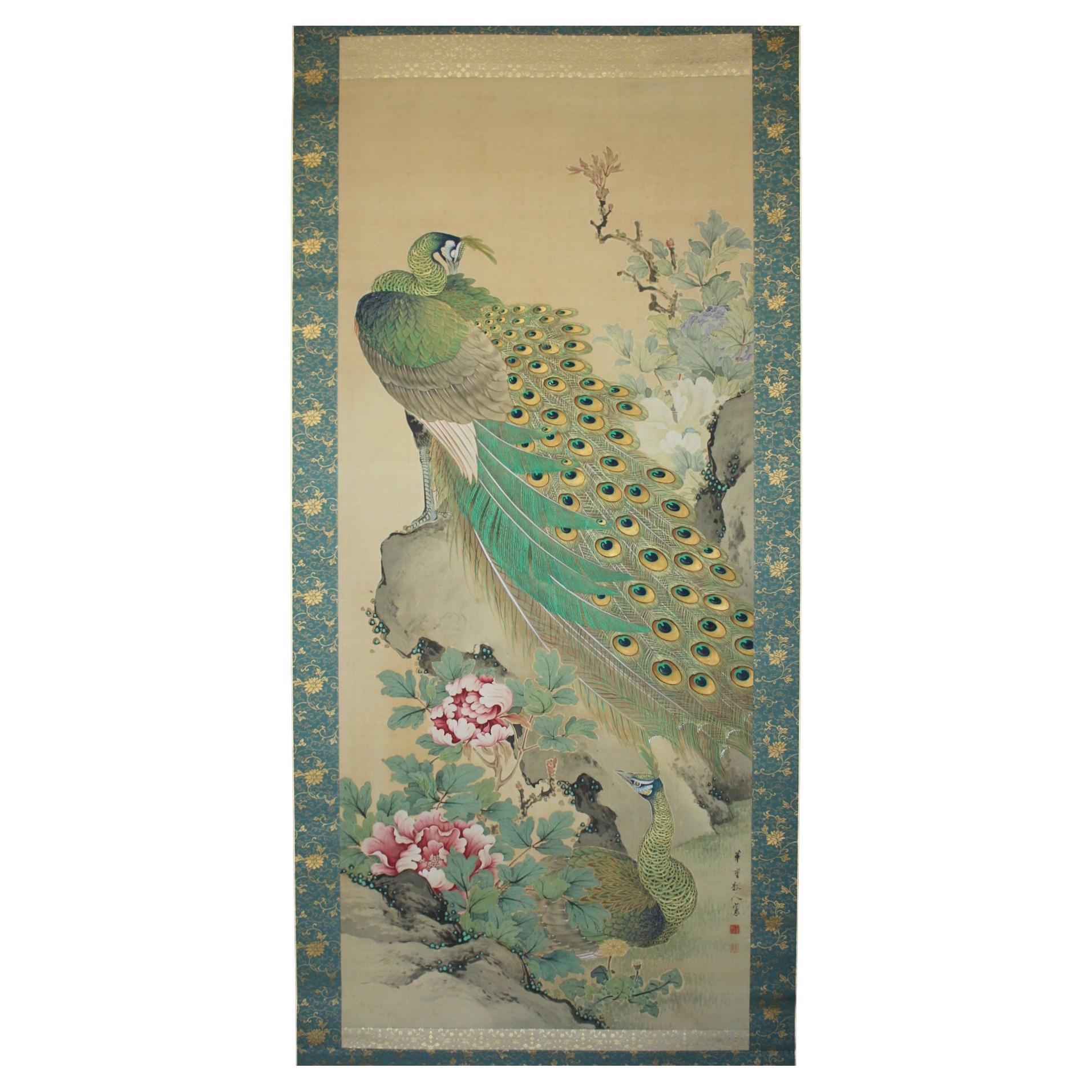
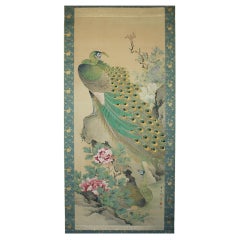
Japanese Antiques A hanging scroll of peacock painted by Kado for Tokonoma
Located in Niiza, JP
Color on silk, Scroll head: wood
Size: Image size: 680(W) x 1600(H) [mm]
Scroll mounting: 850(W) x 2300(H) [mm]
Box size: 100(W) x 100(H) x 940(D) [mm] 1.8kg
Estimate packing si...
Category
Antique Mid-19th Century Japanese Paintings and Screens
Materials
Silk
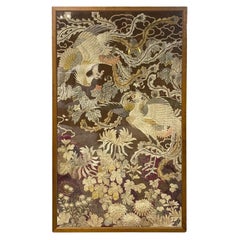
Japanese Asian Large Meiji Period Silk Embroidery Peacock Bird Flower Tapestry
Located in Studio City, CA
A stunning Meiji Period (1868-1912) Japanese large framed embroidery/ tapestry featuring a pair of finely detailed birds - likely peacocks in a floral garden landscape. A truly magn...
Category
Antique 19th Century Japanese Meiji Tapestries
Materials
Silk, Glass, Wood
Spellbound Peacock Feather Armoire
By Koket
Located in Manassas, VA
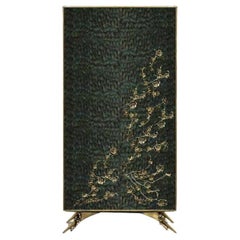
There is a sense of reveal and conceal as KOKET takes a beautiful armoire in high gloss lacquer and adorns it in metal organic lace, revealing a mesmerizing hint of what lies beneath. The stunning interior opens to an antique mirror back with two glass shelves at top four drawers embellished with organic hardware finished to match the exterior.
Materials
Finishes:
Structure: Black Lacquer (High Gloss Finish)
Structure Sides: Black Lacquer (High Gloss Finish)
Door Front: Iridescent Peacock Feathers...
Category
2010s Portuguese Wardrobes and Armoires
Materials
Brass, Gold Leaf
$61,460 / item
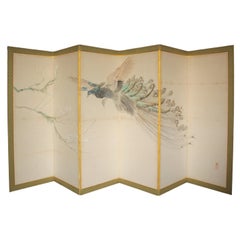
B78 Japanese Antiques 6panels, White Plum Blossoms and Peacock, folding Screen
Located in Niiza, JP
Material: Paper on wooden frame
One piece: W610×H1710mm×D17mm,
Unfolded size: W3690mm
Folded size: W625×H1710×D105mm, 13kg
Estimate packing size: (sandwiched with 5-10mm plywood): 18...
Category
20th Century Japanese Paintings and Screens
Materials
Paper
More Ways To Browse
Antique Feathers
Japanese Kimono
Japanese Used Kimono
Peacock Feather
Antique Talisman
Royal Imperial
Antique Shed
Antique Embroidered Gold
Arts And Crafts Chest Of Drawers
Kimono Painting
Peacock Blue Furniture
Antique Silver Peacock
Blue Kimono
Japanese Screen Silver
Gold Kimono
Antique Silk Kimono
Antique Silk Kimonos
Embroidered Kimono