Want more images or videos?
Request additional images or videos from the seller
1 of 12
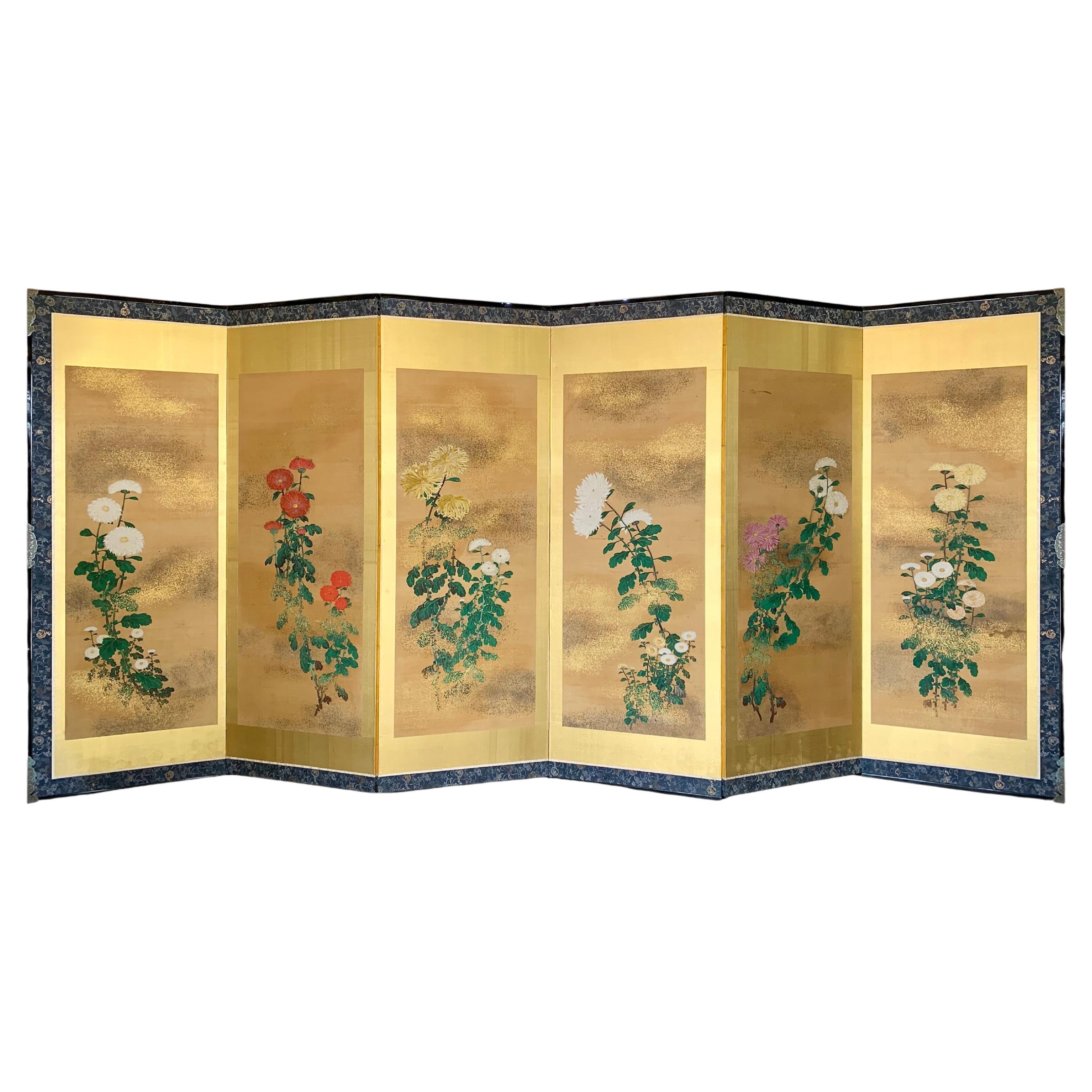
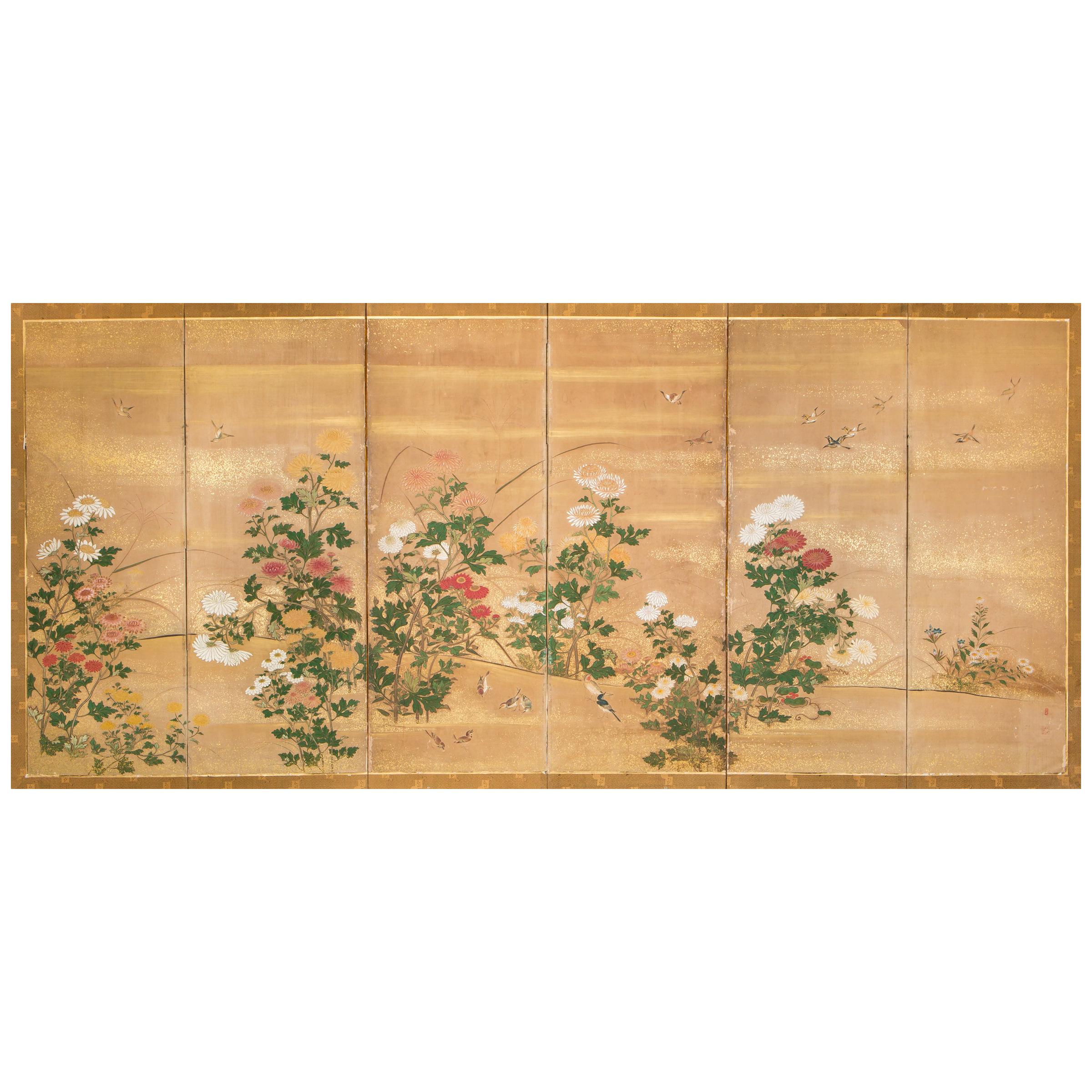
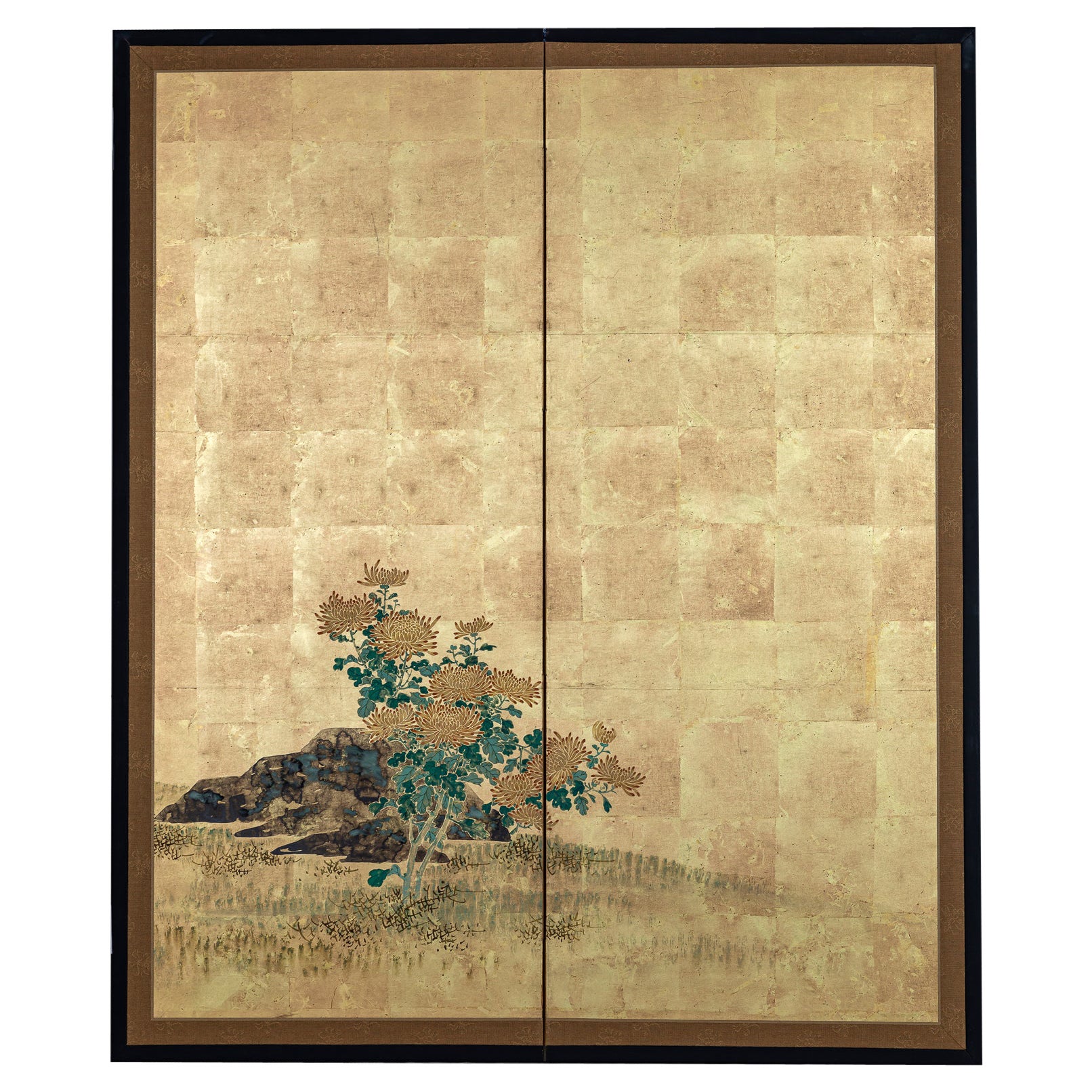
Chrysanthemums in Golden Radiance
$3,290
£2,502.55
€2,884.72
CA$4,671.11
A$5,013.15
CHF 2,687.24
MX$60,330.91
NOK 33,882.17
SEK 30,895.84
DKK 21,548.87
About the Item
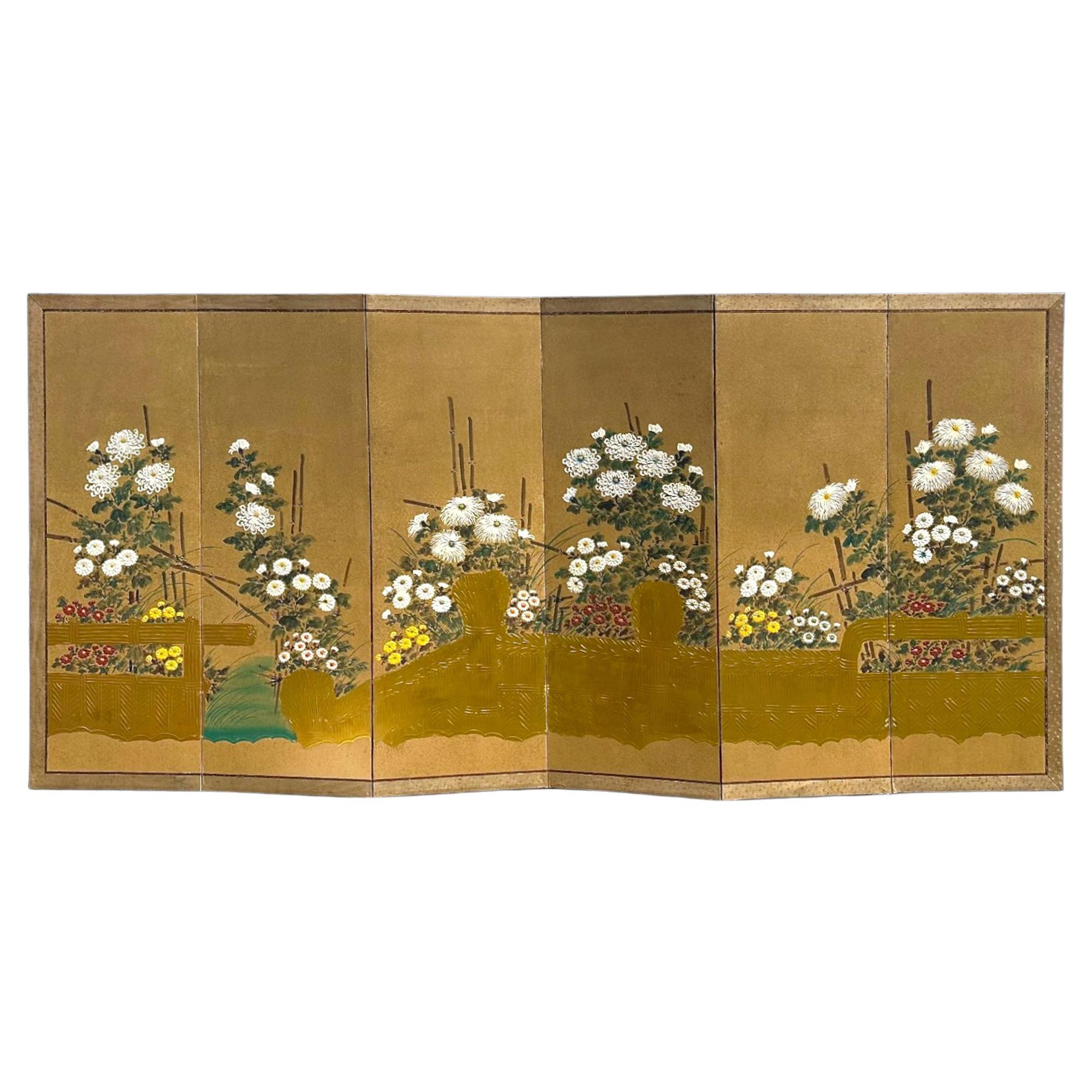
Against a shimmering golden background, chrysanthemums bloom in white, crimson, and yellow — flowers that in Japanese culture symbolize longevity, nobility, and the eternal cycle of life. Supported by bamboo stakes and framed by a delicate fence, each blossom seems to float in quiet harmony, embodying both strength and grace.
DM us for details and acquisition inquiries.
- Dimensions:Height: 147.25 in (374 cm)Width: 68.51 in (174 cm)Depth: 0.79 in (2 cm)
- Style:Meiji (Of the Period)
- Materials and Techniques:
- Place of Origin:
- Period:
- Date of Manufacture:1850-1890
- Condition:
- Seller Location:Fukuoka, JP
- Reference Number:1stDibs: LU8121246842152
About the Seller
5.0
Vetted Professional Seller
Every seller passes strict standards for authenticity and reliability
Established in 1998
1stDibs seller since 2023
62 sales on 1stDibs
Typical response time: 1 hour
- ShippingRetrieving quote...Shipping from: Fukuoka, Japan
- Return Policy
More From This Seller
View AllGarden of Chrysanthemums
Located in Fukuoka, JP
Against a shimmering golden background, chrysanthemums bloom in white, crimson, and yellow — flowers that in Japanese culture symbolize longevity, nobility, and the eternal cycle of ...
Category
Antique Late 19th Century Japanese Meiji Paintings and Screens
Materials
Gold Leaf
$3,430
Meiji Chrysanthemum Masterpiece
Located in Fukuoka, JP
Step into a world of timeless beauty with our exceptional six-panel screen from the Edo-Meiji period. In impeccable condition, each panel features stunning paintings of chrysanthemum...
Category
Antique 19th Century Japanese Meiji Paintings and Screens
Materials
Gold
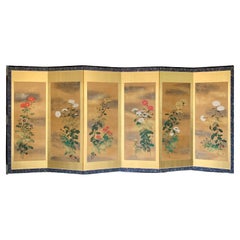
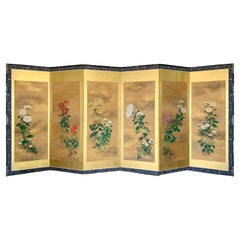
Meiji Chrysanthemum Masterpiece
Located in Fukuoka, JP
Step into a world of timeless beauty with our exceptional six-panel screen from the Edo-Meiji period. In impeccable condition, each panel features stunning paintings of chrysanthemum...
Category
Antique 19th Century Japanese Meiji Paintings and Screens
Materials
Gold
$4,624 Sale Price
40% Off
Japanese Screens: Echo of Chrysanthemums
Located in Fukuoka, JP
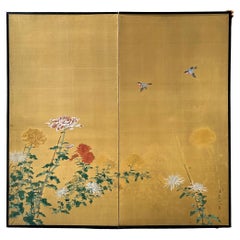
Echo of Chrysanthemums captures the quiet dialogue between form and reflection. Against a radiant gold-leaf ground, blooming chrysanthemums rise in graceful color harmony — white, cr...
Category
Antique 19th Century Japanese Edo Paintings and Screens
Materials
Gold Leaf
$5,785 Sale Price
35% Off
Late Edo Period Rinpa School Chrysanthemum Blossom Screen
By Rimpa School
Located in Fukuoka, JP
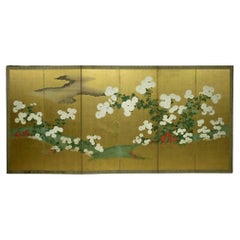
Late Edo Period Rinpa School Chrysanthemum Blossom Screen
Period: late Edo, early 19th century
Size: 364 x 172 cm (143 x 67 inches)
This exquisite late Edo period Rinpa school scr...
Category
Antique 18th Century Japanese Edo Paintings and Screens
Materials
Paper
$7,660 Sale Price
20% Off
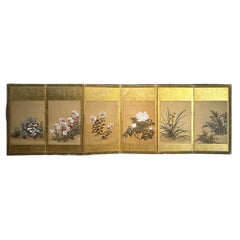
Edo Period Rimpa School Golden Screen - Summer Florals
By Rimpa School
Located in Fukuoka, JP
Edo Period Golden Screen - Summer Florals
Period: Edo
Size: 285 x 92.5 cm (112.2 x 36.4 inches)
SKU: PTA141
This Edo period screen is a golden-framed window into the summer gardens...
Category
Antique 18th Century Japanese Edo Paintings and Screens
Materials
Gold Leaf
$3,120 Sale Price
20% Off
You May Also Like
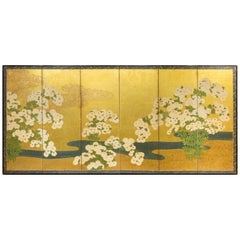
Japanese Six-Panel Screen, Rimpa School Chrysanthemums on Gold
Located in Hudson, NY
An abundant use of gold with beautifully draped chrysanthemums and gold flake clouds. Mineral pigments, go fun, gold leaf on mulberry paper with a silk brocade border.
Category
Antique Early 19th Century Japanese Meiji Paintings and Screens
Materials
Gold Leaf
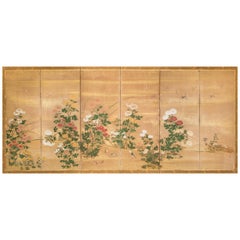
Japanese Six-Panel Screen, Chrysanthemums
Located in Hudson, NY
Japanese six-panel screen: Chrysanthemums, Edo period (circa 1800) painting of a variety of chrysanthemums in a garden landscape, with sparrows. Mineral p...
Category
Antique Early 1800s Japanese Edo Paintings and Screens
Materials
Gold Leaf
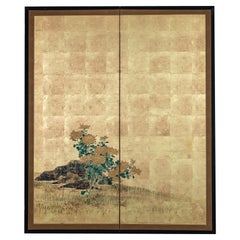
Japanese Two Panel Screen: Simple Chrysanthemums on Gold
Located in Hudson, NY
Mineral pigments on gold leaf. Not signed, by: Baikei Hitsu.
Category
Antique 1880s Japanese Paintings and Screens
Materials
Gold Leaf
Japanese Six-Panel Screen Byobu With Chrysanthemums And Autumn Grass and Flower
Located in Torino, IT
The 19th Century Six-Panel Japanese folding screen "Byōbu" usually used in the most important Japanese house to stop wind and also to separate different space of the same big room de...
Category
Antique Mid-19th Century Japanese Edo Paintings and Screens
Materials
Gold Leaf
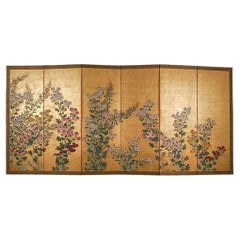
Japanese Two-Panel Screen, Rimpa Style Chrysanthemums on a Twig Fence
Located in Hudson, NY
Detailed painting of varieties of chrysanthemums behind a bound-twig garden fence rendered in silvered, raised gofun. Stylized low-hanging gold mist clouds. Rimpa-style painting in m...
Category
Antique Late 19th Century Japanese Paintings and Screens
Materials
Gold
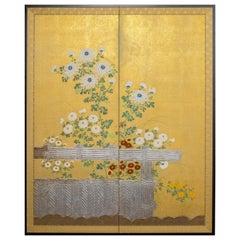
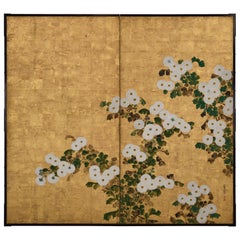
18th Century Japanese Rinpa Screen. White Chrysanthemums. School of Korin.
Located in Kyoto, JP
School of Ogata Korin
White Chrysanthemums
18th Century, Edo period.
A two-panel Japanese screen. Ink, color, gofun and gold leaf on paper.
Dimensions: H. 171 cm x W. 188 cm (67.5” x 74”)
On this two-panel Japanese screen we see blooming chrysanthemums, a flower which embodies the essence of autumn in Japan. Here the traditional floral theme has been simplified and stylized. The bright colors and asymmetrical composition against the delicate gold leaf create a luxurious and ornate work of art. Its background, a strikingly patinated grid of gold leaf, denies any sense of place or time and imbues everything with an ethereal glow. The leaves and stems of the plants are nothing more than pools of mottled color and ink without any outline whatsoever. These are typical Rinpa adaptations of traditional ink painting methods; tarashikomi, or diluted washes of color blended while very wet, and mokkotsu, or “bonelessness,” which creates forms without exterior outlines. The relief work of the rounded flower petals has been obtained by the moriage process (a mixture based on ground shells modeled on the surface of the paper).
On the lower right of the screen, the siganture “Hokyo Korin Jakumyo” and the “Hoshuku” seal can be read. Korin is Ogata Korin, famed for the Irises (Nezu Museum) and Red and White Plum Blossom (MOA Museum of Art) folding screens, both National Treasures. Korin worked in both Kyoto and Edo in the mid-Edo period. Korin was using the art name “Jakumyo” just after he received the Hokyo level, which was in 1701.
This particular screen was published in May of 1961 in the Japanese Sansai Fine Art Magazine*. An in depth article accompanies the photograph of the screen and and a photograph of the signature and seal. This article devotes much of its body to discussing the moriage technique, how it enlivens the chrysanthemum flowers and Korin’s specific skill in using the technique. The article goes on to discuss the most famous works of Korin, utilizing this technique, which were known at the time. Specifically a two-panel screen held in the Honolulu Museum which was discovered in the store-house of Takahashi Soan. A two-panel screen pair which the Nakano family own. A two-panel screen pair with chrysanthemums in moriage in fan designs owned by the Nomura family. Also a small folding screen featuring chrysanthemums held in the Yamato Bunkakan. The article goes on to say that this particular two-fold screen came from the Nijo family. Korin is known to have had a strong connection with the aristocratic Nijo family. The article explains that Korin received a lot of favors from the Nijo family and that this screen would have been gifted to them.
Since that time the Honolulu screen has been amended to ‘attributed to Ogata Korin’ and I do not know further details of the other 3 screens. Other Chrysanthemum screens...
Category
Antique 18th Century Japanese Edo Paintings and Screens
Materials
Gold Leaf