Items Similar to Early 19th Century Japanese Screen. Cherry Blossom
Pheasants by Mori Tetsuzan
Want more images or videos?
Request additional images or videos from the seller
1 of 8
Early 19th Century Japanese Screen. Cherry Blossom
Pheasants by Mori Tetsuzan
$29,500
£22,463.63
€25,866.27
CA$41,804.10
A$44,966.29
CHF 24,031.29
MX$530,024.40
NOK 302,978.26
SEK 276,979.62
DKK 193,264.70
About the Item
Mori Tetsuzan (1775-1841)
Pheasants and Cherry Blossoms
Two-fold Japanese screen. Ink, color, gofun, gold and silver on paper.
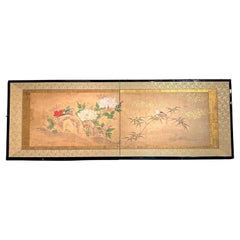
A two-fold Japanese bird and flower screen by the 19th century artist Mori Tetsuzan. The pheasants are rendered in a highly realistic style, owing to Tetsuzan’s careful observation of birds in nature. The delicate cherry blossoms and red leaves are also highly naturalistic, as is the twisting of the tree’s trunk and branches. These are gracefully contrasted with the simplified suggestions of the surrounding landscape, sparingly indicated and obscured by clouds of gold. Tetsuzan presents a warm world that captures the idyllic scenery in early spring. The scene encapsulates the popular Kyoto-based Maruyama-Shijo School style of painting in its fine balance of beautiful, deceptively simple design and detailed surface description.
Like his teacher, Maruyama Okyo, Tetsuzan largely eschewed painting phoenixes, dragons and other mythological creatures, as his interest lay in the world around him. He tried to capture the charm of everyday scenes. Depicted here are a pair of Green Pheasants, the national bird of Japan. They inhabit the farmlands and marshes of most of Japan, and many live near villages and towns: they are a very familiar bird, particularly in pre-industrial Japan. Despite this they are not widely represented in Japanese painting, Chinese Golden and Silver Pheasants being far more common.
Mori Tetsuzan (1775-1841) was the son of Mori Shuho (brother of Mori Sosen), and succeeded the family from Sosen. Together they formed a painting school known as the Mori school that was active in the Osaka area. Tetsuzan originally studied under Sosen, but later became a disciple of Maruyama Okyo. He is known as one of the ten disciples of Okyo. Tetsuzan passed his techniques on to Mori Kansai and Mori Ippo.
- Dimensions:Height: 69 in (175.26 cm)Width: 75 in (190.5 cm)Depth: 0.75 in (1.91 cm)
- Style:Edo (Of the Period)
- Materials and Techniques:
- Place of Origin:
- Period:
- Date of Manufacture:Circa 1820
- Condition:Wear consistent with age and use.
- Seller Location:Kyoto, JP
- Reference Number:1stDibs: LU2472331314422
About the Seller
5.0
Recognized Seller
These prestigious sellers are industry leaders and represent the highest echelon for item quality and design.
Established in 2001
1stDibs seller since 2016
78 sales on 1stDibs
Typical response time: 5 hours
- ShippingRetrieving quote...Shipping from: Kyoto, Japan
- Return Policy
More From This Seller
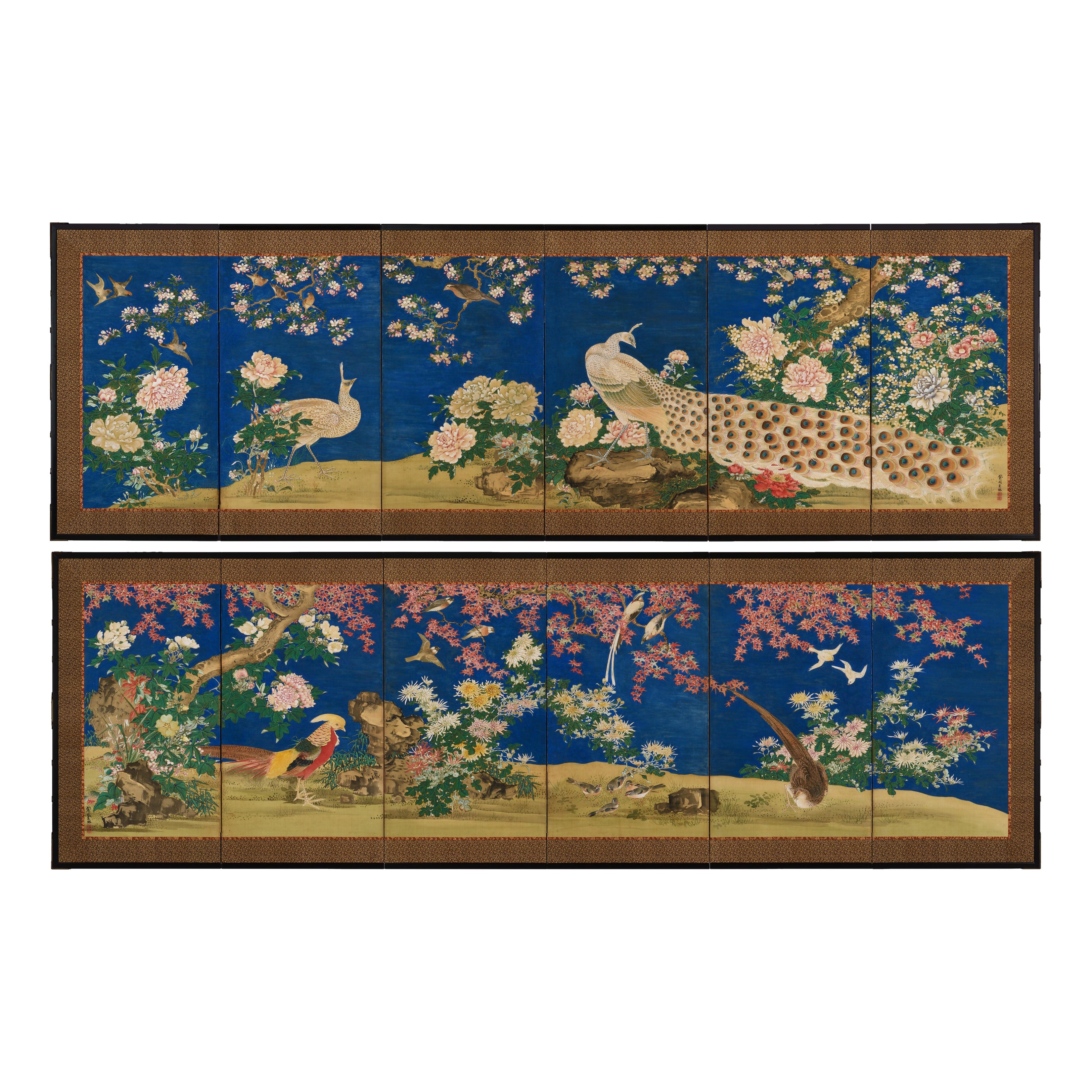
View AllMid 19th Century Japanese Screen Pair. Flowers
Birds of the Four Seasons.
Located in Kyoto, JP
Shioka Sorin (1781-1850)
Flowers & Birds of the Four Seasons
Pair of six-panel Japanese Screens. Ink, gofun and pigments on silk.
Dimensions (each screen): H. 91.5cm x W. 285cm (3...
Category
Antique Mid-19th Century Japanese Edo Paintings and Screens
Materials
Silk
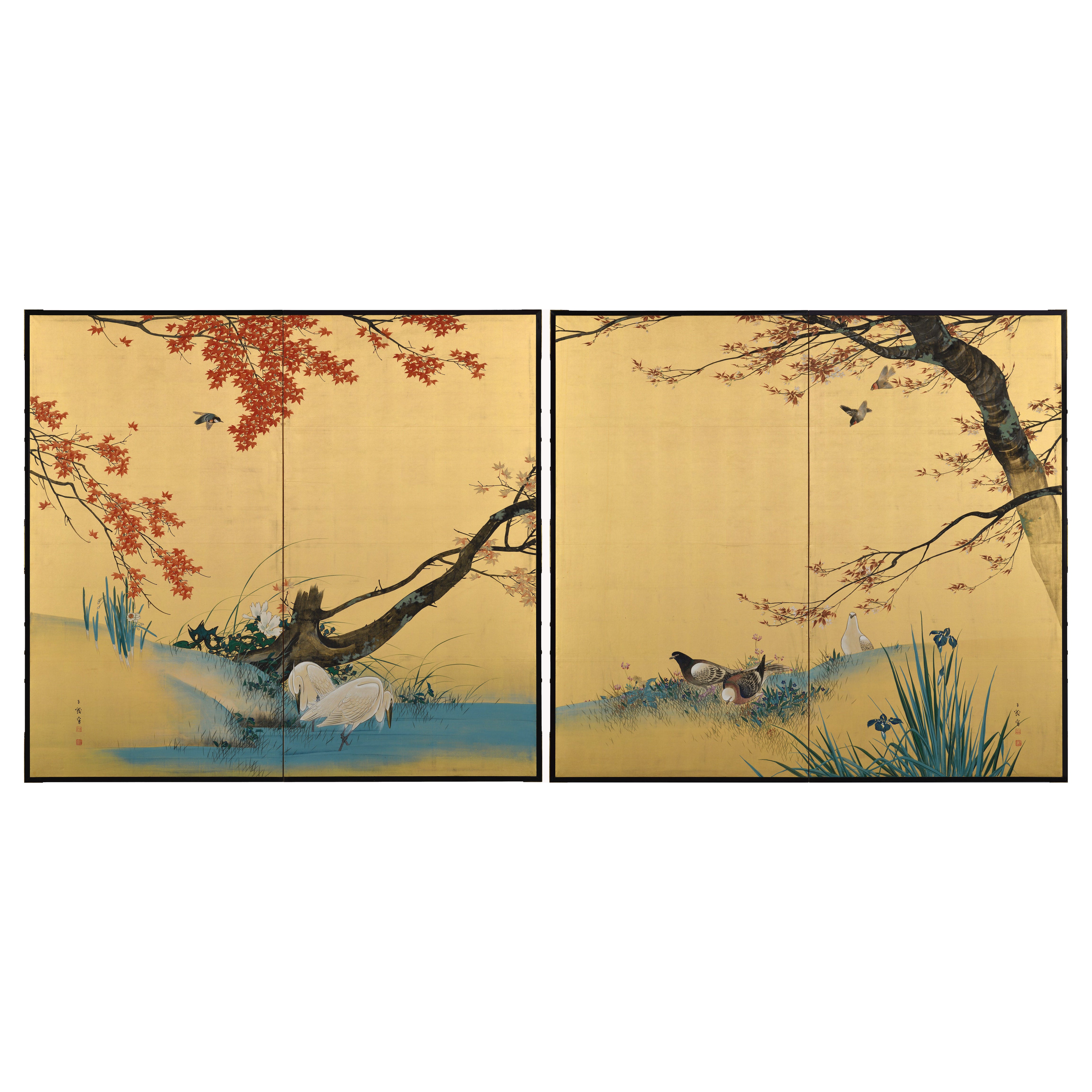
Meiji era Japanese Screen Pair, Two-panel. Spring
Autumn Birds
Flowers.
Located in Kyoto, JP
Spring and Autumn Birds & Flowers
Hasegawa Gyokujun (1863-1921)
Meiji period, circa 1900.
Ink, color and gofun on silk.
Dimensions of each screen:
H. 172 cm x W. 188 cm (68’’ x 7...
Category
Early 20th Century Japanese Meiji Paintings and Screens
Materials
Gold Leaf
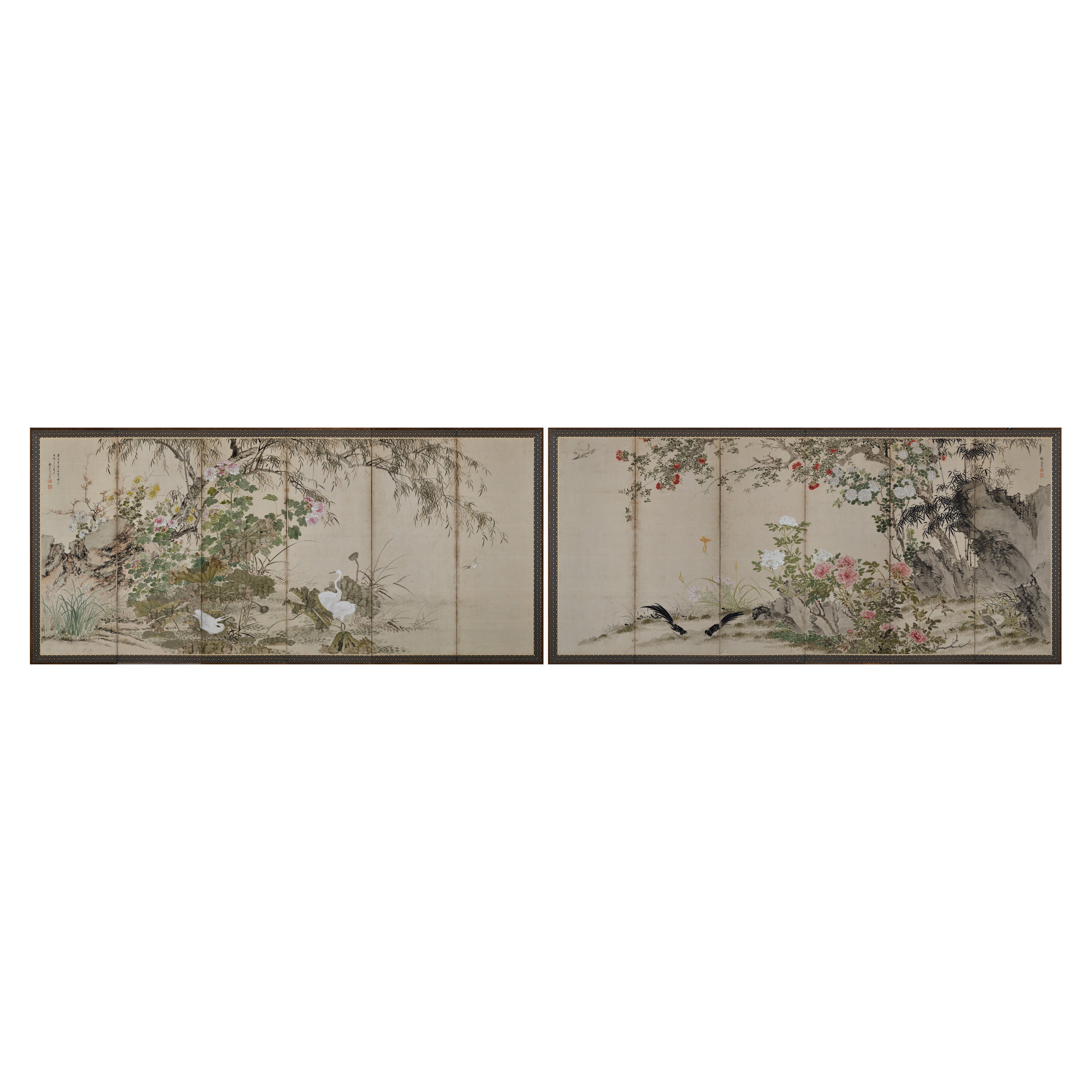
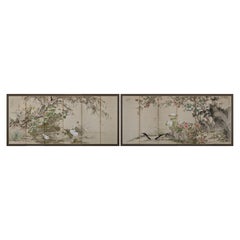
19th Century Japanese Screen Pair - Birds
Flowers of the Four Seasons
Located in Kyoto, JP
Birds & Flowers of the Four Seasons
Yamamoto Baiitsu (1783-1856)
Late Edo period, Dated 1850
A magnificent pair of six-panel Japanese folding screens by Yamamoto Baitsu, representin...
Category
Antique Mid-19th Century Japanese Edo Paintings and Screens
Materials
Wood, Paper
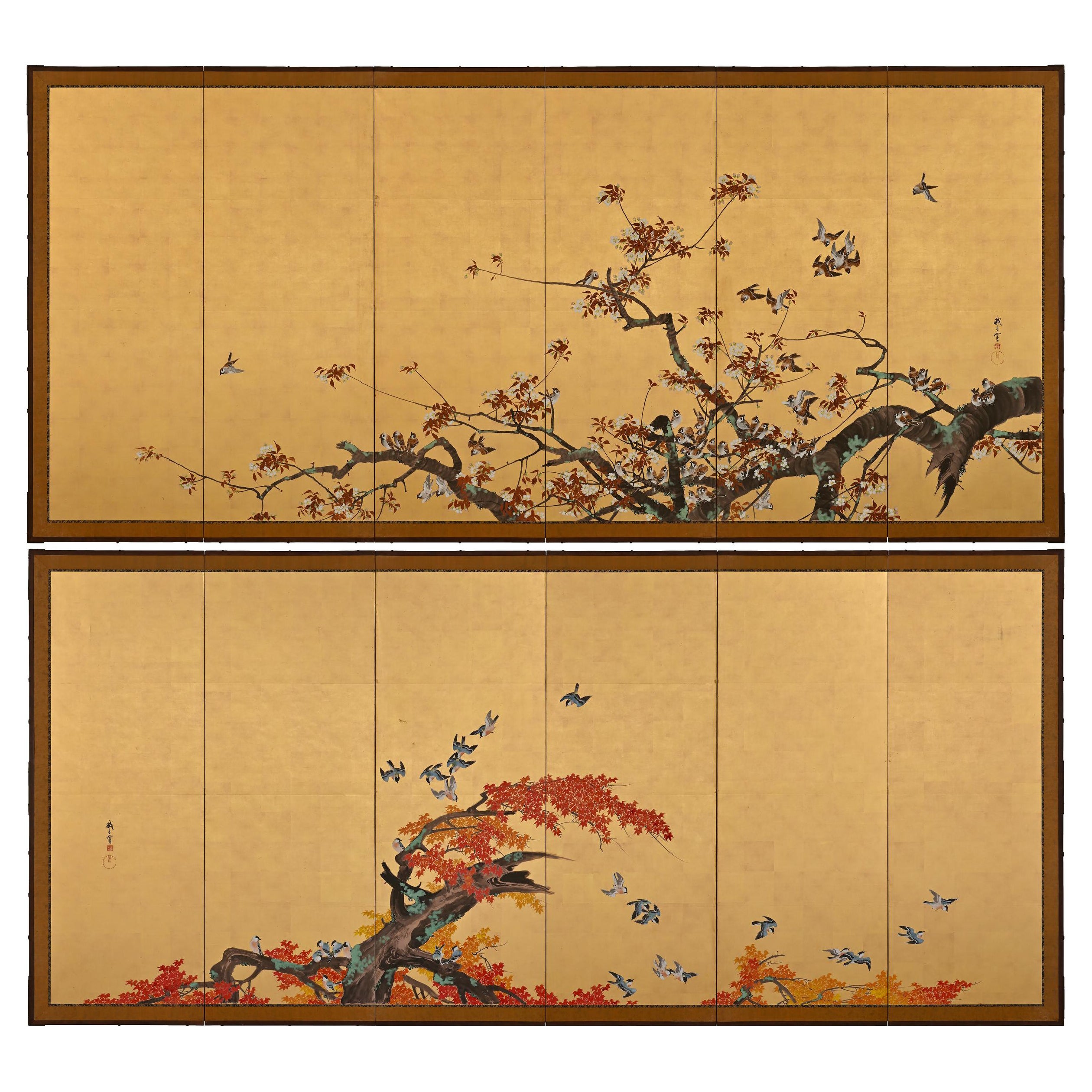
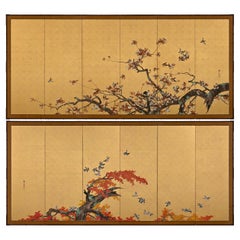
Meiji Era, Circa 1900 Japanese Screen Pair, Flowers
Birds of Spring
Autumn
Located in Kyoto, JP
Flowers & Birds of Spring and Autumn
Unknown artist.
Japan. Meiji period, circa 1900.
A pair of six-fold screens. Ink, color, gofun and gold leaf on paper.
Signed: Gaga S...
Category
Antique 1890s Japanese Meiji Paintings and Screens
Materials
Gold Leaf
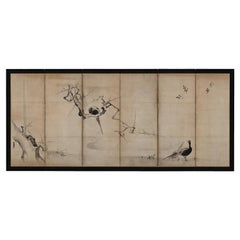
17th Century Japanese Screen. Ink Plum Tree
Birds by Kano Naonobu.
Located in Kyoto, JP
Kano Naonobu (1607-1650)
Plum Tree and Birds
Six-fold Japanese Screen. Ink and slight color on paper.
In this evocative ink work spread over a six-panel folding screen, we see the consummation of the elegance and refinement of the Edo Kano school. This 17th century screen is a rare surviving example of a large-scale bird and flower painting by Kano Naonobu, the younger brother of Kano Tanyu...
Category
Antique 17th Century Japanese Edo Paintings and Screens
Materials
Wood, Paper
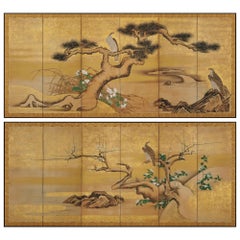
17th Century Japanese Screen Pair by Soga Nichokuan, Hawks on Pine
Plum Trees
Located in Kyoto, JP
Hawks on plum and pine
Soga Nichokuan (active circa 1625-1660)
Pair of six-fold screens.
Ink, mineral pigments, gofun, gold and speckled gold l...
Category
Antique 1640s Japanese Edo Paintings and Screens
Materials
Wood, Paper
You May Also Like
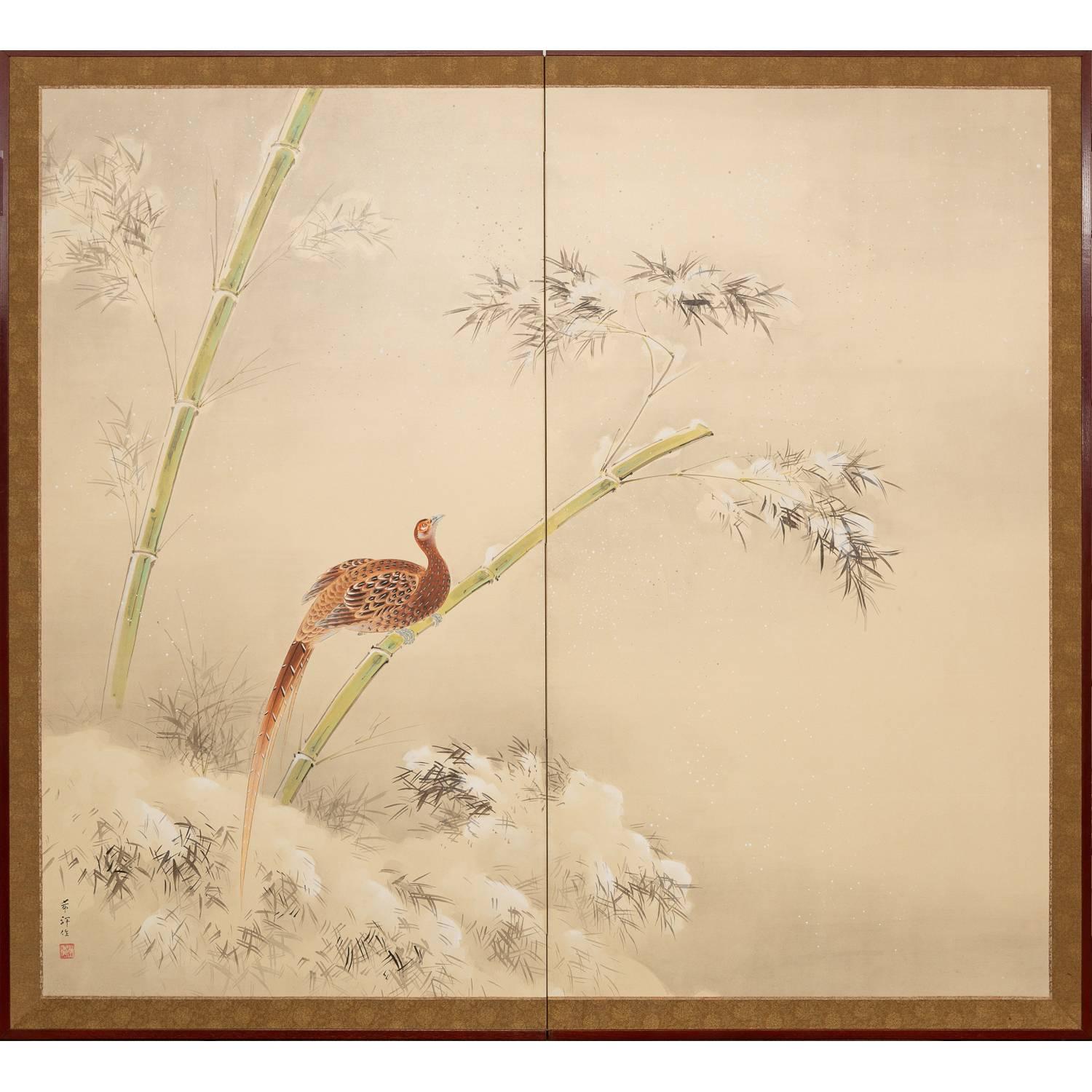
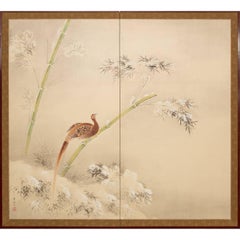
Japanese Two Panel Screen: Pheasant and Snow Covered Bamboo
Located in Hudson, NY
Early Taisho period painting (1912 - 1926) in mineral pigments on mulberry paper with a silk brocade border. Artist signature reads: Kisho saku. Kisho Shibahara (1885-1954).
Category
Early 20th Century Japanese Taisho Paintings and Screens
Materials
Paper
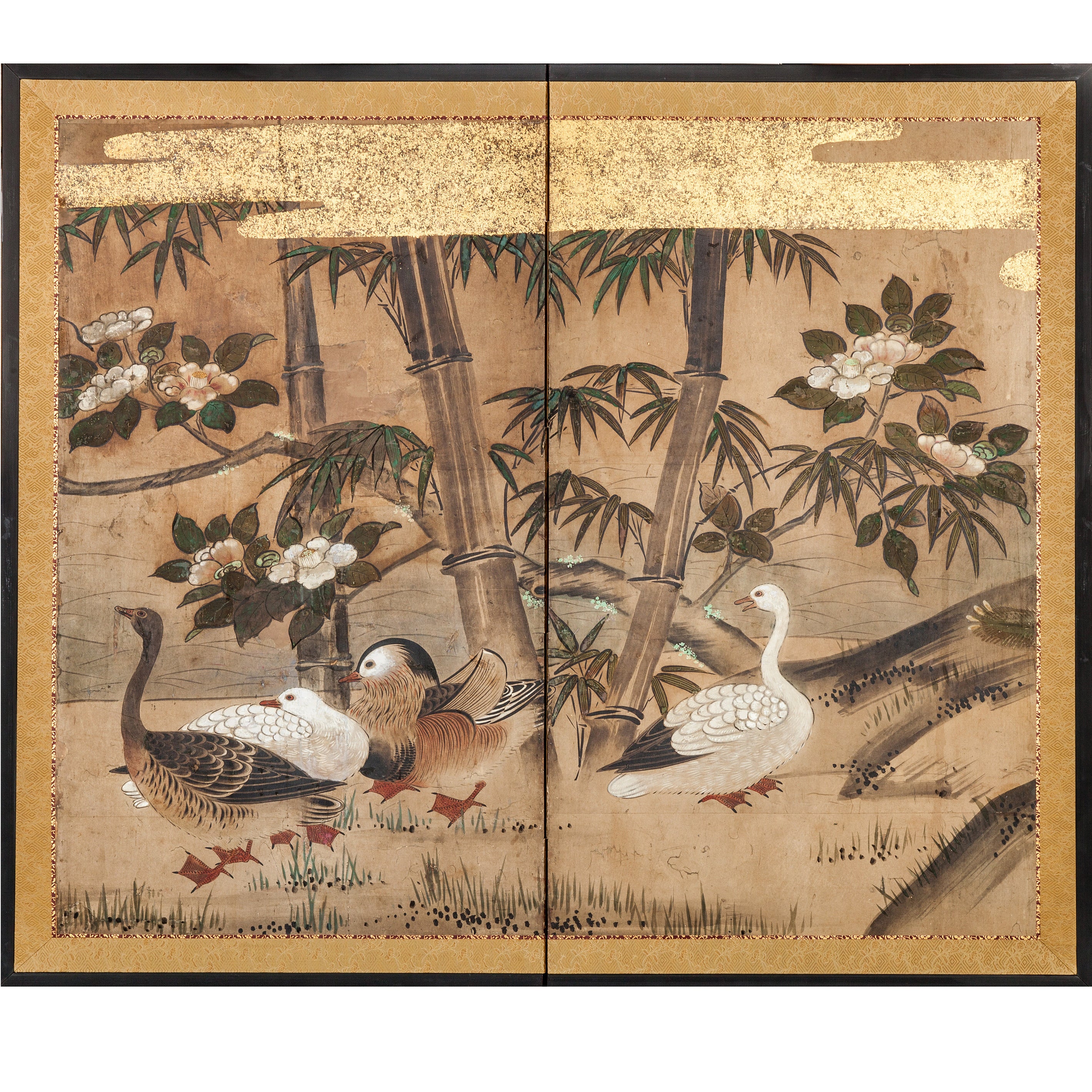
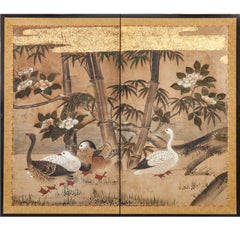
Japanese Two Panel Screen: Mandarin Ducks and Geese Among Bamboo and Flowers
Located in Hudson, NY
Japanese Two Panel Screen: Mandarin Ducks and Geese Among Bamboo and Flowers, Edo period painting (c. 1850) of mandarin ducks and geese on a grassy sh...
Category
Antique Mid-19th Century Japanese Edo Paintings and Screens
Materials
Gold
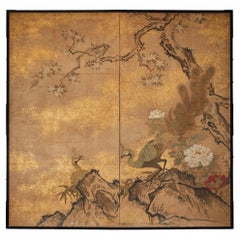
Japanese Two Panel Screen: Amorous Pea-fowl in Craggy Garden Landscape
Located in Hudson, NY
Ink and minimal pigments on mulberry paper with black lacquer trim.
Category
Antique Mid-19th Century Japanese Paintings and Screens
Materials
Lacquer, Paper
Japanese Meiji Period Painted Screen with Gold Fleck Paint
Located in Stamford, CT
Japanese Meiji period (1868-1912) painted screen with gold fleck paint. Remounted during Showa period (1926-1989).
Category
Antique Late 19th Century Japanese Meiji Paintings and Screens
Materials
Silk
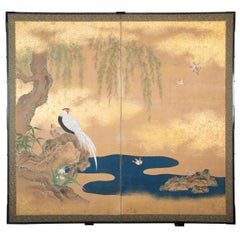
Antique 19th Century Japanese Two-Panel Screen ‘Byobu’, Kano School, Edo Period
Located in London, GB
Japanese Kano School Edo period two-panel screen depicting flowering prunus and bamboo on a rock formation, with colorful birds next to a body of water. ...
Category
Antique Mid-19th Century Japanese Edo Paintings and Screens
Materials
Gold Leaf

Japanese "Magpie and Peony" Two Panel Screen, Edo Period, 18th/19th century
Located in Austin, TX
A sublime Japanese two panel "Magpie and Peony" screen, ink and color on paper, Edo Period, late 18th or early 19th century, circa 1800, Japan.
The two panel screen features a wond...
Category
Antique Early 19th Century Japanese Edo Paintings and Screens
Materials
Copper
More Ways To Browse
Antique Cherry Blossom
Pheasant Art
Japanese Cherry Blossoms
Japanese Painting Silk Gold
Pheasant Bird
19th Century Chinese Painting On Silk
Edo Screen Gold
Japanese Silk Paintings Of Birds
Gold Pheasant
Japanese Screens Flowers
Japanese Birds Painted On Silk
Japan Art Cherry
Hand Painted Pheasant
Golden Pheasant
Chinese Pheasant
19th Silk Painting Birds Chinese
Japanese Screen Cherry
Cherry Blossom Screen