Items Similar to Early 20th Century Japanese Screen. Flowers of the Four Seasons.
Want more images or videos?
Request additional images or videos from the seller
1 of 9
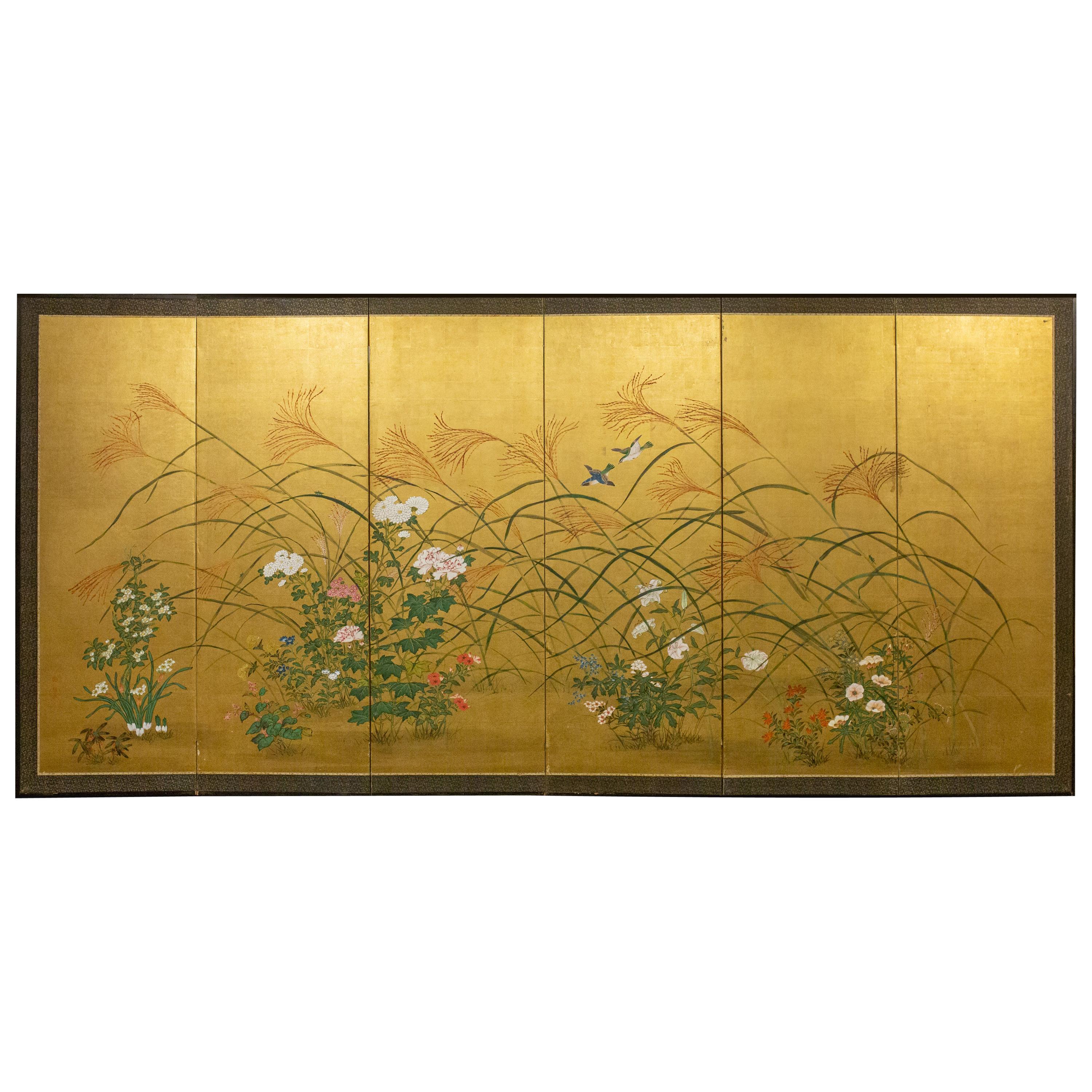
Early 20th Century Japanese Screen. Flowers of the Four Seasons.
$18,500
£14,075.79
€16,218.18
CA$26,264.21
A$28,176.80
CHF 15,113.45
MX$339,244.86
NOK 190,522.84
SEK 173,730.43
DKK 121,171.44
About the Item
Anonymous
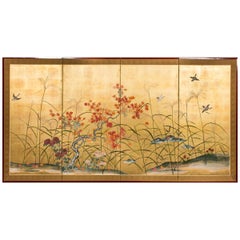
Flowers of the Four Seasons
A four-panel Japanese screen. Ink, gofun and pigments on gold leaf.
This Japanese screen is a rich visual celebration of the flowers of the four seasons, a theme deeply rooted in Japanese aesthetics and poetry. Painted on a luminous gold leaf background, it dates to the early 20th century, during a time when traditional Japanese art continued to thrive alongside growing modern influences. The screen is executed in a nihonga style—a term for Japanese-style painting developed in the Meiji period to distinguish traditional techniques from Western ones.
The screen unfolds right to left. A lush pink peony bloom at the top right suggests early spring, symbolizing wealth, honor, and feminine beauty. Japanese kerria with its bright yellow blossoms symbolize elegance and are often associated with classical Japanese poetry. Oversized red poppies and delicate irises lead us from spring into summer. Pink and white hibiscus flowers dominate the center, blooming in full summer. Hibiscus symbolize delicate beauty and the fleeting nature of life. Chinese Bellflowers with their deep blue, star-shaped blooms represent late summer and are often associated with unchanging love and honesty. Chrysanthemums, central motifs in autumnal Japanese imagery. are symbolic of longevity and rejuvenation. The tall, rust-red plumes represent amaranth and they introduce a shift in tone as the seasons cool. The rich red hues of the maple leaves signify the end of autumn and the approach of winter, creating a poignant seasonal close. Two butterflies subtly enhancing the scene’s sense of life and natural movement. Their presence reinforces the sense of seasonality and transience.
The composition reflects the Yamato-e tradition, which emphasizes lyrical naturalism and seasonal themes. The flowers are rendered with meticulous botanical precision, yet stylized enough to maintain painterly rhythm. Each plant is carefully positioned to allow overlap and layering, creating a sense of depth without violating the screen’s decorative flatness. The gold leaf background sets a timeless, luxurious backdrop. It flattens space while simultaneously radiating warmth, drawing the eye to the vibrant natural forms.
The signature reads Shosen. A number of artists of the era used this name though we remain unsure of the artist’s identity.
- Dimensions:Height: 41.5 in (105.41 cm)Width: 73 in (185.42 cm)Depth: 0.75 in (1.91 cm)
- Style:Taisho (Of the Period)
- Materials and Techniques:
- Place of Origin:
- Period:
- Date of Manufacture:Circa 1910
- Condition:Refinished. Wear consistent with age and use. The screen has just been fully remounted.
- Seller Location:Kyoto, JP
- Reference Number:1stDibs: LU2472345421292
About the Seller
5.0
Recognized Seller
These prestigious sellers are industry leaders and represent the highest echelon for item quality and design.
Established in 2001
1stDibs seller since 2016
77 sales on 1stDibs
Typical response time: 5 hours
- ShippingRetrieving quote...Shipping from: Kyoto, Japan
- Return Policy
More From This Seller
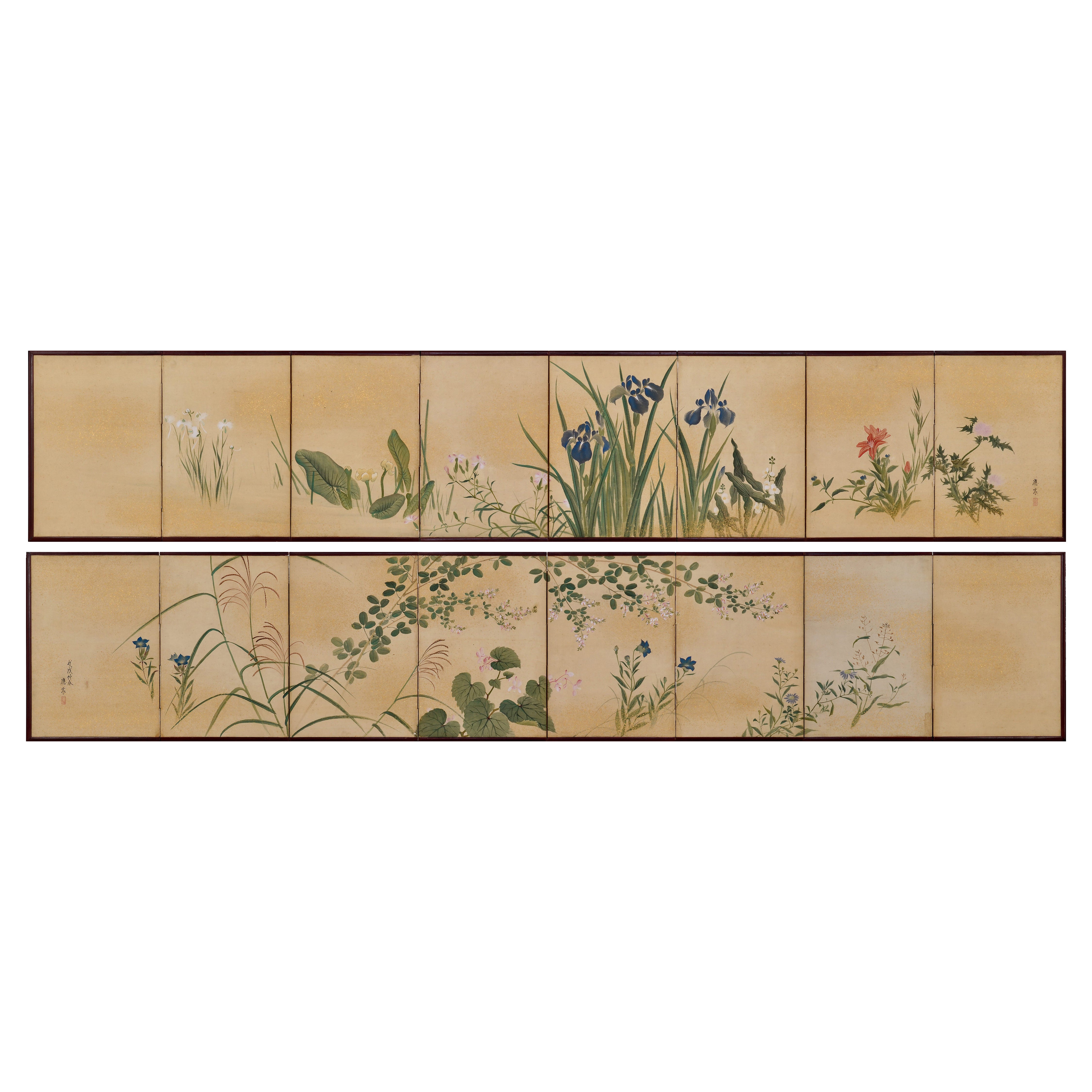
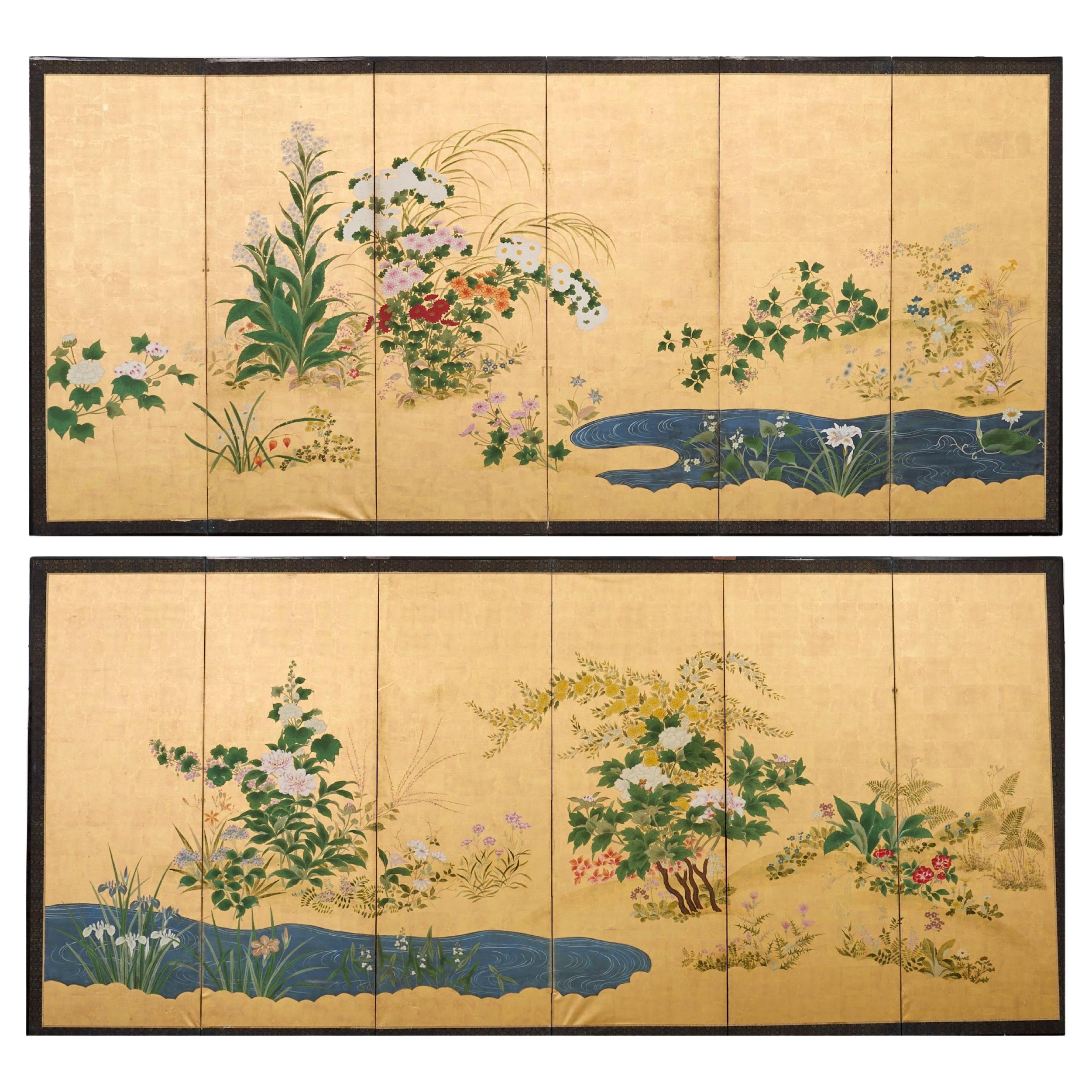
View All1838 Japanese Screen Pair. Flowers
Grasses of the Four Seasons.
Located in Kyoto, JP
Maruyama Oshin (1790-1838)
Flowers and grasses of the four seasons: dated 1838
Pair of eight-panel Japanese screens; ink, color and gold leaf on silk
Dimensions: each (2) H. 38.5 cm...
Category
Antique 1830s Japanese Edo Paintings and Screens
Materials
Silk
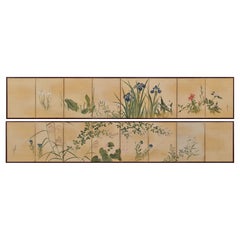
Early 20th Century Japanese Cherry Blossom Screen by Kano Sanrakuki
Located in Kyoto, JP
Cherry Blossoms
Kano Sanrakuki (1898-1981)
Showa period, circa 1930
2-panel Japanese Screen
Color, gofun and gold leaf on paper
Against a backdrop of gold-leafed ground, the lichen covered trunk and branches of the life-sized cherry blossom tree reach out and beyond the confines of the pictorial surface. The overall composition has a feeling of flatness which draws emphasis to the surface and the three-dimensionality of the cherry blossoms. Painstakingly built-up layers of thickly applied shell-white gofun detail the voluminous blossoms and cover large areas of this tour-de-force of Japanese Nihonga painting. By simplifying the background, minimizing the number of colors and depicting the blossoms with such heavy relief, the artist has emphasized the stunning presence of the cherry tree. The type of tree depicted is the Yae-Zakura; a double-layered type of cherry blossom famed for its beauty and strength. When we think of Japanese cherry blossoms, the first thing that comes to mind is Somei Yoshino variety, which has a single flower with five almost white petals. This type is fragile and easily blown away by strong wind or rain. Most of the double-flowered cherry blossoms begin to bloom when the Somei-Yoshino falls, and the flowering period lasts longer than that of the Somei-Yoshino.
Kano Sanrakuki originally studied painting at the Kyoto City Arts and Crafts School under the tutelage of Yamamoto Shunkyo...
Category
Early 20th Century Japanese Showa Paintings and Screens
Materials
Gold Leaf
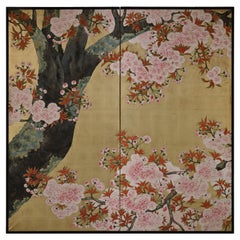
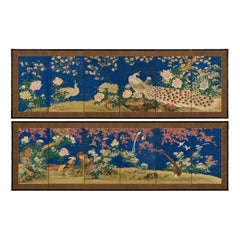
Mid 19th Century Japanese Screen Pair. Flowers
Birds of the Four Seasons.
Located in Kyoto, JP
Shioka Sorin (1781-1850)
Flowers & Birds of the Four Seasons
Pair of six-panel Japanese Screens. Ink, gofun and pigments on silk.
Dimensions (each screen): H. 91.5cm x W. 285cm (3...
Category
Antique Mid-19th Century Japanese Edo Paintings and Screens
Materials
Silk
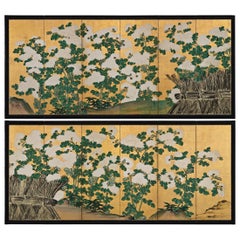
Mid-18th Century Japanese Screen Pair, One Hundred Flowers, Chrysanthemums
Located in Kyoto, JP
Omori Soun (b. 1704)
Chrysanthemums - One Hundred Flowers
A Pair of Six-fold Japanese Screens. Ink, color, gofun and gold leaf on paper.
Dating ...
Category
Antique Mid-18th Century Japanese Edo Paintings and Screens
Materials
Gold Leaf
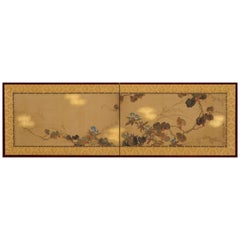
Japanese Screen Painting, Early 19th Century, Autumn Flowers by Sakai Hoitsu
Located in Kyoto, JP
A two-fold Japanese screen by the Rimpa school artist Sakai Hoitsu (1761-1828), Japan, 19th century, Edo period.
This small Japanese folding screen pai...
Category
Antique Early 19th Century Japanese Edo Paintings and Screens
Materials
Wood, Silk
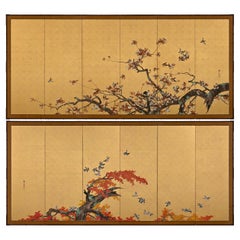
Meiji Era, Circa 1900 Japanese Screen Pair, Flowers
Birds of Spring
Autumn
Located in Kyoto, JP
Flowers & Birds of Spring and Autumn
Unknown artist.
Japan. Meiji period, circa 1900.
A pair of six-fold screens. Ink, color, gofun and gold leaf on paper.
Signed: Gaga S...
Category
Antique 1890s Japanese Meiji Paintings and Screens
Materials
Gold Leaf
You May Also Like
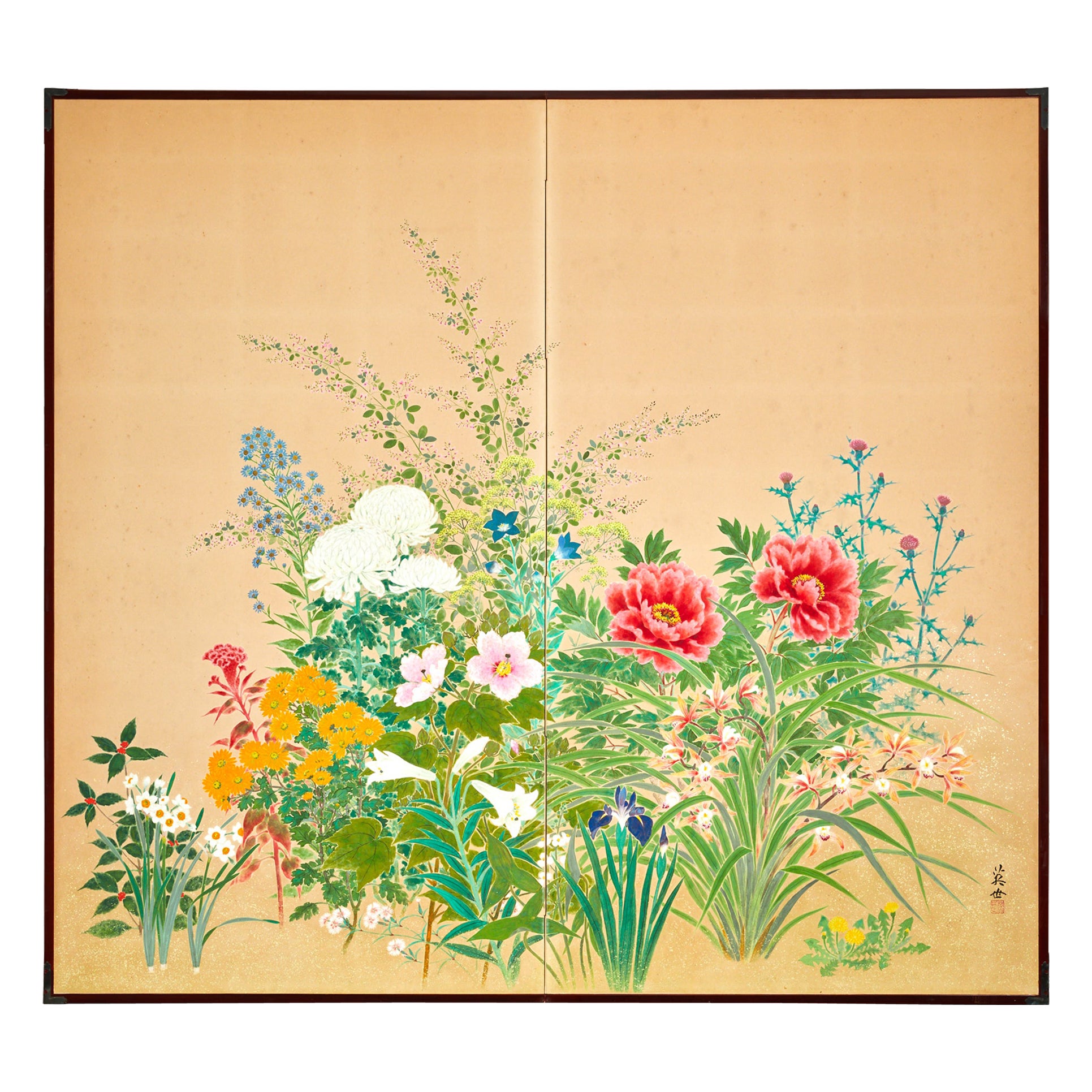
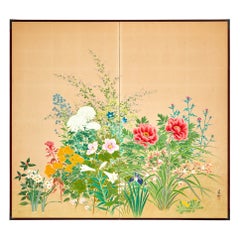
Japanese Two Panel Screen: Seasonal Flowers
Located in Hudson, NY
Peonies, irises, lillies, paperwhites, cockscombs, thistle and other various seasonal flowers in mineral pigmnets on mulberry paper. Oxblood lacquer trim with beautiful bronze mount...
Category
Early 20th Century Japanese Paintings and Screens
Materials
Bronze
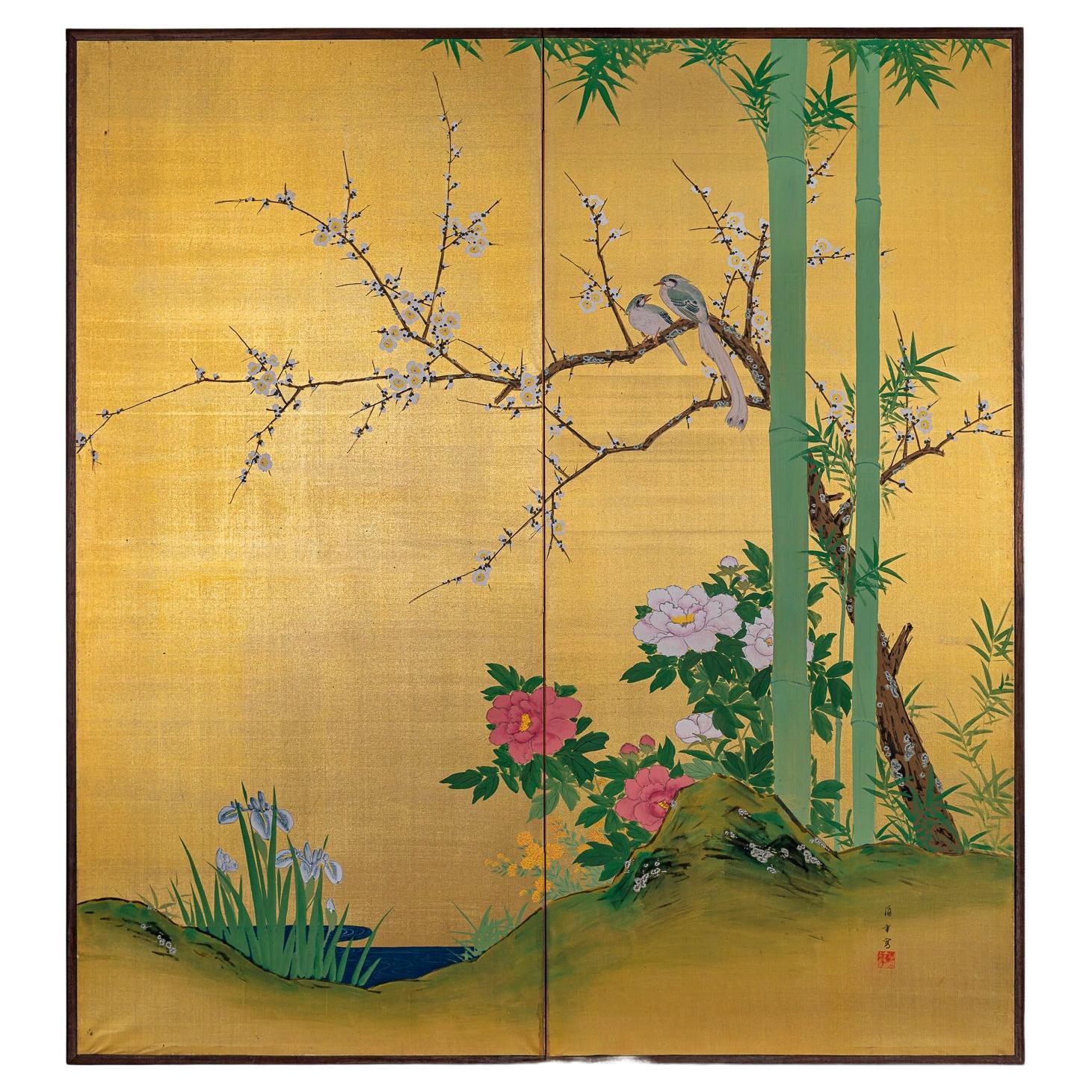
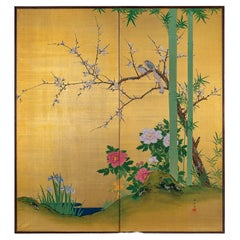
Japanese Two Panel Screen: Summer Flowers
Located in Hudson, NY
Screen depicts Summer flowers and birds on gilded silk. Signature reads: Konishi Fukunen. Notes about Artist: Konishi Fukunen (1887-1959) was born the second son of the Paper mounting specialist Konishi Uhei in Takeo, Fukui prefecture in the mid Meiji period. In 1902 he was sent to Kyoto to study painting under Suzuki Shonen...
Category
Mid-20th Century Japanese Paintings and Screens
Materials
Silk
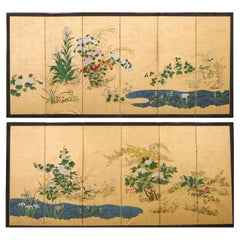
Japanese Six-Panel Screen, a Garden for All Seasons
Located in Hudson, NY
An imaginary garden with flowers from all seasons including spring lilies, summer hibiscuses, autumn chrysanthemums, and winter berries. Wild autumn grasses move in a soft breeze wit...
Category
Antique 1890s Japanese Meiji Paintings and Screens
Materials
Gold Leaf

Pair of Japanese Meiji Screens Blossoms of Spring, Summer and Autumn
Located in Rio Vista, CA
Amazing pair of late 19th/early 20th century Japanese Meiji period byobu screens depicting flowering plants and blossoms of the spring, summer, and autumn. Painted in the Nihonga sch...
Category
Antique 19th Century Japanese Meiji Paintings and Screens
Materials
Brass, Gold Leaf
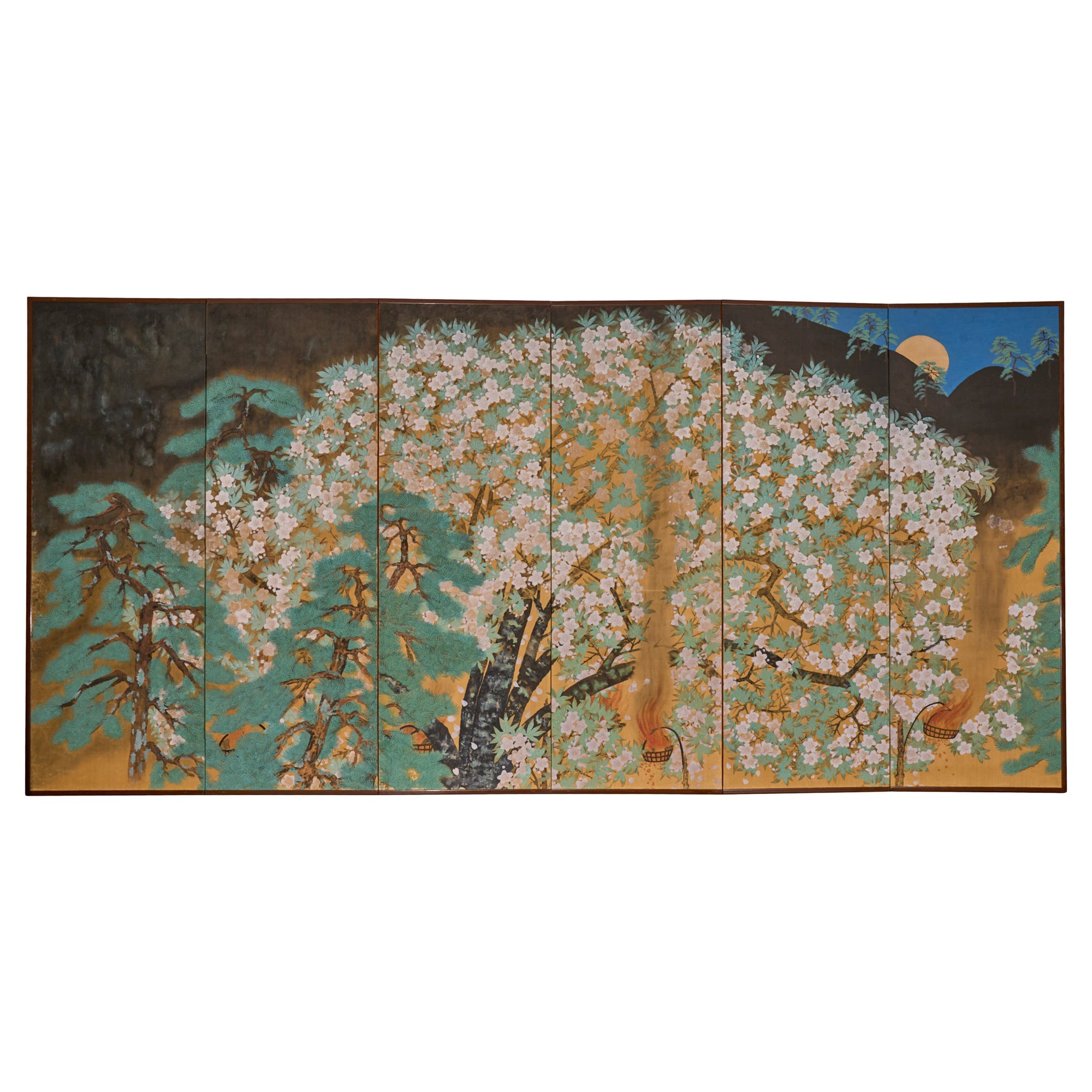
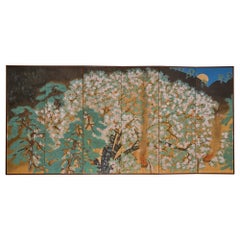
Japanese Six Panel Screen – Yozakura
Located in Hudson, NY
Yozakura or Cherry blossom viewing in the moonlight, with fire baskets illuminating the blooms. Mineral pigments on paper with brown lacquer trim.
Category
Antique Late 19th Century Japanese Paintings and Screens
Materials
Lacquer, Paper
Japanese Four Panel Screen, Autumn Flowers
Located in Hudson, NY
Taisho period painting (1912-1926) of a fall landscape with wild grasses, red maple, and dahlias. Mineral pigments on gold with a silk brocade border and beautiful metal mounts.
Category
Vintage 1920s Japanese Taisho Paintings and Screens
Materials
Silk, Wood, Paper
More Ways To Browse
Japanese 20th Century Modern Furniture
Japanese Beauties
Antique Poppies
Japanese Screen 20th Century Four Panel
Four Seasons Panels
Japanese Four Seasons
Chinese Lattice
Japanese Screen Black
Antique Mandala
Chinese Scroll Paintings
Heian Period
Crane Screen
Edo Scroll
Hanging Screen
Japanese Painting Tree
Japanese Screen 20th Century Four Panel
Chinese Dynasty Painting
Chinoiserie Art Panel