Items Similar to Early 20th Century kimono textile art "Sealine ~Transitions~ " by ikasu Japan
Video Loading
Want more images or videos?
Request additional images or videos from the seller
1 of 12
Early 20th Century kimono textile art "Sealine ~Transitions~ " by ikasu Japan
$1,100
£839.07
€955.95
CA$1,546.06
A$1,686.71
CHF 893.10
MX$20,211.60
NOK 11,374.16
SEK 10,400.83
DKK 7,137.94
About the Item
[Story behind the work]
This artwork uses two pieces - white vintage kimono fabric for sea and green vintage obi (sash for kimono) fabric for seashore, to depict a sealine from bird view.
The foam left from the waves on the seashore is created by acrylic painting.
[Period]
The artwork uses obi and kimono textiles both from Showa era, around 1960ies.
[Meaning of patterns and colors]
In Japanese culture, the sea and shore represent the eternal meeting of movement and stillness - a dialogue between the vast and the grounded.
The sea embodies depth, mystery, and the boundless flow of time, while the shore signifies presence, return, and human connection to the natural world.
Ancient Japanese poetry often captures this encounter: waves that come and go like thoughts or memories, leaving quiet traces on the sand. The shifting boundary between sea and land reflects the Buddhist sense of impermanence - that nothing is fixed, and all things are in gentle motion.
In kimono textiles, the sea and shore motifs express both serenity and vitality. The rhythmic curves of waves and the delicate patterns of foam speak of life’s continuity, of moments that vanish yet remain within the heart.
Together, they form a timeless metaphor for harmony - between strength and softness, movement and pause, the eternal and the fleeting.
[About the Material]
The background fabric of the "sea" has woven ground pattern - "jimon"地紋, that gives it shimmery glow depending on the angle that light hits the fabric surface.
- Creator:Kimono ikasu (Artist)
- Dimensions:Height: 1.19 in (3 cm)Diameter: 19.69 in (50 cm)
- Style:Japonisme (In the Style Of)
- Materials and Techniques:
- Place of Origin:
- Period:
- Date of Manufacture:2024
- Condition:All the works are made from real kimonos, antiques and vintages. For this reason, the fabric may have traces of long-term use and minor fabric damages. In case there are any scratches or stains, we always add a photo of the area on the item page.
- Seller Location:Setagaya City, JP
- Reference Number:1stDibs: LU10079247505162
About the Seller
No Reviews Yet
Vetted Professional Seller
Every seller passes strict standards for authenticity and reliability
1stDibs seller since 2024
- ShippingRetrieving quote...Shipping from: Setagaya City, Japan
- Return Policy
More From This Seller
View AllEarly 20th Century kimono textile art " Rising Sun ~ Renewal ~ " by ikasu Japan
By Kimono ikasu
Located in Setagaya City, JP
[Story behind the work]
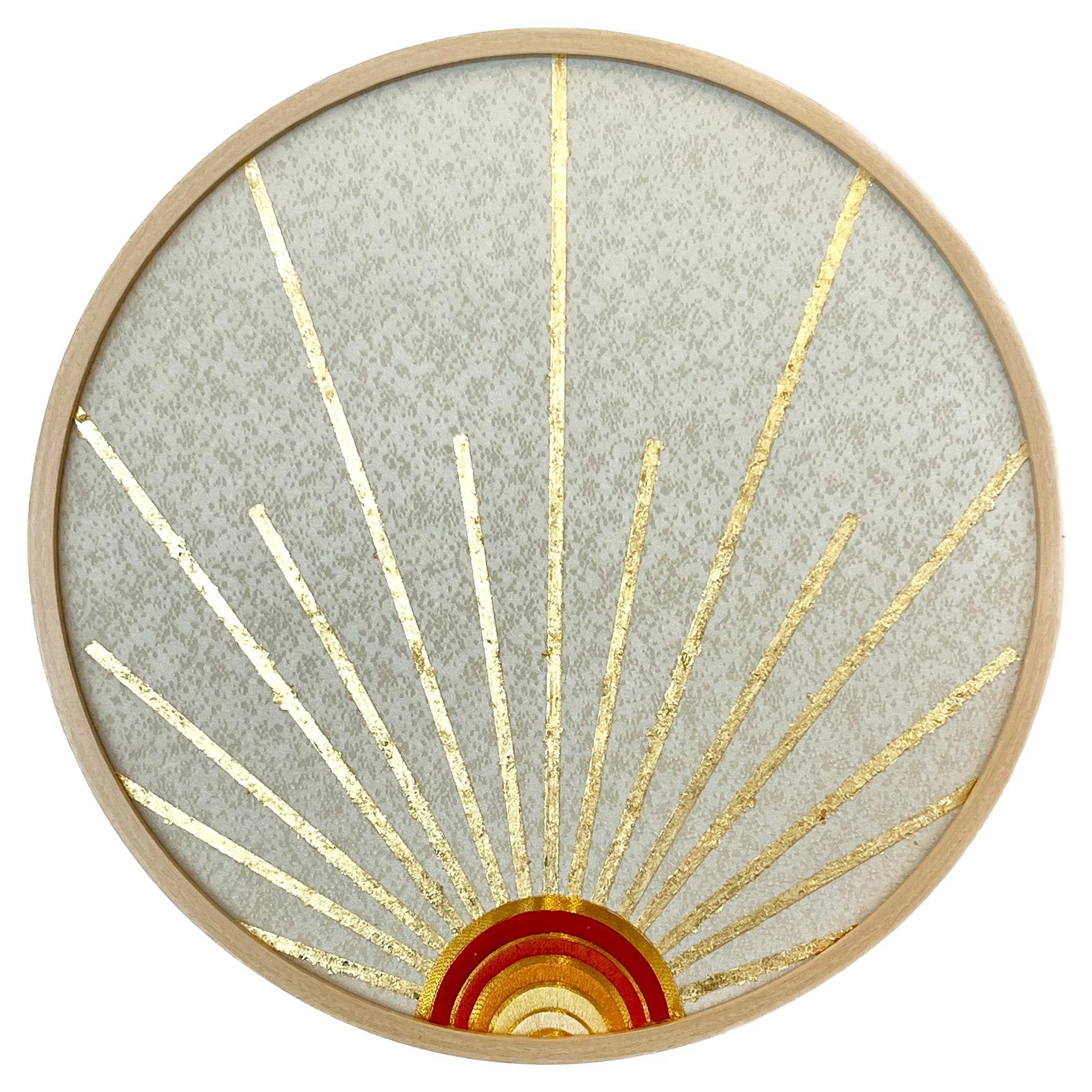
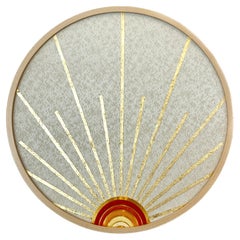
This artwork uses vintage kimono fabric for background and embroidery inclusion from vintage obi (kimono sash) to depict the rising sun.
Sunlight is created...
Category
Vintage 1960s Japanese Japonisme Paintings and Screens
Materials
Gold Leaf
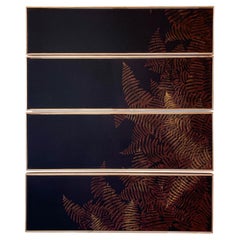
Vintage kimono textile art " Fern ~ Connection to Nature ~" by ikasu Black Japan
By Kimono ikasu
Located in Setagaya City, JP
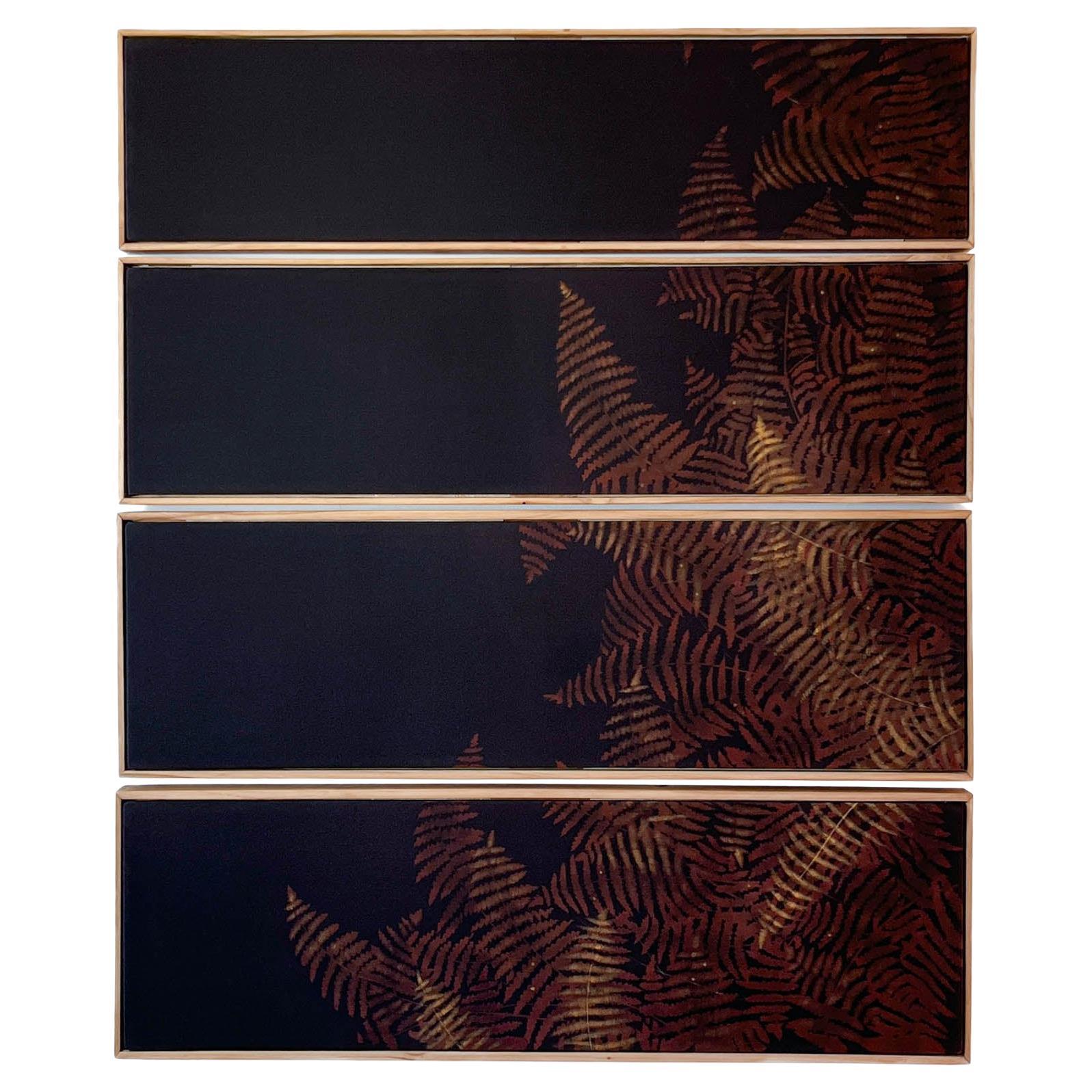
This work uses an antique tomesode (festive kind of kimono) with fern design to evoke feelings of tranquility, harmony, and appreciation for the beauty of the environment. Can be used both vertically and horizontally.
It is elegantly framed with paulownia wood originally used for kimono chest-of-drawers, and is filled with storytelling and sense of luxury.
I used pieces of kimono that could no longer be used as clothing and kiritansu chest-of-drawers that would normally be discarded to create the ultimate upcycled piece.
<< Explanation of colors and patterns
In Japanese traditional culture, ferns, particularly the Japanese painted fern (Athyrium niponicum), hold several meanings and symbolisms:
・Elegance and Beauty: Ferns are admired for their graceful, delicate appearance and intricate leaf patterns. In Japanese aesthetics, they are appreciated for their natural beauty and are often used in gardens, landscapes, and floral arrangements to add a sense of refinement and elegance.
・Resilience and Perseverance: Ferns are known for their ability to thrive in diverse environments, including shady forests, rocky cliffs, and damp soil. Their resilience in the face of challenging conditions is seen as a symbol of endurance and perseverance. In Japanese culture, ferns may represent the ability to overcome adversity and flourish despite obstacles.
・Connection to Nature and Tranquility: Ferns are native to forested areas and are often associated with the natural world. In Japanese traditional culture, they symbolize a deep connection to nature and the importance of maintaining harmony with the environment. The lush green foliage of ferns evokes feelings of tranquility and peacefulness, making them popular motifs in Zen gardens and traditional landscape paintings.
・Purity and Simplicity: Ferns are emblematic of simplicity and purity in Japanese aesthetics. Their unassuming beauty and understated elegance reflect the principles of wabi-sabi, an aesthetic worldview that values imperfection, impermanence, and simplicity. Ferns may be used in tea ceremonies, Ikebana (flower arranging), and other traditional arts to evoke a sense of tranquility and appreciation for life's fleeting moments.
Overall, ferns in Japanese traditional culture symbolize elegance, resilience, connection to nature, purity, and simplicity. Their presence in art, literature, and landscape design underscores their enduring significance as symbols of natural beauty and spiritual resonance.
<< Characteristics of the fabric
This vintage textile is hand-painted with a traditional Japanese technique called "yuzen".
<< About the frame
Kiritansu - chest-of-drawers for kimono, is traditionally made from paulownia wood, a uniquely Japanese material closely tied to the world of kimonos.
Paulownia wood is known as the lightest wood in Japan, prased for its natural luster, resistance to moisture, and resilience against cracking. Since ancient times, it has been used in crafting furniture, chests, and musical instruments.
During the Edo period, it became customary to store cherished kimonos in paulownia chests...
Category
Vintage 1960s Japanese Japonisme Paintings and Screens
Materials
Silk, Wood
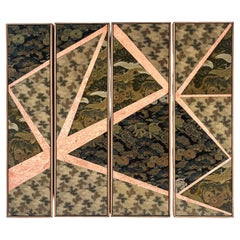
19th Century obi textile art " Pine forest ~ Longivety ~ " by ikasu Green Japan
By Kimono ikasu
Located in Setagaya City, JP
<< Story behind the work
Obi fabric I used for this artwork is taken from three different over 100-years-old antique sashes, and is framed in wood taken from antique ...
Category
Early 20th Century Japanese Japonisme Paintings and Screens
Materials
Gold Leaf
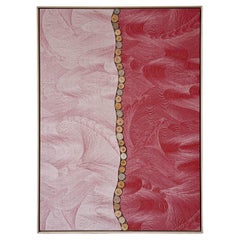
Vintage kimono textile art " Sunset Timelapse ~ Ephemerality ~" ikasu Red Japan
By Kimono ikasu
Located in Setagaya City, JP
<
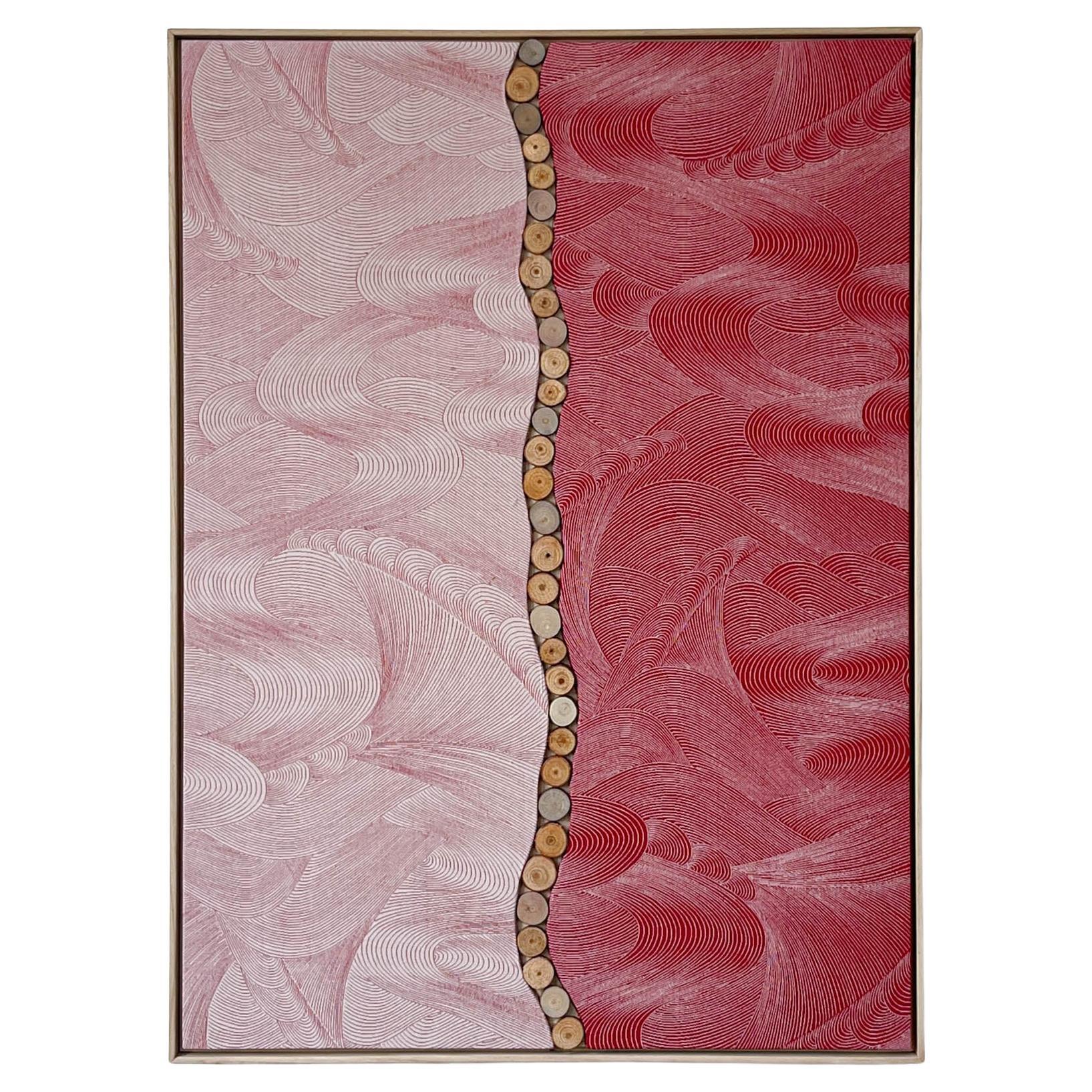
The art piece uses two sides - front and reverse - of the same kimono, to show beautiful sea surrounding Japan, in hues and in late sunset, as a timelapse.
The frame for this work is made of paulownia wood taken from antique Kiritansu - chest-of-drawers for kimono.
I use antique kiritansu that can’t be used as furniture anymore to create basis and frames for my works. It adds them even more authentic atmosphere of traditional wabisabi spirit. Can you feel it?
<< Period / Story
The kimono used in this piece was originally crafted during Showa period (around 1960ies).
<< Explanation and meaning of pattern and colors
Sea waves, depicted in two color variations here, are a symbol of transience and Impermanence in Japanese culture. The ebb and flow of the tides, the ever-changing currents, and the relentless motion of the waves serve as reminders of the fleeting nature of life. This artwork featuring the sea convey themes of impermanence, reminding viewers to cherish the present moment and appreciate the beauty of life's fleeting moments.
The theme of impermanence is strengthen by two colors of the sea - the lighter in early hues and the darker when the sun is just about to set in the sea.
<< About the frame
This artwork frame is crafted from paulownia wood, a uniquely Japanese material closely tied to the world of kimonos, and it serves to convey the refined beauty of Japanese nature.
Paulownia wood is known as the lightest wood in Japan, prased for its natural luster, resistance to moisture, and resilience against cracking. Since ancient times, it has been used in crafting furniture, chests, and musical instruments.
Paulownia wood is closely linked to kimono culture. During the Edo period (17th cent.~), it became customary to store cherished kimonos in paulownia chests...
Category
Vintage 1960s Japanese Japonisme Paintings and Screens
Materials
Silk, Wood
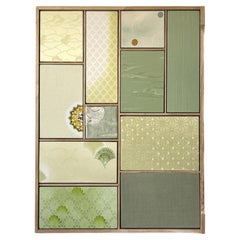
Antique kimono textile art " Kobachi ~ Green Collection ~" by ikasu Japan
By Kimono ikasu
Located in Setagaya City, JP
[Story behind the work]
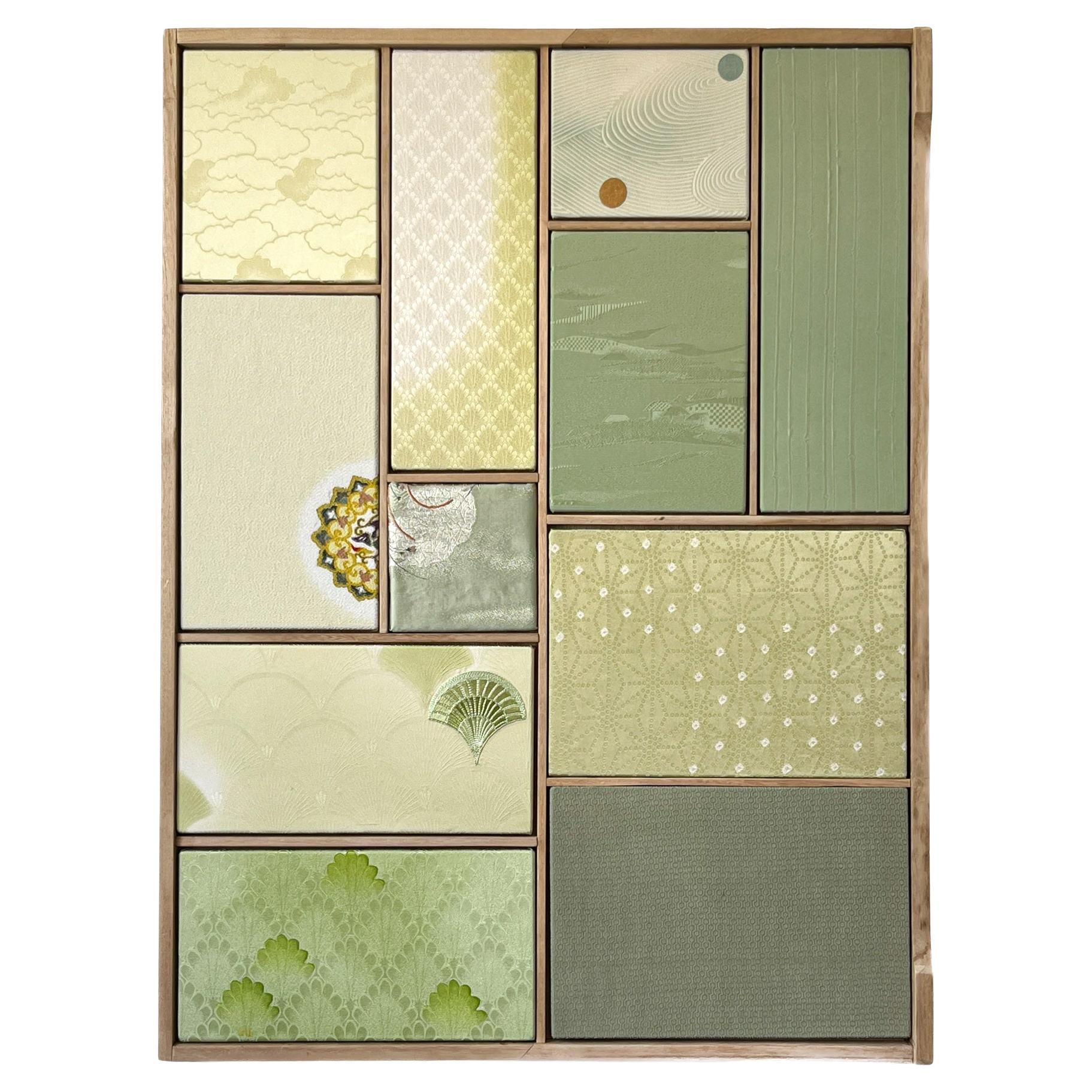
This work is inspired by the green color palette, and is framed in paulownia wood originally used for a kimono chest-of-drawers.
It is elegantly framed with ...
Category
Vintage 1920s Japanese Japonisme Paintings and Screens
Materials
Silk, Wood
Vintage Obi textile art " Golden Landscape ~ Perennity ~" by ikasu Gold Japan
By Kimono ikasu
Located in Setagaya City, JP
<
This obi is a stunning example of traditional Japanese textile artistry. It showcases a waterside landscape using a visual technique known as "kumodori," where ocean waves a...
Category
Vintage 1970s Japanese Japonisme Decorative Art
Materials
Canvas, Silk
You May Also Like
Japanese Two Panel Screen: Antique Kimono Fabric Mounted on Screen
Located in Hudson, NY
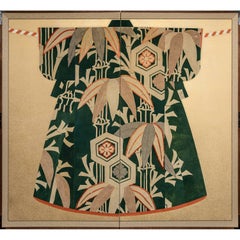
Japanese Two Panel Screen: Late Nineteenth Century Kimono Fabric Mounted on Early Twentieth Century Screen. In the Heian period (eighth century to the twelfth century), noblemen wou...
Category
Early 20th Century Japanese Meiji Paintings and Screens
Materials
Silk, Wood, Paper
Silk Scroll Painting by Matsumura Keibun, 18th Century
By Matsumura Keibun
Located in New York, NY
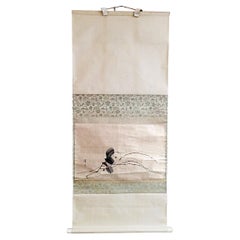
A silk parchment scroll with a Camellia Flower painting, by Japanese artist Matsumura Keibun (1779-1843).
The younger half-brother to Matsumura Goshun, founder of the Shijo schoo...
Category
Antique 1790s Asian Edo Paintings and Screens
Materials
Silk, Parchment Paper
Japanese Antique Fukusa Textile Art Meiji Period
Located in Atlanta, GA
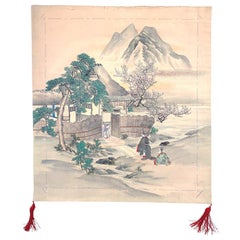
A Japanese silk Fukusa panel circa late 19th-early 20th century of Meiji Period. The front was beautifully decorated with Yuzen-zome, a labor intensive resist-dye technique invested by an artist monk Miyazaki Yuzensai (1654 -1736) of Edo period. The front cover likely depicts a scene from the Tale of Genji, showing a nobleman and his servant pays a visit to a lady in a fenced thatch-roof house under a high peak. The details of blossom trees and pines, as well as the characters, and scenery with a gradual color are astounding. It is telling that the Yuzen dying was used such an mastery.
The piece has a red silk backing and still retains two red tassels on the lower corners as well as decorative stitches along the edges. There is a patched design on the back likely a Mon symbol (family crest).
Fukusa is a traditional Japanese textile...
Category
Early 20th Century Japanese Japonisme Textiles
Materials
Silk
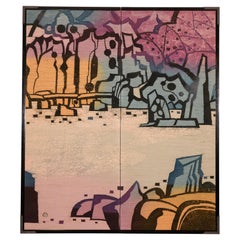
Japanese Two Panel Screen: Textile Landscape
Located in Hudson, NY
"The Garden of Tenryu-ji Temple" Mineral pigments on fabric in a black lacquer trim with bronze mounts. signature and seal read: Minagawa Taizo. ...
Category
20th Century Japanese Paintings and Screens
Materials
Fabric, Lacquer
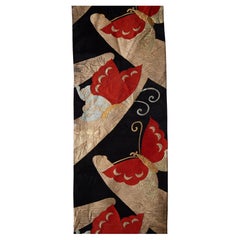
Vintage Japanese Obi Textile, Mid 20th C
Located in Istanbul, TR
An obi in very good condition that can be utilized as a table runner, wall hanging.
Category
Mid-20th Century Japanese Pillows and Throws
Materials
Silk
Early 19th Century Silk Chinese Dragon
Clouds Embroidery
Located in New York, NY
Early 19th Century Silk Chinese Dragon & Clouds Embroidery
9'10" x 10' - 300 x 305
Category
Antique 1820s Chinese Textiles
Materials
Silk