Items Similar to Elegant Horse Screen. In style of Kano Tanshin
Want more images or videos?
Request additional images or videos from the seller
1 of 8
Elegant Horse Screen. In style of Kano Tanshin
$8,500
$13,83038% Off
£6,422.22
£10,449.3438% Off
€7,363.37
€11,980.6438% Off
CA$11,862.73
CA$19,301.3638% Off
A$12,907.55
A$21,001.3438% Off
CHF 6,834.39
CHF 11,119.9538% Off
MX$155,286.64
MX$252,660.4938% Off
NOK 86,781.50
NOK 141,198.6038% Off
SEK 79,398.99
SEK 129,186.8338% Off
DKK 55,014.62
DKK 89,512.0238% Off
About the Item
Ink on gold.
This continuation of equine grace unfolds across a stunning gold-leaf backdrop, capturing the essence of nobility that horses represent in Japanese lore.
The screen depicts these majestic creatures amidst nature, their silhouettes etched with artistic precision that conveys both movement and stillness. Horses in Japanese art are often symbols of wealth and prestige, and this screen is a testament to that tradition, offering a glimpse into the cultural reverence for these animals.
Being unsigned, this screen echoing the style of Kano Tanshin.
Kano Tanshin Morimasa (1653-1718) was the son of Kano Tanyu (1602-1674) by his second wife. Tanyu had originally planned for Kano Toun Masanobu to succeed him as head of his Kajibashi Kano branch; the late birth of his son, however, altered that plan. Upon his father’s death in 1674, Tanshin became head of the Kajibashi. He painted in the manner of his father; his work characterized by a light, carefree style, with an exquisite sense of color. Tanshin received the honorary Buddhist title of Hogan (eye of the law) in 1715. This tea-ceremony screen predates that.
- Similar to:Kano Tanshin (Artist)
- Dimensions:Height: 66.93 in (170 cm)Width: 146.86 in (373 cm)Depth: 0.79 in (2 cm)
- Style:Edo (Of the Period)
- Materials and Techniques:
- Place of Origin:
- Period:
- Date of Manufacture:Unknown
- Condition:Minor losses.
- Seller Location:Fukuoka, JP
- Reference Number:1stDibs: LU8121239721112
About the Seller
5.0
Vetted Professional Seller
Every seller passes strict standards for authenticity and reliability
Established in 1998
1stDibs seller since 2023
62 sales on 1stDibs
Typical response time: 1 hour
- ShippingRetrieving quote...Shipping from: Tambon Hang Dong, Thailand
- Return Policy
More From This Seller
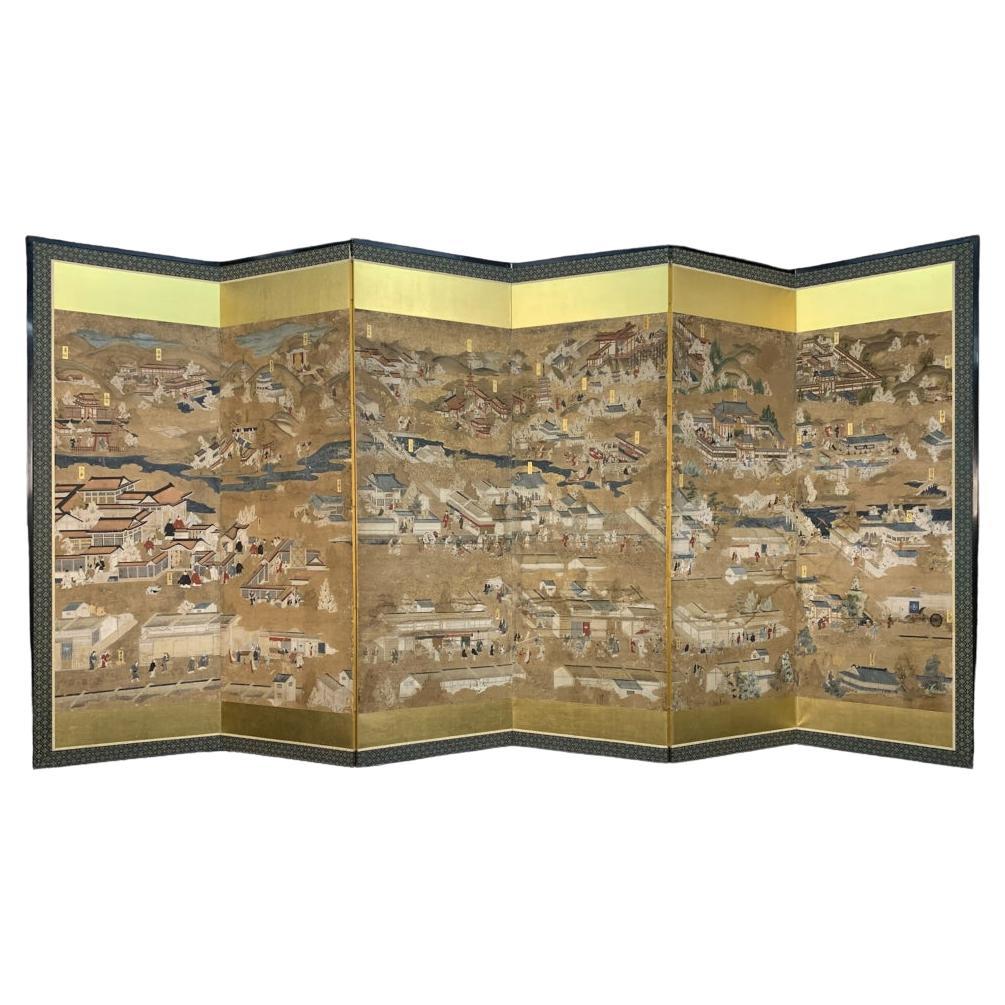
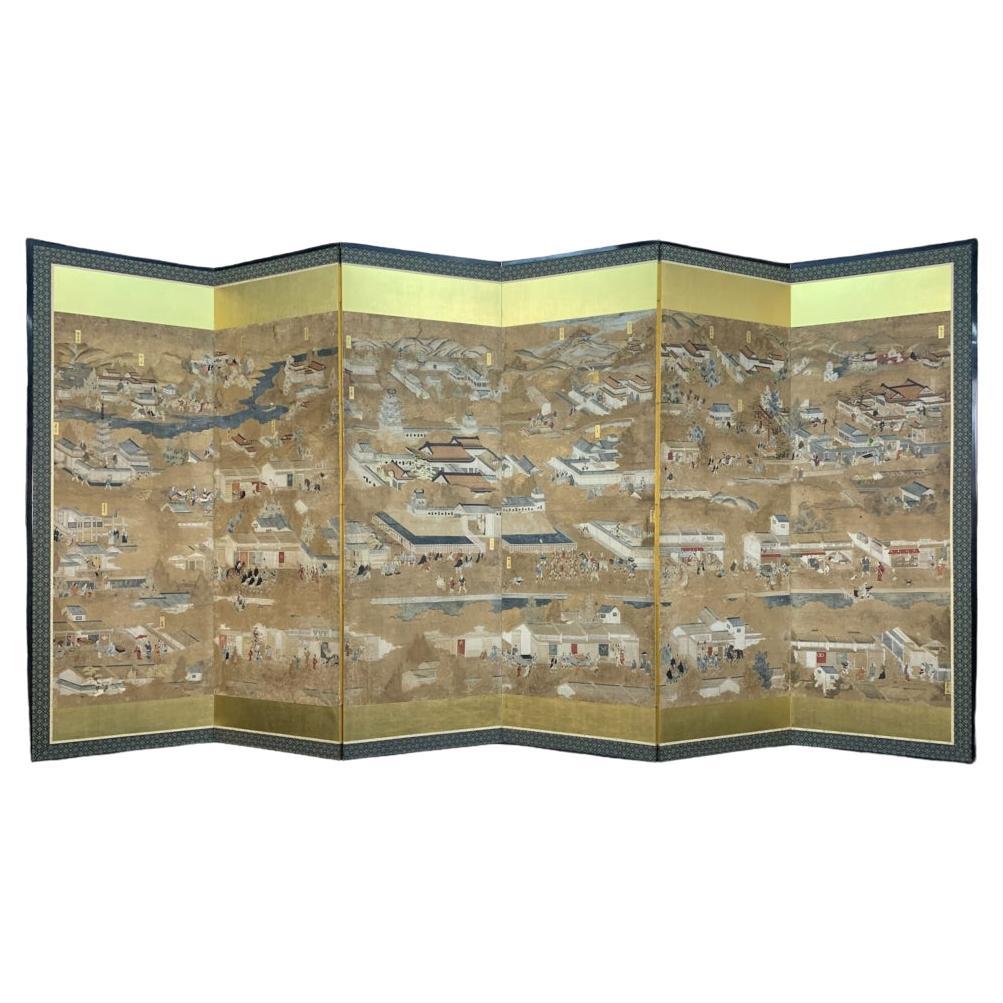
View AllEdo Period Kyoto Screen (2/2)
Located in Fukuoka, JP
Edo Period Kyoto Screen
Period: Edo period
Size: 343 x 176 cm (134.6 x 69 inches)
This stunning Edo period screen depicts typical scenes of daily life...
Category
Antique 18th Century Japanese Edo Paintings and Screens
Materials
Paper, Wood, Silk
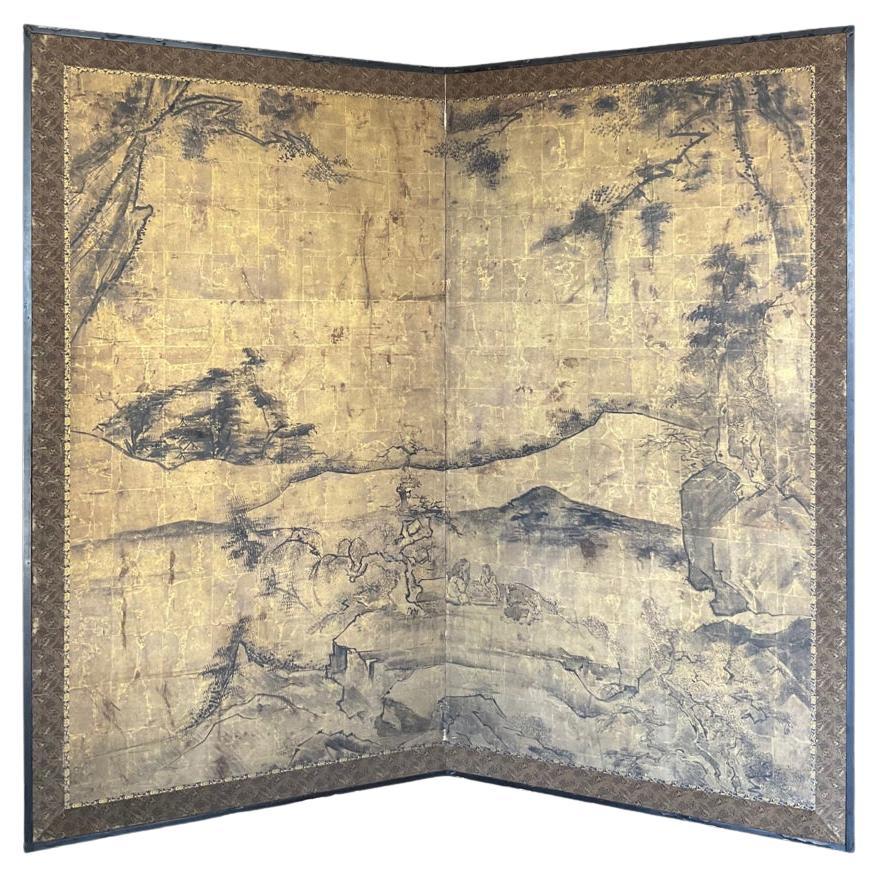
Early Edo Period Chinese-Inspired Screen
Located in Fukuoka, JP
This remarkable screen from the early Edo period, circa the 17th century, showcases the influence of early Chinese art forms with its intricate ink work on a gold leafed surface. The...
Category
Antique 17th Century Japanese Edo Paintings and Screens
Materials
Gold Leaf
$3,496 Sale Price
56% Off
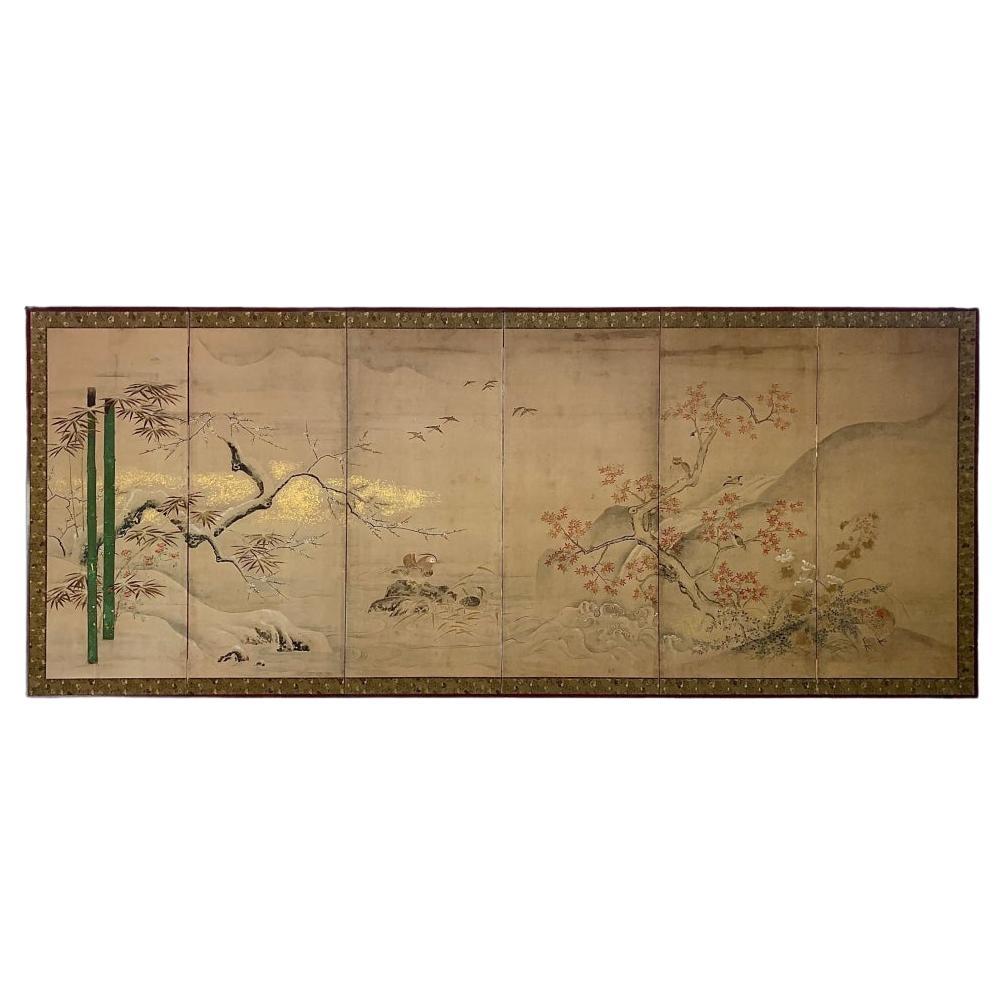
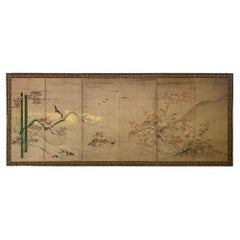
Edo Period Seasonal Transition Screen
Located in Fukuoka, JP
Edo Period Seasonal Transition Screen
Period: Edo
Size: 368 x 153 cm
This exquisite six-panel screen, adorned with golden flakes, beautifully portrays the seamless transitio...
Category
Antique 19th Century Japanese Edo Paintings and Screens
Materials
Gold Leaf
$3,208 Sale Price
61% Off
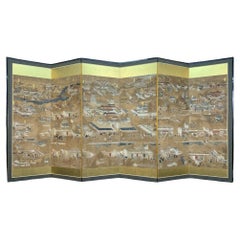
Edo Period Kyoto Screen
Located in Fukuoka, JP
Edo Period Kyoto Screen
Period: Edo period
Size: 343 x 176 cm (134.6 x 69 inches)
SKU: RJ69
This stunning Edo period screen depicts typical scenes of d...
Category
Antique 18th Century Japanese Edo Paintings and Screens
Materials
Silk, Wood, Paper
$9,450
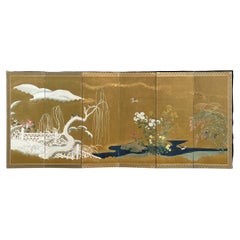
Japanese Screen: Flow of Time in Gold
Located in Fukuoka, JP
Seasons Flowing in Gold is a masterful expression of depth and rhythm, painted with a subtle three-dimensional effect that brings the landscape to life. From the snow-laden willow a...
Category
Antique Early 19th Century Japanese Edo Paintings and Screens
Materials
Paper, Wood
$5,040 Sale Price
20% Off
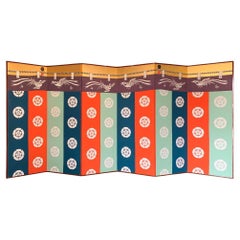
Showa Period Jinmaku Screen
Located in Fukuoka, JP
Showa Jinmaku Screen
Period: Showa
Size: 376x171 cm
Discover the historical charm of our Showa Jinmaku screen, impeccably preserved and in extremely good condition. Jinmaku, or "mi...
Category
20th Century Japanese Showa Paintings and Screens
Materials
Wood, Paper
You May Also Like
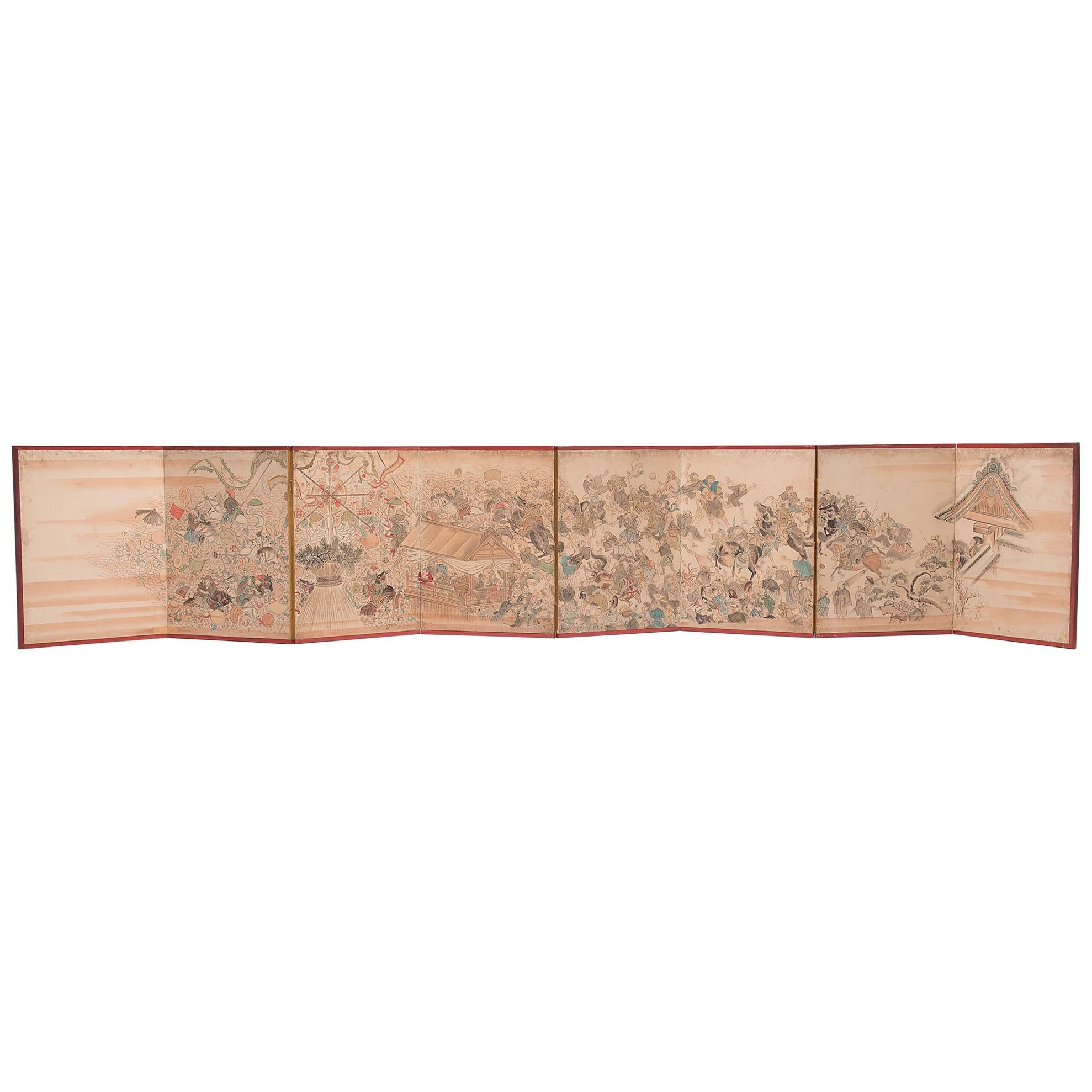
Japanese Edo Period Festival Screen, c. 1750
Located in Chicago, IL
This 18th century folding screen is a stunning example of Japanese artistry. Beautifully painted with delicate brushwork, the evocative sc...
Category
Antique Mid-18th Century Japanese Edo Paintings and Screens
Materials
Paper
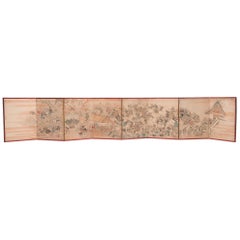
Japanese Kyoto Embroidered Screen
Located in Pasadena, CA
This is a finely stitched Kyoto embroidery screen that dates to the Meiji Era (1868 - 1912). Kyoto has been celebrated for its skilled artistic embro...
Category
Antique Late 19th Century Japanese Japonisme Paintings and Screens
Materials
Brass
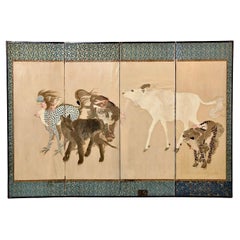
Japanese Six-Panel Screen
Located in Stamford, CT
A six-panel Japanese paper screen with poems, autumn flowers, bamboo fence and Mandarin ducks. Poems are believed to be earlier but were probably...
Category
Antique Mid-19th Century Japanese Edo Paintings and Screens
Materials
Paper
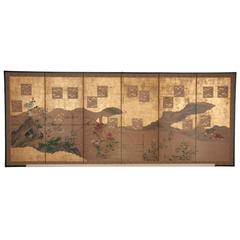
$19,900
Japanese Edo Six Panel Screen Merrymaking in the Chinese Countryside
Located in Rio Vista, CA
Large 19th century Japanese Edo period six panel folding byobu screen made in the Kano school style. Beautifully crafted with signature after Kano Tan'yu. Ink and natural color pigme...
Category
Antique 19th Century Japanese Edo Paintings and Screens
Materials
Gold Leaf
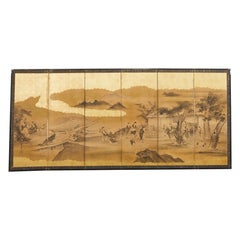
Rare Antique Japanese Folding Screen by Kano Tanshin
By Kano Tanshin
Located in Atlanta, GA
An exquisite Japanese folding screen painted and signed by Kano Tanshin (Morimasa) (1658-1719), circa early Edo Period. An important member of the Kano painter family, the son of Kano Tanyu...
Category
Antique 17th Century Japanese Japonisme Paintings and Screens
Materials
Brass
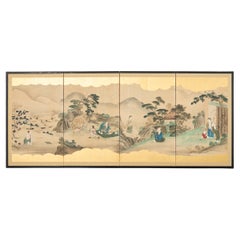
Japanese Edo Four Panel Screen Paragons of Filial Piety
Located in Rio Vista, CA
Late 19th century Edo period Japanese four panel folding byobu screen depicting four of the twenty-four paragons of filial piety. Beautifully painted in the Maruyama-Shijo style. The...
Category
Antique 19th Century Japanese Edo Paintings and Screens
Materials
Brass, Gold Leaf
More Ways To Browse
Asian Horse Art
Antique Work Light
18th Century Horse
18th Century Hand Screen
Hand Painted Horse Painting
Horse Japanese
Japanese Kano Screen
Tea Screen
Edo Japanese Screen Kano
Japanese Screen Horses
Japanese Horse Painting
Kano Tanyu
Used Lattice Panels
Coromandel Lacquer
Calligraphy
Mineral Pigments On Silk
Chinese Silk Screen
Japanese Silver Leaf