Items Similar to Japanese Edo Four Panel Screen Flowering White Chrysanthemums
Video Loading
Want more images or videos?
Request additional images or videos from the seller
1 of 22
Japanese Edo Four Panel Screen Flowering White Chrysanthemums
$7,800
£5,893.27
€6,751.91
CA$10,883.53
A$11,862.49
CHF 6,271.60
MX$142,801.89
NOK 79,602.17
SEK 72,978.92
DKK 50,437.06
About the Item
19th century extraordinary Japanese late Edo/early Meiji period four-panel byobu screen featuring flowering white chrysanthemums painted in a moriage (raised pigment) style. The painting has a dramatic gold leaf square background with Rose of Sharon and pampas grass foliage. Beautifully crafted with Kano school influence. Set in a black lacquered frame with a distressed silk border. Vibrant green foliage and white stand out boldly on the ground. The painting shows well with a desirable aged patina. The frame has losses at the joints. From an estate in San Francisco, CA.
- Dimensions:Height: 40 in (101.6 cm)Width: 75 in (190.5 cm)Depth: 0.5 in (1.27 cm)
- Style:Edo (Of the Period)
- Materials and Techniques:
- Place of Origin:
- Period:
- Date of Manufacture:19th Century
- Condition:Repaired: old repairs. Wear consistent with age and use. Beautifully crafted with age appropriate wear and fading as seen in photos. Minor losses and joint separation. Silk border is faded and worn with losses. Reverse side has tape on joints.
- Seller Location:Rio Vista, CA
- Reference Number:1stDibs: LU1555240992282
About the Seller
5.0
Erin Lane Estate is based in the San Francisco Bay Area, and its team of furniture restorers, art curators, professional appraisers and Asia specialists sources prime vintage and antique furniture from the finest estates in Northern and Southern California. Erin Lane Estate specializes in Hollywood Regency, McGuire, Chinese and Japanese pieces.
Diamond Seller
Premium sellers with a 4.7+ rating and 24-hour response times
Established in 2000
1stDibs seller since 2015
3,114 sales on 1stDibs
Typical response time: 1 hour
- ShippingRetrieving quote...Shipping from: Rio Vista, CA
- Return Policy
More From This Seller
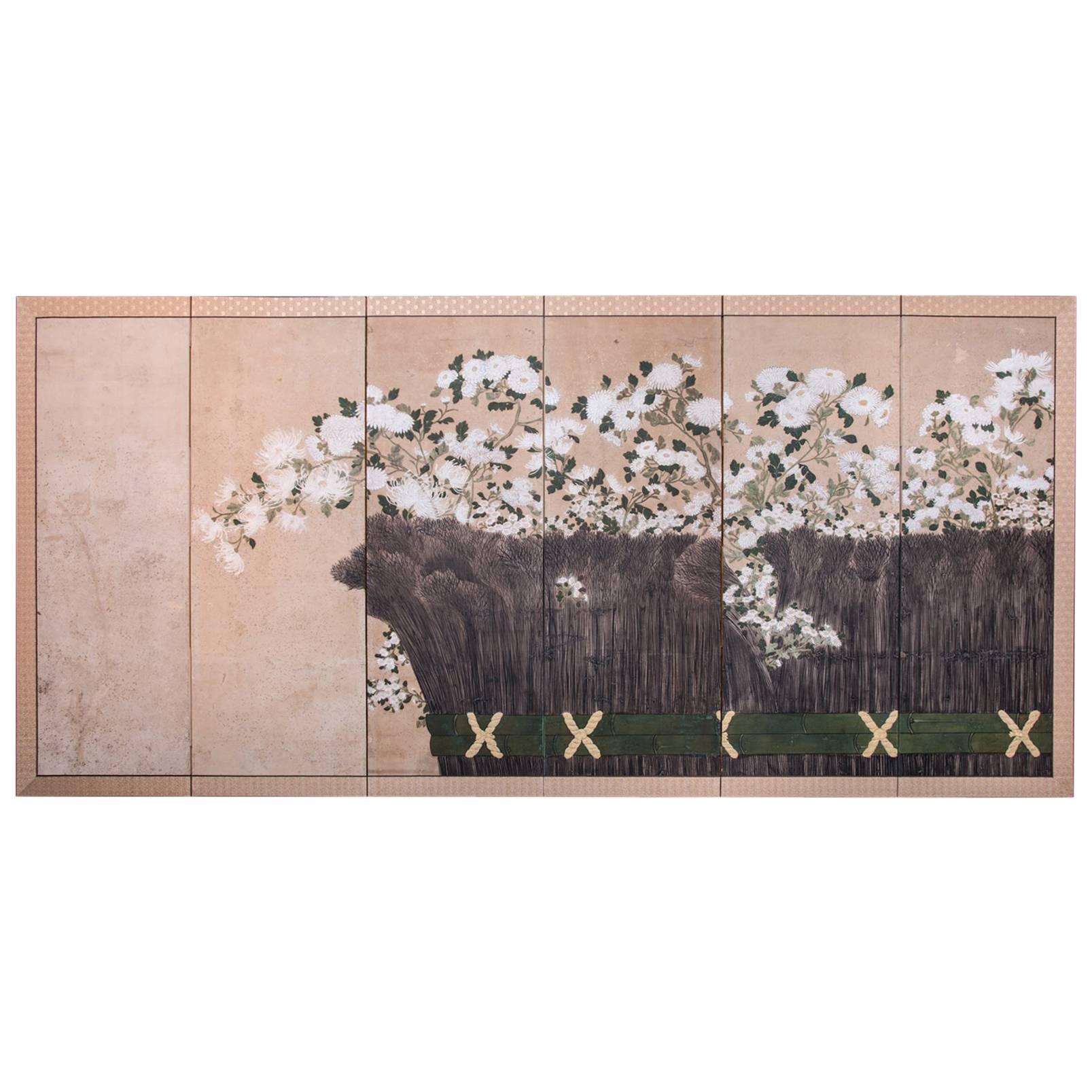
View AllJapanese Meiji Six Panel Screen Brushwood Gate with Chrysanthemums
Located in Rio Vista, CA
Gorgeous Japanese early 20th century Meiji period six-panel byobu screen featuring a brushwood gate and fence with flowering chrysanthemums. The large screen is crafted with ink and ...
Category
20th Century Japanese Meiji Paintings and Screens
Materials
Brass, Gold Leaf, Silver Leaf
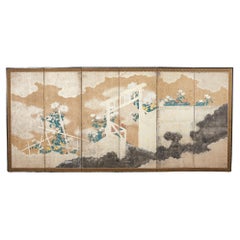
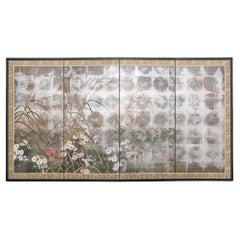
Japanese Showa Four Panel Screen Autumn Flowers and Grasses
Located in Rio Vista, CA
Remarkable Japanese Showa period four-panel byobu screen depicting blossoming autumn flowers and grasses. The screen features a dramatic silver gilt square background that lends a da...
Category
20th Century Japanese Showa Paintings and Screens
Materials
Brass
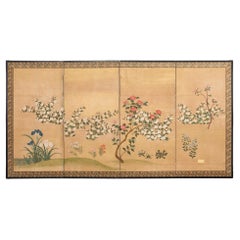
Japanese Showa Four Panel Screen Spring Flowers on Gilt
Located in Rio Vista, CA
Charming mid-20th century Japanese Showa period four-panel folding byobu screen featuring blossoming spring flowers over a bold gilt background. The painting depicts iris, camella, w...
Category
20th Century Japanese Showa Paintings and Screens
Materials
Brass
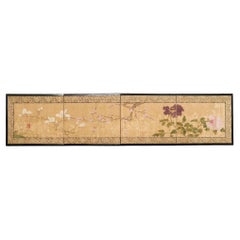
Japanese Edo Four Panel Screen Flowering Peony Prunus Magnolia
Located in Rio Vista, CA
Early 19th century Japanese Edo/Tokugawa period four panel folding byobu table screen featuring peony, prunus, and magnolia. Painted with ink and natural color pigments on silk with ...
Category
Antique 19th Century Japanese Edo Paintings and Screens
Materials
Brass
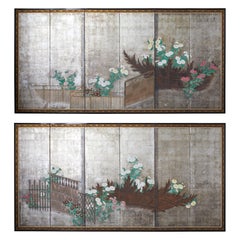
Pair of Six Panel Japanese Edo Screens Chrysanthemums Along Fence
Located in Rio Vista, CA
Remarkable pair of early 19th century Japanese late Edo period screens depicting summer chrysanthemums growing along a brushwood fence. Ink and...
Category
Antique 19th Century Japanese Edo Paintings and Screens
Materials
Silver Leaf
Japanese Showa Four Panel Screen Autumn Foliage
Located in Rio Vista, CA
Gorgeous Japanese Showa period four-panel folding byobu screen depicting autumn foliage. The painting features flowering chrysanthemum (kiku), pampas grass (obena), brush clover (hag...
Category
20th Century Japanese Showa Paintings and Screens
Materials
Brass
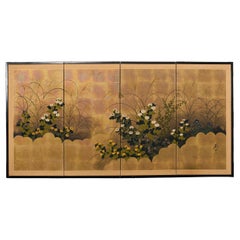
You May Also Like
Japanese Six-Panel Screen, Chrysanthemums
Located in Hudson, NY
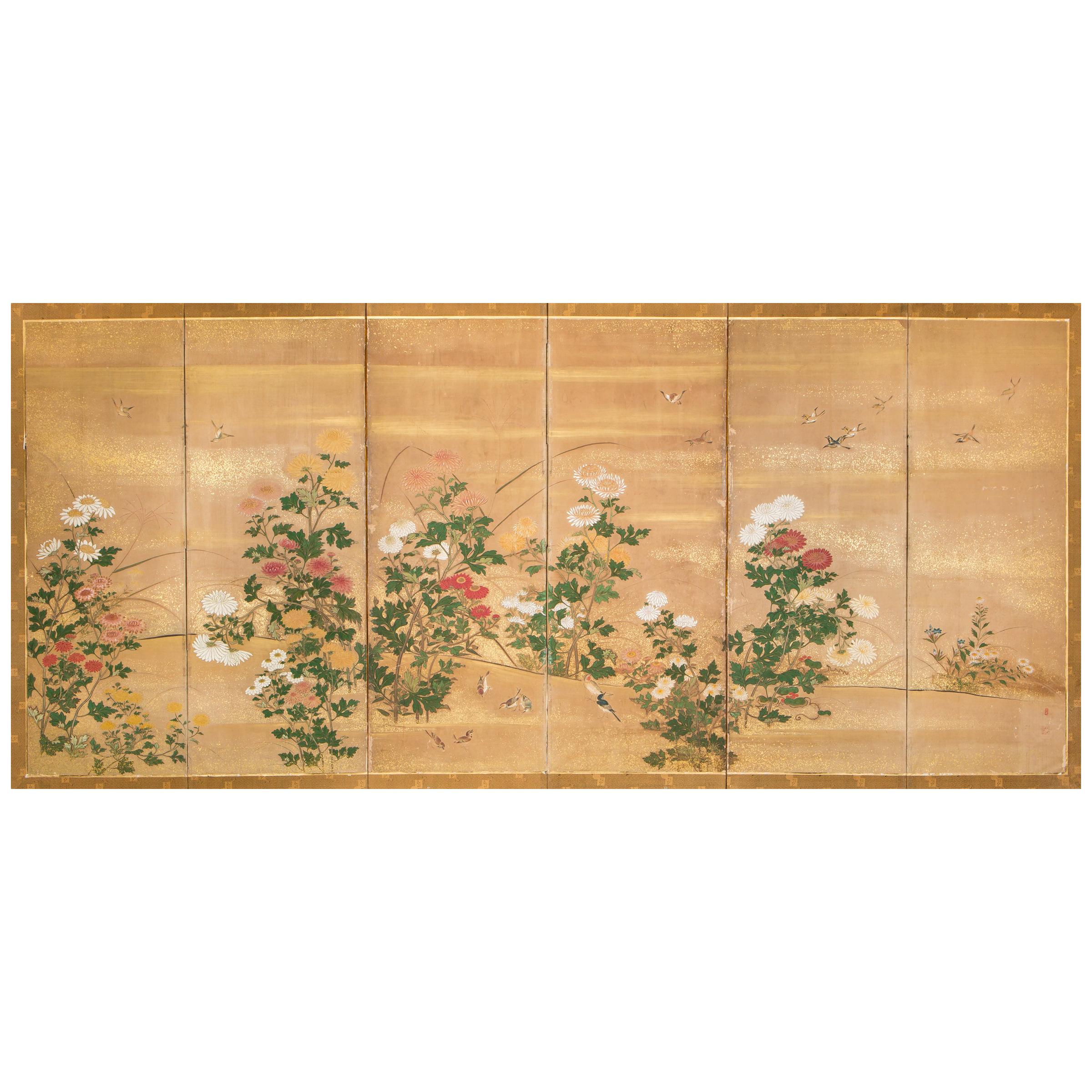
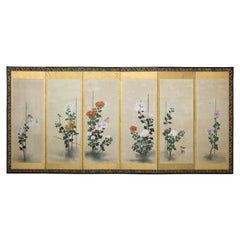
Japanese six-panel screen: Chrysanthemums, Edo period (circa 1800) painting of a variety of chrysanthemums in a garden landscape, with sparrows. Mineral p...
Category
Antique Early 1800s Japanese Edo Paintings and Screens
Materials
Gold Leaf
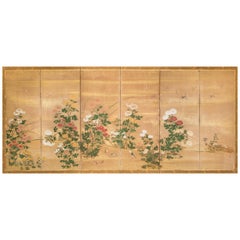
Japanese Six-Panel Screen Byobu With Chrysanthemums And Autumn Grass and Flower
Located in Torino, IT
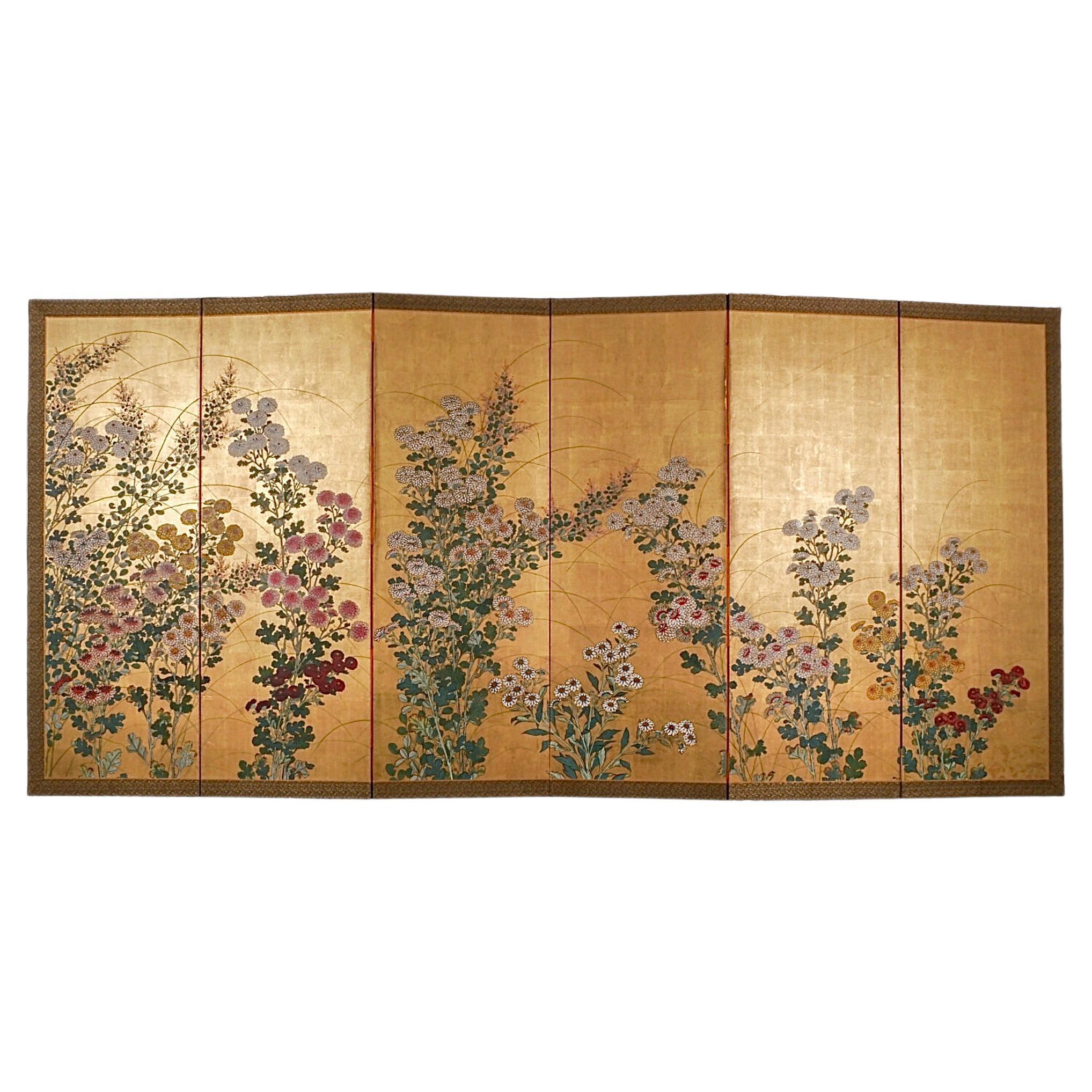
The 19th Century Six-Panel Japanese folding screen "Byōbu" usually used in the most important Japanese house to stop wind and also to separate different space of the same big room de...
Category
Antique Mid-19th Century Japanese Edo Paintings and Screens
Materials
Gold Leaf
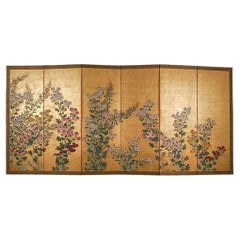
Japanese Six-Panel Screen, Rimpa School Chrysanthemums on Gold
Located in Hudson, NY
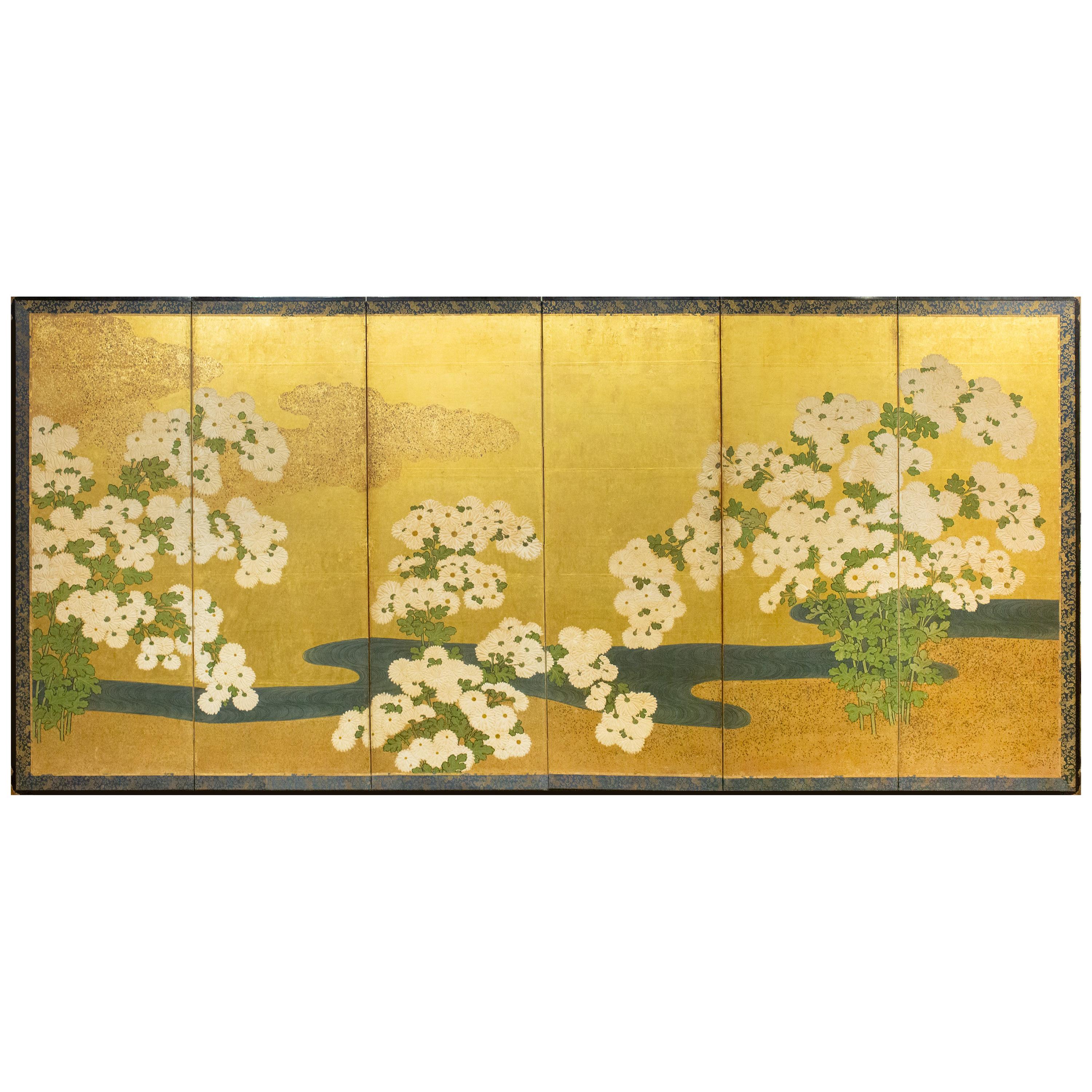
An abundant use of gold with beautifully draped chrysanthemums and gold flake clouds. Mineral pigments, go fun, gold leaf on mulberry paper with a silk brocade border.
Category
Antique Early 19th Century Japanese Meiji Paintings and Screens
Materials
Gold Leaf
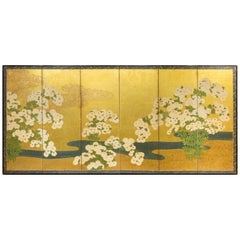
Japanese Six-Panel Screen with Chrysanthemums and Birds, Taishō Period (1920s)
Located in Yonkers, NY
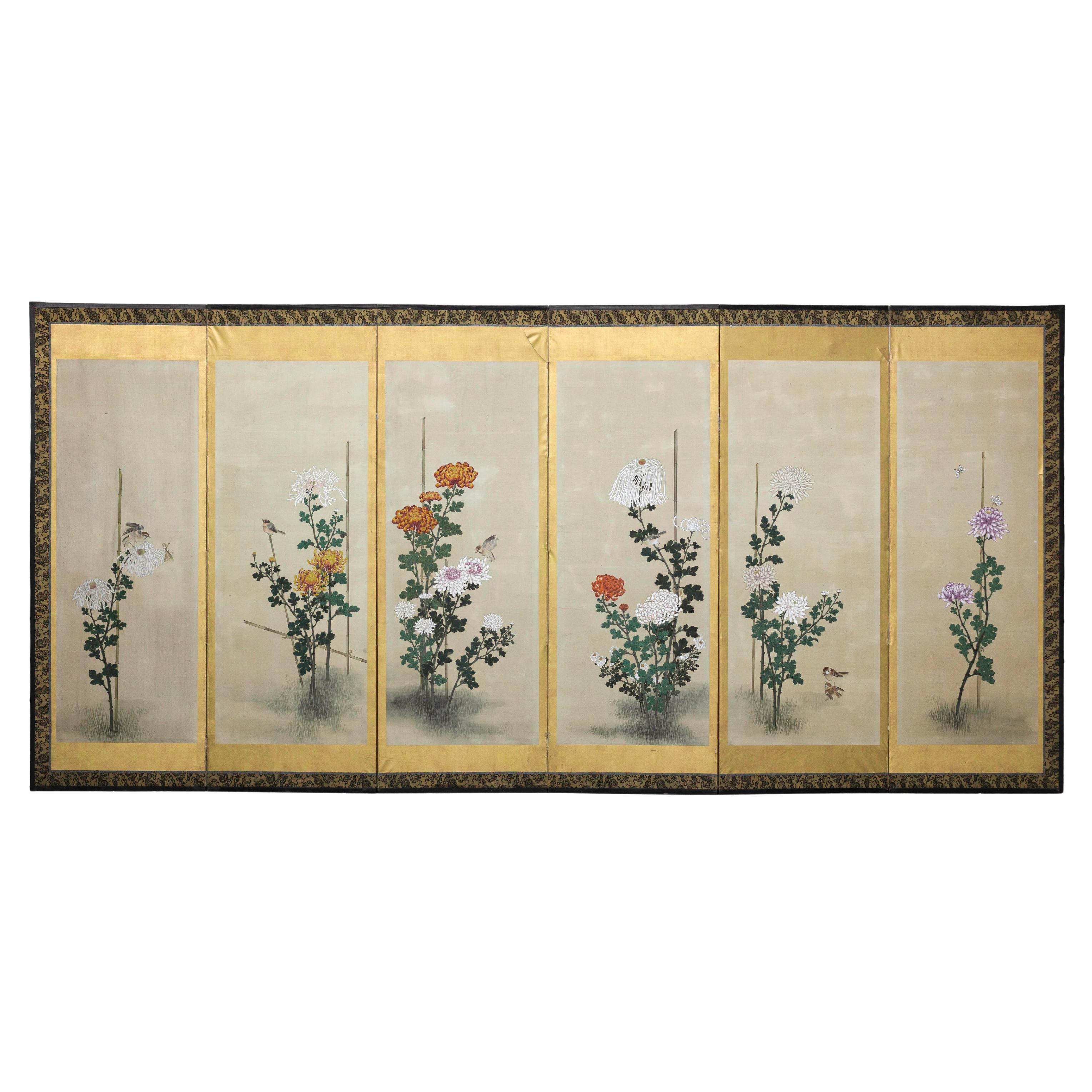
A refined six-panel Japanese folding screen hand-painted with a graceful arrangement of seasonal chrysanthemums and small birds. Likely dating to the early 20th century during the Ta...
Category
Early 20th Century Japanese Taisho Screens and Room Dividers
Materials
Wood, Paper
Japanese Six-Panel Screen, Chrysanthemums and Twig Fence With Gold Flakes
Located in Hudson, NY
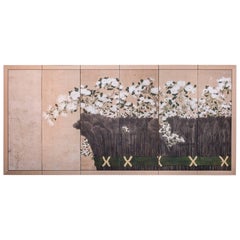
Rimpa School painting in mineral pigments with gofun and gold flakes on mulberry paper with a silk brocade border.
Category
Antique 19th Century Japanese Paintings and Screens
Materials
Gold
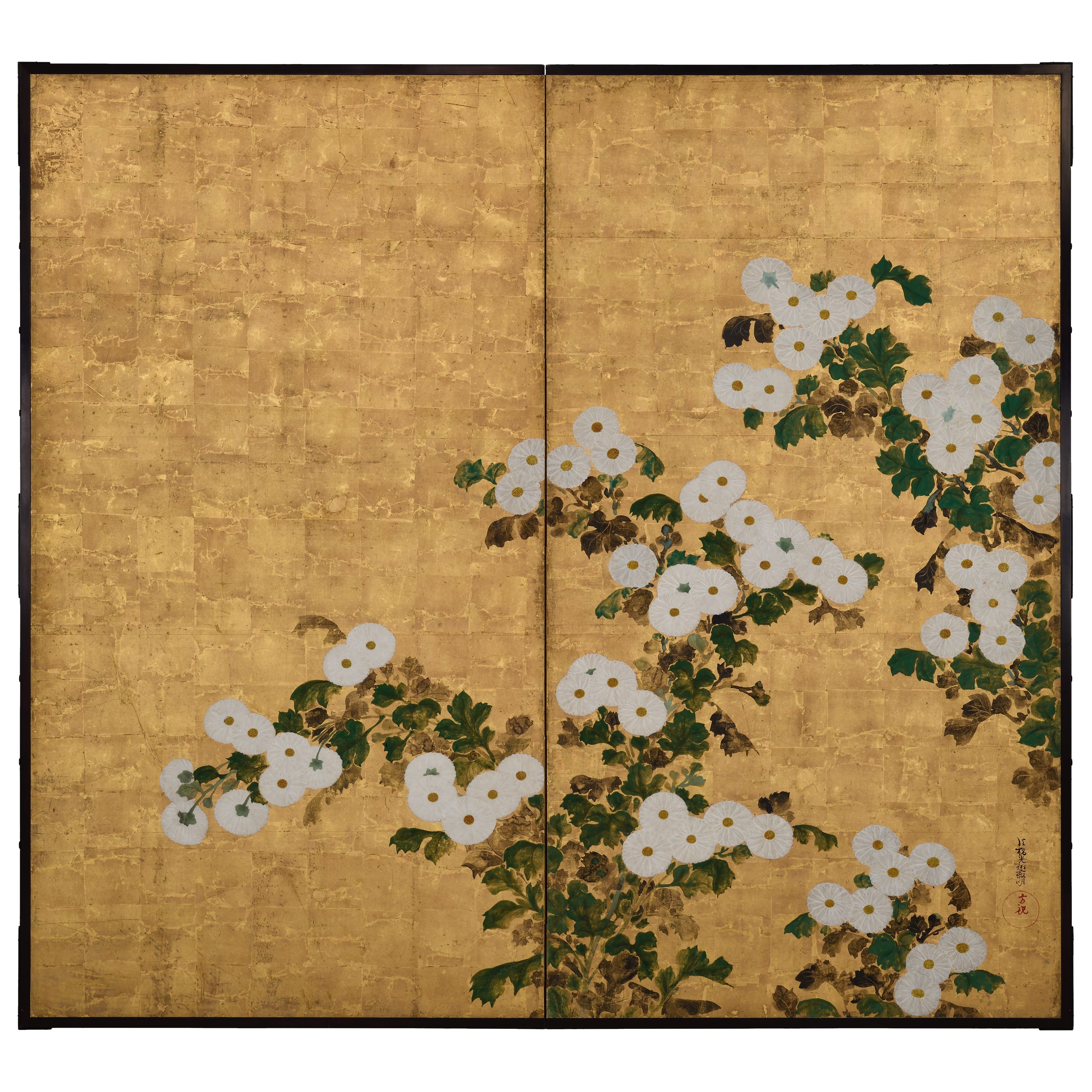
18th Century Japanese Rinpa Screen. White Chrysanthemums. School of Korin.
Located in Kyoto, JP
School of Ogata Korin
White Chrysanthemums
18th Century, Edo period.
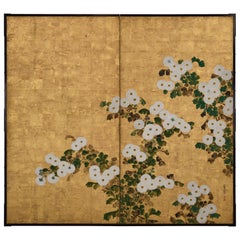
A two-panel Japanese screen. Ink, color, gofun and gold leaf on paper.
Dimensions: H. 171 cm x W. 188 cm (67.5” x 74”)
On this two-panel Japanese screen we see blooming chrysanthemums, a flower which embodies the essence of autumn in Japan. Here the traditional floral theme has been simplified and stylized. The bright colors and asymmetrical composition against the delicate gold leaf create a luxurious and ornate work of art. Its background, a strikingly patinated grid of gold leaf, denies any sense of place or time and imbues everything with an ethereal glow. The leaves and stems of the plants are nothing more than pools of mottled color and ink without any outline whatsoever. These are typical Rinpa adaptations of traditional ink painting methods; tarashikomi, or diluted washes of color blended while very wet, and mokkotsu, or “bonelessness,” which creates forms without exterior outlines. The relief work of the rounded flower petals has been obtained by the moriage process (a mixture based on ground shells modeled on the surface of the paper).
On the lower right of the screen, the siganture “Hokyo Korin Jakumyo” and the “Hoshuku” seal can be read. Korin is Ogata Korin, famed for the Irises (Nezu Museum) and Red and White Plum Blossom (MOA Museum of Art) folding screens, both National Treasures. Korin worked in both Kyoto and Edo in the mid-Edo period. Korin was using the art name “Jakumyo” just after he received the Hokyo level, which was in 1701.
This particular screen was published in May of 1961 in the Japanese Sansai Fine Art Magazine*. An in depth article accompanies the photograph of the screen and and a photograph of the signature and seal. This article devotes much of its body to discussing the moriage technique, how it enlivens the chrysanthemum flowers and Korin’s specific skill in using the technique. The article goes on to discuss the most famous works of Korin, utilizing this technique, which were known at the time. Specifically a two-panel screen held in the Honolulu Museum which was discovered in the store-house of Takahashi Soan. A two-panel screen pair which the Nakano family own. A two-panel screen pair with chrysanthemums in moriage in fan designs owned by the Nomura family. Also a small folding screen featuring chrysanthemums held in the Yamato Bunkakan. The article goes on to say that this particular two-fold screen came from the Nijo family. Korin is known to have had a strong connection with the aristocratic Nijo family. The article explains that Korin received a lot of favors from the Nijo family and that this screen would have been gifted to them.
Since that time the Honolulu screen has been amended to ‘attributed to Ogata Korin’ and I do not know further details of the other 3 screens. Other Chrysanthemum screens...
Category
Antique 18th Century Japanese Edo Paintings and Screens
Materials
Gold Leaf
More Ways To Browse
Antique Chrysanthemum
Antique Brass Panel
Asian Brass Panels
Chrysanthemum Japanese
Japanese 19th Century Meiji Period Silk Painting
19th Century Japanese Lacquer Screen
Japanese Four Panel Silk Screen
Japanese Screen Chrysanthemums
White Lacquer Asian
Meiji Four Panel Screen
Coromandel Panel
Asian Painted Scrolls
Asian Brass Panels
Chrysanthemum Japanese
Chinese Coromandel
Chinese Flower Painting
Edo Period Gold
Japanese 19th Century Meiji Period Silk Painting