Want more images or videos?
Request additional images or videos from the seller
1 of 7
Japanese Hanging Scroll, Taoist Scholar and Student, by Gogaku, 18th Century
Price:$1,800
About the Item
- Dimensions:Height: 45.5 in (115.57 cm)Width: 27.75 in (70.49 cm)Depth: 1 in (2.54 cm)
- Style:Edo (Of the Period)
- Materials and Techniques:
- Place of Origin:
- Period:
- Date of Manufacture:Late 18th Century
- Condition:Wear consistent with age and use. Minor fading. The silk with creases and a small tear from being rolled. The colors still vibrant. The signature and seal legible.
- Seller Location:Austin, TX
- Reference Number:1stDibs: LU894719011212
About the Seller
5.0
Platinum Seller
Premium sellers with a 4.7+ rating and 24-hour response times
Established in 2001
1stDibs seller since 2010
356 sales on 1stDibs
Typical response time: 2 hours
Authenticity Guarantee
In the unlikely event there’s an issue with an item’s authenticity, contact us within 1 year for a full refund. DetailsMoney-Back Guarantee
If your item is not as described, is damaged in transit, or does not arrive, contact us within 7 days for a full refund. Details24-Hour Cancellation
You have a 24-hour grace period in which to reconsider your purchase, with no questions asked.Vetted Professional Sellers
Our world-class sellers must adhere to strict standards for service and quality, maintaining the integrity of our listings.Price-Match Guarantee
If you find that a seller listed the same item for a lower price elsewhere, we’ll match it.Trusted Global Delivery
Our best-in-class carrier network provides specialized shipping options worldwide, including custom delivery.You May Also Like
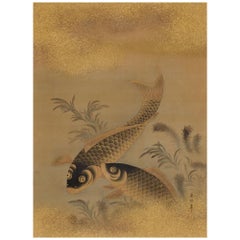
Japanese Painting, Hanging Scroll, Mid 19th Century, Koi and Water Plants
By Iwase Hirotaka
Located in Kyoto, JP
Iwase Hirotaka (1808-1877)
Koi and Water Plants
Hanging scroll, ink, color, gold wash and gold flecks on silk
Inscription: Hirotaka
Seal: Ille...
Category
Antique 1860s Japanese Edo Paintings and Screens
Materials
Silk
$6,500
H 56.5 in W 21.5 in D 0.75 in
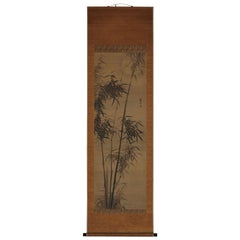
Japanese Painting, Hanging Scroll, 19th Century Bamboo in Moonlight
Located in Kyoto, JP
Bamboo in moonlight
Gamo Rakan (1784-1866)
Hanging scroll, ink on silk.
Dimensions:
Scroll: 201 cm x 58 cm
Image: 137 cm x 45 cm
In this early 19th century work by Gamo Rakan a light ink wash applied to the silk background silhouettes the moon and suggests the atmosphere of early evening. Even though it is a literati subject, Rakan’s bamboo is quite realistic with a strong decorative style. The painting finds its inspiration from Chinese Ming dynasty painters who often used a single-tone, jet black stroke to emphasize the calligraphic nature of bamboo.
In a different era, decorative would have been seen as somewhat unrefined. But increasingly in the Edo period, it was the hallmark of high style. The Japanese people, in particular the rising merchant class, had gradually become apathetic toward the traditional Sesshu and Kano schools of painting. Chinese professional and amateur painters living in the port of Nagasaki during the 18th century had a profound effect on Japanese painting and the freshness of their style and its decorative appeal contributed greatly to its popularity. Gamo Rakan’s teacher, Tani Buncho...
Category
Antique Early 19th Century Japanese Edo Paintings and Screens
Materials
Silk
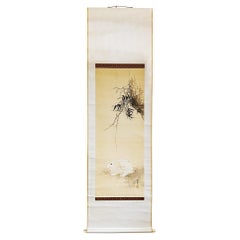
Japanese Hanging Scroll, Late 19th Century
Located in New York, NY
A Japanese hanging scroll or Kakejiku, circa 1890, depicting bamboo grass and a rabbit, framed by top and bottom ribbons of brocade silk.
In ...
Category
Antique 1890s Japanese Meiji Paintings
Materials
Silk, Paper
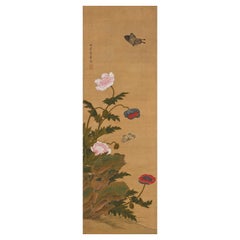
19th Century Japanese Scroll Painting by Igarashi Chikusa, Poppies
Butterflies
Located in Kyoto, JP
Poppies & Butterflies
Ink, pigment and gofun on silk
Igarashi Chikusa (1774-1844)
Signature: Chikusa Ran Zen
Upper Seal: Ran Shuzen
Lower Seal: Kyoho
Dimensions:
Scroll: H. 68” x W. 18” (172cm x 45cm)
Image: H. 38.5’’ x W. 12.5’’ (98cm x 32cm)
This composition shows elegant images of poppies and the butterflies that are inevitably drawn to them. It captures a momentary glimpse into a world both visually dazzling and startlingly realistic. The painting is infused with sensitivity and attention to seasonal change and weather conditions. The thin and fragile poppies are beautifully depicted with brilliant colors and the butterflies are similarly infused with life. The painting is on silk which requires extremely precise painting skills as no element once painted can be removed.
Poppies were a favorite subject of Rinpa school artists through the ages. Originally they were somewhat abstracted but by the age of Sakai Hoitsu...
Category
Antique Early 19th Century Japanese Edo Paintings and Screens
Materials
Silk
$4,800
H 68 in W 18 in D 1 in
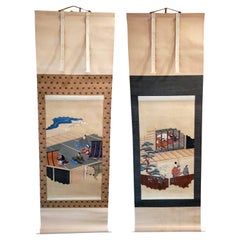
Two Antique Japanese Hanging Scroll Paintings
Located in Atlanta, GA
Two Japanese scroll painting depicts scenes from the Tale of Genji (Genji-E), from Edo period. These painting were purchased from Odewara Shoten in the...
Category
Antique Early 19th Century Japanese Japonisme Paintings and Screens
Materials
Brocade, Paper
Late 18th Century Japanese Framed Painting, God of Thunder by Yamaguchi Soken
Located in Kyoto, JP
Raijin - God of Thunder
Yamaguchi Soken (1759-1818)
Mid to Late Edo period, circa 1800.
Framed painting. Ink and light color on paper.
This humorous painting depicts the Thunder God, Raijin, tumbling from the sky, presumably being struck down by one of his own lighting bolts. He clings to one drumstick as the other is in free-fall along with his Taiko drums...
Category
Antique Late 18th Century Asian Edo Paintings and Screens
Materials
Paper

$8,500
H 45.5 in W 22.5 in D 0.75 in
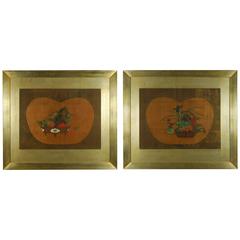
Pair of Antique Japanese Flower Paintings by Yanagisawa Kien, circa 18th Century
By Yanagisawa Kien
Located in Prahran, Victoria
Pair of antique Japanese Nagasaki School paintings by Yanagisawa Kien (1704-1758), depicting classical ikebana flower arrangements. Each painted on silk in mineral pigments and beari...
Category
Antique Mid-18th Century Japanese Edo Paintings and Screens
Materials
Silk
$7,500 / set
H 28.75 in W 42.13 in D 1.58 in
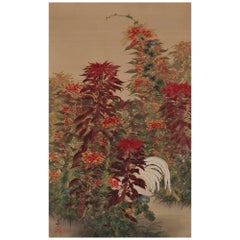
Japanese Painting, Hanging Scroll, Circa 1930, Amaranth and Rooster
Located in Kyoto, JP
Amaranth and Rooster
Artist unknown
Hanging scroll, ink, mineral pigment and gofun on silk.
Painting inscription: Tojo ??
Painting seal: Tojo ??
circa 1930
Dimensions:
Scroll:...
Category
Early 20th Century Japanese Taisho Paintings and Screens
Materials
Silk
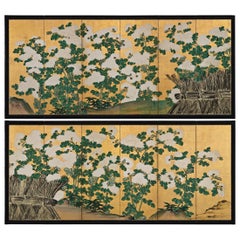
Mid-18th Century Japanese Screen Pair, One Hundred Flowers, Chrysanthemums
Located in Kyoto, JP
Omori Soun (b. 1704)
Chrysanthemums - One Hundred Flowers
A Pair of Six-fold Japanese Screens. Ink, color, gofun and gold leaf on paper.
Dating ...
Category
Antique Mid-18th Century Japanese Edo Paintings and Screens
Materials
Gold Leaf
$48,000 / set
H 67.5 in W 149 in D 0.75 in
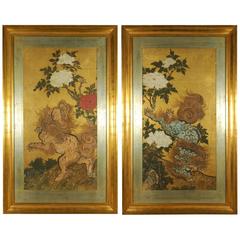
Pair of Antique Japanese Paintings of Karashishi, Edo Period, 18th Century
Located in Prahran, Victoria
A rare pair of antique Japanese Karashishi paintings in a landscape of rocks and peony flowers on gold leaf ground in fine handmade frames, Edo period, early 18th century. The Karash...
Category
Antique Early 18th Century Japanese Edo Paintings and Screens
Materials
Gold Leaf
$50,000 / set
H 77.96 in W 48.04 in D 3.15 in
More From This Seller
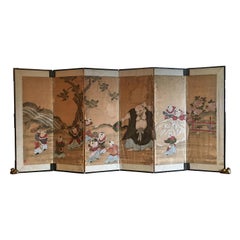
View AllJapanese Six Panel Screen with Hotei, Edo Period, Early 19th Century
Located in Austin, TX
A delightful Japanese six panel painted paper screen featuring the beloved figure Hotei, Edo Period, early 19th century.
Hotei, called Budai in China, and known as the Laughing Buddha or Fat Buddha in the West, is considered to be an emanation of Maitreya, the Buddha of the Future.
In Japan, he also holds a special place as one of the Seven Lucky Gods, being the god of fortune, and protector of children.
He is always portrayed as a mirthful and corpulent man, dressed in loose robes that show off his round belly. He carries a sack with him, said to be filled with treasure. As the protector of children, he is often portrayed with them playing on or around him, as he is here. The children portrayed in this screen are dressed in Chinese style clothing...
Category
Antique Early 19th Century Japanese Edo Paintings and Screens
Materials
Silk, Paper
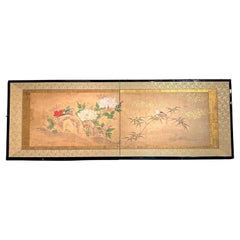
Japanese "Magpie and Peony" Two Panel Screen, Edo Period, 18th/19th century
Located in Austin, TX
A sublime Japanese two panel "Magpie and Peony" screen, ink and color on paper, Edo Period, late 18th or early 19th century, circa 1800, Japan.
The two panel screen features a wond...
Category
Antique Early 19th Century Japanese Edo Paintings and Screens
Materials
Copper
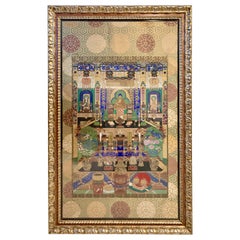
Large Framed Japanese Buddhist Amida Temple Hall Painting, Mid-19th Century
Located in Austin, TX
A large and incredible Japanese painting of a Buddhist temple hall with Amida Nyorai, late Edo or early Meiji period, mid-19th century, Japan. Mounted wit...
Category
Antique Mid-19th Century Japanese Meiji Paintings and Screens
Materials
Brocade, Silk, Acrylic, Wood, Paint
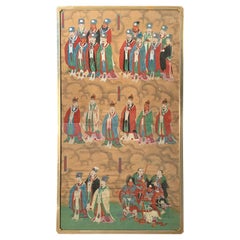
Chinese Early Qing Dynasty "Water and Land Ritual" Painting, 17th Century
Located in Austin, TX
An important Chinese 17th century early Qing Dynasty "Water and Land Ritual" painting, mineral pigment and ink on silk, mounted as a scroll, framed and glazed.
The painting depicting groups of heavenly court officials and deities descending from the clouds to participate in the Liberation Rite of Land and Water. The figures all wear full, sumptuous robes, complete with hats indicating their station. The blue, green, red, black and white of the robes decorated with gilt dragon and geometric designs.
This painting is interesting in that it incorporates Daosit deities and heavenly officials coming down to participate in the Buddhist rite. There are five distinct groups of figures, each with a small inscribed plaque. Some of the groups are identified as Tian Xian, or Heavenly Immortals.
The group at the bottom left are identified as the Sanguan Dadi, or Three Great Emperor-Officials. The Emperor of Heaven is dressed in blue robes with gilt painted dragons. The Emperor of Water wears black robes. The Emperor of Earth wears yellow robes...
Category
Antique 17th Century Chinese Qing Paintings and Screens
Materials
Silk, Glass, Giltwood, Paint
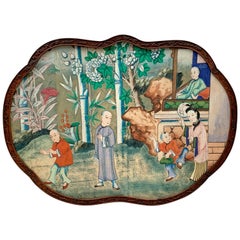
Large Antique Chinese Hand Painted Wallpaper Section in Carved Hardwood Frame
Located in Austin, TX
A wonderfully charming large and colorful Chinese hand painted wallpaper section in a carved and shaped hardwood frame. The wallpaper dates to the first half of the 20th century or e...
Category
Early 20th Century Chinese Chinese Export Paintings and Screens
Materials
Hardwood, Paper
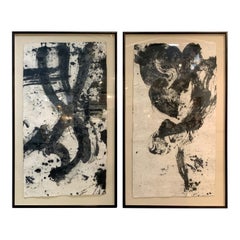
Pair Large Framed Japanese Calligraphy "Dragon"
"Tiger", Mid 20th Century
Located in Austin, TX
A large and powerful pair of Japanese calligraphic works, mid 20th century, Japan. One reading "Dragon", the other reading "Tiger". Ink on handmade paper, framed.
The brush strok...
Category
Mid-20th Century Japanese Expressionist Paintings and Screens
Materials
Paper