Items Similar to Japanese Screen, Early 20th Century Wagtail
Chrysanthemum by Ishizaki Koyo

Want more images or videos?
Request additional images or videos from the seller
1 of 7
Japanese Screen, Early 20th Century Wagtail
Chrysanthemum by Ishizaki Koyo
$14,500
£11,032.38
€12,711.55
CA$20,585.46
A$22,084.52
CHF 11,845.68
MX$265,894.62
NOK 149,328.71
SEK 136,167.09
DKK 94,972.21
About the Item
Ishizaki Koyo (1884-1947)
Wagtail
Chrysanthemum
Early 20th century
Folding screen in two-panels. Ink, pigments and gofun on gold leaf.
Sign: Koyo
Seal: Koyo
This small two-panel folding screen (furosaki byobu), was made for use during the Japanese tea-ceremony. In keeping with the seasonal representation of flowering chrysanthemums, the screen would have been displayed and enjoyed during the fall season. The painter, Ishizaki Koyo, was a prodigiously talented artist who specialized in vivid and decorative flower and bird paintings based on realism. Here, on a luminous gold-leaf ground, he has captured a wagtail resting under a spray of wild chrysanthemums. The overarching curvature of the branch and the abundance of small blooms provide an ideal shelter for the bird. An unidentified creeping vine with its broadly washed leaves and tiny purple flowers grounds and counterbalances the delicate composition.
Conservation and full re-mounting undertaken in Kyoto utilizing traditional techniques and craftsmen.
The representation of wagtails in Japanese art traces its origins back to the 14th century when Zen monks painted birds and flowers in ink. Small and seemingly insignificant birds were often painted to flank images of Zen deities or patriarchs as part of a devotional triptych. These moving ink images of unassuming, though profoundly intense beings had strong Zen overtones. Perhaps Ishizaki Koyo, in this small screen made for contemplation during the tea-ceremony, was alluding to something more than a fleeting moment of nature.
Ishizaki Koyo (1884-1947) originally studied under the Rimpa artist Yamamoto Koichi, before moving to Kyoto to study at the atelier of Takeuchi Seiho in 1893. He was a constant exhibitor with the prestigious national Bunten and Teiten, eventually becoming a judge. His masterworks of the Taisho era rival any paintings of the period and were duly awarded. A frequent international traveler, he gained inspiration from visits to both India and Europe. He was also an avid photographer and mountaineer. He went on to become a professor at the Kyoto Municipal Special School of Painting.
- Dimensions:Height: 21.5 in (54.61 cm)Width: 67.5 in (171.45 cm)Depth: 0.75 in (1.91 cm)
- Style:Taisho (Of the Period)
- Materials and Techniques:
- Place of Origin:
- Period:
- Date of Manufacture:circa 1910
- Condition:Refinished. Conservation and full re-mounting undertaken in Kyoto utilizing traditional techniques and craftsmen.
- Seller Location:Kyoto, JP
- Reference Number:1stDibs: LU2472316935261
About the Seller
5.0
Recognized Seller
These prestigious sellers are industry leaders and represent the highest echelon for item quality and design.
Established in 2001
1stDibs seller since 2016
77 sales on 1stDibs
Typical response time: 5 hours
- ShippingRetrieving quote...Shipping from: Kyoto, Japan
- Return Policy
More From This Seller
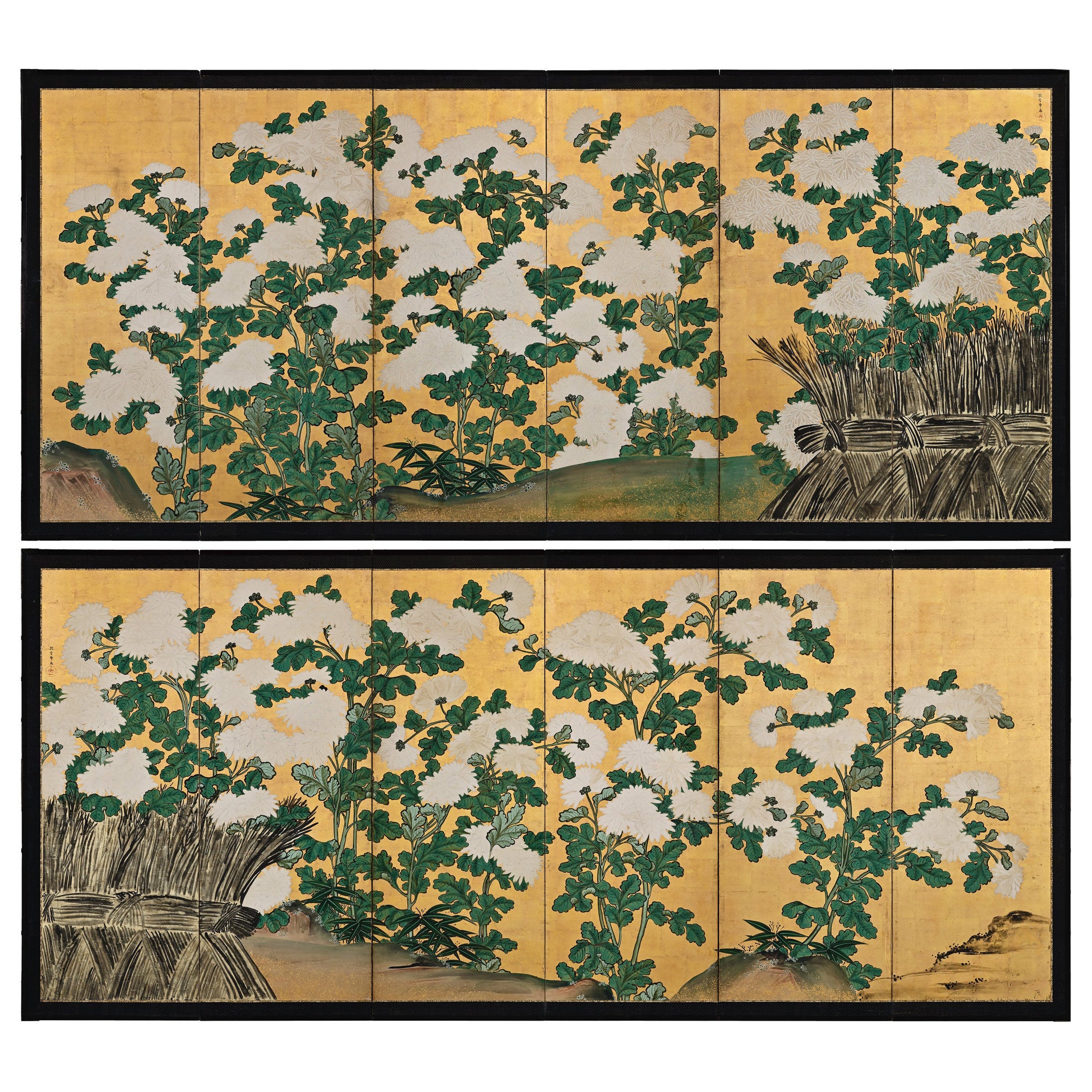
View AllMid-18th Century Japanese Screen Pair, One Hundred Flowers, Chrysanthemums
Located in Kyoto, JP
Omori Soun (b. 1704)
Chrysanthemums - One Hundred Flowers
A Pair of Six-fold Japanese Screens. Ink, color, gofun and gold leaf on paper.
Dating ...
Category
Antique Mid-18th Century Japanese Edo Paintings and Screens
Materials
Gold Leaf
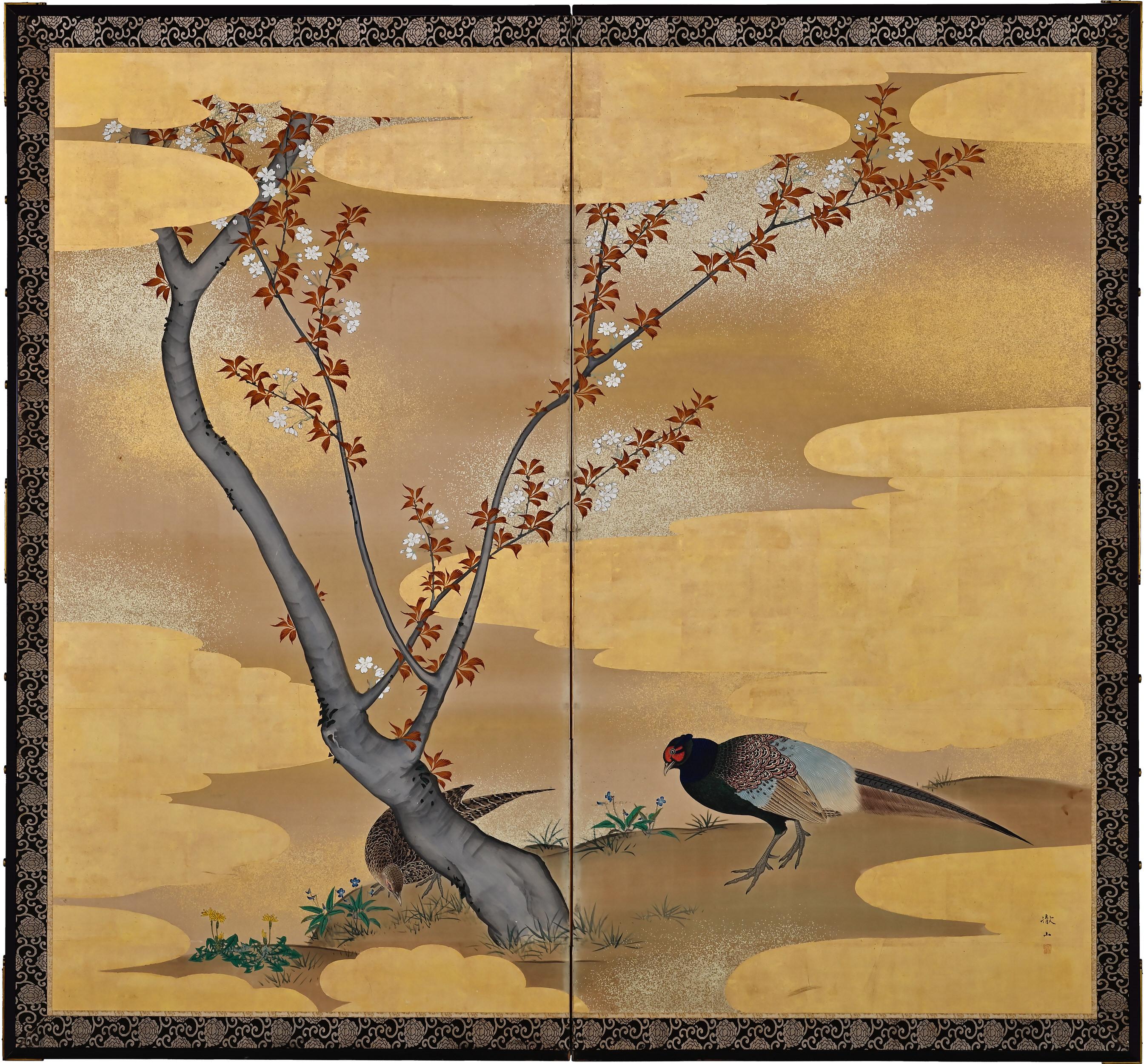
Early 19th Century Japanese Screen. Cherry Blossom
Pheasants by Mori Tetsuzan
Located in Kyoto, JP
Mori Tetsuzan (1775-1841)
Pheasants and Cherry Blossoms
Two-fold Japanese screen. Ink, color, gofun, gold and silver on paper.
A two-fold Japanese bir...
Category
Antique Early 19th Century Japanese Edo Paintings and Screens
Materials
Gold Leaf
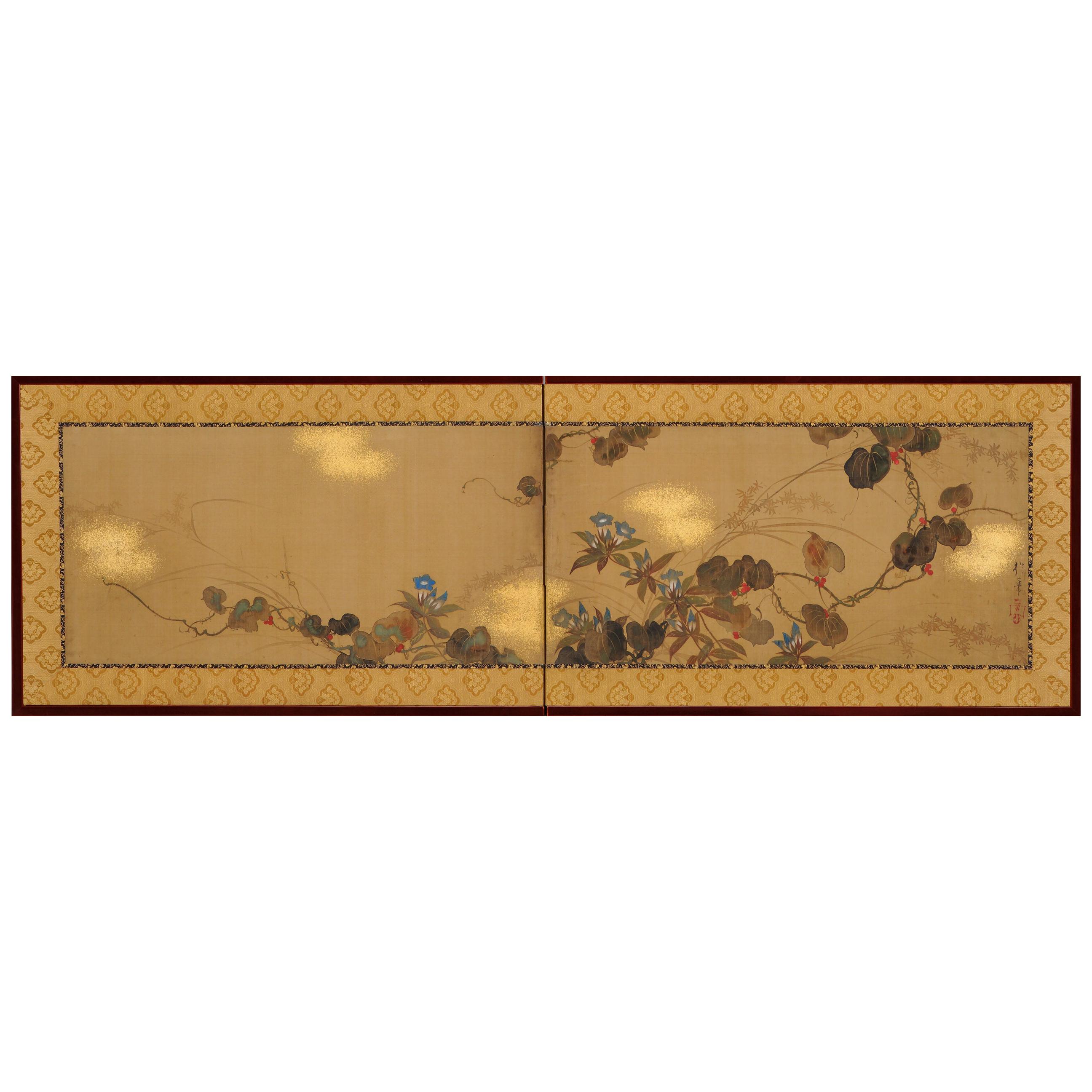
Japanese Screen Painting, Early 19th Century, Autumn Flowers by Sakai Hoitsu
Located in Kyoto, JP
A two-fold Japanese screen by the Rimpa school artist Sakai Hoitsu (1761-1828), Japan, 19th century, Edo period.
This small Japanese folding screen pai...
Category
Antique Early 19th Century Japanese Edo Paintings and Screens
Materials
Wood, Silk
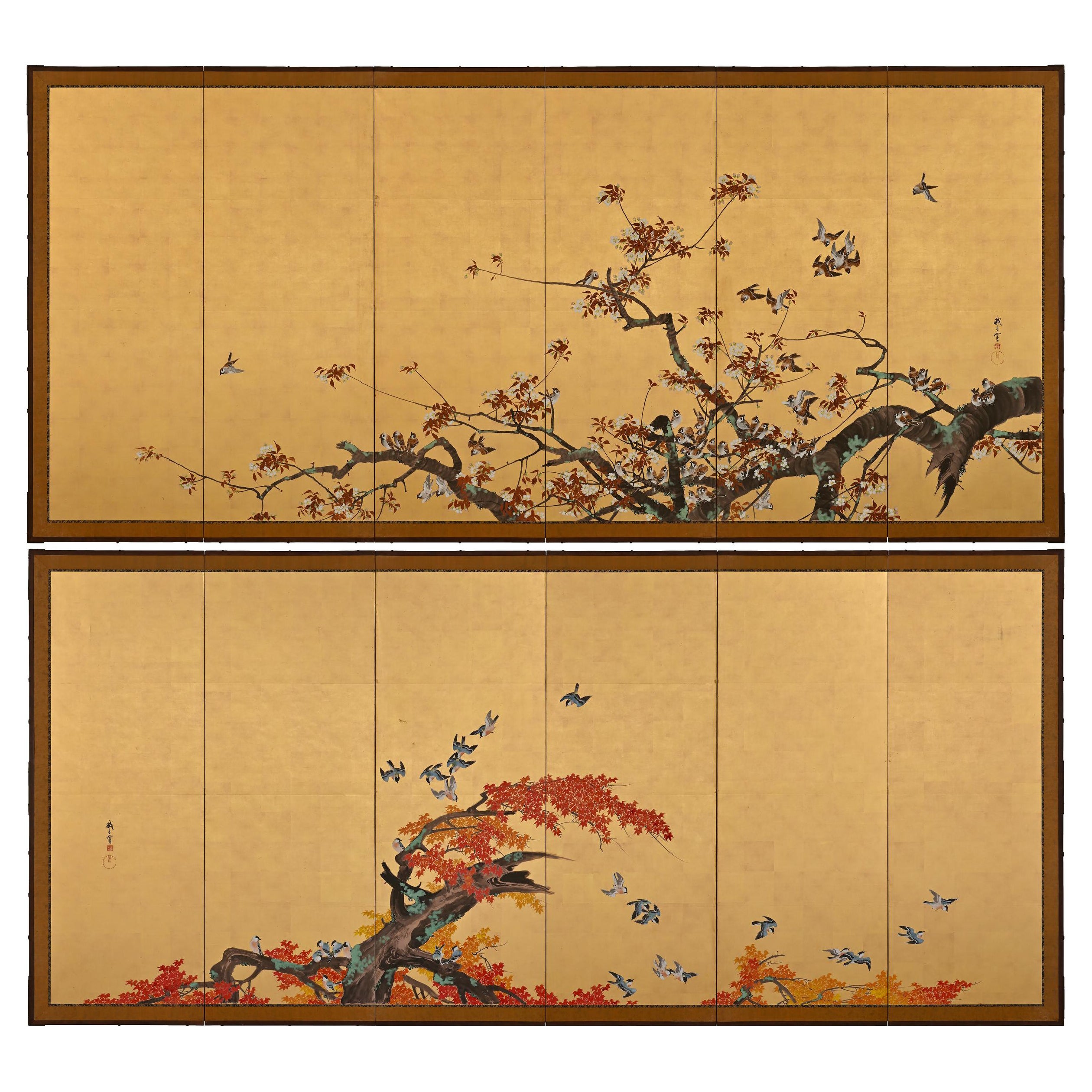
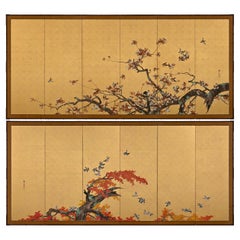
Meiji Era, Circa 1900 Japanese Screen Pair, Flowers
Birds of Spring
Autumn
Located in Kyoto, JP
Flowers & Birds of Spring and Autumn
Unknown artist.
Japan. Meiji period, circa 1900.
A pair of six-fold screens. Ink, color, gofun and gold leaf on paper.
Signed: Gaga S...
Category
Antique 1890s Japanese Meiji Paintings and Screens
Materials
Gold Leaf
Japanese Painting. Bird and Flower. 19th century copy of Lu Ji by Ogata Tomin.
Located in Kyoto, JP
Ogata Tomin (1839 -1895)
Birds in a spring landscape
Ink and colour on silk.
Inscription reads:
“Copy of Lu Ji, painted with heartfelt appreciation”
“Painted by Tomin Ogat...
Category
Antique Late 19th Century Japanese Ming Paintings and Screens
Materials
Silk
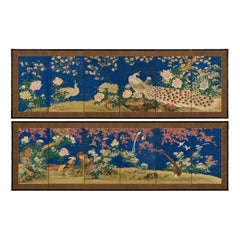
Mid 19th Century Japanese Screen Pair. Flowers
Birds of the Four Seasons.
Located in Kyoto, JP
Shioka Sorin (1781-1850)
Flowers & Birds of the Four Seasons
Pair of six-panel Japanese Screens. Ink, gofun and pigments on silk.
Dimensions (each screen): H. 91.5cm x W. 285cm (3...
Category
Antique Mid-19th Century Japanese Edo Paintings and Screens
Materials
Silk
You May Also Like
Japanese "Magpie and Peony" Two Panel Screen, Edo Period, 18th/19th century
Located in Austin, TX
A sublime Japanese two panel "Magpie and Peony" screen, ink and color on paper, Edo Period, late 18th or early 19th century, circa 1800, Japan.
The two panel screen features a wond...
Category
Antique Early 19th Century Japanese Edo Paintings and Screens
Materials
Copper
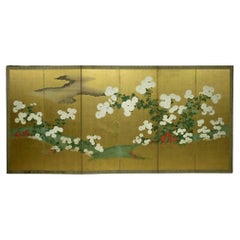
Late Edo Period Rinpa School Chrysanthemum Blossom Screen
By Rimpa School
Located in Fukuoka, JP
Late Edo Period Rinpa School Chrysanthemum Blossom Screen
Period: late Edo, early 19th century
Size: 364 x 172 cm (143 x 67 inches)
This exquisite late Edo period Rinpa school scr...
Category
Antique 18th Century Japanese Edo Paintings and Screens
Materials
Paper
$7,660 Sale Price
20% Off
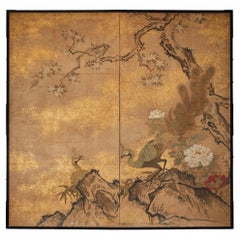
Japanese Two Panel Screen: Amorous Pea-fowl in Craggy Garden Landscape
Located in Hudson, NY
Ink and minimal pigments on mulberry paper with black lacquer trim.
Category
Antique Mid-19th Century Japanese Paintings and Screens
Materials
Lacquer, Paper
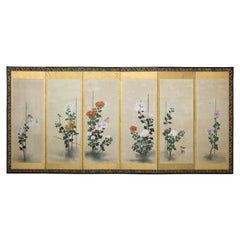
Japanese Six-Panel Screen with Chrysanthemums and Birds, Taishō Period (1920s)
Located in Yonkers, NY
A refined six-panel Japanese folding screen hand-painted with a graceful arrangement of seasonal chrysanthemums and small birds. Likely dating to the early 20th century during the Ta...
Category
Early 20th Century Japanese Taisho Screens and Room Dividers
Materials
Wood, Paper
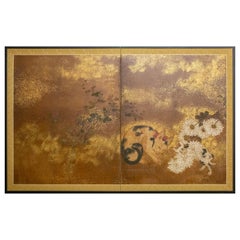
Japanese Two-Panel Screen, Mother and Kitten with Chrysanthemums
Located in Hudson, NY
Delicate painting of garden chrysanthemums with a fine gold mist. A cat grooms herself while a kitten plays with a chrysanthemum. Mineral pigments...
Category
Antique Mid-19th Century Japanese Paintings and Screens
Materials
Gold
Japanese Six-Panel Screen Byobu With Chrysanthemums And Autumn Grass and Flower
Located in Torino, IT
The 19th Century Six-Panel Japanese folding screen "Byōbu" usually used in the most important Japanese house to stop wind and also to separate different space of the same big room de...
Category
Antique Mid-19th Century Japanese Edo Paintings and Screens
Materials
Gold Leaf
More Ways To Browse
Antique Chrysanthemum
20th Century Japanese Painting
Japanese Painted Screen
20th Century Japanese Screens
Hand Painted Japanese Screen
20th Century Folding Screen
Japanese Screen Gold Leaf
Antique Gold Leaf Screens
Japanese Tea Ceremony
Byobu Screens
20th Century Japanese Folding Screen
Flower And Bird Painting
Chrysanthemum Japanese
Japanese Taisho Screen
Japanese Signed Two Panel Screen
Two Panel Folding Screen
Two Panel Japanese Screen Birds
Japanese Screen Chrysanthemums