Items Similar to Japanese Screen Pair, circa 1730, Peacocks and Phoenix, Kano School
Want more images or videos?
Request additional images or videos from the seller
1 of 10
Japanese Screen Pair, circa 1730, Peacocks and Phoenix, Kano School
$42,500per set
£32,098.85per set
€37,079.16per set
CA$59,876.45per set
A$64,127.70per set
CHF 34,474.61per set
MX$778,868.37per set
NOK 435,603.47per set
SEK 398,827.37per set
DKK 277,049.11per set
About the Item
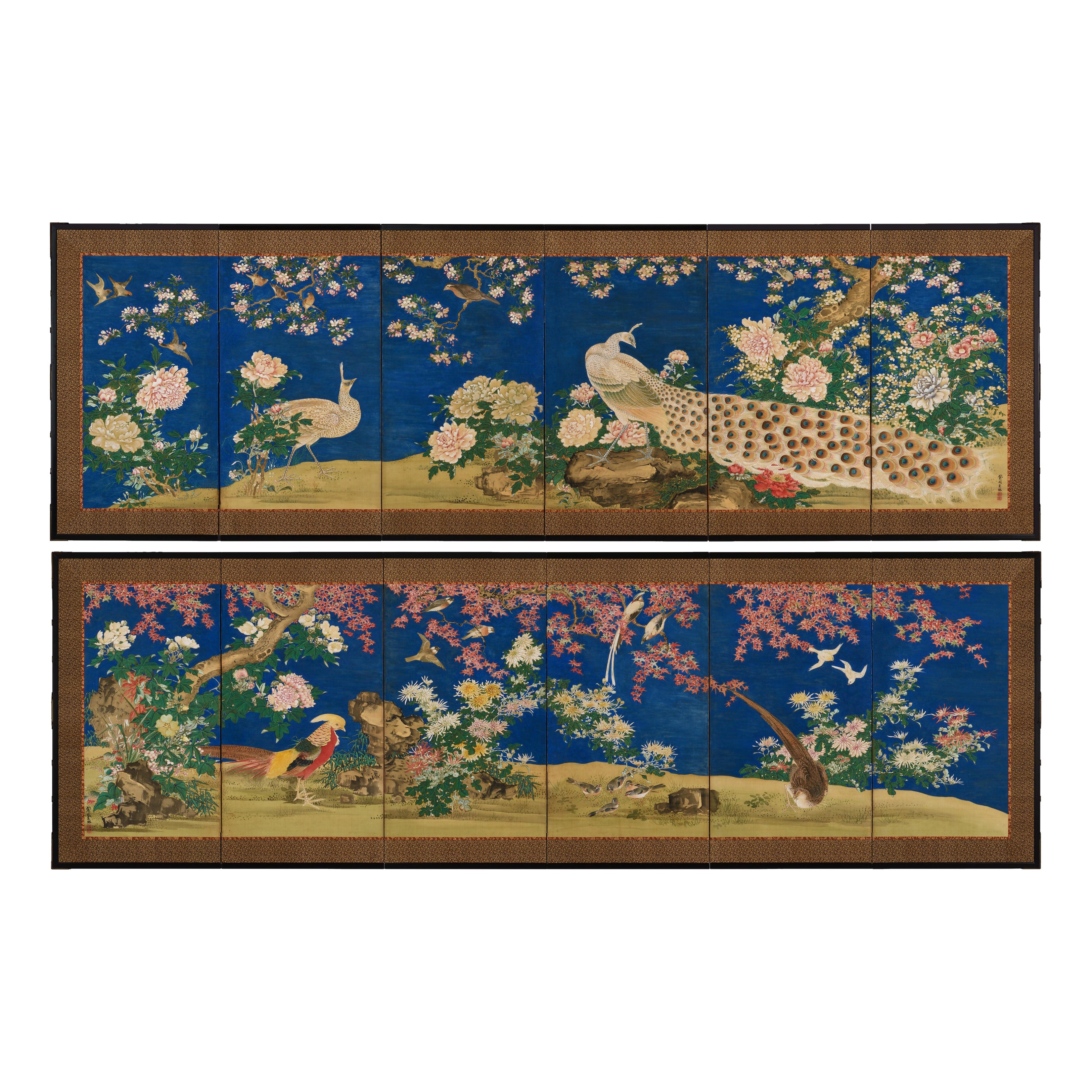
Phoenix and Peacocks.
A pair of six-panel Japanese folding screens by Tsunetake Yotei (n.d.)
First half of the 18th century.
The signature reads 67 year old Tsunetake.
The seals read:
-Tsunetake no in,
-Yotei,
-Seishin
Dimensions:
Each screen – H. 69” x W. 149” (176 cm x 378 cm)
A pair of Kano Grand Picture (Waga) screens depicting phoenix and peacocks rich with symbolic meaning. Dating to the first half of the 18th century, from the Kobikicho Kano school in Edo, this pair of folding screens spring from the height of the Japanese Tokugawa reign. The Kano school of art was within the Tokugawa dispensation and provided for its internal needs rather than a public constituency. A Kano decorated castle, or temple, was a way to acquire military standing and to ensure confidence in the steadfastness of their virtue. Temple residences, especially senior abbacies, were decorated similarly to castles, unsurprisingly as they were sponsored by the same warriors. Beyond image halls and places of ritual exercise, temples had abbacies, monastic living quarters and guest houses, all of which would be ornamented, as rich as any mansion, and in not a dissimilar way.
Kano Grand-Picture Waga invokes the broad notion of auspiciousness, especially its political dimension. The mythical phoenix was a symbol of peace and would only appear in a kingdom blessed with prosperity during the reign of a virtuous emperor. The paulownia tree was regarded as sacred and home to the phoenix, and the phoenix and paulownia together carried strong auspicious connotations. Peacocks communicate high status, wealth and power. This pair of screens would have left no doubt as to the status of their owner or patron.
Waga was understood as bold and colorful, with copious use of gold. The artists strived for luxurious tints and beautiful appearances. This pair of screens epitomize the concept and the startlingly fresh pigments and sublimely hued gold leaf effortlessly sweep the viewer to a previous epoch.
Tsunetake Yotei was an artist of the Kano school. He is listed in Araki Nori. Dai-Nihon Shoga Meika Taikan (Dictionary of Great Japan Calligraphy and Painting Masters). Tokyo: Dai-ichi Shobo. 1975. p.2435. His dates are unknown. Almost certainly he was a student of Kano Tsunenobu Yoboku (1636-1713) of the Kobikicho Kano. All of Tsunenobu’s well-known students used the first and third characters of his name, as is the case with Tsunetake Yotei.
- Dimensions:Height: 69 in (175.26 cm)Width: 149 in (378.46 cm)Depth: 0.75 in (1.91 cm)
- Sold As:Set of 2
- Style:Edo (Of the Period)
- Materials and Techniques:
- Place of Origin:
- Period:
- Date of Manufacture:circa 1730
- Condition:Wear consistent with age and use.
- Seller Location:Kyoto, JP
- Reference Number:1stDibs: LU2472319431222
About the Seller
5.0
Recognized Seller
These prestigious sellers are industry leaders and represent the highest echelon for item quality and design.
Established in 2001
1stDibs seller since 2016
77 sales on 1stDibs
Typical response time: 5 hours
- ShippingRetrieving quote...Shipping from: Kyoto, Japan
- Return Policy
More From This Seller
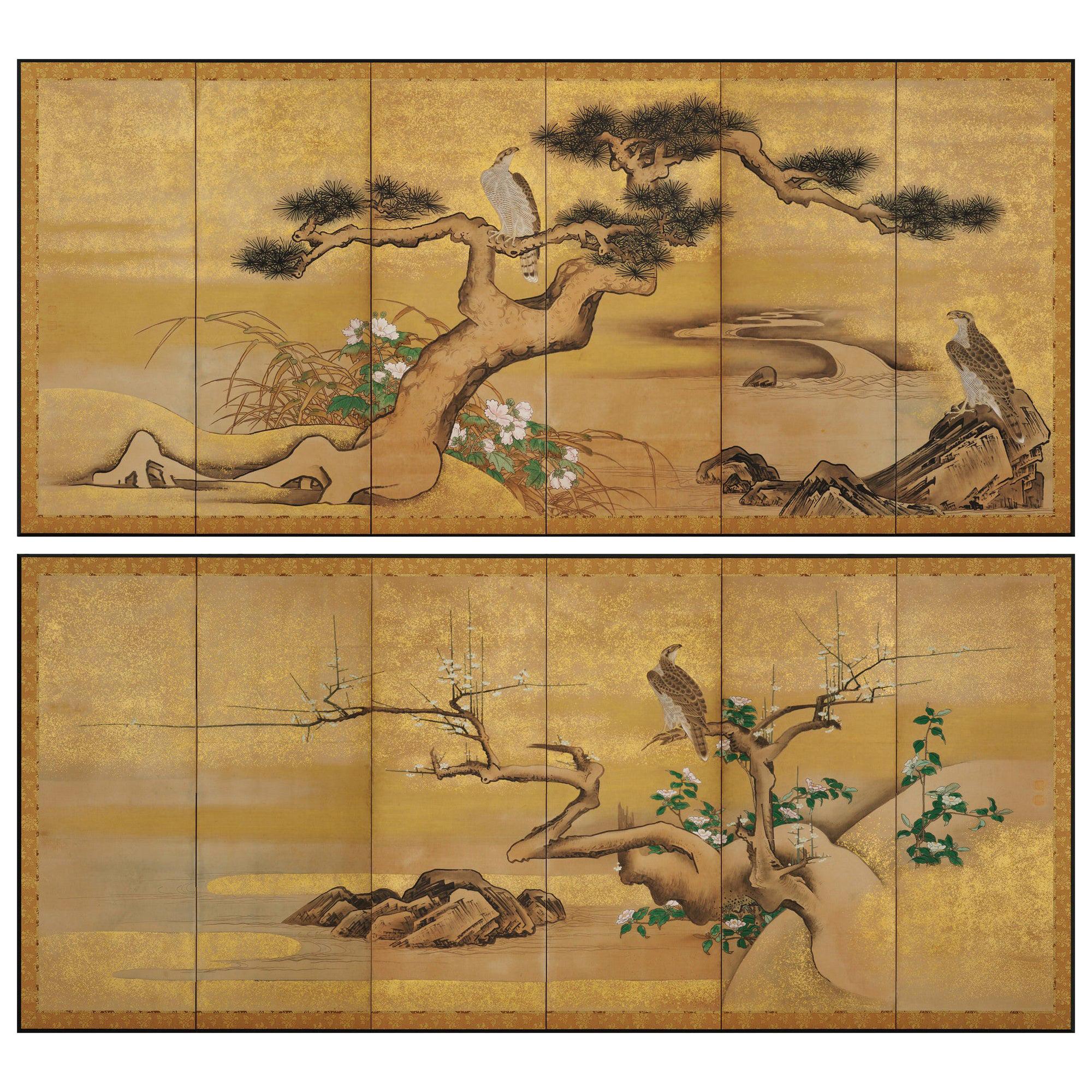
View All17th Century Japanese Screen Pair by Soga Nichokuan, Hawks on Pine
Plum Trees
Located in Kyoto, JP
Hawks on plum and pine
Soga Nichokuan (active circa 1625-1660)
Pair of six-fold screens.
Ink, mineral pigments, gofun, gold and speckled gold l...
Category
Antique 1640s Japanese Edo Paintings and Screens
Materials
Wood, Paper
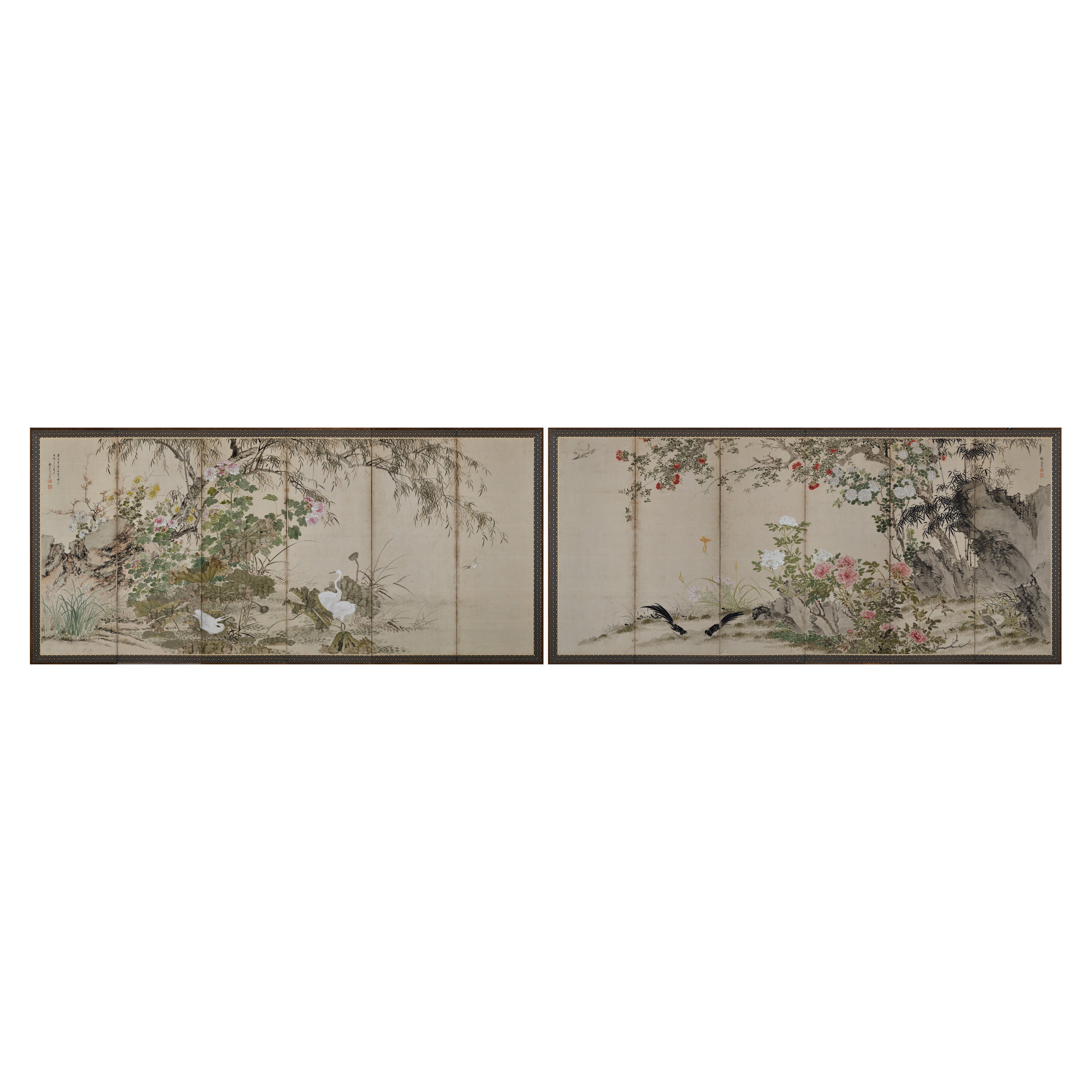
Mid 19th Century Japanese Screen Pair. Flowers
Birds of the Four Seasons.
Located in Kyoto, JP
Shioka Sorin (1781-1850)
Flowers & Birds of the Four Seasons
Pair of six-panel Japanese Screens. Ink, gofun and pigments on silk.
Dimensions (each screen): H. 91.5cm x W. 285cm (3...
Category
Antique Mid-19th Century Japanese Edo Paintings and Screens
Materials
Silk
19th Century Japanese Screen Pair - Birds
Flowers of the Four Seasons
Located in Kyoto, JP
Birds & Flowers of the Four Seasons
Yamamoto Baiitsu (1783-1856)
Late Edo period, Dated 1850
A magnificent pair of six-panel Japanese folding screens by Yamamoto Baitsu, representin...
Category
Antique Mid-19th Century Japanese Edo Paintings and Screens
Materials
Wood, Paper
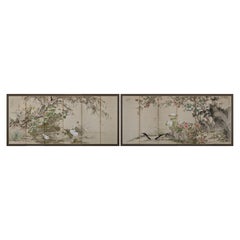
Meiji era Japanese Screen Pair, Two-panel. Spring
Autumn Birds
Flowers.
Located in Kyoto, JP
Spring and Autumn Birds & Flowers
Hasegawa Gyokujun (1863-1921)
Meiji period, circa 1900.
Ink, color and gofun on silk.
Dimensions of each screen:
H. 172 cm x W. 188 cm (68’’ x 7...
Category
Early 20th Century Japanese Meiji Paintings and Screens
Materials
Gold Leaf
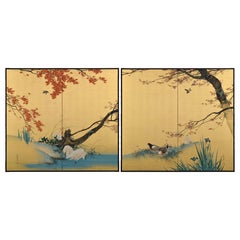
18th Century Japanese Screen Pair. Plum
Young Pines. Kano School.
Located in Kyoto, JP
Dimensions (Each screen): H. 176 cm x W. 378 cm (69’’ x 149’’)
This pair of Japanese folding screens depict blossoming plum trees amongst young pines. They are designed to capture t...
Category
Antique Late 18th Century Japanese Edo Paintings and Screens
Materials
Gold Leaf
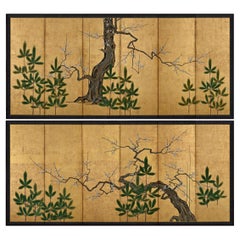
Early 19th Century Japanese Screen. Cherry Blossom
Pheasants by Mori Tetsuzan
Located in Kyoto, JP
Mori Tetsuzan (1775-1841)
Pheasants and Cherry Blossoms
Two-fold Japanese screen. Ink, color, gofun, gold and silver on paper.
A two-fold Japanese bir...
Category
Antique Early 19th Century Japanese Edo Paintings and Screens
Materials
Gold Leaf
You May Also Like
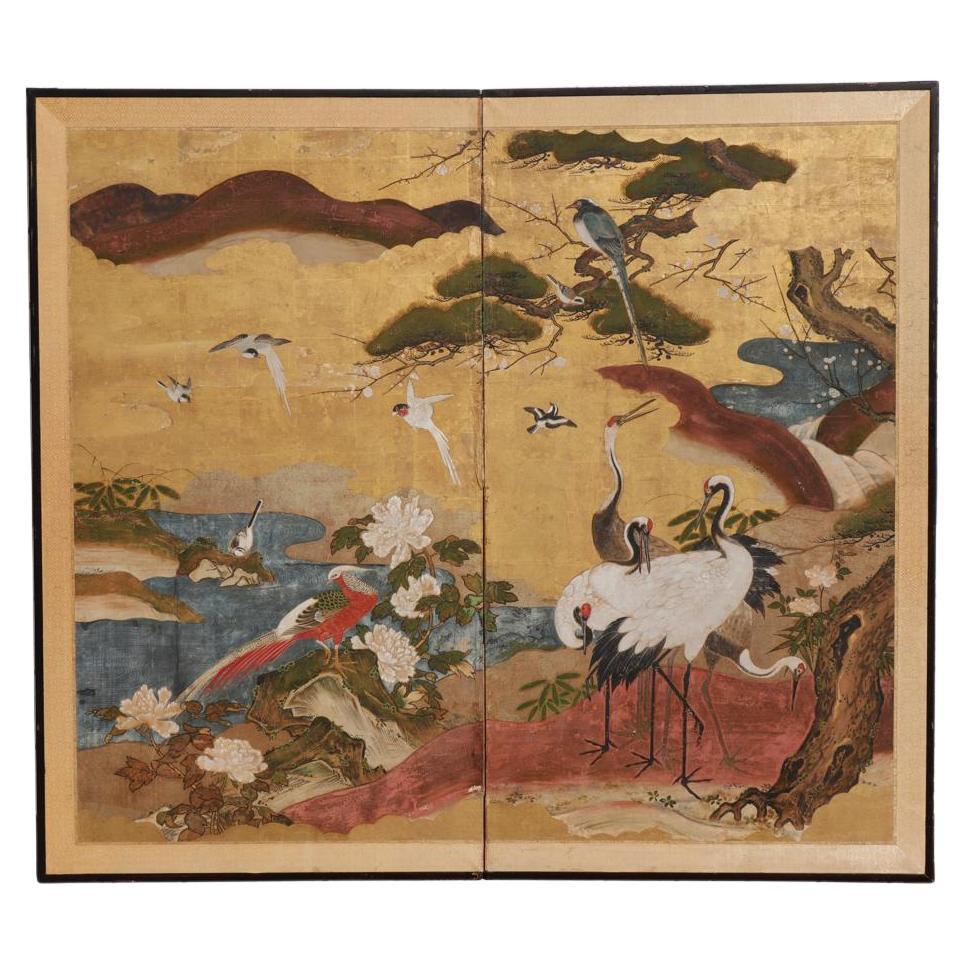
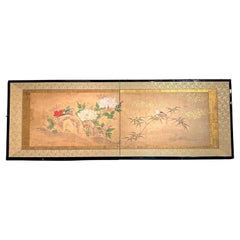
Antique Japanese Kachoga Kano School 2-Panel Screen, Edo Period
Located in Point Richmond, CA
Antique Japanese 2-panel Screen of Birds
Flowers in a Landscape Setting, Kano School, Edo Period. This Kachoga subject of birds and flowers contains a brilliant mix of a variet...
Category
Antique 18th Century Japanese Edo Paintings and Screens
Materials
Gold Leaf
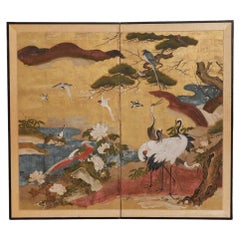
Antique 19th Century Japanese Two-Panel Screen ‘Byobu’, Kano School, Edo Period
Located in London, GB
Japanese Kano School Edo period two-panel screen depicting flowering prunus and bamboo on a rock formation, with colorful birds next to a body of water. ...
Category
Antique Mid-19th Century Japanese Edo Paintings and Screens
Materials
Gold Leaf

Japanese "Magpie and Peony" Two Panel Screen, Edo Period, 18th/19th century
Located in Austin, TX
A sublime Japanese two panel "Magpie and Peony" screen, ink and color on paper, Edo Period, late 18th or early 19th century, circa 1800, Japan.
The two panel screen features a wond...
Category
Antique Early 19th Century Japanese Edo Paintings and Screens
Materials
Copper
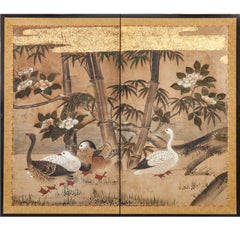
Japanese Two Panel Screen: Mandarin Ducks and Geese Among Bamboo and Flowers
Located in Hudson, NY
Japanese Two Panel Screen: Mandarin Ducks and Geese Among Bamboo and Flowers, Edo period painting (c. 1850) of mandarin ducks and geese on a grassy sh...
Category
Antique Mid-19th Century Japanese Edo Paintings and Screens
Materials
Gold
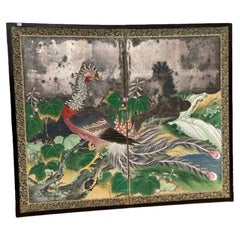
Japanese Two-Panel Phoenix Screen, Edo Period, Ca. 1850
Located in New York, NY
Japanese Two-Panel Phoenix Screen, Edo Period, Ca. 1850
Japanese Edo Period (1603-1868)
DIMENSIONS
Height: 24 inches
Width: 28 inches
Category
Antique 1850s Japanese Japonisme Paintings and Screens
Materials
Wood
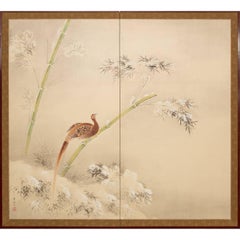
Japanese Two Panel Screen: Pheasant and Snow Covered Bamboo
Located in Hudson, NY
Early Taisho period painting (1912 - 1926) in mineral pigments on mulberry paper with a silk brocade border. Artist signature reads: Kisho saku. Kisho Shibahara (1885-1954).
Category
Early 20th Century Japanese Taisho Paintings and Screens
Materials
Paper
More Ways To Browse
Asian Gold Leaf Art
18th Century Screen
Japanese Folding Screens
Kano School
Edo Screen Gold
18th Century Japanese Screens
Calligraphy
18th Century Hand Screen
Asian Art Painting Pair Wood Panel
Pair Of Japanese Screens
Japanese Peacock
Japanese Calligraphy Paintings
Antique Japanese Calligraphy
Peacock Screen
Japanese Kano Screen
Antique Peacock Painting
Kano School Screen
Edo Japanese Screen Kano