Items Similar to Japanese Silver Screen Pair, Meiji Period, Herons
Plovers, Shijo School
Want more images or videos?
Request additional images or videos from the seller
1 of 11
Japanese Silver Screen Pair, Meiji Period, Herons
Plovers, Shijo School
$22,500per set
£17,007.40per set
€19,508.19per set
CA$31,365.93per set
A$34,144.37per set
CHF 18,123.84per set
MX$410,830.25per set
NOK 229,653.77per set
SEK 210,427.75per set
DKK 145,685.98per set
About the Item
Heron
Plovers
Ink and silver leaf on paper
Maekawa Bunrei (1837-1917)
A pair of low six-panel Japanese screens by Maekawa Bunrei, a later master of the Kyoto based Shijo school of painting. On the right screen a solitary white heron stands motionless in a stream. On the left screen plovers play along a shoreline. The elegant forms are executed employing fluid, minimalistic ink brushstrokes. The soft brushstrokes and the sharp light of the silver leaf lend the scenes a sense of translucence. The sophisticated composition superbly exploits the long, horizontal pictorial surface of the pair of folding screens. The origins of Shijo school painting are closely linked with Haiku poetry. Like Haiku, Shijo attempts to capture an immediate, subjective reaction to a stimulus from the world of nature. Naturalism is eschewed for the psychological impression taken from it. As in Haiku, simplification, the reduction of a scene to its most basic signifying elements, is at the core of Shijo work.
With their simplified design, masterful use of negative space and clarity of expression, this pair of screens represents the height of the Shijo school.
Maekawa Bunrei (1837-1917) was a Kyoto based Shijo school artist. He studied painting under his father Maekawa Gorei (1806-1876), who in turn was a pupil of Matsumura Keibun (1779-1843). He was particularly known for his paintings of birds and flowers. He played an active role of the Kyoto painting scene of the Meiji era. He was a member of the Kyoto Art Association (Jounsha). He worked at the Kyoto Prefectural Painting School at its inception and was a judge at the Kyoto Japan Youth Painting Association. He was also a frequent exhibitor at Japan’s National Industrial Exhibitions.
- Dimensions:Height: 35 in (88.9 cm)Width: 98 in (248.92 cm)Depth: 0.75 in (1.91 cm)
- Sold As:Set of 2
- Style:Meiji (Of the Period)
- Materials and Techniques:
- Place of Origin:
- Period:1900-1909
- Date of Manufacture:circa 1900
- Condition:Wear consistent with age and use.
- Seller Location:Kyoto, JP
- Reference Number:1stDibs: LU2472328307472
About the Seller
5.0
Recognized Seller
These prestigious sellers are industry leaders and represent the highest echelon for item quality and design.
Gold Seller
Premium sellers maintaining a 4.3+ rating and 24-hour response times
Established in 2001
1stDibs seller since 2016
75 sales on 1stDibs
Typical response time: 6 hours
- ShippingRetrieving quote...Shipping from: Kyoto, Japan
- Return Policy
More From This Seller
View All19th Century Japanese Screen Pair - Birds
Flowers of the Four Seasons
Located in Kyoto, JP
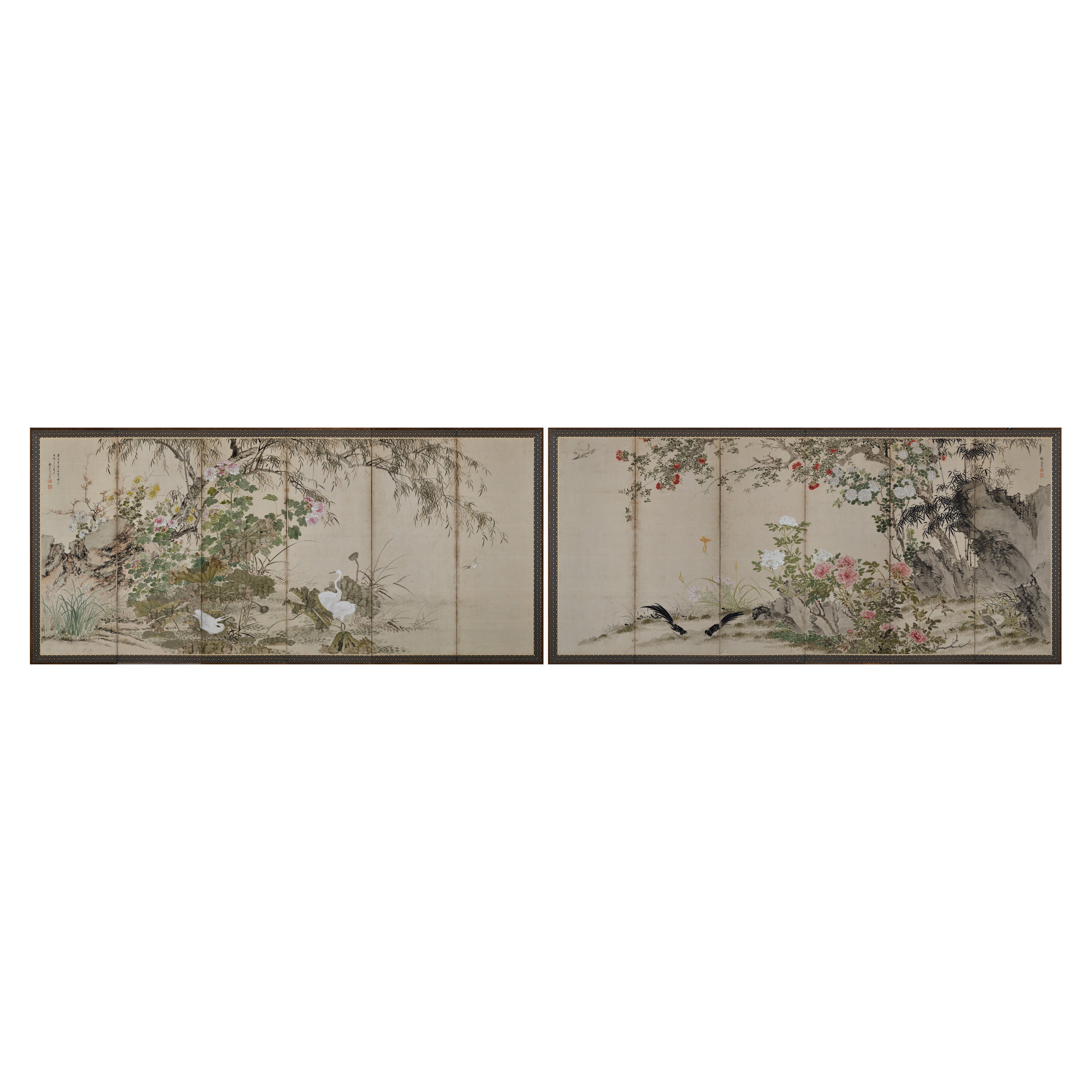
Birds & Flowers of the Four Seasons
Yamamoto Baiitsu (1783-1856)
Late Edo period, Dated 1850
A magnificent pair of six-panel Japanese folding screens by Yamamoto Baitsu, representin...
Category
Antique Mid-19th Century Japanese Edo Paintings and Screens
Materials
Wood, Paper
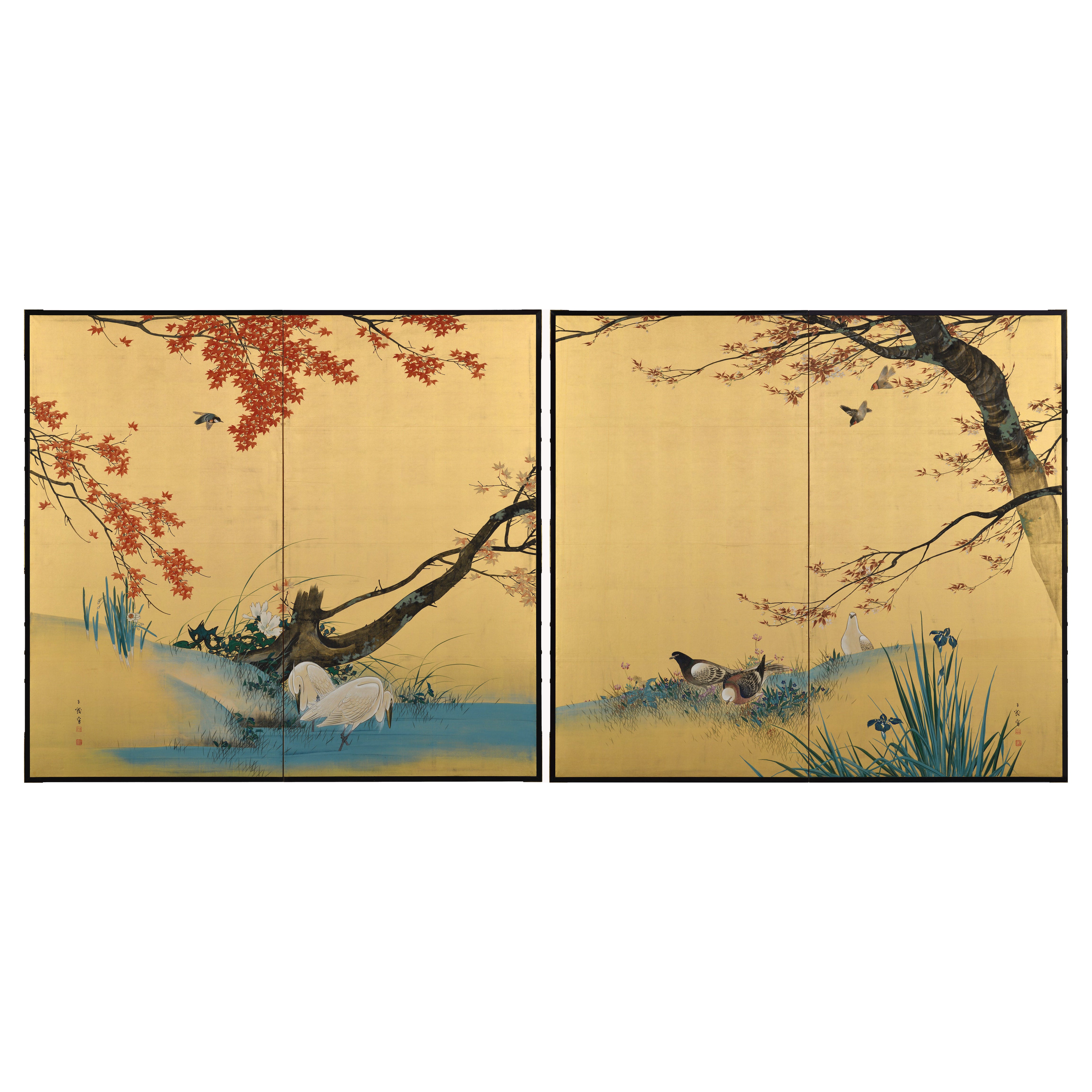
Meiji era Japanese Screen Pair, Two-panel. Spring
Autumn Birds
Flowers.
Located in Kyoto, JP
Spring and Autumn Birds & Flowers
Hasegawa Gyokujun (1863-1921)
Meiji period, circa 1900.
Ink, color and gofun on silk.
Dimensions of each screen:
H. 172 cm x W. 188 cm (68’’ x 7...
Category
Early 20th Century Japanese Meiji Paintings and Screens
Materials
Gold Leaf
Mid 19th Century Japanese Screen Pair. Flowers
Birds of the Four Seasons.
Located in Kyoto, JP
Shioka Sorin (1781-1850)
Flowers & Birds of the Four Seasons
Pair of six-panel Japanese Screens. Ink, gofun and pigments on silk.
Dimensions (each screen): H. 91.5cm x W. 285cm (3...
Category
Antique Mid-19th Century Japanese Edo Paintings and Screens
Materials
Silk
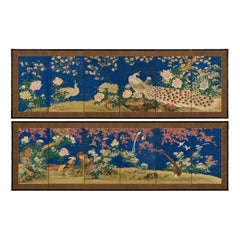
17th Century Japanese Screen Pair by Soga Nichokuan, Hawks on Pine
Plum Trees
Located in Kyoto, JP
Hawks on plum and pine
Soga Nichokuan (active circa 1625-1660)
Pair of six-fold screens.
Ink, mineral pigments, gofun, gold and speckled gold l...
Category
Antique 1640s Japanese Edo Paintings and Screens
Materials
Wood, Paper
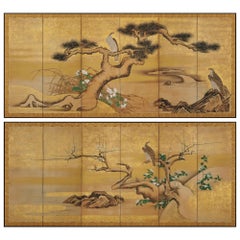
17th Century Japanese Screen Pair. Flock of Cranes. Ink and color on gold leaf.
Located in Kyoto, JP
A pair of six-fold Japanese screens from the 17th century depicting a flock of cranes arriving at their wintering grounds. The expansive scene is heavily atmospheric. The cranes are...
Category
Antique 17th Century Japanese Edo Paintings and Screens
Materials
Gold Leaf
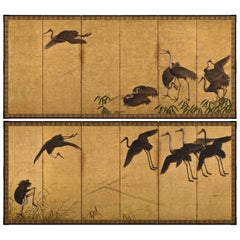
Mid 18th Century Japanese Screen Pair. Crows
Pines by Unkoku Toshuku.
Located in Kyoto, JP
Unkoku Toshuku (1722-1779)
Crows and Pines
A pair of six-panel Japanese Screens. Ink and gold leaf on paper.
Dimensions: Each Screen: H. 170.5 cm x W. 375 cm
Haha-cho or mynah birds, whose forms resemble crows in artwork, were commonly depicted in Japanese art. These types of paintings were originally modeled on paintings attributed to the 13th century Chinese painter Muqi (Mokkei), whose art was enormously influential in Japan. Crows only became a theme among Japanese artists from the later 1500s onward. They likely were inspired by these imported Chinese paintings of myna birds, which are not native to Japan, substituting the native species of crow instead.
The best known early examples of the depiction of Japanese crows are two Momoyama screen...
Category
Antique Mid-18th Century Japanese Edo Paintings and Screens
Materials
Gold Leaf
You May Also Like
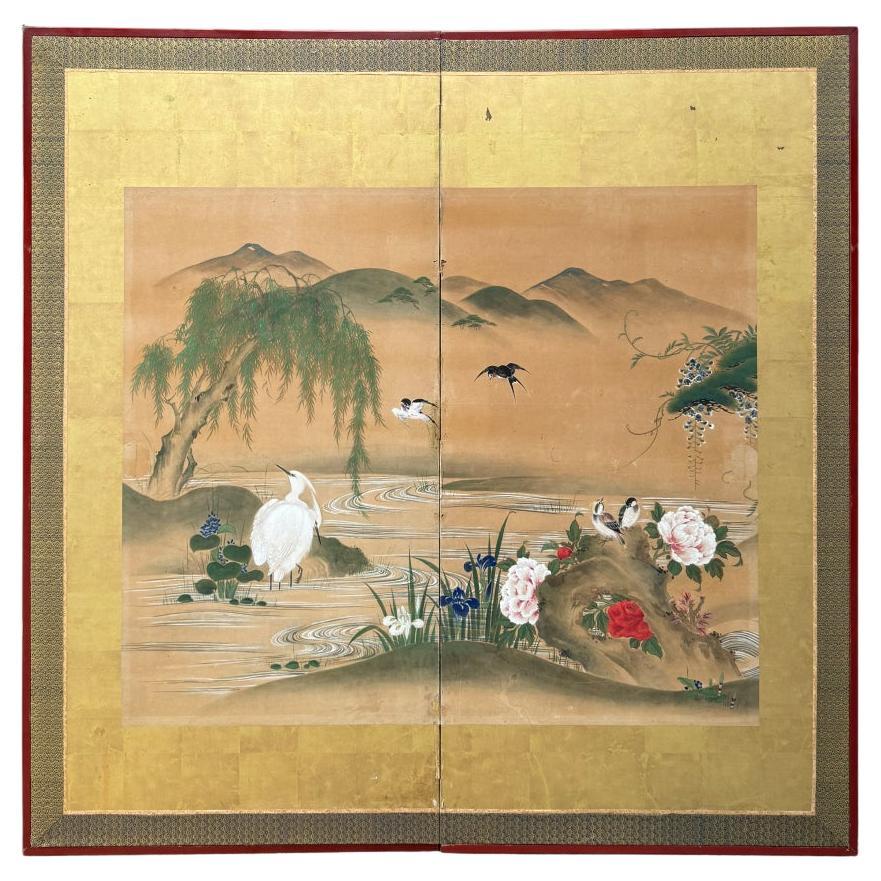
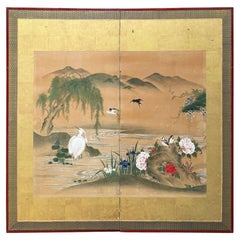
Meiji periof Nature scene with herons
Located in Fukuoka, JP
Meiji periof Nature scene with herons
Peroid: Meiji
Size: 154 x 155 cm (60.6 x 61 inches)
The artwork showcases a serene natural landscape that harmoniously blends various element...
Category
Antique 19th Century Japanese Meiji Paintings and Screens
Materials
Wood, Paper
$2,700 Sale Price
59% Off
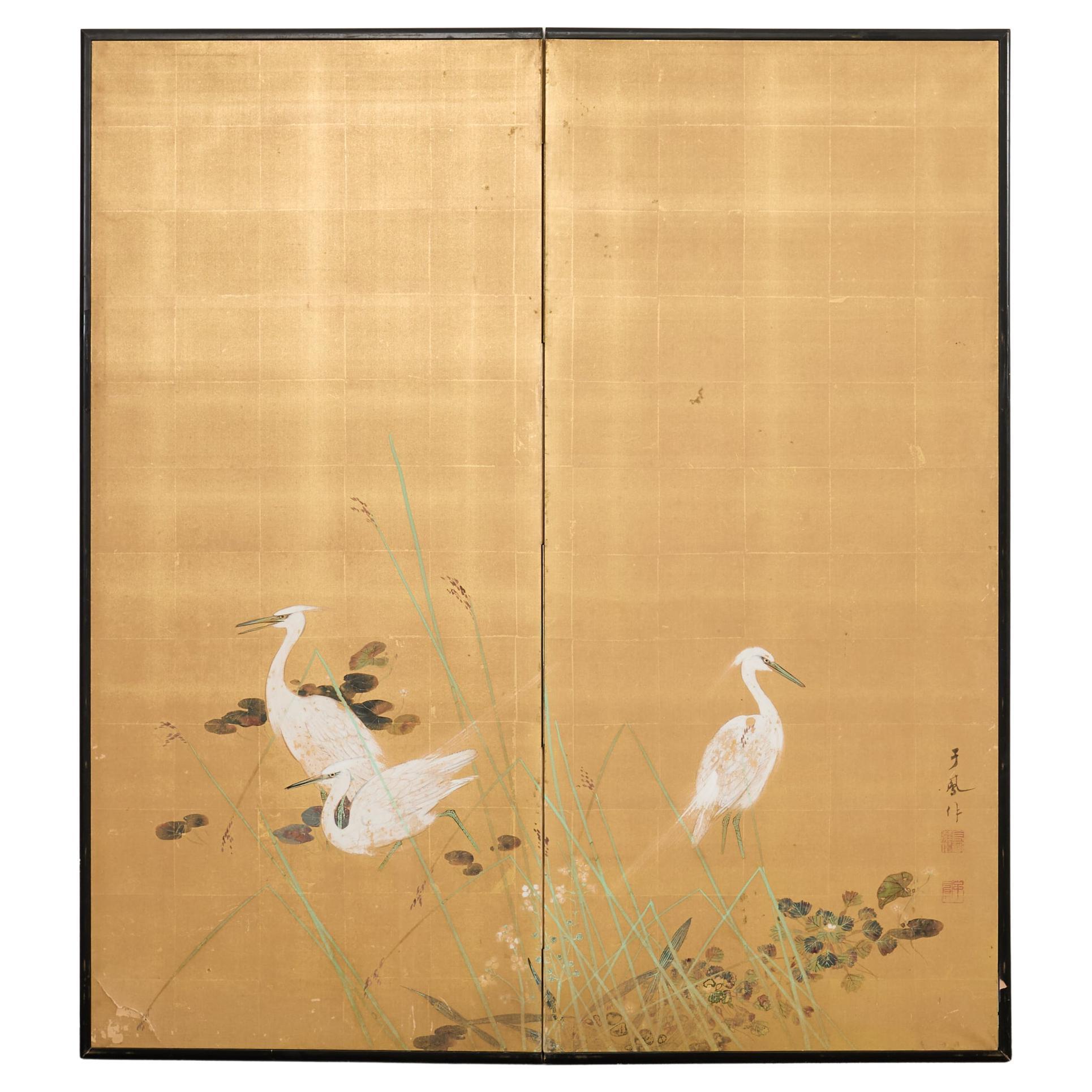
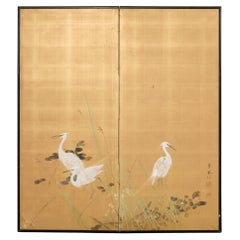
Japanese Showa Two Panel Screen Egrets in Grass
Located in Rio Vista, CA
Stunning Japanese Showa period two-panel folding byobu screen depicting three egrets in the grass at a pond. The large screen features a dramatic gold leaf square background with nat...
Category
20th Century Japanese Showa Paintings and Screens
Materials
Wood, Paper
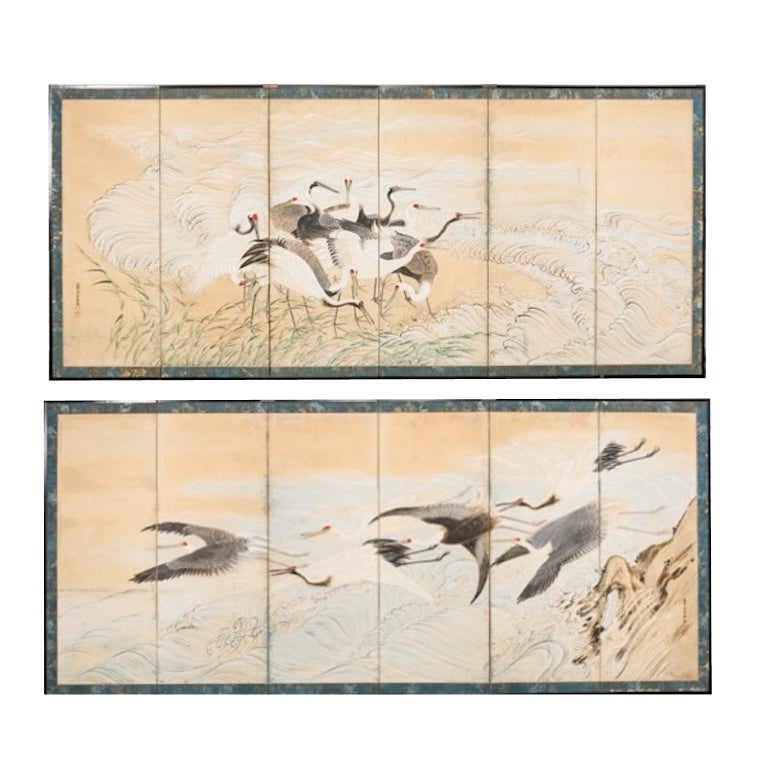
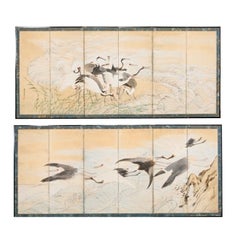
Pair of Japanese Meiji Six Panel Screen Cranes Above Cresting Waves
Located in Rio Vista, CA
Amazing 19th century pair of large Japanese Meiji period six panel screens each depicting a sedge of Manchurian red-crowned cranes along the shore. The screens are crafted in the Nihonga school style with intricate details and beautifully depicted cresting waves. Each screen is signed by artist Hakundo Keikan and studio name of Watahiki Tokai (Japanese 1837-1915). Both screens are signed with red seals on the left and right side. Tokai was a Chinese scholar from the late Edo period and served in the Imperial Household...
Category
Antique 19th Century Japanese Meiji Paintings and Screens
Materials
Brass
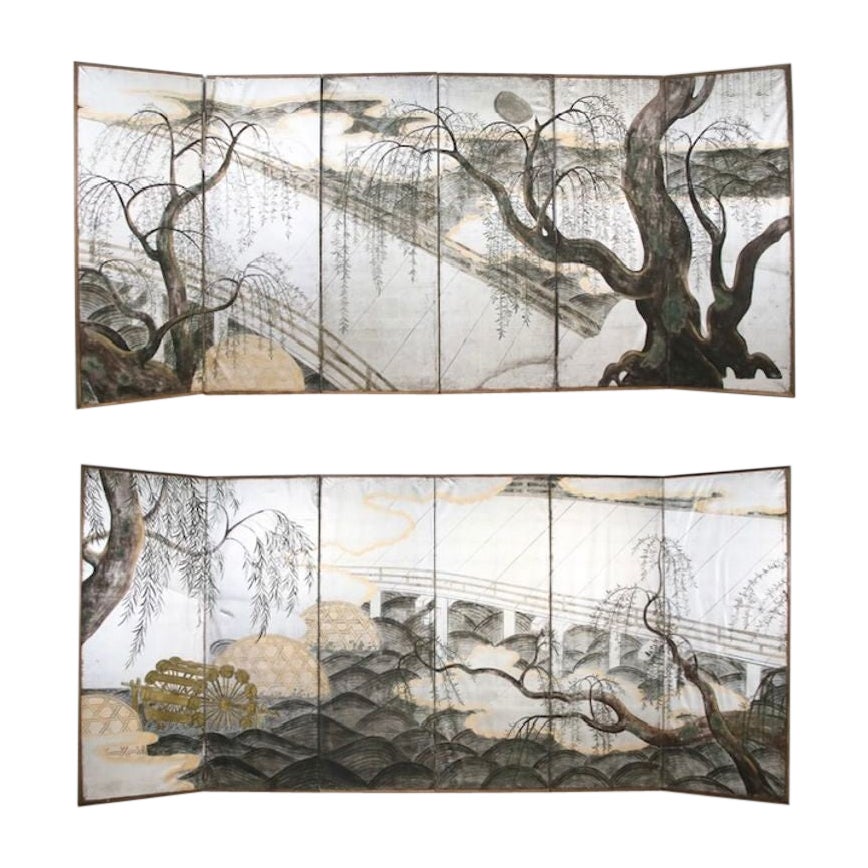
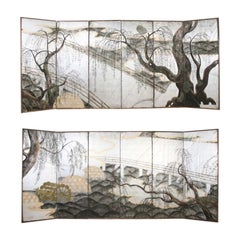
Pair of Japanese Silver Leaf Meiji Period Painted Screens
Located in Dallas, TX
The product is a pair of Japanese silver leaf Meiji period painted screens. These screens showcase intricate artwork and designs typical of the Me...
Category
Antique 19th Century Japanese Paintings and Screens
Materials
Wood
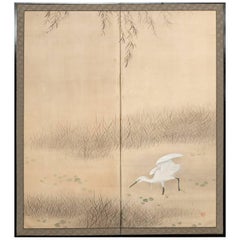
Japanese Two Panel Screen, Heron In Water Lily Pond Under Willow
Located in Hudson, NY
Japanese Screen painted with Heron In Water Lily Pond Under Willow. Meiji period (1868 - 1912) painting of a heron at pond's edge. Painted in min...
Category
Early 20th Century Japanese Meiji Paintings and Screens
Materials
Wood, Paper
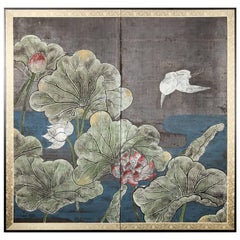
Japanese Two Panel Screen, Lotus and Heron
Located in Hudson, NY
Japanese two panel screen, lotus and heron
Colored mineral pigments on silver leaf on handmade mulberry paper.
Category
Antique Late 19th Century Japanese Paintings and Screens
More Ways To Browse
Japanese Antique Silver
Japanese Silver Meiji
Antique Heron
Long Horizontal
Japanese Silver Leaf
Silver Japanese Painting
Meiji Period Japanese Screen
Japanese Screen Silver
Pair Of Japanese Screens
White Heron
Japanese Silver Leaf Screen
Heron Japanese
Heron Screen
18th Century Screen
Antique Lacquer Painting
Scroll Painting Silk
Silk Japanese Scrolls
Framed Art With Asian Brass Frame