Items Similar to Japanese Traditional Brocade Silk Two-Panel Folding Screen
Want more images or videos?
Request additional images or videos from the seller
1 of 6
Japanese Traditional Brocade Silk Two-Panel Folding Screen
$9,250
£6,988.89
€8,013.08
CA$12,909.44
A$14,046.45
CHF 7,437.42
MX$168,988.40
NOK 94,438.69
SEK 86,404.79
DKK 59,868.85
About the Item
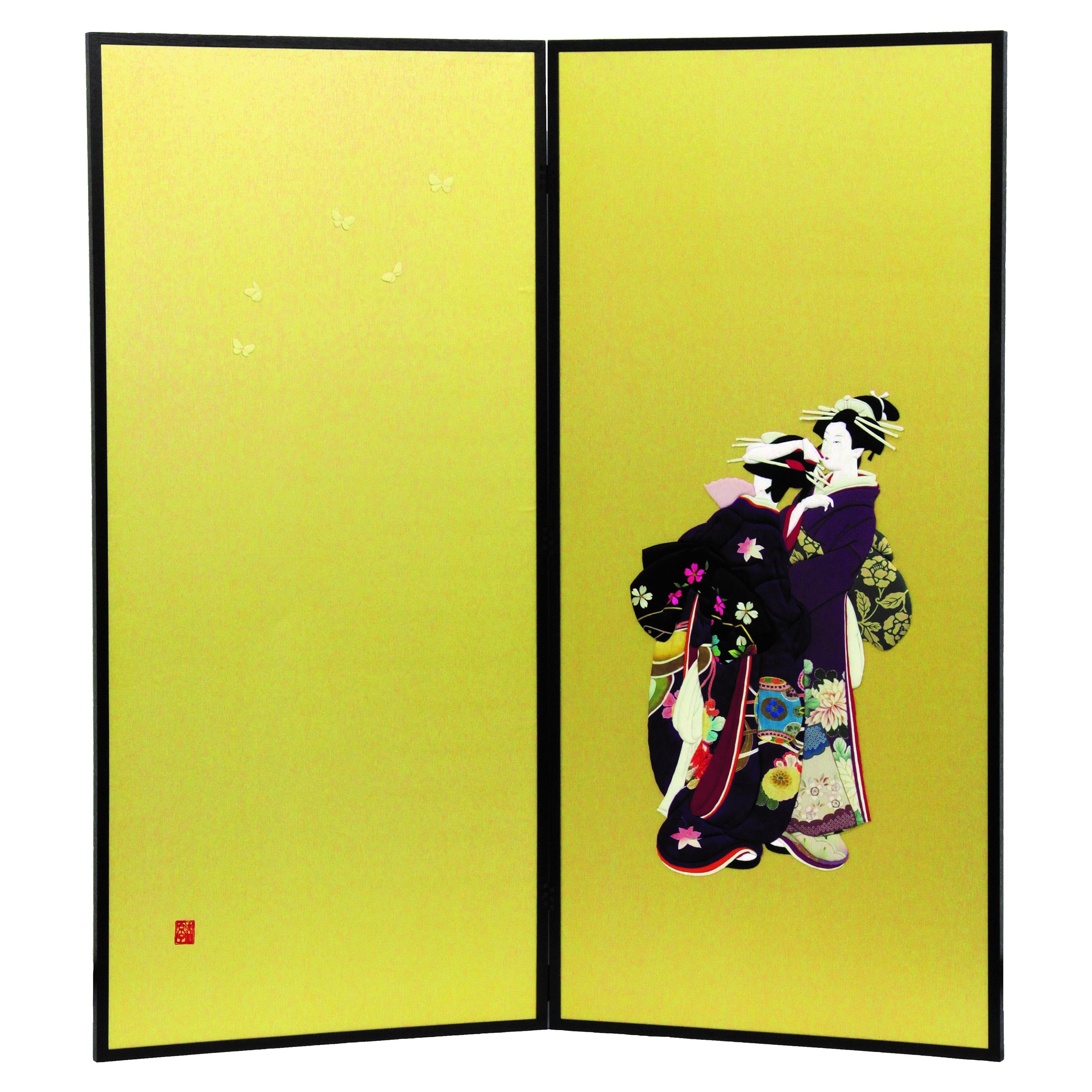
Japanese contemporary two-panel "byobu" or folding screen featuring two graceful ladies dressed in elegant formal traditional Japanese kimonos. This folding screen is inspired by Japanese "bijin" (beautiful woman) artistic tradition. It showcases a traditional Japanese decorative art form using high quality silk and brocade fabrics, known as oshie (literally, “pressed pictures”) that goes back to the Edo period, (1603-1868). It is said this art form was born of the reluctance of ladies of the court to discard the magnificent silk kimonos and brocaded obi they had donned for a lifetime. The solution was to recycle these opulent fabrics into stunning works of art.
Oshie resembles a carefully crafted very intricate jigsaw puzzle comprising numerous pieces of kimono fabric padded with slightly differing thicknesses of cotton and painstakingly glued and ironed together to create an undulating three-dimensional picture. Highly detailed oshie pieces contain hundreds of small pieces that are expertly aligned to express subtle gradations in color, as well as light and shade. In the final process, facial features are painted in miniature-like exactitude. The end product is an awe-inspiring piece with a surprising three-dimensional effect.
This elegant fold screen series conveys the beauty and sensibility that the history of Japan reflects and at the same time enhances contemporary living spaces.
Dimensions: H 60 in, W 57 in, D 2 in.
- Dimensions:Height: 60 in (152.4 cm)Width: 57 in (144.78 cm)Depth: 2 in (5.08 cm)
- Style:Meiji (In the Style Of)
- Materials and Techniques:
- Place of Origin:
- Period:
- Date of Manufacture:Contemporary
- Production Type:New Custom(One of a Kind)
- Estimated Production Time:Available Now
- Condition:
- Seller Location:Takarazuka, JP
- Reference Number:Seller: CVKC1stDibs: LU2771318478262
About the Seller
5.0
Gold Seller
Premium sellers maintaining a 4.3+ rating and 24-hour response times
Established in 2009
1stDibs seller since 2017
238 sales on 1stDibs
Typical response time: 2 hours
- ShippingRetrieving quote...Shipping from: Takarazuka, Japan
- Return Policy
More From This Seller
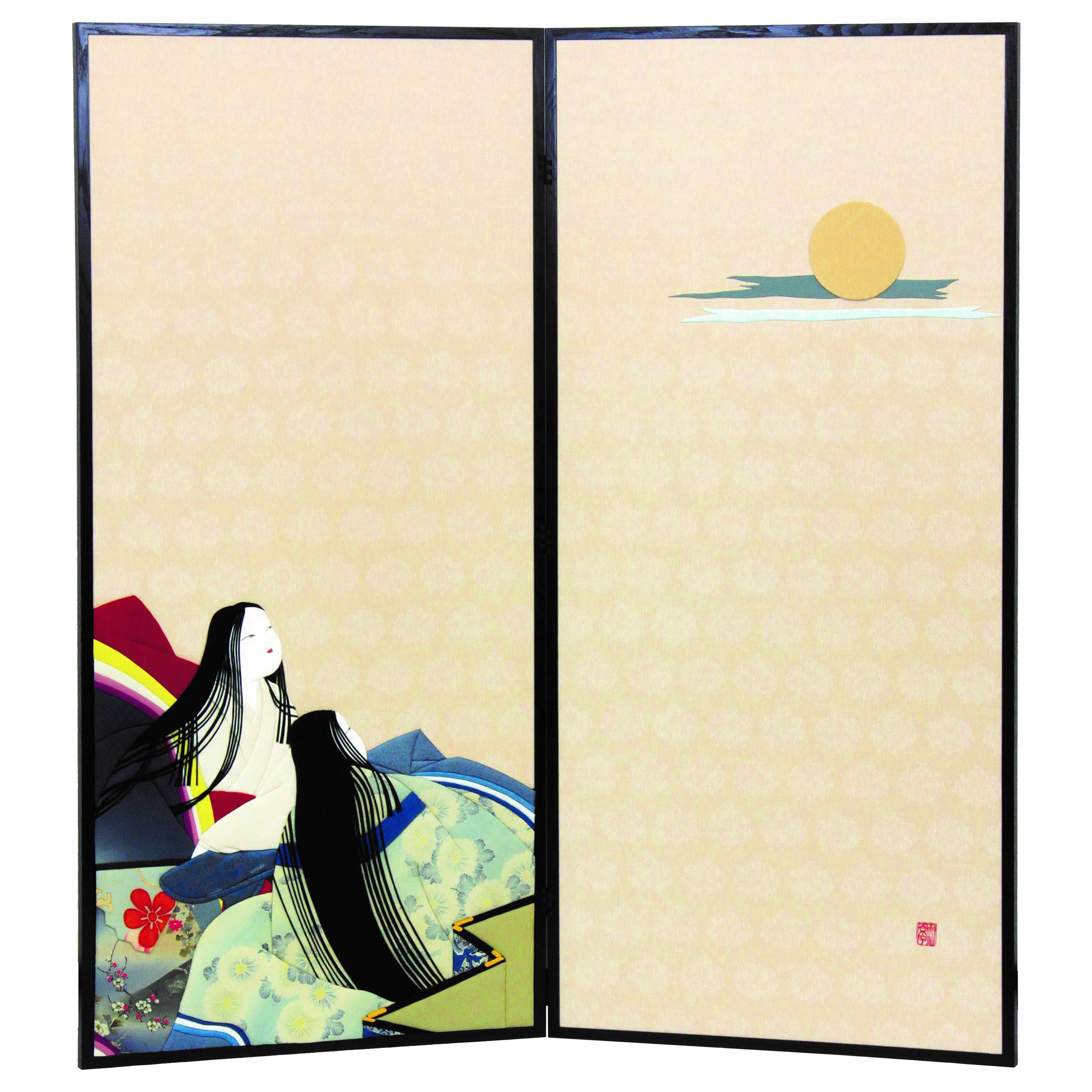
View AllJapanese Silk Brocade Traditional Two-Panel Folding Screen
Located in Takarazuka, JP
Extraordinary Japanese contemporary two-panel "byobu" or folding screen featuring a lady from the Heian period court, showcased in "The Tale of Genji" by Murasaki Shikibu, widely int...
Category
21st Century and Contemporary Japanese Paintings and Screens
Materials
Silk
Japanese Contemporary Black Gold Silk Brocade Two-Panel Folding Screen
Located in Takarazuka, JP
Exceptional Japanese contemporary two-panel "byobu" or folding screen featuring two graceful ladies dressed in elegant formal traditional Japanese kimonos. This folding screen is ins...
Category
21st Century and Contemporary Japanese Meiji Paintings and Screens
Materials
Gold
Japanese Large Red Silk Brocade Gilded Two Panel Folding Screen
Located in Takarazuka, JP
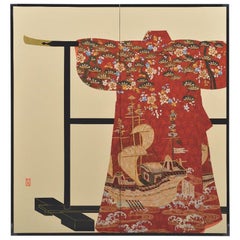
Exquisite contemporary Japanese two panel folding screen or "byobu" featuring genryoku style handcrafted silk raised kimono in cream and gold needlework on a mesmerizing red background. Tagasode is the way a genryoku kosode kimono is hung over a kimono rack...
Category
21st Century and Contemporary Japanese Paintings and Screens
Materials
Gold
Japanese Contemporary silk brocade Traditional Oshie Handcrafted Decorative Art
Located in Takarazuka, JP
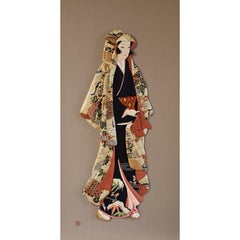
Extraordinary hand crafted Japanese contemporary traditional oshie wall decorative art piece with a stunning three-dimensional effect. This is a centuries-old traditional Japanese handcrafted wall decorative art form using high quality silk and brocade fabrics, known as oshie (literally, “pressed pictures”) that goes back to the Edo period (1603-1868). It is said this art form was born of the reluctance of ladies of the court to discard the magnificent silk kimonos and brocaded obi they had donned for a lifetime. The solution was to recycle these opulent fabrics into stunning works of art.
Oshie resembles a carefully crafted very intricate jigsaw puzzle comprising numerous intricate pieces of kimono fabric padded with slightly differing thicknesses of cotton and painstakingly glued and ironed individually. All those tiny pieces are then glued one by one on a custom-made board making sure each piece lands on the exact right place making sure that the right pieces overlap the lower pieces to create an undulating three-dimesional picture. Highly detailed oshie pieces contain hundreds of small pieces that are expertly aligned to recreate even the minutest details of the the painting In the final process. Facial features are painted in miniature-like exactitude. The end product is an awe-inspiring piece with a surprising three-dimensional effect.
This magnificent piece depicts a fascinating scene of a lady of privilege wearing an exquisitely brocaded headdress and overcoat to protect herself from the cold. Each dainty step she takes exposes the folds of her multi-layered kimono in a scene reminiscent of the ladies of the ancient imperial court of Japan. The creator of this signed piece has prided herself in using exquisite antique and vintage kimono and obi...
Category
21st Century and Contemporary Japanese Meiji Paintings and Screens
Materials
Brocade, Silk
Japanese Contemporary Silk Brown Black Cream Two-Panel Folding Screen, 3
Located in Takarazuka, JP
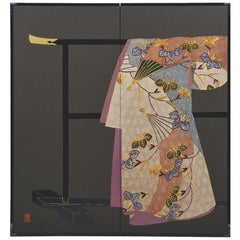
Extraordinary contemporary Japanese two-panel "byobu" or folding screen showcasing genryoku style handcrafted raised embroidered silk brocade kimono Japanese decorative art in autumn...
Category
21st Century and Contemporary Japanese Meiji Decorative Art
Materials
Gold
Japanese Contemporary Silk Red Black Cream Hand-Crafted Two Panel Folding Screen
Located in Takarazuka, JP
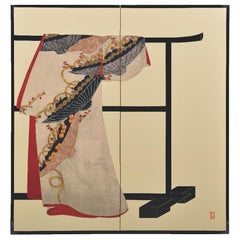
Exceptional Japanese contemporary two panel "byobu" or folding screen featuring genryoku style handcrafted silk raised kimono Japanese decorative art in crimson red, cream and gold o...
Category
21st Century and Contemporary Japanese Meiji Decorative Art
Materials
Gold
You May Also Like
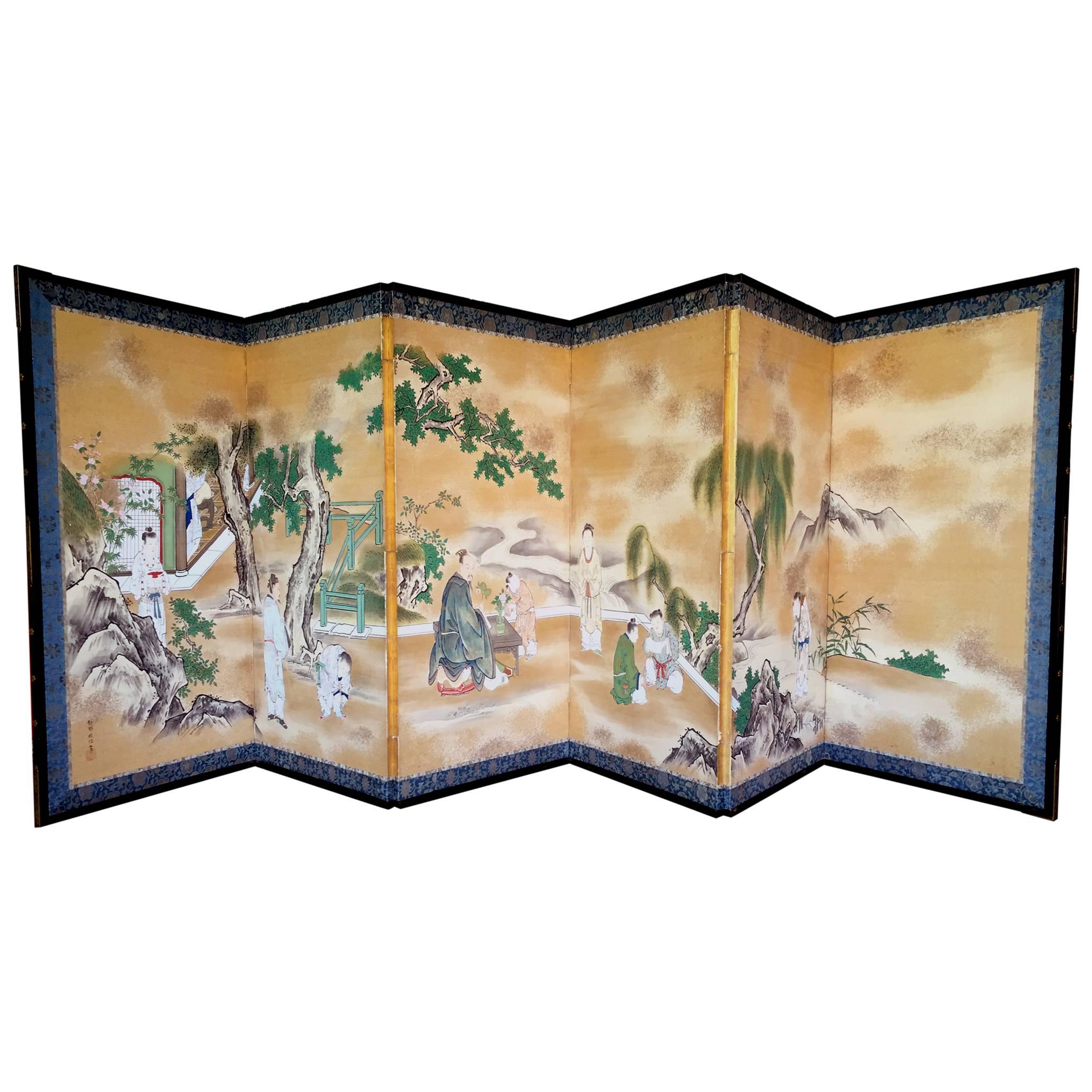
Rare Antique Japanese Folding Screen by Kano Tanshin
By Kano Tanshin
Located in Atlanta, GA
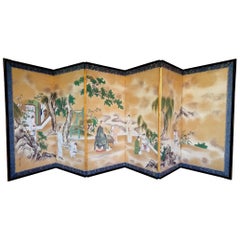
An exquisite Japanese folding screen painted and signed by Kano Tanshin (Morimasa) (1658-1719), circa early Edo Period. An important member of the Kano painter family, the son of Kano Tanyu...
Category
Antique 17th Century Japanese Japonisme Paintings and Screens
Materials
Brass
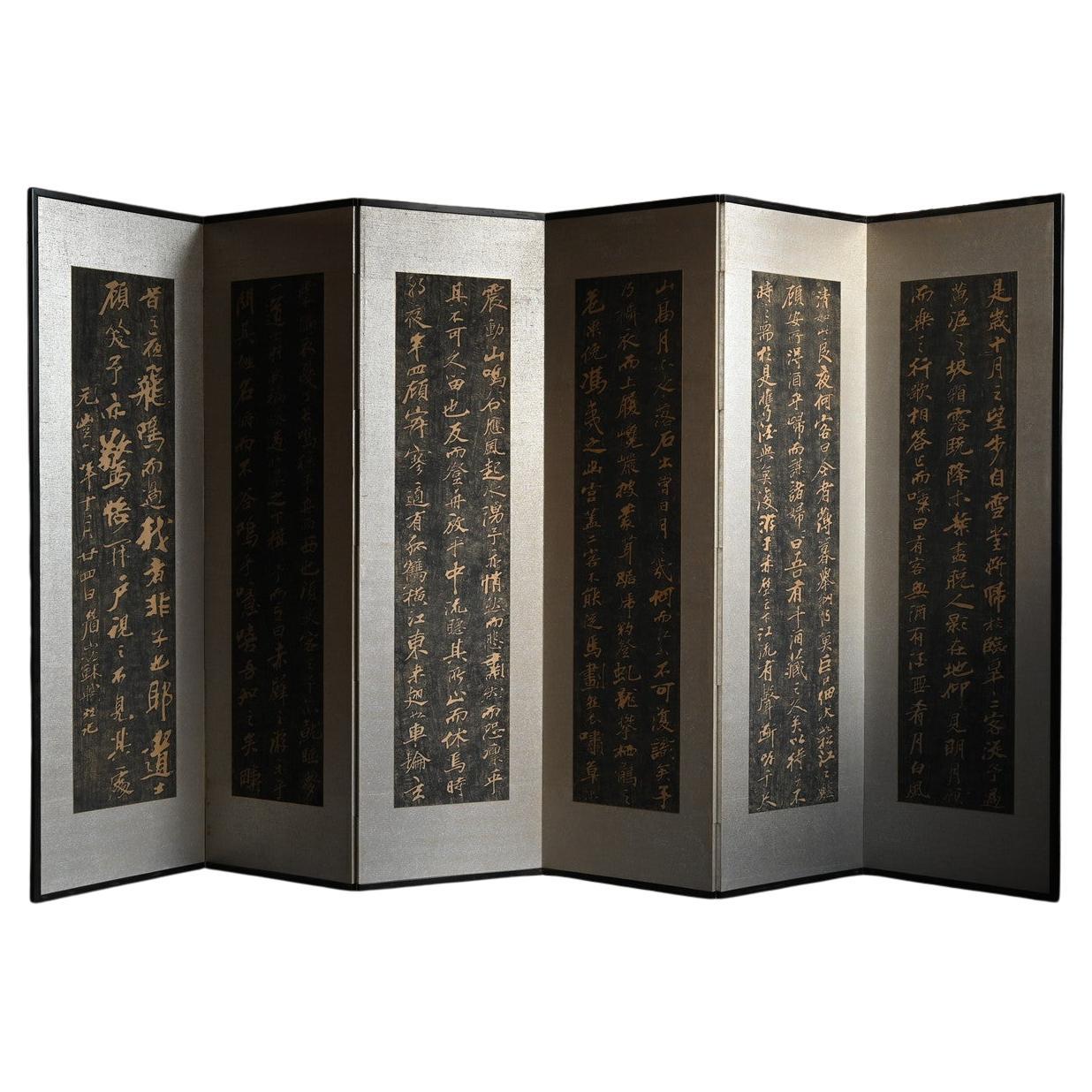
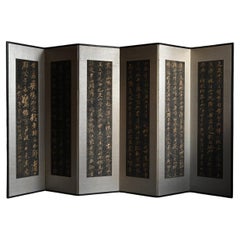
Old Japanese woodblock print folding screen/room partition/object
Located in Sammu-shi, Chiba
This is a woodblock-printed folding screen made in Japan during the Showa period, featuring writings by a Chinese calligrapher.
It is a passage from a story written by a famous Chin...
Category
20th Century Japanese Showa Paintings and Screens
Materials
Paper
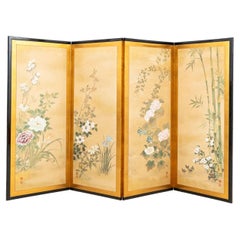
Japanese 4-Panel Byobu Screen
Located in Astoria, NY
Japanese Four Panel Byobu Screen, with hand-painted scenes of flowers within gilt borders, chop seal marks to each panel. Larger panels: 38.75" H x 17.25" W x 1" D. Provenance: From ...
Category
Late 20th Century Japanese Ming Paintings and Screens
Materials
Hardwood, Paper
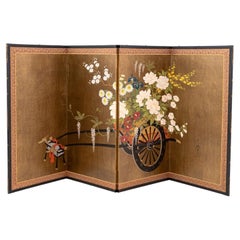
Japanese 4-Panel Byobu Screen
Located in Astoria, NY
Japanese Four-Panel Byobu Screen, 20th century, ink on gold leaf ground, decorated with a scene of a hana guruma (flower cart), signed lower right. Each panel: 36.25" H x 18.25" W x ...
Category
20th Century Japanese Paintings and Screens
Materials
Gold Leaf
Pair of Rare Antique Japanese Folding Screens with Provenance
Located in Atlanta, GA
An amazing pair of matching antique Japanese folding screen predating 1812-1813, most likely from Kano School. Six panels each depict C...
Category
Antique 1810s Japanese Japonisme Paintings and Screens
Materials
Brass
Japanese Two Panel Screen: Antique Kimono Fabric Mounted on Screen
Located in Hudson, NY
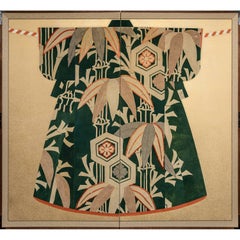
Japanese Two Panel Screen: Late Nineteenth Century Kimono Fabric Mounted on Early Twentieth Century Screen. In the Heian period (eighth century to the twelfth century), noblemen wou...
Category
Early 20th Century Japanese Meiji Paintings and Screens
Materials
Silk, Wood, Paper
More Ways To Browse
Folding Screens
Japanese Silk Paintings
Japanese Silk Screen Painting
Japanese Kimono
Japanese Silk Panel
Meiji Silk
Japanese Folding Screens
Byobu Screens
Japanese Folding Screen Screen
Japanese Silk Brocade
Japanese Folding Screen Art
Byobu Panel
Japanese Byobu
Japanese Meiji Panel
Kimono Obi
Silk Obi
Japanese Screen Kimono
Brocade Kimono