Items Similar to Japanese Two-Panel Screen Chinese Style Painting with Calligraphy
Want more images or videos?
Request additional images or videos from the seller
1 of 11
Japanese Two-Panel Screen Chinese Style Painting with Calligraphy
$20,500
£15,486.99
€17,760.22
CA$28,603.83
A$31,129.76
CHF 16,501.86
MX$374,514.83
NOK 209,296.55
SEK 191,491.69
DKK 132,682.31
About the Item
Painting of a perforated garden stone with red bamboo growing behind. Chinese zekku poem reads, "Returning home to my grass hut on a spring evening," by the Tang-poet Qian Qi. Screen is signed: Riken isshi Sonko. The bamboo painter: Riken Kitamura Kozo (1881-1961). Screen is dated Taisho 8 (1919). Mineral pigments on silver, with silk brocade border. Good condition.
- Dimensions:Height: 67.75 in (172.09 cm)Width: 74.25 in (188.6 cm)Depth: 0.75 in (1.91 cm)
- Style:Taisho (Of the Period)
- Materials and Techniques:
- Place of Origin:
- Period:
- Date of Manufacture:1919
- Condition:Details on request.
- Seller Location:Hudson, NY
- Reference Number:Seller: S16421stDibs: LU855113549202
About the Seller
5.0
Recognized Seller
These prestigious sellers are industry leaders and represent the highest echelon for item quality and design.
Established in 1971
1stDibs seller since 2008
170 sales on 1stDibs
Typical response time: 8 hours
Associations
The Art and Antique Dealers League of AmericaAntiques Associations Members
- ShippingRetrieving quote...Shipping from: Hudson, NY
- Return Policy
More From This Seller
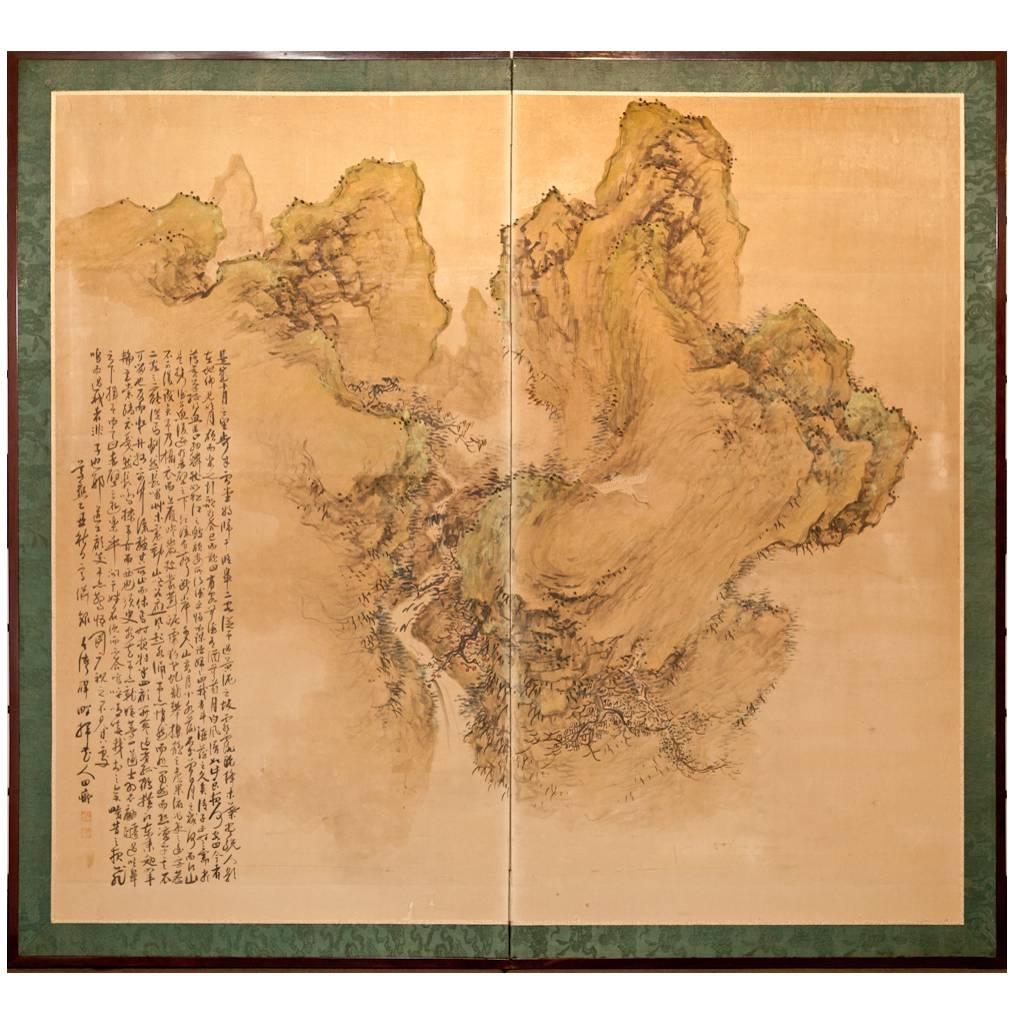
View AllJapanese Two Panel Screen: Mountain Landscape with Calligraphy
Located in Hudson, NY
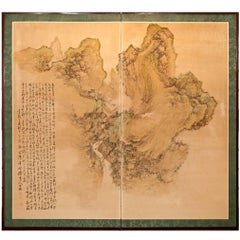
Japanese Two Panel Screen: Mountain Landscape with Calligraphy. Late Edo (c. 1850) painting of a dramatic mountainside carved by a waterfall with a crane flying in the foreground an...
Category
Antique Mid-19th Century Japanese Edo Paintings and Screens
Materials
Silk, Wood, Paper
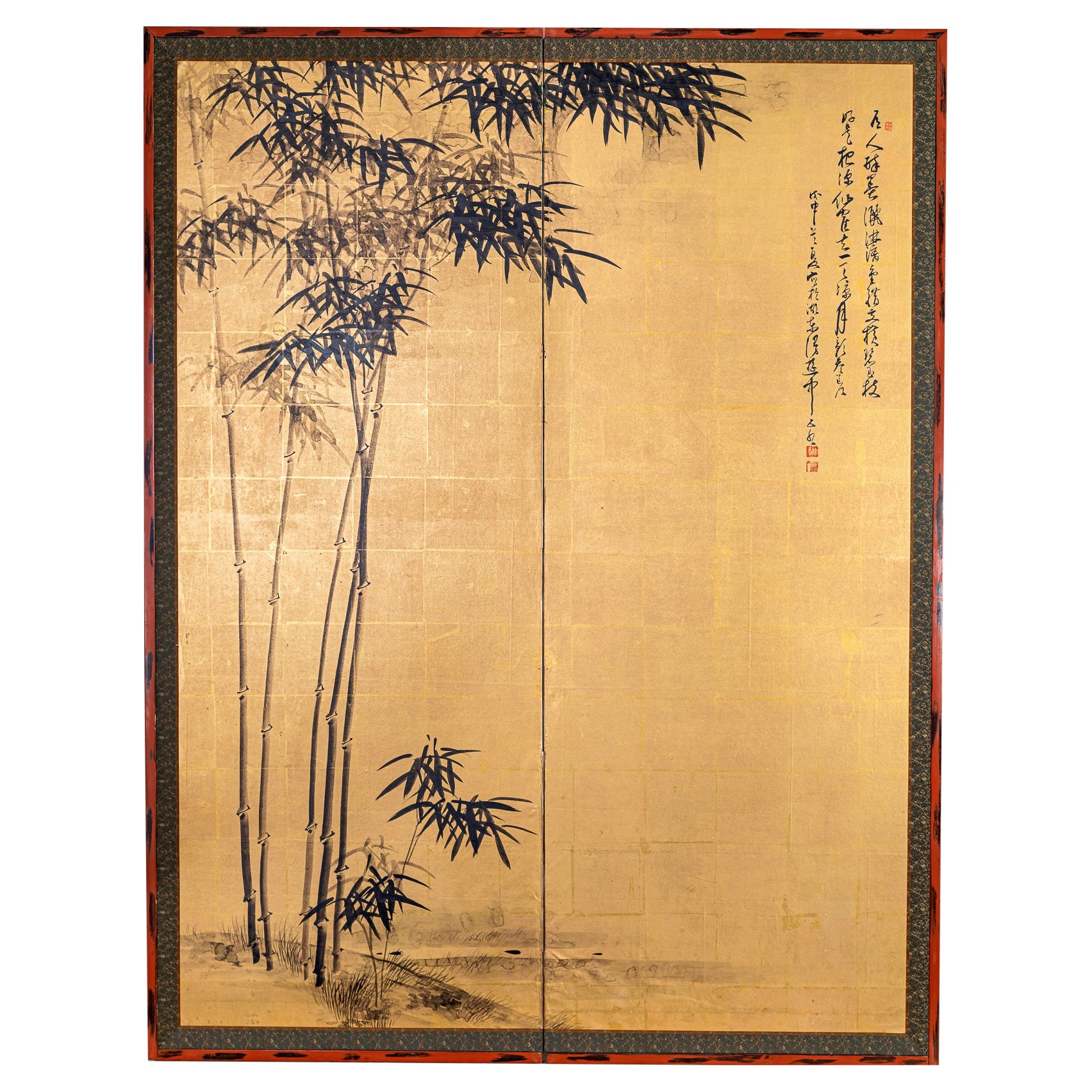
Japanese Two Panel Screen: Bamboo with Calligraphy Poem
Located in Hudson, NY
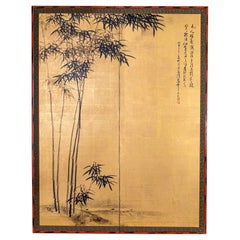
Moon and bamboo in ink on gold paper with red and black lacquered negoro frame. (Meiji period) Calligraphy reads: Beauty in ink painting with standing woods and branches, like in par...
Category
Antique Early 1900s Japanese Paintings and Screens
Materials
Paper
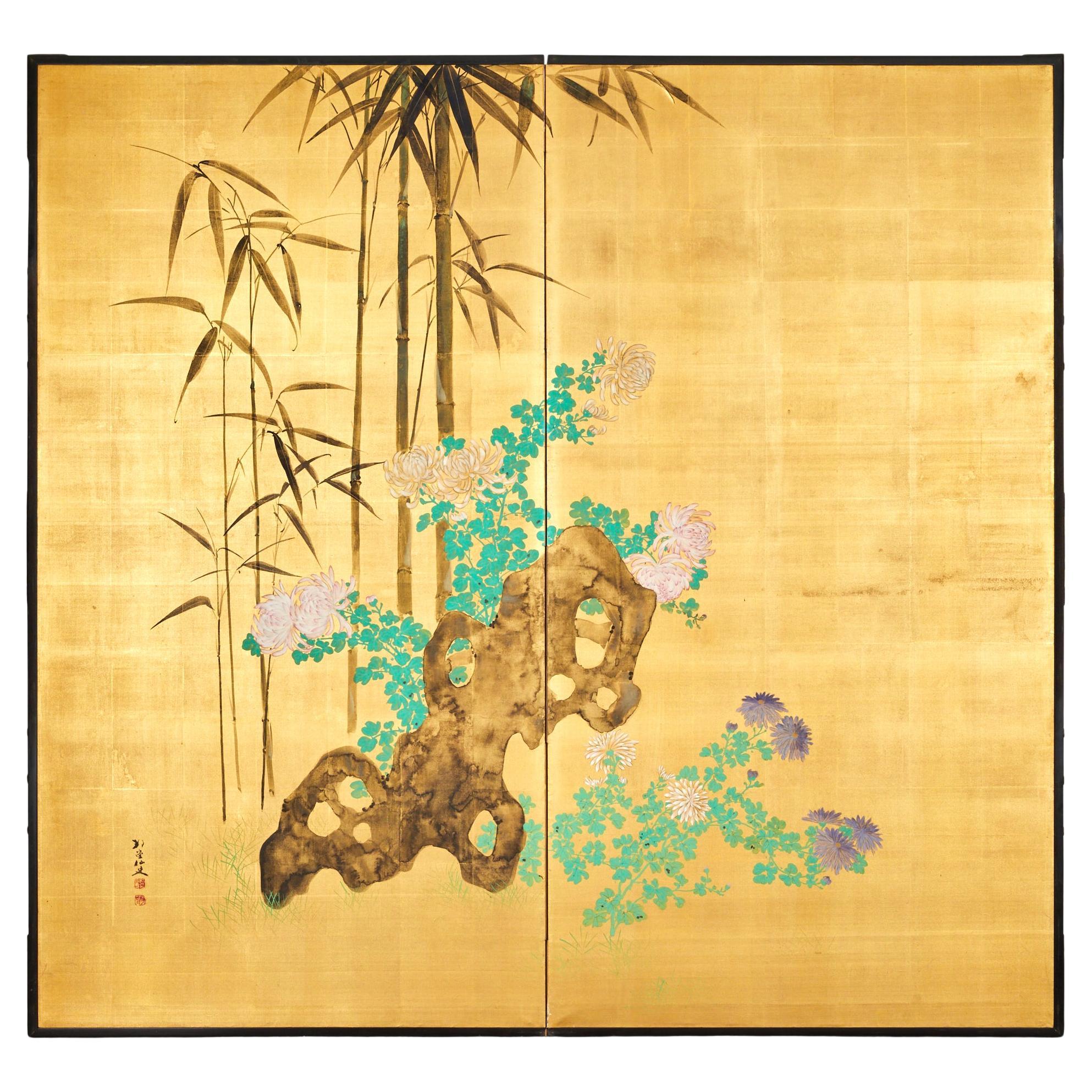
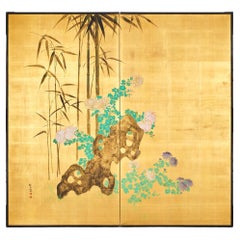
Japanese Two Panel Screen: Garden Scene
Located in Hudson, NY
Bamboo, chrysanthemums and garden stone in mineral pigments on a gold silk ground. Black lacquer trim with well patinaed bronze hardware. Signature and seals read: Seido Senshi
Category
Early 20th Century Japanese Paintings and Screens
Materials
Bronze
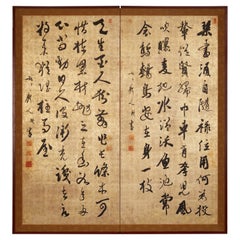
Japanese Two Panel Screen: Ink Calligraphy Poem of the Moon
Located in Hudson, NY
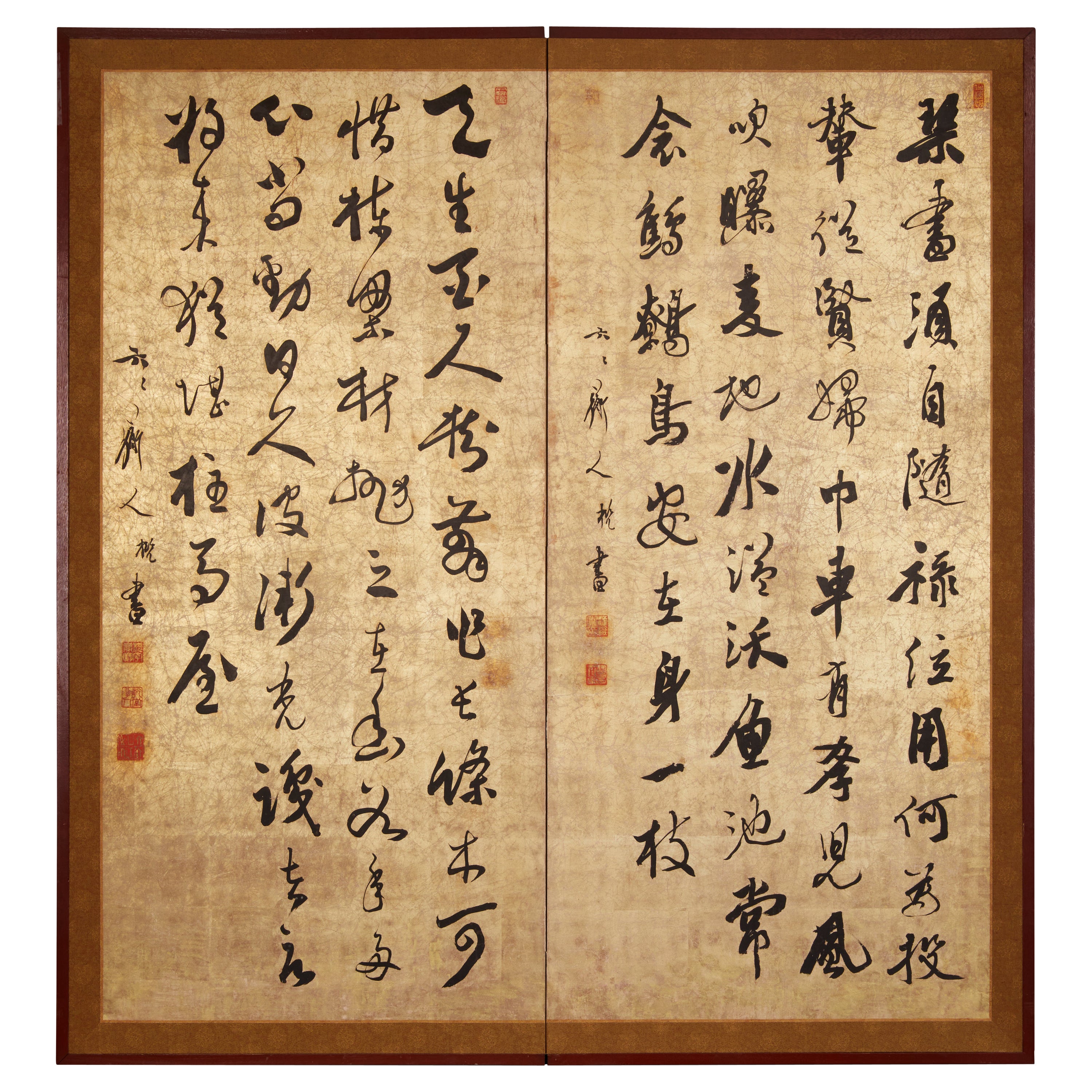
Poems refer to moon gazers. Ink on mulberry paper with a silk brocade border. Seals read: Roku-roku sai.
Category
Antique 19th Century Japanese Paintings and Screens
Materials
Brocade, Silk, Paper
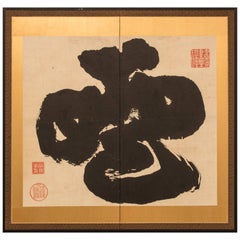
Japanese Two Panel Screen, Zen Calligraphy Character Cloud
Located in Hudson, NY
Meiji period (1868 - 1912) calligraphy painting. Abstract character reads: Kumo (cloud). Seal on the upper right reads Shogazen, seal on the upper left reads Hosai. Ink on mulberr...
Category
Early 20th Century Japanese Meiji Paintings and Screens
Materials
Silk, Wood, Paper
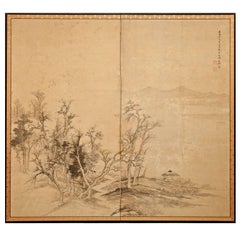
Japanese Two-Panel Screen: Ink Landscape on Silk
By Shunyu
Located in Hudson, NY
Japanese Two Panel Screen: Ink Landscape on Silk, Meiji period (1868 - 1912) painting of a man riding a mule on a pathway through the Kurotani mountains with a thatched roof shelter ...
Category
Antique 19th Century Japanese Meiji Paintings and Screens
Materials
Silk, Wood
You May Also Like
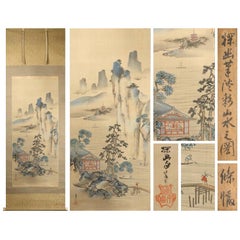
Lovely 17th-18th Century Scroll Painting Japan Artist Kano Soyu Painted
Located in Amsterdam, Noord Holland
It is a work that is said to have been drawn by Kano Soyu as you can see.
It is a picture of the light-colored Sansui map carefully drawn to the smallest detail, and the
towering m...
Category
Antique 17th Century Japanese Edo Paintings and Screens
Materials
Silk
$3,026 Sale Price
20% Off
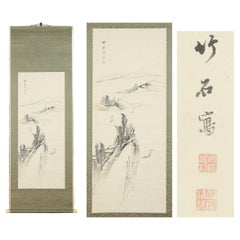
Japanese Painting 18c Edo Scroll Chikuseki Nagamachi Nihonga Landscape Painting
Located in Amsterdam, Noord Holland
[Authentic Artwork] ◆ Nagamachi Chikuseki ◆ Landscape ◆ Edo Period ◆ Mitsuishi Origin ◆ Kagawa Prefecture ◆ Handwritten ◆ Paperback ◆ Hanging Scroll ◆ k891 ◆ Nagamachi Chikuseki
Explore the artistry of Chikuseki Nagamachi...
Category
Antique 18th Century Edo Paintings
Materials
Silk
$1,823 Sale Price
20% Off
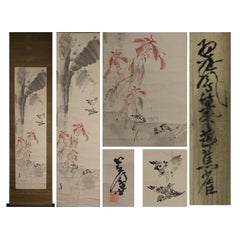
Artists Suiho Yano Showa Period Scroll Japan 20c Artist Nihonga
Located in Amsterdam, Noord Holland
As you can see, it is a work of "Basho / Sparrow" drawn by Midori Yano.
Under Basho, this work skillfully depicts the appearance of sparrows forming a flock and singing food.
«Su...
Category
20th Century Japanese Taisho Paintings and Screens
Materials
Silk
$1,143 Sale Price
20% Off
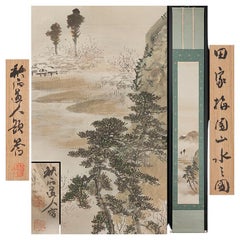
Japanese Nihonga Painting 1900 Meiji/Taisho Scroll Shûseki, Okutani Landscape
Located in Amsterdam, Noord Holland
Susheki Okutani "Takaya Plum Garden Landscape"
Silk, Colored, Authentic, Hanging Scroll, , Double Box
size Axis: Height 206.5cm Width 29.3cm
Drawing…Height 126.7cm Width 19.5cm *There may be slight differences in dimensions. Thank you for your understanding.
situation It is in good condition, but please note that there are some light stains.
Please check the image for details.
Thank you for your support.
Biography Akishi Okutani
Japanese painter. Born in Osaka. His name is Tsunejiro. He studied under Kansai Mori. From an early age, he exhibited his works at the Japan Painting Association and the Young People's Painting Association, which was led by Gaho Hashimoto and Gyokusho Kawabata, and won numerous awards. He also opened a private school...
Category
20th Century Taisho Paintings
Materials
Silk
$1,727 Sale Price
20% Off
Japanese Painting Taisho / Showa Period Scroll by Shuson Kono Nanga Landscape
Located in Amsterdam, Noord Holland
Authentic work ◆ Shuson Kono ◆ Illustrated landscape of the literati ◆ Shared box ◆ Landscape ◆ Ehime Prefecture ◆ Handpainted ◆ Silk ◆ Hanging scrol...
Category
Vintage 1930s Taisho Paintings
Materials
Silk
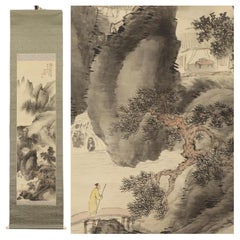
$2,207 Sale Price
20% Off
Lovely Japanese 18/19th c Edo Scroll Kano Osanobu Nihonga Painting Mountain
Located in Amsterdam, Noord Holland
Kano Osanobu (狩野養信)
Osanobu Kano (born August 18, 1796; died June 12, 1846) was the ninth painter of the Kobikicho Kano School in the Edo period. His common name was Shozaburo. His father was Naganobu KANO, and Tadanobu KANO was his son. His Go (pen name) was Osanobu Seisenin, Kaishinsai, and Gyokusen.
Brief Personal History
He was born the eldest son of Naganobu ISENIN during the Edo period. He was first sent to serve at Edo Castle at the age of 15, and it appears that he was apparently pushed by his father to perform various public tasks for the Kanon School. He kept a diary for 36 years, starting from the day before he first went into service at Edo Castle until the day before he died. The diary is entitles "Official Service Diary" (it consists of 52 volumes that are maintained at the Tokyo National Museum, and 4 volumes that are separately maintained at the different families), and have become the focus of a lot of attention in recent years for the detailed information they present on the daily life and work of a prestigious official painter. The reading of the characters of his name was originally "Takenobu"; however, with the birth of the first son of the Shongun Ieyoshi TOKUGAWA in 1813, whose name was Takechiyo, having a sylable with the same pronunciation of "Take"was deemed to be inappropriate, and was therefore changed to "Osanobu". Because Takenobu died the following year, after which he was referred to as Gyokujuin, Osanobu changed his pen name Gyokusen he had used until that point to Seisenin, in order to avoid using the same Chinese charcter pronounced alike. In 1819, he attained the second highest rank for a Buddhist priest, Hogen, and assumed the role of head of the family after his father passed away in 1828. In 1834 he attained the highest rank for a Buddhist priest, Hoin. He oversaw the rennovation of the wall paintings of Nishinomaru Palace of Edo Castle from 1838 to 1839, and Honmaru Palace of it from 1844 to 1846. It is thought that Osanobu later died due to the fatigue...
Category
Antique 18th Century Edo Paintings
Materials
Silk
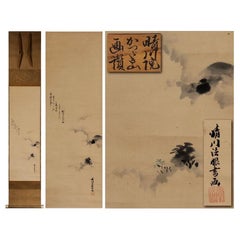
$1,727 Sale Price
20% Off
More Ways To Browse
Antique Calligraphy
Asian Silk Screens And Paintings
Japanese Painting On Wood Panel
Silk Screen Paintings
20th Century Japanese Painting
Antique Silk Screen
Japanese Silk Paintings
Japanese Silk Screen Painting
Antique Chinese Screens
Asian Silk Paintings Antique
Antique Silk Screen Painting
Antique Japanese Silk Screen
Chinese Wood Screen
Japanese Silk Painting 20th Century
Chinese Wood Painting
Chinese And Japanese Antique Furniture
20th Japan Painting On Silk
Chinese Paper Screens