Items Similar to Japanese Two Panel Screen: Mandarin Ducks and Geese Among Bamboo and Flowers
Want more images or videos?
Request additional images or videos from the seller
1 of 6
Japanese Two Panel Screen: Mandarin Ducks and Geese Among Bamboo and Flowers
$15,000
£11,361.11
€13,047.84
CA$21,019.91
A$22,852.88
CHF 12,116.62
MX$273,948.03
NOK 153,996.03
SEK 141,081.30
DKK 97,516.08
About the Item
Japanese Two Panel Screen: Mandarin Ducks and Geese Among Bamboo and Flowers, Edo period painting (c. 1850) of mandarin ducks and geese on a grassy shoreline with bamboo and white camellia flowers. A beautiful early painting with heavy gold dust clouds, and soft pigments on mulberry paper with a silk brocade border. Great condition.
- Dimensions:Height: 37.88 in (96.22 cm)Width: 44.5 in (113.03 cm)Depth: 0.75 in (1.91 cm)
- Style:Edo (Of the Period)
- Materials and Techniques:
- Place of Origin:
- Period:
- Date of Manufacture:circa 1850
- Condition:Condition report available upon request.
- Seller Location:Hudson, NY
- Reference Number:Seller: S14921stDibs: LU85513014112
About the Seller
5.0
Recognized Seller
These prestigious sellers are industry leaders and represent the highest echelon for item quality and design.
Established in 1971
1stDibs seller since 2008
170 sales on 1stDibs
Typical response time: 5 hours
Associations
The Art and Antique Dealers League of AmericaAntiques Associations Members
- ShippingRetrieving quote...Shipping from: Craryville, NY
- Return Policy
More From This Seller
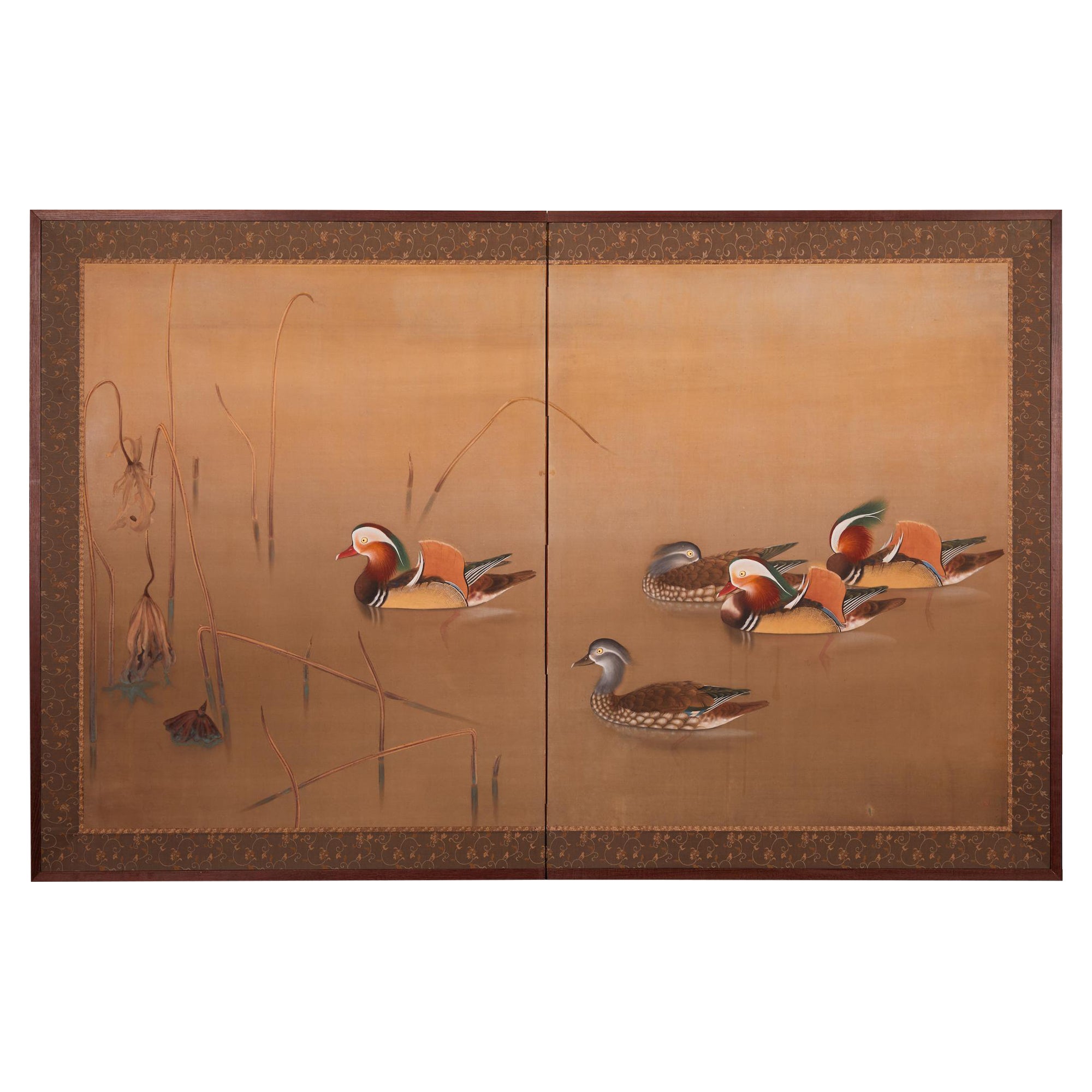
View AllJapanese Two Panel Screen: Mandarin Ducks Among Dry Lotus
Located in Hudson, NY
Natural scene of Mandarin ducks gliding gracefully amongst the water.
Mineral pigments on silk with silk brocade border and natural wood trim. Seal reads: Kei.
Category
Early 20th Century Japanese Paintings and Screens
Materials
Silk, Wood
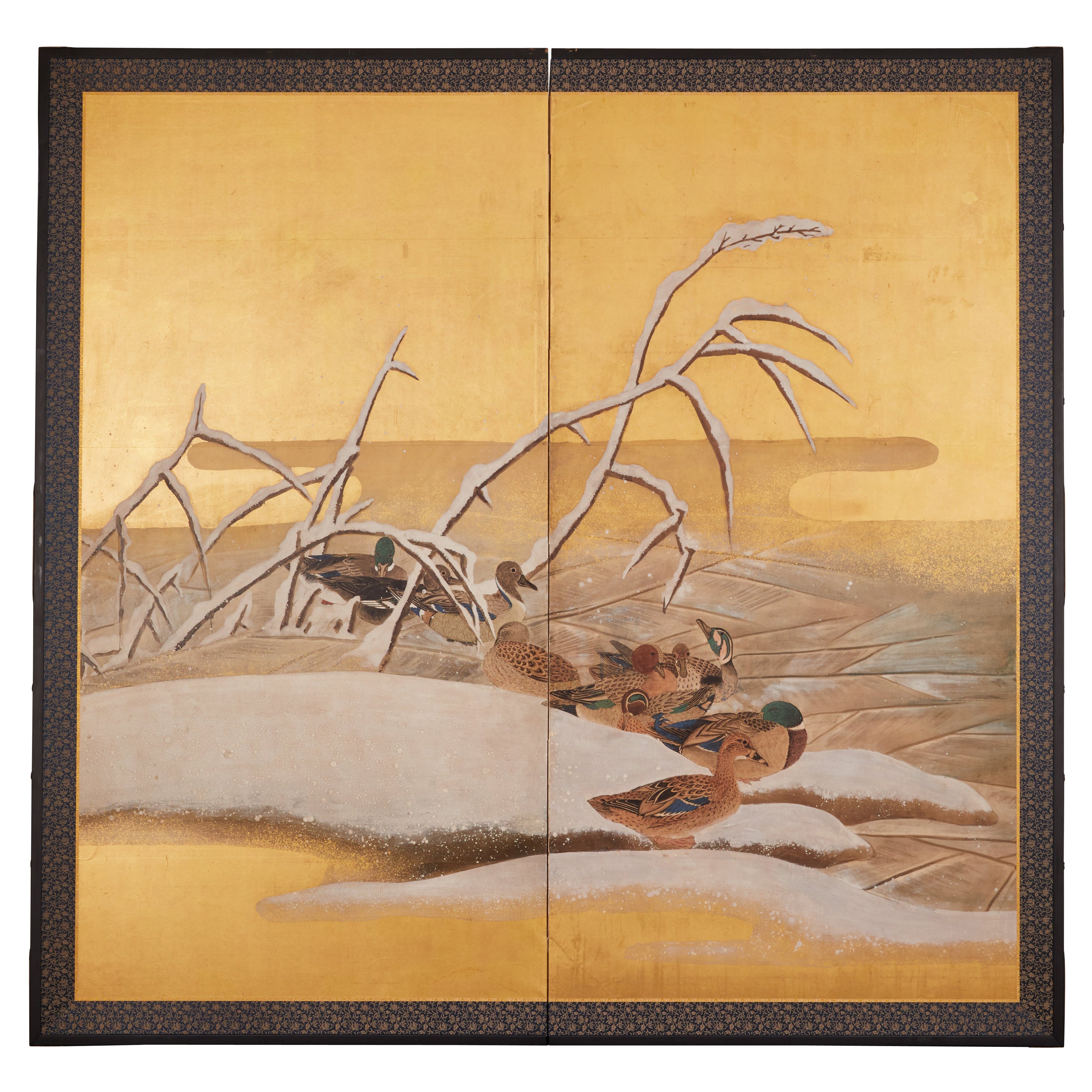
Japanese Two Panel Screen: Mandarin Ducks in Winter
Located in Hudson, NY
Fine painting of a variety of waterfowl in rich mineral pigments on gold leaf with a silk brocade border.
Category
Antique 19th Century Japanese Paintings and Screens
Materials
Gold Leaf
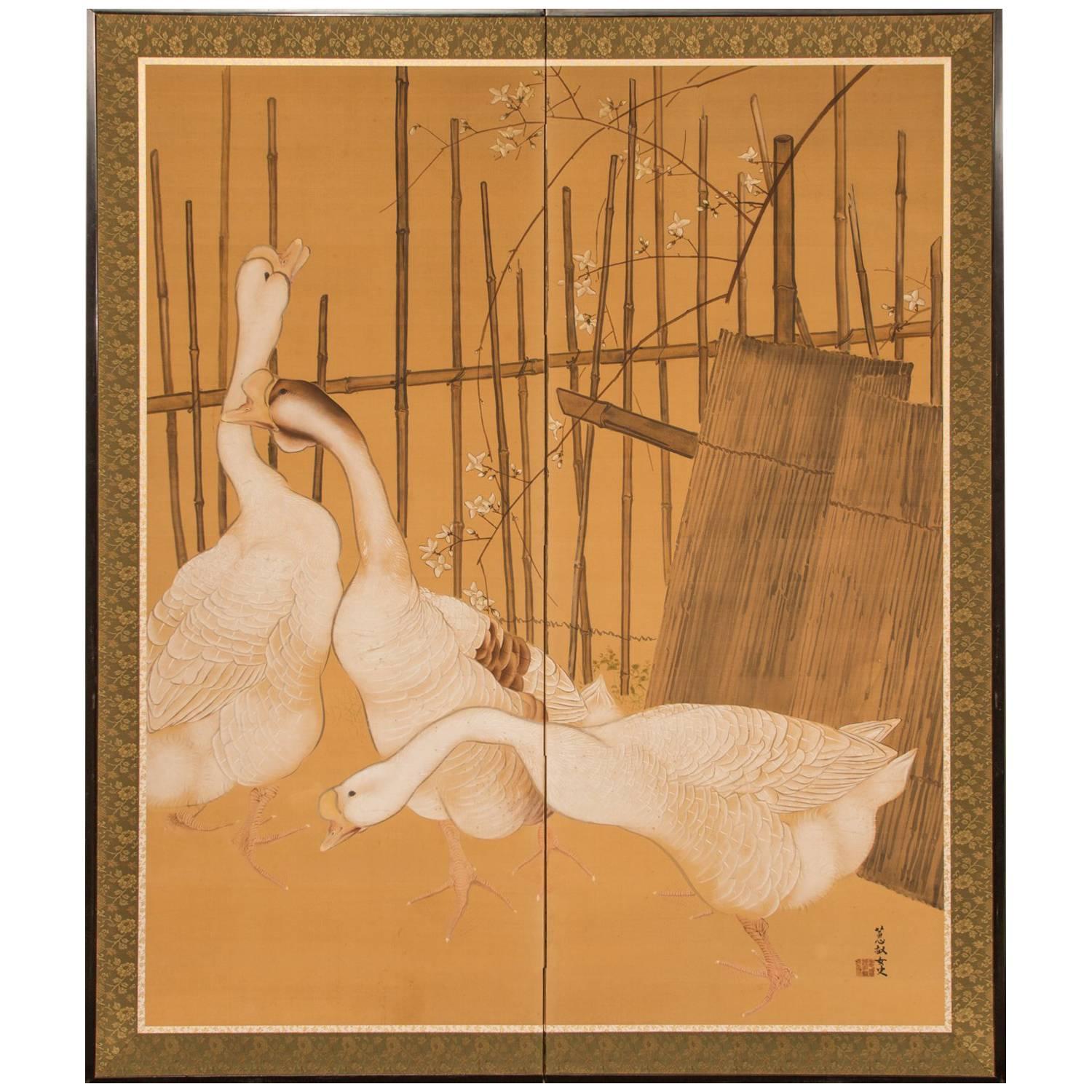
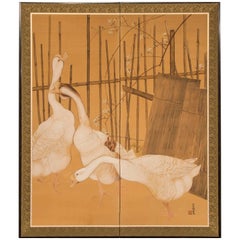
Japanese Two-Panel Screen: Geese in a Country Setting
Located in Hudson, NY
Country farm geese with early spring blossoms and a bamboo fence. Beautiful details on the feathers. Signature and seal read Keibo Joshi (Ms. Keibo) min...
Category
Early 20th Century Japanese Meiji Paintings and Screens
Materials
Silk, Wood, Paper
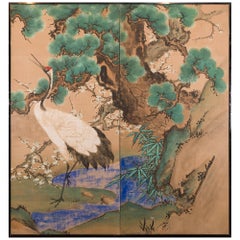
Japanese Two Panel Screen Manchurian Crane and Turtles
Located in Hudson, NY
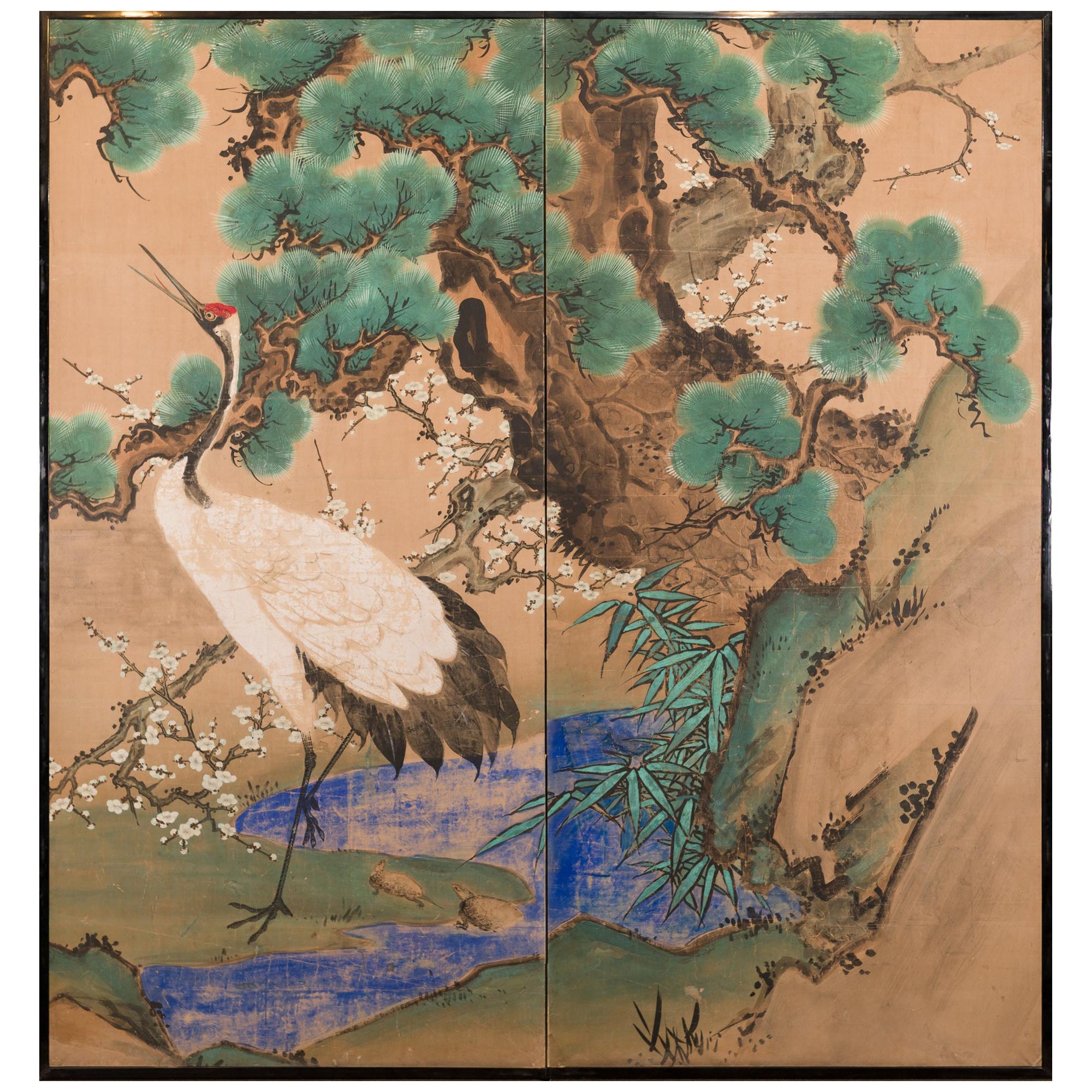
In Japan, cranes symbolize fidelity as they mate for life and turtles symbolize longevity. Additionally, this screen also has the Japanese motif of sho-chiku-bai, or the three friends of winter (pine, plum, and bamboo). So called the three friends of winter because all three flourish during the cold months. This screen was originally fusuma doors...
Category
Antique Mid-19th Century Japanese Edo Paintings and Screens
Materials
Paper
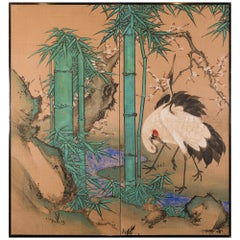
Japanese Two Panel Screen Amorous Cranes and Turtles
Located in Hudson, NY
Japanese two panel screen: Amorous Cranes and Turtles. In Japan, cranes symbolize fidelity as they mate for life and turtles symbolize longevity. Additionally, this screen also has the Japanese motif of sho-chiku-bai, or the three friends of winter (pine, plum, and bamboo). So called the three friends of winter because all three flourish during the cold months. This screen was originally fusuma doors...
Category
Antique 1850s Japanese Edo Paintings and Screens
Materials
Wood, Paper
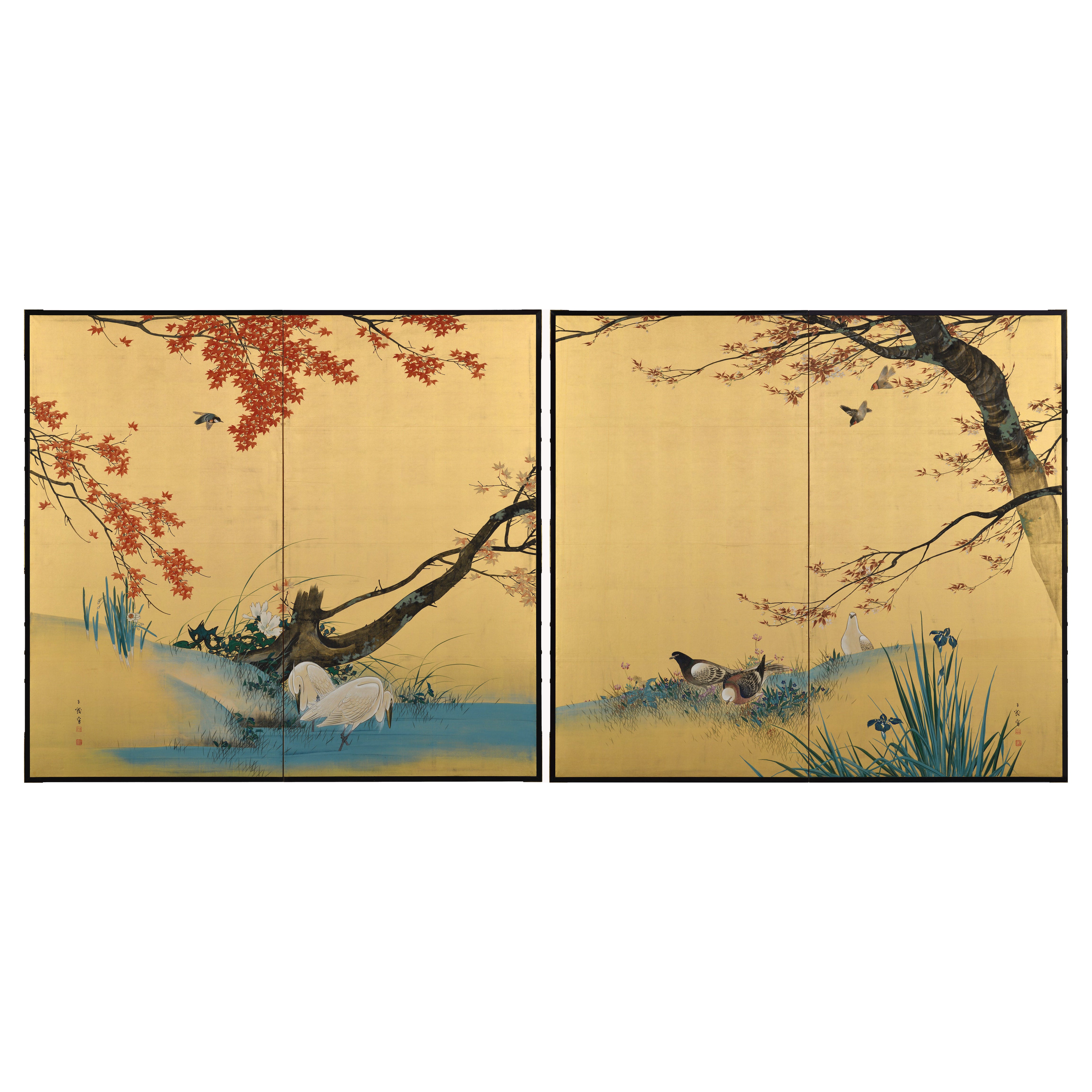
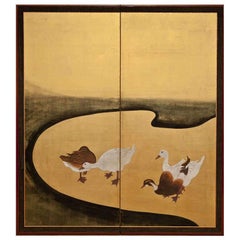
Japanese Two Panel Screen: Water Fowl by River
s Edge
Located in Hudson, NY
Japanese Two Panel Screen: Water Fowl by River's Edge, Showa period (1926 - 1989) painting of fowl on a river bank. Very art deco in style. Painted in min...
Category
Early 20th Century Japanese Showa Paintings and Screens
Materials
Silk, Wood, Paper
You May Also Like
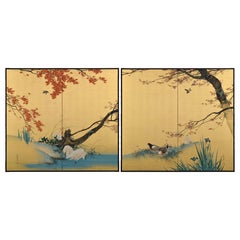
Meiji era Japanese Screen Pair, Two-panel. Spring
Autumn Birds
Flowers.
Located in Kyoto, JP
Spring and Autumn Birds & Flowers
Hasegawa Gyokujun (1863-1921)
Meiji period, circa 1900.
Ink, color and gofun on silk.
Dimensions of each screen:
H. 172 cm x W. 188 cm (68’’ x 7...
Category
Early 20th Century Japanese Meiji Paintings and Screens
Materials
Gold Leaf
19th Century Japanese Screen Pair - Birds
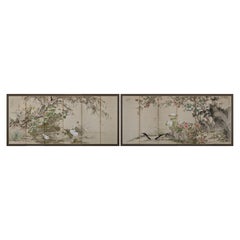
Flowers of the Four Seasons
Located in Kyoto, JP
Birds & Flowers of the Four Seasons
Yamamoto Baiitsu (1783-1856)
Late Edo period, Dated 1850
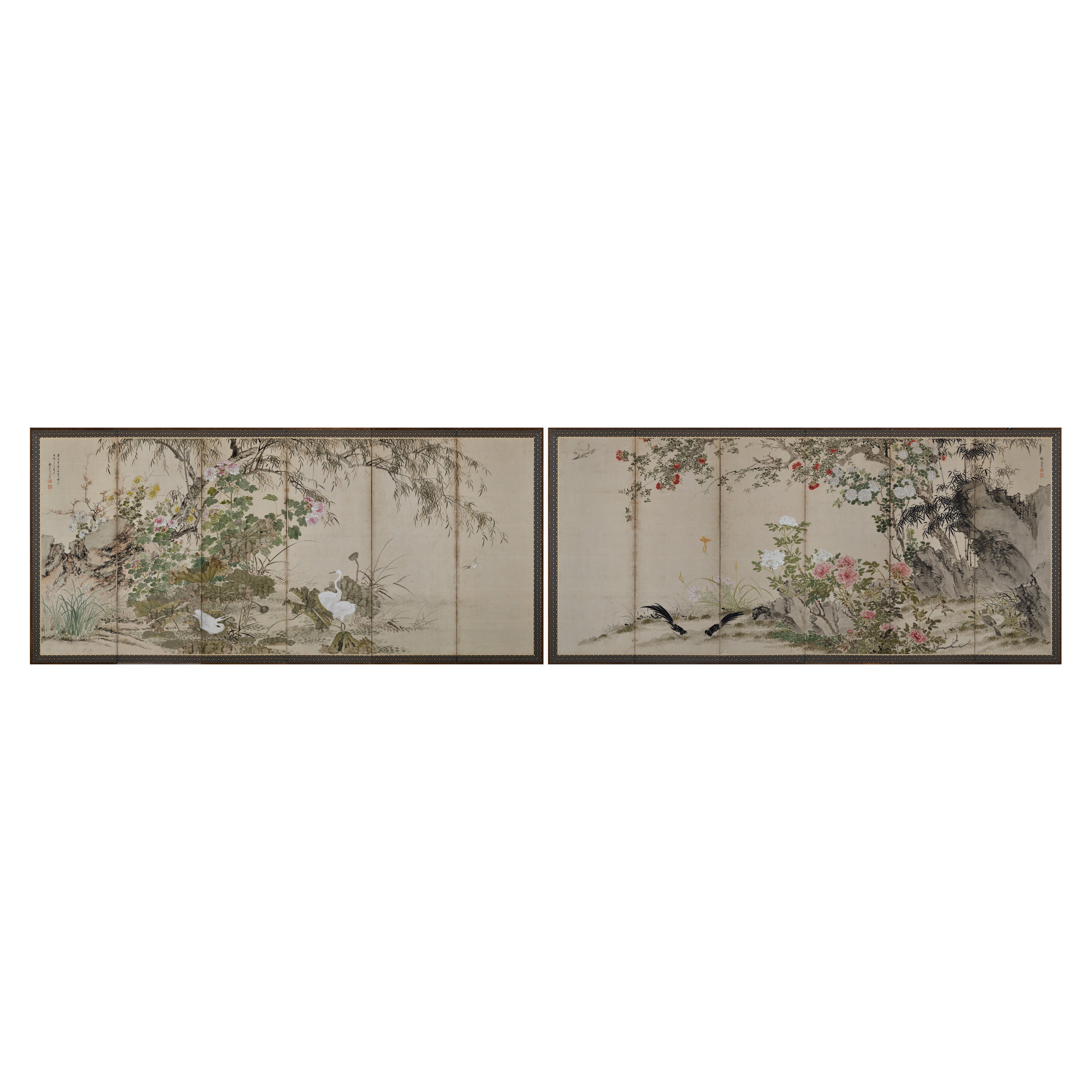
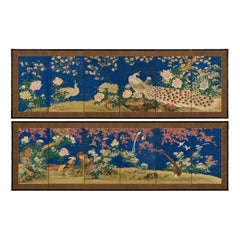
A magnificent pair of six-panel Japanese folding screens by Yamamoto Baitsu, representin...
Category
Antique Mid-19th Century Japanese Edo Paintings and Screens
Materials
Wood, Paper
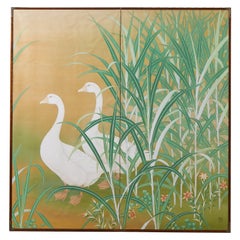
Japanese Meiji Two Panel Screen Geese and Reeds
Located in Rio Vista, CA
Fantastic Japanese late Meiji period two-panel byobu screen by Hashimoto Koshu. The large screen features two white geese amid brightly colored reeds. The symbolism of geese and reeds was introduced to Japan from China in the 13th century. This was a popular subject for Japanese zen artists of the period. Beautifully crafted with exceptional brush strokes and details. Made with natural pigments in dramatic vivid colors of white, pink, and mint green on a silk background of gilt. Circa 1900 with artist seal on bottom right corner. Koshu studied Western art under...
Category
20th Century Japanese Meiji Paintings and Screens
Materials
Silk, Wood, Paper
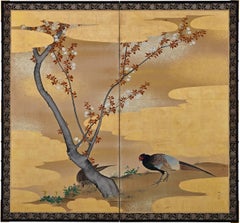
Early 19th Century Japanese Screen. Cherry Blossom
Pheasants by Mori Tetsuzan
Located in Kyoto, JP
Mori Tetsuzan (1775-1841)
Pheasants and Cherry Blossoms
Two-fold Japanese screen. Ink, color, gofun, gold and silver on paper.
A two-fold Japanese bir...
Category
Antique Early 19th Century Japanese Edo Paintings and Screens
Materials
Gold Leaf
Mid 19th Century Japanese Screen Pair. Flowers
Birds of the Four Seasons.
Located in Kyoto, JP
Shioka Sorin (1781-1850)
Flowers & Birds of the Four Seasons
Pair of six-panel Japanese Screens. Ink, gofun and pigments on silk.
Dimensions (each screen): H. 91.5cm x W. 285cm (3...
Category
Antique Mid-19th Century Japanese Edo Paintings and Screens
Materials
Silk
Antique Japanese Kachoga Kano School 2-Panel Screen, Edo Period
Located in Point Richmond, CA
Antique Japanese 2-panel Screen of Birds
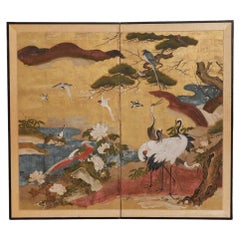
Flowers in a Landscape Setting, Kano School, Edo Period. This Kachoga subject of birds and flowers contains a brilliant mix of a variet...
Category
Antique 18th Century Japanese Edo Paintings and Screens
Materials
Gold Leaf
More Ways To Browse
Antique Ducks
Asian Black Screens
Japanese Painting Silk Gold
Japanese Flower Painting
Edo Screen Gold
Japanese Screens Flowers
Japanese Screen Black
Japanese Paper Flowers
Bamboo Screen Mid Century
Japanese Screen Bamboo
Japanese Silk Screen Flowers
Wood Ducks
Two Geese
Antique Wood Ducks
Wood Geese
Asian Screen Ducks
Asian Panel Lacquer
Silk Bird