Items Similar to Japanese Two Panel Screen: Mountains in the Mist

Want more images or videos?
Request additional images or videos from the seller
1 of 15
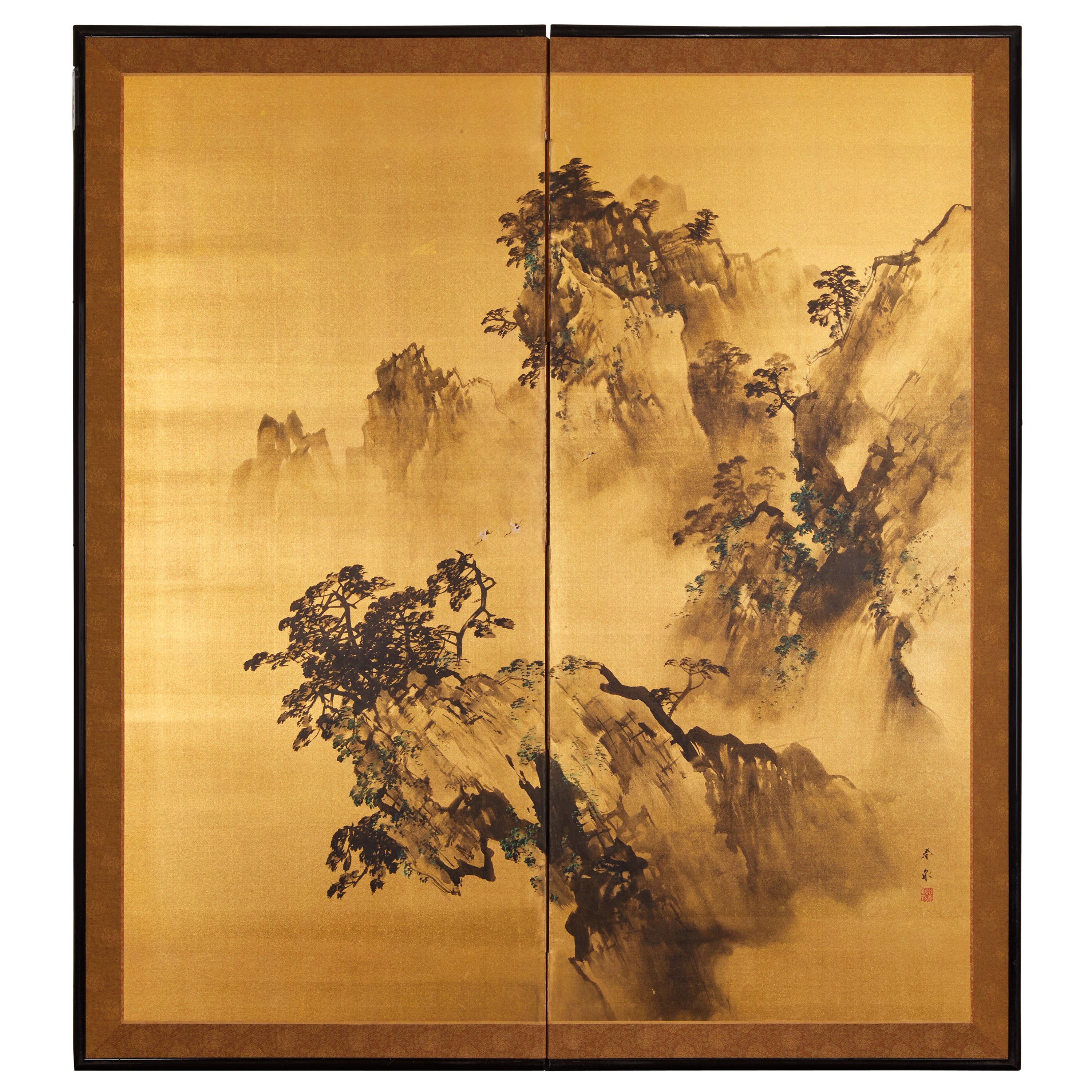
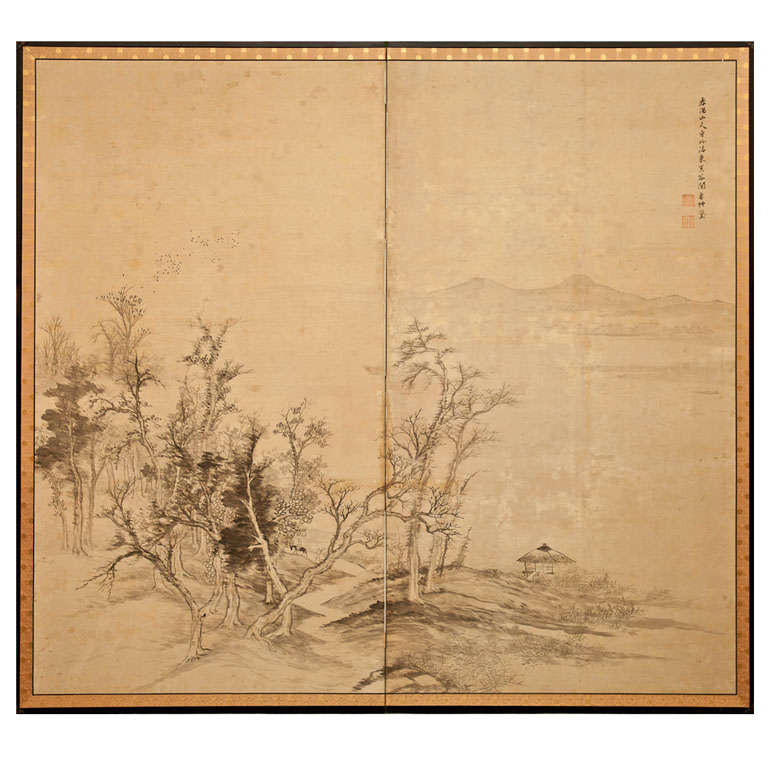
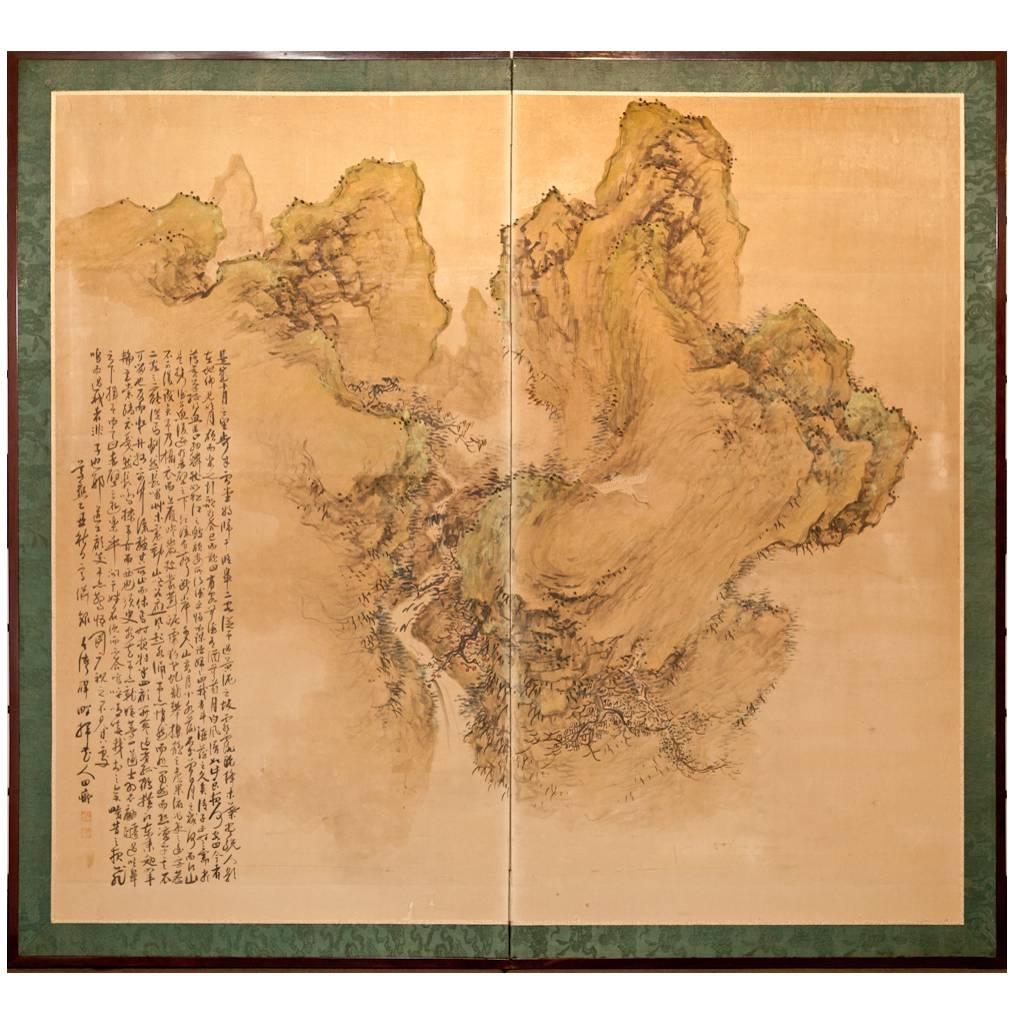
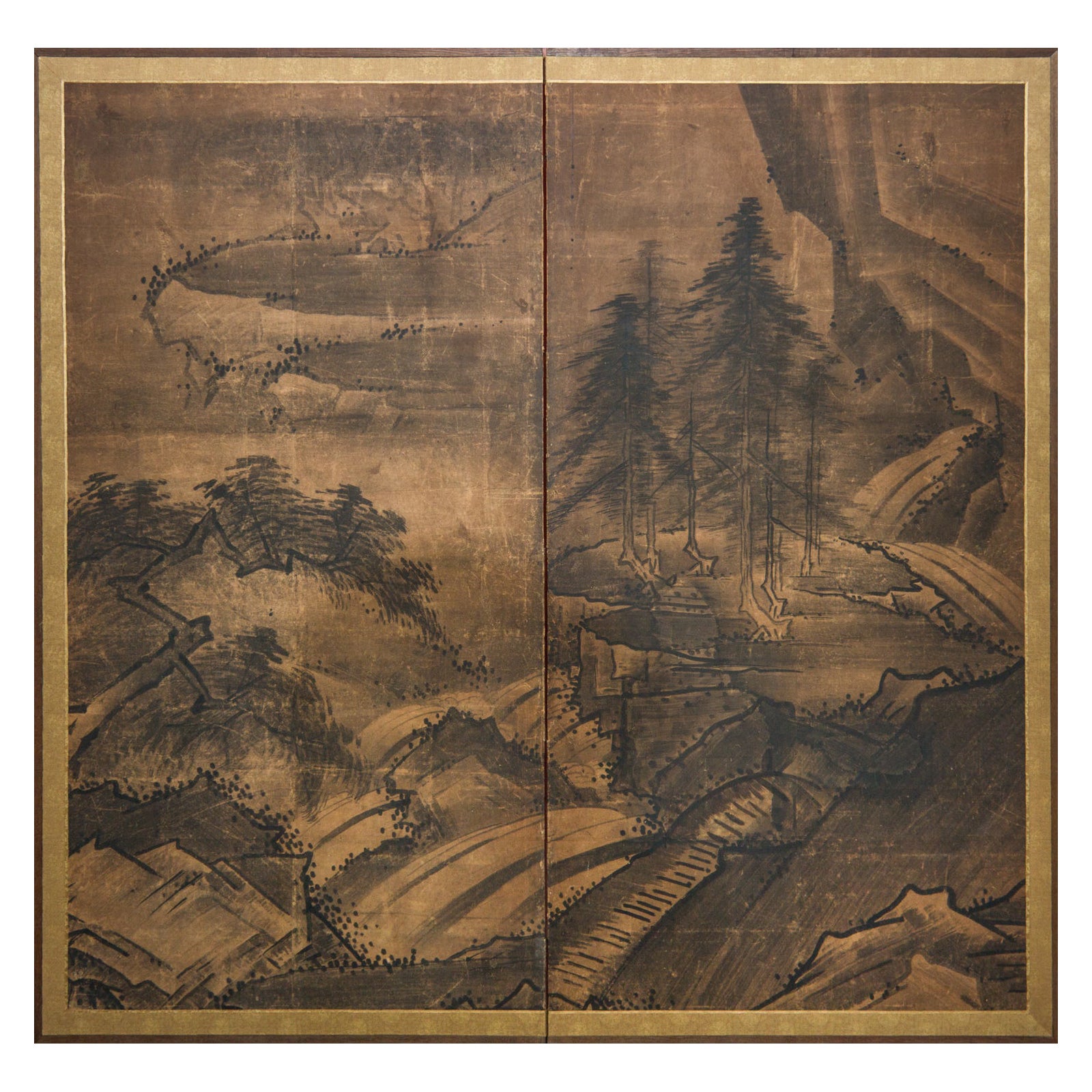
Japanese Two Panel Screen: Mountains in the Mist
$20,350
£15,422.95
€17,688.82
CA$28,432.81
A$31,018.66
CHF 16,451.67
MX$373,704.90
NOK 208,803.59
SEK 191,165.35
DKK 132,109.07
About the Item
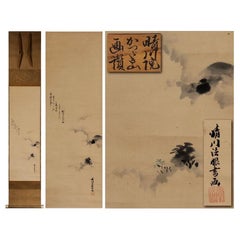
Chinese School landscape ink painting on gilded silk by Yukimatsu Shunpo, signed and dated 1924. Yukimatsu Shunpo was born in Oita in 1897 and studied under Himejima Chikugai in Osaka. He exhibited with the Teiten (future Nitten) many times and received grand prize in 1926 and 1927. Reading of the calligraphy, "January's steady rain. Today, who we are going to meet? Spring will come, flowers will bloom." (In ancient times, January was part of spring.) One of a pair, sold separately.
- Dimensions:Height: 67.75 in (172.09 cm)Width: 73 in (185.42 cm)Depth: 0.75 in (1.91 cm)
- Style:Taisho (Of the Period)
- Materials and Techniques:
- Place of Origin:
- Period:
- Date of Manufacture:1924
- Condition:Most items that are 100 years old have been cleaned or polished in their lifetime. More involved restorations are mentioned in the above description. For a detailed condition report and a video of this item please contact us directly. -Naga Antiques.
- Seller Location:Hudson, NY
- Reference Number:Seller: S17471stDibs: LU855123305152
About the Seller
5.0
Recognized Seller
These prestigious sellers are industry leaders and represent the highest echelon for item quality and design.
Established in 1971
1stDibs seller since 2008
170 sales on 1stDibs
Typical response time: 8 hours
Associations
The Art and Antique Dealers League of AmericaAntiques Associations Members
- ShippingRetrieving quote...Shipping from: Craryville, NY
- Return Policy
More From This Seller
View AllJapanese Two-Panel Screen Temples Through Misty Forest
Located in Hudson, NY
Japanese two-panel screen: Temples Through Misty Forest. Chinese School landscape ink painting on gilded silk by Yukimatsu Shunpo, signed and dated 1924. Yukimatsu Shunpo was born in...
Category
Vintage 1920s Japanese Taisho Paintings and Screens
Materials
Silk, Wood
Japanese Two Panel Screen: Craggy Landscape on Gold Sil
Located in Hudson, NY
Dramatic Mountain landscape with gnarled pines. Signature reads: Shunsen. Ink painting on gold silk with silk brocade border.
Category
Early 20th Century Japanese Paintings and Screens
Materials
Brocade, Silk
Japanese Two-Panel Screen: Ink Landscape on Silk
By Shunyu
Located in Hudson, NY
Japanese Two Panel Screen: Ink Landscape on Silk, Meiji period (1868 - 1912) painting of a man riding a mule on a pathway through the Kurotani mountains with a thatched roof shelter ...
Category
Antique 19th Century Japanese Meiji Paintings and Screens
Materials
Silk, Wood
Japanese Two Panel Screen: Mountain Landscape with Calligraphy
Located in Hudson, NY
Japanese Two Panel Screen: Mountain Landscape with Calligraphy. Late Edo (c. 1850) painting of a dramatic mountainside carved by a waterfall with a crane flying in the foreground an...
Category
Antique Mid-19th Century Japanese Edo Paintings and Screens
Materials
Silk, Wood, Paper
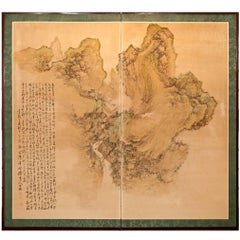
Japanese Two Panel Screen Suiboku Landscape in Sesshu Style
Located in Hudson, NY
Suiboku is a style of ink painting that is reminicent of the way calligraphers paint. Masterfully painted Muromachi Period (1336-1573) painting, unique in style and strength for the period with very bold lines. Sesshu Toyo...
Category
Antique 16th Century Japanese Paintings and Screens
Materials
Silk, Paper
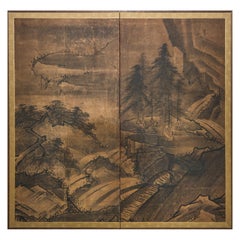
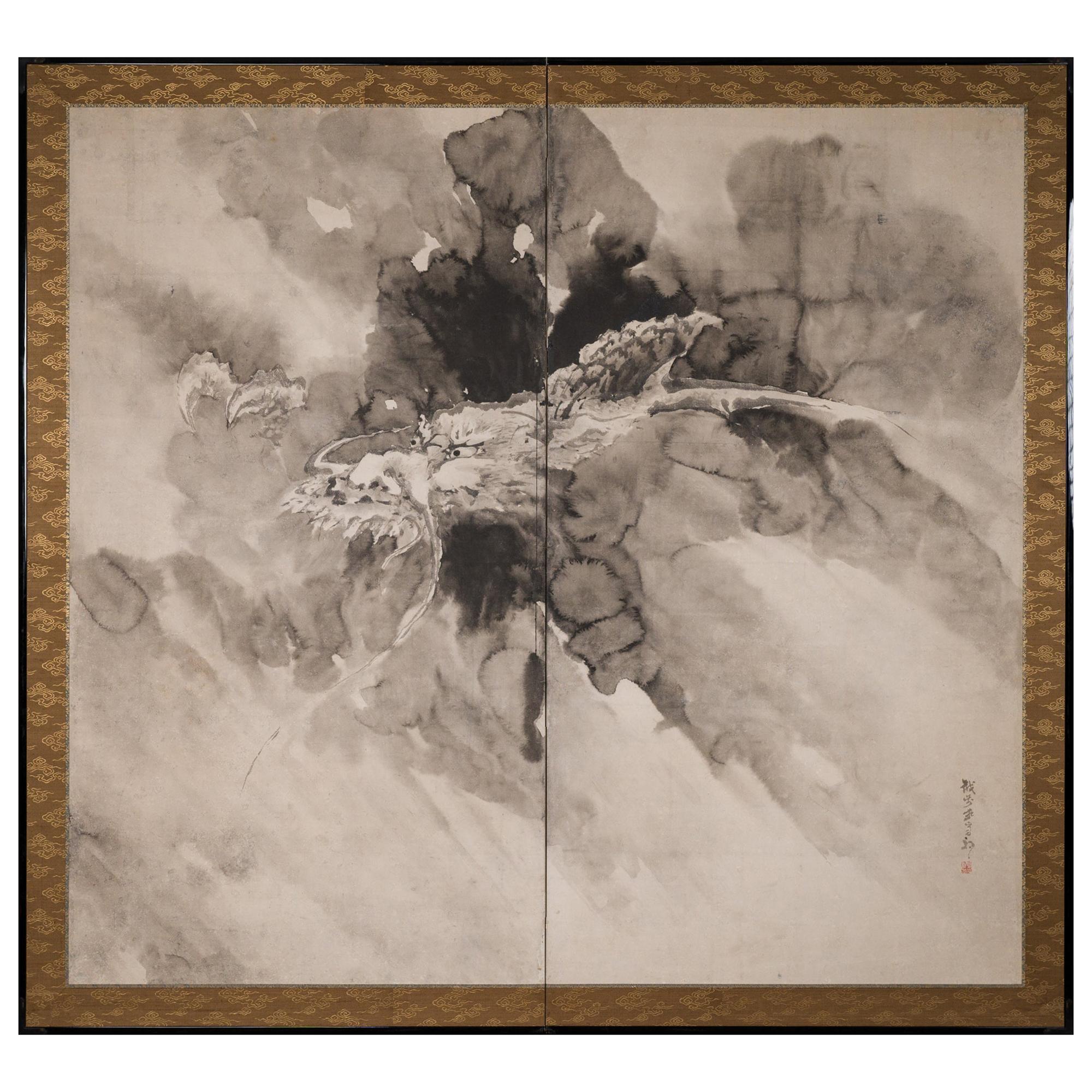
Japanese Two Panel Screen Dragon in the Mist
Located in Hudson, NY
Ink (Sumi) on paper. Signature and Seal read: Kishi Ganku It is backed with paper covered in gold and silver flake. Kishi Ganku (1749 or 1756-1839) was the...
Category
Antique Early 19th Century Japanese Edo Paintings and Screens
Materials
Wood, Paper
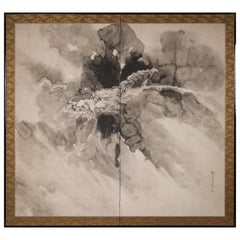
You May Also Like
Japanese Meiji Two-Panel Screen Chinese Country Winter Landscape
Located in Rio Vista, CA
Late 19th / early 20th century Japanese Meiji period two-panel folding byobu screen featuring a winter landscape with a Chinese country villa and distant village. Kano School screen ...
Category
Antique 19th Century Japanese Meiji Paintings and Screens
Materials
Brass
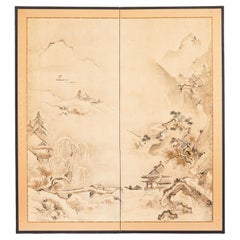
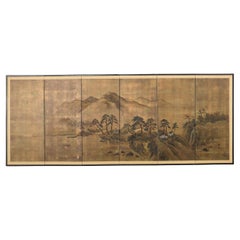
Japanese Showa Six Panel Screen Mountain Landscape
Located in Rio Vista, CA
Large Japanese Showa period six panel folding byobu screen depicting a grand mountain landscape with small village homes. Painted with natural color pigments over a gilt background. ...
Category
20th Century Japanese Showa Paintings and Screens
Materials
Brass
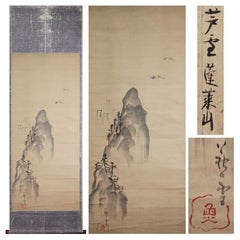
Antique Japanese 18th c Edo Scroll Rosetsu Nagasawa Nihonga Landscape Painting
Located in Amsterdam, Noord Holland
The following is a work of art depicting the ``Horai Landscape,'' a land of peach, created by the master artist
[Rosetsu Nagasawa]
A painter from the late Edo period.
There are conf...
Category
Antique 18th Century Edo Paintings
Materials
Silk
$1,530 Sale Price
20% Off
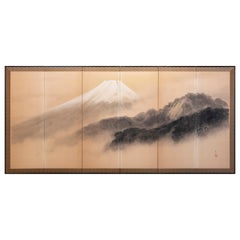
A six-panel paper folding screen of Mount Fuji shrouded in mist
Located in Milano, IT
A Japanese six-panel screen painted on paper, depicting Mount Fuji emerging from the clouds, its snow-covered peak set in a soft, atmospheric haze. On the right, dark pines appear fa...
Category
Antique Late 19th Century Japanese Paintings and Screens
Materials
Paper
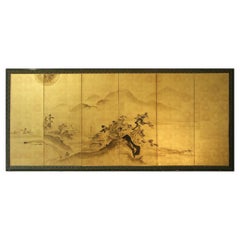
Japanese Screen Landscape on Gold Leaf with Inks
By Japanese Studio
Located in Brescia, IT
Six-panel screen from the Tosa school painted with ink on gold leaf depicting a relaxing oriental landscape with pagodas, figures on boats and a beautiful sun in the sky.
The screen ...
Category
Antique Late 19th Century Japanese Meiji Paintings and Screens
Materials
Gold Leaf
Lovely Japanese 18/19th c Edo Scroll Kano Osanobu Nihonga Painting Mountain
Located in Amsterdam, Noord Holland
Kano Osanobu (狩野養信)
Osanobu Kano (born August 18, 1796; died June 12, 1846) was the ninth painter of the Kobikicho Kano School in the Edo period. His common name was Shozaburo. His father was Naganobu KANO, and Tadanobu KANO was his son. His Go (pen name) was Osanobu Seisenin, Kaishinsai, and Gyokusen.
Brief Personal History
He was born the eldest son of Naganobu ISENIN during the Edo period. He was first sent to serve at Edo Castle at the age of 15, and it appears that he was apparently pushed by his father to perform various public tasks for the Kanon School. He kept a diary for 36 years, starting from the day before he first went into service at Edo Castle until the day before he died. The diary is entitles "Official Service Diary" (it consists of 52 volumes that are maintained at the Tokyo National Museum, and 4 volumes that are separately maintained at the different families), and have become the focus of a lot of attention in recent years for the detailed information they present on the daily life and work of a prestigious official painter. The reading of the characters of his name was originally "Takenobu"; however, with the birth of the first son of the Shongun Ieyoshi TOKUGAWA in 1813, whose name was Takechiyo, having a sylable with the same pronunciation of "Take"was deemed to be inappropriate, and was therefore changed to "Osanobu". Because Takenobu died the following year, after which he was referred to as Gyokujuin, Osanobu changed his pen name Gyokusen he had used until that point to Seisenin, in order to avoid using the same Chinese charcter pronounced alike. In 1819, he attained the second highest rank for a Buddhist priest, Hogen, and assumed the role of head of the family after his father passed away in 1828. In 1834 he attained the highest rank for a Buddhist priest, Hoin. He oversaw the rennovation of the wall paintings of Nishinomaru Palace of Edo Castle from 1838 to 1839, and Honmaru Palace of it from 1844 to 1846. It is thought that Osanobu later died due to the fatigue...
Category
Antique 18th Century Edo Paintings
Materials
Silk
$1,721 Sale Price
20% Off
More Ways To Browse
Painted Panel Screen
Antique Japanese Silk Screen
Japanese Painted Silk
Hand Painted Silk Screen
Calligraphy
Japanese Taisho Screen
Hand Painted Silk Panels
Chinese Painting On Silk
Japanese Signed Two Panel Screen
Japanese Art Mountains
Antique Chinese Painting On Silk Panel
Japanese Screens Mountains
Chinese Screen Painted
Antique Japanese Silk Screen
Vintage Japanese Screen
20th Century Japanese Silk
Japanese Wood Panel
Asian Wood Screen Panels