Items Similar to Korean Buddhist Temple Scroll Painting Sinjung T
aenghwa Joseon Dynasty
Want more images or videos?
Request additional images or videos from the seller
1 of 17
Korean Buddhist Temple Scroll Painting Sinjung T
aenghwa Joseon Dynasty
$7,500
£5,722.14
€6,543.60
CA$10,569.10
A$11,524.47
CHF 6,115.92
MX$139,327.15
NOK 77,401.44
SEK 70,949.18
DKK 48,873.98
About the Item
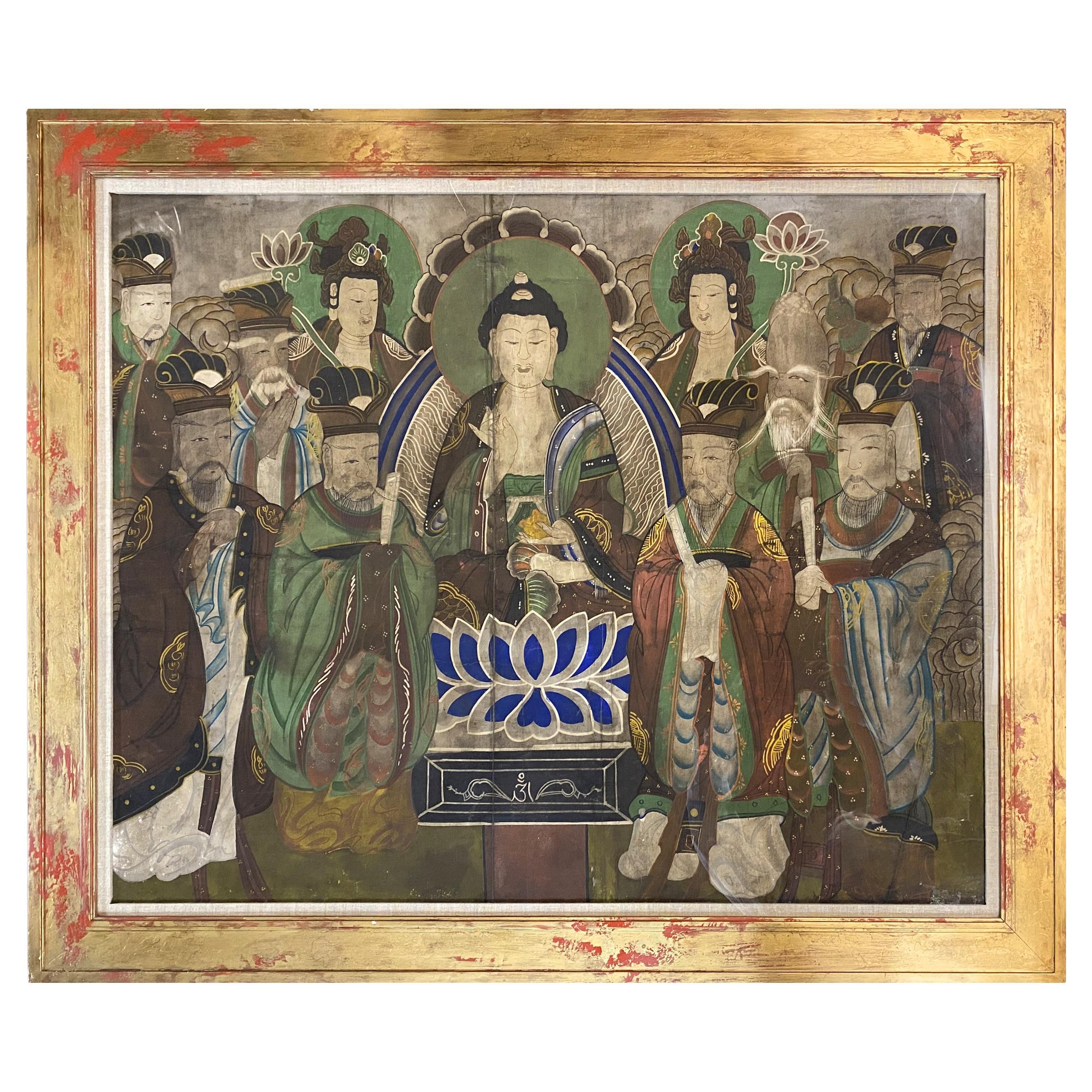
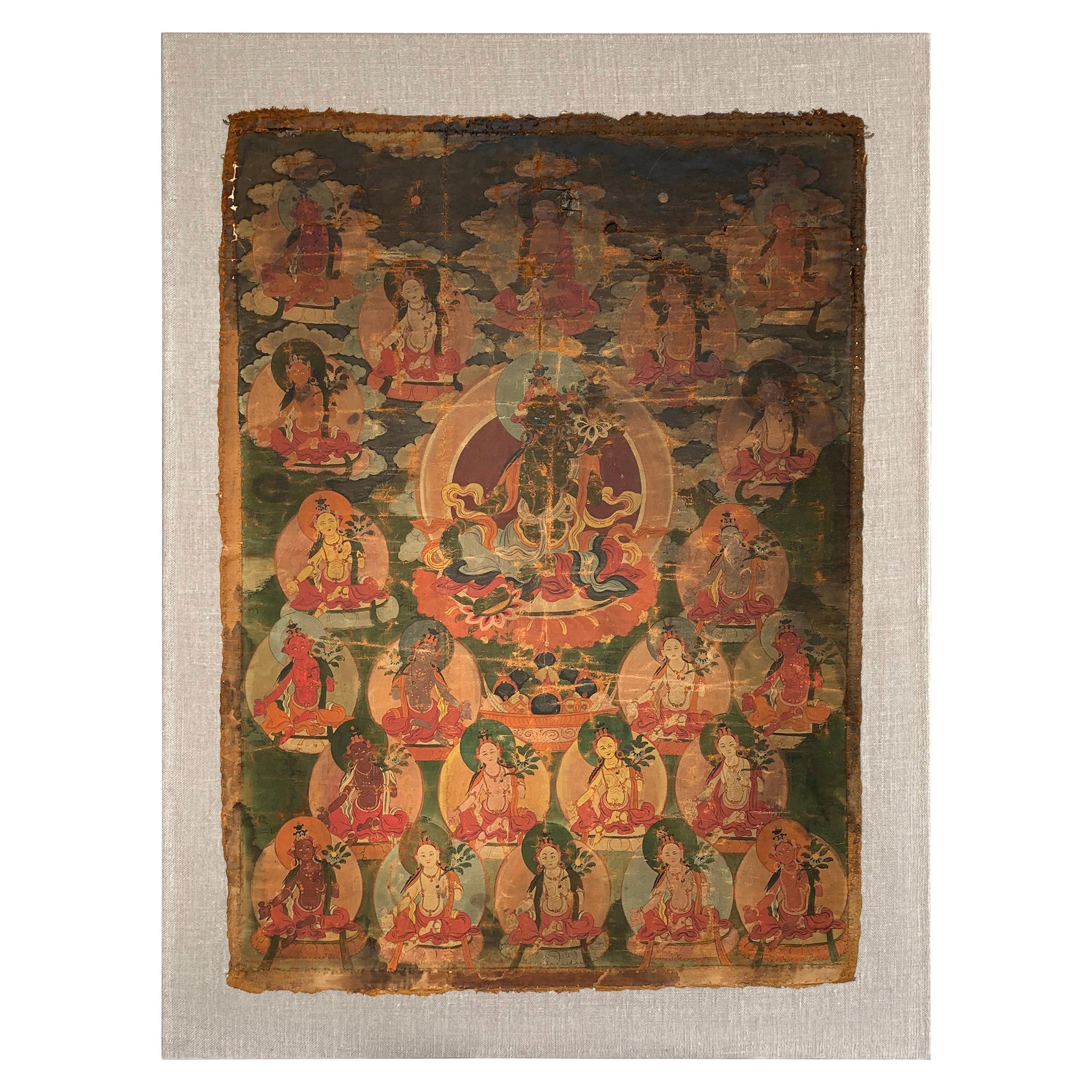
A large Korean Buddhist painting on silk framed in wood with an acrylic shadow box. The type of the painting is known in Korean as Sinjung T'aenghwa (Literally translated as Scroll-style Buddhist Painting) and was traditionally hanging in the temples above the altars behind the Buddhist statue. Functioning as a banner for visual storytelling and worship ambience, they were categorized based on subject matter (the deity it depicted and the context) which determined the location of the display as well as the occasion. Different from Buddhism-dominated Goryeo dynasty, Joseon was a largely Confucianism-oriented society and initially the Buddhism was even suppressed. Toward the end of Joseon period (19th century onward), the attitude toward Buddhism relaxed. These scrolling paintings gradually replaced the stucco mural in the temples and gained their popularity.
The piece on offer is large middle altar piece. It depicts Amitabha seated on a double-lotus throne surrounded by flanked bodhisattvas, Ahart attendants, Taoist immortals, and other deities. Sometimes known as Sermon in the Paradise, the painting was done with polychrome pigments on silk. It was set by a silk border and line backing within a wood frame and a new acrylic shadow box.
On the lower left corner. a plate with Hanji writing dated the piece to Guanxu 18th year which was 1888. There is also a hand-written note on reverse: "CA 1830 - Verified at the Boston Museum of Fine Arts - Apr. 1985 - Mounted / framed 1984".
The silk painting was in a stable preserved fragment state. It shows lots of losses, wears, fading to half of the image. The Amitah figure in the center as well as the right side of the scroll carries on a sense of grandeur that it once was and a wonderful aura of antiquity. A worn beauty regardless.
- Dimensions:Height: 46.5 in (118.11 cm)Width: 69.5 in (176.53 cm)Depth: 1.5 in (3.81 cm)
- Style:Other (Of the Period)
- Materials and Techniques:
- Place of Origin:
- Period:
- Date of Manufacture:1888
- Condition:Wear consistent with age and use. Minor losses. Minor structural damages. Minor fading. Perserved fragment state (see description and photos). The acrylic shadow box is a new replacement.
- Seller Location:Atlanta, GA
- Reference Number:1stDibs: LU945044087242
About the Seller
4.9
Platinum Seller
Premium sellers with a 4.7+ rating and 24-hour response times
Established in 2006
1stDibs seller since 2010
581 sales on 1stDibs
Typical response time: <1 hour
- ShippingRetrieving quote...Shipping from: Atlanta, GA
- Return Policy
More From This Seller
View AllFramed Tibetan Thankga of Amitabha
Located in Atlanta, GA
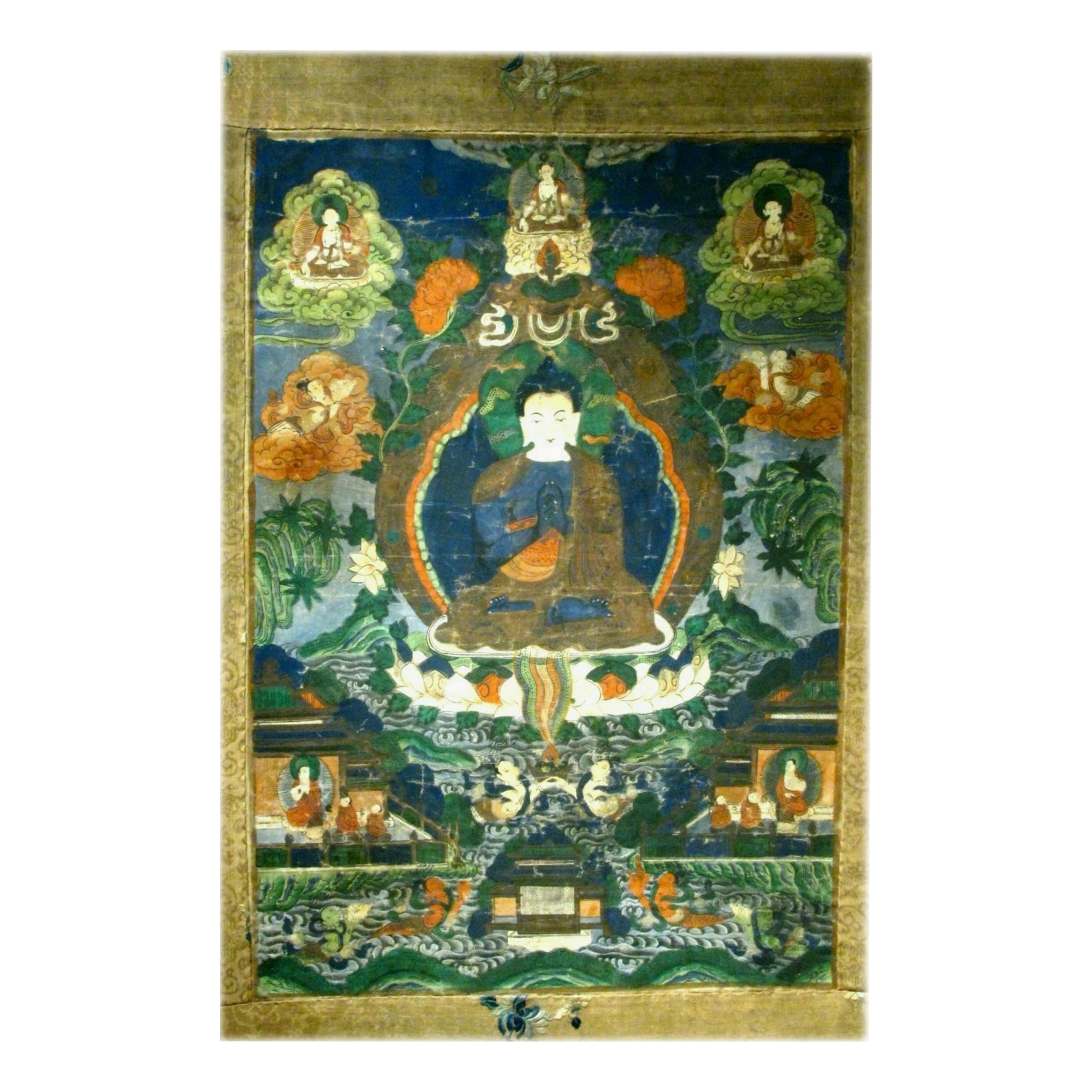
An antique Tibetan Thankga depicting Amitabha and surrounding deities, circa late 19th century. The center Amitabha is in a meditation form holding a black beggar's bowl. In the Mahayana Tradition of Buddhism, Amitabha is a celestial Buddha: the Buddha of Infinite Light and the principal Buddha in Pure Land Buddhism, a branch of East Asian Buddhism...
Category
Antique Late 19th Century Tibetan Tibetan Paintings and Screens
Materials
Cotton, Silk, Wood, Paint
Antique Korean Folk Painting of Mountain Spirit Joseon Dynasty
Located in Atlanta, GA
An antique Korean folk painting of an old sage meditating among rocks under an ancient pine tree with a flying crane circa 19th century late Joseon period. The image was likely part of a larger scroll that depict of Mountain Spirit...
Category
Antique 19th Century Korean Folk Art Paintings and Screens
Materials
Brocade, Wood, Paper
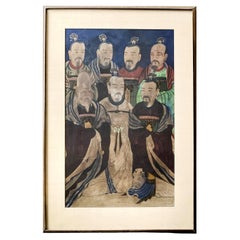
Framed Korean Folk Shamanistic Painting of Seven Stars
Located in Atlanta, GA
A Korean folk painting watercolor on linen (silk) with a cloth mat and walnut wood frame. The work is in the shamanistic style and depicts the Tao...
Category
Early 20th Century Korean Folk Art Paintings and Screens
Materials
Textile
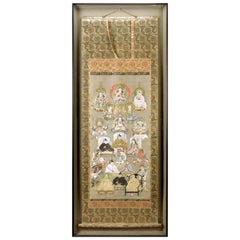
Japanese Silk Suijaku Scroll Nyorai-Kojin with Mixed Buddhism and Shinto Deities
Located in Atlanta, GA
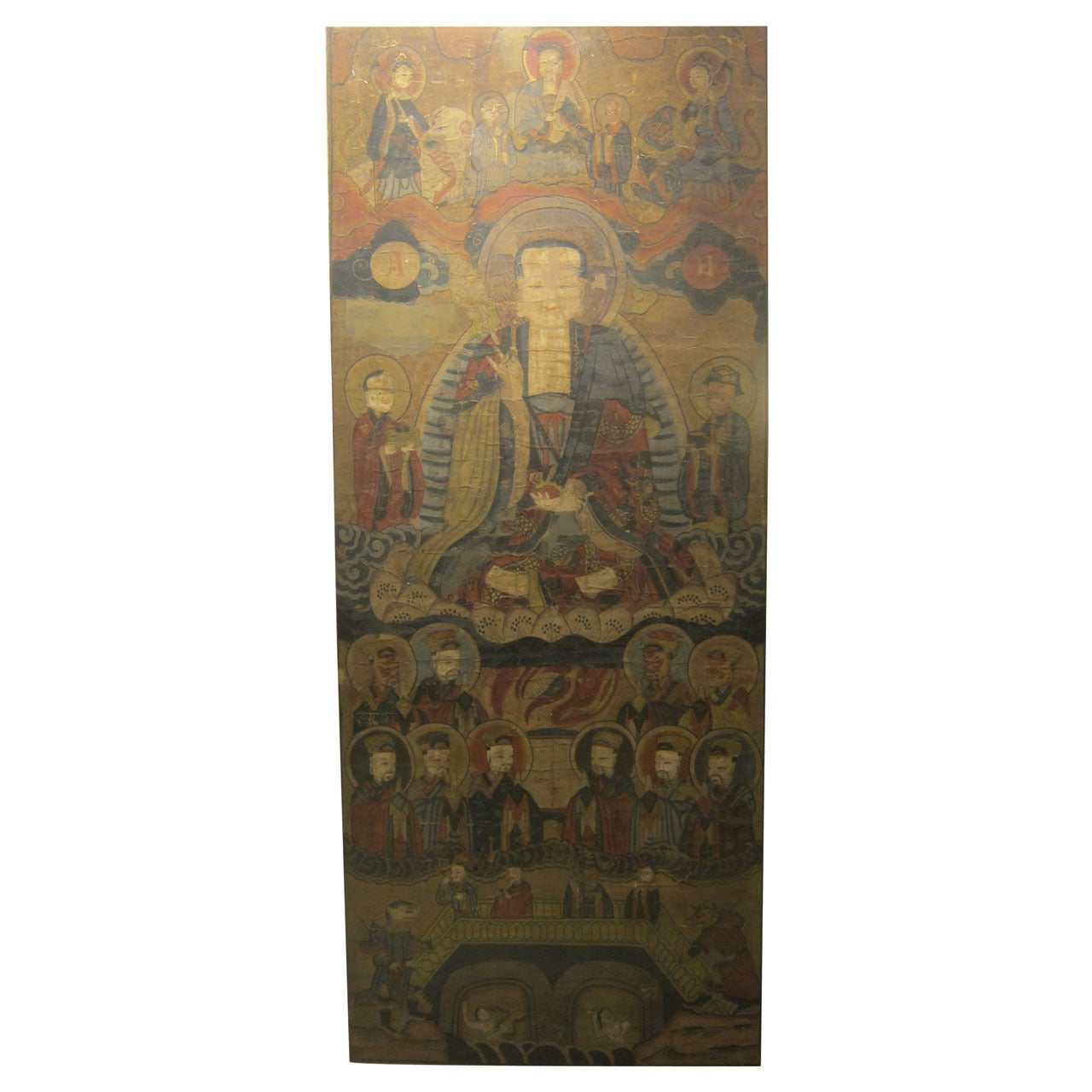
A Japanese silk Suijaku hanging scroll beautifully presented in a custom wood shadow box frame from Edo period (circa 18-19th century). The scroll, surmounted on golden brocade was painted in fine details with gouache, ink and gold powder highlight, served as a Suijaku mandala for the worshippers. Honji Suijaku is a complicated religious concept uniquely developed in Japan. It mixed and hybrid the Buddism deities with native shinto spirits (known as Kami), which were seen as local manifestations (the suijaku, literally means a "trace") of Buddhist deities (the honji literally the original ground). The original idea may lie with the synergetic strategy to spread Buddism by making it more relatable to the local population who had already worshiped Shinto gods. The paradigm, adopted in the 10th century from an orignal Chinese concept, remained a defining feature of Japanese religious life up to the end of the Edo period (1868). Instead of being confined to deities, its application was often extended to historical figures as shown on this scroll.
This long hanging scroll depicts an arrangement of 21 figures including Buddhism and Shinto deities as well as two historical figures on the bottom. Each figure was name-tagged in Kanji for easy identification by the worshippers. It was used in the temple or shrine so that when the worshipper prayed in front the mandala, they prayed simultaneously to all the deities.
On the very top, sits Nyorai-Kojin, a hybrid deity of Nyorai Buddha and Kojin, the kaki for fire, stove and kitchen. From the top to bottom and left to right, here is the list of the deities: Kanon with Thousand Hands, Kanon with Willow Branch, Monju Bosatsu...
Category
Antique Early 19th Century Japanese Edo Paintings and Screens
Materials
Silk, Wood
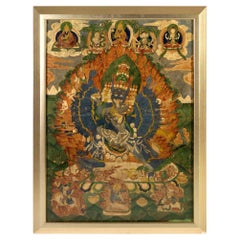
Framed Antique Tibetan Thangka of Yamantaka with Consort
Located in Atlanta, GA
An antique Tibetan Thangka with polychrome pigments on cloth, circa mid to late 19th century. It depicts Yamantaka, also known as Vajrabhairava, who is a wrathful manifestation of Manjusri, the bodhisattva of wisdom, and in other contexts he also functions as a dharmapala, or 'Dharma-protector'. The buffalo head deity Vajrabhairava is one of the three principal meditation deities of the Gelug School. He is shown with nine faces in the Yab Yum...
Category
Antique 19th Century Tibetan Tibetan Paintings and Screens
Materials
Textile
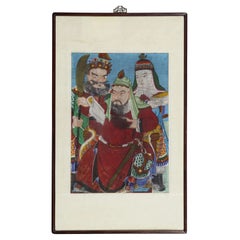
Framed Korean Folk Painting of General Guan Gong
Located in Atlanta, GA
A Korean folk Shamanism watercolor on textile matted with woven brocade and presented in a wood frame with an oriental style metal hanging hardware. The painting was estimated to be from early 20th century circa 1910-1930s. It depicts Guan Yu (160-220AD), a legendary Chinese warrior and general from Eastern Han Dynasty. Long worshiped in China as a deity, across all three major religions, Guan Gong...
Category
Early 20th Century Korean Folk Art Paintings and Screens
Materials
Textile, Brocade
You May Also Like
18th/19th Century Korean Buddhist T’aenghwa Painted Scroll or Banner in Frame
Located in Milford, NH
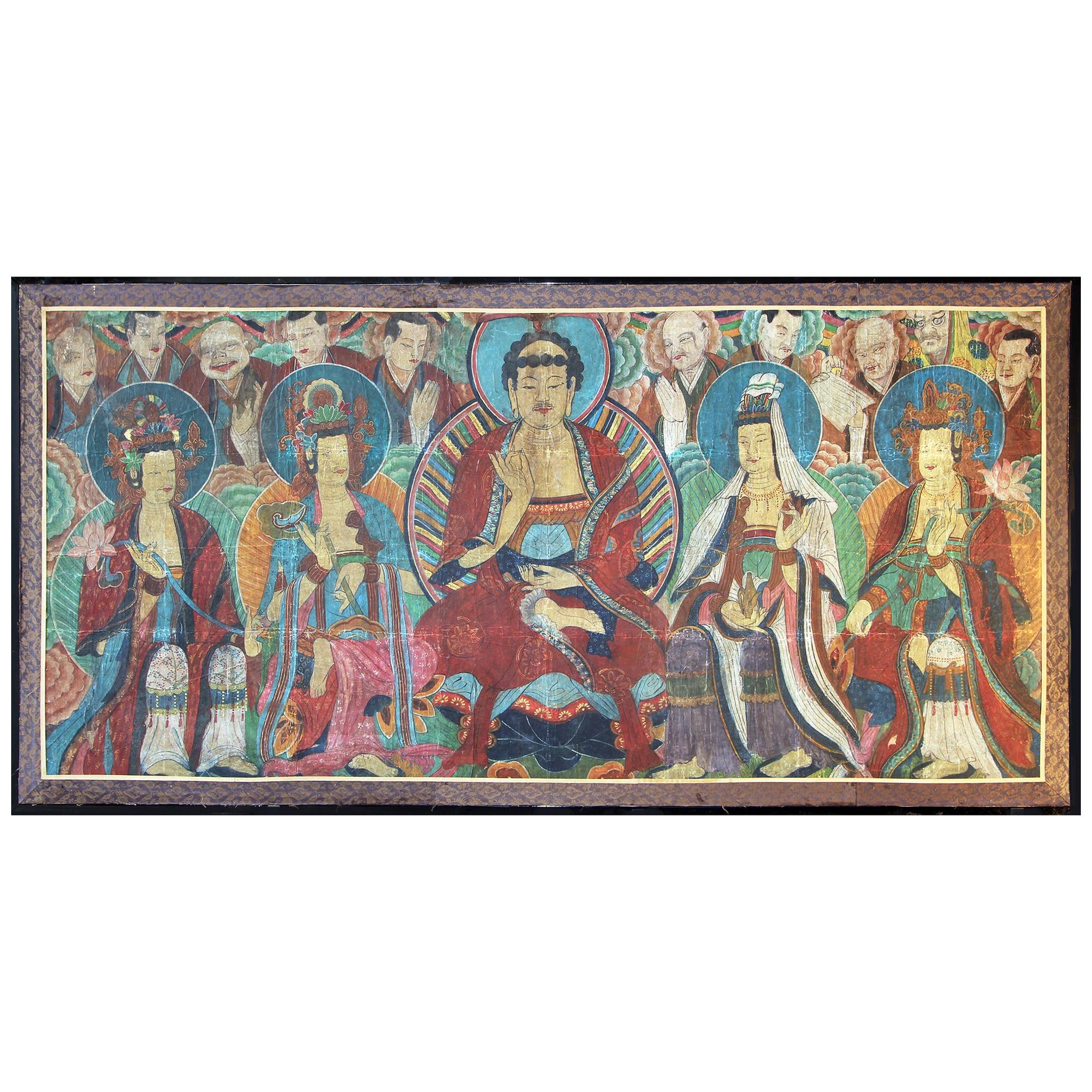
A fine Korean Buddhist T’aenghwa scroll painting, similar to the Tibetan Thangka paintings. The Korean name taenghwa is very similar to the Tibetan word thangka and the period of pop...
Category
Antique 18th Century Korean Paintings
Materials
Canvas
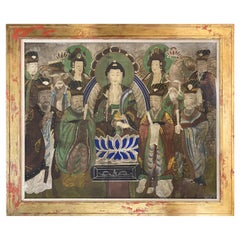
18th Century Buddhist Chinese Scroll Painting
Located in New York, NY
18th century Buddhist Chinese Scroll Painting.
This is a temple piece and has been re-backed numerous times over its life span. The practice...
Category
Antique Late 18th Century Chinese Paintings and Screens
Materials
Paper

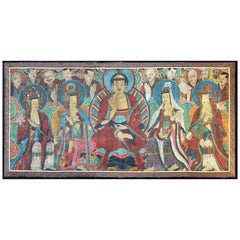
Fine and Large 19th Century Painting of Buddha and Bodhisattvas, Buddhist Art
Located in Brescia, IT
Painting on natural-colored paper, depicting many characters from the Buddhist pantheon.
These images of Buddha and bodhisattvas depicted stories from Chinese Buddhist scriptures and...
Category
Antique 19th Century Chinese Paintings and Screens
Materials
Paper
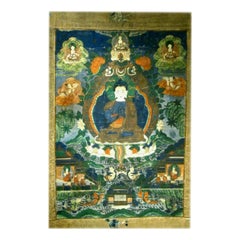
A Very Good Tibetan Thangka Depicting Buddha Nagaraja, 19th Century or Earlier
Located in Ottawa, Ontario
A striking 19th century Tibetan thangka of the enlightened one, Buddha Nagaraja; King of Nagas (a.k.a. Buddha Nageshvara). Shown seated in the vajra position atop a lotus blossom, ha...
Category
Antique 19th Century Tibetan Tibetan Paintings and Screens
Materials
Other
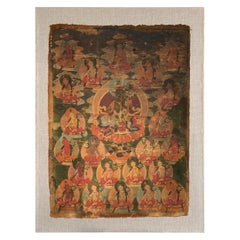
18th Century Tibetan Thangka Painting
Located in Chicago, IL
A rare striking 18th century Tibetan Thangka depicting the Green Tara seated on a lotus throne ready to step down to offer comfort and pro...
Category
Antique 18th Century Tibetan Tibetan Paintings and Screens
Materials
Linen, Paint
Japanese Buddhist Teaching Painting
Located in Greenwich, CT
Japanese Buddhist teaching painting, set of four paintings with 24 Buddhist stories with Japanese written characters in each story on one screen. Provenance: Purchased from Christie's South Kensington...
Category
Antique 1820s Japanese Edo Paintings and Screens
Materials
Paper
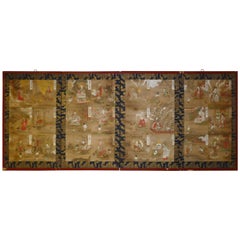
$2,500 Sale Price
34% Off
More Ways To Browse
Antique Shadow Box
Korean Silk
Antique Buddhist Statues
Acrylic Shadow Box
Large Buddhist
Antique Korean Painting
Buddhist Altar
Buddhist Scroll
Antique Buddhist Altars
Korean Painted Screen
Korean Silk Painting
Korean Silk Screen
Joseon Paintings
Korean Painting On Wood
Korean Scroll Painting
Korean Scroll
Korean Temple
Japanese Maple