Items Similar to Korean Chaekgeori painting. 19th Century Joseon. Books
Scholars’ Accouterments
Want more images or videos?
Request additional images or videos from the seller
1 of 6
Korean Chaekgeori painting. 19th Century Joseon. Books
Scholars’ Accouterments
$12,000
£9,088.89
€10,438.27
CA$16,815.92
A$18,282.30
CHF 9,693.30
MX$219,158.42
NOK 123,196.82
SEK 112,865.04
DKK 78,012.86
About the Item
Books and Scholars’ Accouterments; Chaekgeori
Second half of the 19th century
Korean framed panel. Ink and color on paper.
This Korean Chaekgeori painting depicts two open shelves in a rough approximation of Western linear perspective, creating an appearance of three-dimensional depth. The lower shelf displays Chinese porcelain, an archaic Chinese bronze and a clock set against a luminous rear panel of deep blue. The upper shelf is stacked with books.
Of the various kinds of Korean decorative painting which were popular towards the end of the Joseon period (1392-1897), Chaekgeori or chaekgado is the genre that most embodies the spirit and aspirations of the period’s literati. The genre depicts books and other material commodities as symbolic embodiments of knowledge, power and aspiration. Chinese curiosities from the Qing dynasty (1644–1912) entered the homes of the upper classes of Korea during this period, and this is reflected in these paintings. Books mingle with scholarly objects, all competing for prominence of place and the attention of the viewer. The clock is an example of new technology brought to East Asia via Jesuit missionaries and Western merchants.
This panel is the work of a Korean court painter who created paintings for the elite of Korean society. There was a complex family lineage of professional painters and they transmitted painting themes and styles within those families. The elements of this panel, including the Chinese bronze and porcelain and the clock are reproduced virtually identically in a number of important Chaekgeori screen paintings dating to the second half of the 19th century. It is directly comparable to a work by Yi Taek-gyun in the Cleveland Museum of Art. Its size is highly unusual. It is a single sheet measuring 20” across and 36” high (51cm x 92cm). The question remains as to whether this was originally designed as a single panel or whether it was originally part of a folding screen. Thus far Korean Chaekgeori have only been discovered in folding screen formats of 8, 10 and 12 panels. The width of these screen panels ranges from 8.25” to 13.75” (21cm to 35cm). The 20” width of this panel lends substantial weight to the theory that it was painted to be displayed as a single panel as it is currently presented.
- Dimensions:Height: 47.5 in (120.65 cm)Width: 26.5 in (67.31 cm)Depth: 0.75 in (1.91 cm)
- Style:Edo (Of the Period)
- Materials and Techniques:
- Place of Origin:
- Period:
- Date of Manufacture:Circa 1880
- Condition:Replacements made: Recently completely remounted and reframed. One replacement section of painting/paper at the lower right corner. The was restored during a previous restoration. Refinished. Minor losses.
- Seller Location:Kyoto, JP
- Reference Number:1stDibs: LU2472339273642
About the Seller
5.0
Recognized Seller
These prestigious sellers are industry leaders and represent the highest echelon for item quality and design.
Established in 2001
1stDibs seller since 2016
77 sales on 1stDibs
Typical response time: 6 hours
- ShippingRetrieving quote...Shipping from: Kyoto, Japan
- Return Policy
More From This Seller
View AllJapanese Painting, 17th Century, Tale of Genji, Tosa School
Located in Kyoto, JP
Illustration to an unidentified chapter of the Tale of Genji (Genji Monogatari)
Tosa School (second half of the 17th Century)
Ink, pigment, gofun and...
Category
Antique Late 17th Century Japanese Edo Paintings and Screens
Materials
Gold Leaf
Korean Painting, Wall Panel, 17th Century Ink Grapevine
Located in Kyoto, JP
Grapevine
Anonymous. Korean, 17th century.
Wall panel, ink on paper.
Upper seal:
Kou Kinun in
Lower seal:
Kaigen
Dimensions:
Measures: 98.5 cm x 29.5 cm (39” ...
Category
Antique 17th Century Korean Other Paintings and Screens
Materials
Wood, Paper
Japanese Screen Painting, Circa 1700
Tales of Ise
by Tosa Mitsusuke
By Tosa Mitsusuke 1
Located in Kyoto, JP
A six-fold Japanese screen by Tosa Mitsusuke (1675-1710), Japan 17th-18th century, Edo period.
The signature reads Shoroku-i ge Tosa sa Konoe Shogen Mit...
Category
Antique Late 17th Century Japanese Edo Paintings and Screens
Materials
Gold Leaf
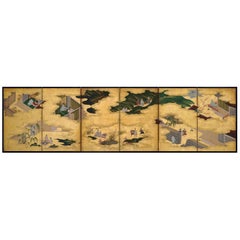
Mid 19th Century Japanese Screen Pair. Flowers
Birds of the Four Seasons.
Located in Kyoto, JP
Shioka Sorin (1781-1850)
Flowers & Birds of the Four Seasons
Pair of six-panel Japanese Screens. Ink, gofun and pigments on silk.
Dimensions (each screen): H. 91.5cm x W. 285cm (3...
Category
Antique Mid-19th Century Japanese Edo Paintings and Screens
Materials
Silk
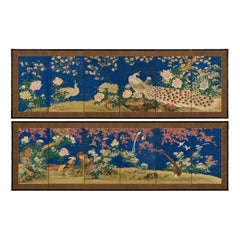
19th Century Japanese Scroll Painting, Birds
Flowers of the Four Seasons
Located in Kyoto, JP
Birds and flowers of the four seasons
Early to mid-19th century
Ink, pigment and gofun on silk
Unidentified artist
Signature: S...
Category
Antique 1830s Japanese Edo Paintings and Screens
Materials
Silk
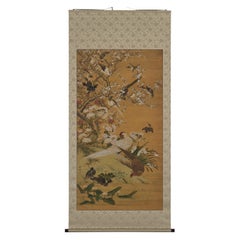
Japanese Painting. Bird and Flower. 19th century copy of Lu Ji by Ogata Tomin.
Located in Kyoto, JP
Ogata Tomin (1839 -1895)
Birds in a spring landscape
Ink and colour on silk.
Inscription reads:
“Copy of Lu Ji, painted with heartfelt appreciation”
“Painted by Tomin Ogat...
Category
Antique Late 19th Century Japanese Ming Paintings and Screens
Materials
Silk
You May Also Like
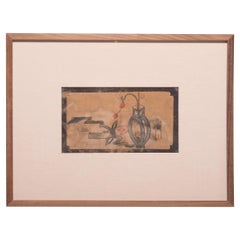
"Scholar
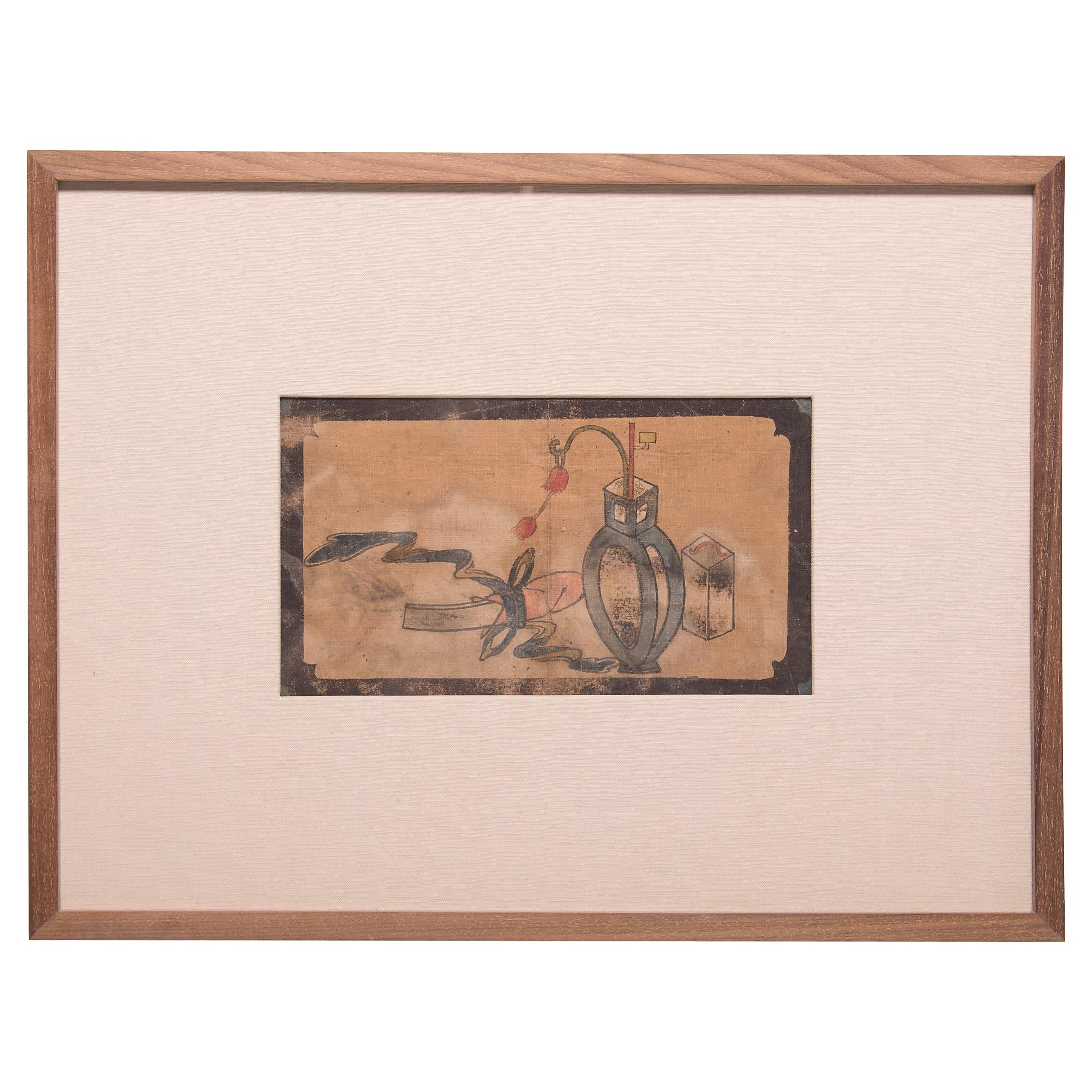
s Treasures" Chinese Painting, c. 1850
Located in Chicago, IL
A scroll and a small lantern depicted in this 19th century painting suggest the romantic notion of a Chinese scholar painting in the evening hours. Re...
Category
Antique Mid-19th Century Chinese Qing Paintings and Screens
Materials
Fabric
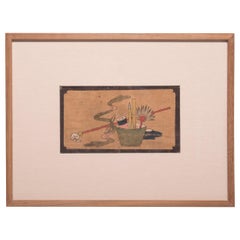
"Treasures of the Scholars
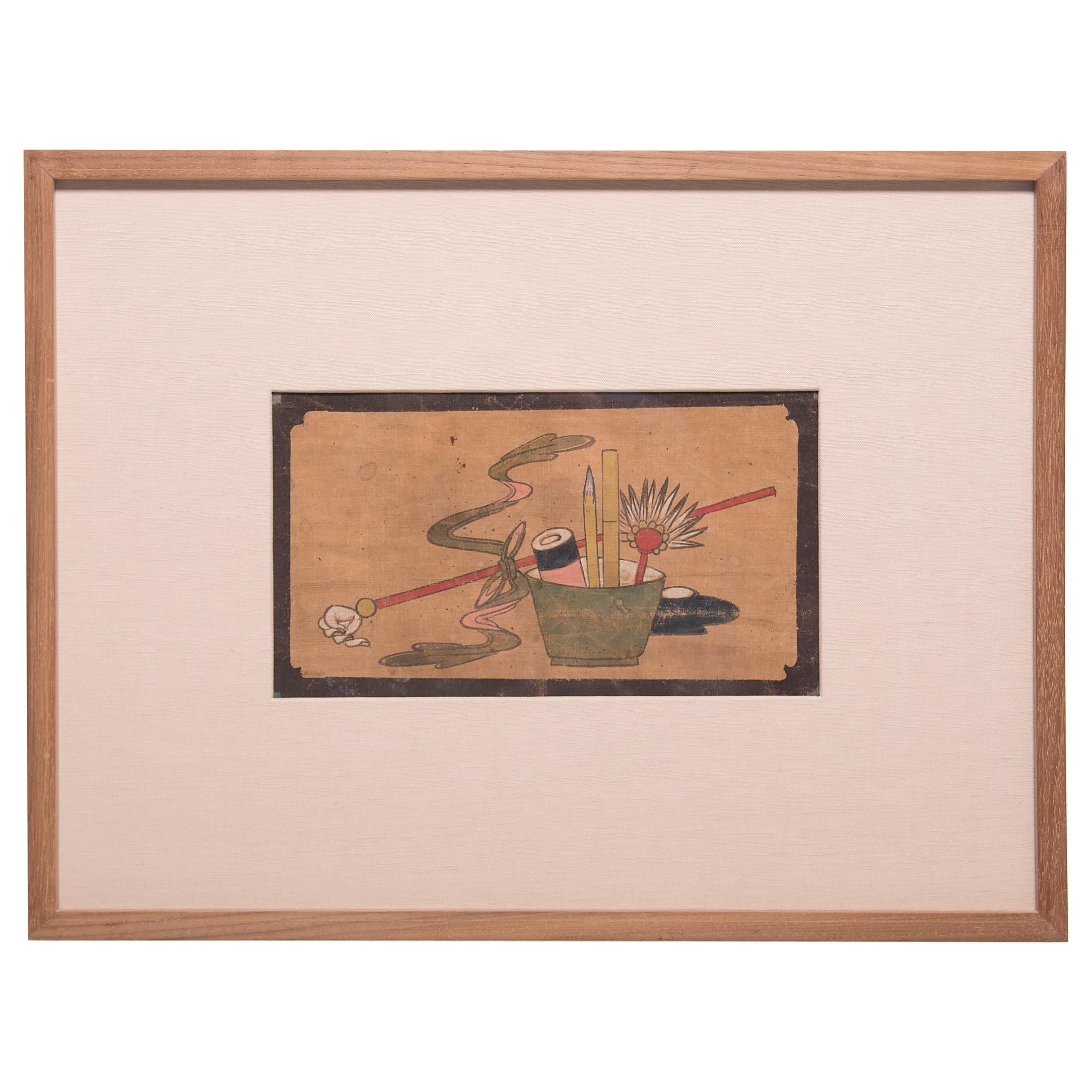
Studio" Chinese Painting, c. 1850
Located in Chicago, IL
With careful brushwork, this 19th century painting honors the four treasures of the scholar's studio - paper, calligraphy brush, ink, and inkstone. Essenti...
Category
Antique Mid-19th Century Chinese Qing Paintings and Screens
Materials
Fabric
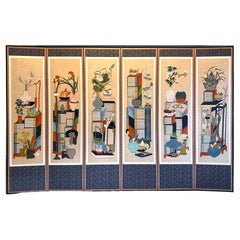
Korean Folding Chaekgeori Painted Scholar Floor Screen
Located in Atlanta, GA
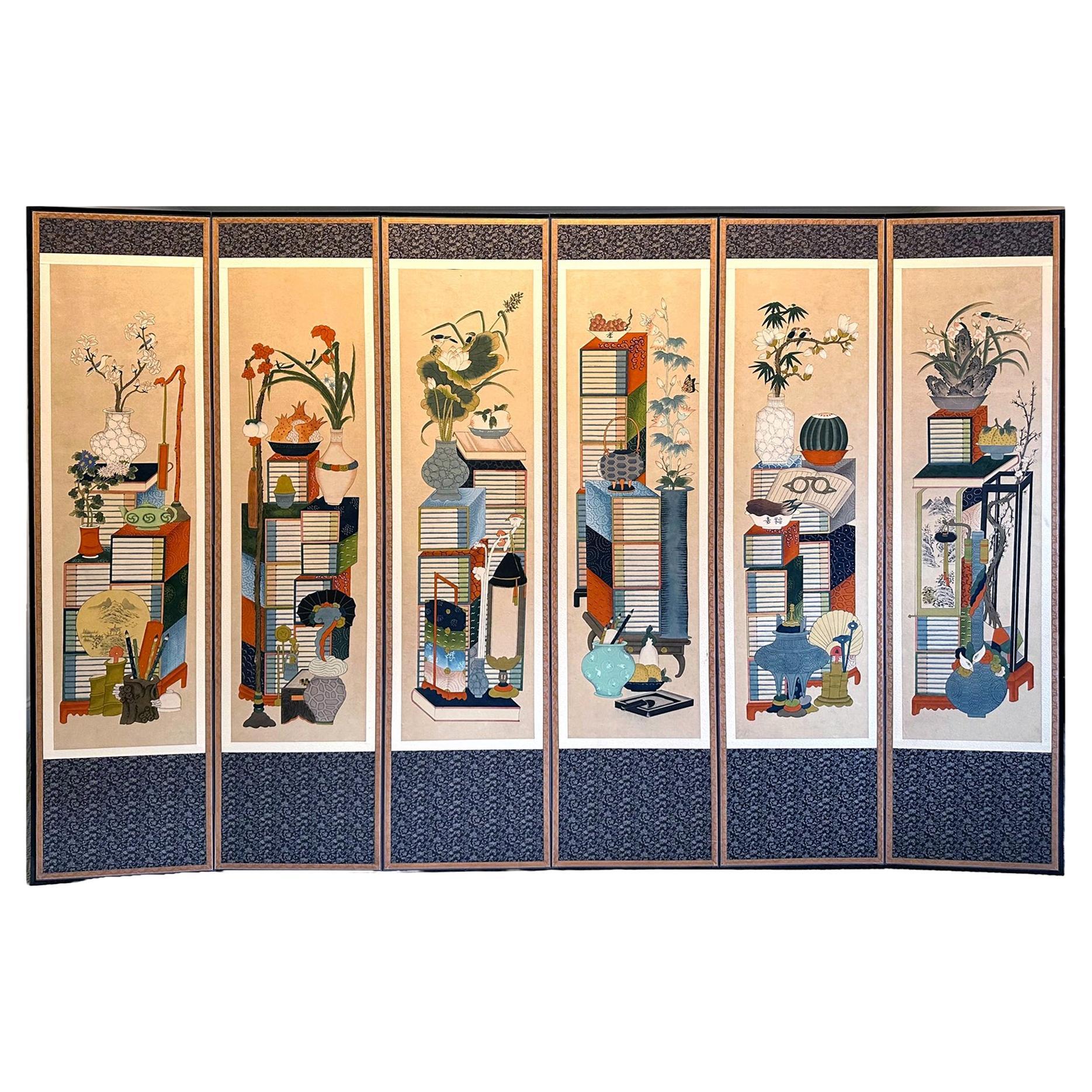
A six-panel painted folding floor screen from Korea circa early 20th century. This type of screen is called Chaekgeori (books and things) which is quite unique to Korea. It became popular at the end of 18th century favored and encouraged by King Jeongjo (1752-1800) as a political tool to promote social conservatism such as the traditional Confucianism value, especially considered important in a time when waves of new ideology influx came to Korea. Initially commissioned for the royal court, they became increasingly popular with the scholars of noble and affluent households and were used widely in their halls and studies. Early screens were painted with trompe-l’oeil bookcases displaying books and arrays of collectibles. Later, the bookcases were eliminated to focus on the assemblage of neatly stacked books and objects of scholarly pursue. On this screen, the six panels were neatly presented and framed in woven brocade borders. Among the stacked volumes, one can find many fine porcelain vases with flowers, potted orchids, pen holders with brush pens and scroll paintings, incense burner, ink stone, teapot, fan with ink painting, vessels of fruits, exotic plants such as lotus, plumeria and even a pair of glasses. It feels like a pleasant visual measure hunting for the viewers. Several words in Chinese found their way into the picture as well, including filial (xiao), longevity (shou) and luck (fu).
The painting was done in a meticulous way with no details overlooked and also with a rather western still-life dimensional perspective. In a rather unusual maximal but also minimalistic way, the screen exudes a historical charm with a folky flair but appears modern at the same time.
Each panel is 17.5"w by 70.2"h.
For general information on the subject see reference: Chaekgeori the Power and Pleasure of Possessions in Korean Painted Screens...
Category
20th Century Korean Folk Art Paintings and Screens
Materials
Brocade, Silk, Wood, Paper
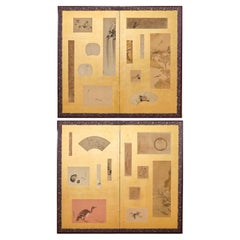
Pair of Japanese Two Panel Screens Edo Period Vignettes
Located in Rio Vista, CA
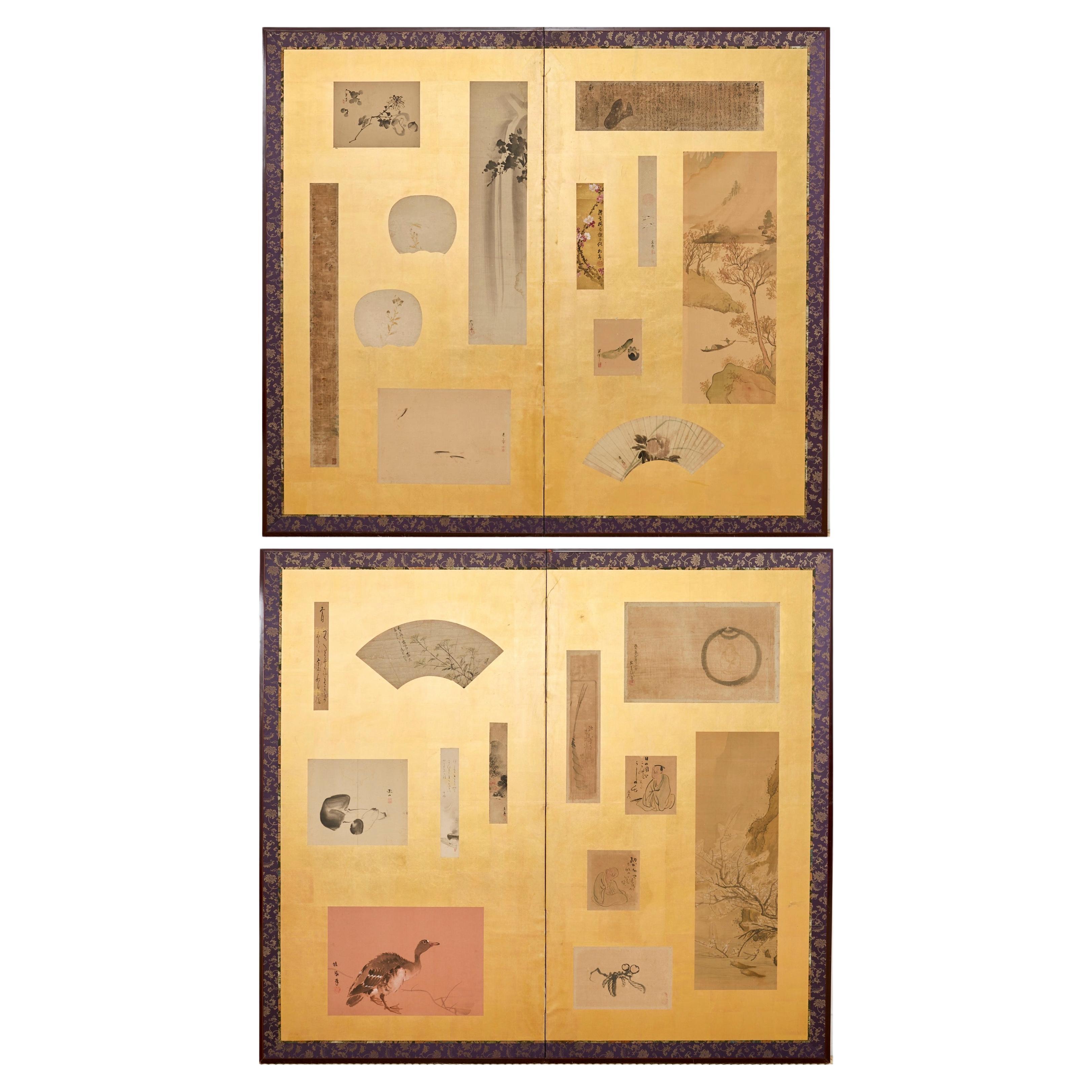
Impressive pair of Japanese two-panel byobu screens featuring late 18th-century edo period applied vignettes, poems, and paintings in various formats over a dramatic gold leaf square...
Category
Antique 18th Century Japanese Edo Paintings and Screens
Materials
Gold Leaf
Mid-19th Century Chinese Painting on Rice or Pith Paper
Located in Chapel Hill, NC
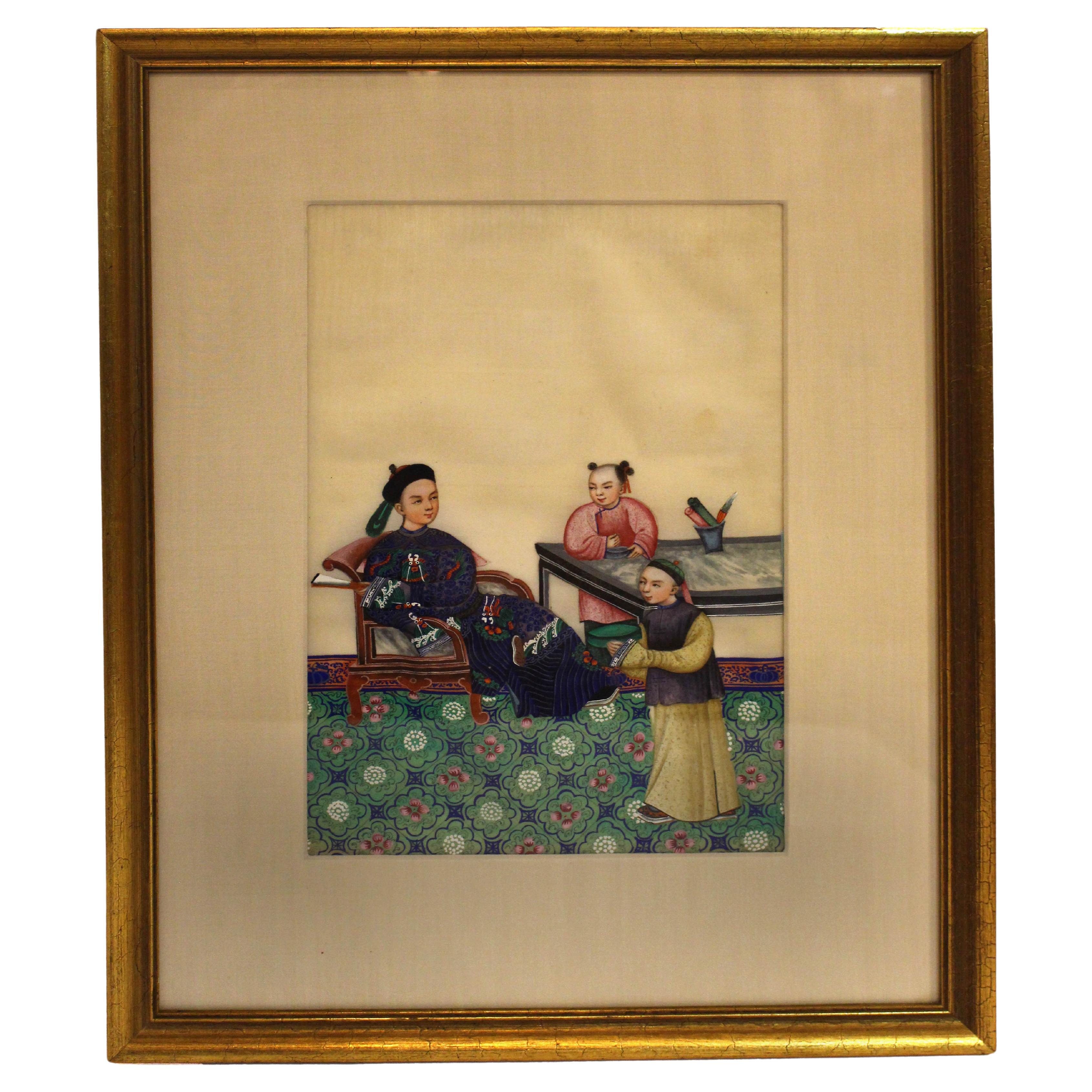
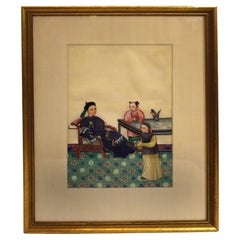
Mid-19th century Chinese Painting on Rice or Pith Paper. Gouache or opaque watercolor of a student & attendants. Note remarkable details including marble panelled chair...
Category
Antique Mid-19th Century Chinese Qing Paintings and Screens
Materials
Paper
$384 Sale Price
68% Off
Japanese Buddhist Teaching Painting
Located in Greenwich, CT
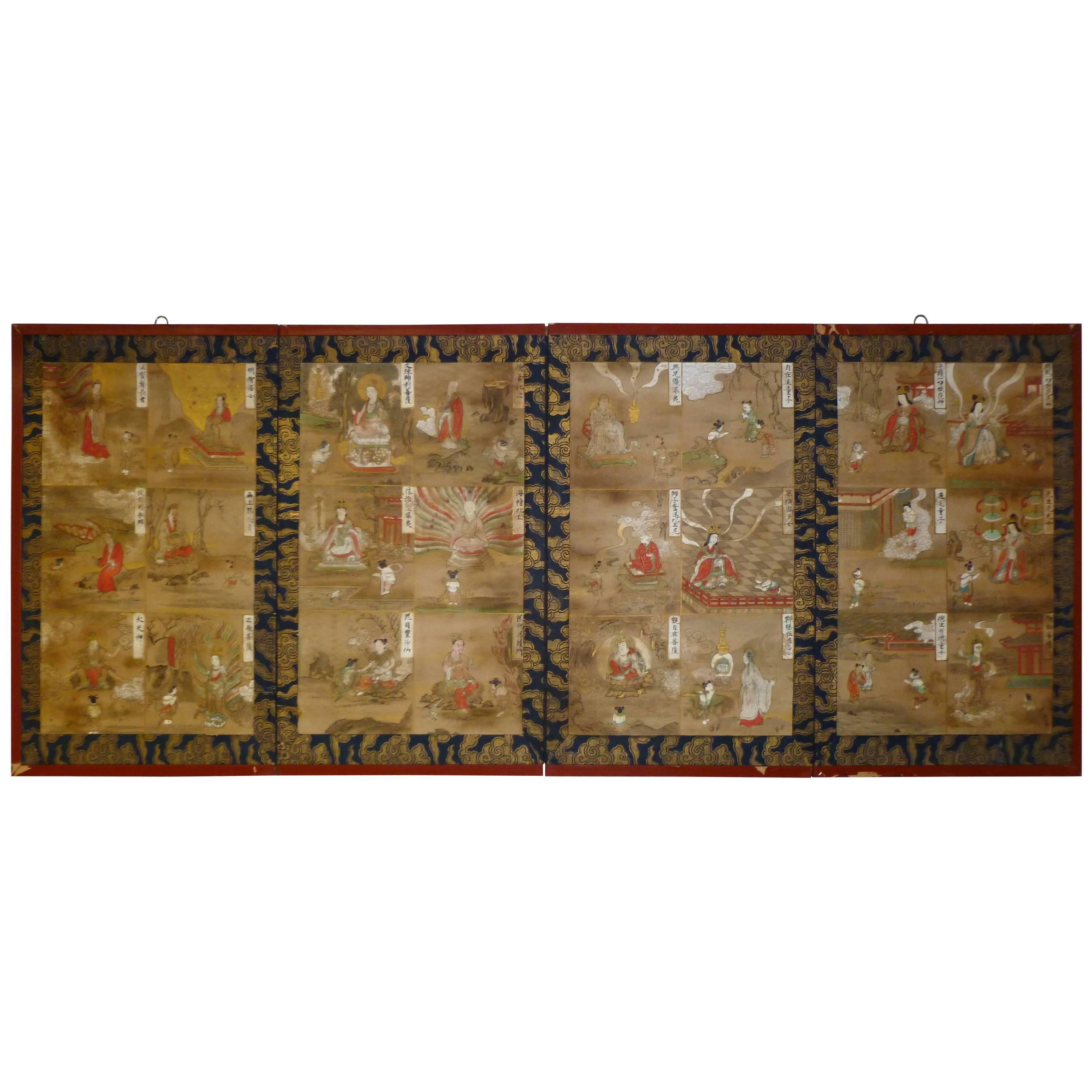
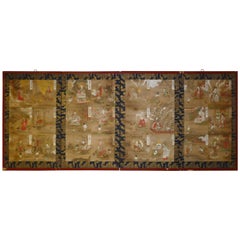
Japanese Buddhist teaching painting, set of four paintings with 24 Buddhist stories with Japanese written characters in each story on one screen. Provenance: Purchased from Christie's South Kensington...
Category
Antique 1820s Japanese Edo Paintings and Screens
Materials
Paper
$2,500 Sale Price
34% Off
More Ways To Browse
Stack Of Books
Korean Panel
Antique Korean Painting
Antique China Clock
Chinese Antique Clocks
Korean Painted Screen
Joseon Paintings
12 Panel Screen
Chinese Porcelain Clock
Korean Chaekgeori
Used Lattice Panels
Antique Japanese Lacquer Screens
Japanese Meiji Panel
Coromandel Lacquer
18th Century Japanese Screens
Calligraphy
Mineral Pigments On Silk
Chinese Silk Screen